1. Search Result
Search Result
Results for "

Progesterone Levels

" in MedChemExpress (MCE) Product Catalog:

21

Inhibitors & Agonists

2

Natural
Products

3

Isotope-Labeled Compounds

1

Click Chemistry

Targets Recommended:
Cat. No. Product Name Target Research Areas Chemical Structure
  • HY-109171

    NT-814; BAY3427080

    Neurokinin Receptor Cardiovascular Disease Neurological Disease
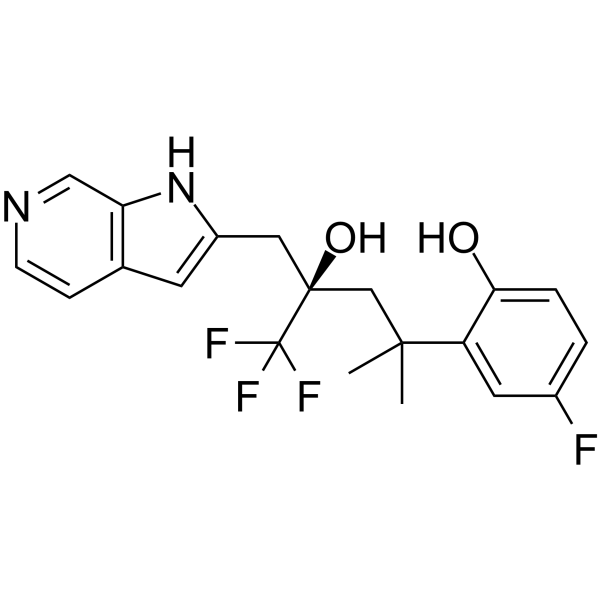
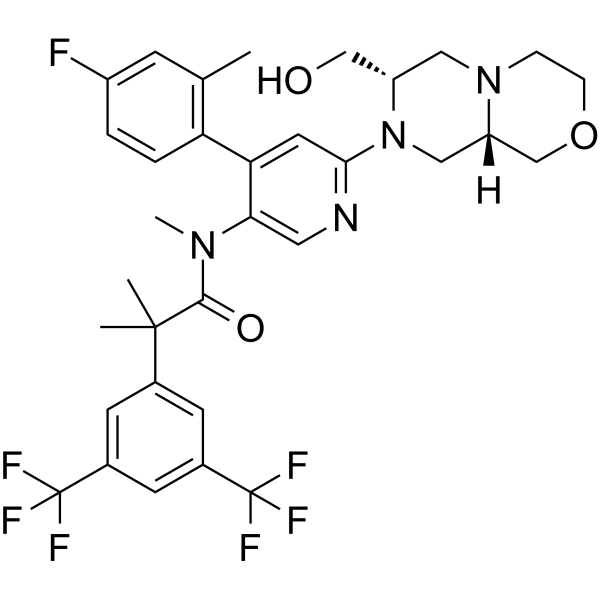
    Elinzanetant is an orally active and selective NK-1 and NK-3 receptor antagonist. Elinzanetant alleviates menopause-associated vasomotor symptoms, including hot flashes and night sweats. Elinzanetant reduces estradiol and progesterone levels. Elinzanetant can be used for the research of moderate to severe vasomotor and sleep disorders associated with menopause .
    Elinzanetant
  • HY-W040047

    Endogenous Metabolite Metabolic Disease
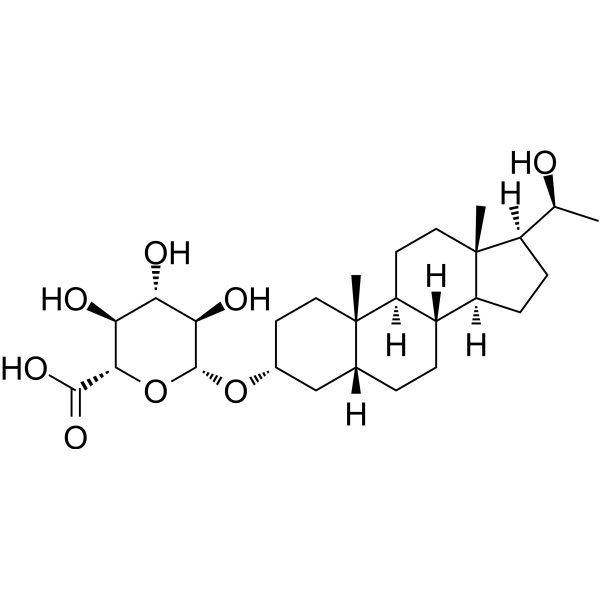
    Pregnanediol 3-glucuronide is the main terminal metabolite of Progesterone (HY-N0437). Pregnanediol 3-glucuronide is the metabolite of Progesterone produced in the liver through hydroxylation and glucuronidation, with high hydrophilicity and easy excretion through urine. A decrease in the level of Pregnanediol 3-glucuronide is associated with an increased risk of thyroid cancer, while an increase is associated with the state of pregnancy. Pregnanediol 3-glucuronide is of great significance in the monitoring of female reproductive health, pregnancy assessment, and the diagnosis of endocrine diseases .
    Pregnanediol 3-glucuronide
  • HY-14234
    Glucocorticoid receptor agonist
    1 Publications Verification

    Glucocorticoid Receptor Metabolic Disease Inflammation/Immunology Endocrinology
    Glucocorticoid receptor agonist is a Glucocorticoid receptor agonist that acts on Glucocorticoid receptor (GR), progesterone receptor (PR) and mineralocorticoid receptor (MR) with the IC50 values of 2.1 , 1200 and 210 nM, respectively. Glucocorticoid receptor agonist has steroid-like anti-inflammatory properties and may be used to improve metabolism and reduce increased levels of body fat and serum insulin .
    Glucocorticoid receptor agonist
  • HY-17375
    Allylestrenol
    1 Publications Verification

    Progesterone Receptor Androgen Receptor Endocrinology
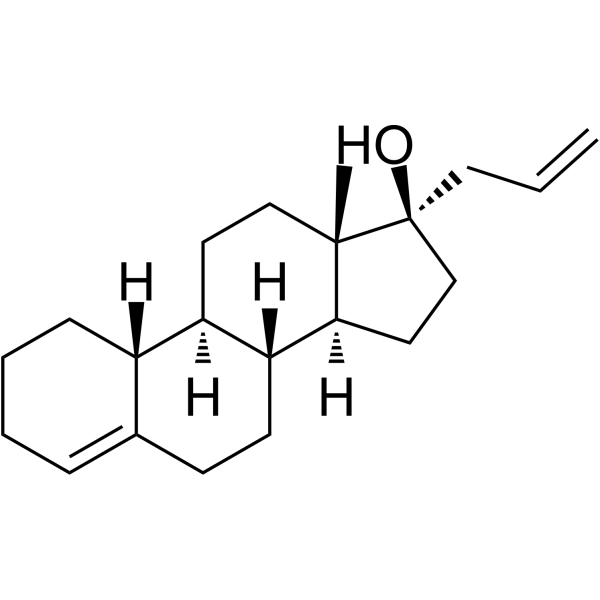
    Allylestrenol is an orally active synthetic anti-androgen sexualsteroid. Allylestrenol can prevent miscarriage in vivo. Allylestrenol significantly affects testosterone progesterone level in rat model. Allylestrenol can reduce ventral prostate weight in rat model .
    Allylestrenol
  • HY-107850S

    NSC 1612-d5; NSC 47462-d5

    Isotope-Labeled Compounds Endogenous Metabolite Metabolic Disease
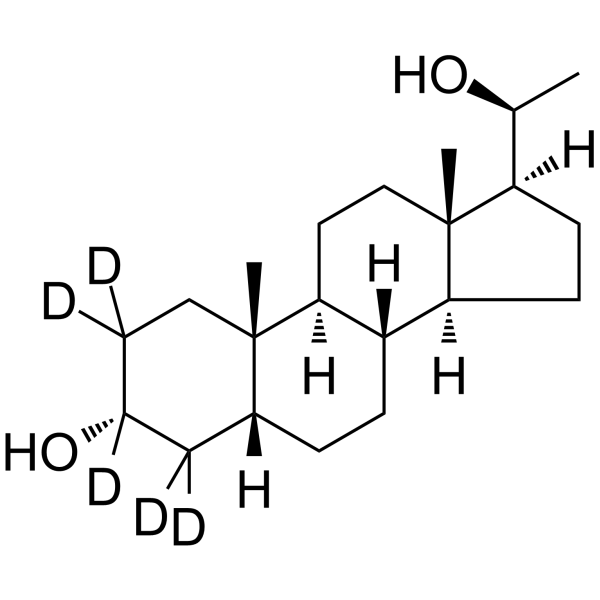
    Pregnanediol-d5 is the deuterium labeled Pregnanediol. Pregnanediol is the major metabolite of progesterone and can be excreted via urine. Pregnanediol offers an indirect way to measure progesterone levels in vivo .
    Pregnanediol-d5
  • HY-135730

    Endogenous Metabolite Endocrinology
    Aglepristone is a synthetic steroidal antiprogestin with abortifacient activity. Aglepristone is used exclusively as an abortifacient in pregnant animals. Aglepristone has been shown to be a safe and effective abortifacient in the second trimester of pregnancy. Aglepristone causes termination of pregnancy and does not cause fetal resorption. During aglepristone treatment, an increase in plasma concentrations of prolactin was observed, while progesterone levels remained unchanged. The use of aglepristone also resulted in early arrest of corpus luteum function and a shortening of the estrus interval .
    Aglepristone
  • HY-106751

    Progesterone Receptor Endocrinology
    Anordrin is a contraceptive agent. Anordrin exhibits estrogenicites and can induce decrease in serum progesterone levels in rat models. Anordrin inhibits endometrial epithelial cell mitosis and NAFLD induced by Tamoxifen (HY-13757A) in mouse uterus and liver as an anti-estrogenic and estrogenic agent .
    Anordrin
  • HY-109171R

    NT-814 (Standard); BAY3427080 (Standard)

    Reference Standards Neurokinin Receptor Cardiovascular Disease Neurological Disease
    Elinzanetant (Standard) is the analytical standard of Elinzanetant. This product is intended for research and analytical applications. Elizanetant (NT-814) is an orally active, selective NK-1,3 receptor antagonist. Elizanetant can reduce the levels of estradiol and progesterone, and is used in the study of vascular motor symptoms and sleep disorders related to menopause in women .
    Elinzanetant (Standard)
  • HY-W040047S

    Endogenous Metabolite Isotope-Labeled Compounds Endocrinology
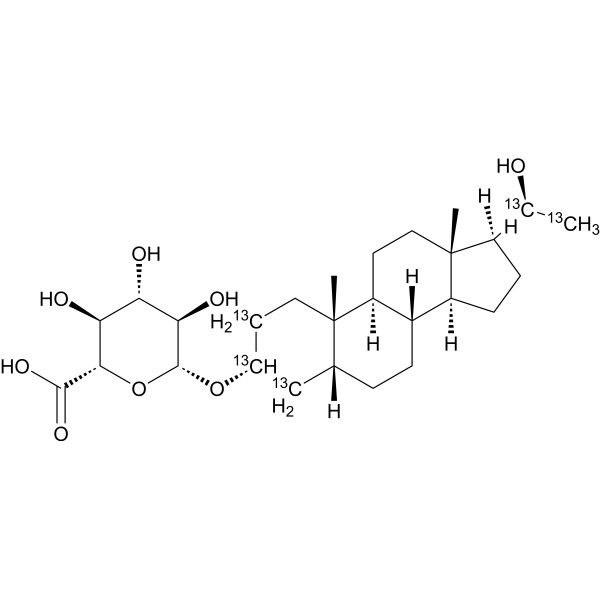
    Pregnanediol 3-glucuronide is the main end-metabolite of Progesterone (HY-N0437). Pregnanediol 3-glucuronide is a metabolite of Progesterone formed by hydroxylation and glucuronidation in the liver, with high hydrophilicity and easy excretion through urine. Pregnanediol 3-glucuronide excretion rate of ≥ 9 μmol/24 h can serve as biochemical evidence of ovulation. Pregnanediol 3-glucuronide reflects the quality of the luteal phase, and a level of < 7 μmol/24 h may indicate anovulation or luteal insufficiency. Pregnanediol 3-glucuronide holds significant importance in monitoring female reproductive health, assessing pregnancy, and diagnosing endocrine disorders.
    Pregnanediol 3-glucuronide-13C5
  • HY-162547

    Endogenous Metabolite Endocrinology
    Oxogestone phenpropionate is a progesterone that can be used in studies to regulate hormone levels .
    Oxogestone phenpropionate
  • HY-107850R

    NSC 1612 (Standard); NSC 47462 (Standard)

    Endogenous Metabolite Reference Standards Metabolic Disease
    Pregnanediol (Standard) is the analytical standard of Pregnanediol. This product is intended for research and analytical applications. Pregnanediol is the major metabolite of progesterone and can be excreted via urine. Pregnanediol offers an indirect way to measure progesterone levels in vivo .
    Pregnanediol (Standard)
  • HY-123420

    Dinordrin I

    Steroid Sulfatase Metabolic Disease
    Dinordrin (Dinordrin I) is a steroid with a luteolytic effect. Dinordrin can cause depression of both plasma estrogen and progesterone levels .
    Dinordrin
  • HY-117127

    AY-11440

    Progesterone Receptor Others
    Clogestone acetate (AY-11440) is an orally active progesterone receptor agonist. Clogestone acetate reduces adrenal and ovarian weight, as well as serum and adrenocortical ketone levels in rats .
    Clogestone acetate
  • HY-126762

    Progesterone Receptor Endocrinology
    Fenprostalene is an analog of Dinoprost (PGF2α) (HY-12956) that is used in veterinary medicine to induce corpus luteum regression and blood Progesterone (HY-N0437) levels reduction in dogs. Fenprostalene is potent in ameliorating pyometra and inducing abortion .
    Fenprostalene
  • HY-17375R

    Progesterone Receptor Reference Standards Androgen Receptor Endocrinology
    Allylestrenol (Standard) is the analytical standard of Allylestrenol. This product is intended for research and analytical applications. Allylestrenol is an orally active synthetic anti-androgen sexualsteroid. Allylestrenol can prevent miscarriage in vivo. Allylestrenol significantly affects testosterone progesterone level in rat model. Allylestrenol can reduce ventral prostate weight in rat model .
    Allylestrenol (Standard)
  • HY-109171S

    NT-814-d3; BAY3427080-d3

    Isotope-Labeled Compounds Neurokinin Receptor Cardiovascular Disease Neurological Disease
    Elinzanetant-d3 (NT-814-d3) is deuterium labeled Elinzanetant. Elizanetant (NT-814) is an orally active, selective NK-1,3 receptor antagonist. Elizanetant can reduce the levels of estradiol and progesterone, and is used in the study of vascular motor symptoms and sleep disorders related to menopause in women .
    Elinzanetant-d3
  • HY-117649

    Estrogen Receptor/ERR Cancer
    RU-39411 is a steroidal anti-estrogen with mixed estrogenic/antiestrogen activity. RU-39411 has shown inhibitory effects on cell growth in the MCF-7 breast cancer model, with the effect being correlated with its binding affinity to the estrogen receptor. RU-39411 was able to downregulate the estrogen binding capacity of cells, but did not reduce estrogen receptor mRNA levels, indicating that the grafting of its side chain prevents the antagonistic effects usually associated with steroidal estrogens. The administration of RU-39411 can promote the synthesis of progesterone receptors, further supporting its activity as an estrogen .
    RU-39411
  • HY-W738639

    18-OH-DOC; 11-Deoxy-18-hydroxycorticosterone

    Melanocortin Receptor Angiotensin Receptor Drug Metabolite Mineralocorticoid Receptor Cardiovascular Disease Metabolic Disease
    18-Hydroxy-11-deoxy corticosterone (18-OH-DOC) is a mineralocorticoid whose synthesis is regulated by adrenocorticotropic hormone (ACTH) and angiotensin II. 18-Hydroxy-11-deoxy corticosterone is an intermediate in the metabolism of progesterone and plays an important role in regulating blood pressure and water-salt balance. Continuous infusion of 18-Hydroxy-11-deoxy corticosterone can increase systolic blood pressure in rats, and plasma levels of 18-Hydroxy-11-deoxy corticosterone are significantly elevated in the db/db mouse model of type 2 diabetes, suggesting its potential involvement in metabolic dysregulation and diabetes-related regulation. 18-Hydroxy-11-deoxy corticosterone holds promise for research in areas such as hypertension, diabetes, and other related fields .
    18-Hydroxy-11-deoxy corticosterone
  • HY-106074

    MDL 646

    Drug Derivative Inflammation/Immunology
    Mexiprostil (MDL 646) is an orally active gastric protectant, being a synthetic analogue of Prostaglandin E1 (HY-B0131). Mexiprostil exhibits significant inhibition of gastric acid secretion caused by Histamine (HY-B1204) and Bethanechol (HY-B0406) in rats, dogs, and cats. Mexiprostil can also inhibit the increase in gastric acid secretion caused by Pentagastrin (HY-A0261) in cats, while it does not have this effect in dogs and rats. Mexiprostil does not cause pregnancy termination. Mexiprostil can be used for research on gastric ulcers .
    Mexiprostil
  • HY-186011

    Progesterone Receptor Metabolic Disease
    CPAG-1 is a small-molecule activator of progesterone receptor membrane component 2 (PGRMC2). CPAG-1 can enhance mitochondrial heme delivery to the nucleus mediated by PGRMC2 and activate genes related to heat production in brown adipose tissue (BAT), such as Ucp1 and Pgc-1α, and reduce lipid accumulation in BAT. CPAG-1 reduce fasting blood sugar and insulin levels, and improve glucose tolerance and insulin sensitivity. CPAG-1 can be used for research of type 2 diabetes .
    CPAG-1
  • HY-182485

    Dopamine β-hydroxylase Others
    U-11634 is an orally active dopamine β-hydroxylase noncompetitive inhibitor, with rat LD50 values of 1197 mg/kg (subcutaneous) and 524 mg/kg (oral). U-11634 blocks conversion of dopamine to norepinephrine and reduces norepinephrine levels in brain. U-11634 decreases food intake and spontaneous motor activity via dietary inclusion. U-11634 induces thyroid toxicity and inhibits pregnancy. U-11634 inhibits deciduomata formation in intact and steroid-treated rats, with no reversal by progesterone or oestradiol. U-11634 can be used for pregnancy .
    U-11634

Inquiry Online

Your information is safe with us. * Required Fields.

Salutation


Country or Region *

Applicant Name *


Organization Name *

Department *


Email Address *


Product Name *

Cat. No.


Requested quantity *

Phone Number *


Remarks

Inquiry Online

Inquiry Information

Product Name:
Cat. No.:
Quantity:
MCE Japan Authorized Agent:

