
1. Search Result
Search Result
Results for "

Psa Inhibitors

" in MedChemExpress (MCE) Product Catalog:

20

Inhibitors & Agonists

1

Biochemical Assay Reagents

1

Inhibitory Antibodies

2

Natural
Products

1

Click Chemistry

Targets Recommended:
Cat. No. Product Name Target Research Areas Chemical Structure
  • HY-114402

    PROTACs Androgen Receptor Cancer
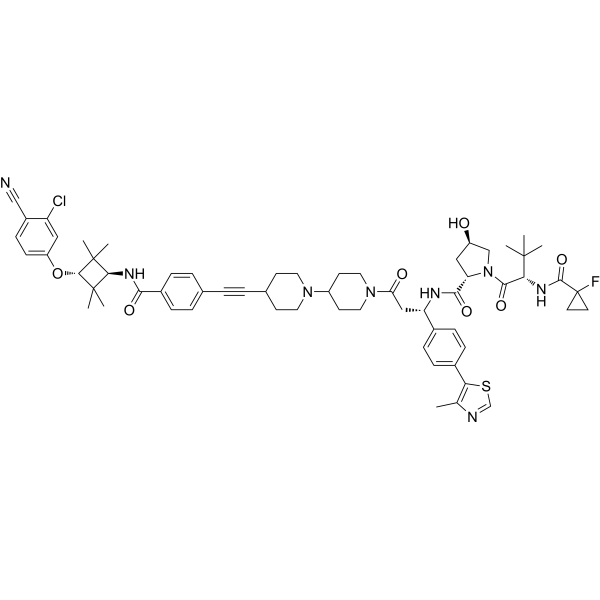
    ARD-69 is a PROTAC degrader based on the E3 ubiquitin ligase VHL and targeting the androgen receptor, which can induce androgen receptor (AR) protein degradation in AR-positive prostate cancer cells. ARD-69 inhibits AR-regulated gene expression, binds to the AR ligand binding domain at one end and binds to VHL at the other end, prompting AR to be recruited to the E3 ubiquitin ligase complex, triggering proteasome degradation, thereby inhibiting AR signaling pathways and downstream gene expression (such as PSA, TMPRSS2). ARD-69 can be used to study of castration-resistant prostate cancer (mCRPC) .
    ARD-69 is composed of a target protein ligand (pink part) AR antagonist 14 (HY-172624), a PROTAC linker (black part) tert-Butyl 4-ethynyl-[1,4'-bipiperidine]-1'-carboxylate (HY-W442074), and a VHL-type E3 ubiquitinase ligand (blue part) VH 101, acid (HY-47070); among them, the VHL ligand and the linker can form a conjugate VH 101-amide-piperidine-Pip-alkyne (HY-172625).
    ARD-69
  • HY-145709

    Androgen Receptor Cancer
    Ar-V7-IN-1 is a potent inhibitor of Ar-V7. Ar-V7-IN-1 inhibits the transcriptional activity of androgen receptor (AR) and the secretion of prostate-specific antigen (PSA) with an eGFP IC50 of 1232 nM and the PSA IC50 of 1391 μM. Ar-V7-IN-1 has the potential for the research of various indications, in particular cancers such as prostate cancer .
    Ar-V7-IN-1
  • HY-P99012

    Interleukin Related SARS-CoV Infection Inflammation/Immunology
    Clazakizumab is a monoclonal antibody with high affinity and specificity for the IL-6 (interleukin-6) cytokine. Clazakizumab may be helpful in inhibiting the cytokine response to SARS-CoV-2 in COVID-19. Clazakizumab can be used for the research of psoriatic arthritis (PsA) and renal antibody-mediated rejection .
    Clazakizumab
  • HY-12759
    CARM1-IN-1
    4 Publications Verification

    Histone Methyltransferase Cancer
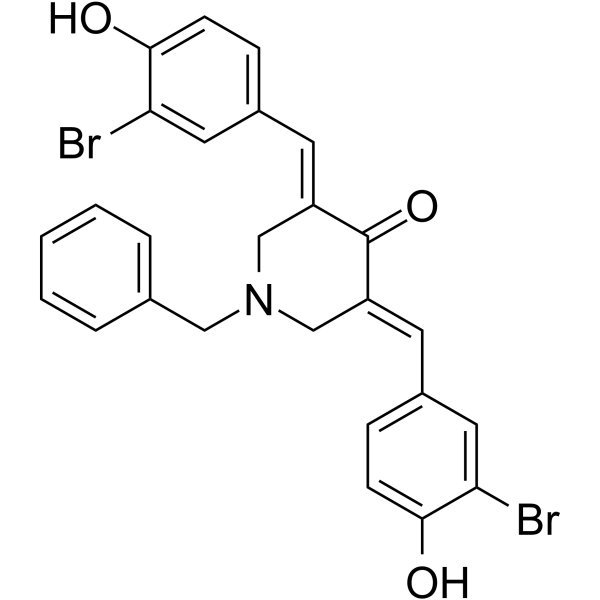
    CARM1-IN-1 (compound 7g) is a highly potent and selective inhibitor of CARM1 (IC50=8.6 μM, CARM1/PABP1), with low inhibitory activity against PRMT1 and SET7 (IC50 >667 μM). CARM1-IN-1 inhibits the methylation activity of CARM1 and the methylation levels of different substrates, such as PABP1, CA150, SmB, and H3. CARM1-IN-1 also inhibits the promoter activity of prostate-specific antigen (PSA) without significant cytotoxicity .
    CARM1-IN-1
  • HY-12759A
    CARM1-IN-1 hydrochloride
    4 Publications Verification

    Histone Methyltransferase Cancer
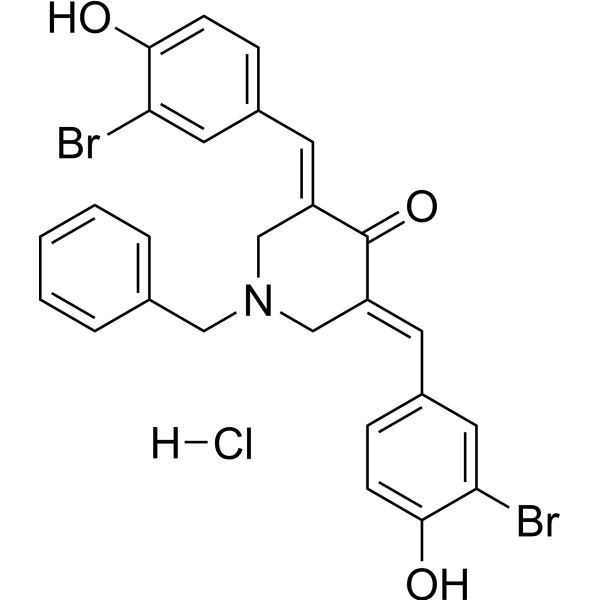
    CARM1-IN-1 (compound 7g) hydrochloride is a highly potent and selective inhibitor of CARM1 (IC50=8.6 μM, CARM1/PABP1), with low inhibitory activity against PRMT1 and SET7 (IC50 >667 μM). CARM1-IN-1 hydrochloride inhibits the methylation activity of CARM1 and the methylation levels of different substrates, such as PABP1, CA150, SmB, and H3. CARM1-IN-1 hydrochloride also inhibits the promoter activity of prostate-specific antigen (PSA) without significant cytotoxicity .
    CARM1-IN-1 hydrochloride
  • HY-162779

    PSMA Elastase Others
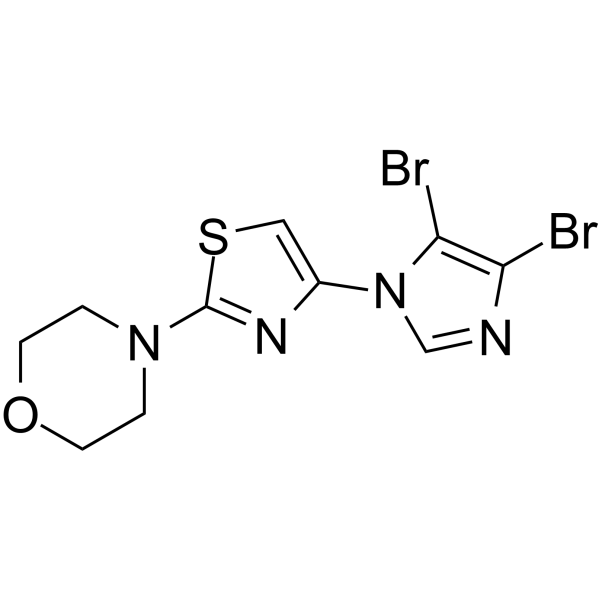
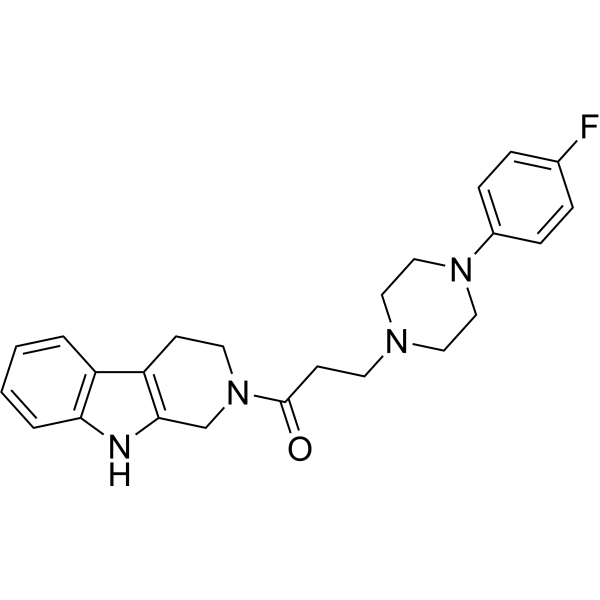
    CDD-3290 (Compound 20) is a prostate-specific antigen (PSA) inhibitor with a Ki value of 216 nM. CDD-3290 also inhibits α-chymotrypsin and elastase .
    CDD-3290
  • HY-40156

    Bacterial Reactive Oxygen Species (ROS) Apoptosis Infection
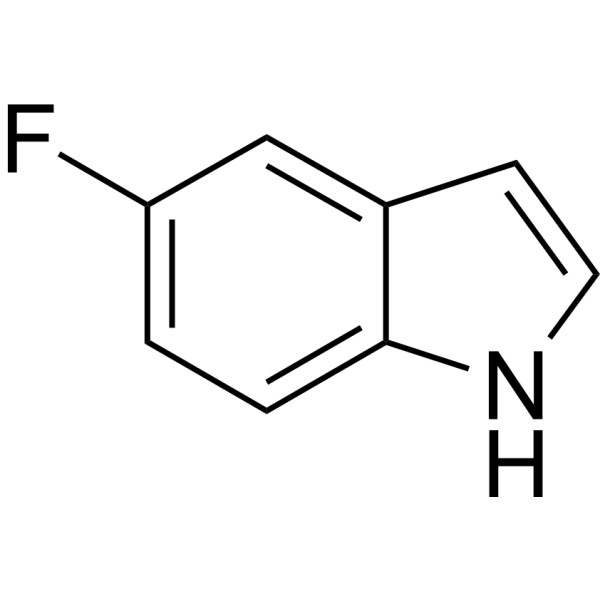
    5-Fluoroindole is an orally active fluorinated indole derivative and antibacterial agent. 5-Fluoroindole induces ROS accumulation and triggers Apoptosis. 5-Fluoroindole inhibits the growth of pan-susceptible Mycobacterium tuberculosis (Mtb) H37Rv strains. 5-Fluoroindole has significant bactericidal activity against Pseudomonas syringae pv. actinidiae (Psa) with an EC50 of 15.34 μg/mL. 5-Fluoroindole introduces fluorine labeling for protein research. 5-Fluoroindole can be used in the study of tuberculosis and kiwifruit bacterial canker .
    5-Fluoroindole
  • HY-155644

    Bacterial Reactive Oxygen Species (ROS) Infection
    ROS inducer 1 (compound I29) is a fungicide, with EC50 against Xanthomonas axonopodis pv. citri (Xac), Xanthomonas oryzae pv. oryzae (Xoo), and Pseudomonas syringae pv. actinidiae (Psa) of 5.73, 6.62 and 9.05 μg/mL. ROS inducer 1 can effectively induce the production of ROS in Xanthomonas cells and inhibit rice bacterial blight. ROS inducer 1 has the potential to study bacterial infection in crops .
    ROS inducer 1
  • HY-179123

    Androgen Receptor Apoptosis Cancer
    ZC9 is a novel androgen receptor (AR) degrader. ZC9 directly binds to AR and inhibits Dihydrotestosterone-induced nuclear translocation of AR. ZC9 promotes AR degradation via the ubiquitin-proteasome system and suppresses AR transcriptional activity. ZC9 significantly decreases the mRNA levels of other AR downstream genes, including PSA, TMPRSS2, and PMEPA1. ZC9 promotes Apoptosis. ZC9 exhibits anticancer activity against prostate cancer .
    ZC9
  • HY-161688

    Apoptosis HDAC Cancer
    HDAC-IN-73 (compound P-503) is a histone deacetylase (HDAC) inhibitor. HDAC-IN-73 shows IC50s values of 0.17, 0.49 µM for HDAC1 and HDAC6, respectively. Notably, HDAC-IN-73's inhibitory potency against HDAC6 is heightened, exhibiting a 9-fold greater efficacy than PsA (HY-N2150) (IC50=3.9 μM). HDAC-IN-73 shows potent antiproliferative activity, induces apoptosis, and causes cell cycle arrest at G2 / M phase. HDAC-IN-73 has the potential to be used for the research of cancer such as colon cancer .
    HDAC-IN-73
  • HY-170820

    Molecular Glues Bcl-2 Family CDK EGFR HSP Androgen Receptor c-Myc Cancer
    XYD049 is a CRBN-based molecular glue degrader targeting GSPT1, with a DC50 of 19 nM. XYD049 mediates the formation of a ternary complex between CRBN and GSPT1, thereby triggering CRBN- and proteasome-dependent degradation of GSPT1. By degrading GSPT1, XYD049 downregulates castration-resistant prostate cancer (CRPC)-related oncogenes, including BCL2, CDK2, E2F3, EGFR, HSP90B1, TMPRSS2, AR, AR-V7, PSA and c-Myc. XYD049 inhibits cancer cell growth and suppresses tumor growth in mice. XYD049 can be used for research on castration-resistant prostate cancer. XYD049 consists of a linker (black part) NH2-C5-NH-Boc (HY-W004710), a CRBN-based E3 ligase ligand (blue part) Thalidomide 4-fluoride (HY-41547), and a target protein ligand (red part) GSPT1 ligand-1 (HY-170821), among which the E3 ligase ligand plus linker forms the conjugate E3 Ligase Ligand-linker Conjugate 158 (HY-170822) .
    XYD049
  • HY-158410

    Aminopeptidase Neurological Disease
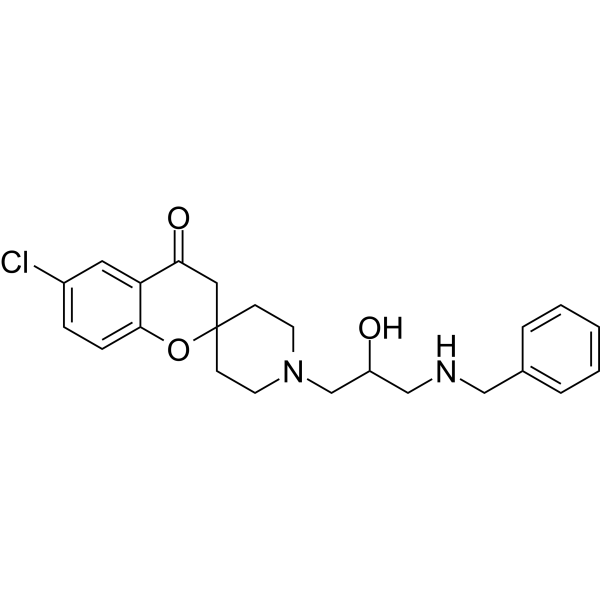
    PSA-IN-1 (compound 19) is a puromycin sensitive aminopeptidase (PSA) inhibitor with IC50 at 7 nM. PSA-IN-1 has analgesic activity .
    PSA-IN-1
  • HY-114246

    Androgen Receptor Cancer
    ONC1-13B is a potent androgen receptor (AR) antagonist with the activity of effectively inhibiting PSA expression in prostate cancer cells. ONC1-13B can effectively inhibit PSA expression and prostate cancer cell proliferation under DHT stimulation. ONC1-13B exerts its anti-tumor effect by preventing androgen from binding to AR and its nuclear translocation .
    ONC1-13B
  • HY-N8856

    Others Others
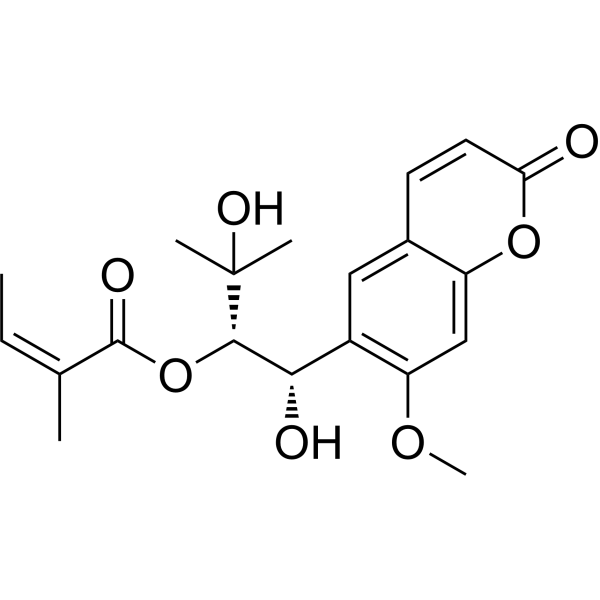
    Angelol M,isolated from the roots of Angelica gigas Nakai, shows activity in inhibiting prostate specific antigen (PSA) secreted from androgen dependent prostate cancer cell line, LNCaP cells .
    Angelol M
  • HY-149983

    Bacterial Infection
    Antibacterial agent 141 (Compound B14) has antibacterial activity against four plant pathogens Xoo, Xac, Psa and Cmm, with an EC50 value of 1.28 μM. Antibacterial agent 141 can inhibit the formation of cell membrane and change cell permeability.
    Antibacterial agent 141
  • HY-N2733

    Others Others
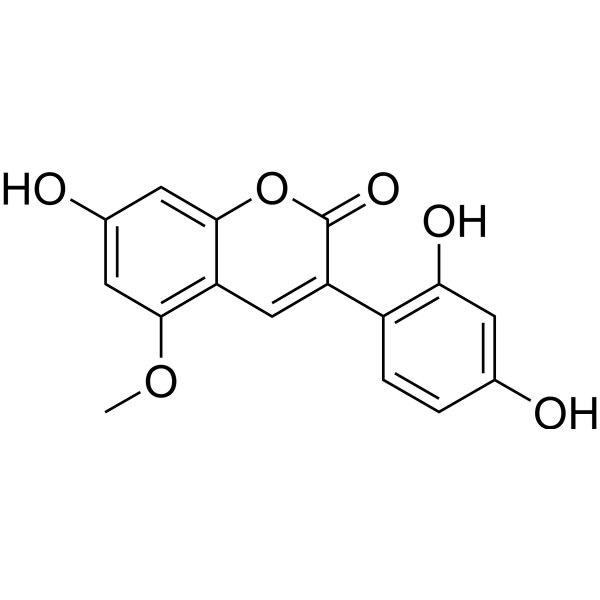
    7,2',4'-Trihydroxy-5-methoxy-3-arylcoumarin is a coumarin, that can be isolated from campylotropis hirtella (FRANCH.) SCHINDL. 7,2',4'-Trihydroxy-5-methoxy-3-arylcoumarin inhibits PSA secretion in LNCaP cells, with an IC50 of 24.2 μg/mL .
    7,2',4'-Trihydroxy-5-methoxy-3-arylcoumarin
  • HY-173409

    Androgen Receptor Ser/Thr Protease Inflammation/Immunology
    AR antagonist 11 (Compound c2) is a selective AR antagonist with an IC50 of 0.019 μM. AR antagonist 11 is also effective against AR F877L/T878A mutant (IC50: 1.03 μM). AR antagonist 11 inhibits LNCaP cell proliferation and reduces PSA protein expression (IC50: 0.54 μM). AR antagonist 11 can be used for research of prostate cancer (PCa) .
    AR antagonist 11
  • HY-403733B

    Androgen Receptor Prostaglandin Receptor Cancer
    (+)-JJ-450 is a non-competitive antagonist targeting the androgen receptor (AR) that inhibits AR nuclear localization and transcriptional activity in the absence of androgen. (+)-JJ-450 is less active than (-)-JJ-450 (HY-403733A) in inhibiting prostate-specific antigen (PSA) expression in LN95 cells, possibly because (+)-JJ-450 targets the ligand binding domain (LBD) of AR. (+)-JJ-450 inhibits the transcriptional activity of AR and its splice variants (e.g., ARv7) by promoting the degradation of unliganded AR in the nucleus and reducing the binding of AR to androgen response elements (AREs). (+)-JJ-450 can be used in castration-resistant prostate cancer (CRPC) studies that are resistant to enzalutamide (MDV3100) (HY-70003) .
    (+)-JJ-450
  • HY-121656

    Endogenous Metabolite Cancer
    AKR1C2/3-IN-2 is a potential AKR1C3 inhibitor with selective AKR1C3 activity. AKR1C2/3-IN-2 is able to block AKR1C3-mediated testosterone (T) production and PSA induction, affecting the endocrine activity of prostate cancer cells. AKR1C2/3-IN-2 shows selectivity over other AKR1C enzymes, indicating its potential application in inhibiting drug-resistant prostate cancer. AKR1C2/3-IN-2 has no inhibitory activity against COX isomerases, further emphasizing its specificity as a prostate cancer inhibitory compound .
    AKR1C2/3-IN-2
  • HY-183667

    Androgen Receptor Kallikrein Cancer
    JNJ-pan-AR is an orally active androgen receptor (AR) inhibitor with an IC50 of 19 nM and a Ki of 8.4 nM against human wild-type AR. JNJ-pan-AR abolishes androgen-induced KLK2 and KLK3 mRNA expression and reduces androgen-dependent colony formation in prostate cancer cells. JNJ-pan-AR blocks AR nuclear translocation, inhibits PSA protein expression, and represses the growth of AR-dependent tumor cells and ARF877L-driven tumor xenografts. JNJ-pan-AR blocks transactivation and signaling of wild-type AR and various mutant AR variants. JNJ-pan-AR is applicable for research on castration-resistant prostate cancer .
    JNJ-pan-AR

Inquiry Online

Your information is safe with us. * Required Fields.

Salutation


Country or Region *

Applicant Name *


Organization Name *

Department *


Email Address *


Product Name *

Cat. No.


Requested quantity *

Phone Number *


Remarks

Inquiry Online

Inquiry Information

Product Name:
Cat. No.:
Quantity:
MCE Japan Authorized Agent:

