
16 Results for "

SSTR+ tumor

" in MedChemExpress (MCE) Product Catalog:
Products (16)

16 Results for "SSTR+ tumor" in MCE Product Catalog:

2
2 Cited Publications
Cat. No.: HY-106033
CAS No.: 204318-14-9
Purity:  98.15%
Synonyms: DOTATOC; SDZ-SMT 487; SMT 487
Research Areas:  

Cancer

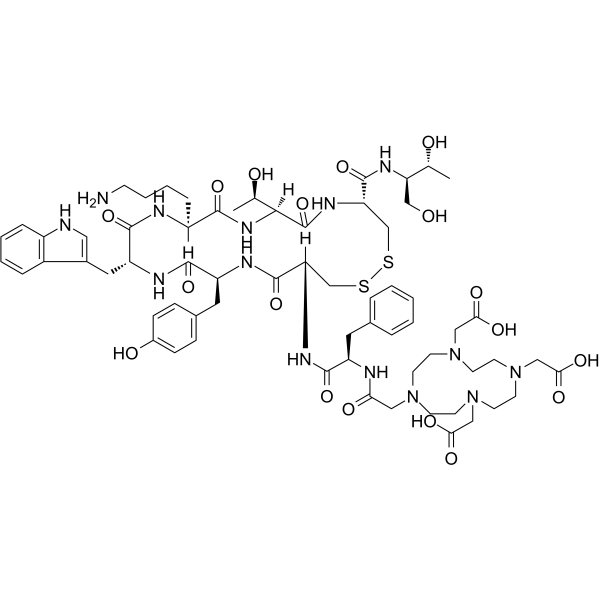
Edotreotide is a ligand that selectively targets SSTR2 and can competitively bind to the receptor. Edotreotide mediates the targeted delivery, while modificated with radionuclides (such as 90Y, 177Lu, and 68Ga) to SSTR-positive tumors and induces tumor cell apoptosis by releasing β rays. Edotreotide has strong tumor targeting and precise killing activity. Edotreotide is used in the synthesis of radionuclide-drug conjugates (RDCs) and is widely used in the field of neuroendocrine tumors (such as metastatic carcinoids, lung and thymus NETs) .
loading...
    loading...
2
2 Cited Publications
Cat. No.: HY-P5126
CAS No.: 1192362-32-5
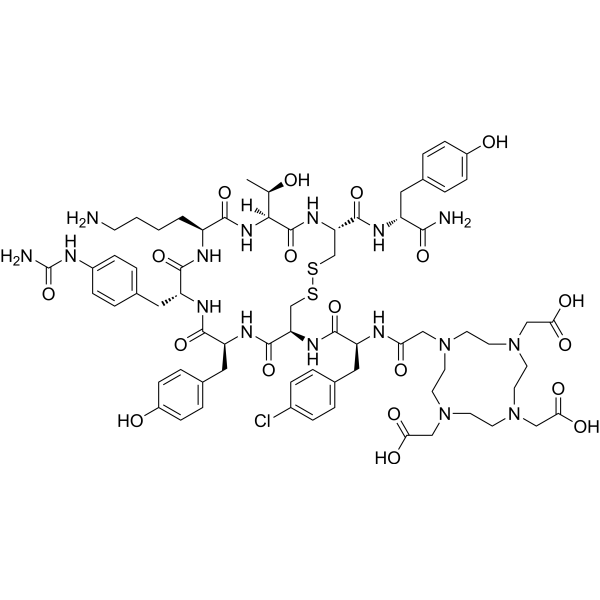
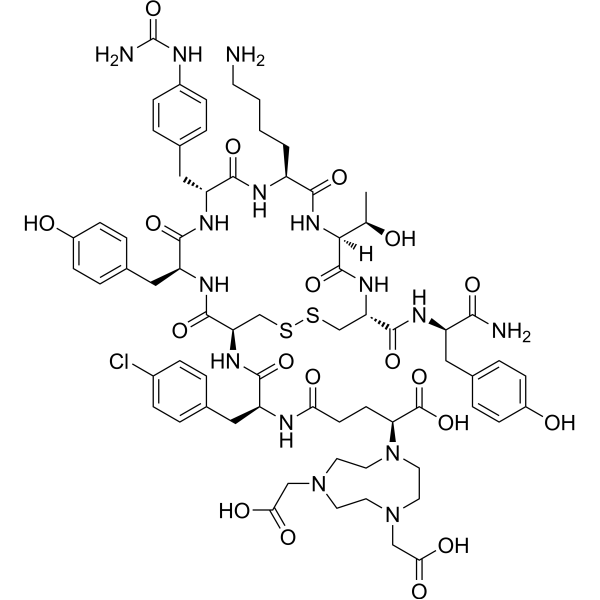
DOTA-LM3 is a somatostatin receptor (SSTR) antagonist. LM3 refers to p-Cl-Phe- cyclo(D-Cys-Tyr-D-4-amino-Phe(carbamoyl)-Lys-Thr-Cys)D-Tyr- NH2, as well as a somatostatin antagonist. DOTA-LM3 is often isotopically labeled for tracing tumors in vivo, such as 177Lu-DOTA-LM3 and 68 Ga-DOTA-LM3. 68 Ga-DOTA-LM3 shows favorable biodistribution, high tumor uptake, good tumor retention, and few safety concerns. 177Lu-DOTA-LM3 can be used for research in DOTATOC-negative liver metastases, such as pancreatic NET and extensive tumor thrombosis . DOTA-LM3 can be used for the synthesis/research of Radionuclide-Drug Conjugates (RDCs).
loading...
    loading...
2
2 Cited Publications
Cat. No.: HY-P5126A
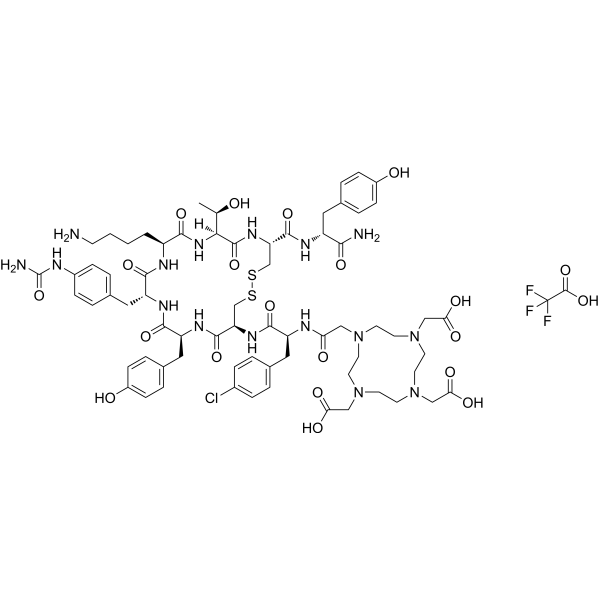
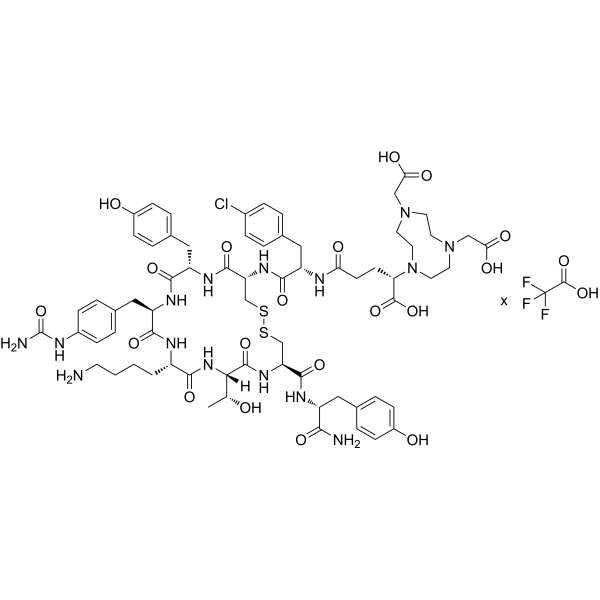
DOTA-LM3 TFA is a somatostatin receptor (SSTR) antagonist. LM3 refers to p-Cl-Phe- cyclo(D-Cys-Tyr-D-4-amino-Phe(carbamoyl)-Lys-Thr-Cys)D-Tyr- NH2, as well as a somatostatin antagonist. DOTA-LM3 TFA is often isotopically labeled for tracing tumors in vivo, such as 177Lu-DOTA-LM3 TFA and 68 Ga-DOTA-LM3 TFA. 68 Ga-DOTA-LM3 TFA shows favorable biodistribution, high tumor uptake, good tumor retention, and few safety concerns. 177Lu-DOTA-LM3 TFA can be used for research in DOTATOC-negative liver metastases, such as pancreatic NET and extensive tumor thrombosis . DOTA-LM3 (TFA) can be used for the synthesis/research of Radionuclide-Drug Conjugates (RDCs).
loading...
    loading...
1
1 Cited Publications
Cat. No.: HY-P5128
CAS No.: 1039726-31-2
Synonyms: Satoreotide tetraxetan
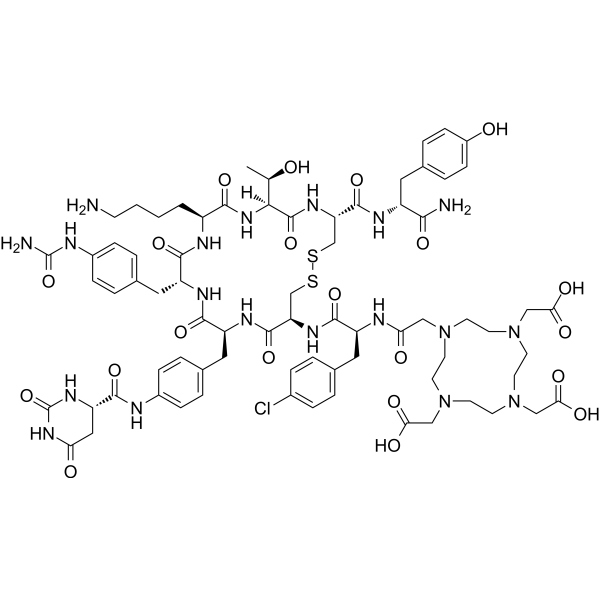
DOTA-JR11 is a somatostatin receptor 2 SSTR2)antagonist. DOTA-JR11 can be labeled by 68Ga, used for paired imaging in neuroendocrine tumors (NETs) research . DOTA-JR11 can be used for the synthesis/research of Radionuclide-Drug Conjugates (RDCs).
loading...
    loading...
Cat. No.: HY-P99562
CAS No.: 2148354-90-7
Synonyms: XmAb-18087

Target:  

CD3

Research Areas:  

Cancer

Tidutamab (XmAb-18087) is a humanized and affinity-optimized bispecific antibody (bsAb) targeting SSTR2 binding domain and T-cell binding domain (CD3). Tidutamab possesses a full Fc domain to maintain long serum half-life.Tidutamab eliminates SSTR+ tumor cells by stimulating redirected T cellmediated cytotoxicity (RTcC) .
loading...
    loading...
Cat. No.: HY-P5362
NODAGA-LM3 is a ligand that can cross the blood-brain barrier and targets somatostatin receptor SSTR2 with high affinity (IC50 = 1.3 nM). NODAGA-LM3 does not trigger the internalization of SSTR2 and can inhibit agonist-induced internalization processes. NODAGA-LM3 shows low uptake in normal tissues such as the liver and spleen, but high uptake in the lungs and blood pool. 68Ga-labeled NODAGA-LM3 can serve as a PET imaging agent for well-differentiated neuroendocrine tumors, and is applied in studies related to small cell lung cancer and well-differentiated neuroendocrine tumors .
loading...
    loading...
Cat. No.: HY-163317A
Target:  

Somatostatin Receptor

Research Areas:  

Cancer

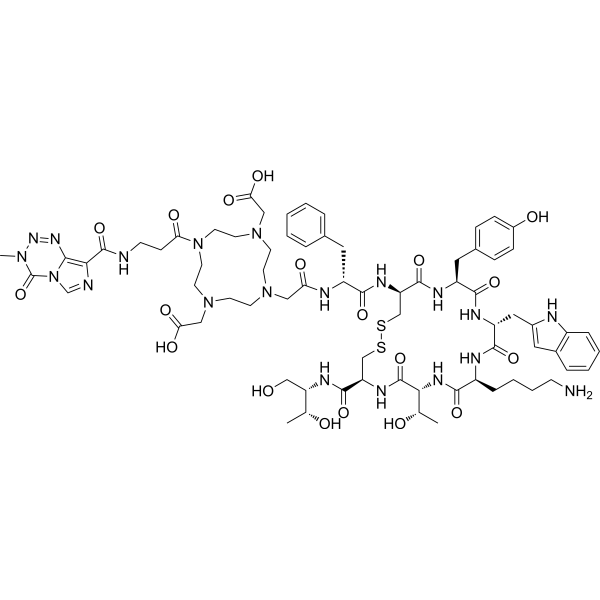
MMC(TMZ)-TOC TFA has high binding affinity and selectivity for somatostatin receptor subtype-2 (SSTR2). MMC(TMZ)-TOC TFA targets delivery of TMZ to SSTR2-positive tumor cells. MMC(TMZ)-TOC TFA can be used for the research of cancer .
loading...
    loading...
Cat. No.: HY-P2434
CAS No.: 846569-60-6
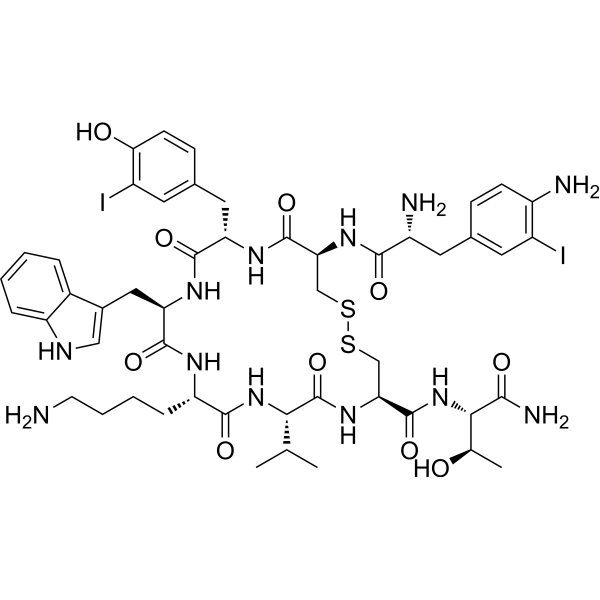
AP102 is a dual SSTR2/SSTR5-specific somatostatin analog (SSA). AP102 is a disulfide-bridged octapeptide SSA containing synthetic iodinated amino acids. AP102 binds with subnanomolar affinity to SSTR2 and SSTR5 (IC50: 0.63 and 0.65 nM, respectively). AP102 does not bind to SSTR1 or SSTR3. AP102 can be used for acromegaly and neuroendocrine tumors research .
loading...
    loading...
Cat. No.: HY-P5362A
NODAGA-LM3 TFA is a ligand that can cross the blood-brain barrier and targets somatostatin receptor SSTR2 with high affinity (IC50 = 1.3 nM). NODAGA-LM3 TFA does not trigger the internalization of SSTR2 and can inhibit agonist-induced internalization processes. NODAGA-LM3 TFA shows low uptake in normal tissues such as the liver and spleen, but high uptake in the lungs and blood pool. 68Ga-labeled NODAGA-LM3 TFA can serve as a PET imaging agent for well-differentiated neuroendocrine tumors, and is applied in studies related to small cell lung cancer and well-differentiated neuroendocrine tumors .
loading...
    loading...
Cat. No.: HY-163317
Target:  

Somatostatin Receptor

Research Areas:  

Cancer

MMC(TMZ)-TOC has high binding affinity and selectivity for somatostatin receptor subtype-2 (SSTR2). MMC(TMZ)-TOC targets delivery of TMZ to SSTR2-positive tumor cells. MMC(TMZ)-TOC can be used for the research of cancer .
loading...
    loading...
Cat. No.: HY-P0036D
CAS No.: 1427427-01-7
NOTA‑Octreotide is a selective SSTR2‑targeting PET tracer. NOTA‑Octreotide binds specifically to SSTR2 and accumulates in SSTR2‑expressing tissues. NOTA‑Octreotide enables effective imaging of somatostatin receptor‑positive tumors in mice and shows high specific uptake in SSTR2‑expressing organs in healthy rats. NOTA-Octreotide can be used for PET imaging investigation of neuroendocrine tumors. .
loading...
    loading...
Cat. No.: HY-P12129
Zaregreptide dizuxetan is a SSTR-targeting peptide-DOTA variant conjugate. Zaregreptide dizuxetan can be conjugated with 177Lutetium for the study of SSTR-positive neuroendocrine tumors .
loading...
    loading...
Cat. No.: HY-P11900
Ac-crown-TATE is an actinium-labeled radioligand derived from the SSTR2 agonist crown-TATE, which targets neuroendocrine tumors with high SSTR2 expression. The [226Ac]Ac-crown-TATE form of Ac-crown-TATE possesses both SPECT-detectable γ-emission and α-radiation properties, and it inhibits tumor growth and prolongs survival. Ac-crown-TATE can be used in studies of SSTR2-positive neuroendocrine tumors, targeted α-radiation, and radionuclide imaging .
loading...
    loading...
Cat. No.: HY-P11924
Research Areas:  

Cancer

TATE-DA-I is a somatostatin receptor 2 (SSTR2) ligand with an IC50 of 25.3 nM. TATE-DA-I binds to albumin to prolong its circulation retention time and also exhibits enhanced tumor accumulation capacity. TATE-DA-I enables clear visualization of SSTR2-positive tumors in SPECT/CT imaging. TATE-DA-I can be used in cancer-related research .
loading...
    loading...
Cat. No.: HY-106033R
CAS No.: 204318-14-9
Synonyms: DOTATOC (Standard); SDZ-SMT 487 (Standard); SMT 487 (Standard)
Edotreotide (Standard) is the analytical standard of Edotreotide (HY-106033). This product is intended for research and analytical applications. Edotreotide is a ligand that selectively targets SSTR2 and can competitively bind to the receptor. Edotreotide mediates the targeted delivery, while modificated with radionuclides (such as 90Y, 177Lu, and 68Ga) to SSTR-positive tumors and induces tumor cell apoptosis by releasing β rays. Edotreotide has strong tumor targeting and precise killing activity. Edotreotide is used in the synthesis of radionuclide-drug conjugates (RDCs) and is widely used in the field of neuroendocrine tumors (such as metastatic carcinoids, lung and thymus NETs) .
loading...
    loading...
Cat. No.: HY-P12131
Oxoreotide atexetan citrate is a conjugate of a SSTR-targeting peptide and atexetan. Oxoreotide atexetan citrate is used in combination with radioisotopes such as lead-212 ( 212Pb) to study somatostatin receptor-expressing neuroendocrine tumors (NETs) .
loading...
    loading...
  • 1

