
1. Search Result
Search Result
Results for "

Sarcosine

" in MedChemExpress (MCE) Product Catalog:

22

Inhibitors & Agonists

4

Peptides

3

Natural
Products

2

Recombinant Proteins

3

Isotope-Labeled Compounds

1

Click Chemistry

Cat. No. Product Name Target Research Areas Chemical Structure
  • HY-101037
    Sarcosine
    3 Publications Verification

    N-Methylglycine; Sarcosin

    Endogenous Metabolite GlyT Cancer
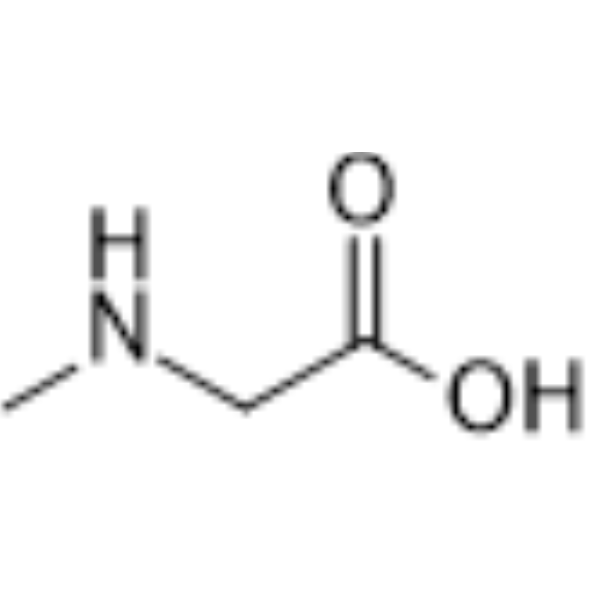
    Sarcosine (N-Methylglycine), an endogenous amino acid, is a competitive glycine transporter type I (GlyT1) inhibitor and N-methyl-D-aspartate (NMDA) receptor co-agonist. Sarcosine increases the glycine concentration, resulting in an indirect potentiation of the NMDA receptor. Sarcosine is commonly used for the research of schizophrenia .
    Sarcosine
  • HY-P2861
    Sarcosine oxidase, Bacillus
    1 Publications Verification

    SAO

    Endogenous Metabolite Others
    Sarcosine oxidase, Bacillus (SAO) can catalyze the oxidative demethylation of sarcosine to generate glycine, H2O2, 5,10-CH2-tetrahydrofolate, which are often used in biochemical reactions .
    Sarcosine oxidase, Bacillus
  • HY-P4198

    Fmoc-Sar10

    Biochemical Assay Reagents Others
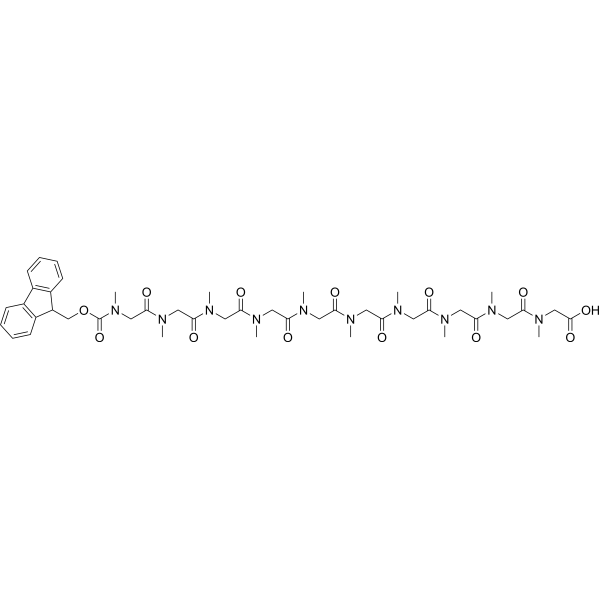
    Fmoc-N(Me)-Sar10 (Fmoc-Sar10) is an Fmoc-protected derivative of a methylated sarcosine decamer, which supports cell adhesion, proliferation, and maintenance of cell phenotype. Fmoc-N(Me)-Sar10 is primarily used in peptide synthesis to introduce enzymatically stable spacer sequences. By mimicking the extracellular matrix (ECM), Fmoc-N(Me)-Sar10 provides a 3D growth microenvironment for cells and is mainly used in tissue engineering and 3D cell culture, particularly suitable for in vitro culture studies of cells such as chondrocytes .
    Fmoc-N(Me)-Sar10
  • HY-N16040

    Liposome Others
    DMG-pSar25 is a double lipid-tailed polysarcosine lipid with 25 sarcosine moieties, serving as a PEG lipid substitute in lipid nanoparticle formulations for mRNA delivery. DMG-pSar25 supports mRNA delivery in lipid nanoparticle formulations .
    DMG-pSar25
  • HY-P2838
    Creatininase, Microorganism
    2 Publications Verification

    Creatinine amidohydrolase; CAH

    Endogenous Metabolite Metabolic Disease
    Creatininase, Microorganism (Creatinine amidohydrolase; CAH), namely creatinine amidohydrolase, from Pseudomonas putida, is a homohexameric enzyme commonly used in biochemical research. Creatininase acts on carbon-nitrogen bonds other than peptide bonds, and can catalyze the hydrolysis of creatinine to creatine, which can then be metabolized by creatinase to urea and sarcosine .
    Creatininase, Microorganism
  • HY-142035
    N-Propargylglycine
    1 Publications Verification

    Mitochondrial Metabolism Neurological Disease Metabolic Disease Inflammation/Immunology Cancer
    N-Propargylglycine is a brain-penetrant and orally active PRODH inhibitor. N-Propargylglycine covalently modifies enzyme-bound FAD and active site lysine, causing enzyme structural distortion, protein decay, and irreversible inhibition of proline and 4-hydroxyproline catabolism. N-Propargylglycine induces UPRmt, upregulates mitochondrial chaperones and YME1L1, enhances mitochondrial proteostasis, blocks astrocytic L-proline consumption, and abolishes L-proline’s ATP-maintaining and viability-protective effects. N-Propargylglycine stimulates neural processes, increases brain proline, hydroxyproline, and sarcosine levels, partially normalizes Huntington’s disease whole brain transcriptomes. N-Propargylglycine reduces hyperoxaluria, prevents calcium oxalate stone formation, reduces kidney tubular damage, and restores weight and survival in Grhpr knockout mice. N-Propargylglycine can be used for the research of breast cancer, neurodegenerative disorders, Huntington’s disease, and primary hyperoxaluria type 2 .
    N-Propargylglycine
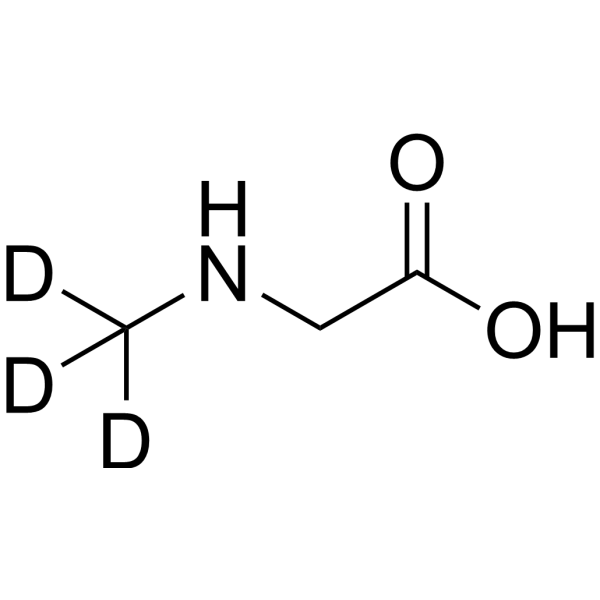
  • HY-101037S1

    N-Methylglycine-d3; Sarcosin-d3

    Isotope-Labeled Compounds Endogenous Metabolite GlyT Cancer
    Sarcosine-d3 is the deuterium labeled Sarcosine. Sarcosine (N-Methylglycine), an endogenous amino acid, is a competitive glycine transporter type I (GlyT1) inhibitor and N-methyl-D-aspartate (NMDA) receptor co-agonist. Sarcosine increases the glycine concentration, resulting in an indirect potentiation of the NMDA receptor. Sarcosine is commonly used for the research of schizophrenia .
    Sarcosine-d3
  • HY-P2893

    Creatine amidohydrolase

    Endogenous Metabolite Others
    Creatinase, Actinobacteria (Creatine amidohydrolase) is a hydrolase that catalyzes the hydrolysis of creatine into sarcosine and urea, and plays an important role in the enzymatic determination of creatinine concentration .
    Creatinase, Actinobacteria
  • HY-P2893A

    Creatine amidinohydrolase

    Endogenous Metabolite Metabolic Disease
    Creatinase (Recombinant) is a hydrolase responsible for catalyzing the hydrolysis of creatine (HY-W010388) into sarcosine (HY-101037) and urea (HY-Y0271). Creatinase (Recombinant) can be used in conjunction with creatinine deiminase (HY-P2838) and sarcosine oxidase (HY-P2861) in an enzyme cascade reaction to measure creatinine (HY-B0504) levels in blood and urine. Creatinase (Recombinant) is the rate-limiting enzyme in this enzymatic cascade, and the enzymatic quantification of creatinine is an important method for evaluating kidney function .
    Creatinase (Recombinant)
  • HY-164166

    Biochemical Assay Reagents Drug Intermediate Amino Acid Derivatives Others
    Fmoc-Sar-Sar-Sar-OH is a small molecule polypeptide composed of sarcosine residues, in which the N-terminus of the peptide chain is protected by Fmoc. Fmoc-Sar-Sar-Sar-OH can be used for peptide synthesis or synthesis of agent-peptide ligand conjugates .
    Fmoc-Sar-Sar-Sar-OH
  • HY-101037R

    N-Methylglycine (Standard); Sarcosin (Standard)

    Reference Standards Endogenous Metabolite GlyT Cancer
    Sarcosine (Standard) is the analytical standard of Sarcosine. This product is intended for research and analytical applications. Sarcosine (N-Methylglycine), an endogenous amino acid, is a competitive glycine transporter type I (GlyT1) inhibitor and N-methyl-D-aspartate (NMDA) receptor co-agonist. Sarcosine increases the glycine concentration, resulting in an indirect potentiation of the NMDA receptor. Sarcosine is commonly used for the research of schizophrenia .
    Sarcosine (Standard)
  • HY-W1116287

    Drug Derivative Drug Intermediate Others
    N-Acetyl-Sar24 is an acetylated derivative of Sarcosine (HY-101037) .
    N-Acetyl-Sar24
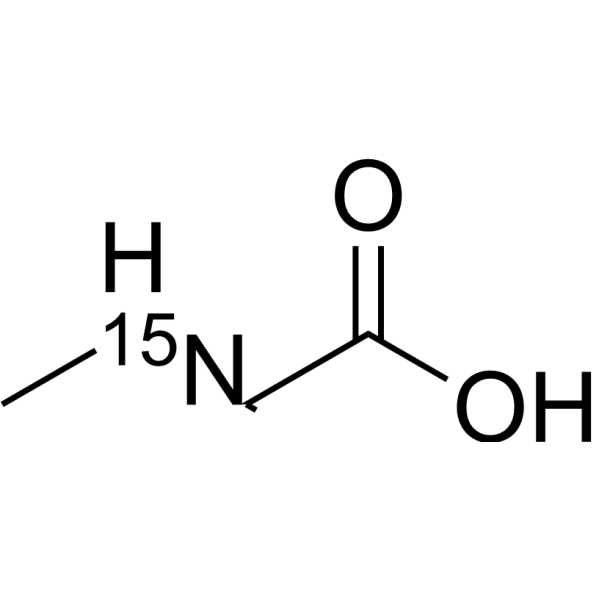
  • HY-101037S

    N-Methylglycine-15N; Sarcosin-15N

    Endogenous Metabolite GlyT Cancer
    Sarcosine- 15N is the 15N-labeled Sarcosine. Sarcosine (N-Methylglycine), an endogenous amino acid, is a competitive glycine transporter type I (GlyT1) inhibitor and N-methyl-D-aspartate (NMDA) receptor co-agonist. Sarcosine increases the glycine concentration, resulting in an indirect potentiation of the NMDA receptor. Sarcosine is commonly used for the research of schizophrenia .
    Sarcosine-15N
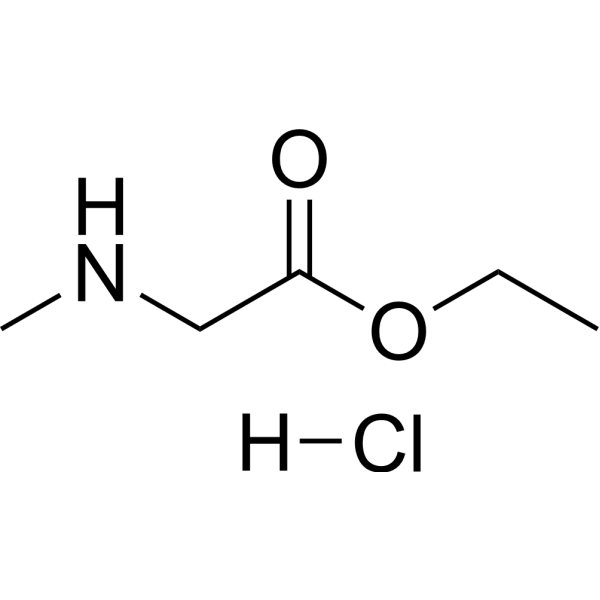
  • HY-Y1144

    N-[(Ethoxycarbonyl)methyl]-N-methylamine hydrochloride; Sacrosine ethyl ester hydrochloride

    Amino Acid Derivatives Others
    Sarcosine ethyl ester hydrochloride is a Glycine (HY-Y0966) derivative .
    Sarcosine ethyl ester hydrochloride
  • HY-W748519

    N-Methylglycine-13C3; Sarcosin-13C3

    Isotope-Labeled Compounds GlyT Endogenous Metabolite Cancer
    Sarcosine- 13C3 (N-Methylglycine- 13C3; Sarcosin- 13C3) is the 13C-labeled Sarcosine (HY-101037). Sarcosine (N-Methylglycine), an endogenous amino acid, is a competitive glycine transporter type I (GlyT1) inhibitor and N-methyl-D-aspartate (NMDA) receptor co-agonist. Sarcosine increases the glycine concentration, resulting in an indirect potentiation of the NMDA receptor. Sarcosine is commonly used for the research of schizophrenia .
    Sarcosine-13C3
  • HY-W188178

    Drug Derivative Cancer
    N-Nitrososarcosine is a nitrosation product of Sarcosine (HY-101037) and can be found in cured meat products. N-Nitrososarcosine (225 mg/kg) induces the formation of metastatic liver carcinomas in mice .
    N-Mitrososarcosine
  • HY-172288

    Biochemical Assay Reagents Others
    N-TETAMINE-pSar45 is a polysarcosine (pSar) derivative featuring an N-tetamine head group and a 45-mer polysarcosine tail. Sarcosine is an amino acid derivated that is being developed as an alternative to PEG for in vivo applications due to its biodegradability and highly reduced antigenicity. pSar-lipid derivatives such as this may be applied in the development of lipid nanoparticles.
    N-TETAMINE-pSar45
  • HY-P2861A

    Biochemical Assay Reagents Metabolic Disease
    Sarcosine Oxidase, E.coli catalyzes the demethylation of sarcosine to glycine.
    Sarcosine Oxidase, E.coli
  • HY-E70955

    Endogenous Metabolite Metabolic Disease
    Sarcosine Dehydrogenase, Pseudomonas sp. (EC 1.5.99.1) is a mitochondrial enzyme that catalyzes the chemical reaction N-demethylation of sarcosine to give glycine. Sarcosine dehydrogenase, Pseudomonas sp. (EC 1.5.99.1) is an oxidoreductase that acts on the CH-NH group of donor molecules and other acceptor molecules.
    Sarcosine Dehydrogenase, Pseudomonas sp.
  • HY-172510

    Biochemical Assay Reagents Others
    N-Hexadecyl-pSar25 is a polysarcosine (pSar) derivative featuring a hexadecyl head group and a 25-mer polysarcosine tail. Sarcosine is an amino acid derivated that is being developed as an alternative to PEG for in vivo applications due to its biodegradability and highly reduced antigenicity. pSar-lipid derivatives such as this may be applied in the development of lipid nanoparticles.
    N-Hexadecyl-pSar25
  • HY-P2893C

    Biochemical Assay Reagents Metabolic Disease
    Creatinase, Flavobacterium sp. (EC 3.5.3.3) belongs to the hydrolase family and acts on carbon-nitrogen bonds other than peptide bonds, especially in linear amidine compounds. Creatinase, Flavobacterium sp. (EC 3.5.3.3) accelerates the conversion of creatine and water molecules into sarcosine and urea. Creatinase, Flavobacterium sp. (EC 3.5.3.3) functions as a homodimer.
    Creatinase, Flavobacterium sp.
  • HY-E71011

    Biochemical Assay Reagents Metabolic Disease
    N-Carbamoylsarcosine Amidase, E. coli, belongs to the hydrolase family. This family of enzymes acts on carbon-nitrogen bonds other than peptide bonds, particularly the carbon-nitrogen bonds in linear amides, and participates in the metabolism of arginine and proline. The two substrates of N-Carbamoylsarcosine Amidase, E. coli, are N-carbamoylsarcosine and H2O, while its three products are sarcosine, CO2, and NH3.ions to the healing immune response.
    N-Carbamoylsarcosine Amidase, E.coli

Inquiry Online

Your information is safe with us. * Required Fields.

Salutation


Country or Region *

Applicant Name *


Organization Name *

Department *


Email Address *


Product Name *

Cat. No.


Requested quantity *

Phone Number *


Remarks

Inquiry Online

Inquiry Information

Product Name:
Cat. No.:
Quantity:
MCE Japan Authorized Agent:

