11 Results for "

Sulfo-Cyanine5.5

" in MedChemExpress (MCE) Product Catalog:
Products (11)

11 Results for "Sulfo-Cyanine5.5" in MCE Product Catalog:

72
72 Publications Verification
Cat. No.: HY-D0924
CAS No.: 210892-23-2
Synonyms: Sulfo-Cyanine5.5
Cy5.5 is a CY dye. CY, short for Cyanine, is a compound consisting of two nitrogen atoms connected by an odd number of methyl units. Cyanine compounds have the characteristics of long wavelength, adjustable absorption and emission, high extinction coefficient, good water solubility and relatively simple synthesis . CY dyes are of en used for the labeling of proteins, antibodies and small molecular compounds. For the labeling of protein antibodies, the combination can be completed through a simple mixing reaction. Below, we introduce the labeling method of protein antibody labeling, which has certain reference significance .
loading...
    loading...
3
3 Cited Publications
Cat. No.: HY-D1389
CAS No.: 2419286-92-1
Synonyms: Sulfo-Cyanine5.5 NHS ester tripotassium
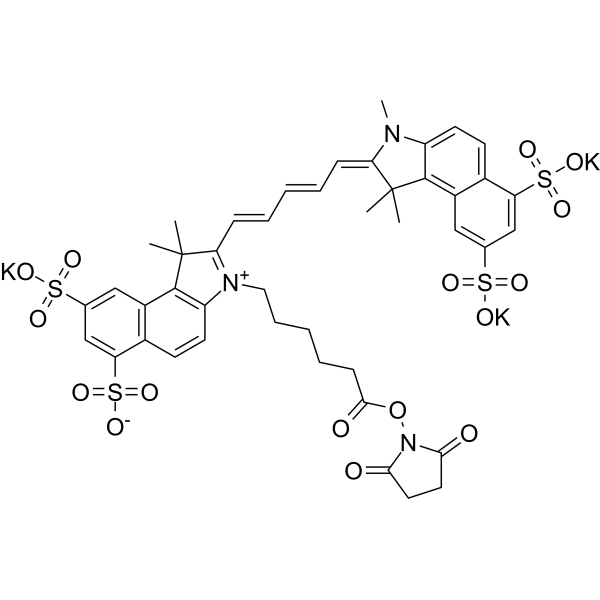
Sulfo-CY-5.5 NHS ester (Sulfo-Cyanine5.5 NHS ester) tripotassium is an amine-reactive ester of sulfonated far-red Cyanine5.5 fluorophore, which can be used to label antibodies, proteins, etc., as well as for in vivo NIR imaging .
loading...
    loading...
Cat. No.: HY-D1541
Sulfo-Cyanine5.5 alkyne, a near-infrared (NIR) fluorescent dye, is an alkyne modified Sulfo-Cyanine5.5 (Ex=67 8nm, Em=694 nm). Sulfo-Cyanine5.5 alkyne can react with azides for Click Chemistry labeling.
loading...
    loading...
Cat. No.: HY-D1376
CAS No.: 2183440-46-0
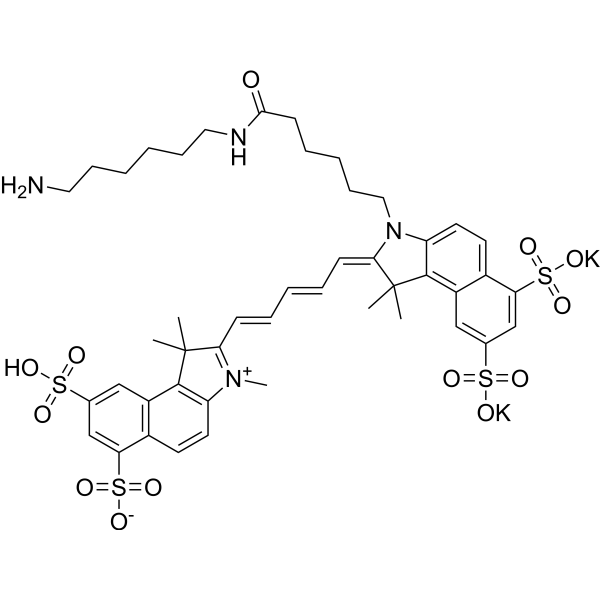
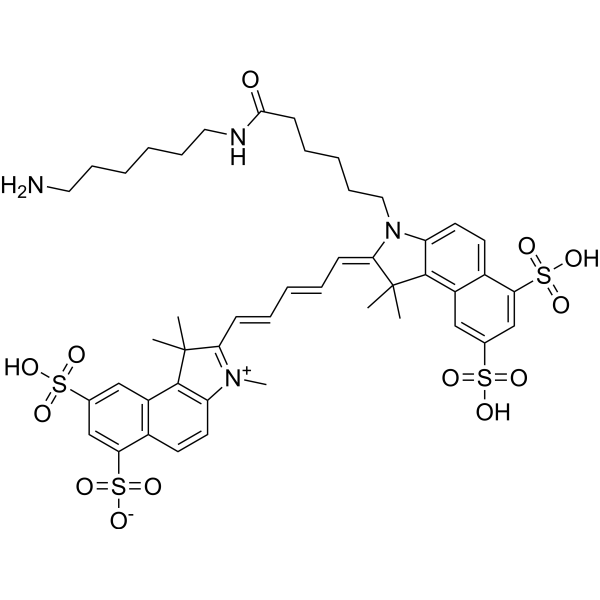
Sulfo-Cyanine5.5 amine potassium is a water-soluble cyanine dye suitable for far-red/near-infrared applications such as in vivo imaging. The dye has four sulfonate groups, making it highly hydrophilic and water-soluble. Like other cyanines, sulfo-Cyanine5.5 has an excellent extinction coefficient, making it a bright fluorescent marker in the far-red region. This is an amine-containing fluorescent dye. The amine group is separated from the fluorophore by a relatively long linker that facilitates conjugation. Aliphatic primary amine groups can be coupled with various electrophiles (activated esters, epoxides, etc.) and can also be used for enzymatic transamination labeling.
loading...
    loading...
Cat. No.: HY-D1376A
CAS No.: 2183440-45-9
Sulfo-Cyanine5.5 amine consists of four sulfonate groups and has highly hydrophilic. Sulfo-Cyanine5.5 amine is an amine-containing fluorescent dye, the aliphatic primary amine group can be coupled with various electrophiles (activated esters, epoxides, etc). Sulfo-Cyanine5.5 amine can be used for the research of far red/NIR applications (such as in vivo imaging) and also can be used for enzymatic transamination labeling .
loading...
    loading...
Cat. No.: HY-D1366
CAS No.: 2183440-68-6
Target:  

Fluorescent Dye

Research Areas:  

Others

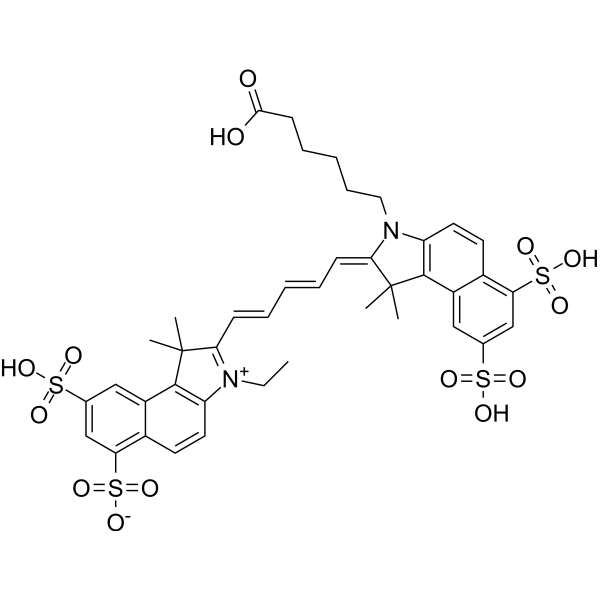
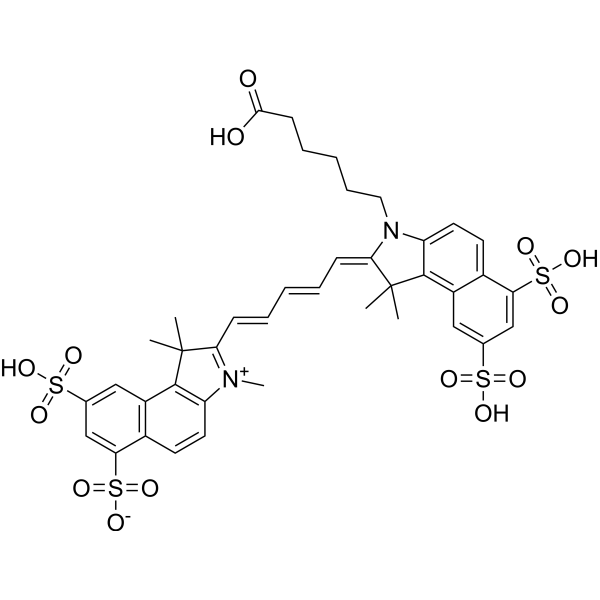
Sulfo-Cyanine5.5 carboxylic acid is a Fluorescent dye. Sulfo-Cyanine5.5 carboxylic acid emits red fluorescence, with a peak absorption wavelength of 673 nm. Sulfo-Cyanine5.5 carboxylic acid can be used to visualize aqueous sub-compartments and phase separation in synthetic multi-compartment microstructures. Sulfo-Cyanine5.5 carboxylic acid can serve as an intravenous contrast agent for in vivo cerebral perfusion imaging, mapping hemodynamics and perfusion regions .
loading...
    loading...
Cat. No.: HY-D1351
CAS No.: 2183440-58-4
Synonyms: Sulfo-Cy5.5 maleimide potassium
Sulfo-Cyanine5.5 maleimide (Sulfo-Cy5.5 maleimide) potassium is a fluorescent dye. Sulfo-Cyanine5.5 is a nearinfrared (NIR) fluorophore with excitation maximum 675 nm and emission maximum 694 nm. Sulfo-Cyanine5.5 maleimide potassium can be used for the labeling of sensitive proteins, nanoparticles, and highly hydrophylic biopolymers .
loading...
    loading...
Cat. No.: HY-D1366A
CAS No.: 2183440-69-7
Target:  

Fluorescent Dye

Research Areas:  

Others

Sulfo-Cyanine5.5 carboxylic acid potassium is a Fluorescent dye. Sulfo-Cyanine5.5 carboxylic acid potassium emits red fluorescence, with a peak absorption wavelength of 673 nm. Sulfo-Cyanine5.5 carboxylic acid potassium can be used to visualize aqueous sub-compartments and phase separation in synthetic multi-compartment microstructures. Sulfo-Cyanine5.5 carboxylic acid potassium can serve as an intravenous contrast agent for in vivo cerebral perfusion imaging, mapping hemodynamics and perfusion regions .
loading...
    loading...
Cat. No.: HY-D1308
CAS No.: 2382994-65-0
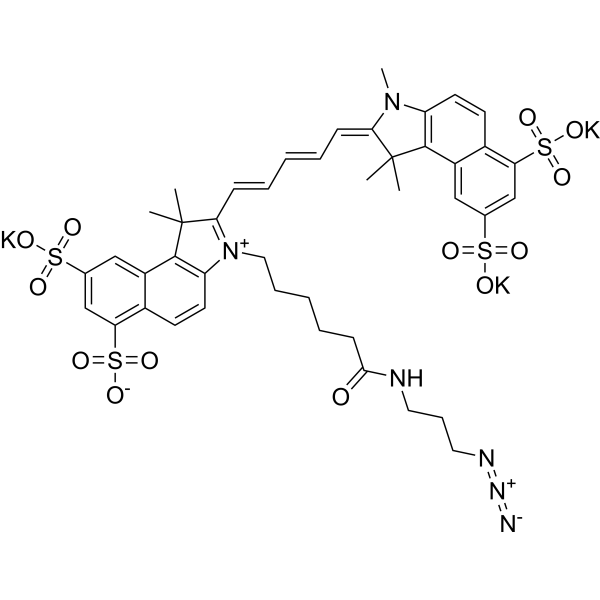
Sulfo-Cyanine5.5 azide tripotassium, a near-infrared (NIR) fluorescent dye, is an azide-functionalized Sulfo-Cyanine5.5 (Ex=678 nm, Em=694 nm). Sulfo-Cyanine5.5 azide tripotassium can react with alkynes for Click Chemistry labeling . It contains an azide group and can undergo copper-catalyzed azide-alkyne cycloaddition (CuAAc) with molecules containing alkyne groups. It can also undergo ring strain-promoted alkyne-azide cycloaddition (SPAAC) with molecules containing DBCO or BCN groups.
loading...
    loading...
Cat. No.: HY-D0924A
Synonyms: Sulfo-Cyanine5.5 acetate
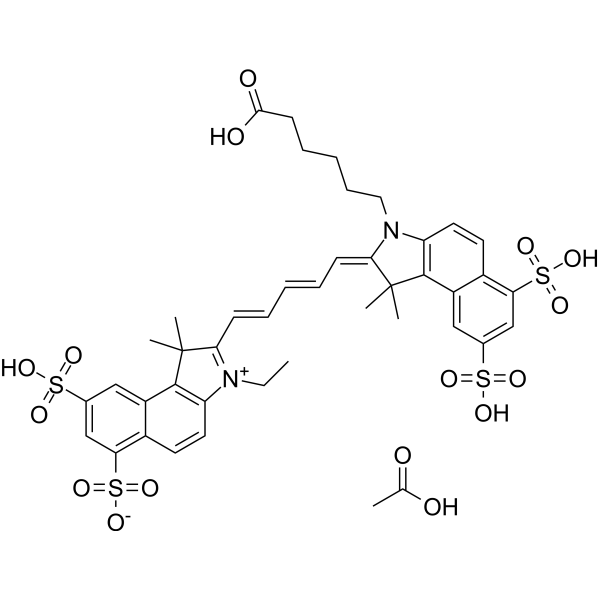
Cy5.5 acetate is a CY dye. CY, short for Cyanine, is a compound consisting of two nitrogen atoms connected by an odd number of methyl units. Cyanine compounds have the characteristics of long wavelength, adjustable absorption and emission, high extinction coefficient, good water solubility and relatively simple synthesis . CY dyes are of en used for the labeling of proteins, antibodies and small molecular compounds. For the labeling of protein antibodies, the combination can be completed through a simple mixing reaction. Below, we introduce the labeling method of protein antibody labeling, which has certain reference significance .
loading...
    loading...
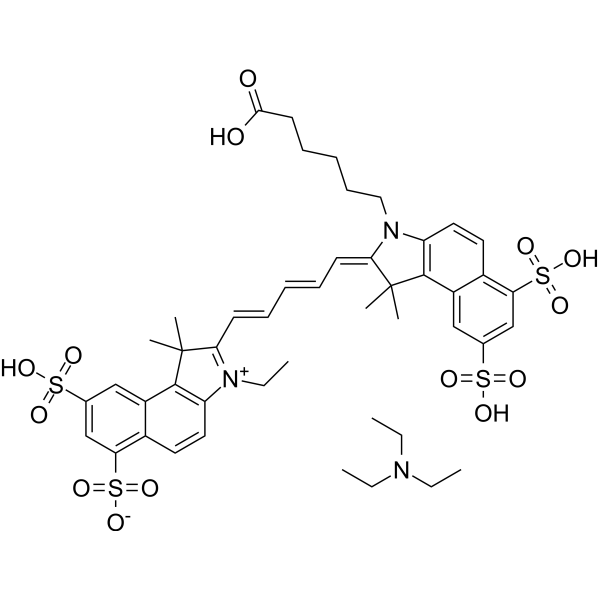
Cat. No.: HY-D0924B
Synonyms: Sulfo-Cyanine5.5 TEA
Cy5.5 TEA is a CY dye. CY, short for Cyanine, is a compound consisting of two nitrogen atoms connected by an odd number of methyl units. Cyanine compounds have the characteristics of long wavelength, adjustable absorption and emission, high extinction coefficient, good water solubility and relatively simple synthesis . CY dyes are of en used for the labeling of proteins, antibodies and small molecular compounds. For the labeling of protein antibodies, the combination can be completed through a simple mixing reaction. Below, we introduce the labeling method of protein antibody labeling, which has certain reference significance .
loading...
    loading...
  • 1

