1. Search Result
Search Result
Results for "

Tip Inhibitors

" in MedChemExpress (MCE) Product Catalog:

10

Inhibitors & Agonists

1

Oligonucleotides

Targets Recommended:
Cat. No. Product Name Target Research Areas Chemical Structure
  • HY-15887
    MG 149
    Maximum Cited Publications
    13 Publications Verification

    Tip60 HAT inhibitor

    Histone Acetyltransferase Epigenetic Reader Domain Apoptosis PINK1/Parkin Cardiovascular Disease Neurological Disease Inflammation/Immunology Cancer
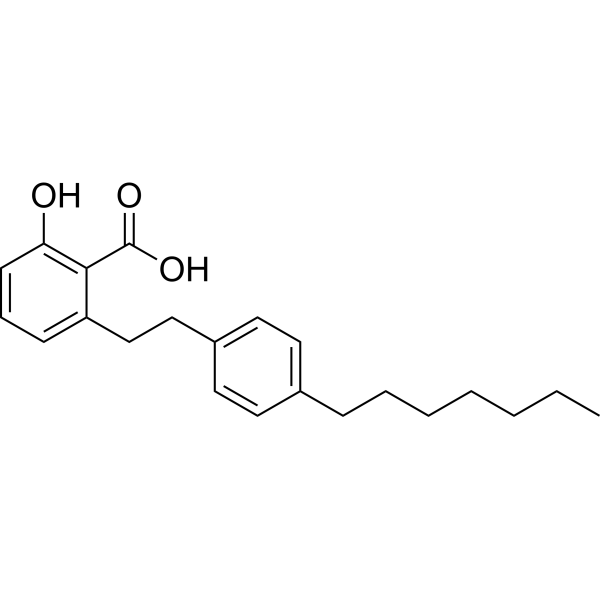
    MG149 (Tip60 HAT inhibitor) is a selective and potent Tip60 inhibitor with IC50 of 74 uM, similar potentcy for MOF (IC50 = 47 uM); little potent for PCAF and p300 (IC50 >200 uM). MG 149 inhibits KAT8 and blocks PINK1 kinase activity. MG149 inhibits the phosphorylation of Parkin and ubiquitin, thereby suppressing the initiation of PINK1-dependent mitophagy. MG 149 can reverse chronic restraint stress (CRS) induced hypertension and related molecular changes. MG 149 commonly used in research on diseases such as hypertension and Parkinson's disease .
    MG 149
  • HY-110127
    NU9056
    5+ Cited Publications

    Histone Acetyltransferase Apoptosis Cancer
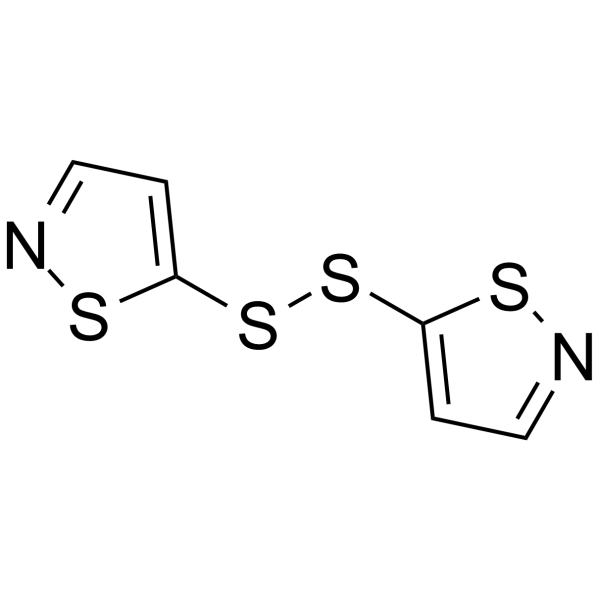
    NU9056 is a potent and selective Tip60 (KAT5) histone acetyltransferase inhibitor with an of 2 µM. NU9056 shows >16-fold selectivity for Tip60 over PCAF, p300 and GCN5. NU9056 induces apoptosis of prostate cancer cells .
    NU9056
  • HY-123604
    TH1834
    3 Publications Verification

    Histone Acetyltransferase Apoptosis Cancer
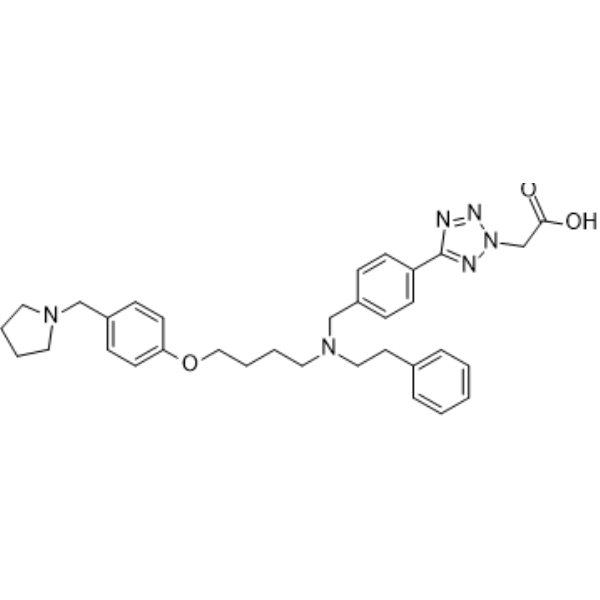
    TH1834 is a specific Tip60 (KAT5) histone acetyltransferase (HAT) inhibitor. TH1834 induces apoptosis and increases DNA damage in breast cancer. TH1834 does not affect the activity of related histone acetyltransferase MOF. Anticancer activity .
    TH1834
  • HY-123604A
    TH1834 dihydrochloride
    3 Publications Verification

    Histone Acetyltransferase Apoptosis Cancer
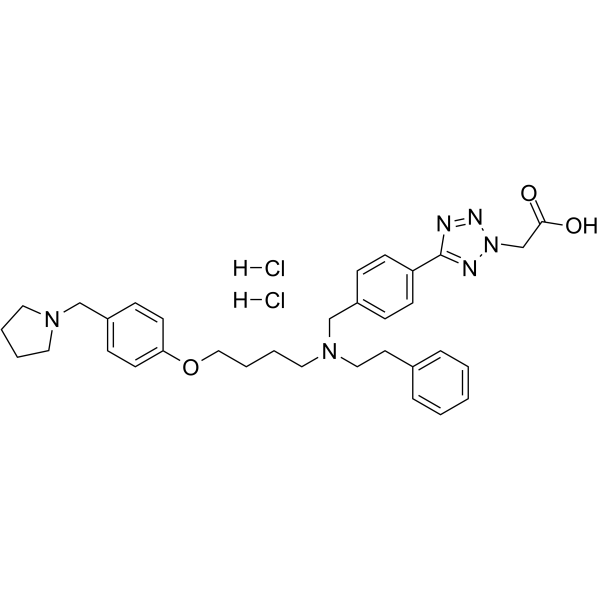
    TH1834 dihydrochloride is a specific Tip60 (KAT5) histone acetyltransferase inhibitor. TH1834 dihydrochloride induces apoptosis and increases DNA damage in breast cancer. TH1834 dihydrochloride does not affect the activity of related histone acetyltransferase MOF. Anticancer activity .
    TH1834 dihydrochloride
  • HY-117089

    Environmental Pollutants Fungal Infection
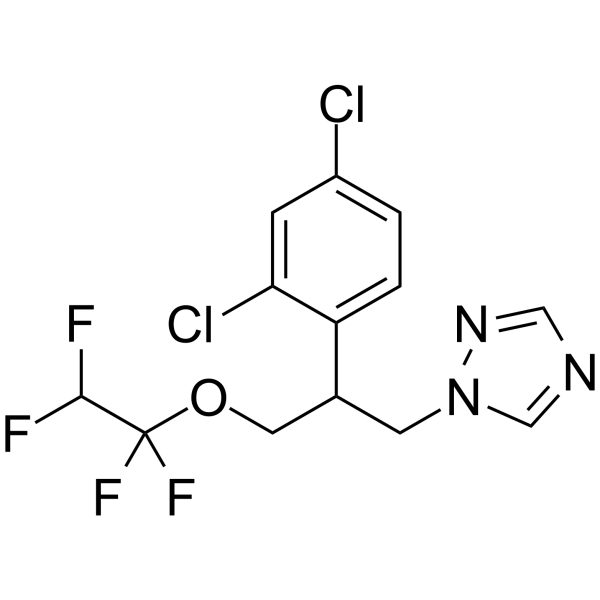
    Tetraconazole is a selective irreversible inhibitor of 14-α-sterol demethylase (CYP51) with antifungal activity. Tetraconazole competitively binds to the enzyme to block fungal ergosterol synthesis, resulting in cell membrane damage. The EC50 of tetraconazole against wheat pathogens is 0.382-0.802 mg/L, and the EC50 against onion root tip meristem cell growth is 6.7 mg/L, and (R)-(+)-Tetraconazole is 1.49-1.98 times more active than (S)-(-)-Tetraconazole. Tetraconazole can also induce oxidative stress and chromosomal aberrations in plant cells .
    Tetraconazole
  • HY-103702

    Proton Pump DNA/RNA Synthesis Apoptosis Inflammation/Immunology Cancer
    TIP48/49-IN-1 is an orally active, specific RUVBL1/2 (TIP48/49) ATPase inhibitor with an IC50 of 59 nM against purified RUVBL1/2. TIP48/49-IN-1 inhibits the DNA replication process, leading to S-phase arrest. TIP48/49-IN-1 induces apoptosis. TIP48/49-IN-1 can be used for the research of non-small cell lung cancer (NSCLC) cells .
    TIP48/49-IN-1
  • HY-121801

    Fungal Microtubule/Tubulin Mitosis Infection
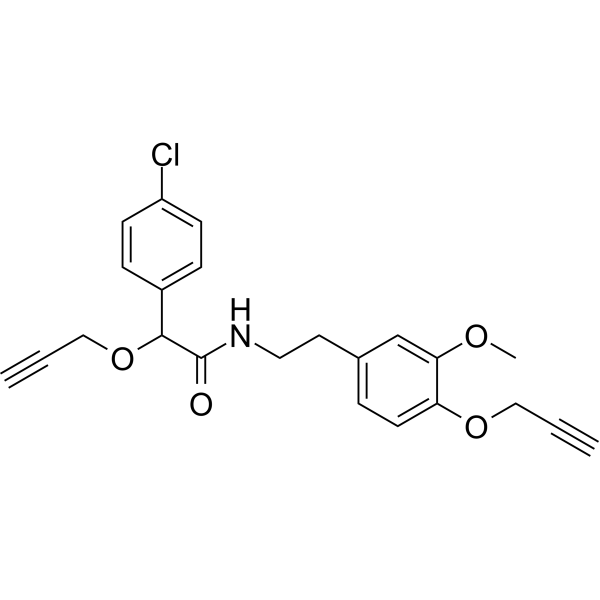
    Zarilamid is a fungicide which is active against a broad spectrum of Oomycete fungi. Zarilamid inhibits nuclear division in germinating zoospore cysts of Phytophthora capsici. Zarilamide inhibits growth of tobacco roots and causes swelling of the root tips, destructs microtubule cytoskeleton and inhibits mitosis .
    Zarilamid
  • HY-W560961

    Nucleoside Antimetabolite/Analog Cancer
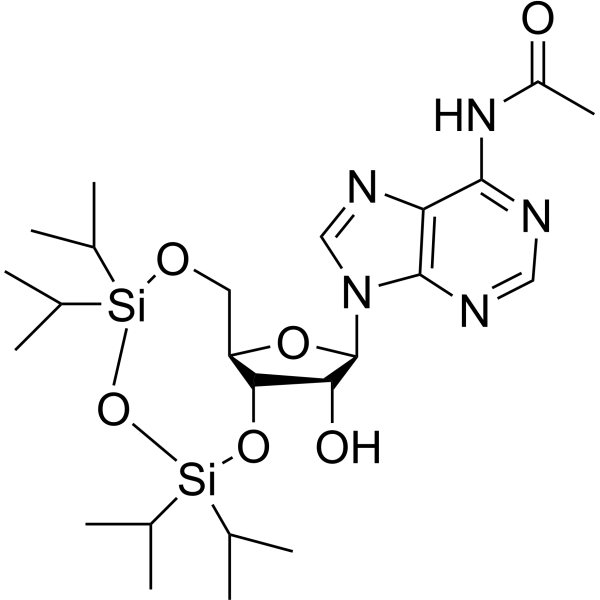
    3',5'-TIPS-N-Ac-Adenosine is an adenosine analog. Adenosine analogs mostly act as smooth muscle vasodilators and have also been shown to inhibit cancer progression. Its popular products are adenosine phosphate, Acadesine (HY-13417), Clofarabine (HY-A0005), Fludarabine phosphate (HY-B0028) and Vidarabine (HY-B0277) .
    3',5'-TIPS-N-Ac-Adenosine
  • HY-W721611

    Herbicide Others
    Terbucarb is a phenylcarbamate herbicide. Terbucarb disrupts the mitotic microtubule organizing centers in plant cells, leading to the formation of multipolar spindles and branched phragmoplasts, thereby inhibiting plant growth. An "anaphase star" pattern induced by Terbucarb is observed in onion root tips. Terbucarb is cytotoxic to isolated rat hepatocytes, inducing cell death accompanied by depletion of intracellular ATP, protein thiols and glutathione .
    Terbucarb
  • HY-181888

    HIV HIV Protease Infection
    GRL-142 is a potent HIV-1 protease inhibitor capable of crossing the blood-brain barrier. GRL-142 exhibits extremely high inhibitory activity against both wild-type and multidrug-resistant strains (IC50=0.0094 nM). GRL-142 acts synergistically with the P2/P2' segments via a unique scaffold binding mechanism, utilizes fluorine-mediated stable interactions to maintain its bioactive conformation, adapts to p51 HIV-1 protease mutants, and maintains the flap-closed state by directly acting on the flap tip residues. GRL-142 disrupts the flap-water hydrogen bond network of wild-type protease, thereby effectively blocking viral replication. GRL-142 can be used to study HIV-1 infection and the associated neurocognitive disorder (HAND) .
    GRL-142

Inquiry Online

Your information is safe with us. * Required Fields.

Salutation


Country or Region *

Applicant Name *


Organization Name *

Department *


Email Address *


Product Name *

Cat. No.


Requested quantity *

Phone Number *


Remarks

Inquiry Online

Inquiry Information

Product Name:
Cat. No.:
Quantity:
MCE Japan Authorized Agent:

