1. Search Result
Search Result
Results for "

Unstable

" in MedChemExpress (MCE) Product Catalog:

55

Inhibitors & Agonists

1

Screening Libraries

24

Biochemical Assay Reagents

3

Natural
Products

2

Isotope-Labeled Compounds

7

Oligonucleotides

Cat. No. Product Name Target Research Areas Chemical Structure
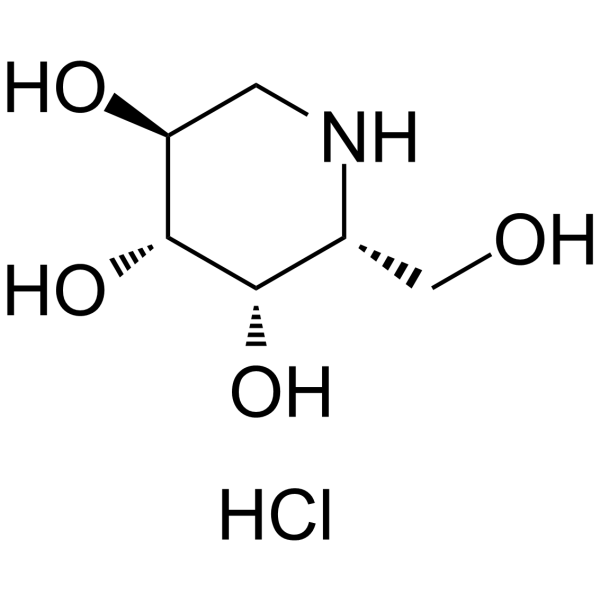
  • HY-14929A
    Migalastat hydrochloride
    1 Publications Verification

    GR181413A

    Glycosidase Others
    Migalastat (GR181413A free base) hydrochloride is an orally active α-galactosidase A molecular chaperone, with an IC50 value of 0.04 μM for human α-Gal A. Migalastat binds to the active site of certain unstable mutant forms of α-galactosidase A, facilitating their transport to the lysosome. After dissociation in the acidic environment, Migalastat enables the mutant α-galactosidase A to exhibit biological activity .
    Migalastat hydrochloride
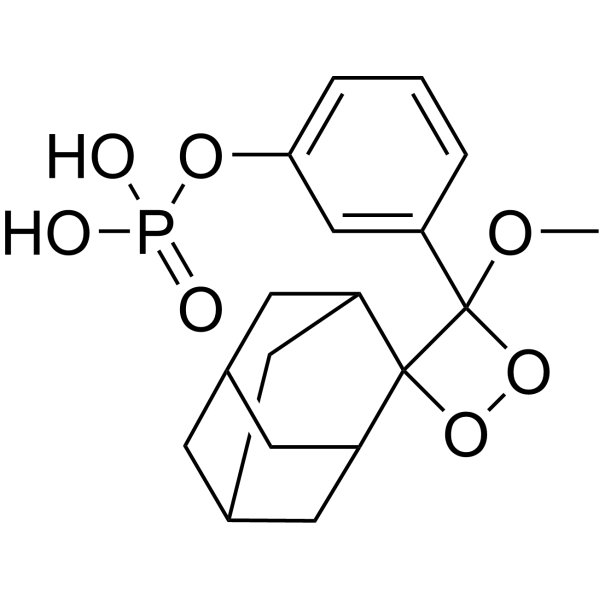
  • HY-15906
    AMPPD
    1 Publications Verification

    Lumi-Phos Plus; Lumigen PPD; PPD

    Phosphatase Others
    AMPPD (Lumi-Phos Plus; Lumigen PPD) is a chemiluminescent substrate for alkaline phosphatase (APase). AMPPD is hydrolyzed by APase to generate an unstable dioxetane intermediate, and the intermediate releases a chemiluminescent signal when it decomposes. The luminescent signal of AMPPD can be detected by highly sensitive equipment, thereby achieving quantitative analysis of the target molecule. AMPPD can be used in ultrasensitive enzyme-linked immunosorbent assays (such as quantitative detection of human tissue kininogen), chemiluminescent detection of proteins and nucleic acids, and other fields .
    AMPPD
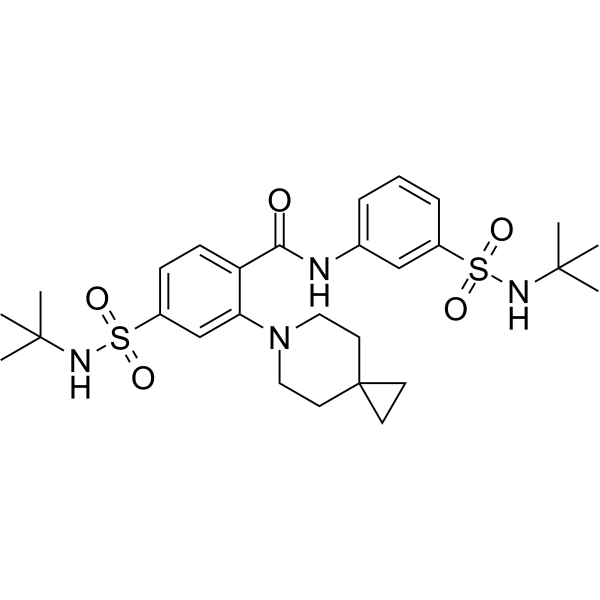
  • HY-145034
    KIF18A-IN-1
    1 Publications Verification

    Kinesin Cancer
    KIF18A-IN-1 is an inhibitor of the mitotic kinesin KIF18A with anti-tumor activity. KIF18A targeted inhibitors may activate mitotic checkpoints and selectively kill chromosomally unstable cancer cells .
    KIF18A-IN-1
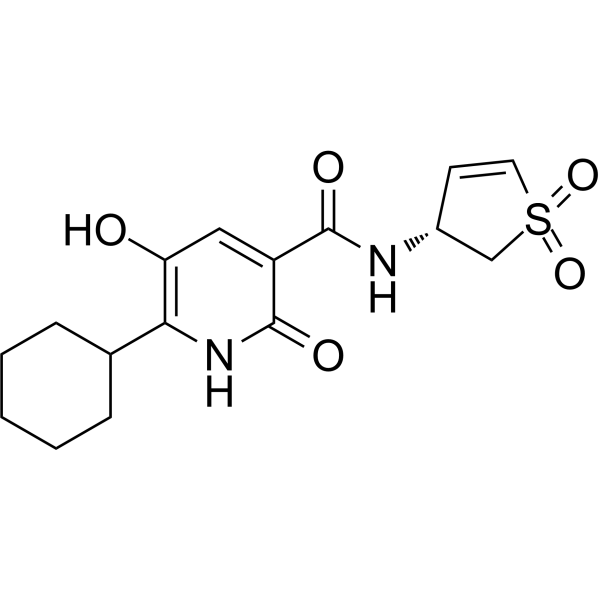
  • HY-162471

    DNA/RNA Synthesis ATM/ATR Cancer
    GSK_WRN3 is selective WRN helicase inhibitor (pIC50 = 8.6). SK_WRN3 can selectively inhibit the growth of microsatellite unstable (MSI) cancer cells, induce DNA damage, and cause cell cycle arrest. GSK_WRN3 has anti-tumor activity .
    GSK_WRN3
  • HY-163942

    DNA/RNA Synthesis Cancer
    GSK_WRN4 is an orally active WRN helicase inhibitor (pIC50=7.6). GSK_WRN4 induces DNA damage markers (p21, p-γH2AX, p-KAP1). GSK_WRN4 selectively inhibits microsatellite-unstable tumor growth in vitro and in vivo by inducing DNA double-strand breaks, particularly at expanded TA repeats and regions of DNA damage .
    GSK_WRN4
  • HY-W1048549A

    HOOC-PEG2000-Thiol

    Biochemical Assay Reagents Others
    HOOC-PEG2000-SH (HOOC-PEG2000-Thiol) is a reactive thiol PEG derivative with a terminal carboxyl group. The carboxyl group can react with amine or hydroxyl groups to form a stable amide bond or an unstable ester bond. The PEG linkage between the thiol and carboxyl groups has good water solubility, flexible linker distance and higher stability .
    HOOC-PEG2000-SH
  • HY-167015

    Liposome Others
    1O14 is an ionizable lipid. The ability of ionizable lipids to form unstable non-bilayer structures at acidic pH is key for endosomal escape and cytosolic delivery of RNA. 1O14 can be used in the preparation of liposomes .
    1O14
  • HY-101839

    VU0488130

    mAChR Neurological Disease
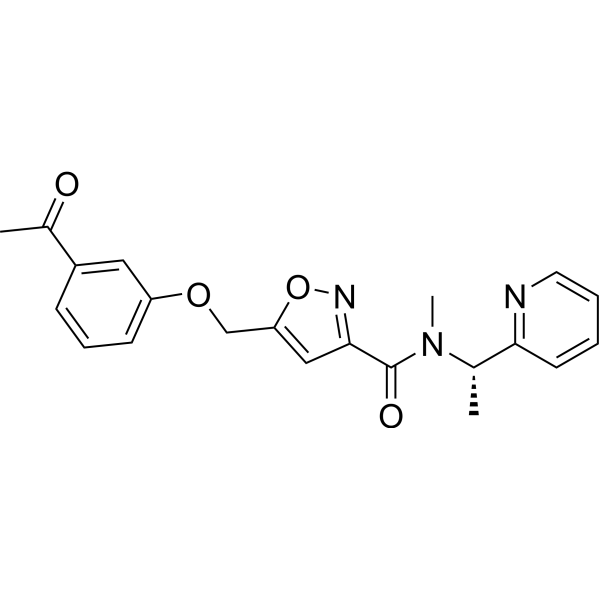
    ML381 (VU0488130) is a highly selective, central nervous system penetrant mAChR M5 orthogonal antagonist (IC50 = 450 nM; Ki = 340 nM). ML381 is unstable in rat plasma and can be mainly used as a molecular probe for in vitro and electrophysiological studies .
    ML381
  • HY-167012

    Liposome Others
    306Oi9-cis2 is an ionizable lipid. The ability of ionizable lipids to form unstable non-bilayer structures at acidic pH is key for endosomal escape and cytosolic delivery of RNA. 306Oi9-cis2 can be used in the preparation of liposomes .
    306Oi9-cis2
  • HY-122520

    mAChR Neurological Disease
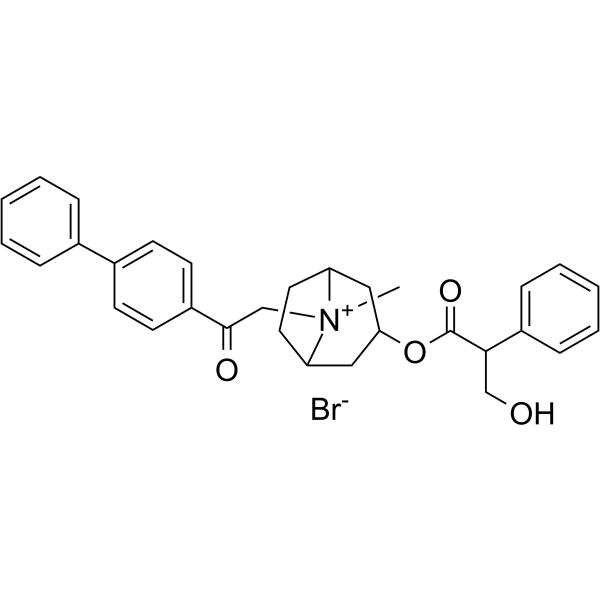
    Fentonium bromide is an anti-ulcerogenic, anticholinergic and antispasmodic agent. Fentonium bromide can be used in the research of neurological conditions, such as unstable bladder .
    Fentonium bromide
  • HY-14929

    GR181413A free base; 1-Deoxygalactonojirimycin

    Glycosidase Others
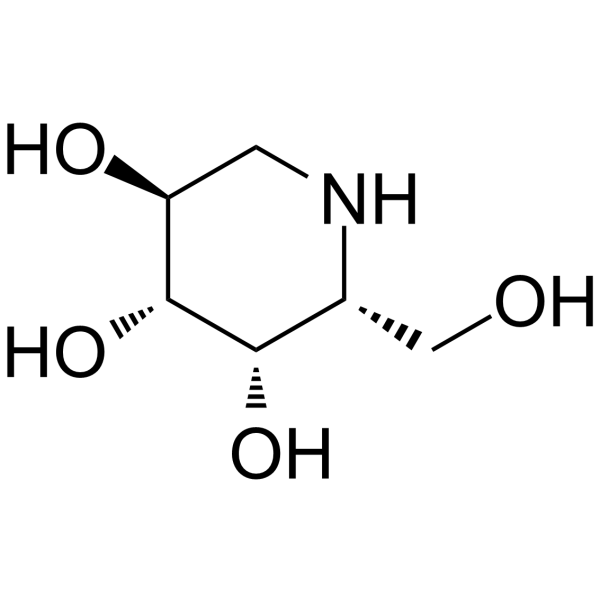
    Migalastat (GR181413A free base) is an orally active α-galactosidase A molecular chaperone, with an IC50 value of 0.04 μM for human α-Gal A. Migalastat binds to the active site of certain unstable mutant forms of α-galactosidase A, facilitating their transport to the lysosome. After dissociation in the acidic environment, Migalastat enables the mutant α-galactosidase A to exhibit biological activity .
    Migalastat
  • HY-112621

    LTA4 methyl ester

    Biochemical Assay Reagents Inflammation/Immunology
    Leukotriene A4 methyl ester (LTA4 methyl ester) is synthesized in mast cells, eosinophils, and neutrophils from arachidonic acid by 5-lipoxygenase (5-LO), which exhibits both lipoxygenase and LTA4 synthase activities. LTA4 is rapidly metabolized by LTA4 hydrolase or LTC4 synthase to LTB4 or LTC4, respectively. LTA4, from leukocytes, is known to undergo transcellular metabolism in platelets, erythrocytes, and endothelial cells. Further metabolism of LTA4 by 15-LO leads to lipoxin biosynthesis. LTA4 as a free acid is highly unstable. The methyl ester is stable and can be readily hydrolyzed to the free acid as needed.
    Leukotriene A4 methyl ester
  • HY-W040176

    N-Palmitoyl-tyrosine phosphoric acid ammonium

    LPL Receptor Cardiovascular Disease Neurological Disease Inflammation/Immunology
    N-PTyrosine PA (N-Palmitoyl-tyrosine phosphoric acid) ammonium is a lysophosphatidic acid (LPA) receptor modulator, which exhibits weak inhibitory activity against LPA1 and partial agonist properties towards LPA5. N-PTyrosine PA ammonium inhibits the activation of LPA receptors and downstream responses by competing with agonists for binding sites. N-PTyrosine PA ammonium can induce morphological changes and aggregation, and also inhibit LPA-induced morphological changes through receptor desensitization caused by pre-incubation. N-PTyrosine PA ammonium can be used in the research of related diseases such as atherosclerosis and acute ischemic syndromes (e.g., unstable angina, myocardial infarction, stroke) .
    N-PTyrosine PA ammonium
  • HY-118365

    RUNX Infection Cancer
    NSC 140873 is an inhibitor of the RUNX1-CBFβ interaction. NSC 140873 can be used for research of viral infection and leukemia. NSC 140873 has an unstable structure and can be converted spontaneously in solution to a benzodiazepine (Ro5-3335) .
    NSC 140873
  • HY-N12196

    Cytochrome P450 Infection
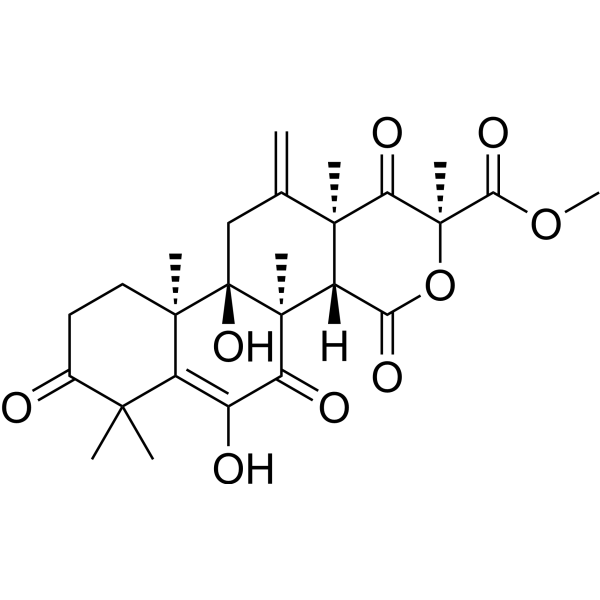
    Terretonin is a fungal terpenoid isolated from Aspergillus terreus. The complete biosynthetic pathway of terretonin includes: cytochrome P450 Trt6 catalyzes the oxidation of terrenoid to obtain an unstable intermediate; then it is catalyzed by isomerase Trt14 and processed by non-heme iron-dependent dioxygenase Trt7 to complete the biosynthesis of terretonin .
    Terretonin
  • HY-14654B

    Acetylsalicylic acid DL-lysine; ASA DL-lysine

    COX NF-κB p38 MAPK Cardiovascular Disease Others Inflammation/Immunology
    Aspirin DL-lysine (ASA DL-lysine) is a lysine-containing aspirin derivative. Aspirin DL-lysine inhibits cyclooxygenase (COX) in platelets, blocks the synthesis of thromboxane A2 (TXA2), and thus inhibits platelet aggregation and activation. Aspirin DL-lysine can be used to study thrombin generation in patients with unstable angina pectoris .
    Aspirin DL-lysine
  • HY-167629

    Phytohormone Drug Intermediate Others
    Gibberellenic acid is an intermediate gibberellin compound with a tetracyclic diterpenoid skeleton, and can be generated by thermal decomposition of Gibberellic acid (GA3, HY-N1964) in aqueous solution. Gibberellenic acid is thermally unstable in water and can further convert into allogibberic acid (approximately 80%) and 9-epiallogibberic acid (approximately 10%). It plays an important role in the degradation pathway and structural elucidation of Gibberellins .
    Gibberellenic acid
  • HY-W1048549C

    HOOC-PEG5000-Thiol

    Biochemical Assay Reagents Others
    HOOC-PEG5000-SH (HOOC-PEG5000-Thiol) is a reactive thiol PEG derivative with a terminal carboxyl group. The carboxyl group can react with amine or hydroxyl groups to form a stable amide bond or an unstable ester bond. The PEG linkage between the thiol and carboxyl groups has good water solubility, flexible linker distance and higher stability .
    HOOC-PEG5000-SH
  • HY-176874

    Phosphodiesterase (PDE) Inflammation/Immunology Cancer
    Enpp-1-IN-29 (Compound 1) is a highly selective ectonucleotide pyrophosphatase/phosphodiesterase 1 (ENPP1) inhibitor (IC50=0.05 nM). Enpp-1-IN-29 is promising for research of ENPP1-overexpressing cancers (e.g., breast cancer, head/neck cancer, metastatic chromosome-unstable tumors) and immune-related diseases (e.g., autoimmune disorders, tumor immune evasion) .
    Enpp-1-IN-29
  • HY-W1048547J

    HOOC-PEG40000-Amine

    PROTAC Linkers Others
    HOOC-PEG40000-NH2 (HOOC-PEG40000-Amine) is a heterobifunctional PEG crosslinker that can be used to attach functional PEG to biomolecules, particles, and other surface materials. The carboxyl group reacts with the amine group to form a stable amide bond. It can also react with the hydroxyl group to form an unstable ester bond. On the other hand, the amine group can be used to react with many amine-reactive groups, such as succinimidyl NHS esters, aldehydes, etc .
    HOOC-PEG40000-NH2
  • HY-N3086

    Others Others
    Phebalosin is a coumarin that can be isolated from Polygala paniculata. Phebalosin shows biological activity but very unstable in aqueous solution .
    Phebalosin
  • HY-114603B

    LY 294468 dihydrochloride

    Thrombin Cardiovascular Disease
    Efegatran (LY 294468) dihydrochloride is an inhibitor for thrombin, which inhibits aggregation of platelets, and exhibits anticoagulant and antithrombotic activities .
    Efegatran dihydrochloride
  • HY-114603A

    LY 294468 sulfate

    Thrombin Cardiovascular Disease
    Efegatran (LY 294468) sulfate is an inhibitor for thrombin, which inhibits aggregation of platelets, and exhibits anticoagulant and antithrombotic activities .
    Efegatran sulfate
  • HY-114603

    LY 294468

    Thrombin Cardiovascular Disease
    Efegatran (LY 294468) is an inhibitor for thrombin, which inhibits aggregation of platelets, and exhibits anticoagulant and antithrombotic activities .
    Efegatran
  • HY-167004A

    Liposome Others
    IAJD249 is an ionizable lipid. The ability of ionizable lipids to form unstable non-bilayer structures at acidic pH is key for endosomal escape and cytosolic delivery of RNA. IAJD249 can be used in the preparation of liposomes .
    IAJD249
  • HY-167004

    Liposome Others
    IAJD93 is an ionizable lipid. The ability of ionizable lipids to form unstable non-bilayer structures at acidic pH is key for endosomal escape and cytosolic delivery of RNA. IAJD93 can be used in the preparation of liposomes .
    IAJD93
  • HY-167003

    Liposome Others
    L16 is an ionizable lipid. The ability of ionizable lipids to form unstable non-bilayer structures at acidic pH is key for endosomal escape and cytosolic delivery of RNA. L16 can be used in the preparation of liposomes .
    L16
  • HY-167011

    Liposome Others
    Al-28 is an ionizable lipid. The ability of ionizable lipids to form unstable non-bilayer structures at acidic pH is key for endosomal escape and cytosolic delivery of RNA. Al-28 can be used in the preparation of liposomes .
    Al-28
  • HY-106904

    Calcium Channel 5-HT Receptor Dopamine Receptor Cardiovascular Disease
    Nexopamil is a calcium antagonist of Ca 2+ channel, 5HT2, 5HT1A, 5HT1C and dopamine D2 receptors. Nexopamil exhibits vasodilatory, cardioprotective, and platelet aggregation inhibiting effects. Nexopamil can be used for researches of stable or unstable angina and possibly of peripheral arterial occlusive disease .
    Nexopamil
  • HY-121716

    Antibiotic 2088A; LL-14I352α

    Bacterial Cancer
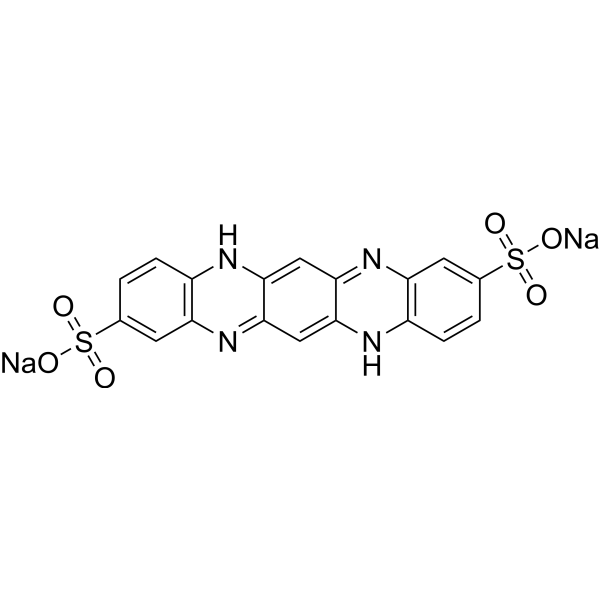
    Pelagiomicin A is a novel phenazine antibiotic produced by the marine bacterium Pelagiobacter variabilis. The compound is unstable in water and small alcohols. The absolute structure of its major component, Pelagiomicin A, as well as the properties of minor amounts of other structures, were determined by spectroscopic data and synthesis. Pelagiomicin A is active against both Gram-positive and Gram-negative bacteria and exhibits antitumor activity in vitro and in vivo.
    Pelagiomicin A
  • HY-10313

    Integrin Cardiovascular Disease
    ZD 2486 is a glycoprotein IIb/IIIa (GP IIb/IIIa) antagonist. ZD 2486 inhibits platelet aggregation by blocking the binding of fibrinogen to the GP IIb/IIIa receptor on platelets. ZD 2486 can be used for the study of conditions related to unwanted platelet aggregation, such as acute coronary syndrome, unstable angina pectoris, acute myocardial infarction, and complications from cardiovascular interventional procedures [1]
    ZD 2486
  • HY-W1048549E

    HOOC-PEG20000-Thiol

    Biochemical Assay Reagents Others
    HOOC-PEG20000-SH (HOOC-PEG20000-Thiol) is a reactive thiol PEG derivative with a terminal carboxyl group. The carboxyl group can react with amine or hydroxyl groups to form a stable amide bond or an unstable ester bond. The PEG linkage between the thiol and carboxyl groups has good water solubility, flexible linker distance and higher stability .
    HOOC-PEG20000-SH
  • HY-161505

    Transthyretin (TTR) Others
    Transthyretin-IN-3 (compound 6) is a designed benzofuran analogue. Transthyretin-IN-3 selectively binds to plasma transthyretin (TTR) to inhibit Amyloid aggregation (IC50=5.0±0.2 μM). Transthyretin-IN-3 can bind to TTR's thyroxine binding site specifically by carrying chlorine substituents at specific locations in its structure. This binding can prevent TTR tetramers from dissociating into unstable monomers .
    Transthyretin-IN-3
  • HY-W740650

    GR181413A-15N

    Isotope-Labeled Compounds Glycosidase Others
    Migalastat hydrochloride- 15N (GR181413A- 15N) is the 15N-labeled Migalastat hydrochloride (HY-14929A). Migalastat (GR181413A free base) hydrochloride is an orally active α-galactosidase A molecular chaperone, with an IC50 value of 0.04 μM for human α-Gal A. Migalastat binds to the active site of certain unstable mutant forms of α-galactosidase A, facilitating their transport to the lysosome. After dissociation in the acidic environment, Migalastat enables the mutant α-galactosidase A to exhibit biological activity .
    Migalastat hydrochloride-15N
  • HY-131310

    Endogenous Metabolite Metabolic Disease
    9(S)-HpOTrE is a monohydroperoxy polyunsaturated fatty acid produced by the action of 5-lipoxygenase (5-LO) on α-linolenic acid. It can be further metabolized to colnelenic acid by a divinyl ether synthase activity found in garlic and potato microsomal fractions. 9(S)-HpOTrE also serves as a substrate for further oxidation by both soybean and potato LOs, resulting in the formation of 9,16-dihydroperoxy acid.The suicide inactivation of LOs when 9(S)-HpOTrE is used as a substrate is thought to occur via formation of an unstable epoxide.
    9(S)-HpOTrE
  • HY-W728096

    GR181413A-d5 free base

    Isotope-Labeled Compounds Glycosidase Others
    Migalastat-d5 (GR181413A-d5 (free base)) is deuterium labeled Migalastat. Migalastat (GR181413A free base) is an orally active α-galactosidase A molecular chaperone, with an IC50 value of 0.04 μM for human α-Gal A. Migalastat binds to the active site of certain unstable mutant forms of α-galactosidase A, facilitating their transport to the lysosome. After dissociation in the acidic environment, Migalastat enables the mutant α-galactosidase A to exhibit biological activity .
    Migalastat-d5
  • HY-129922

    Prostaglandin Receptor Endocrinology
    Prostaglandin I2 is an unstable prostanoid which, through the ‘I prostanoid’ (IP) receptor, inhibits platelet aggregation and promotes vasodilatation in pulmonary vascular beds. AFP 07 is a 7,7-difluoroprostacyclin derivative that acts as a selective and highly potent agonist for the IP receptor (Ki=0.561 nM).1 AFP 07 shows weaker affinity for EP receptors, with Ki values > 100 nM for EP1-3 and > 10 nM for EP4. 16(R)-AFP 07 is an epimer of AFP 07. Its biological properties, particularly through the IP and EP receptors, remain to be evaluated.
    16(R)-AFP 07 free acid
  • HY-180170

    Kinesin Cancer
    KIF18A-IN-18 (Compound I) is a KIF18A inhibitor. KIF18A-IN-18 can be used in the research of chromosomally unstable tumors .
    KIF18A-IN-18
  • HY-167002

    Liposome Others
    RM 137-15 is an ionizable lipid. The ability of ionizable lipids to form unstable non-bilayer structures at acidic pH is key for endosomal escape and cytosolic delivery of RNA. RM 137-15 can be used in the preparation of liposomes .
    RM 137-15
  • HY-P2872A

    Endogenous Metabolite Metabolic Disease
    Thioglucosidase, Sinapis alba (white mustard) seed (EC 3.2.1.147) hydrolyzes the S-glucosidic bond of a glucosinolate substrate to form an unstable aglycone that rearranges with the loss of sulfate primarily to the isothiocyanate, though thiocyanates and nitriles are also formed.
    Thioglucosidase, Sinapis alba (white mustard) seed
  • HY-E71031

    Biochemical Assay Reagents Others
    Allene oxide synthase, Parthenium argentatum (EC 4.2.1.92) is a potent anti-oxidant enzyme to remove lipid hydroperoxides in biological samples. Allene oxide synthase, Parthenium argentatum (EC 4.2.1.92) converts lipoxygenase derived fatty acid hydroperoxides to unstable allene epoxides.
    Allene oxide synthase, Parthenium argentatum
  • HY-182595

    Biochemical Assay Reagents Others
    Hydroxylamine Solution, 1.5 M, pH 8.5, is composed of 1.5 M hydroxylamine hydrochloride, deionized water, etc., with a pH of 8.5. Hydroxylamine Solution, 1.5 M, pH 8.5, is mainly used to remove unstable fluorescent groups or biotin during antibody labeling.
    Hydroxylamine Solution, 1.5 M, pH 8.5
  • HY-182594

    Biochemical Assay Reagents Others
    Hydroxylamine Solution, 1.5 M, pH 8.0, is composed of 1.5 M hydroxylamine hydrochloride, deionized water, etc., with a pH of 8.0. Hydroxylamine Solution, 1.5 M, pH 8.0, is mainly used to remove unstable fluorescent groups or biotin during antibody labeling.
    Hydroxylamine Solution, 1.5 M, pH 8.0
  • HY-W1048549D

    HOOC-PEG10000-Thiol

    Biochemical Assay Reagents Others
    HOOC-PEG10000-SH (HOOC-PEG10000-Thiol) is a reactive thiol PEG derivative with a terminal carboxyl group. The carboxyl group can react with amine or hydroxyl groups to form a stable amide bond or an unstable ester bond. The PEG linkage between the thiol and carboxyl groups has good water solubility, flexible linker distance and higher stability .
    HOOC-PEG10000-SH
  • HY-W1048549B

    HOOC-PEG3400-Thiol

    Biochemical Assay Reagents Others
    HOOC-PEG3400-SH (HOOC-PEG3400-Thiol) is a reactive thiol PEG derivative with a terminal carboxyl group. The carboxyl group can react with amine or hydroxyl groups to form a stable amide bond or an unstable ester bond. The PEG linkage between the thiol and carboxyl groups has good water solubility, flexible linker distance and higher stability .
    HOOC-PEG3400-SH
  • HY-179322

    DNA/RNA Synthesis Cancer
    DHX9-IN-21 (Compound 635) is a DHX9 inhibitor with an IC50 of 2 nM; its EC50 at the cellular level is 19.1 nM. DHX9-IN-21 exhibits antiproliferative activity against LS411N (CRC-MSI-H), with an IC50 value of 79.2 nM. DHX9-IN-21 can be used for the research of microsatellite unstable colorectal cancer .
    DHX9-IN-21
  • HY-W121887

    Zomepirac glucuronide

    Dipeptidyl Peptidase Transmembrane Glycoprotein Inflammation/Immunology
    Zomepirac acyl-O-β-D-glucuronide (Zomepirac glucuronide) is a dipeptidyl peptidase IV Inhibitor. Zomepirac acyl-O-β-D-glucuronide is an unstable and chemically reactive metabolite of Zomepirac (HY-B0890A). Zomepirac acyl-O-β-D-glucuronide forms covalent adducts with cell membrane glycoproteins. Zomepirac acyl-O-β-D-glucuronide can be used for research on immunotoxicity .
    Zomepirac acyl-O-β-D-glucuronide
  • HY-W1048547A

    HOOC-PEG2000-Amine

    Biochemical Assay Reagents Others
    HOOC-PEG2000-NH2 (HOOC-PEG2000-Amine) is a heterobifunctional PEG crosslinker that can be used to attach functional PEG to biomolecules, particles, and other surface materials. The carboxyl group reacts with the amine group to form a stable amide bond. It can also react with the hydroxyl group to form an unstable ester bond. On the other hand, the amine group can be used to react with many amine-reactive groups, such as succinimidyl NHS esters, aldehydes, etc .
    HOOC-PEG2000-NH2
  • HY-W1048547E

    HOOC-PEG20000-Amine

    Biochemical Assay Reagents Others
    HOOC-PEG20000-NH2 (HOOC-PEG20000-Amine) is a heterobifunctional PEG crosslinker that can be used to attach functional PEG to biomolecules, particles, and other surface materials. The carboxyl group reacts with the amine group to form a stable amide bond. It can also react with the hydroxyl group to form an unstable ester bond. On the other hand, the amine group can be used to react with many amine-reactive groups, such as succinimidyl NHS esters, aldehydes, etc .
    HOOC-PEG20000-NH2
  • HY-W1048547I

    HOOC-PEG3400-Amine

    Biochemical Assay Reagents Others
    HOOC-PEG3400-NH2 (HOOC-PEG3400-Amine) is a heterobifunctional PEG crosslinker that can be used to attach functional PEG to biomolecules, particles, and other surface materials. The carboxyl group reacts with the amine group to form a stable amide bond. It can also react with the hydroxyl group to form an unstable ester bond. On the other hand, the amine group can be used to react with many amine-reactive groups, such as succinimidyl NHS esters, aldehydes, etc .
    HOOC-PEG3400-NH2

Inquiry Online

Your information is safe with us. * Required Fields.

Salutation


Country or Region *

Applicant Name *


Organization Name *

Department *


Email Address *


Product Name *

Cat. No.


Requested quantity *

Phone Number *


Remarks

Inquiry Online

Inquiry Information

Product Name:
Cat. No.:
Quantity:
MCE Japan Authorized Agent:

