


1. Search Result
Search Result
Results for "

WNV

" in MedChemExpress (MCE) Product Catalog:

29

Inhibitors & Agonists

2

Biochemical Assay Reagents

6

Peptides

4

Inhibitory Antibodies

5

Natural
Products

5

Recombinant Proteins

1

Click Chemistry

Cat. No. Product Name Target Research Areas Chemical Structure
  • HY-N0110
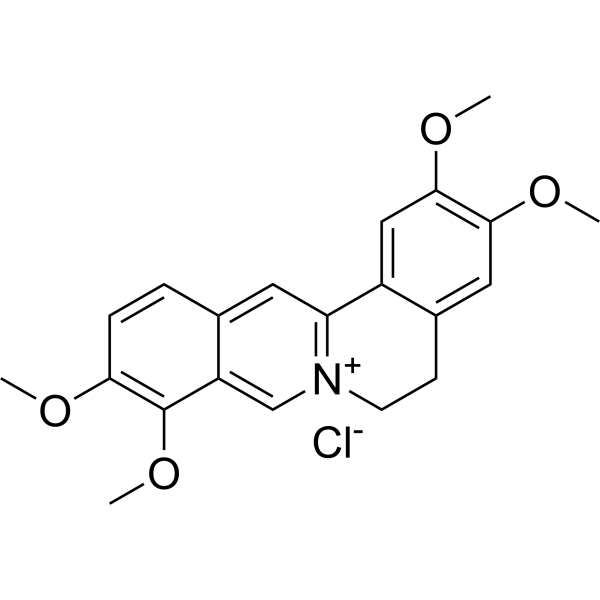
    Palmatine chloride
    5+ Cited Publications

    mAChR Indoleamine 2,3-Dioxygenase (IDO) Virus Protease Aurora Kinase Apoptosis Bacterial Parasite Infection Neurological Disease Metabolic Disease Inflammation/Immunology Cancer
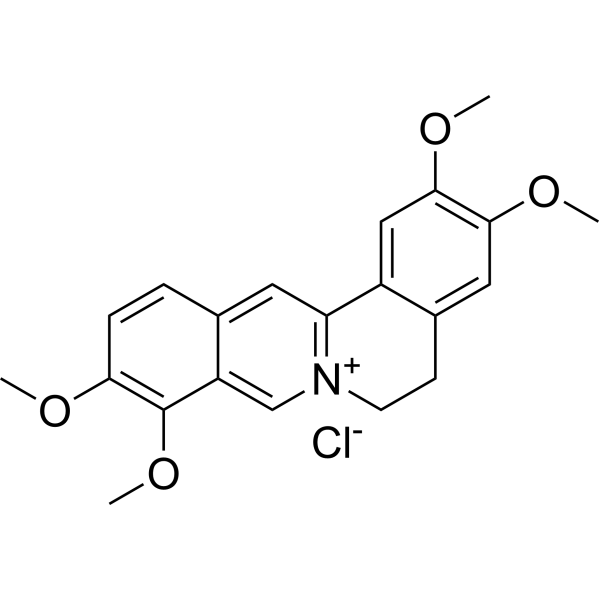
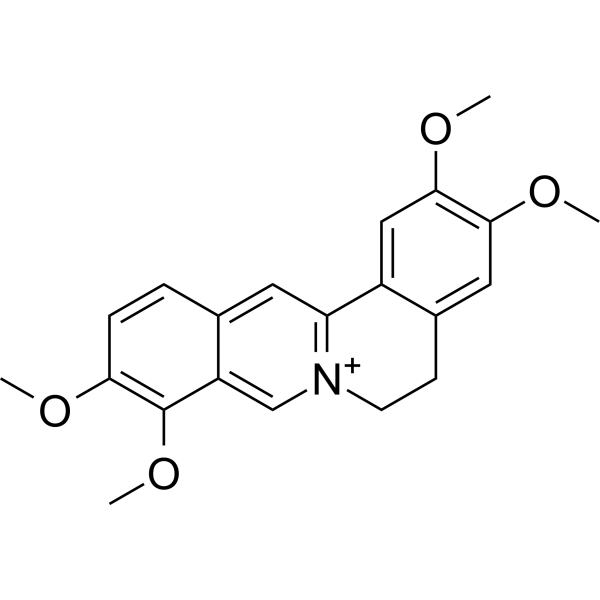
    Palmatine chloride is an orally active and irreversible indoleamine 2,3-dioxygenase 1 (IDO-1) inhibitor with IC50s of 3 μM and 157μM against HEK 293-hIDO-1 and rhIDO-1, respectively. Palmatine chloride can also inhibit West Nile virus (WNV) NS2B-NS3 protease in an uncompetitive manner with an IC50 of 96 μM. Palmatine chloride shows anti-cancer, anti-oxidation, anti-inflammatory, neuroprotection, antibacterial, anti-viral activities .
    Palmatine chloride
  • HY-Y1883

    Environmental Pollutants Biochemical Assay Reagents Apoptosis Infection Cancer
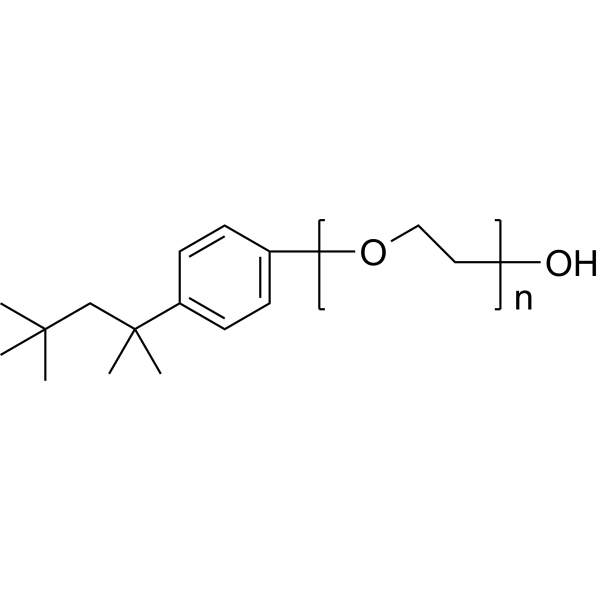
    Polyethylene glycol mono(4-tert-octylphenyl) ether surfactant is a non-denaturing detergent that solubilizes lipid membranes. Polyethylene glycol mono(4-tert-octylphenyl) ether surfactant is commonly used in laboratories and is applied to vaccines at different stages of the manufacturing process. Polyethylene glycol mono(4-tert-octylphenyl) ether surfactant is listed as an excipient in certain vaccines including split virus influenza vaccines. Polyethylene glycol mono(4-tert-octylphenyl) ether surfactant is a nonionic surfactant. Polyethylene glycol mono(4-tert-octylphenyl) ether surfactant induces Apoptosis in prostate and colon cancer cell lines and reduces the infectivity of classic enveloped viruses such as WNV .
    Polyethylene glycol mono(4-tert-octylphenyl) ether surfactant
  • HY-P2260
    Tat-beclin 1
    5+ Cited Publications

    CHIKV Autophagy HIV Infection
    Tat-beclin 1, a peptide derived from a region of the autophagy protein (beclin 1), is a potent inducer of autophagy and interacts with negative regulator of autophagy, GAPR-1 (GLIPR2). Tat-beclin 1 decreases the accumulation of polyglutamine expansion protein aggregates and the replication of several pathogens (including HIV-1) in vitro, and reduces mortality in mice infected with chikungunya (CHIKV) or West Nile virus (WNV) .
    Tat-beclin 1
  • HY-Y1883A
    Polyethylene glycol mono(4-tert-octylphenyl) ether
    Maximum Cited Publications
    24 Publications Verification

    Environmental Pollutants Biochemical Assay Reagents Infection Cancer
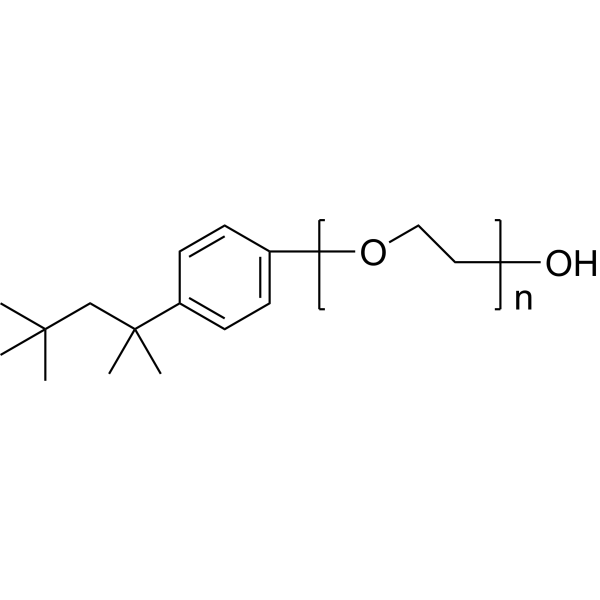
    Polyethylene glycol mono(4-tert-octylphenyl) ether is a non-denaturing detergent that solubilizes lipid membranes. Polyethylene glycol mono(4-tert-octylphenyl) ether is commonly used in laboratories and is applied to vaccines at different stages of the manufacturing process. Polyethylene glycol mono(4-tert-octylphenyl) ether is listed as an excipient in certain vaccines including split virus influenza vaccines. Polyethylene glycol mono(4-tert-octylphenyl) ether is a nonionic surfactant. Polyethylene glycol mono(4-tert-octylphenyl) ether induces Apoptosis in prostate and colon cancer cell lines and reduces the infectivity of classic enveloped viruses such as WNV .
    Polyethylene glycol mono(4-tert-octylphenyl) ether
  • HY-N0110A

    mAChR Indoleamine 2,3-Dioxygenase (IDO) Virus Protease Aurora Kinase Apoptosis Bacterial Parasite Infection Neurological Disease Metabolic Disease Inflammation/Immunology Cancer
    Palmatine is an orally active and irreversible indoleamine 2,3-dioxygenase 1 (IDO-1) inhibitor with IC50s of 3 μM and 157μM against HEK 293-hIDO-1 and rhIDO-1, respectively. Palmatine can also inhibit West Nile virus (WNV) NS2B-NS3 protease in an uncompetitive manner with an IC50 of 96 μM. Palmatine shows anti-cancer, anti-oxidation, anti-inflammatory, neuroprotection, antibacterial, anti-viral activities .
    Palmatine
  • HY-123805

    RIG-I-like receptor (RLR) HCV IFNAR Infection
    KIN1400 is a potent IRF3 activator. KIN1400 triggers IRF3-dependent innate immune antiviral genes (RIG-I, MDA5, IFIT1, and Mx1) and IFN-β expression. KIN1400 inhibits WNV and DV, two mosquito-borne members of the Flaviviridae and the genus Flavivirus. KIN1400 also inhibits HCV replication. KIN1400 induces innate antiviral immunity through a MAVS-IRF3 axis .
    KIN1400
  • HY-N0110B
    Palmatine hydroxide
    5+ Cited Publications

    mAChR Indoleamine 2,3-Dioxygenase (IDO) Virus Protease Aurora Kinase Apoptosis Bacterial Parasite Infection Neurological Disease Metabolic Disease Inflammation/Immunology Cancer
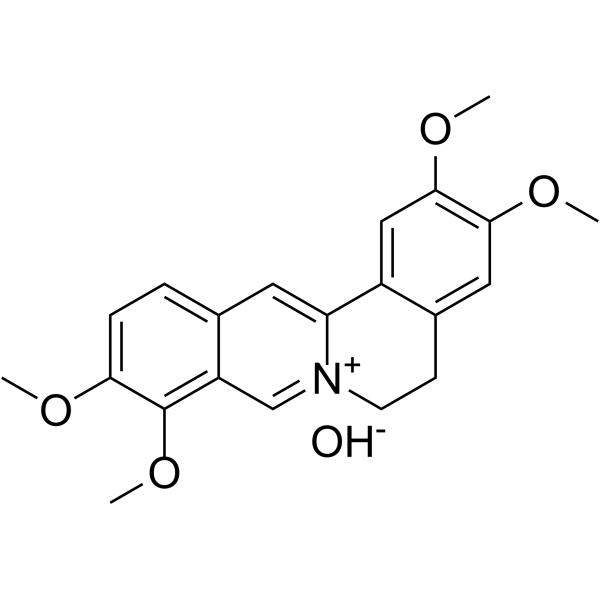
    Palmatine hydroxide is an orally active and irreversible indoleamine 2,3-dioxygenase 1 (IDO-1) inhibitor with IC50s of 3 μM and 157μM against HEK 293-hIDO-1 and rhIDO-1, respectively. Palmatine hydroxide can also inhibit West Nile virus (WNV) NS2B-NS3 protease in an uncompetitive manner with an IC50 of 96 μM. Palmatine hydroxide shows anti-cancer, anti-oxidation, anti-inflammatory, neuroprotection, antibacterial, anti-viral activities .
    Palmatine hydroxide
  • HY-117813

    Nucleoside Antimetabolite/Analog DNA/RNA Synthesis Dengue Virus Flavivirus CHIKV SARS-CoV Infection
    2-Thiouridine is an orally active modified nucleobase. 2-Thiouridine stabilizes U:A base pairs and destabilizes U:G wobble base pairs. 2-Thiouridine significantly improves the efficiency and accuracy of nonenzymatic replication of mixed-sequence A/U-containing RNA templates. 2-Thiouridine exhibits antiviral activity against multiple positive-sense single-stranded RNA viruses (DENV2, ZIKV, YFV, JEV, WNV, CHIKV, human coronaviruses ( [HCoV]-229E, HCoV-OC43, SARS-CoV), and MERS-CoV) .
    2-Thiouridine
  • HY-134910

    Virus Protease Infection
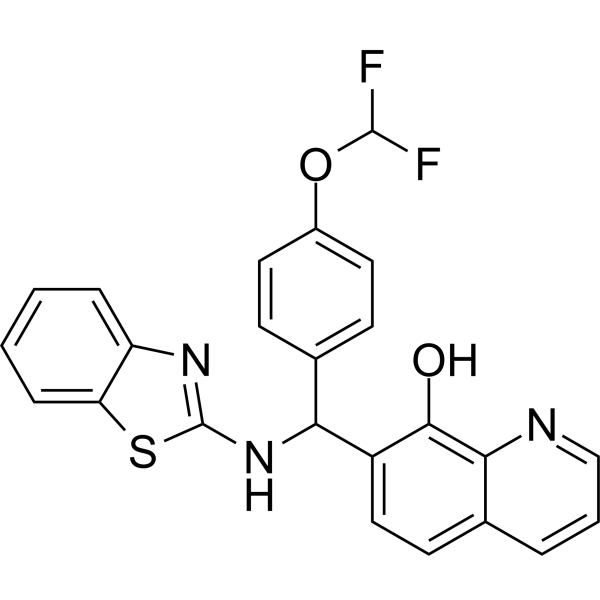
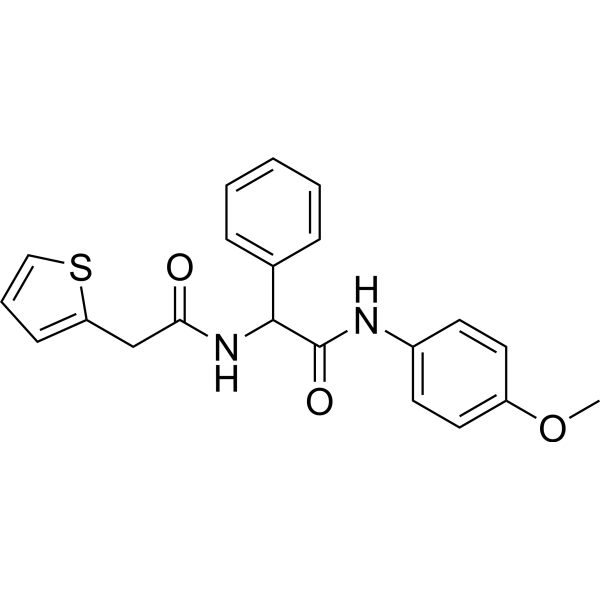
    SID-852843 is a WNV NS2B-NS3 proteinase inhibitor. SID-852843 can inhibit WNV NS2B-NS3 proteinase activity with IC50 value of 0.105 μM. SID-852843 can be used for the research of virus infection .
    SID-852843
  • HY-165485

    Flavivirus HBV Dengue Virus Infection
    OSL-95II is an antiviral agent. OSL-95II is a potent BVDV and WNV inhibitor. OSL-95II is a better inhibitor of HBV than SP169. OSL-95II inhibits dengue virus production .
    OSL-95II
  • HY-148310

    Virus Protease Infection
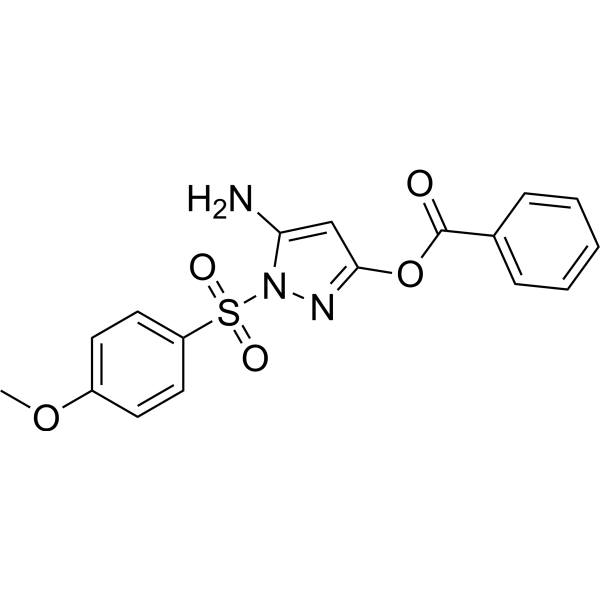
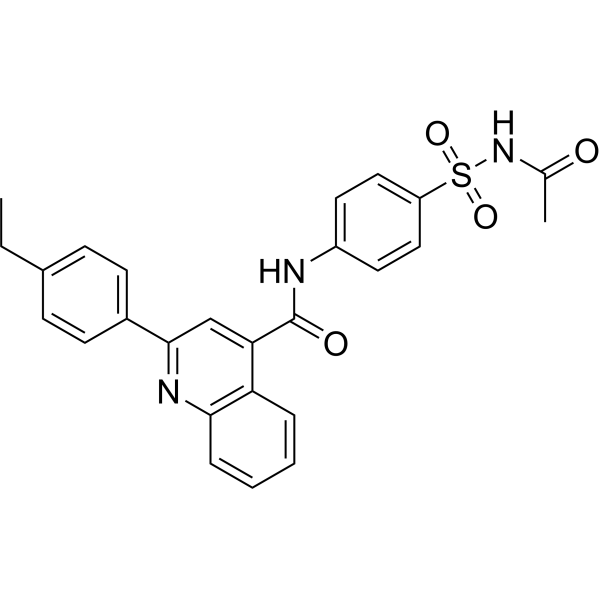
    Flaviviruses-IN-2 (compound 78) is a potent flaviviruses inhibitor. Flaviviruses-IN-2 reduces the WNV (West Nile virus) protease activity, with inhibition of 56% .
    Flaviviruses-IN-2
  • HY-P990817

    Dengue Virus Flavivirus Infection
    Anti-West Nile/dengue virus E protein Antibody (E60) is mouse-derived IgG2a κ type antibody inhibitor, targeting to West Nile/dengue virus E protein. Anti-West Nile/dengue virus E protein Antibody (E60) can cross-neutralize West Nile virus (WNV) and dengue virus (DENV) envelope (E) protein. Anti-West Nile/dengue virus E protein Antibody (E60) can be used for the researches of WNV and DENV infection .
    Anti-West Nile/dengue virus E protein Antibody (E60)
  • HY-153076

    Virus Protease Infection
    Flaviviruses-IN-3 (compound 87) is a potent flaviviruse inhibitor. Flaviviruses-IN-3 reduces the WNV (West Nile virus) protease activity, with a inhibition of 54% .
    Flaviviruses-IN-3
  • HY-P2260A

    Autophagy HIV Infection
    Tat-beclin 1 TFA, a peptide derived from a region of the autophagy protein (beclin 1), is a potent inducer of autophagy and interacts with negative regulator of autophagy, GAPR-1 (GLIPR2). Tat-beclin 1 TFA decreases the accumulation of polyglutamine expansion protein aggregates and the replication of several pathogens (including HIV-1) in vitro, and reduces mortality in mice infected with chikungunya (CHIKV) or West Nile virus (WNV) .
    Tat-beclin 1 TFA
  • HY-161804

    PROTACs Dengue Virus Infection
    GNF-2-deg is a PROTAC degrader for dengue virus envelope protein (DENV E protein) with DC50 of 0.83 μM. GNF-2-deg prevents viral entry by inhibiting E-mediated membrane fusion, prevents virion production by protein degradation, and thereby exhibits antiviral activity against DENV 2 with EC90 of 3.5 μM. GNF-2-deg exhibits antiviral activity against ZIKV, JEV, WNV and YFV with EC90 of 1.96-7.79 μM. (Pink: ligand for target protein (HY-161805); Black: linker (HY-42149); Blue: ligand for E3 ligase (HY-23095))
    GNF-2-deg
  • HY-179013

    Virus Protease Flavivirus Dengue Virus Infection
    NS2B/NS3-IN-9 (Compound 73) is a broad-spectrum, non-competitive anti-Orthoflavivirus lipopeptide inhibitor targeting the NS2B-NS3 protease. NS2B/NS3-IN-9 exhibits IC50 values for Dengue virus DENV2 NS2B-NS3, West Nile virus WNV NS2B-NS3, and Zika virus ZIKV NS2B-NS3 of 2.4, 7.2, and 1.9 μM, respectively. NS2B/NS3-IN-9 also exhibits antiviral activity at the cellular level against DENV2, WNV, and ZIKV, with EC50 values of 4.1, 4.9, and 5.0 μM, respectively. NS2B/NS3-IN-9 has no significant toxicity to cells. NS2B/NS3-IN-9 can be used for the study of anti-Orthoflavivirus .
    NS2B/NS3-IN-9
  • HY-N0110R

    Apoptosis Virus Protease Indoleamine 2,3-Dioxygenase (IDO) Parasite Bacterial Aurora Kinase mAChR Reference Standards Infection Neurological Disease Metabolic Disease Inflammation/Immunology Cancer
    Palmatine (chloride) (Standard) is the analytical standard of Palmatine (chloride). This product is intended for research and analytical applications. Palmatine chloride is an orally active and irreversible indoleamine 2,3-dioxygenase 1 (IDO-1) inhibitor with IC50s of 3 μM and 157μM against HEK 293-hIDO-1 and rhIDO-1, respectively. Palmatine chloride can also inhibit West Nile virus (WNV) NS2B-NS3 protease in an uncompetitive manner with an IC50 of 96 μM. Palmatine chloride shows anti-cancer, anti-oxidation, anti-inflammatory, neuroprotection, antibacterial, anti-viral activities .
    Palmatine chloride (Standard)
  • HY-153921

    Dengue Virus Infection
    DEPN-8 is a WNV protease substrate. DEPN-8 is used for dengue virus protease inhibitor development .
    DEPN-8
  • HY-18223

    Dengue Virus Infection
    NITD-203 is a RdRp domain inhibitor. NITD 203 induces inhibition of the four DENV serotypes, as well as of YFV and WNV .
    NITD-203
  • HY-P4209A

    Virus Protease Others
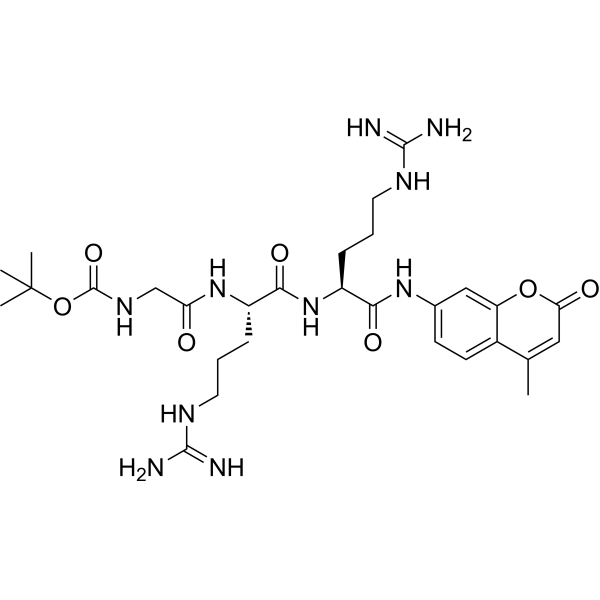
    Boc-GRR-AMC (TFA) is a tri-peptide Substrate. Boc-GRR-AMC can be used for a fluorogenic West Nile virus (WNV) substrate, profiling the substrate specificity for the NS2B-NS3 proteases or determining the pH optimum of LdMC activity .
    Boc-GRR-AMC TFA
  • HY-P5312

    Virus Protease Infection
    Abz-Nle-Lys-Arg-Arg-Ser-3-(NO2)Tyr is a WNV NS2B-NS3 protease substrate. Abz-Nle-Lys-Arg-Arg-Ser-3-(NO2)Tyr is used for WNV NS2B-NS3 protease substrate peptide selective inhibitor development .
    Abz-Gly-Leu-Lys-Arg-Gly-Gly-3-(NO2)Tyr
  • HY-P5312A

    Virus Protease Infection
    Abz-Gly-Leu-Lys-Arg-Gly-Gly-3-(NO2)Tyr acetate is the acetate salt form of Abz-Gly-Leu-Lys-Arg-Gly-Gly-3-(NO2)Tyr. Abz-Gly-Leu-Lys-Arg-Gly-Gly-3-(NO2)Tyr acetate is the substrate for WNV NS2B NS3 protease, which is utilized for the development of WNV protease substrate peptide selective inhibitor .
    Abz-Gly-Leu-Lys-Arg-Gly-Gly-3-(NO2)Tyr acetate
  • HY-P991771

    Flavivirus Infection
    Anti-WNV E protein DI-DII Antibody (E53) reacts with an epitope in domain I and II of the envelope (E) protein. Anti-WNV E protein DI-DII Antibody (E53) blocks Vero cell infection with WNV in vitro. Recommend Isotype Controls: Mouse IgG2a kappa, Isotype Control (HY-P99978) .
    Anti-WNV E protein DI-DII Antibody (E53)
  • HY-P991772

    Flavivirus Infection
    Anti-WNV E protein DIII-LR Antibody (E16) reacts with the domain III lateral ridge (DIII-LR) of the envelope (E) protein of West Nile Virus (WNV). Anti-Mouse CD11b Antibody (5C6) protects mice from WNV infection. Recommend Isotype Controls: Mouse IgG2b kappa, Isotype Control (HY-P99982) .
    Anti-WNV E protein DIII-LR Antibody (E16)
  • HY-131379

    Flavivirus Dengue Virus HCV Influenza Virus Infection
    ZX-2401 (Compound 98a) is a 1,3,5-Triazine-based analogue of Purine (HY-34431). ZX-2401 has a significant antiviral activity against viruses of the Flaviviridae family, such as West Nile Virus (WNV), Hepatitis C (HCV), Yellow Fever Virus (YFV), Dengue Virus (DV), Bovine Viral Diarrhea Virus (BVDV) and Banzi Virus (BV) with EC90s of 0.6-10 μg/mL. ZX-2401 significantly reduces virus production with an EC90 of 3.3 mg/mL. ZX-2401 can be used for influenza infections research .
    ZX-2401
  • HY-P991774

    Flavivirus Infection
    Anti-West Nile virus NS1 Antibody (10NS1) reacts with non-structural protein 1 (NS1) of West Nile virus (WNV). Anti-West Nile virus NS1 Antibody (10NS1) offers significant protection against flaviviral infections in vivo. Recommend Isotype Controls: Mouse IgG2a kappa, Isotype Control (HY-P99978) .
    Anti-West Nile virus NS1 Antibody (10NS1)
  • HY-181990

    Virus Protease Flavivirus
    IRBM-Z-1 is a non-competitive inhibitor of Zika virus (ZIKV) NS2B-NS3 protease, with an IC50 of 1.8 μM. IRBM-Z-1 also exhibits inhibitory activity against the NS2B-NS3 proteases of T156I-mutated dengue virus 2 (DENV2) and West Nile virus (WNV), with IC50 values of 3.9 μM and 4.7 μM, respectively. IRBM-Z-1 inhibits ZIKV replication, attenuates virus-induced cytopathic effects. IRBM-Z-1 is applicable to research related to ZIKV infection .
    IRBM-Z-1
  • HY-156052

    Flavivirus Dengue Virus Virus Protease Infection
    CN-716 dihydrochloride is a reversible covalent flavivirus NS2B·NS3 protease inhibitor with antiviral activity. CN-716 dihydrochloride effectively inhibits the replication of dengue virus (DENV2), West Nile virus (WNV) and Zika virus (ZIKV). The IC50 values of CN-716 dihydrochloride against the proteases of the above three viruses are 0.066 μM, 0.11 μM and 0.25 μM, respectively, while the Ki values against the same proteases are 0.051 μM, 0.082 μM and 0.04 μM, respectively. CN-716 dihydrochloride can be used to study the infection mechanisms of dengue fever, West Nile fever and Zika virus infection .
    CN-716 dihydrochloride
  • HY-181991

    Virus Protease Flavivirus Infection
    IRBM-Z-2 is a non-competitive, orally active Zika virus (ZIKV) NS2B-NS3 protease inhibitor, with IC50 values of 0.04 μM and 3.1 μM against the wild-type and I156T mutant strains, respectively. IRBM-Z-2 exhibits broad-spectrum anti-flavivirus potential, with IC50 values of 2.1 μM and 0.09 μM against the NS2B-NS3 proteases of dengue virus 2 (DENV2) and West Nile virus (WNV), respectively. IRBM-Z-1 inhibits ZIKV replication and alleviates virus-induced cytopathic effects. IRBM-Z-1 can be used in studies related to ZIKV infection .
    IRBM-Z-2

Inquiry Online

Your information is safe with us. * Required Fields.

Salutation


Country or Region *

Applicant Name *


Organization Name *

Department *


Email Address *


Product Name *

Cat. No.


Requested quantity *

Phone Number *


Remarks

Inquiry Online

Inquiry Information

Product Name:
Cat. No.:
Quantity:
MCE Japan Authorized Agent:

