1. Search Result
Search Result
Results for "

active cavity

" in MedChemExpress (MCE) Product Catalog:

17

Inhibitors & Agonists

1

Peptides

2

Natural
Products

1

Isotope-Labeled Compounds

Cat. No. Product Name Target Research Areas Chemical Structure
  • HY-I0096

    iGluR HIV HIV Integrase Neurological Disease
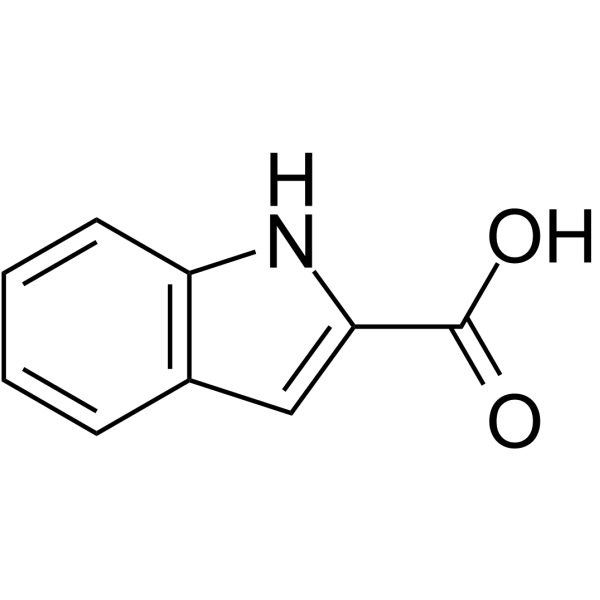
    Indole-2-carboxylic acid (I2CA) is a competitive antagonist of the glycine site of the NMDA receptor (Ki=15 μM, 5-fluoro-I2CA) and an inhibitor of HIV-1 integrase. Indole-2-carboxylic acid is selective for the glycine site of the NMDA receptor and blocks the enhancement of NMDA receptor by competitively inhibiting the binding of glycine to the NMDA receptor. Indole-2-carboxylic acid can also inhibit the strand transfer activity of HIV-1 integrase by chelating Mg 2+ at the active site of integrase and interacting with the hydrophobic cavity. Indole-2-carboxylic acid can be used in the study of neurological diseases (such as stroke, epilepsy) and HIV-1 infection .
    Indole-2-carboxylic acid
  • HY-130187A
    Sapienic acid sodium
    1 Publications Verification

    Bacterial Infection
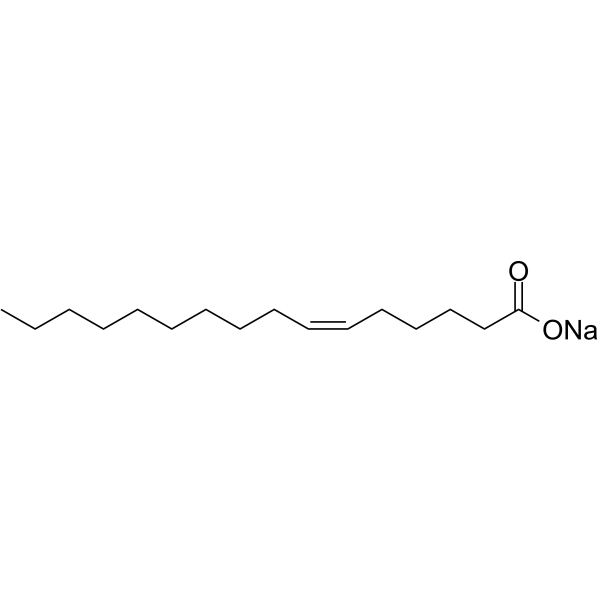
    Sapienic acid sodium is a fatty acid commonly found on the skin and in mucosa. Sapienic acid sodium has variable antimicrobial activities against Gram-positive and Gram-negative bacteria found on the skin and in the oral cavity. Sapienic acid sodium is active against Streptococcus sanguinis, Streptococcus mitis and Fusobacterium nucleatum with MBC values of 31.3 μg/mL, 375.0 μg/mL and 93.8 μg/mL, respectively .
    Sapienic acid sodium
  • HY-139731

    Transketolase Herbicide Others
    Transketolase-IN-1 is a transketolase inhibitor and a herbicide. Transketolase-IN-1 inhibits weed growth and exhibits safety for maize and wheat at specified application rates. Transketolase-IN-1 can be used for the research of weed control in wheat and maize fields .
    Transketolase-IN-1
  • HY-B1390A

    Environmental Pollutants Bacterial Infection
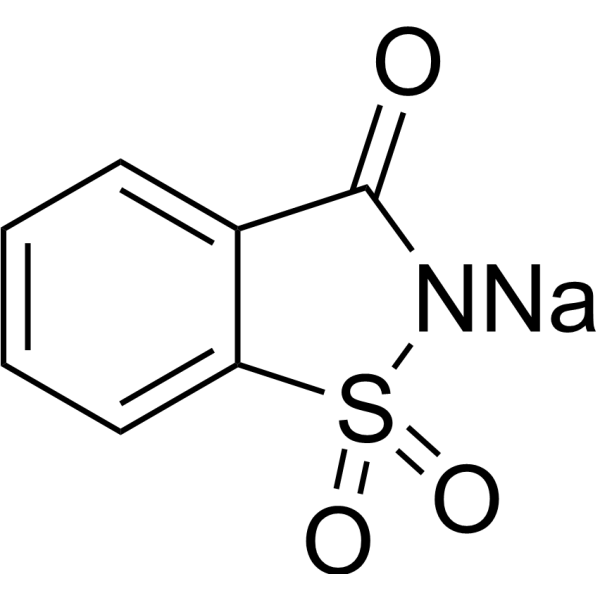
    Saccharin sodium is an orally active, non-caloric artificial sweetener (NAS). Saccharin sodium has bacteriostatic and microbiome-modulating properties. Saccharin binds to and signals via specific taste receptors, not only in the oral cavity but also alongside the gastrointestinal tract. Saccharin has been reported to bind the human and rodent heteromeric guanine nucleotide-binding protein (G protein) coupled sweet taste receptors T1R2/T2R3 as well as the human bitter taste receptor T2R43 and T2R44. Saccharin can inhibit bacterial growth in vitro .
    Saccharin sodium
  • HY-130187
    Sapienic acid
    1 Publications Verification

    Bacterial Infection
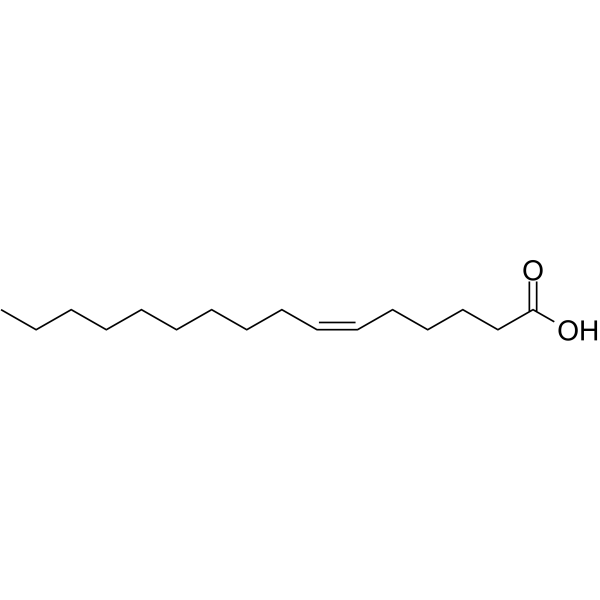
    Sapienic acid is a fatty acid commonly found on the skin and in mucosa. Sapienic acid has variable antimicrobial activities against Gram-positive and Gram-negative bacteria found on the skin and in the oral cavity. Sapienic acid is active against Streptococcus sanguinis, Streptococcus mitis and Fusobacterium nucleatum with MBC values of 31.3 μg/mL, 375.0 μg/mL and 93.8 μg/mL, respectively .
    Sapienic acid
  • HY-116188

    Others Inflammation/Immunology
    HX1 is a potent reversible myeloperoxidase (MPO) inhibitor with an IC50 value of 50 nM. HX1 is bound within the active site cavity above the heme and blocks the substrate channel. HX1 is promising for research of inflammatory diseases .
    HX1
  • HY-B1390AR

    Bacterial Reference Standards Infection
    Saccharin (sodium) (Standard) is the analytical standard of Saccharin (sodium). This product is intended for research and analytical applications. Saccharin sodium is an orally active, non-caloric artificial sweetener (NAS). Saccharin sodium has bacteriostatic and microbiome-modulating properties. Saccharin binds to and signals via specific taste receptors, not only in the oral cavity but also alongside the gastrointestinal tract. Saccharin has been reported to bind the human and rodent heteromeric guanine nucleotide-binding protein (G protein) coupled sweet taste receptors T1R2/T2R3 as well as the human bitter taste receptor T2R43 and T2R44. Saccharin can inhibit bacterial growth in vitro .
    Saccharin sodium (Standard)
  • HY-130187S

    Isotope-Labeled Compounds Bacterial Infection
    Sapienic acid-d19 is a deuterated labeled Sapienic acid . Sapienic acid is a fatty acid commonly found on the skin and in mucosa. Sapienic acid has variable antimicrobial activities against Gram-positive and Gram-negative bacteria found on the skin and in the oral cavity. Sapienic acid is active against Streptococcus sanguinis, Streptococcus mitis and Fusobacterium nucleatum with MBC values of 31.3 μg/mL, 375.0 μg/mL and 93.8 μg/mL, respectively .
    Sapienic acid-d19
  • HY-133031A

    Histone Methyltransferase Others
    CSV0C018875 hydrochloride is a G9a (EHMT2) inhibitor that inhibits G9a activity. CSV0C018875 can effectively inhibit G9a activity in both enzyme and cell-based assays, and its toxicity is much lower than that of the known G9a inhibitor BIX-01294. CSV0C018875 binds tightly to the active site cavity of G9a, thereby improving the binding firmness and prolonging the residence time of the compound, further enhancing the inhibitory effect of G9a. CSV0C018875 has the potential to improve its ADME (absorption, distribution, metabolism and excretion) and pharmacodynamic properties through further optimization .
    CSV0C018875 hydrochloride
  • HY-183661

    SARS-CoV Infection
    SCHEMBL12616233 is a SARS-CoV-2 main protease (MPro) inhibitor. SCHEMBL12616233 binds to the active cavity of SARS-CoV-2 MPro and forms a stable complex. SCHEMBL12616233 can be used for the research of covid-19 .
    SCHEMBL12616233
  • HY-N19854

    NO Synthase Neurological Disease
    Mariaterpenoside A is an inducible nitric oxide synthase (iNOS) inhibitor. Mariaterpenoside A interacts with the active cavity of iNOS protein via hydrogen bonds with specific residues of the binding site. Mariaterpenoside A suppresses NO release in LPS (HY-D1056)-induced murine microglial BV-2 cells. Mariaterpenoside A can be used for the research of neurodegenerative disease .
    Mariaterpenoside A
  • HY-183076

    Bacterial Infection
    AW00718 is a Brachyspira pilosicoli glutamate racemase (Bp-MurI) inhibitor. AW00718 binds to Bp-MurI active site residues, forming stable hydrogen bonds and interactions with conserved amino acids in the enzyme’s binding cavity. AW00718 exerts antibacterial and bactericidal activity against Brachyspira pilosicoli in vitro. AW00718 can be used for the research of intestinal spirochaetosis .
    AW00718
  • HY-P11720

    Beta-lactamase Bacterial Infection
    M104 peptide is an OXA-48 carbapenemase inhibitor and antibiotic potentiator. M104 peptide effectively blocks the binding and active site cavity of OXA-48 . M104 peptide restores Meropenem (HY-13678)’s antibacterial activity against OXA-48-producing Klebsiella pneumoniae. M104 peptide can be used for the research of Carbapenem-resistant Klebsiella pneumoniae infection .
    M104 peptide
  • HY-181562

    DNA/RNA Synthesis Cancer
    WRN-IN-24 is an orally active allosteric covalent Werner syndrome helicase (WRN) inhibitor with an IC50 of 201 nM. WRN-IN-24 binds to a novel allosteric cavity, forms an additional hydrogen bond with K894, and functionally inhibits WRN activity. WRN-IN-24 inhibits colorectal cancer cells proliferation and exerts dose-dependent antitumor activity in xenograft mouse models. WRN-IN-24 can be used for the research of microsatellite instability-high cancers, including colorectal cancer .
    WRN-IN-24
  • HY-113658

    Endogenous Metabolite Others
    ts-SA is a carbonic anhydrase (CA) inhibitor with activity against seven human CA homologues. ts-SA can bind to the Zn(II) ion in the enzyme active site in a deprotonated form. The organic skeleton of ts-SA extends in the enzyme cavity and participates in multiple interactions with amino acid residues and water molecules. Due to its structural differences, the inhibitory performance of ts-SA is significantly better than that of another pyridine derivative. ts-SA exhibits low nanomolar inhibitory activity and is a multi-target CA inhibitor .
    ts-SA
  • HY-153149

    Adenosine Receptor Apoptosis PGC-1α Metabolic Disease Inflammation/Immunology
    LJ-2698 is an orally active adenosine A3 receptor antagonist. LJ-2698 induces increased levels of anti-inflammatory cytokines in macrophages and significantly elevates the number of anti-inflammatory M2 macrophages in the lung. LJ-2698 prevents alveolar cavity enlargement, restores pulmonary function, inhibits matrix metalloproteinase activity and pulmonary cell apoptosis in the lung tissues of mice. LJ-2698 prevents renal injury, inhibits renal lipid accumulation, and increases PGC1α levels in renal tissues of mice with diabetic nephropathy. LJ-2698 is applicable to the research of emphysema and diabetic nephropathy .
    LJ-2698
  • HY-183329

    Microtubule/Tubulin Apoptosis Cancer
    Tubulin polymerization-IN-92, an analog of KX-01 (HY-10340), is a potent orally active tubulin polymerization inhibitor that binds tubulin with a Ka of 1.29 μM. Tubulin polymerization-IN-92 simultaneously occupies the colchicine site in β-tubulin and a cavity in α-tubulin. Tubulin polymerization-IN-92 exerts antiproliferative activity, induces G2/M cell cycle arrest and apoptosis in cancer cells. Tubulin polymerization-IN-92 inhibits tumor growth in mouse xenograft models. Tubulin polymerization-IN-92 can be used for the research of colon cancer, cervical cancer, and Paclitaxel (HY-B0015)-resistant ovarian cancer .
    Tubulin polymerization-IN-92

Inquiry Online

Your information is safe with us. * Required Fields.

Salutation


Country or Region *

Applicant Name *


Organization Name *

Department *


Email Address *


Product Name *

Cat. No.


Requested quantity *

Phone Number *


Remarks

Inquiry Online

Inquiry Information

Product Name:
Cat. No.:
Quantity:
MCE Japan Authorized Agent:

