


18 Results for "

adherent

" in MedChemExpress (MCE) Product Catalog:
Products (18)

18 Results for "adherent" in MCE Product Catalog:

5
5 Cited Publications
Cat. No.: HY-K3007

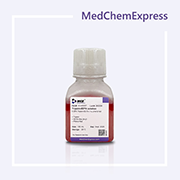
MCE 0.25% Trypsin-EDTA (1x), phenol red consists of dried trypsin powder dissolved in EDTA. MCE Trypsin hydrolyzes intercellular proteins and disperses primary tissues or adherent cells into individual cells, and can be widely used for cell dissociation, cell culture passaging and primary tissue dissociation. The 100 mL is defined as the base specification. All larger sizes correspond to incremental volumes of this base.

loading...
    loading...
1
1 Cited Publications
Cat. No.: HY-148243
CAS No.: 2756014-24-9
Purity:  99.69%
Synonyms: STL5-T-0057
Research Areas:  

Cancer

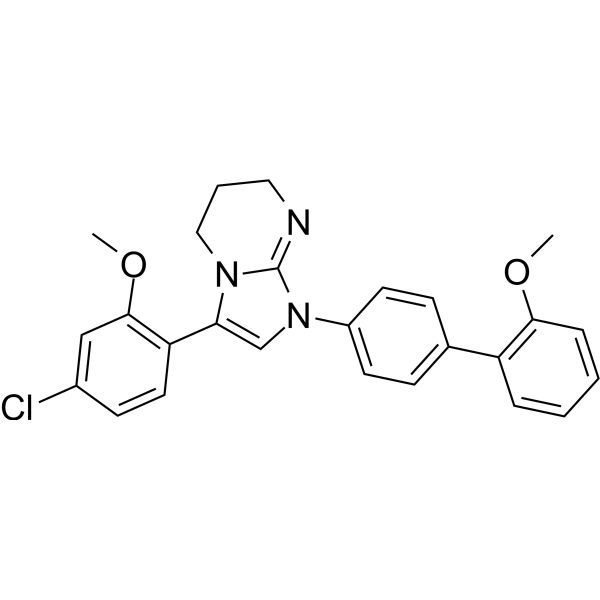
IGUANA-1 free base (STL5-T-0057) is an selective ALDH1 B1 inhibitor with an IC50 value of 30 nM. IGUANA-1 free base inhibits cell growth of SW480 cells in adherent and spheroid conditions with IC50 values of 2.46 and 0.39 μM, respectively. IGUANA-1 free base can be used for the research of cancer .
loading...
    loading...
Cat. No.: HY-129047B
CAS No.: 9002-07-7
Research Areas:  

Others

Recombinant Trypsin Solution is an animal-free trypsin solution used to digest cells or tissues. Recombinant Trypsin Solution has high stability at room temperature and gentle digestion, and can be used to digest weakly adherent cells or stem cells under low serum or serum-free culture conditions. Compared with traditional trypsin digestion solution, Recombinant Trypsin Solution does not contain any animal-derived ingredients, is gentle and effective, and can replace the application of animal-derived trypsin in cell digestion .
loading...
    loading...
Cat. No.: HY-12875
CAS No.: 1637739-82-2
Purity:  99.45%
Target:  

Ras

Research Areas:  

Cancer

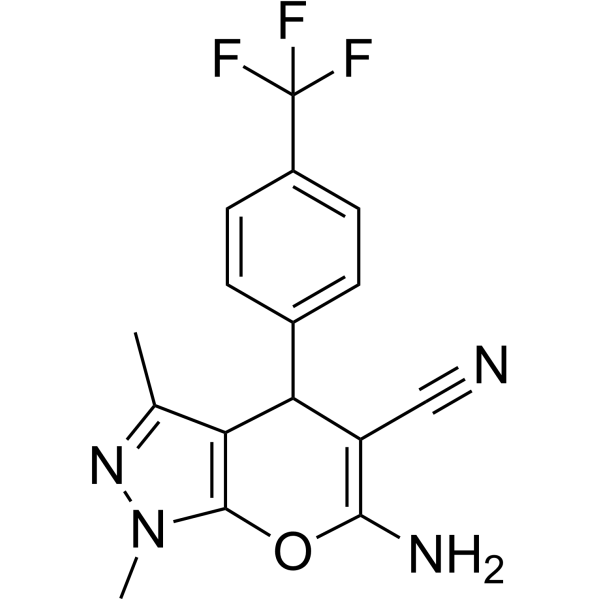
BQU57 is a selective inhibitor of RalA/RalB small GTPases, with a binding potency (Kb) of 7.7 μM for RalB-GDP. BQU57 can block its interaction with effector proteins (such as SEC5 and EXO84), inhibiting tumor cell migration, invasion and non-adherent growth. BQU57 downregulates the NF-κB signaling pathway, reduces the expression of IL-6, IL-8 and MMP-13, and inhibits apoptosis by regulating the Bcl-2/Bax balance. BQU57 also protects the extracellular matrix by inhibiting the Ral/NF-κB pathway and can be used for the study of degenerative diseases. BQU57 exhibits significant antitumor activity in triple-negative breast cancer (TNBC) models, inhibiting orthotopic tumor growth and lung metastasis and enhancing paclitaxel chemotherapy sensitivity .
loading...
    loading...
Cat. No.: HY-174497
Target:  

mRNA

Research Areas:  

Others

eGFP mRNA expresses green fluorescent protein derived from the jellyfish Aequorea victoria. eGFP is a commonly used direct-detection reporter gene in mammalian cell culture, which produces bright green fluorescence. This product is synthesized without modified nucleosides, with a Cap1 version cap analog at the 5' end and a 100nt PolyA tail at the 3' end. It can be used as a positive reference for IVT (in vitro transcription) or LNP delivery systems.
loading...
    loading...
Cat. No.: HY-150287A
Synonyms: ITS-X
Insulin-Transferrin-Selenium-Ethanolamine (ITS-X) is a cell culture supplement as well as a cell growth and adhesion promoter. Insulin-Transferrin-Selenium-Ethanolamine supports adhesion, pseudopodium formation, pseudopodium elongation and proliferation of adherent cancer cells in serum-free culture systems .
loading...
    loading...
Cat. No.: HY-131131
CAS No.: 124412-00-6
Purity:  99.81%
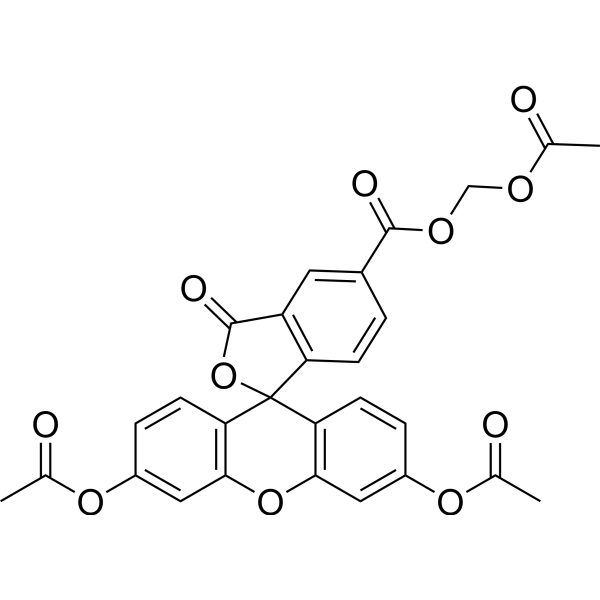
5-CFDA-AM is a cell-permeable esterase substrate that can be used as an active probe to measure enzyme activity and cell membrane integrity. 5-CFDA-AM is electroneutral and can enter the cell at a lower concentration than CFDA, where it is hydrolysed by intracellular esterases to produce carboxyfluorescein, which contains an additional negative charge and can be better retained in the cell. 5-CFDA-AM can be used to detect cell viability .
loading...
    loading...
Cat. No.: HY-N3341
CAS No.: 179388-53-5
Research Areas:  

Infection

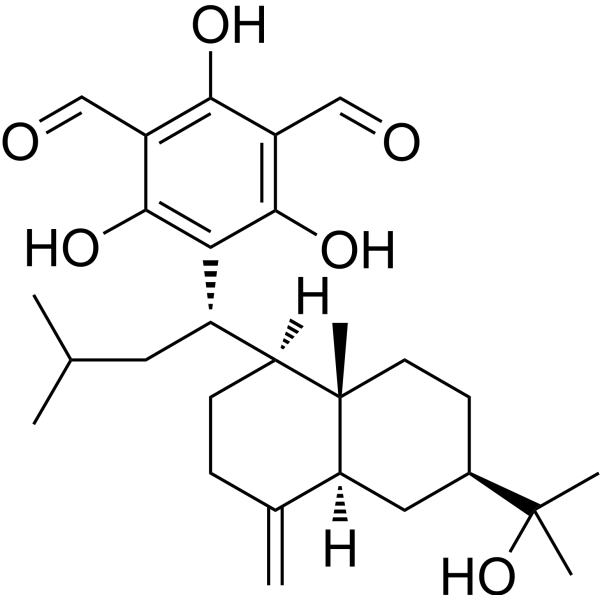
Macrocarpal H is a natural compound that can be isolated from the Leaves of Eucalyptus globulus. Macrocarpal H exhibits antibacterial activity against Gram-positive cariogenic bacteria and Gram-negative periodontopathic bacteria. Macrocarpal H inhibits adherent water-insoluble glucan synthesis via glucosyltransferase. Macrocarpal H can be used for the research of caries, periodontal disease, dental caries, periodontal disorders .
loading...
    loading...
Cat. No.: HY-W134423B
CAS No.: 9002-18-0
Agar, meets USP testing specifications is a high-quality selective growth support and substrate for non-adherent cells. Agar, meets USP testing specifications effectively supports the growth, colony formation and metachromatic matrix production of chondrocytes, and also facilitates the isolation and differentiation of pure chondrocyte strains by restricting the proliferation of fibroblast-like cells. Chondrocytes grown in Agar, meets USP testing specifications can be successfully transferred to a liquid suspension culture system, where they continue to proliferate while retaining the characteristics exhibited during growth in agar .
loading...
    loading...
Cat. No.: HY-P10365
Research Areas:  

Others

Vmm-p15 is a peptide agonist optimized for the adhesion G protein-coupled receptor GPR64 (also known as ADGRG2 or HE6). The affinity of VPM-p15 with GPR64 is significantly higher than that of the original p15 peptide. The cAMP level induced by VMM-P15 increased significantly, activated GPR64, and triggered downstream Gs, Gq, and G12/13 signaling. VPM-p15 can be used to study the activation mechanism of adherent GPCR family members .
loading...
    loading...
Cat. No.: HY-E70560
CAS No.: 534583-22-7
Research Areas:  

Others

Cellular digestive enzyme is often used as an alternative to trypsin for detaching adherent cells from a culture dish .
loading...
    loading...
Cat. No.: HY-P2633
CAS No.: 400090-20-2
Synonyms: AC-100
Target:  

Peptides

Research Areas:  

Metabolic Disease

Dentonin (AC-100) is a synthetic fragment derived from MEPE. Dentonin enhances osteogenesis by promoting osteoprogenitor adhesion and facilitates immature adherent cells survival. Dentonin has no significant effect to mature osteoblasts. Dentonin can be used for the research of phosphate homeostasis and bone metabolism .
loading...
    loading...
Cat. No.: HY-P2633A
Synonyms: AC-100 TFA
Target:  

Integrin

Research Areas:  

Metabolic Disease

Dentonin TFA (AC-100 TFA) is a synthetic fragment derived from MEPE. Dentonin TFA enhances osteogenesis by promoting osteoprogenitor adhesion and facilitates immature adherent cells survival. Dentonin TFA has no significant effect to mature osteoblasts. Dentonin TFA can be used for the research of phosphate homeostasis and bone metabolism .
loading...
    loading...
Cat. No.: HY-117358
CAS No.: 113302-01-5
Research Areas:  

Inflammation/Immunology

KW-5805 is an orally effective anti-ulcer agent that potently inhibits gastric injury induced by various necrotizing agents. KW-5805 enhances the activity of gastric mucosal glucosamine synthetase, increases the levels of gastric adherent mucus and mucosal glycoproteins, and promotes the biosynthesis, storage and secretion of gastric mucus. KW-5805 inhibits the reduction of gastric mucosal blood volume and oxygen supply caused by hemorrhagic shock. KW-5805 suppresses the development of experimental gastric and duodenal ulcers, necrotizing agent-induced gastric mucosal injury, and induced gastric acid secretion. KW-5805 can be used in ulcer-related research .
loading...
    loading...
Cat. No.: HY-K2027

MCE OptiLNP Gene Editing Kit is a ready-to-use transfection reagent based on LNP technology. It is designed for the efficient co-transfection of Cas9 mRNA and sgRNA during gene editing in common cells (adherent or suspension cells).

loading...
    loading...
Cat. No.: HY-K2004

MCE Trypan Blue Staining Solution (0.4%) is suitable for viability assessment of most adherent and suspension cell lines. It is commonly used for cell culture quality control, evaluation of cellular responses following drug treatment, and viability measurements after cell thawing and recovery.

loading...
    loading...
Cat. No.: HY-K3028

MCE MEM Reduced Serum Medium for Transfection (Phenol Red) is a chemically defined essential medium developed based on classical MEM formulation. Enables at least a 50% reduction in fetal bovine serum (FBS) usage while maintaining normal cell growth rates and cellular morphology, and is suitable for the culture of a wide variety of suspension and adherent mammalian cells.

loading...
    loading...
Cat. No.: HY-K3027

Minimum Essential Medium (MEM), also known as Minimal Essential Medium, was developed by Harry Eagle based on Eagle’s Basal Medium (BME). It is a basic cell culture medium with a simple formulation and broad applicability, and is one of the most commonly used media in animal cell culture. MEM contains only 12 essential amino acids, L-glutamine, and 8 vitamins. It is primarily used for the culture of adherent cells. With appropriate formulation modifications, it can also be used for other types of cell culture.

loading...
    loading...
  • 1

