9 Results for "

ammonium nitrogen

" in MedChemExpress (MCE) Product Catalog:
Products (9)

9 Results for "ammonium nitrogen" in MCE Product Catalog:

58
58 Publications Verification
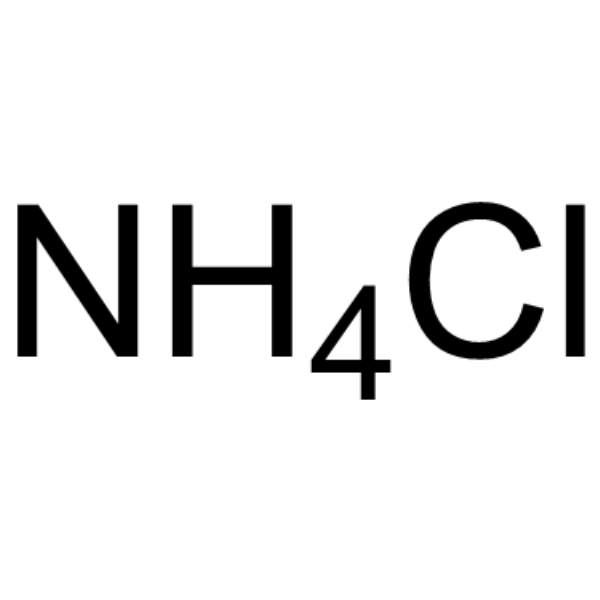
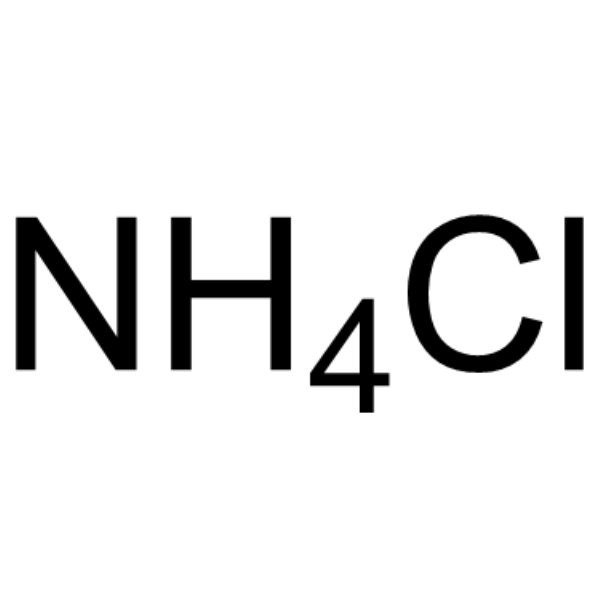
Cat. No.: HY-Y1269C
CAS No.: 12125-02-9
Synonyms: Salmiac, for cell culture
Ammonium chloride, for cell culture (Salmiac, for cell culture) is a reagent that can be used in cell culture to provide a source of nitrogen. Ammonium chloride can be used as a heteropolar compound to regulate pH value, which can cause intracellular alkalination and metabolic acidosis, thus affecting the activity of enzymes and affecting the process of biological systems. Ammonium chloride acts as an autophagy inhibitor.Ammonium chloride is also a lysosome inhibitor.
loading...
    loading...
2
2 Cited Publications
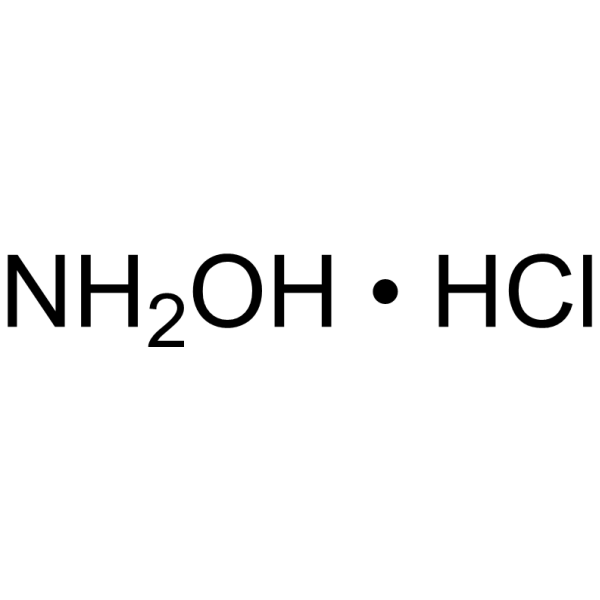
Cat. No.: HY-Y0882
CAS No.: 5470-11-1
Target:  

Monoamine Oxidase

Research Areas:  

Cardiovascular Disease

Hydroxylamine hydrochloride is a selective Monoamine oxidase (MAO) inhibitor used for inhibiting of platelet aggregation. Hydroxylamine hydrochloride is an intermediate of nitrogen cycle in aerobic ammonium oxidizers microorganisms, such as ammonium oxidizing bacteria (AOB), ammonium oxidizing archaea (AOA) and complete ammonium oxidizing bacteria (comammox). Hydroxylamine hydrochloride impacts NO and N2O emissions by aerobic ammonium oxidizers microorganisms and inhibits nitrite oxidizing bacteria (NOB) activity .
loading...
    loading...
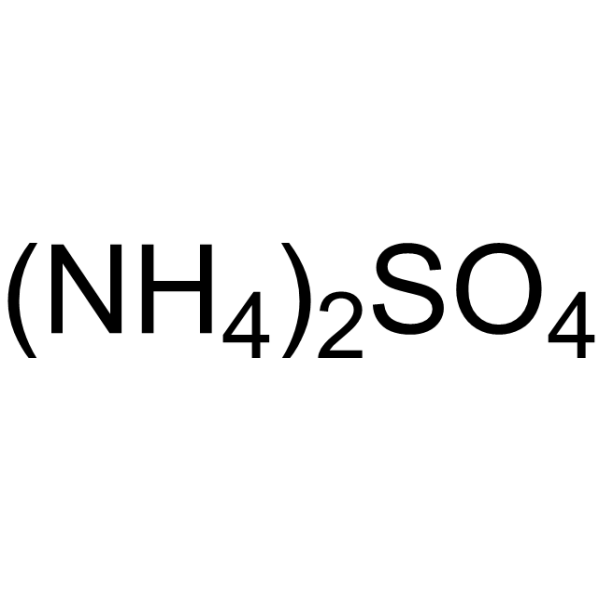
Cat. No.: HY-Y0261A
CAS No.: 7783-20-2
Ammonium sulphate,≥99.0%,AR is an inorganic sulfate salt used for molecular biology . Ammonium sulphate,≥99.0%,AR can be used to precipitate proteins, separate antibodies, and enhance antigen-antibody reactions. Ammonium sulphate,≥99.0%,AR can serve as a nitrogen source in plant fertilizers and has developmentally toxicity to freshwater snails, but increases the number of Anopheles africanus and Culex mosquito larvae in rice paddies. Ammonium sulphate,≥99.0%,AR also inhibits the conversion of glucose to ascorbic acid in plants .
loading...
    loading...
Cat. No.: HY-W019872
CAS No.: 7722-76-1
Ammonium dihydrogen phosphate is an ammonium phosphate salt with both hydrogenation and dehydration properties. Ammonium dihydrogen phosphate decomposes to form phosphoric acid and ammonia upon heating, and serves as a main component of fertilizers. Ammonium dihydrogen phosphate promotes glycosidic bond cleavage, formation of dehydrated sugars and furans, biomass carbonization, hydrogen donor reactions, and lignin bond weakening. Ammonium dihydrogen phosphate selectively promotes the production of furfural and levoglucosenone during the pyrolysis of lignocellulosic biomass. Ammonium dihydrogen phosphate can be used as a nitrogen/phosphorus source and activator for the preparation of nitrogen-phosphorus co-doped activated carbon. Ammonium dihydrogen phosphate acts as a sucrose conversion catalyst in sustainable wood adhesive formulations. Ammonium dihydrogen phosphate is applicable to related research in various fields such as agriculture and electronics .
loading...
    loading...
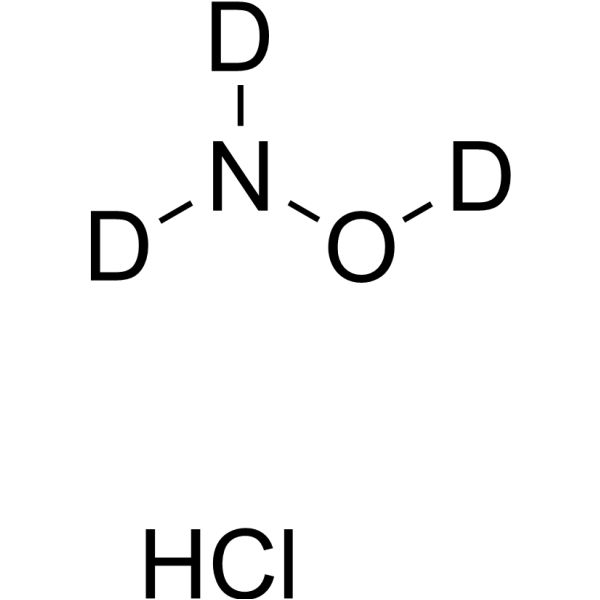
Cat. No.: HY-Y0882S1
CAS No.: 15588-23-5
Hydroxylamine-d3 (hydrochloride) is the deuterium labeled Hydroxyamine hydrochloride. Hydroxylamine hydrochloride is a selective Monoamine oxidase (MAO) inhibitor used for inhibiting of platelet aggregation. Hydroxylamine hydrochloride is an intermediate of nitrogen cycle in aerobic ammonium oxidizers microorganisms, such as ammonium oxidizing bacteria (AOB), ammonium oxidizing archaea (AOA) and complete ammonium oxidizing bacteria (comammox). Hydroxylamine hydrochloride impacts NO and N2O emissions by aerobic ammonium oxidizers microorganisms and inhibits nitrite oxidizing bacteria (NOB) activity .
loading...
    loading...
Cat. No.: HY-Y1269I
CAS No.: 12125-02-9
Synonyms: Salmiac (Pharmaceutical primary standard, USP)
Ammonium chloride United States Pharmacopeia (USP) Reference Standard (Salmiac, Pharmaceutical primary standard, USP) is a reagent that can be used in cell culture to provide a source of nitrogen. Ammonium chloride can be used as a heteropolar compound to regulate pH value, which can cause intracellular alkalination and metabolic acidosis, thus affecting the activity of enzymes and affecting the process of biological systems. Ammonium chloride is also a lysosome inhibitor .
loading...
    loading...
Cat. No.: HY-W653739
CAS No.: 41944-86-9
Synonyms: Abscisic aldehyde
Target:  

Drug Intermediate

Research Areas:  

Others

(+)-Abscisic Aldehyde (ABAld) is an intermediate in the biosynthesis of the plant hormone abscisic acid (ABA). (+)-Abscisic Aldehyde is produced by the dehydrogenation of xanthoxin by xanthoxin dehydrogenases, followed by selective oxidation by abscisic aldehyde oxygenase. (+)-Abscisic Aldehyde has an oxidizing PsAOγ activity and it correlates with ABA accumulation in the old leaves of pea plants with long exposure of salinity, ammonium or nitrogen deficiency. (+)-Abscisic Aldehyde can be used for plant growth and development research .
loading...
    loading...
Cat. No.: HY-Y0882S
CAS No.: 40711-48-6
Hydroxylamine- 15N hydrochloride is the 15N-labeled Hydroxylamine hydrochloride (HY-Y0882). Hydroxylamine hydrochloride is a selective Monoamine oxidase (MAO) inhibitor used for inhibiting of platelet aggregation. Hydroxylamine hydrochloride is an intermediate of nitrogen cycle in aerobic ammonium oxidizers microorganisms, such as ammonium oxidizing bacteria (AOB), ammonium oxidizing archaea (AOA) and complete ammonium oxidizing bacteria (comammox). Hydroxylamine hydrochloride impacts NO and N2O emissions by aerobic ammonium oxidizers microorganisms and inhibits nitrite oxidizing bacteria (NOB) activity .
loading...
    loading...
Cat. No.: HY-N18041
CAS No.: 158335-66-1
Pseudostellarin E is a proline-rich, caryophyllaceous cyclopeptide present in the roots of Pseudostellaria heterophylla. Pseudostellarin E can be synthesized by overexpressing its precursor gene prePhPE in the leaves of Nicotiana benthamiana .
loading...
    loading...

