1. Search Result
Search Result
Results for "

arsenic

" in MedChemExpress (MCE) Product Catalog:

18

Inhibitors & Agonists

2

Biochemical Assay Reagents

1

Natural
Products

1

Recombinant Proteins

1

Isotope-Labeled Compounds

Cat. No. Product Name Target Research Areas Chemical Structure
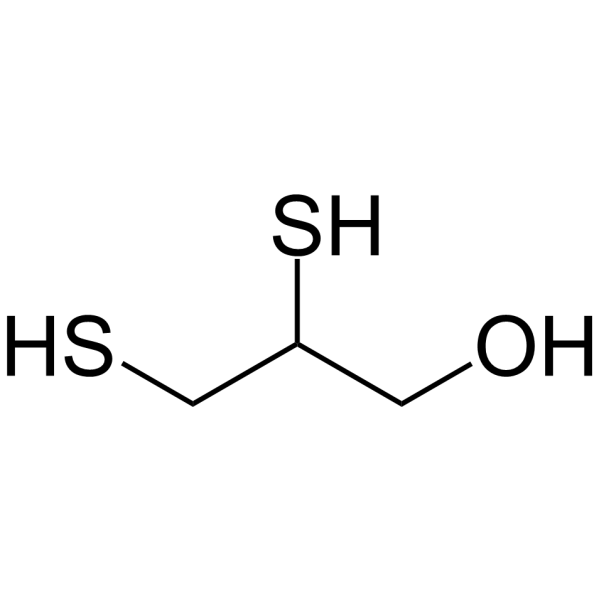
  • HY-B1285
    Dimercaprol
    1 Publications Verification

    2,3-Dimercapto-1-propanol; Dithioglycerol

    HIV Infection
    Dimercaprol (2,3-Dimercapto-1-propanol) is an anti-heavy metal-poisoning agent, which exhibits anti-HIV activity. Dimercaprol can be used for the study for arsenic, mercury, gold, lead, antimony, and other toxic metal poisoning .
    Dimercaprol
  • HY-13963
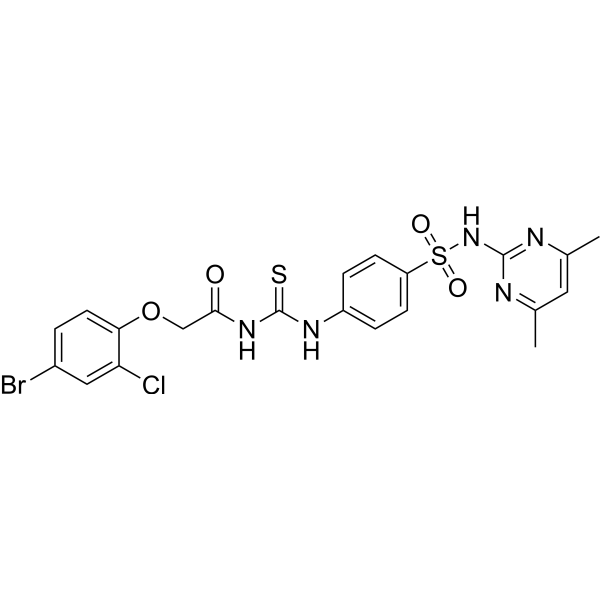
    ZCL278
    3 Publications Verification

    Ras Dengue Virus VSV Arenavirus Infection Neurological Disease Metabolic Disease Cancer
    ZCL278 is a selective Cdc42 inhibitor with Kds of 6.4 μM in fluorescence titration and 11.4 μM in surface plasmon resonance (SPR) measurement. ZCL278 is able to disrupt the Cdc42-ITSN interaction as well as GTP/GDP binding. ZCL278 has inhibitory effects on various enveloped viruses, but is ineffective against non-enveloped viruses. ZCL278 can be used for the studies of arsenic neurotoxicity and HER2-positive gastric cancer (GC) .
    ZCL278
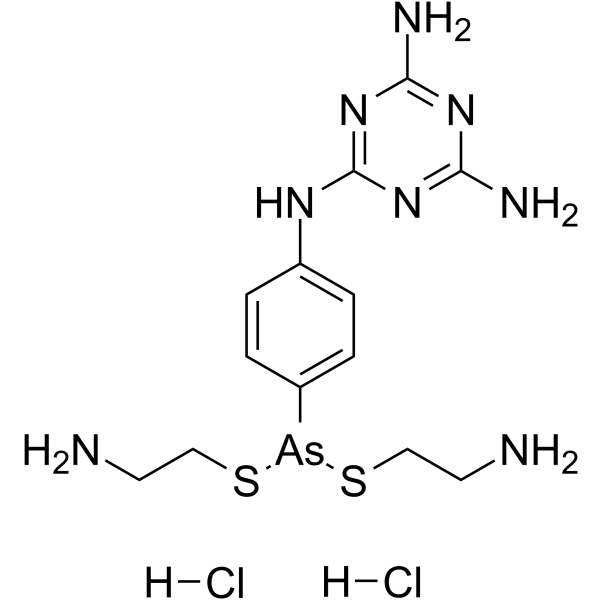
  • HY-138502A

    Parasite Infection
    Melarsomine dihydrochloride is a trivalent arsenical compound used as an adulticide. Melarsomine dihydrochloride can be used for the reserach of canine heartworm disease and other helminth infections .
    Melarsomine dihydrochloride
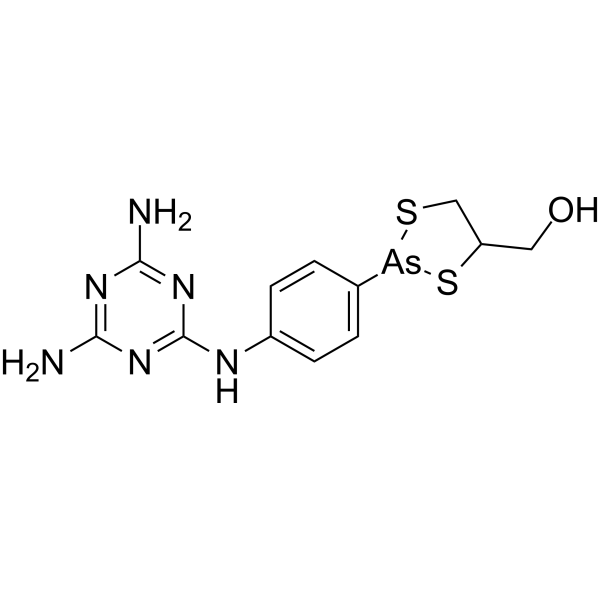
  • HY-119594

    Parasite Apoptosis Infection Neurological Disease Inflammation/Immunology Cancer
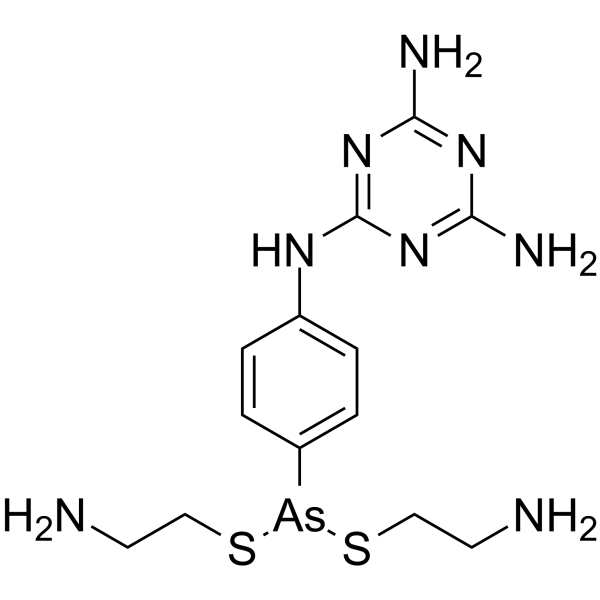
    Melarsoprol, a melaminophenylarsine-type trivalent organic arsenical, is an important agent for African trypanosomiasis. Melarsoprol inhibits the growth of lymphoid leukemic cell by inducing apoptosis. Melarsoprol crosses the blood-brain barrier .
    Melarsoprol
  • HY-16386

    Mitochondrial Metabolism Cancer
    PENAO is a potent tumour cell mitochondrial toxin. PENAO inactivates tumor cell mitochondria by targeting inner-membrane adenine nucleotide transferase .
    PENAO
  • HY-W741573

    nAChR Neurological Disease
    N-Biotinyl p-aminophenyl arsenic acid is a bifunctional reagent that can bind to both streptavidin and dithiols. N-Biotinyl p-aminophenyl arsenic acid decreases the Rbungarotoxin-binding sites in reduced Torpedo nicotinic receptors (IC50 is 10-300 nM), and protects the receptor from irreversible alkylation by bromoacetylcholine .
    N-Biotinyl p-aminophenyl arsenic acid
  • HY-14943

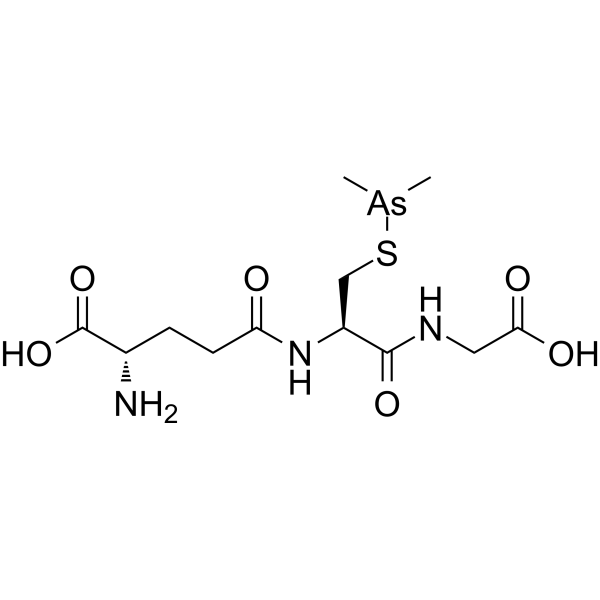
    ZIO-101; S-Dimethylarsino-glutathione

    Apoptosis Cancer
    Darinaparsin (ZIO-101), an organic arsenical, is a mitochondrial-targeted agent. Darinaparsin induces apoptosis in ancer cells, and has anticancer effects .
    Darinaparsin
  • HY-16386A

    Mitochondrial Metabolism Cancer
    PENAO TFA is the trifluoroacetic acid of PENAO (HY-16386). PENAO is a potent tumour cell mitochondrial toxin. PENAO inactivates tumor cell mitochondria by targeting inner-membrane adenine nucleotide transferase .
    PENAO TFA
  • HY-138502

    Parasite Infection
    Melarsomine is a trivalent arsenical compound used as an adulticide. Melarsomine can be used for the reserach of canine heartworm disease and other helminth infections .
    Melarsomine
  • HY-B1285R

    2,3-Dimercapto-1-propanol (Standard); Dithioglycerol (Standard)

    Reference Standards HIV Infection
    Dimercaprol (Standard) is the analytical standard of Dimercaprol. This product is intended for research and analytical applications. Dimercaprol (2,3-Dimercapto-1-propanol) is an anti-heavy metal-poisoning agent, which exhibits anti-HIV activity. Dimercaprol can be used for the study for arsenic, mercury, gold, lead, antimony, and other toxic metal poisoning .
    Dimercaprol (Standard)
  • HY-113949

    Drug Intermediate Others
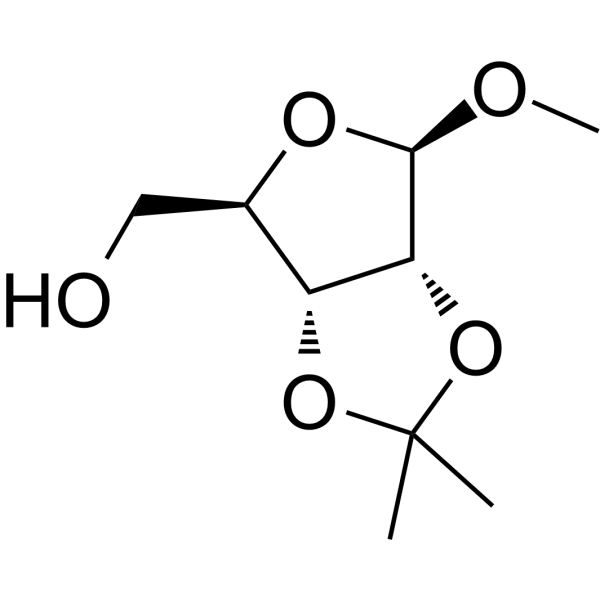
    Methyl 2,3-O-Isopropylidene-β-D-ribofuranoside is a furanose derivative. Methyl 2,3-O-Isopropylidene-β-D-ribofuranoside serves as an important intermediate for the synthesis of compounds such as arsenic-containing ribosides .
    Methyl 2,3-O-Isopropylidene-β-D-ribofuranoside
  • HY-W017224

    Sodium 1-butanesulfonate

    Biochemical Assay Reagents Others
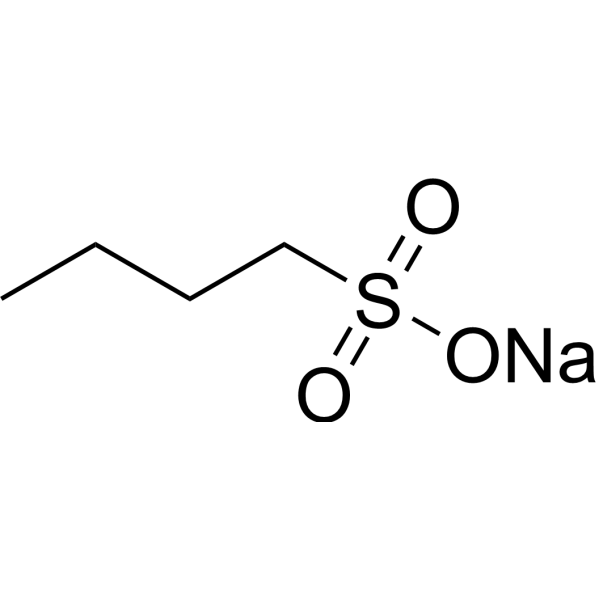
    Sodium butane-1-sulfonate (Sodium 1-butanesulfonate) is an ion-pair reagent. Sodium butane-1-sulfonate is often used in combination with tetramethylammonium hydroxide, malonic acid, etc. in reversed-phase ion-pair chromatography, and can improve the separation efficiency of species of elements such as arsenic and selenium .
    Sodium butane-1-sulfonate
  • HY-Y0443

    Triphenyl arsenic

    Biochemical Assay Reagents Others
    Triphenylarsine (Triphenyl arsenic) is a kind of biological materials or organic compounds that are widely used in life science research.
    Triphenylarsine
  • HY-N16399

    Reactive Oxygen Species (ROS) Cadherin Cancer
    Black tea extract is the extract of Black tea. Black tea extract prevents inorganic arsenic (iAs) induced ROS generation, inhibiting uncontrolled proliferation, epithelial to mesenchymal transition (EMT) and metastasis in HaCaT cells. Black tea extract has an anti-fibrotic activity. Black tea extract can be used for skin cancers research .
    Black tea extract
  • HY-145909

    Epigenetic Reader Domain Cancer
    BRD4 Inhibitor-17 (Compound 5i) is a potent inhibitor of BRD4 with an IC50 of 0.33 μM. BRD4 Inhibitor-17 plays crucial role in regulating transcription of inflammatory, proliferation and cell cycle genes. BRD4 Inhibitor-17 serves as potential antidotes for arsenicals .
    BRD4 Inhibitor-17
  • HY-122461

    Parasite Infection
    Glycobiarsol is an organic arsenical compound, which can be used as an amoebicidal agent. Glycobiarsol exhibits toxicity and side effects .
    Glycobiarsol
  • HY-177995

    Monoisoamyl meso-2,3-dimercaptosuccinic acid

    Reactive Oxygen Species (ROS) SOD Neurological Disease Cancer
    MiADMSA (Monoisoamyl meso-2,3-dimercaptosuccinic acid) is an orally active thiol chelator that can effectively remove heavy metals such as arsenic and lead from the body of animals. Arsenic binds with two vicinal sulfhydryl groups available in MiADMSA leading to marked reduction in body arsenic burden and also marked reduction in various oxidative stress parameters and antioxidant enzymes like-ROS, nitrite, TBARS, GSH, SOD and catalase. MiADMSA attenuates urinary bladder carcinogenesis, protects against oxidative stress, ameliorates copper-induced histopathology, reverses neurotoxicity, and is safe in animals. MiADMSA can be used in studies of bladder cancer, arsenic, and lead-induced developmental neurotoxicity .
    MiADMSA
  • HY-13963S

    Isotope-Labeled Compounds Endogenous Metabolite Infection Cancer
    ZCL278- 13C is a 13C-labeled version of ZCL278 (HY-13963). ZCL278 is a selective Cdc42 inhibitor with Kds of 6.4 μM in fluorescence titration and 11.4 μM in surface plasmon resonance (SPR) measurement. ZCL278 can disrupt the interaction between Cdc42 and ITSN, and also inhibit the binding of GTP and GDP. ZCL278 has inhibitory effects on various enveloped viruses, but is ineffective against non-enveloped viruses. ZCL278 can be used in the research of arsenic neurotoxicity and HER2-positive gastric cancer (GC) [1][2][3][4].
    ZCL278-13C

Inquiry Online

Your information is safe with us. * Required Fields.

Salutation


Country or Region *

Applicant Name *


Organization Name *

Department *


Email Address *


Product Name *

Cat. No.


Requested quantity *

Phone Number *


Remarks

Inquiry Online

Inquiry Information

Product Name:
Cat. No.:
Quantity:
MCE Japan Authorized Agent:

