28 Results for "

bacterial membrane potential

" in MedChemExpress (MCE) Product Catalog:
Products (28)

28 Results for "bacterial membrane potential" in MCE Product Catalog:

1
1 Cited Publications
Cat. No.: HY-A0248A
CAS No.: 4135-11-9
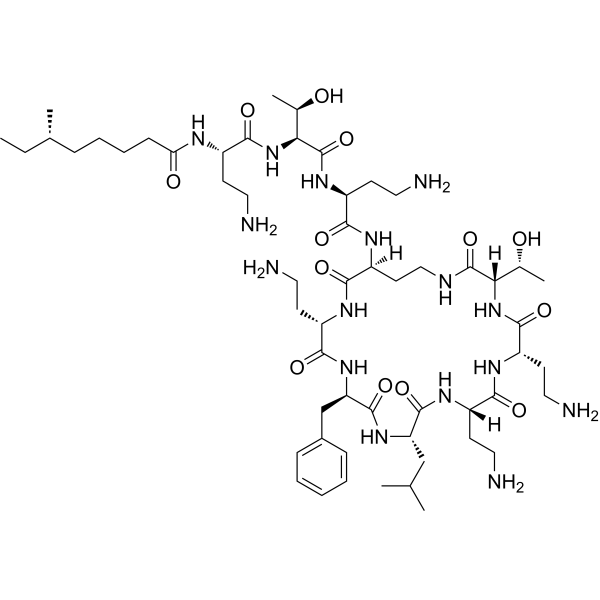
Polymyxin B1 is a potent antimicrobial lipopeptide first derived from Bacilus polymyxa. Polymyxin B1 is the major component in Polymyxin B (HY-A0248). Polymyxin B1 can induce lysis of bacterial cells through interaction with their membranes. Polymyxin B1 has the potential for multidrug-resistant Gram-negative bacterial infections treatment .
loading...
    loading...
1
1 Cited Publications
Cat. No.: HY-16485
CAS No.: 560130-42-9
Synonyms: TD-6424 hydrochloride
Target:  

Antibiotic Bacterial

Research Areas:  

Infection

Telavancin hydrochloride (TD-6424 hydrochloride) is a bactericidal agent that exhibits inhibitory activity against Staphylococcus aureus. Telavancin hydrochloride inhibits bacterial cell wall synthesis by binding to the lipid-linked N-acetylglucosamine-N-muramyl pentapeptide (with a D-Ala-D-Ala terminus), a peptidoglycan precursor, and blocks the transglycosylation and transpeptidation steps. Telavancin hydrochloride disrupts bacterial membrane barrier function, induces dissipation of bacterial membrane potential, and causes leakage of cytoplasmic ATP and potassium ions, with its activity restricted exclusively to bacterial membranes. Telavancin hydrochloride can be used in research on bacterial infections, central venous catheter-related bloodstream infections, and Gram-positive bacterial pneumonia .
loading...
    loading...
Cat. No.: HY-I1070
CAS No.: 319-78-8
Synonyms: (R)-Isoleucine
Category:  

Microorganisms

Target:  

ASCT

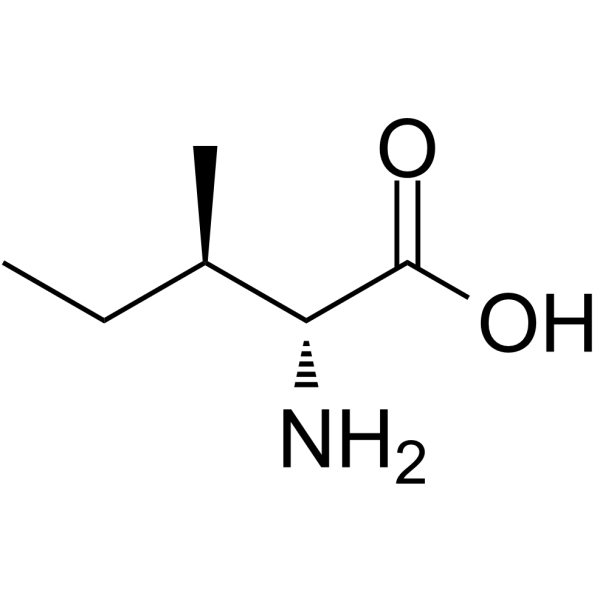
D-Isoleucine is a selective competitive activator of the Asc-1 antiporter (Ki=0.98 mM). D-Isoleucine promotes the release of D-serine and glycine by binding to the Asc-1 protein on the neuronal cell membrane, and enhances NMDA receptor-dependent synaptic plasticity. D-Isoleucine can be used in the study of neurodegenerative diseases (such as Alzheimer's disease and schizophrenia). D-Isoleucine also acts as a non-classical D-amino acid, interferes with bacterial peptidoglycan synthesis, and inhibits the formation of Staphylococcus aureus biofilm, and has potential antibacterial application value[1][2].
loading...
    loading...
Cat. No.: HY-W015551
CAS No.: 3913-81-3
Synonyms: (E)-Dec-2-enal
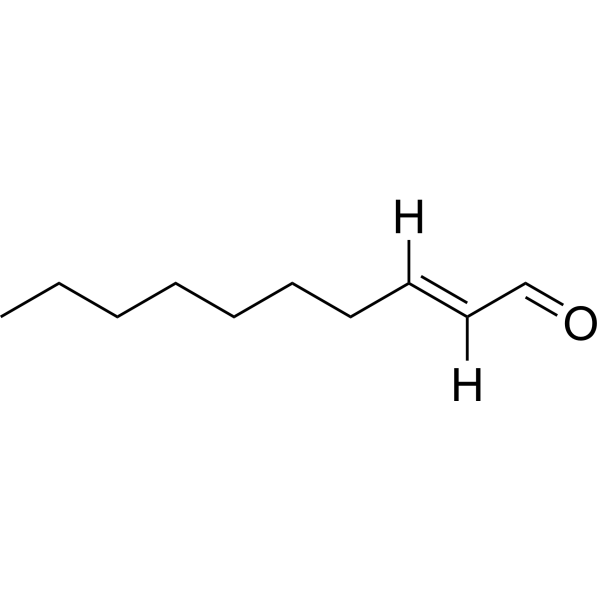
trans-2-Decenal ((E)-Dec-2-enal) acts as a urease inhibitor and antibacterial agent against Helicobacter pylori, with an IC50 of 9.484 μg/mL against Helicobacter pylori urease. trans-2-Decenal reduces the urease activity of Helicobacter pylori, and possesses antibacterial, bactericidal, anti-biofilm and anti-migratory activities. It alters the morphology of Helicobacter pylori, induces bacterial rupture, inhibits biofilm formation, reduces the number of mature biofilms and impairs the migratory capacity of Helicobacter pylori. trans-2-Decenal disrupts the cell wall integrity of Phytophthora capsici, damages membrane integrity and permeability, triggers intracellular reactive oxygen species (ROS) accumulation, decreases glutathione levels and disrupts the mitochondrial membrane potential of Phytophthora capsici. trans-2-Decenal is applicable to studies related to Helicobacter pylori and plant diseases induced by and Phytophthora capsici .
loading...
    loading...
Cat. No.: HY-156004
CAS No.: 2399497-60-8
Purity:  99.62%
Target:  

Bacterial

Research Areas:  

Others

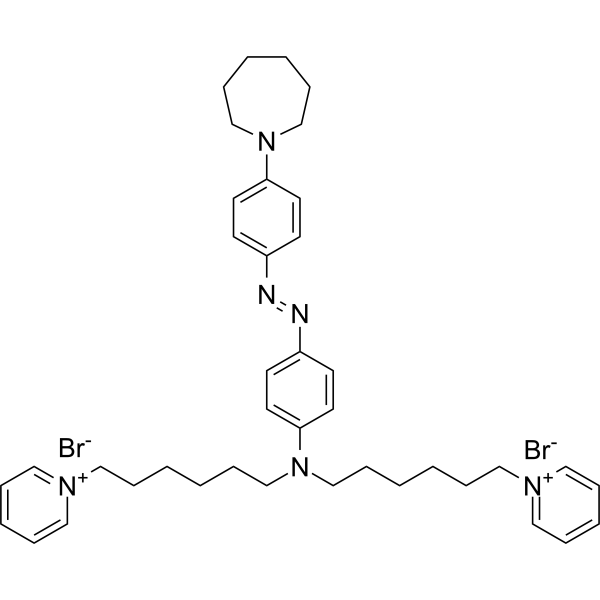
Ziapin 2 is a membrane potential modulator and an intracellular membrane photoactuator. Ziapin 2 binds to the bacterial plasma membrane, and upon embedding into the lipid bilayer, undergoes trans-cis isomerization under 470 nm light irradiation, which triggers membrane potential hyperpolarization and induces the opening of ion channels on bacterial cell membranes. Through interactions with lipids, Ziapin 2 increases the overall flexibility of the lipid bilayer. Ziapin 2 can form photosensitive transmembrane dimers to trigger cellular signal transduction. Ziapin 2 is applicable to the research and regulation of bacterial electrical signal transduction and the regulation of membrane physical properties .
loading...
    loading...
Cat. No.: HY-W019922
CAS No.: 7783-40-6
Magnesium fluoride is a biochemical reagent. Magnesium fluoride nanoparticles act as an antibacterial and antibiofilm agent with activity against pathogenic bacteria. Magnesium fluoride can be used for the research of bacteria-related infections .
loading...
    loading...
Cat. No.: HY-W101673
CAS No.: 2416-95-7
Dipropofol is a dimeric derivative of Propofol (HY-B0649) with antioxidant and antibacterial activities. Dipropofol terminates free radical chain reactions, scavenges DPPH free radicals and inhibits lipid peroxidation. Dipropofol protects cells from death induced by glutamate, Aβ(25-35) and buthionine sulfoximine, and increases the survival rate of mice exposed to oxygen. Dipropofol selectively activates tonic GABAA currents, hyperpolarizes resting membrane potential, reduces action potential firing, and alleviates the severity of seizures induced by Kainic acid. Dipropofol can be used in the research of Gram-positive bacterial infections, Alzheimer's disease, cerebral ischemia-related neuronal injury, oxygen toxicity and temporal lobe epilepsy .
loading...
    loading...
Cat. No.: HY-A0248AS
Polymyxin B1-d7 TFA is the deuterium labeled Polymyxin B1 TFA (HY-A0248A). Polymyxin B1 is a potent antimicrobial lipopeptide first derived from Bacilus polymyxa. Polymyxin B1 is the major component in Polymyxin B (HY-A0248). Polymyxin B1 can induce lysis of bacterial cells through interaction with their membranes. Polymyxin B1 has the potential for multidrug-resistant Gram-negative bacterial infections treatment .
loading...
    loading...
Cat. No.: HY-P10696
CAS No.: 2154327-48-5
Target:  

Bacterial

Research Areas:  

Infection

C16G2 is a specific targeted antimicrobial peptide (STAMP) that targets the cariogenic oral pathogen Streptococcus mutans. C16G2 specifically recognizes and disrupts the bacterial cell membrane, causing small molecule leakage and loss of membrane potential, leading to bacterial killing. C16G2 exhibits higher selectivity and efficacy against Streptococcus mutans, unlike broad-spectrum antimicrobial peptides .
loading...
    loading...
Cat. No.: HY-P11165
CAS No.: 2173394-02-8
Target:  

Bacterial

Research Areas:  

Infection

DRGN-1 is an antimicrobial peptide. DRGN-1 exhibits potent antimicrobial and anti-biofilm activities, inhibiting both Gram-negative and Gram-positive bacteria, with an EC50 range of 0.50-4.62 μM. DRGN-1 exerts its antimicrobial effect by disrupting bacterial membrane permeability and slightly depolarizing the membrane potential. DRGN-1 inhibits the formation of biofilms of single bacterial species and mixed species of Pseudomonas aeruginosa and Staphylococcus aureus. DRGN-1 can significantly promote the healing of uninfected and mixed biofilm-infected mouse wounds. DRGN-1 can be used for the study of infections .
loading...
    loading...
Cat. No.: HY-P10696A
Target:  

Bacterial

Research Areas:  

Infection

C16G2 TFA is a specific targeted antimicrobial peptide (STAMP) that targets the cariogenic oral pathogen Streptococcus mutans. C16G2 TFA specifically recognizes and disrupts the bacterial cell membrane, causing small molecule leakage and loss of membrane potential, leading to bacterial killing. C16G2 TFA exhibits higher selectivity and efficacy against Streptococcus mutans, unlike broad-spectrum antimicrobial peptides .
loading...
    loading...
Cat. No.: HY-178504
Target:  

Bacterial

Research Areas:  

Infection

Lug-15 is a rapid bactericidal agent. Lug-15 exhibits strong antibacterial activity against both Gram-positive and Gram-negative bacteria, including drug-resistant strains. Lug-15 rapidly kills bacteria primarily through membrane disruption and had a very low propensity to induce bacterial resistance. Lug-15 demonstrates low hemolytic toxicity and significant therapeutic potential in various infection models. Lug-15 can be used for research on combating infections caused by multi-drug resistant bacteria .
loading...
    loading...
Cat. No.: HY-173190
Antibacterial agent 271 is an antibacterial agent with significant inhibition against Escherichia coli (MIC: 2.2 μM). Antibacterial agent 271 reduces metabolic activity by disrupting the integrity of bacterial membranes. Antibacterial agent 271 binds to DNA grooves to inhibit replication and induces accumulation of reactive oxygen species (ROS) , ultimately leading to bacterial death. Antibacterial agent 271 shows significant potential in combating bacterial infections .
loading...
    loading...
Cat. No.: HY-170991
Research Areas:  

Infection

C12-rrw-NH2 (Compound Lip7) is an antibacterial agent against gram-positive bacteria, especially against Methicillin (HY-121544)-resistant Staphylococcus aureus (MRSA). C12-rrw-NH2 induces bacterial death via depolarizing the bacterial cytoplasmic membrane, disrupting the integrity of the bacterial membrane, leading to leakage of nucleic acid and protein and promoting the generation of Reactive Oxygen Species. C12-rrw-NH2 is potential to be used for research of developing high-stability antimicrobial peptides .
loading...
    loading...
Cat. No.: HY-168258
Target:  

Bacterial

Research Areas:  

Infection

Antibiofilm agent-13 (compound 14b) is a potent antibacterial agent that displays a broad-spectrum antimicrobial activity. Antibiofilm agent-13 could disintegrate the integrity of bacterial cell membranes by destroying transmembrane potential and enhancing membrane permeability, and causing the generation of intracellular ROS and the leakage of DNA and proteins, ultimately leading to bacterial death. Antibiofilm agent-13 inhibits both Gram-positive bacteria (MIC of 0.5-1 μg/mL) and Gram-negative bacteria (MIC of 1-32 μg/mL) .
loading...
    loading...
Cat. No.: HY-162923
Target:  

Bacterial Antibiotic

Research Areas:  

Infection

Antibacterial agent 244 is an orally active compound with broad-spectrum antibacterial activity, primarily targeting Gram-positive bacteria, with a MIC value of 1–4 μg/mL and low hemolytic toxicity (HC50 of 111.6 μg/mL). Antibacterial agent 244 disrupts bacterial transmembrane potential, increases membrane permeability, leading to leakage of cellular contents such as DNA and proteins, ultimately causing bacterial death. Antibacterial agent 244 can be used in research related to Gram-positive bacterial infections .
loading...
    loading...
Cat. No.: HY-P11220
Research Areas:  

Infection

Hs02 is a cationic amphiphilic antibacterial peptide derived from human proteins, and it is the membrane-active module of the core chimeric peptide Chim2. Hs02 exhibits broad-spectrum and potent antibacterial activity against various human pathogenic bacteria with the MIC for Staphylococcus aureus and Escherichia coli of as low as 2 μM, and the MBC is 2-4 μM. Hs02 primarily kills bacteria by disrupting the integrity of the bacterial cell membrane, and it has a relatively low selectivity for eukaryotic cell membranes. Hs02 induces the release of IL-12 but does not induce the release of IL-6, indicating its potential for pro-inflammatory or immune activation. Hs02 can be used in antibacterial and immunomodulatory research .
loading...
    loading...
Cat. No.: HY-P10134
CAS No.: 335080-41-6
Target:  

Bacterial

Research Areas:  

Infection

Salivaricin B is a broad-spectrum bacteriocin produced by Lactobacillus M7. Salivaricin B reduces cell wall thickness, induces abnormal septum formation, and exerts rapid bactericidal activity against susceptible Gram-positive bacteria without disrupting cytoplasmic membrane integrity or dissipating membrane potential. Salivaricin B inhibits the growth of oral, upper respiratory tract and food-related Gram-positive pathogens, spoilage bacteria, lactobacilli, and SboB-non-producing Streptococcus salivarius strains. Its activity is strain-dependent, and it has no effect on Gram-negative bacteria. Salivaricin B can be used in studies related to bacterial infections .
loading...
    loading...
Cat. No.: HY-127020
CAS No.: 108605-51-2
Target:  

Bacterial

Research Areas:  

Infection

Deoxyenterocin is a bacterial metabolite originally isolated from Streptomyces that has diverse biological activities, including antibiotic, antiviral, and antioxidant properties. It inhibits the growth of S. lutea, S. aureus, K. pneumoniae, and V. percolans in vitro when used at a concentration of 500 μg/mL. Deoxyenterocin (50 μg/mL) inhibits the cytopathic effect of influenza A H1N1 virus by 60.6% in vitro. It also prevents hydrogen peroxide-induced decreases in glutathione (GSH) levels and in the mitochondrial membrane potential in mouse primary cortical neuronal cultures when used at a concentration of 1 μM.
loading...
    loading...
Cat. No.: HY-W101673R
CAS No.: 2416-95-7
Research Areas:  

Others

Dipropofol (Standard) is the analytical standard of Dipropofol. This product is intended for research and analytical applications. Dipropofol is a dimeric derivative of Propofol (HY-B0649) with antioxidant and antibacterial activities. Dipropofol terminates free radical chain reactions, scavenges DPPH free radicals and inhibits lipid peroxidation. Dipropofol protects cells from death induced by glutamate, Aβ(25-35) and buthionine sulfoximine, and increases the survival rate of mice exposed to oxygen. Dipropofol selectively activates tonic GABAA currents, hyperpolarizes resting membrane potential, reduces action potential firing, and alleviates the severity of seizures induced by Kainic acid. Dipropofol can be used in the research of Gram-positive bacterial infections, Alzheimer's disease, cerebral ischemia-related neuronal injury, oxygen toxicity and temporal lobe epilepsy .
loading...
    loading...

