
1. Search Result
Search Result
Pathways Recommended: Stem Cell/Wnt Cell Cycle/DNA Damage
Results for "

basal Cell

" in MedChemExpress (MCE) Product Catalog:

756

Inhibitors & Agonists

18

Screening Libraries

60

Fluorescent Dyes

95

Biochemical Assay Reagents

39

Peptides

73

MCE Kits

11

Inhibitory Antibodies

28

Natural
Products

5

Recombinant Proteins

29

Isotope-Labeled Compounds

2

Antibodies

25

Click Chemistry

42

Oligonucleotides

1

GMP Molecules

Cat. No. Product Name Target Research Areas Chemical Structure
  • HY-B1247
    Protoporphyrin IX
    20+ Cited Publications

    PPIX

    Endogenous Metabolite Others
    Protoporphyrin IX is a final intermediate in the heme biosynthetic pathway, which acts as a radiation sensitizer enhancing ROS generation even in a hypoxic state and inducing DNA damage. Protoporphyrin IX also acts as a photo sensitizer undergoing photobleaching that occurs through direct degradation by light irradiation. Protoporphyrin IX is formed and accumulated following 5-aminolevulinic acid (5-ALA) (HY-W000450) administration in the tumor cells of rats. Protoporphyrin IX causes selective improvement of basal cell carcinoma when activated red fluorescence of a peak wavelength at 405 nm. Protoporphyrin IX is promising for research of sonodynamic and photodynamic agents for a wide range of cancers, such as bladder cancer and nodular basal cell carcinoma .
    Protoporphyrin IX
  • HY-P99601

    BFCR 4350A; RG 6160; RO 7187797

    CD3 Neurological Disease Cancer
    Cevostamab (BFCR4350A; RG6160; RO7187797) is a humanized IgG1-based BsAb that targets membrane-proximal extracellular domain of FcRH5 on multiple myeloma (MM) cells as well as CD3 on T cells. Moreover, Cevostamab facilitates efficient synapse formation, improves killing activity of T cells against MM tumor cells .
    Cevostamab
  • HY-13566
    Belotecan
    2 Publications Verification

    CKD-602 free base

    Topoisomerase Apoptosis Cancer
    Belotecan (CKD-602 free base) is a DNA topoisomerase I inhibitor. Belotecan induces cell apoptosis and cell-cycle arrest. Belotecan is a camptothecin analogue with anti-tumor effects, it can be used for the research of cancer .
    Belotecan
  • HY-148807

    QC8222 free base; TACH 101 free base

    Histone Demethylase Apoptosis Cancer
    Zavondemstat (QC8222 free base; TACH 101 free base) is an orally active pan-KDM4 inhibitor, with a IC50 ≤ 0.08 μM against human KDM4A-D and a Kᵢ of 0.52 μM against human KDM4C. Zavondemstat induces cell apoptosis, causes S-phase cell cycle arrest, reduces the population of tumor-initiating cells and inhibits cancer cell proliferation. Zavondemstat suppresses tumor growth and induces tumor regression in mouse xenograft models. Zavondemstat can be used for the research of various cancers including colorectal cancer, esophageal squamous cell carcinoma and triple-negative breast cancer .
    Zavondemstat
  • HY-113306

    Endogenous Metabolite Others
    1-Methyladenine is a gonad maturation-promoting regulator. 1-Methyladenine is produced in testes and ovarian follicle cells of starfish under the induction of gonad-stimulating substance (GSS). 1-Methyladenine promotes starfish oocyte maturation and spawning, and modifies bases that regulate DNA structure. 1-Methyladenine converts T-A base pairs in double-stranded DNA into non-disruptive T (anti)m1A (syn) Hoogsteen conformation. If this conformational base is not repaired in a timely manner, 1-Methyladenine transforms into cytotoxic DNA damage and blocks the replication process .
    1-Methyladenine
  • HY-114305
    A1874
    2 Publications Verification

    PROTACs Epigenetic Reader Domain Cancer
    A1874 is a nutlin-based (MDM2 ligand) and BRD4-degrading PROTAC with a DC50 of 32 nM (induce BRD4 degradation in cells). Effective in inhibiting many cancer cell lines proliferation .
    A1874
  • HY-A0169A
    Methyl aminolevulinate hydrochloride
    1 Publications Verification

    Reactive Oxygen Species (ROS) Photosensitizer Cancer
    Methyl aminolevulinate hydrochloride is a sensitizer used in photodynamic therapy (PDT). Methyl aminolevulinate hydrochloride penetrates the skin and induces the production of photoactive porphyrins including protoporphyrin IX in cells; upon exposure to appropriate light, it generates ROS, which triggers cellular oxidation and cell death. Methyl aminolevulinate hydrochloride acts as a photo-damage reversing agent through epidermal reconstruction, cytokine-mediated activation of dermal fibroblasts, elastin breakdown, new collagen formation, and compression of dilated capillaries. Methyl aminolevulinate hydrochloride reduces the expression of the proliferation marker Ki-67 and the early skin carcinogenesis marker TP53. Methyl aminolevulinate hydrochloride delays the onset of ultraviolet-induced skin tumors and reduces tumor burden in hairless mice. Methyl aminolevulinate hydrochloride is applicable to research related to actinic keratosis and basal cell carcinoma .
    Methyl aminolevulinate hydrochloride
  • HY-W008818

    p-Aminoacetophenone

    Drug Intermediate Others
    4'-Aminoacetophenone (p-Aminoacetophenone) is an intermediate that can be used for the synthesis of other active compounds, such as antitumor agents .
    4'-Aminoacetophenone
  • HY-174406A

    Myosin PDGFR Reactive Oxygen Species (ROS) Ferroptosis Akt mTOR ERK Inflammation/Immunology Cancer
    MT-125 free base is a specific and well-tolerated inhibitor of non-muscle myosin IIA (Ki,NMIIA = 2.7 μM) and IIB (EC50 = 1.7 μM). MT-125 free base can pass through the blood-brain barrier. MT-125 free base induces ferroptosis and DNA damage by increasing the levels of reactive oxygen species (ROS) within tumor cells. MT-125 free base can enhance the PDGFR signaling pathway. MT-125 free base can be used for research on glioblastoma.
    MT-125 free base
  • HY-122590

    Gli Cancer
    Glabrescione B is the first compound that binds the Hedgehog (Hh) modulator Gli1. Glabrescione B impairs its activity by interfering with Gli1-DNA interaction. Glabrescione B inhibits the growth of Hedgehog-dependent tumor cells, the self-renewal ability, and clonogenicity of tumor-derived stem cells .
    Glabrescione B
  • HY-126675
    AS2863619 free base
    5+ Cited Publications

    CDK STAT Inflammation/Immunology
    AS2863619 free base enables conversion of antigen-specific effector/memory T cells into Foxp3 + regulatory T (Treg) cells for the treatment of various immunological diseases. AS2863619 free base is a potent, orally active cyclin-dependent kinase 8 (CDK8) and CDK19 inhibitor with IC50s of 0.61 nM and 4.28 nM, respectively. STAT5 activation enhanced by AS2863619 free base inhibition of CDK8/19, which consequently activates the Foxp3 gene .
    AS2863619 free base
  • HY-108715

    Fluorescent Dye Neurological Disease
    Real Thiol is a reversible reaction-based fluorescent probe which can quantitatively monitor the real-time glutathione dynamics in living cells.
    Real Thiol
  • HY-DY1002

    Reactive Oxygen Species (ROS) Fluorescent Dye Others
    H2DCFDA (DCFH-DA) (solution) is a cell-permeable probe used to detect intracellular reactive oxygen species (ROS) (Ex/Em=488/525 nm) .
    Solvent and concentration: DMSO: 10 mM.
    The 1 mL volume is defined as the base specification. All larger sizes correspond to incremental volumes of this base.
    H2DCFDA (solution)
  • HY-B1247R

    PPIX (Standard)

    Reference Standards Endogenous Metabolite Others
    Protoporphyrin IX (Standard) is the analytical standard of Protoporphyrin IX. This product is intended for research and analytical applications. Protoporphyrin IX is a final intermediate in the heme biosynthetic pathway, which acts as a radiation sensitizer enhancing ROS generation even in a hypoxic state and inducing DNA damage. Protoporphyrin IX also acts as a photo sensitizer undergoing photobleaching that occurs through direct degradation by light irradiation. Protoporphyrin IX is formed and accumulated following 5-aminolevulinic acid (5-ALA) (HY-W000450) administration in the tumor cells of rats. Protoporphyrin IX causes selective improvement of basal cell carcinoma when activated red fluorescence of a peak wavelength at 405 nm. Protoporphyrin IX is promising for research of sonodynamic and photodynamic agents for a wide range of cancers, such as bladder cancer and nodular basal cell carcinoma .
    Protoporphyrin IX (Standard)
  • HY-114357A

    TAM Receptor c-Met/HGFR Trk Receptor Cancer
    DS-1205b free base is a potent and selective inhibitor of AXL kinase, with an IC50 of 1.3 nM. DS-1205b free base also inhibits MER, MET, and TRKA, with IC50s of 63, 104, and 407 nM, respectively. DS-1205b free base can inhibit cell migration in vitro and tumor growth in vivo .
    DS-1205b free base
  • HY-113965
    CUR61414
    1 Publications Verification

    Hedgehog Smo Apoptosis Inflammation/Immunology
    CUR61414 is a novel, potent and cell permeable Hedgehog signaling pathway inhibitor (IC50 =100-200 nM). CUR61414 is a small-molecule aminoproline class compound and selectively binds to smoothened (Smo) with a Ki value of 44 nM. CUR-61414 can induce apoptosis in cancer cells without affecting neighboring non-tumor cells .
    CUR61414
  • HY-139192A
    Brophenexin free base
    3 Publications Verification

    NMDAR/TRPM4-IN-2 free base

    iGluR TRP Channel ERK Neurological Disease
    Brophenexin free base (compound 8) is a potent NMDAR/TRPM4 interaction interface inhibitor. Brophenexin free base shows neuroprotective activity. Brophenexin free base prevents NMDA-induced cell death and mitochondrial dysfunction in hippocampal neurons, with an IC50 of 2.1 μM. Brophenexin free base protects mice from MCAO-induced brain damage and NMDA-induced retinal ganglion cell loss .
    Brophenexin free base
  • HY-135218A
    AV-153 free base
    1 Publications Verification

    DNA/RNA Synthesis Cancer
    AV-153 free base, a 1,4-dihydropyridine (1,4-DHP) derivative, is an antimutagenic. AV-153 free base intercalates to DNA in a single strand break and reduces DNA damage, stimulates DNA repair in human cells in vitro. AV-153 free base interacts with thymine and cytosine and has an influence on poly(ADP)ribosylation. AV-153 free base has anti-cancer activity .
    AV-153 free base
  • HY-149380

    Raf Cancer
    Vem-L-Cy5 (compound 3),modified with the NIR fluorophore cyanine-5 (Cy5),is a Vemurafenib (HY-12057)-based inhibitor of BRAF. Vem-L-Cy5 targets to BRAF V600E,and also inhibits MEK phosphorylation. Vem-L-Cy5 has cell permeability,and inhibits cell growth of many types of cancer .
    Vem-L-Cy5
  • HY-100303
    FR194738 free base
    2 Publications Verification

    Squalene Monooxygenase Metabolic Disease
    FR194738 free base is a squalene epoxidase inhibitor. FR194738 inhibits squalene epoxidase activity in HepG2 cell homogenates with an IC50 of 9.8 nM.
    FR194738 free base
  • HY-B1247A
    Protoporphyrin IX disodium
    20+ Cited Publications

    PPIX disodium

    Endogenous Metabolite Cancer
    Protoporphyrin IX disodium is a final intermediate in the heme biosynthetic pathway, which acts as a radiation sensitizer enhancing ROS generation even in a hypoxic state and inducing DNA damage. Protoporphyrin IX disodium also acts as a photo sensitizer undergoing photobleaching that occurs through direct degradation by light irradiation. Protoporphyrin IX disodium is formed and accumulated following 5-aminolevulinic acid (5-ALA) (HY-W000450) administration in the tumor cells of rats. Protoporphyrin IX disodium causes selective improvement of basal cell carcinoma when activated red fluorescence of a peak wavelength at 405 nm. Protoporphyrin IX disodium is promising for research of sonodynamic and photodynamic agents for a wide range of cancers, such as bladder cancer and nodular basal cell carcinoma .
    Protoporphyrin IX disodium
  • HY-139813

    DNA Alkylator/Crosslinker Cancer
    Phenanthriplatin is a monovalent platinum(II)-based complex with a large cytotoxicity against cancer cells .
    Phenanthriplatin
  • HY-P991088

    CD3 Cancer
    HPN536 is a trispecific, T-cell-activating protein-based construct, which binds to mesothelin-expressing tumor cells, CD3ε on T cells, and to serum albumin. HPN536 specifically redirects T cells for potent redirected lysis of mesothelin-expressing cancer cells with concomitant T-cell activation .
    HPN536
  • HY-16031

    NSC710464 free base

    Aryl Hydrocarbon Receptor Integrin Drug Intermediate DNA/RNA Synthesis Cancer
    AFP464 (NSC710464) free base is a prodrug of Aminoflavone (HY-132974) and an agonist of the aryl hydrocarbon receptor (AhR). AFP464 free base downregulates the expression of α6-integrin (α6-integrin), inhibits breast tumor growth, reduces the population of tumor-initiating cells, disrupts mammosphere structure, induces the formation of mucin lake clusters, triggers DNA damage, and exerts antiproliferative activity. AFP464 free base is rapidly converted to Aminoflavone by nonspecific esterases in plasma and cell culture media. AFP464 free base is applicable to research related to breast cancer .
    AFP464 free base
  • HY-D2479

    Fluorescent Dye Metabolic Disease
    DMANI is an intramolecular charge transfer (ICT)-based mitochondria-targeted ratiometric fluorescent probe. DMANI can monitor mitochondrial peroxynitrite (ONOO ) in living cells .
    DMANI
  • HY-W369099

    STAT Apoptosis Cancer
    HJC0152 (free base) is an orally active and potent inhibitor of STAT3. HJC0152 (free base) inhibits cell cycle progression and induces apoptosis. HJC0152 (free base) significantly suppresses MDA-MB-231 xenograft tumor growth in mice .
    HJC0152 free base
  • HY-148243
    IGUANA-1 free base
    1 Publications Verification

    STL5-T-0057

    Aldehyde Dehydrogenase (ALDH) Cancer
    IGUANA-1 free base (STL5-T-0057) is an selective ALDH1 B1 inhibitor with an IC50 value of 30 nM. IGUANA-1 free base inhibits cell growth of SW480 cells in adherent and spheroid conditions with IC50 values of 2.46 and 0.39 μM, respectively. IGUANA-1 free base can be used for the research of cancer .
    IGUANA-1 free base
  • HY-15960

    VDC-597 free base

    PI3K mTOR Apoptosis Cancer
    PWT-33597 (VDC-597) free base is a dual inhibitor of PI3Kα and mTOR, which can effectively block the signaling downstream of PI3K and mTOR. PWT-33597 free base is capable of inducing tumor cell apoptosis and inhibiting tumor growth. PWT-33597 free base has anti-tumor activity and can be used in the research of tumors such as renal cell carcinoma .
    PWT-33597 free base
  • HY-125832

    Biochemical Assay Reagents Others
    PBDB-T is a wide bandgap polymer donor in Perylene diimide (PDI)-based polymer solar cells (PSCs) .
    PBDB-T
  • HY-108248

    HSP Cardiovascular Disease Neurological Disease Metabolic Disease
    KU-32 is a novel, novobiocin-based Hsp90 inhibitor that can protect against neuronal cell death.
    KU-32
  • HY-150287B

    ITS-A

    Biochemical Assay Reagents Others
    Insulin-Transferrin-Selenium-Sodium Pyruvate (ITS-A) is a basal media supplement used to reduce the amount of fetal bovine serum (FBS) used to culture cells.
    Insulin-Transferrin-Selenium-Sodium Pyruvate
  • HY-136809

    Histone Methyltransferase Cancer
    PRMT6-IN-2 (compound 2) is a dual inhibitor of protein arginine methyltransferase PRMT6 and CARM1 with an IC50 of 30 nM. PRMT6 is abnormally expressed in many cancer cells, and PRMT6-IN-2-based derivatives have potential anticancer activity.
    PRMT6-IN-2
  • HY-176938

    PhosTACs EGFR Apoptosis Drug Derivative Cancer
    AfaPhos1 is a new, Afatinib (HY-10261)-based EGFR PhosTAC. AfaPhos1 induces EGFR dephosphorylation at both pY1068 and pY845. AfaPhos1 induces Apoptosis. AfaPhos1 has anticancer activity against non-small cell lung cancer .
    AfaPhos1
  • HY-100313

    Farnesyl Transferase HCV Metabolic Disease
    YM-53601 free base, a squalene synthase inhibitor, reduces plasma cholesterol and triglyceride levels in vivo . YM-53601 free base inhibits squalene synthase derived from human hepatoma cells with an IC50 of 79 nM. Lipid-lowering agent . YM-53601 free base is also an inhibitor of farnesyl-diphosphate farnesyltransferase 1 (FDFT1) enzyme activity and abrogates HCV propagation .
    YM-53601 free base
  • HY-14661

    Kinesin Cancer
    SB-743921 free base is a potent selective inhibitor of the mitotic kinesin KSP (Eg5), with a Ki of 0.1 nM. SB-743921 free base can induce mitotic arrest, block cell cycle progression, induce apoptosis, and can be used in the research of myeloma, leukemia and other diseases .
    SB-743921 free base
  • HY-112095

    ENS-101 free base

    iGluR Neurological Disease
    EVT-101 free base is a GluN2B antagonist. EVT-101 free base binds at the same GluN1/GluN2B dimer interface as Ifenprodil (HY-12882). EVT-101 free base inhibits calcium influx in chicken-derived cells, with an EC50 of 22 nM. EVT-101 can be used in the research of brain disorders .
    EVT-101 free base
  • HY-146087

    Autophagy Cancer
    Autophagy inducer 4 is a Magnolol-based Mannich base derivatives, which can be used as an anticancer agent. Autophagy inducer 4 suppresses cancer cells via inducing autophagy. Autophagy inducer 4 has 76-fold improvement in cytotoxicity against T47D cells compared with Magnolol. Autophagy inducer 4 also possesses suppressive effects on migration of T47D and Hela cancer cells .
    Autophagy inducer 4
  • HY-114503

    DNA/RNA Synthesis Cancer
    NSAH is a reversible and competitive nonnucleoside ribonucleotide reductase (RR) inhibitor, with cell-free IC50 of 32 μM and cell-based IC50 of ~250 nM, respectively .
    NSAH
  • HY-19727

    Ser/Thr Protease SARS-CoV Infection Metabolic Disease
    FOY 251 free base, an anti-proteolytic active metabolite of Camostate (HY-13512), acts as a proteinase inhibitor . FOY 25 free base inhibits SARS-CoV-2 infection in cells assay .
    FOY 251 free base
  • HY-143882

    PROTACs Akt Cancer
    MS5033 is a potent PROTAC-based AKT (protein kinase B) degrader, with a DC50 of 430 nM in PC3 cells .
    MS5033
  • HY-112816A

    MDM-2/p53 Apoptosis Cancer
    MA242 free base is a specific dual inhibitor of MDM2 and NFAT1. MA242 free base directly binds both MDM2 and NFAT1 with high affinity, induces their protein degradation, and inhibits NFAT1-mediated transcription of MDM2. MA242 free base induces apoptosis in pancreatic cancer cell lines regardless of p53 status .
    MA242 free base
  • HY-D1396
    Br-DAPI
    3 Publications Verification

    Fluorescent Dye DNA Stain Others
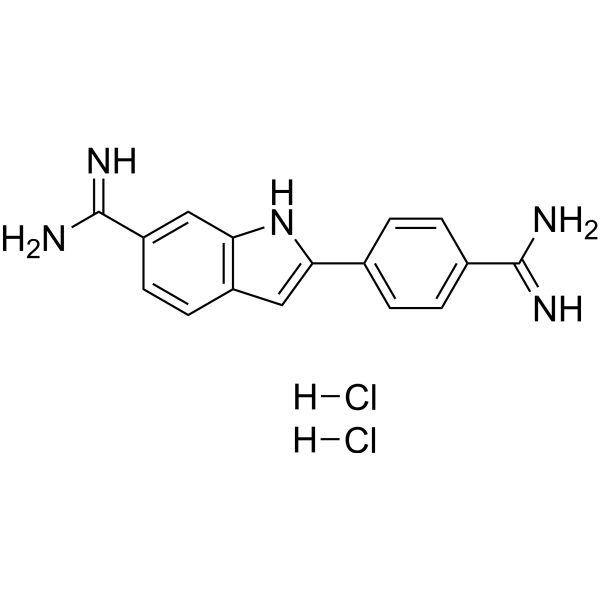
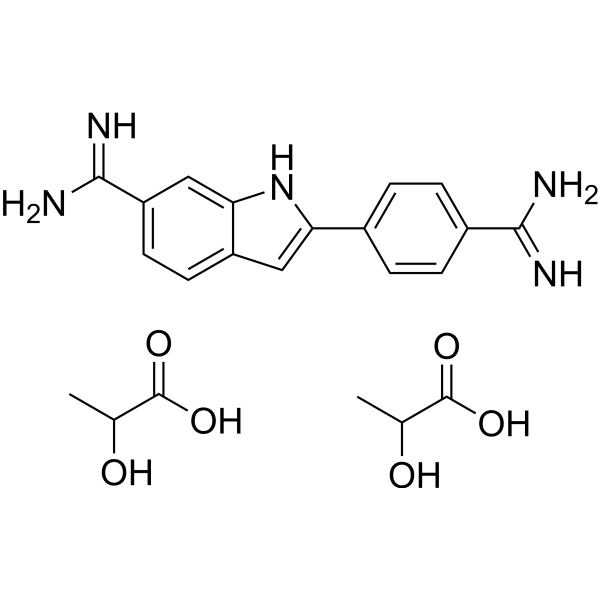
    Br-DAPI is a marker dye in DAPI series. DAPI is a fluorescent dye that binds strongly to DNA. It binds to the AT base pair of the double-stranded DNA minor groove, and one DAPI molecule can occupy three base pair positions. The fluorescence intensity of DAPI molecules bound to double-stranded DNA is increased by about 20 times, and it is commonly observed with fluorescence microscopy, and the amount of DNA can be determined based on the intensity of fluorescence. In addition, because DAPI can pass through intact cell membranes, it can be used to stain both live and fixed cells . Storage: Keep away from light.
    Br-DAPI
  • HY-137062

    CDK Cancer
    CGP-79807 is a purine-based CDK inhibitor. CGP-79807 can block the cell cycle by inhibiting CDK activity to suppress the proliferation of tumor cells. CGP-79807 can be used in the study of cancer .
    CGP-79807
  • HY-A0169

    Reactive Oxygen Species (ROS) Photosensitizer Cancer
    Methyl aminolevulinate is a sensitizer used in photodynamic therapy (PDT). Methyl aminolevulinate penetrates the skin and induces the production of photoactive porphyrins including protoporphyrin IX in cells; upon exposure to appropriate light, it generates ROS, which triggers cellular oxidation and cell death. Methyl aminolevulinate acts as a photo-damage reversing agent through epidermal reconstruction, cytokine-mediated activation of dermal fibroblasts, elastin breakdown, new collagen formation, and compression of dilated capillaries. Methyl aminolevulinate reduces the expression of the proliferation marker Ki-67 and the early skin carcinogenesis marker TP53. Methyl aminolevulinate delays the onset of ultraviolet-induced skin tumors and reduces tumor burden in hairless mice. Methyl aminolevulinate is applicable to research related to actinic keratosis and basal cell carcinoma .
    Methyl aminolevulinate
  • HY-117803

    OSI-461 free base

    Apoptosis Cancer
    CP 461 free base (OSI-461 free base) is a novel pro-apoptotic compound with the activity of inhibiting cyclic guanosine monophosphate phosphodiesterase. CP 461 free base exhibits growth inhibitory activity against a variety of human tumor cell lines in vitro. CP 461 free base selectively induces apoptosis in cancer cell lines but has no effect on normal cells. CP 461 free base can be used in the study of renal cell carcinoma, prostate cancer and Crohn's disease .
    CP 461 free base
  • HY-153494A

    PNT100 sodium

    Bcl-2 Family Cancer
    PNT100 sodium is a 24-base, chemically unmodified DNA oligonucleotide sequence that is complementary to the regulatory region upstream of the BCL-2 gene. Exposure of tumor cells to PNT100 results in suppression of proliferation and cell death.
    Rosomidnar sodium
  • HY-153494

    PNT100

    Bcl-2 Family Cancer
    PNT100 is a 24-base, chemically unmodified DNA oligonucleotide sequence that is complementary to the regulatory region upstream of the BCL-2 gene. Exposure of tumor cells to PNT100 results in suppression of proliferation and cell death.
    Rosomidnar
  • HY-147743

    Smo Cancer
    SMO-IN-1 (Compound 15) is an orally active Smoothened (SMO) inhibitor with an EC50 of 89 nM against sonic Hh protein (shh) .
    SMO-IN-1
  • HY-163324A

    Cytochrome P450 Others
    2-Me PeER is a rhodamine dye-based fluorescent probe that detects CYP3A4 activity. In fluorescence-activated cell sorting (FACS) based on CYP3A4 activity, homogeneous and functional human induced pluripotent stem cell (hiPSC)-derived hepatocytes and intestinal epithelial cells can be obtained with the aid of 2-Me PeER .
    2-Me PeER
  • HY-167854

    Aurora Kinase Apoptosis IGF-1R Cancer
    KW-2450 Free base is a potent multikinase inhibitor targeting Aurora A and B kinases, demonstrating significant antitumor activity against triple-negative breast cancer (TNBC). KW-2450 Free base effectively reduces cell viability, promotes apoptosis, and inhibits colony formation and mammosphere formation in TNBC cells. KW-2450 Free base significantly suppresses the growth of TNBC xenografts, leading to tetraploid accumulation followed by apoptosis or the survival of octaploid cells. KW-2450 Free base enhances the efficacy of combination therapy with the MEK inhibitor selumetinib, resulting in a synergistic antitumor effect in TNBC models. KW-2450 Free base also acts as an orally bioavailable inhibitor of IGF-1R and IR tyrosine kinases, contributing to its potential antineoplastic activity by inhibiting tumor cell proliferation and inducing apoptosis.
    KW-2450 free base

Inquiry Online

Your information is safe with us. * Required Fields.

Salutation


Country or Region *

Applicant Name *


Organization Name *

Department *


Email Address *


Product Name *

Cat. No.


Requested quantity *

Phone Number *


Remarks

Inquiry Online

Inquiry Information

Product Name:
Cat. No.:
Quantity:
MCE Japan Authorized Agent:

