
Search Result
Results for "
biofuel
" in MedChemExpress (MCE) Product Catalog:
7
Biochemical Assay Reagents
15
Isotope-Labeled Compounds
| Cat. No. |
Product Name |
Target |
Research Areas |
Chemical Structure |
-
- HY-N2325
-
|
|
Endogenous Metabolite
|
Others
|
|
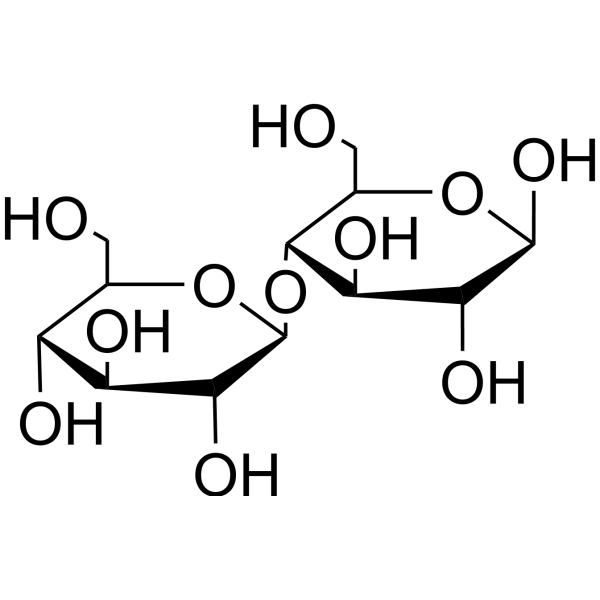
D-(+)-Cellobiose is a water-soluble disaccharide and an important intermediate product in the degradation process of cellulose and hemicellulose. D-(+)-cellobiose is used as a carbon source by microorganisms in fermentation processes, where it is converted into ethanol or other metabolic products. D-(+)-Cellobiose has significant application value in biofuel production, such as bioethanol .
|
-
-
- HY-N0537
-
Xylose
5 Publications Verification
D-(+)-Xylose; (+)-Xylose; Wood sugar
|
Environmental Pollutants
Endogenous Metabolite
|
Metabolic Disease
|
|
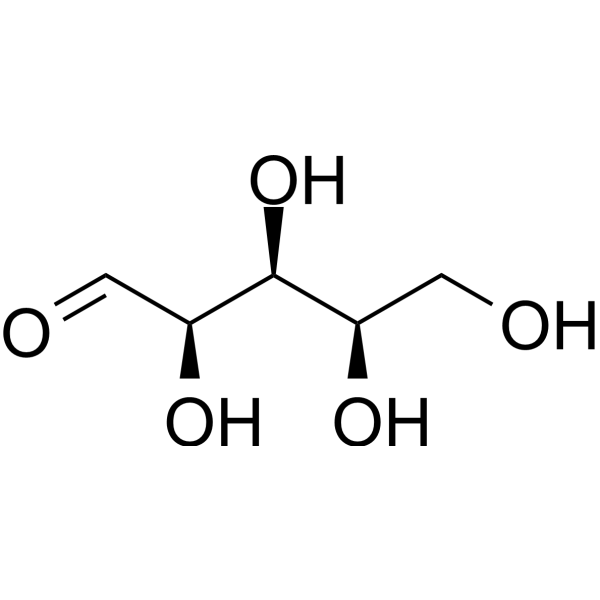
Xylose (D-(+)-Xylose) is a natural pentose sugar that is catalyzed by xylose isomerase to form xylulose, which is a key step in the anaerobic ethanol fermentation of Xylose. Xylose can be used by microorganisms to produce fuels, chemicals, and bulk industrial enzymes. Xylose provides the substances and energy for cells, as a carbon source for the biosynthesis of high-value chemicals and biofuel. Xylose can be used to fully explore lignocellulose resources and provide a new direction for microbia fermentation .
|
-
-
- HY-W032013
-
-
-
- HY-108943
-
|
|
Others
|
Others
|
|
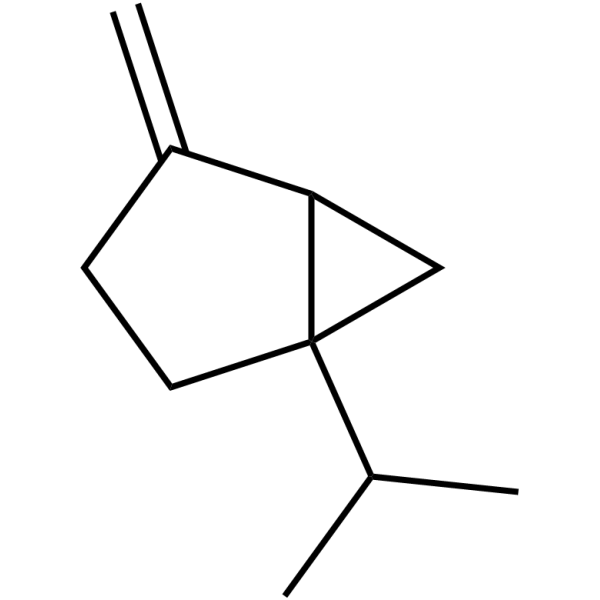
Sabinene is an naturally occurring bicyclic monoterpene which can be used as flavorings, perfume additives, fine chemicals, and advanced biofuels. Sabinene is also an orally active compound to attenuates skeletal muscle atrophy and regulates ROS-mediated MAPK/MuRF-1 pathways .
|
-
-
- HY-N8045
-
|
Ricinolic acid methyl ester
|
Biochemical Assay Reagents
|
Others
|
|
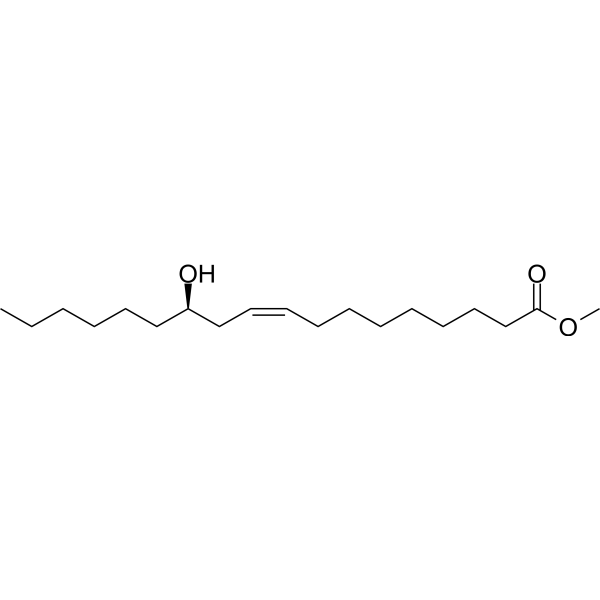
Methyl ricinoleate is a compound belonging to the group of fatty acid methyl esters. It is derived from ricinoleic acid, a monounsaturated omega-9 fatty acid found in castor oil. Methyl ricinoleate is often used as a reference compound for the analysis of fatty acid methyl esters by gas chromatography. It has also been investigated for its potential use as a biofuel and as an ingredient in the production of biodegradable plastics and surfactants.
|
-
-
- HY-P2875
-
|
|
Endogenous Metabolite
|
Others
|
|
Hemicellulase is a hemicellulose-targeting hydrolase that breaks down the binding of glucose and polymers to water molecules present in plant fibers. Hemicellulase specifically degrades hemicellulose (such as xylan and mannan) in plant cell walls by hydrolyzing β-1,4-xylosidic bonds and ester bonds (such as acetyl and ferulic acid ester bonds). Hemicellulase relies on the synergistic action of the glycoside hydrolase (GH) and carbohydrate esterase (CE) families to achieve efficient hydrolysis through acid-base catalysis (such as Glu/Asp residues) and substrate binding pockets. Hemicellulase can be used in the food industry (such as improving bread texture), biofuel production (lignocellulose pretreatment) and paper industry (biobleaching) .
|
-
-
- HY-W040971
-
-
-
- HY-Y0839
-
|
4-Oxovaleric acid; NSC 3716
|
Environmental Pollutants
Endogenous Metabolite
Bacterial
|
Infection
|
|
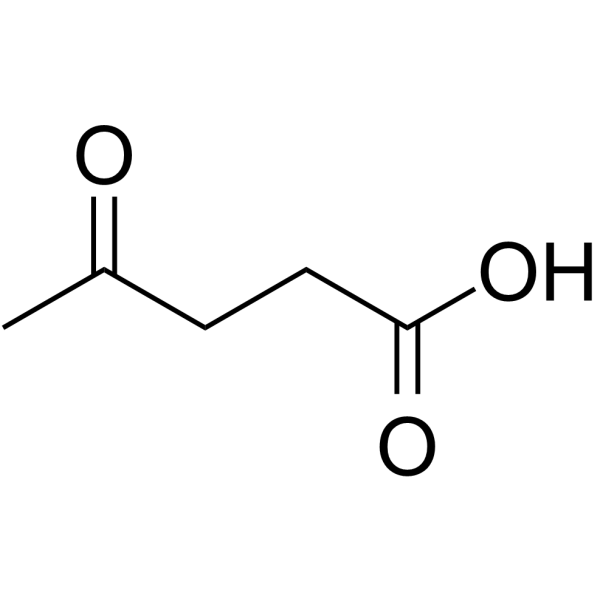
Levulinic acid is a precursor for the synthesis of biofuels, such as ethyl levulinate. Levulinic acid is also a 5-keto-pentanoic acid. Levulinic acid can be utilized by the cells as a cosubstrate for biopolymer synthesis. Levulinic acid can be used in antibacterial research .
|
-
-
- HY-Y1887
-
|
|
Environmental Pollutants
Biochemical Assay Reagents
Insecticide
|
Cardiovascular Disease
Infection
Inflammation/Immunology
|
|
Cottonseed oil is an edible oil extracted from the seeds of cotton (Gossypium hirsutum). Its fatty acid composition includes 26-35% saturated fatty acids, 42-52% polyunsaturated fatty acids, and 18-24% monounsaturated fatty acids. Cottonseed oil is regarded as an Insecticide, as it is used to protect the trunks of apple trees from damage by the apple clearwing moth. Cottonseed oil possesses anti-inflammatory and cardioprotective properties. It also has extensive applications in many fields such as biofuels, animal husbandry, cosmetics, agriculture, and chemical industry .
|
-
-
- HY-Y0839S
-
|
4-Oxovaleric acid-d5; NSC 3716-d5
|
Endogenous Metabolite
Bacterial
|
Others
|
|
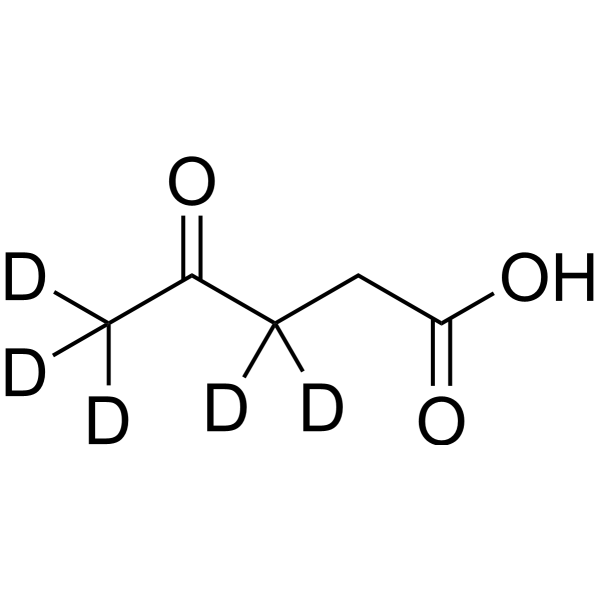
Levulinic acid-d5 is the deuterium labeled Levulinic acid . Levulinic acid is a precursor for the synthesis of biofuels, such as ethyl levulinate .
|
-
-
- HY-121262
-
|
Bisabolene; γ-Bisabolene
|
Drug Intermediate
|
Infection
|
|
Bisabolene (mixture of isomers) (Bisabolene) is a sesquiterpenoid plant natural product and also a hydrocarbon precursor for various industry-relevant chemicals. Bisabolene (mixture of isomers) serves as an important precursor for the production of industry-relevant chemicals such as biofuels, bioplastics, pharmaceuticals and cosmetics .
|
-
-
- HY-P2889
-
|
|
Biochemical Assay Reagents
|
Others
|
|
Pyranose oxidase, Coriolus sp. is an oxidoreductase targeting monosaccharides (e.g., D-glucose, D-galactose). Pyranose oxidase, Coriolus sp. is promising for research of biosensors (glucose, 1,5-anhydroglucitol detection) and biofuel cells .
|
-
-
- HY-W004570
-
|
5-NP
|
Endogenous Metabolite
|
Infection
|
|
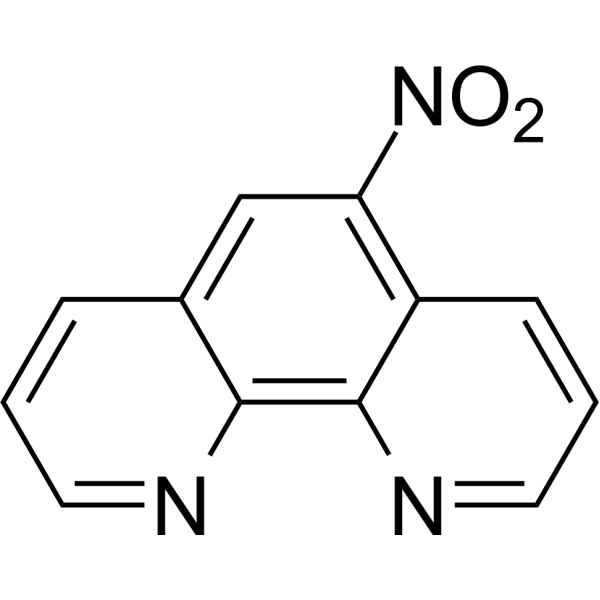
5-Nitro-1,10-phenanthroline (5-NP), is a o-Phenanthroline (HY-W004544) derivative, as a mediator of glucose oxidase (GOX) with antituberculous activity. 5-Nitro-1,10-phenanthroline can be applied as redox mediators for oxidases and is suitable for the development of reagent-less biosensors and biofuel cells .
|
-
-
- HY-B2225B
-
|
Edible corn starch (from corn)
|
Biochemical Assay Reagents
Endogenous Metabolite
|
Others
|
|
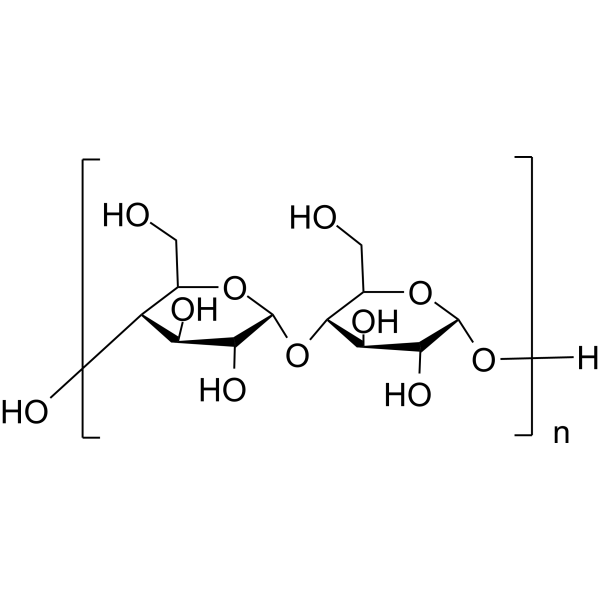
Starch (from corn) is a carbohydrate extracted from the kernel of the corn plant. It contains two main components, namely amylose and amylopectin. Starches from corn have various applications in the food industry as thickeners, stabilizers and binders. It is commonly used in the production of products such as baked goods, snacks, sauces and soups. In addition, it can be used as a raw material for the production of biofuels and bioplastics.
|
-
-
- HY-W779019
-
|
D-(+)-Xylose-13C5; (+)-Xylose-13C5; Wood sugar-13C5
|
Isotope-Labeled Compounds
Endogenous Metabolite
|
Metabolic Disease
|
|
Xylose- 13C5 (D-(+)-Xylose- 13C5) is 13C labeled Xylose. Xylose (D-(+)-Xylose) is a natural pentose sugar that is catalyzed by xylose isomerase to form xylulose, which is a key step in the anaerobic ethanol fermentation of Xylose. Xylose can be used by microorganisms to produce fuels, chemicals, and bulk industrial enzymes. Xylose provides the substances and energy for cells, as a carbon source for the biosynthesis of high-value chemicals and biofuel. Xylose can be used to fully explore lignocellulose resources and provide a new direction for microbia fermentation .
|
-
-
- HY-N0537R
-
|
D-(+)-Xylose (Standard); (+)-Xylose (Standard); Wood sugar (Standard)
|
Reference Standards
Endogenous Metabolite
|
Metabolic Disease
|
|
Xylose (Standard) (D-(+)-Xylose (Standard)) is the analytical standard of Xylose (HY-N0537). This product is intended for research and analytical applications. Xylose (D-(+)-Xylose) is a natural pentose sugar that is catalyzed by xylose isomerase to form xylulose, which is a key step in the anaerobic ethanol fermentation of Xylose. Xylose can be used by microorganisms to produce fuels, chemicals, and bulk industrial enzymes. Xylose provides the substances and energy for cells, as a carbon source for the biosynthesis of high-value chemicals and biofuel. Xylose can be used to fully explore lignocellulose resources and provide a new direction for microbia fermentation.
|
-
-
- HY-N0537S3
-
|
D-(+)-Xylose-2-13C; (+)-Xylose-2-13C; Wood sugar-2-13C
|
Isotope-Labeled Compounds
Endogenous Metabolite
|
Metabolic Disease
|
|
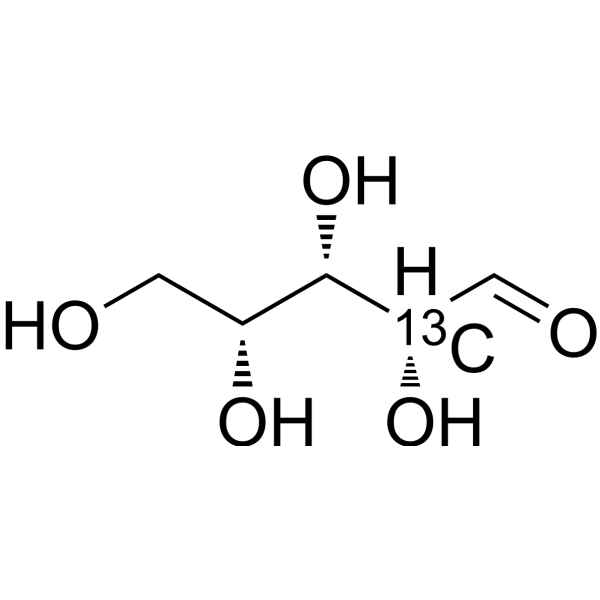
Xylose-2- 13C (D-(+)-Xylose-2- 13C) is the 13C labeled Xylose (HY-N0537). Xylose (D-(+)-Xylose) is a natural pentose sugar that is catalyzed by xylose isomerase to form xylulose, which is a key step in the anaerobic ethanol fermentation of Xylose. Xylose can be used by microorganisms to produce fuels, chemicals, and bulk industrial enzymes. Xylose provides the substances and energy for cells, as a carbon source for the biosynthesis of high-value chemicals and biofuel. Xylose can be used to fully explore lignocellulose resources and provide a new direction for microbia fermentation .
|
-
-
- HY-141610
-
|
Methyl enanthate
|
Biochemical Assay Reagents
|
Others
|
|
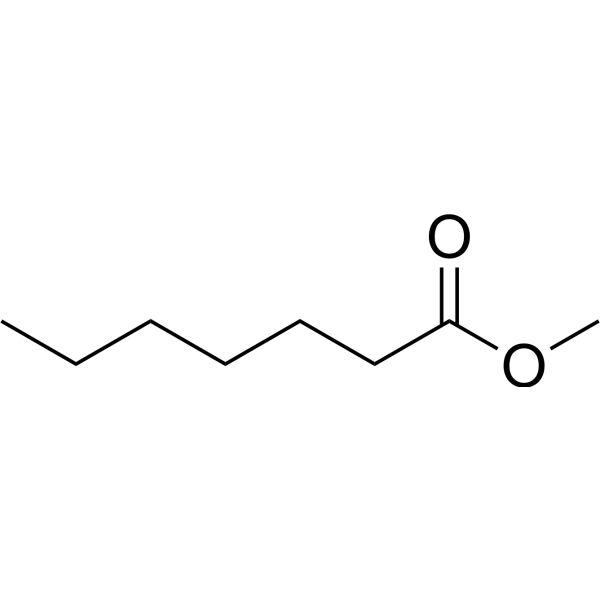
Methyl heptanoate, commonly used as a flavoring and fragrance ingredient in the food and cosmetic industries, Methyl heptanoate is also used as a solvent for various substances, including resins, oils and waxes, in addition, it has been studied for its potential as a biofuel and polymer production application.
|
-
-
- HY-123307
-
|
Xylafop
|
Environmental Pollutants
Acetyl-CoA Carboxylase
|
Others
|
|
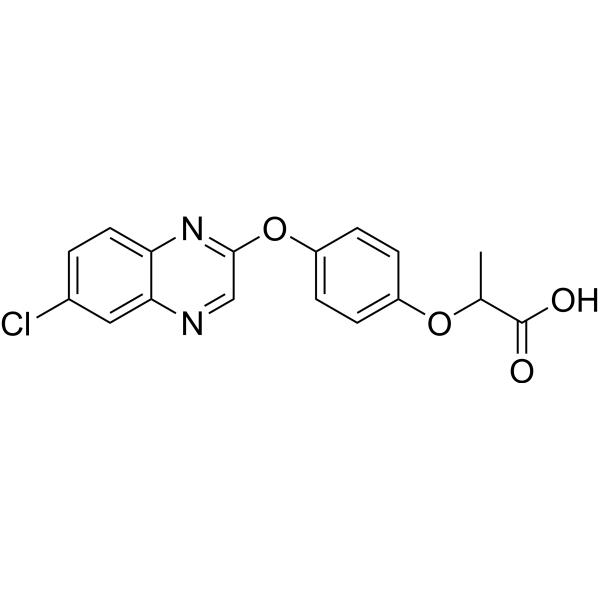
Quizalofop (Xylafop) is a herbicide that inhibits acetyl-CoA carboxylase (ACCase) to reduce the synthesis of fatty acids. Quizalofop can be used to screen EMS (HY-W015854) mutated microalgae for research on improving the performance of microalgae biofuel production .
|
-
-
- HY-Y0839R
-
|
4-Oxovaleric acid (Standard); NSC 3716 (Standard); (Standard)
|
Reference Standards
Endogenous Metabolite
Bacterial
|
Others
|
|
Levulinic acid (Standard) is the analytical standard of Levulinic acid. This product is intended for research and analytical applications. Levulinic acid is a precursor for the synthesis of biofuels, such as ethyl levulinate.
|
-
-
- HY-W032013S1
-
|
Octanol-d2
|
Calcium Channel
Endogenous Metabolite
|
Metabolic Disease
|
|
1-Octanol-d2 is the deuterium labeled 1-Octanol . 1-Octanol (Octanol), a saturated fatty alcohol, is a T-type calcium channels (T-channels) inhibitor with an IC50 of 4 μM for native T-currents . 1-Octanol is a highly attractive biofuel with diesel-like properties .
|
-
-
- HY-W032013R
-
|
Octanol (Standard)
|
Reference Standards
Calcium Channel
Endogenous Metabolite
|
Neurological Disease
Metabolic Disease
|
|
1-Octanol (Standard) is the analytical standard of 1-Octanol. This product is intended for research and analytical applications. 1-Octanol (Octanol), a saturated fatty alcohol, is a T-type calcium channels (T-channels) inhibitor with an IC50 of 4 μM for native T-currents . 1-Octanol is a highly attractive biofuel with diesel-like properties .
|
-
-
- HY-114686
-
|
|
Drug Metabolite
|
Cardiovascular Disease
|
|
(R)-γ-Valerolactone is a precursor of antihypertensive compounds. (R)-γ-Valerolactone can also be used in the research of biodegradable plastics and biofuels .
|
-
-
- HY-W068214
-
|
Methyl-10-undecenoate
|
Environmental Pollutants
Biochemical Assay Reagents
|
Others
|
|
Methyl undec-10-enoate, which is an ester formed by the condensation of methanol and undec-10-enoic acid, is commonly used as a flavoring and fragrance in the food and cosmetic industries due to its sweet fruity smell and taste , in addition, its potential use in biofuel production and as a starting material for the synthesis of various organic compounds was investigated.
|
-
-
- HY-165091
-
|
1,2-Octanoin-3-decanoin; TG(8:0/8:0/10:0)
|
Endogenous Metabolite
|
Others
|
|
1,2-Dioctanoyl-3-decanoyl-rac-glycerol (1,2-Octanoin-3-decanoin) is a triglyceride identified in microalgae biomass by ion mobility-mass spectrometry. It can be used to characterize microalgae biomass. Different analytical strategies can determine its distribution in different microalgae and its relationship with other compounds, which has application value in biofuel production.
|
-
-
- HY-B2225BS
-
|
|
Isotope-Labeled Compounds
Biochemical Assay Reagents
Endogenous Metabolite
|
Others
|
|
Starch- 13C12 (from corn) is the 13 labeled Starch (from corn) (HY-B2225B). Starch (from corn) is a carbohydrate extracted from the kernel of the corn plant. It contains two main components, namely amylose and amylopectin. Starches from corn have various applications in the food industry as thickeners, stabilizers and binders. It is commonly used in the production of products such as baked goods, snacks, sauces and soups. In addition, it can be used as a raw material for the production of biofuels and bioplastics.
|
-
-
- HY-W010176
-
|
3,7-Dimethyloctan-1-ol
|
Environmental Pollutants
Biochemical Assay Reagents
|
Others
|
|
3,7-Dimethyloctan-1-ol, 3,7-Dimethyloctan-1-ol is commonly used as a flavor and fragrance ingredient due to its pleasant aroma, it can also be used as a solvent, and in the synthesis of various organic compounds (including pharmaceuticals and agrochemicals), in addition, due to its high energy content and low volatility, 3,7-Dimethyloctan-1-ol has been investigated for its potential use as a biofuel, due to its toxicity to some pests, it has also been studied as a potential repellent and insecticide,
|
-
-
- HY-W040971R
-
-
-
- HY-W654314
-
-
-
- HY-W032013S
-
|
Octanol-d17
|
Calcium Channel
Endogenous Metabolite
|
Metabolic Disease
|
|
1-Octanol-d17 is the deuterium labeled 1-Octanol . 1-Octanol (Octanol), a saturated fatty alcohol, is a T-type calcium channels (T-channels) inhibitor with an IC50 of 4 μM for native T-currents . 1-Octanol is a highly attractive biofuel with diesel-like properties .
|
-
-
- HY-W778511
-
|
4-Oxovaleric acid-13C3; NSC 3716-13C3
|
Isotope-Labeled Compounds
Bacterial
Endogenous Metabolite
|
Infection
|
|
Levulinic acid- 13C3 (4-Oxovaleric acid- 13C) is the 13C-labeled Levulinic acid (HY-Y0839). Levulinic acid is a precursor for the synthesis of biofuels, such as ethyl levulinate. Levulinic acid is also a 5-keto-pentanoic acid. Levulinic acid can be utilized by the cells as a cosubstrate for biopolymer synthesis. Levulinic acid can be used in antibacterial research .
|
-
-
- HY-W032013S2
-
|
Octanol-d2-1
|
Calcium Channel
Endogenous Metabolite
Isotope-Labeled Compounds
|
Others
|
|
1-Octanol-d2-1 is deuterated labeled 1-Octanol (HY-W032013). 1-Octanol (Octanol), a saturated fatty alcohol, is a T-type calcium channels (T-channels) inhibitor with an IC50 of 4 μM for native T-currents . 1-Octanol is a highly attractive biofuel with diesel-like properties .
|
-
-
- HY-W032013S3
-
|
Octanol-d5
|
Calcium Channel
Endogenous Metabolite
Isotope-Labeled Compounds
|
Others
|
|
1-Octanol-d5 is deuterated labeled 1-Octanol (HY-W032013). 1-Octanol (Octanol), a saturated fatty alcohol, is a T-type calcium channels (T-channels) inhibitor with an IC50 of 4 μM for native T-currents . 1-Octanol is a highly attractive biofuel with diesel-like properties .
|
-
-
- HY-N8045R
-
|
Ricinolic acid methyl ester (Standard)
|
Biochemical Assay Reagents
Reference Standards
|
Others
|
|
Methyl ricinoleate (Standard) is the analytical standard of Methyl ricinoleate. This product is intended for research and analytical applications. Methyl ricinoleate is a compound belonging to the group of fatty acid methyl esters. It is derived from ricinoleic acid, a monounsaturated omega-9 fatty acid found in castor oil. Methyl ricinoleate is often used as a reference compound for the analysis of fatty acid methyl esters by gas chromatography. It has also been investigated for its potential use as a biofuel and as an ingredient in the production of biodegradable plastics and surfactants.
|
-
-
- HY-W010410R
-
|
|
Reference Standards
Others
|
Neurological Disease
Metabolic Disease
|
|
Methyl ricinoleate (Standard) is the analytical standard of Methyl ricinoleate. This product is intended for research and analytical applications. Methyl ricinoleate is a compound belonging to the group of fatty acid methyl esters. It is derived from ricinoleic acid, a monounsaturated omega-9 fatty acid found in castor oil. Methyl ricinoleate is often used as a reference compound for the analysis of fatty acid methyl esters by gas chromatography. It has also been investigated for its potential use as a biofuel and as an ingredient in the production of biodegradable plastics and surfactants.
|
-
-
- HY-W004570R
-
|
5-NP (Standard)
|
Endogenous Metabolite
Reference Standards
|
Infection
|
|
5-Nitro-1,10-phenanthroline (Standard) (5-NP (Standard)) is the analytical standard of 5-Nitro-1,10-phenanthroline (HY-W004570). This product is intended for research and analytical applications. 5-Nitro-1,10-phenanthroline (5-NP), is a o-Phenanthroline (HY-W004544) derivative, as a mediator of glucose oxidase (GOX) with antituberculous activity. 5-Nitro-1,10-phenanthroline can be applied as redox mediators for oxidases and is suitable for the development of reagent-less biosensors and biofuel cells .
|
-
-
- HY-W699942
-
|
|
Isotope-Labeled Compounds
|
Others
|
|
3-(2-Hydroxy-2-(methyl-d3)propyl-3,3,3-d3) 5-methyl 2,6-dimethyl-4-(2-nitrophenyl)-1,4-dihydropyridine-3,5-dicarboxylate is deuterated labeled 3-(2-Hydroxy-2-(methyl-)propyl-3,3,3-) 5-methyl 2,6-dimethyl-4-(2-nitrophenyl)-1,4-dihydropyridine-3,5-dicarboxylate.
|
-
-
- HY-141610S
-
|
Methyl enanthate-d13
|
Isotope-Labeled Compounds
Biochemical Assay Reagents
|
Others
|
|
Methyl heptanoate-d13 (Methyl enanthate-d13) is the deuterium labeled Methyl heptanoate (HY-141610). Methyl heptanoate, commonly used as a flavoring and fragrance ingredient in the food and cosmetic industries, Methyl heptanoate is also used as a solvent for various substances, including resins, oils and waxes, in addition, it has been studied for its potential as a biofuel and polymer production application.
|
-
-
- HY-W724393
-
|
Methyl enanthate-d5
|
Isotope-Labeled Compounds
Biochemical Assay Reagents
|
Others
|
|
Methyl heptanoate-d5 (Methyl enanthate-d5) is the deuterium labeled Methyl heptanoate (HY-141610). Methyl heptanoate, commonly used as a flavoring and fragrance ingredient in the food and cosmetic industries, Methyl heptanoate is also used as a solvent for various substances, including resins, oils and waxes, in addition, it has been studied for its potential as a biofuel and polymer production application.
|
-
-
- HY-W040971S
-
-
-
- HY-W779018
-
|
D-(+)-Xylose-13C2; (+)-Xylose-13C2; Wood sugar-13C2
|
Isotope-Labeled Compounds
Endogenous Metabolite
|
Metabolic Disease
|
|
Xylose- 13C2 (D-(+)-Xylose- 13C2) is the 13C-labeled Xylose. Xylose (D-(+)-Xylose) is a natural pentose sugar that is catalyzed by xylose isomerase to form xylulose, which is a key step in the anaerobic ethanol fermentation of Xylose. Xylose can be used by microorganisms to produce fuels, chemicals, and bulk industrial enzymes. Xylose provides the substances and energy for cells, as a carbon source for the biosynthesis of high-value chemicals and biofuel. Xylose can be used to fully explore lignocellulose resources and provide a new direction for microbia fermentation .
|
-
| Cat. No. |
Product Name |
Type |
-
- HY-N8045
-
|
Ricinolic acid methyl ester
|
Biochemical Assay Reagents
|
|
Methyl ricinoleate is a compound belonging to the group of fatty acid methyl esters. It is derived from ricinoleic acid, a monounsaturated omega-9 fatty acid found in castor oil. Methyl ricinoleate is often used as a reference compound for the analysis of fatty acid methyl esters by gas chromatography. It has also been investigated for its potential use as a biofuel and as an ingredient in the production of biodegradable plastics and surfactants.
|
-
- HY-Y1887
-
|
|
Biochemical Assay Reagents
|
|
Cottonseed oil is an edible oil extracted from the seeds of cotton (Gossypium hirsutum). Its fatty acid composition includes 26-35% saturated fatty acids, 42-52% polyunsaturated fatty acids, and 18-24% monounsaturated fatty acids. Cottonseed oil is regarded as an Insecticide, as it is used to protect the trunks of apple trees from damage by the apple clearwing moth. Cottonseed oil possesses anti-inflammatory and cardioprotective properties. It also has extensive applications in many fields such as biofuels, animal husbandry, cosmetics, agriculture, and chemical industry .
|
-
- HY-B2225B
-
|
Edible corn starch (from corn)
|
Biochemical Assay Reagents
|
|
Starch (from corn) is a carbohydrate extracted from the kernel of the corn plant. It contains two main components, namely amylose and amylopectin. Starches from corn have various applications in the food industry as thickeners, stabilizers and binders. It is commonly used in the production of products such as baked goods, snacks, sauces and soups. In addition, it can be used as a raw material for the production of biofuels and bioplastics.
|
-
- HY-141610
-
|
Methyl enanthate
|
Biochemical Assay Reagents
|
|
Methyl heptanoate, commonly used as a flavoring and fragrance ingredient in the food and cosmetic industries, Methyl heptanoate is also used as a solvent for various substances, including resins, oils and waxes, in addition, it has been studied for its potential as a biofuel and polymer production application.
|
-
- HY-W068214
-
|
Methyl-10-undecenoate
|
Biochemical Assay Reagents
|
|
Methyl undec-10-enoate, which is an ester formed by the condensation of methanol and undec-10-enoic acid, is commonly used as a flavoring and fragrance in the food and cosmetic industries due to its sweet fruity smell and taste , in addition, its potential use in biofuel production and as a starting material for the synthesis of various organic compounds was investigated.
|
-
- HY-W010176
-
|
3,7-Dimethyloctan-1-ol
|
Biochemical Assay Reagents
|
|
3,7-Dimethyloctan-1-ol, 3,7-Dimethyloctan-1-ol is commonly used as a flavor and fragrance ingredient due to its pleasant aroma, it can also be used as a solvent, and in the synthesis of various organic compounds (including pharmaceuticals and agrochemicals), in addition, due to its high energy content and low volatility, 3,7-Dimethyloctan-1-ol has been investigated for its potential use as a biofuel, due to its toxicity to some pests, it has also been studied as a potential repellent and insecticide,
|
-
- HY-N8045R
-
|
Ricinolic acid methyl ester (Standard)
|
Biochemical Assay Reagents
|
|
Methyl ricinoleate (Standard) is the analytical standard of Methyl ricinoleate. This product is intended for research and analytical applications. Methyl ricinoleate is a compound belonging to the group of fatty acid methyl esters. It is derived from ricinoleic acid, a monounsaturated omega-9 fatty acid found in castor oil. Methyl ricinoleate is often used as a reference compound for the analysis of fatty acid methyl esters by gas chromatography. It has also been investigated for its potential use as a biofuel and as an ingredient in the production of biodegradable plastics and surfactants.
|
| Cat. No. |
Product Name |
Category |
Target |
Chemical Structure |
| Cat. No. |
Product Name |
Chemical Structure |
-
- HY-Y0839S
-
|
|
|
Levulinic acid-d5 is the deuterium labeled Levulinic acid . Levulinic acid is a precursor for the synthesis of biofuels, such as ethyl levulinate .
|
-
-
- HY-W779019
-
|
|
|
Xylose- 13C5 (D-(+)-Xylose- 13C5) is 13C labeled Xylose. Xylose (D-(+)-Xylose) is a natural pentose sugar that is catalyzed by xylose isomerase to form xylulose, which is a key step in the anaerobic ethanol fermentation of Xylose. Xylose can be used by microorganisms to produce fuels, chemicals, and bulk industrial enzymes. Xylose provides the substances and energy for cells, as a carbon source for the biosynthesis of high-value chemicals and biofuel. Xylose can be used to fully explore lignocellulose resources and provide a new direction for microbia fermentation .
|
-
-
- HY-N0537S3
-
|
|
|
Xylose-2- 13C (D-(+)-Xylose-2- 13C) is the 13C labeled Xylose (HY-N0537). Xylose (D-(+)-Xylose) is a natural pentose sugar that is catalyzed by xylose isomerase to form xylulose, which is a key step in the anaerobic ethanol fermentation of Xylose. Xylose can be used by microorganisms to produce fuels, chemicals, and bulk industrial enzymes. Xylose provides the substances and energy for cells, as a carbon source for the biosynthesis of high-value chemicals and biofuel. Xylose can be used to fully explore lignocellulose resources and provide a new direction for microbia fermentation .
|
-
-
- HY-W032013S1
-
|
|
|
1-Octanol-d2 is the deuterium labeled 1-Octanol . 1-Octanol (Octanol), a saturated fatty alcohol, is a T-type calcium channels (T-channels) inhibitor with an IC50 of 4 μM for native T-currents . 1-Octanol is a highly attractive biofuel with diesel-like properties .
|
-
-
- HY-B2225BS
-
|
|
|
Starch- 13C12 (from corn) is the 13 labeled Starch (from corn) (HY-B2225B). Starch (from corn) is a carbohydrate extracted from the kernel of the corn plant. It contains two main components, namely amylose and amylopectin. Starches from corn have various applications in the food industry as thickeners, stabilizers and binders. It is commonly used in the production of products such as baked goods, snacks, sauces and soups. In addition, it can be used as a raw material for the production of biofuels and bioplastics.
|
-
-
- HY-W654314
-
|
|
|
S-Phenyl-d5-mercapturic Acid is deuterated labeled S-Phenyl.
|
-
-
- HY-W032013S
-
|
|
|
1-Octanol-d17 is the deuterium labeled 1-Octanol . 1-Octanol (Octanol), a saturated fatty alcohol, is a T-type calcium channels (T-channels) inhibitor with an IC50 of 4 μM for native T-currents . 1-Octanol is a highly attractive biofuel with diesel-like properties .
|
-
-
- HY-W778511
-
|
|
|
Levulinic acid- 13C3 (4-Oxovaleric acid- 13C) is the 13C-labeled Levulinic acid (HY-Y0839). Levulinic acid is a precursor for the synthesis of biofuels, such as ethyl levulinate. Levulinic acid is also a 5-keto-pentanoic acid. Levulinic acid can be utilized by the cells as a cosubstrate for biopolymer synthesis. Levulinic acid can be used in antibacterial research .
|
-
-
- HY-W032013S2
-
|
|
|
1-Octanol-d2-1 is deuterated labeled 1-Octanol (HY-W032013). 1-Octanol (Octanol), a saturated fatty alcohol, is a T-type calcium channels (T-channels) inhibitor with an IC50 of 4 μM for native T-currents . 1-Octanol is a highly attractive biofuel with diesel-like properties .
|
-
-
- HY-W032013S3
-
|
|
|
1-Octanol-d5 is deuterated labeled 1-Octanol (HY-W032013). 1-Octanol (Octanol), a saturated fatty alcohol, is a T-type calcium channels (T-channels) inhibitor with an IC50 of 4 μM for native T-currents . 1-Octanol is a highly attractive biofuel with diesel-like properties .
|
-
-
- HY-W699942
-
|
|
|
3-(2-Hydroxy-2-(methyl-d3)propyl-3,3,3-d3) 5-methyl 2,6-dimethyl-4-(2-nitrophenyl)-1,4-dihydropyridine-3,5-dicarboxylate is deuterated labeled 3-(2-Hydroxy-2-(methyl-)propyl-3,3,3-) 5-methyl 2,6-dimethyl-4-(2-nitrophenyl)-1,4-dihydropyridine-3,5-dicarboxylate.
|
-
-
- HY-141610S
-
|
|
|
Methyl heptanoate-d13 (Methyl enanthate-d13) is the deuterium labeled Methyl heptanoate (HY-141610). Methyl heptanoate, commonly used as a flavoring and fragrance ingredient in the food and cosmetic industries, Methyl heptanoate is also used as a solvent for various substances, including resins, oils and waxes, in addition, it has been studied for its potential as a biofuel and polymer production application.
|
-
-
- HY-W724393
-
|
|
|
Methyl heptanoate-d5 (Methyl enanthate-d5) is the deuterium labeled Methyl heptanoate (HY-141610). Methyl heptanoate, commonly used as a flavoring and fragrance ingredient in the food and cosmetic industries, Methyl heptanoate is also used as a solvent for various substances, including resins, oils and waxes, in addition, it has been studied for its potential as a biofuel and polymer production application.
|
-
-
- HY-W040971S
-
|
|
|
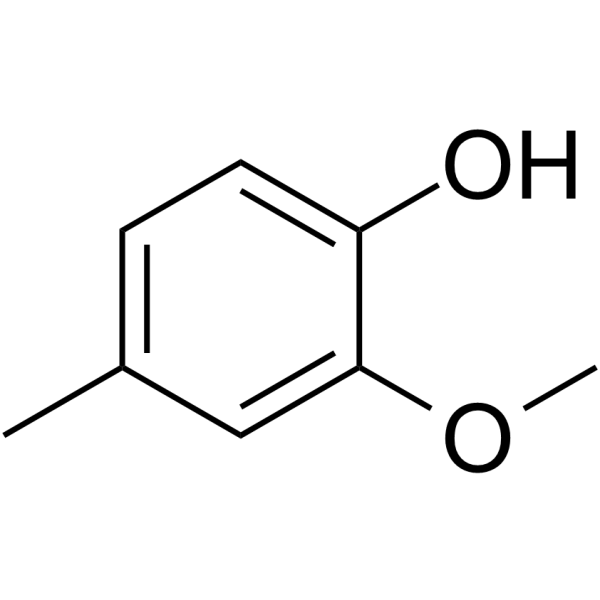
Creosol-d4 (2-Methoxy-4-methylphenol-d4) is the deuterium labeled Creosol (HY-W040971). Creosol (2-Methoxy-4-methylphenol) is an endogenous metabolite that acts as an important chemical intermediate and potential biofuel mainly derived from lignocellulosic biomass. Creosol is blood brain barrier penetrable .
|
-
-
- HY-W779018
-
|
|
|
Xylose- 13C2 (D-(+)-Xylose- 13C2) is the 13C-labeled Xylose. Xylose (D-(+)-Xylose) is a natural pentose sugar that is catalyzed by xylose isomerase to form xylulose, which is a key step in the anaerobic ethanol fermentation of Xylose. Xylose can be used by microorganisms to produce fuels, chemicals, and bulk industrial enzymes. Xylose provides the substances and energy for cells, as a carbon source for the biosynthesis of high-value chemicals and biofuel. Xylose can be used to fully explore lignocellulose resources and provide a new direction for microbia fermentation .
|
-
| Cat. No. |
Product Name |
|
Classification |
-
- HY-N0537
-
Xylose
5 Publications Verification
D-(+)-Xylose; (+)-Xylose; Wood sugar
|
|
Sweetening Agents
|
|
Xylose (D-(+)-Xylose) is a natural pentose sugar that is catalyzed by xylose isomerase to form xylulose, which is a key step in the anaerobic ethanol fermentation of Xylose. Xylose can be used by microorganisms to produce fuels, chemicals, and bulk industrial enzymes. Xylose provides the substances and energy for cells, as a carbon source for the biosynthesis of high-value chemicals and biofuel. Xylose can be used to fully explore lignocellulose resources and provide a new direction for microbia fermentation .
|
-
- HY-Y1887
-
|
|
|
Solvents
|
|
Cottonseed oil is an edible oil extracted from the seeds of cotton (Gossypium hirsutum). Its fatty acid composition includes 26-35% saturated fatty acids, 42-52% polyunsaturated fatty acids, and 18-24% monounsaturated fatty acids. Cottonseed oil is regarded as an Insecticide, as it is used to protect the trunks of apple trees from damage by the apple clearwing moth. Cottonseed oil possesses anti-inflammatory and cardioprotective properties. It also has extensive applications in many fields such as biofuels, animal husbandry, cosmetics, agriculture, and chemical industry .
|
-
- HY-B2225B
-
|
Edible corn starch (from corn)
|
|
Binders
Disintegrants
|
|
Starch (from corn) is a carbohydrate extracted from the kernel of the corn plant. It contains two main components, namely amylose and amylopectin. Starches from corn have various applications in the food industry as thickeners, stabilizers and binders. It is commonly used in the production of products such as baked goods, snacks, sauces and soups. In addition, it can be used as a raw material for the production of biofuels and bioplastics.
|
Your information is safe with us. * Required Fields.
Inquiry Information
- Product Name:
- Cat. No.:
- Quantity:
- MCE Japan Authorized Agent:

