Search Result
Results for "
biotin labeling
" in MedChemExpress (MCE) Product Catalog:
61
Biochemical Assay Reagents
5
Isotope-Labeled Compounds
| Cat. No. |
Product Name |
Target |
Research Areas |
Chemical Structure |
-
- HY-111496
-
|
|
Biochemical Assay Reagents
|
Others
|
|
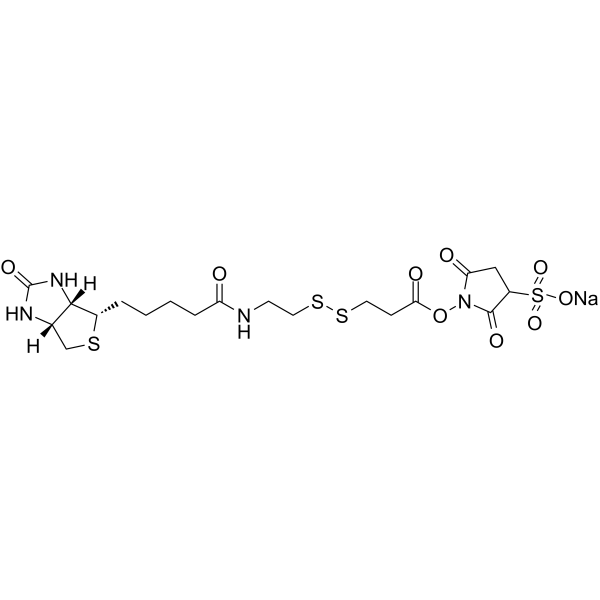
Sulfo-NHS-SS-biotin sodium is a long-chain cleavable and cell-impermeant amine-reactive biotinylation reagent. Sulfo-NHS-SS-biotin sodium can be used for the labeling and purifying of cell-surface protein .
|
-
-
- HY-128699
-
|
Dethiobiotin
|
Endogenous Metabolite
|
Endocrinology
|
|
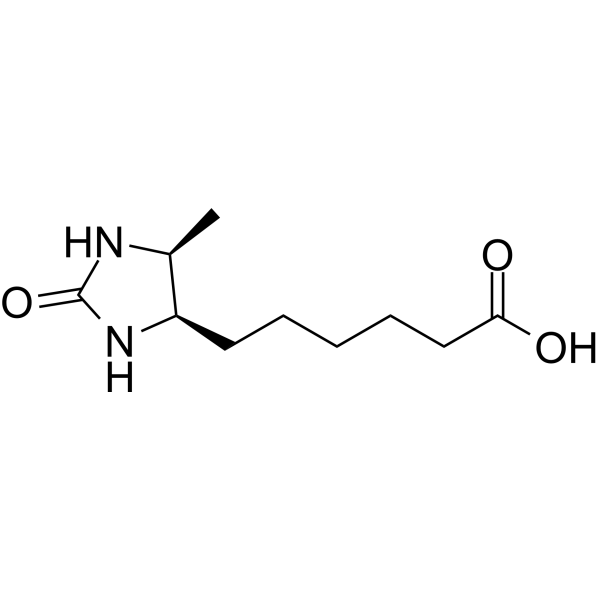
D-Desthiobiotin is a biotin derivative. D-Desthiobiotin increases testosterone. D-Desthiobiotin is used in affinity chromatography and protein chromatography, also can be used for protein and cell labeling, detection and isolation .
|
-
-
- HY-130809
-
|
|
Biochemical Assay Reagents
|
Cancer
|
|
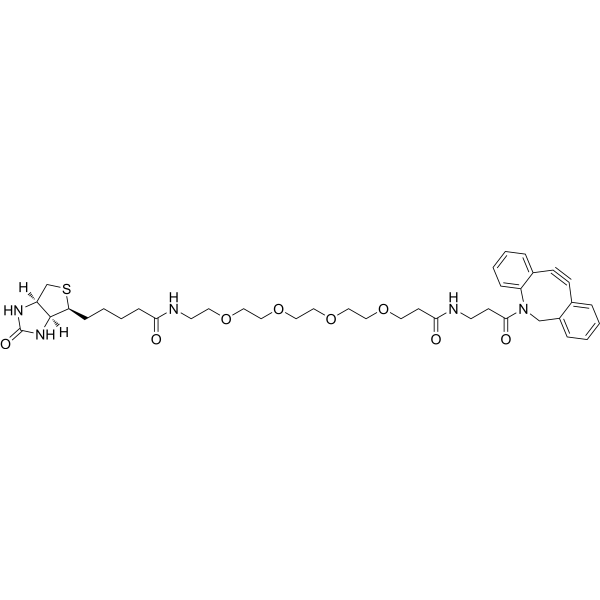
DBCO-PEG4-Biotin is an azadibenzocyclooctyne-biotin derivative containing a biotin group and 4 PEGs. DBCO-PEG4-Biotin is a versatile biotinylation reagent used for the introduction of a biotin moiety to azide-labeled biomolecules via copper-free strain-promoted alkyne-azide click chemistry (SPAAC) reaction . DBCO-PEG4-Biotin is a click chemistry reagent, it contains a DBCO group that can undergo strain-promoted alkyne-azide cycloaddition (SPAAC) with molecules containing Azide groups.
|
-
-
- HY-136769
-
|
|
Biochemical Assay Reagents
|
Others
|
|
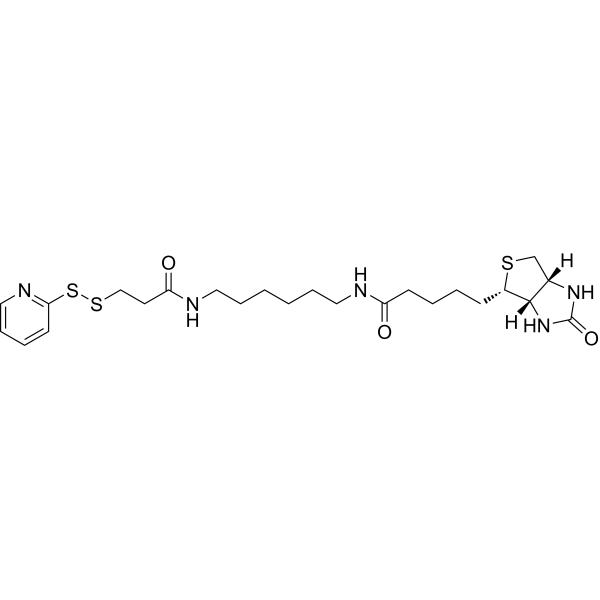
Biotin-HPDP is a biochemical reagent. Biotin-HPDP can couple with GMPS and label free protein thiols. Biotin-HPDP can be used as a biological material or organic compound for life science related research .
|
-
-
- HY-140889
-
|
|
PROTAC Linkers
|
Cancer
|
|
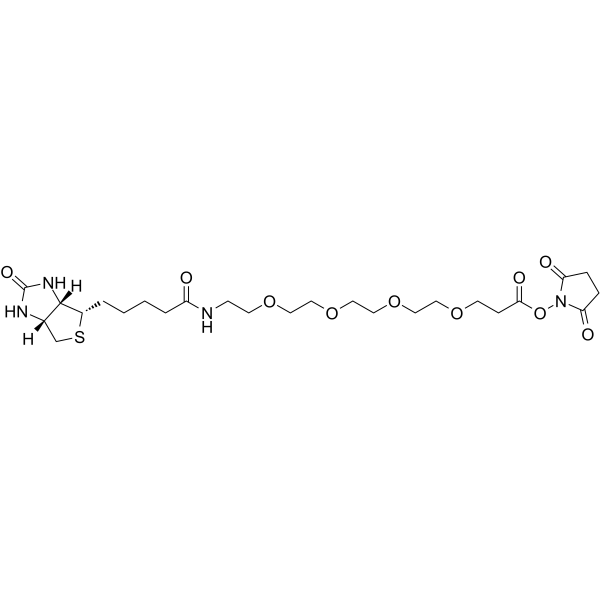
Biotin-PEG4-NHS ester is a biotin-labeled, PEG-based PROTAC linker that can be used in the synthesis of PROTACs .
|
-
-
- HY-139912
-
|
|
DNA Stain
Biochemical Assay Reagents
|
Others
|
|
Biotin-aniline is a probe with substantially high reactivity towards RNA and DNA. Biotin-aniline is also a novel APEX2 substrate. Biotin-aniline can label proteins via miniSOG. Biotin-aniline emerges as more efficient probe for capturing subcellular transcriptome in living cells with high spatial specificity .
|
-
-
- HY-111377
-
|
|
Fluorescent Dye
|
Others
|
|
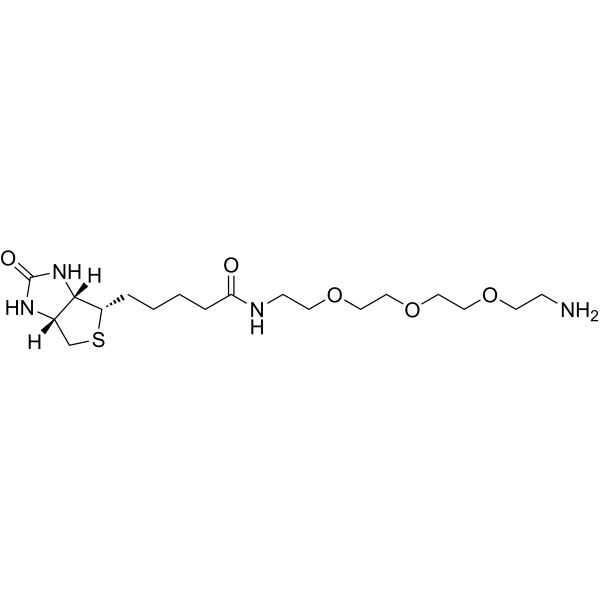
Amine-PEG3-Biotin is a signal amplification label containing a biotin group and a terminal primary amine group .
|
-
-
- HY-NP052
-
|
OVA-biotin
|
Biochemical Assay Reagents
|
Others
|
|
Ovalbumin-Biotin is a biotinylated biochemical reagent. Ovalbumin-Biotin is used to label or detect specific antigens, molecules or cellular structures .
|
-
-
- HY-140895
-
|
|
PROTAC Linkers
|
Cancer
|
|
Biotin-PEG4-amine is a biotin-labeled, PEG-based PROTAC linker that can be used in the synthesis of PROTACs .
|
-
-
- HY-154801
-
|
|
Biochemical Assay Reagents
|
Others
|
|
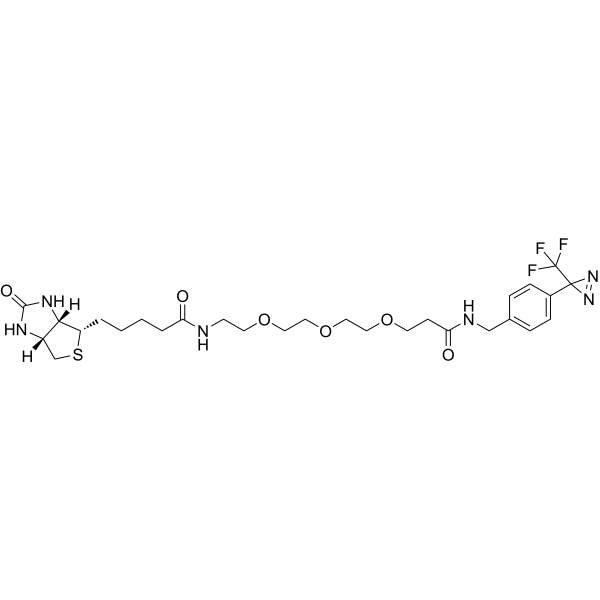
Biotin-PEG3-CONH-Ph-CF3-diazirine is a biotin labeled PEG3 derivative. Biotin-PEG3-CONH-Ph-CF3-diazirine can be used for protein labeling .
|
-
-
- HY-D0183
-
|
|
Biochemical Assay Reagents
|
Others
|
|
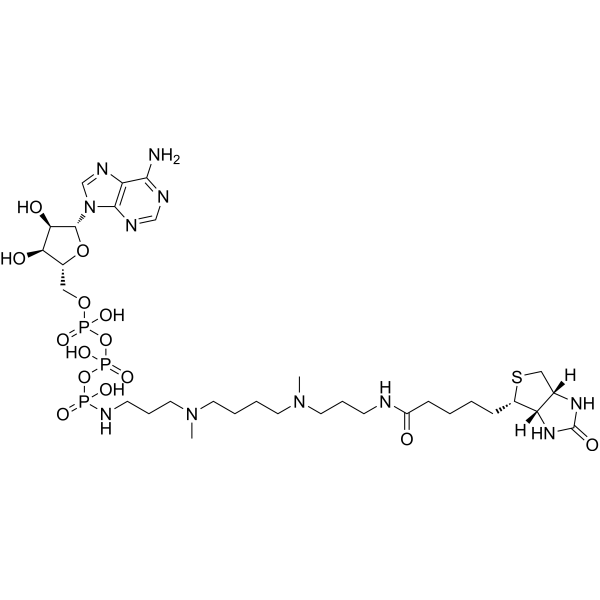
ATP-polyamine-biotin, the first cell-permeable ATP analogue, is an efficient kinase cosubstrate. ATP-polyamine-biotin promotes biotin labeling of kinase substrates in live cells .
|
-
-
- HY-D1668
-
|
|
DNA Stain
Reverse Transcriptase
|
Infection
Neurological Disease
Cancer
|
|
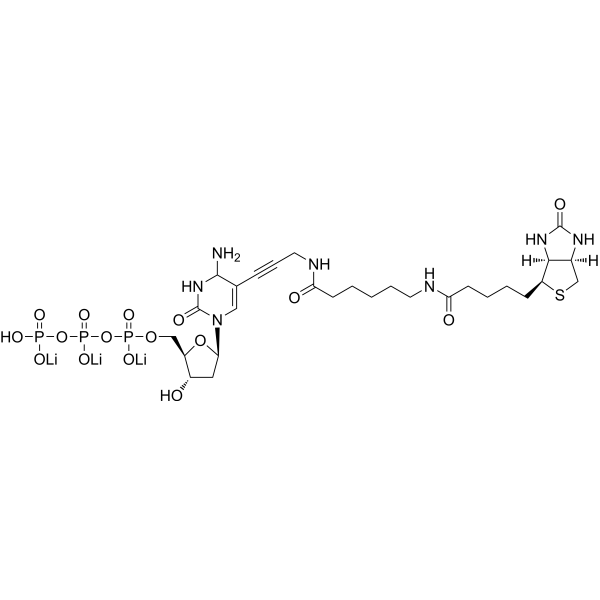
Biotin-11-dCTP is a biotinylated deoxynucleoside triphosphate and an important DNA labeling reagent. In random primer DNA labeling reactions, Biotin-11-dCTP incorporates into newly synthesized DNA strands to generate labeled DNA probes suitable for hybridization applications. In addition, Biotin-11-dCTP can serve as a substrate for terminal deoxynucleotidyl transferase to end-label oligonucleotides for telomere sequence detection, or to label the cut ends of linearized DNA molecules, thereby supporting streptavidin-based electron microscopy analysis. For example, Biotin-11-dCTP can label the cut ends of linearized DNA molecules under the action of dGTP and avian myeloblastosis virus reverse transcriptase .
|
-
-
- HY-D2355
-
|
|
Biochemical Assay Reagents
|
Others
|
|
Tris-NTA Biotin is a biotin-labeled version of tris-NTA. Tris-NTA Biotin, as a bridge connecting His-tagged proteins with streptavidin, can reversibly label proteins and cell surfaces. Tris-NTA Biotin can be used in experiments such as protein immobilization, kinetic determination, live cell labeling, and Western blot detection .
|
-
-
- HY-D1635
-
|
biotin-XX-SSE
|
Fluorescent Dye
Exosomes
|
Infection
|
|
Sulfo-NHS-LC-LC-Biotin (Biotin-XX-SSE), a biotin reagent, is used to label the proteins exposed to the external leaflet of intact exosomes and contains a larger spacer arm between the biotin and amine reactive linker. The size of this linker helps to overcome steric hindrance and increases labeling efficiency at the crowded exosome surface .
|
-
-
- HY-140899
-
|
|
PROTAC Linkers
|
Cancer
|
|
Biotin-PEG8-amine is a biotin-labeled, PEG-based PROTAC linker that can be used in the synthesis of PROTACs .
|
-
-
- HY-B2227F
-
-
-
- HY-D1669
-
|
|
Fluorescent Dye
|
Others
|
|
Biotin-11-UTP is a Biotin-labeled uridine triphosphate (UTP), containing 11 atoms in the linker between biotin and UTP. Biotin-11-UTP can biotinylate transcribed RNA in vitro and has been widely used as labeling RNA probe . Biotin-11-UTP is a click chemistry reagent, it contains an Alkyne group and can undergo copper-catalyzed azide-alkyne cycloaddition (CuAAc) with molecules containing Azide groups.
|
-
-
- HY-100894
-
|
|
Caspase
|
Cancer
|
|
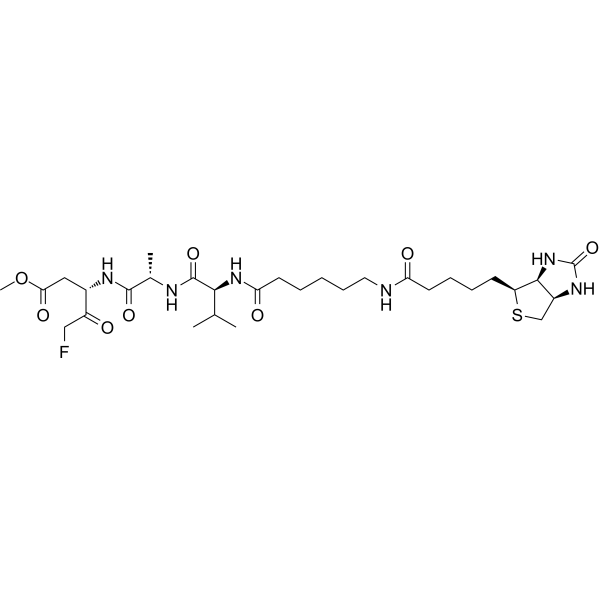
Biotin-VAD-FMK is a cell permeable, irreversible biotin-labeled caspase inhibitor, used to identify active caspases in cell lysates.
|
-
-
- HY-140932
-
|
|
PROTAC Linkers
|
Cancer
|
|
Biotin-PEG4-hydrazide is a biotin-labeled, PEG-based PROTAC linker that can be used in the synthesis of PROTACs .
|
-
-
- HY-D1686
-
|
biotin-16-UTP tetralithium
|
DNA Stain
|
Others
|
|
Biotin-16-UTP is an active substrate for RNA polymerase. Biotin-16-UTP can replace UTP in the in vitro transcription reaction for RNA labeling .
|
-
-
- HY-P2609F
-
|
|
PACAP Receptor
|
Others
|
|
PACAP (1-38), amide, Biotin-labeled is a biological active peptide. (Biotin-labeled HY-P0221)
|
-
-
- HY-116027
-
|
|
PROTAC Linkers
|
Cancer
|
|
Biotin-PEG3-acid is a biotin-labeled, PEG-based PROTAC linker that can be used in the synthesis of PROTACs .
|
-
-
- HY-140896
-
|
|
PROTAC Linkers
|
Cancer
|
|
Biotin-PEG5-amine is a biotin-labeled, PEG-based PROTAC linker that can be used in the synthesis of PROTACs .
|
-
-
- HY-140900
-
|
|
PROTAC Linkers
|
Cancer
|
|
Biotin-PEG11-amine is a biotin-labeled, PEG-based PROTAC linker that can be used in the synthesis of PROTACs .
|
-
-
- HY-W156324
-
|
|
PROTAC Linkers
Liposome
|
Others
|
|
Biotin-PEGn-NHS ester is a biotin-labeled PROTAC linker, which belongs to the PEG class and can be used to synthesize PROTAC molecules. Biotin-PEGn-NHS ester can interact with free neutral avidin in solution and successfully target malignant glioma cells. Biotin-PEGn-NHS ester can also be grafted onto the amino group of GelMA to prepare biotin-modified functionalized hydrogel, gelatin methacryloyl (Bio-GelMA) .
|
-
-
- HY-13948F
-
|
biotin-Ahx-Angiotensin II; biotin-Ahx-Ang II; biotin-Ahx-DRVYIHPF
|
Angiotensin Receptor
|
Others
|
|
Biotin-Ahx-Angiotensin II human (Biotin-Ahx-Angiotensin II; Biotin-Ahx-Ang II; Biotin-Ahx-DRVYIHPF) is a biological active peptide. (biotin labeled HY-13948)
|
-
-
- HY-145445
-
-
-
- HY-150743A
-
|
|
Toll-like Receptor (TLR)
|
Inflammation/Immunology
|
|
Biotin-labeled ODN 2395 (sodium), a C class oligodeoxynucleotide, is a TLR9 agonist. Biotin-labeled ODN 2395 (sodium) can be used to evaluate CpG ODN cellular uptake and localization using a biotin detection system and light microscopy.
|
-
-
- HY-146245A
-
|
|
Toll-like Receptor (TLR)
|
Inflammation/Immunology
|
|
Biotin-labeled ODN 1826 (sodium), a class B CpG ODN (oligodeoxynucleotide), is a TLR9 agonist. Biotin-labeled ODN 1826 (sodium) can be used to evaluate CpG ODN cellular uptake and localization using a biotin detection system and light microscopy.
|
-
-
- HY-P1097F
-
-
-
- HY-140893
-
|
|
PROTAC Linkers
|
Cancer
|
|
Biotin-PEG6-alcohol is a biotin-labeled, PEG-based PROTAC linker that can be used in the synthesis of PROTACs .
|
-
-
- HY-140888
-
|
|
PROTAC Linkers
|
Cancer
|
|
Biotin-PEG2-NHS ester is a biotin-labeled, PEG-based PROTAC linker that can be used in the synthesis of PROTACs .
|
-
-
- HY-140907
-
|
|
PROTAC Linkers
|
Cancer
|
|
Biotin-PEG3-Mal is a biotin-labeled, PEG-based PROTAC linker that can be used in the synthesis of PROTACs .
|
-
-
- HY-17571F
-
|
biotin-α-Hypophamine; biotin-Oxytocic hormone
|
Oxytocin Receptor
|
Others
|
|
Biotin-Oxytocin (Biotin-α-Hypophamine; Biotin-Oxytocic hormone) is a biological active peptide. (This is Oxytocin (HY-17571) N-terminally labeled with Biotin.)
|
-
-
- HY-B0511S2
-
|
Vitamin B7-d2; Vitamin H-d2; D-biotin-d2
|
Endogenous Metabolite
|
Metabolic Disease
|
|
Biotin-d2 is the deuterium labeled Biotin. Biotin is an enzyme co-factor present in minute amounts in every living cell.
|
-
-
- HY-D1686B
-
|
|
DNA Stain
|
Others
|
|
Biotin-16-UTP tetrasodium is an active substrate for RNA polymerase. Biotin-16-UTP tetrasodium can replace UTP in the in vitro transcription reaction for RNA labeling .
|
-
-
- HY-B0511S
-
-
-
- HY-158099
-
|
Celastrol-biotin
|
Biochemical Assay Reagents
|
Cancer
|
|
Biotin-Cel (Celastrol-Biotin) is a biotin-labeled Celastrol (HY-13067). Celastrol exhibits antitumor, anti-inflammatory, and anti-obesity activities. Biotin-Cel can be used in biotin-affinity pulldown assay to identify the molecular target of Celastrol in hepatocellular carcinoma cells .
|
-
-
- HY-146244A
-
|
|
Toll-like Receptor (TLR)
|
Inflammation/Immunology
|
|
Biotin-labeled agatolimod (sodium), a class B CpG ODN (oligodeoxynucleotide), is a TLR9 agonist. Biotin-labeled agatolimod (sodium) can be used to evaluate CpG ODN cellular uptake and localization using a biotin detection system and light microscopy.
|
-
-
- HY-163791
-
|
|
Biochemical Assay Reagents
|
Others
|
|
Fluorescein Biotin Azide is a conjugate of fluorescein and biotin, which can be used as a detection and labeling tool for click chemistry .
|
-
-
- HY-128699R
-
|
Dethiobiotin (Standard)
|
Endogenous Metabolite
Reference Standards
|
Endocrinology
|
|
D-Desthiobiotin (Standard) is the analytical standard of D-Desthiobiotin. This product is intended for research and analytical applications. D-Desthiobiotin is a biotin derivative. D-Desthiobiotin increases testosterone. D-Desthiobiotin is used in affinity chromatography and protein chromatography, also can be used for protein and cell labeling, detection and isolation .
|
-
-
- HY-140656F
-
|
|
Fluorescent Dye
|
Others
|
|
Biotin-PEG20000-Biotin is a biotin labeled PEG derivative. Biotin is an enzyme co-factor, can be used for labeling protein; PEG is a hydrophilic and water-soluble polymer with low toxicity.
|
-
-
- HY-148958
-
-
-
- HY-B0511S1
-
|
rel-Vitamin B7-d4; rel-Vitamin H-d4; rel-D-biotin-d4
|
Endogenous Metabolite
|
Metabolic Disease
|
|
rel-Biotin-d4 is the deuterium labeled Biotin. Biotin is an enzyme co-factor present in minute amounts in every living cell.
|
-
-
- HY-152965
-
-
-
- HY-150741A
-
|
|
Toll-like Receptor (TLR)
|
Inflammation/Immunology
|
|
Biotin-labeled ODN 2216 (sodium) is a human-specific TLR9 (toll-like receptor 9) ligand or agonist. Biotin-labeled ODN 2216 (sodium) can be used to evaluate CpG ODN cellular uptake and localization using a biotin detection system and light microscopy.
|
-
-
- HY-176206H
-
|
|
Biochemical Assay Reagents
|
Others
|
|
Biotin-PEG40000-COOH is a linear heterobifunctional PEG compound with biotin and carboxylic acid functional groups. Biotin can bind to avidin and streptavidin with high specificity and affinity. Biotin-PEG40000-COOH can be used to biotin-label antibodies, proteins and other macromolecules containing primary amines in the presence of a condensing agent .
|
-
-
- HY-157920
-
|
N-biotinyl-N'-[2-(N-maleimido)ethyl]piperazine
|
Biochemical Assay Reagents
|
Others
|
|
Biotin-PE-maleimide (N-Biotinyl-N'-[2-(N-maleimido)ethyl]piperazine) is a bulky, membrane-impermeable, sulfhydryl-containing reagent with a relatively large molecular size. Biotin-PE-maleimide can be used for biotin labeling (such as thiol groups) and detection of proteins or other biomolecules .
|
-
-
- HY-13443F
-
|
Lys27(biotin)-Exendin 4
|
GCGR
|
Others
|
|
Exendin 4, biotin labeled is a biotin labeled Exendin 4 (HY-13443). Exendin 4 is a long-acting GLP-1 receptor agonist .
|
-
-
- HY-157221
-
-
- HY-D18569F
-
|
|
Endogenous Metabolite
|
Metabolic Disease
|
|
3-Indoleacetic acid, biotin labeled the biotin labeled 3-Indoleacetic acid (HY-18569). 3-Indoleacetic acid, biotin labeled can be conjugated to streptavidin for purification.
|
-
- HY-D2842B
-
|
|
Fluorescent Dye
|
Others
|
|
FITC-PEG2000-biotin is a fluorescent dye composed of polyethylene glycol (PEG), FITC (HY-66019) and a Biotin (HY-B0511). FITC-PEG2000-biotin can be used for fluorescent labeling and imaging .
|
-
- HY-W1048533H
-
|
biotin-PEG1000-Thiol
|
Biochemical Assay Reagents
|
Others
|
|
Biotin-PEG1000-SH (Biotin-PEG1000-Thiol) is a biotin PEG polymer containing a thiol (-SH). Biotin-labeled compounds can then be linked to avidin or streptavidin for further purification or detection .
|
-
- HY-181228
-
|
|
Biochemical Assay Reagents
|
Others
|
|
DBCO-PEG10-Biotin is an azadibenzocyclooctyne-biotin derivative containing a biotin group and 10 PEGs. DBCO-PEG10-Biotin is a versatile biotinylation reagent used for the introduction of a biotin moiety to azide-labeled biomolecules via copper-free strain-promoted alkyne-azide click chemistry (SPAAC) reaction. DBCO-PEG10-Biotin is a click chemistry reagent, it contains a DBCO group that can undergo strain-promoted alkyne-azide cycloaddition (SPAAC) with molecules containing Azide groups .
|
-
- HY-140492
-
|
|
PROTAC Linkers
|
Cancer
|
|
Biotin-PEG8-acid is a biotin-labeled, PEG-based PROTAC linker that can be used in the synthesis of PROTACs .
|
-
- HY-156497
-
-
- HY-156381
-
|
|
Biochemical Assay Reagents
|
Others
|
|
Biotin-PEG3-CoenzymeA is a non cell-permeable substrate based on biotin with a PEG linker. Biotin-PEG3-CoenzymeA can be used for biotinylation of living cells, Labeling in solution, interaction studies .
|
-
- HY-145057
-
-
- HY-N0437F
-
|
Pregn-4-ene-3,20-dione-biotin
|
Progesterone Receptor
Drug Derivative
|
Cardiovascular Disease
Cancer
|
|
Progesterone 3-biotin (Pregn-4-ene-3,20-dione-biotin) is a biotin-labeled probe that allows progesterone to be detected or immobilized using the biotin ligand. Progesterone 3-biotin is the biotinylated derivative of Progesterone (HY-N0437) .
|
-
- HY-D2842D
-
|
|
Fluorescent Dye
|
Others
|
|
FITC-PEG5000-biotin is a fluorescent dye composed of polyethylene glycol (PEG), FITC (HY-66019) and a Biotin (HY-B0511). FITC-PEG5000-biotin can be used for fluorescent labeling and imaging .
|
-
- HY-D2842
-
|
|
Fluorescent Dye
|
Others
|
|
FITC-PEG400-biotin is a fluorescent dye composed of polyethylene glycol (PEG), FITC (HY-66019) and a Biotin (HY-B0511). FITC-PEG400-biotin can be used for fluorescent labeling and imaging .
|
-
- HY-D2842A
-
|
|
Fluorescent Dye
|
Others
|
|
FITC-PEG1000-biotin is a fluorescent dye composed of polyethylene glycol (PEG), FITC (HY-66019) and a Biotin (HY-B0511). FITC-PEG1000-biotin can be used for fluorescent labeling and imaging .
|
-
- HY-D2842C
-
|
|
Fluorescent Dye
|
Others
|
|
FITC-PEG3400-biotin is a fluorescent dye composed of polyethylene glycol (PEG), FITC (HY-66019) and a Biotin (HY-B0511). FITC-PEG3400-biotin can be used for fluorescent labeling and imaging .
|
-
- HY-P0206F
-
-
- HY-150724A
-
|
|
Toll-like Receptor (TLR)
|
Inflammation/Immunology
|
|
Biotin-labeled ODN 1018 (sodium), an oligodeoxynucleotide, is a TLR-9 agonist. Biotin-labeled ODN 1018 (sodium) can be used to evaluate CpG ODN cellular uptake and localization using a biotin detection system and light microscopy.
|
-
- HY-173381A
-
|
Cholesteryl biotinyl(polyethyleneglycol)-1000 carbamate
|
Biochemical Assay Reagents
|
Others
|
|
Cholesteryl-PEG1000-Biotin is a lipid product. Cholesteryl-PEG1000-Biotin is a cholesterol backbone attached to one side of a PEG unit and a Biotin unit on the other side. Biotin is an enzyme cofactor that can be used to label proteins, and PEG is a low-toxic, hydrophilic, water-soluble polymer. Cholesteryl-PEG1000-Biotin can be used for drug circulation time studies .
|
-
- HY-150725A
-
|
|
Toll-like Receptor (TLR)
|
Inflammation/Immunology
|
|
Biotin-labeled ODN 1585 (sodium) is a potent inducer of IFN and TNFα production. Biotin-labeled ODN 1585 (sodium) can be used to evaluate CpG ODN cellular uptake and localization using a biotin detection system and light microscopy.
|
-
- HY-P2504
-
|
|
Syk
|
Others
|
|
Syk Kinase Peptide Substrate, Biotin labeled is a biotin-labled Syk kinase peptide substrate.
|
-
- HY-W1048533C
-
|
biotin-PEG5000-Thiol
|
Biochemical Assay Reagents
|
Others
|
|
Biotin-PEG5000-SH (Biotin-PEG5000-Thiol) is a biotin PEG polymer containing a thiol (-SH). Biotin-labeled compounds can then be linked to avidin or streptavidin for further purification or detection .
|
-
- HY-W1048533A
-
|
biotin-PEG2000-Thiol,
|
Biochemical Assay Reagents
|
Others
|
|
Biotin-PEG2000-SH (Biotin-PEG2000-Thiol) is a biotin PEG polymer containing a thiol (-SH). Biotin-labeled compounds can then be linked to avidin or streptavidin for further purification or detection .
|
-
- HY-W1048533E
-
|
biotin-PEG20000-Thiol
|
Biochemical Assay Reagents
|
Others
|
|
Biotin-PEG20000-SH (Biotin-PEG20000-Thiol) is a biotin PEG polymer containing a thiol (-SH). Biotin-labeled compounds can then be linked to avidin or streptavidin for further purification or detection .
|
-
- HY-150726A
-
|
|
Toll-like Receptor (TLR)
|
Inflammation/Immunology
|
|
Biotin-labeled ODN 1668 (sodium), a class B CpG ODN (oligodeoxynucleotide), is a TLR9 agonist. Biotin-labeled ODN 1668 (sodium) can be used to evaluate CpG ODN cellular uptake and localization using a biotin detection system and light microscopy.
|
-
- HY-150738A
-
|
|
Toll-like Receptor (TLR)
|
Inflammation/Immunology
|
|
Biotin-labeled ODN 2088 (sodium) is a potent TLR3, TLR7 and TLR9 inhibitor. Biotin-labeled ODN 2088 (sodium) can be used to evaluate CpG ODN cellular uptake and localization using a biotin detection system and light microscopy.
|
-
- HY-150751A
-
|
|
Toll-like Receptor (TLR)
|
Inflammation/Immunology
|
|
Biotin-labeled ODN TTAGGG (sodium), a inhibitory oligonucleotide (ODN), is a TLR9, AIM2 and cGAS antagonist. Biotin-labeled ODN TTAGGG (sodium) can be used to evaluate CpG ODN cellular uptake and localization using a biotin detection system and light microscopy.
|
-
- HY-135641
-
|
|
Fluorescent Dye
|
Others
|
|
Biotin-probe 1 is a non-radiolabeled probe. Biotin-labeled probes can be applied to in situ hybridization .
|
-
- HY-176206D
-
|
|
Biochemical Assay Reagents
|
Others
|
|
Biotin-PEG10000-COOH is a linear heterobifunctional PEG compound with biotin and carboxylic acid functional groups. Biotin can bind to avidin and streptavidin with high specificity and affinity. Biotin-PEG10000-COOH can be used to biotin-label antibodies, proteins and other macromolecules containing primary amines in the presence of a condensing agent .
|
-
- HY-176206A
-
|
|
Biochemical Assay Reagents
|
Others
|
|
Biotin-PEG2000-COOH is a linear heterobifunctional PEG compound with biotin and carboxylic acid functional groups. Biotin can bind to avidin and streptavidin with high specificity and affinity. Biotin-PEG2000-COOH can be used to biotin-label antibodies, proteins and other macromolecules containing primary amines in the presence of a condensing agent .
|
-
- HY-147207A
-
|
|
Liposome
|
Others
|
|
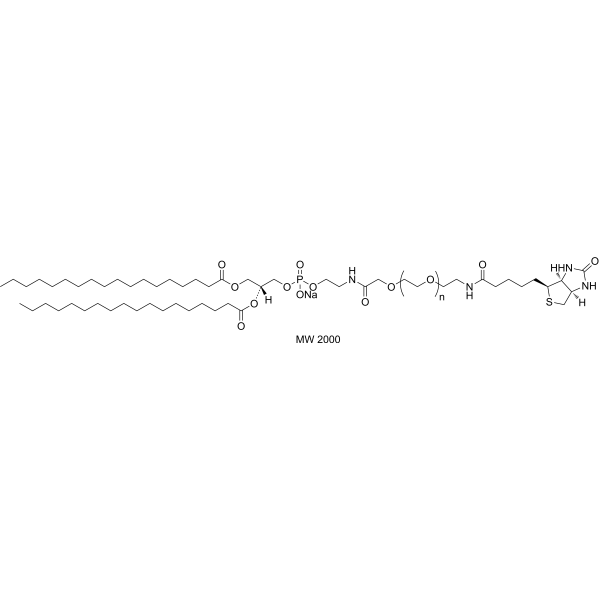
Phospholipid-PEG2000-Biotin is a Biotin labeled phospholipid PEG derivative, can be used for modify liposome and cells surface, and pancreatic islets for cell transplantation. Phospholipid is a class of lipid containing a hydrophilic "head" and two hydrophobic "tails" ; PEG is a hydrophilic and water-soluble polymer with low toxicity; Biotin is an enzyme co-factor, can be used for labeling protein .
|
-
- HY-W998679
-
|
N-(Fluorescein-5-carbamidoethyl)biotinamide
|
Fluorescent Dye
Endogenous Metabolite
|
|
|
Biotin (5-fluorescein) conjugate (N-(Fluorescein-5-carbamidoethyl)biotinamide) is a fluorescently labeled biotin derivative with high cell labeling activity. Biotin (5-fluorescein) conjugate can be used to detect and locate target molecules in biomedical research. Biotin (5-fluorescein) conjugate is widely used in immunofluorescence staining experiments to improve the sensitivity and specificity of the experiment.
|
-
- HY-140493
-
|
|
PROTAC Linkers
|
Cancer
|
|
Biotin-PEG12-acid is a biotin-labeled, PEG-based PROTAC linker that can be used in the synthesis of PROTACs .
|
-
- HY-140908
-
|
|
PROTAC Linkers
|
Cancer
|
|
Biotin-PEG6-Mal is a biotin-labeled, PEG-based PROTAC linker that can be used in the synthesis of PROTACs .
|
-
- HY-140943
-
|
|
PROTAC Linkers
|
Cancer
|
|
Biotin-PEG7-thiourea is a biotin-labeled, PEG-based PROTAC linker that can be used in the synthesis of PROTACs .
|
-
- HY-P4869
-
|
|
Ras
|
Others
|
|
Biotin-KRpep-2d acetate is a biotin-labeled KRpep-2d (HY-P3277) .
|
-
- HY-140934
-
|
|
PROTAC Linkers
|
Cancer
|
|
Biotin-PEG2-NH-Boc is a biotin-labeled, PEG-based PROTAC linker that can be used in the synthesis of PROTACs .
|
-
- HY-130893A
-
|
|
Biochemical Assay Reagents
|
Others
|
|
Biotin-EDA TFA is a nucleophilic biotinylation reagent used for the conjugation of various substrates and identification and quantification using biotin-conjugated fluorescent labels .
|
-
- HY-113053F
-
|
PGA1-biotin
|
Drug Derivative
|
Infection
|
|
Prostaglandin A1-biotin (PGA1-biotin) is a biotin-labeled Prostaglandin A1 (HY-113053). Prostaglandin A1-biotin can be found in the culture filtrate of rhizobia, and the culture filtrate containing this compound exhibits significant antiviral activity .
|
-
- HY-185447
-
|
|
PD-1/PD-L1
|
Cancer
|
|
Biotin-itaconate is a biotin-labeled itaconic anhydride that targets PD-L1. Biotin-itaconate acts as a biotin probe for in vitro alkylation assays to identify itaconate-modified protein substrates. Biotin-itaconate is applicable to cancer research .
|
-
- HY-113041F
-
|
PGA2-biotin; Medullin-biotin
|
Biochemical Assay Reagents
|
Others
|
|
Prostaglandin A2-biotin (PGA2-biotin) is a biotin-labeled Prostaglandin A2 (HY-113041). Prostaglandin A2-biotin retains the activity of inhibiting cellular proliferation. Prostaglandin A2-biotin is an effective tool for studying the interaction between Prostaglandin A2 and cellular proteins and exploring the mechanism of its inhibition of cellular proliferation .
|
-
- HY-D2945
-
|
|
Fluorescent Dye
|
Others
|
|
CLIP-Biotin is a Biotin-labeled CLIP tag fluorescent probe. CLIP-Biotin can be used for marking the CLIP-tag fusion proteins in cells.
|
-
- HY-D3302
-
|
DOPI-4,5-P2-biotin sodium; Phosphatidylinositol-4,5-diphosphate C-8-biotin sodium; PI(4,5)P2-biotin sodium
|
Biochemical Assay Reagents
|
Others
|
|
PtdIns-(4,5)-P2-biotin (DOPI-4,5-P2-biotin) sodium is a biotin-labeled phosphatidylinositol 4,5-bisphosphate (PIP2) derivative. PtdIns-(4,5)-P2-biotin sodium uses a biotin tag to capture and purify natural PIP2 molecules and their interacting proteins.
|
-
- HY-D2842E
-
|
|
Fluorescent Dye
|
Others
|
|
FITC-PEG10000-biotin is a fluorescent dye composed of polyethylene glycol (PEG), FITC (HY-66019) and a Biotin (HY-B0511). FITC-PEG10000-biotin can be used for fluorescent labeling and imaging .
|
-
- HY-W1048533D
-
|
biotin-PEG10000-Thiol
|
Biochemical Assay Reagents
|
Others
|
|
Biotin-PEG10000-SH (Biotin-PEG10000-Thiol) is a biotin PEG polymer containing a thiol (-SH). Biotin-labeled compounds can then be linked to avidin or streptavidin for further purification or detection .
|
-
- HY-W1048533I
-
|
biotin-PEG3400-Thiol
|
Biochemical Assay Reagents
|
Others
|
|
Biotin-PEG3400-SH (Biotin-PEG3400-Thiol) is a biotin PEG polymer containing a thiol (-SH). Biotin-labeled compounds can then be linked to avidin or streptavidin for further purification or detection .
|
-
- HY-W1048533J
-
|
biotin-PEG40000-Thiol
|
Biochemical Assay Reagents
|
Others
|
|
Biotin-PEG40000-SH (Biotin-PEG40000-Thiol) is a biotin PEG polymer containing a thiol (-SH). Biotin-labeled compounds can then be linked to avidin or streptavidin for further purification or detection .
|
-
- HY-165087
-
-
- HY-100894R
-
|
|
Caspase
Reference Standards
|
Cancer
|
|
Biotin-VAD-FMK (Standard) is the analytical standard of Biotin-VAD-FMK (HY-100894). This product is intended for research and analytical applications. Biotin-VAD-FMK is a cell permeable, irreversible biotin-labeled caspase inhibitor, used to identify active caspases in cell lysates.
|
-
- HY-176206E
-
|
|
Biochemical Assay Reagents
|
Others
|
|
Biotin-PEG20000-COOH is a linear heterobifunctional PEG compound with biotin and carboxylic acid functional groups. Biotin can bind to avidin and streptavidin with high specificity and affinity. Biotin-PEG20000-COOH can be used to biotin-label antibodies, proteins and other macromolecules containing primary amines in the presence of a condensing agent .
|
-
- HY-176206
-
|
|
Biochemical Assay Reagents
|
Others
|
|
Biotin-PEG1000-COOH is a linear heterobifunctional PEG compound with biotin and carboxylic acid functional groups. Biotin can bind to avidin and streptavidin with high specificity and affinity. Biotin-PEG1000-COOH can be used to biotin-label antibodies, proteins and other macromolecules containing primary amines in the presence of a condensing agent .
|
-
- HY-176206B
-
|
|
Biochemical Assay Reagents
|
Others
|
|
Biotin-PEG3400-COOH is a linear heterobifunctional PEG compound with biotin and carboxylic acid functional groups. Biotin can bind to avidin and streptavidin with high specificity and affinity. Biotin-PEG3400-COOH can be used to biotin-label antibodies, proteins and other macromolecules containing primary amines in the presence of a condensing agent .
|
-
- HY-176206C
-
|
|
Biochemical Assay Reagents
|
Others
|
|
Biotin-PEG5000-COOH is a linear heterobifunctional PEG compound with biotin and carboxylic acid functional groups. Biotin can bind to avidin and streptavidin with high specificity and affinity. Biotin-PEG5000-COOH can be used to biotin-label antibodies, proteins and other macromolecules containing primary amines in the presence of a condensing agent .
|
-
- HY-147206C
-
|
|
Fluorescent Dye
|
Others
|
|
Biotin-PEG3400-Alk is a biotin labeled PEG derivative. Biotin is an enzyme co-factor, can be used for labeling protein; PEG is a hydrophilic and water-soluble polymer with low toxicity; Alk (Alkyne), acyclic (branched or unbranched) aliphatic hydrocarbon, can react with azido, which improve the efficiency of biotin binding targets. Biotin-PEG3400-Alk is a click chemistry reagent, it contains an Alkyne group and can undergo copper-catalyzed azide-alkyne cycloaddition (CuAAc) with molecules containing Azide groups.
|
-
- HY-147206A
-
|
|
Fluorescent Dye
|
Others
|
|
Biotin-PEG1000-Alk is a biotin labeled PEG derivative. Biotin is an enzyme co-factor, can be used for labeling protein; PEG is a hydrophilic and water-soluble polymer with low toxicity; Alk (Alkyne), acyclic (branched or unbranched) aliphatic hydrocarbon, can react with azido, which improve the efficiency of biotin binding targets. Biotin-PEG1000-Alk is a click chemistry reagent, it contains an Alkyne group and can undergo copper-catalyzed azide-alkyne cycloaddition (CuAAc) with molecules containing Azide groups.
|
-
- HY-147206E
-
|
|
Fluorescent Dye
|
Others
|
|
Biotin-PEG10000-Alk is a biotin labeled PEG derivative. Biotin is an enzyme co-factor, can be used for labeling protein; PEG is a hydrophilic and water-soluble polymer with low toxicity; Alk (Alkyne), acyclic (branched or unbranched) aliphatic hydrocarbon, can react with azido, which improve the efficiency of biotin binding targets. Biotin-PEG10000-Alk is a click chemistry reagent, it contains an Alkyne group and can undergo copper-catalyzed azide-alkyne cycloaddition (CuAAc) with molecules containing Azide groups.
|
-
- HY-147206B
-
|
|
Fluorescent Dye
|
Others
|
|
Biotin-PEG2000-Alk is a biotin labeled PEG derivative. Biotin is an enzyme co-factor, can be used for labeling protein; PEG is a hydrophilic and water-soluble polymer with low toxicity; Alk (Alkyne), acyclic (branched or unbranched) aliphatic hydrocarbon, can react with azido, which improve the efficiency of biotin binding targets. Biotin-PEG2000-Alk is a click chemistry reagent, it contains an Alkyne group and can undergo copper-catalyzed azide-alkyne cycloaddition (CuAAc) with molecules containing Azide groups.
|
-
- HY-147206F
-
|
|
Fluorescent Dye
|
Others
|
|
Biotin-PEG20000-Alk is a biotin labeled PEG derivative. Biotin is an enzyme co-factor, can be used for labeling protein; PEG is a hydrophilic and water-soluble polymer with low toxicity; Alk (Alkyne), acyclic (branched or unbranched) aliphatic hydrocarbon, can react with azido, which improve the efficiency of biotin binding targets. Biotin-PEG20000-Alk is a click chemistry reagent, it contains an Alkyne group and can undergo copper-catalyzed azide-alkyne cycloaddition (CuAAc) with molecules containing Azide groups.
|
-
- HY-130477
-
|
|
PROTAC Linkers
|
Cancer
|
|
Fmoc-Lys (biotin-PEG4)-OH is a biotin-labeled, PEG-based PROTAC linker that can be used in the synthesis of PROTACs .
|
-
- HY-NP043
-
|
|
Fluorescent Dye
|
Others
|
|
Avidin-Cy3 is Cy3-labeled Avidin. Avidin has excellent affinity with biotin and is often used in combination with biotin for immunoassays to detect the location of antigens in tissues .
|
-
- HY-W013166
-
|
N-biotinylaminoethyl methanethiosulfonate
|
Biochemical Assay Reagents
|
Others
|
|
MTSEA-biotin is a biotin-conjugated 2-aminoethyl-methanethiosulfonate that can be used to specifically label modified nucleosides. MTSEA-biotin binds 4-thiouridine (s4U) to visualize newly transcribed tRNA in Saccharomyces cerevisiae cells .
|
-
- HY-140895B
-
|
biotin-PEG10000-NH2
|
Biochemical Assay Reagents
|
Others
|
|
Biotin-PEG10000-Amine (Biotin-PEG10000-NH2) is a biotin PEG polymer containing a free amine group (-NH2). The amine group is reactive with an activated NHS ester via formation of an amide bond. Biotin-labeled compounds can then be linked to avidin or streptavidin for further purification or detection .
|
-
- HY-140895C
-
|
biotin-PEG20000-NH2
|
Biochemical Assay Reagents
|
Others
|
|
Biotin-PEG20000-Amine (Biotin-PEG20000-NH2) is a biotin PEG polymer containing a free amine group (-NH2). The amine group is reactive with an activated NHS ester via formation of an amide bond. Biotin-labeled compounds can then be linked to avidin or streptavidin for further purification or detection .
|
-
- HY-W190865
-
|
biotin-PEG5-COOH
|
Biochemical Assay Reagents
|
Others
|
|
Biotin-PEG5-acid (Biotin-PEG5-COOH) is a biotin-PEG compound containing a carboxyl group (-COOH) that can be used to react with an amine group (NH2) to form a stable amide bond. Biotin-PEG5-acid can be used for protein labeling and drug delivery research .
|
-
- HY-140895D
-
|
biotin-PEG40000-NH2
|
Biochemical Assay Reagents
|
Others
|
|
Biotin-PEG40000-Amine (Biotin-PEG40000-NH2) is a biotin PEG polymer containing a free amine group (-NH2). The amine group is reactive with an activated NHS ester via formation of an amide bond. Biotin-labeled compounds can then be linked to avidin or streptavidin for further purification or detection .
|
-
- HY-116027A
-
|
biotin-PEG10-COOH
|
Biochemical Assay Reagents
|
Others
|
|
Biotin-PEG10-acid (Biotin-PEG10-COOH) is a biotin-PEG compound containing a carboxyl group (-COOH) that can be used to react with an amine group (NH2) to form a stable amide bond. Biotin-PEG10-acid can be used for protein labeling and drug delivery research .
|
-
- HY-116027B
-
|
biotin-PEG11-COOH
|
Biochemical Assay Reagents
|
Others
|
|
Biotin-PEG11-acid (Biotin-PEG11-COOH) is a biotin-PEG compound containing a carboxyl group (-COOH) that can be used to react with an amine group (NH2) to form a stable amide bond. Biotin-PEG11-acid can be used for protein labeling and drug delivery research .
|
-
- HY-140895A
-
|
biotin-PEG5000-NH2
|
Biochemical Assay Reagents
|
Others
|
|
Biotin-PEG5000-Amine (Biotin-PEG5000-NH2) is a biotin PEG polymer containing a free amine group (-NH2). The amine group is reactive with an activated NHS ester via formation of an amide bond. Biotin-labeled compounds can then be linked to avidin or streptavidin for further purification or detection .
|
-
- HY-D125859F
-
|
HRP-biotin
|
Biochemical Assay Reagents
|
Others
|
|
Peroxidase, Horseradish, Biotin labeled (HRP-Biotin) can be used to encapsulate DNA nanoflowers for creating stabilized streamlined ELISA platforms resistant to harsh environment .
|
-
- HY-160841
-
|
|
DNA Stain
DNA/RNA Synthesis
|
Others
|
|
Biotin-16-dCTP is a biotinylated deoxycytidine triphosphate that serves as an important DNA labeling substrate. Biotin-16-dCTP can be enzymatically incorporated into the 3' end of DNA probes via terminal deoxynucleotidyl transferase, forming a 1-3 nucleotide-long tail to achieve biotinylation of the probes. Biotin-16-dCTP enhances chemiluminescent detection of low-abundance targets such as specific tRNA isoacceptors through Northern blotting. Biotin-16-dCTP can also replace conventional dCTP to be integrated into single-stranded DNA generated by asymmetric polymerase chain reaction, which is applicable for bioconjugation or pull-down assays. Repeated freeze-thaw cycles of Biotin-16-dCTP should be avoided to prevent degradation of its function for probe biotinylation .
|
-
- HY-W190940
-
|
|
Biochemical Assay Reagents
|
Others
|
|
Biotin-PEG4-S-S-acid is a cleavable reagent which can efficiently introduce a biotin moiety to amine-containing biomolecules. The disulfide bond in this linker can be cleaved using reducing agents such as DTT, BME and TCEP to remove the biotin label.
|
-
- HY-D1870
-
|
|
Fluorescent Dye
|
Others
|
|
Sulfo-Cy3-PEG3-biotin potassium is a biotin-modified derivative of Cy3 (Cyanine3) (HY-D0822) dye containing a TCO group. The TCO group of Sulfo-Cy3-PEG3-biotin potassium reacts with the tetrazine functional group in highly specific click chemistry to form a covalent bond. Thus, Sulfo-Cy3-PEG3-biotin potassium can be covalently bound to some biomolecules (especially antibodies, proteins, etc.) to track their location and dynamic changes in biological samples. And because it is labeled with biotin, it is often used in affinity chromatography experiments, such as immunoprecipitation.
|
-
- HY-B0511S3
-
|
Vitamin B7-13C5; Vitamin H-13C5; D-biotin-13C5
|
Isotope-Labeled Compounds
Endogenous Metabolite
|
Metabolic Disease
|
|
Biotin- 13C5 (Vitamin B7- 13C5) is 13C labeled Biotin. Biotin, vitamin B7 and serves as a coenzyme for five carboxylases in humans, involved in the synthesis of fatty acids, isoleucine, and valine, and in gluconeogenesis. Biotin is necessary for cell growth, the production of fatty acids, and the metabolism of fats and amino acids .
|
-
- HY-D2597
-
|
|
Fluorescent Dye
|
Others
|
|
Cy7.5-PEG2000-biotin is a biotinylated hyaluronic acid labeled with CY7.5 (HY-D0926). Cy7.5-PEG2000-biotin is widely used for cell imaging and in vivo imaging of shallow tissues (Ex/Em=770/820 nm).
|
-
- HY-D2598
-
|
|
Fluorescent Dye
|
Others
|
|
Cy7.5-PEG5000-biotin is a biotinylated hyaluronic acid labeled with CY7.5 (HY-D0926). Cy7.5-PEG5000-biotin is widely used for cell imaging and in vivo imaging of shallow tissues (Ex/Em=770/820 nm).
|
-
- HY-W591393
-
|
|
Biochemical Assay Reagents
|
Cancer
|
|
Biotin Azide Plus is an oxazolidine reagent that integrates azide-biotin click chemistry and a photocleavable linker arm. Biotin Azide Plus not only reacts with biotin thioether to form stable sulfinimide products, but also enables bioconjugation of proteins and DNA through biotin redox-activated chemical labeling technology. Taking advantage of the streptavidin capture and photo-release properties, Biotin Azide Plus effectively facilitates the isolation of lipid-derived electrophile-protein adducts, thus finding wide application in scientific research related to fields such as SKBR3 cancer .
|
-
- HY-W614753
-
|
|
Biochemical Assay Reagents
|
Others
|
|
Biotin-naphthylamine is a biotinylated biochemical assay reagent, which is a substrate for ascorbate peroxidase 2 (APEX2). Biotin-naphthylamine is utilized as a novel probe for labeling DNA and RNA .
|
-
- HY-127049
-
|
|
Fluorescent Dye
|
Others
|
|
Arachidonic acid-Biotin is a biotin-labeled Arachidonic acid (HY-109590) that can be used to detect complexes of arachidonic acid with protein binding partners such as fatty acid binding proteins (FABPs) .
|
-
- HY-140532
-
|
|
PROTAC Linkers
|
Cancer
|
|
N-(Amino-PEG4)-N-Biotin-PEG4-acid is a biotin-labeled, PEG-based PROTAC linker that can be used in the synthesis of PROTACs .
|
-
- HY-147206
-
|
|
Fluorescent Dye
|
Others
|
|
Biotin-PEG600-Alk is a Biotin-labeled Alkyne functionalized polyethylene glycol. Biotin-PEG600-Alk can be used to modify proteins, peptides, and oligonucleotides . Biotin-PEG600-Alk is a click chemistry reagent, it contains an Alkyne group and can undergo copper-catalyzed azide-alkyne cycloaddition (CuAAc) with molecules containing Azide groups.
|
-
- HY-140922
-
|
|
PROTAC Linkers
|
Cancer
|
|
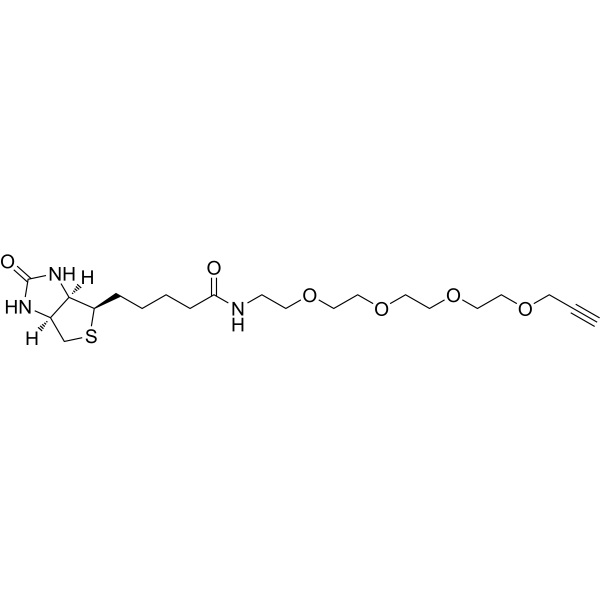
Biotin-PEG4-alkyne is a biotin-labeled, PEG-based PROTAC linker that can be used in the synthesis of PROTACs . Biotin-PEG4-alkyne is a click chemistry reagent, it contains an Alkyne group and can undergo copper-catalyzed azide-alkyne cycloaddition (CuAAc) with molecules containing Azide groups.
|
-
- HY-157919
-
|
N-6-(biotinylamino)hexanoyl-N'-[2-(N-maleimido)ethyl]piperazine, hydrochloride
|
Biochemical Assay Reagents
|
Others
|
|
Biotin-PEAC5-maleimide hydrochloride is a biochemical assay reagent, and can be used in biotin-PEAC5-maleimide (BPM)-labeling assay to assess modification of protein thiols by electrophiles .
|
-
- HY-W250928D
-
|
|
Fluorescent Dye
|
Others
|
|
Biotin-PEG3400-azide is a biotin labeled PEG derivative. Biotin is an enzyme co-factor, can be used for labeling protein; PEG is a hydrophilic and water-soluble polymer with low toxicity; azide, is a moderately good leaving group, can react with alkyne by Cu-catalyzation, which improve the efficiency of biotin binding targets. It contains an azide group and can undergo copper-catalyzed azide-alkyne cycloaddition (CuAAc) with molecules containing alkyne groups. It can also undergo ring strain-promoted alkyne-azide cycloaddition (SPAAC) with molecules containing DBCO or BCN groups.
|
-
- HY-W250928C
-
|
|
Fluorescent Dye
|
Others
|
|
Biotin-PEG2000-azide is a biotin labeled PEG derivative. Biotin is an enzyme co-factor, can be used for labeling protein; PEG is a hydrophilic and water-soluble polymer with low toxicity; azide, is a moderately good leaving group, can react with alkyne by Cu-catalyzation, which improve the efficiency of biotin binding targets. It contains an azide group and can undergo copper-catalyzed azide-alkyne cycloaddition (CuAAc) with molecules containing alkyne groups. It can also undergo ring strain-promoted alkyne-azide cycloaddition (SPAAC) with molecules containing DBCO or BCN groups.
|
-
- HY-147207C
-
|
|
Liposome
|
Others
|
|
Phospholipid-PEG5000-Biotin is a phospholipid PEG derivative, can be used for modify liposome and cells surface, and pancreatic islets for cell transplantation. Phospholipid is a class of lipid containing a hydrophilic “head” and two hydrophobic “tails”; PEG is a hydrophilic and water-soluble polymer with low toxicity; Biotin is an enzyme co-factor, can be used for labeling protein .
|
-
- HY-D2615
-
|
|
Fluorescent Dye
|
Others
|
|
ICG PEG5000 biotin is a fluorescent dye composed of Indocyanine green (ICG) (HY-D0711), PEG and biotin. Indocyanine green provides it with fluorescent labeling function, PEG enhances its biocompatibility and stability, and biotin can bind to target molecules containing streptavidin to achieve targeted imaging or targeted delivery (Ex/Em=785/813 nm).
|
-
- HY-D2614
-
|
|
Fluorescent Dye
|
Others
|
|
ICG PEG2000 biotin is a fluorescent dye composed of Indocyanine green (ICG) (HY-D0711), PEG and biotin. Indocyanine green provides it with fluorescent labeling function, PEG enhances its biocompatibility and stability, and biotin can bind to target molecules containing streptavidin to achieve targeted imaging or targeted delivery (Ex/Em=785/813 nm).
|
-
- HY-175083
-
|
|
Drug Derivative
PI3K
|
Others
|
|
PtdIns-(4,5)-P2-biotin trisodium is a Biotin-labeled PtdIns-(4,5)-P2 analog. PtdIns-(4,5)-P2-biotin trisodium is an affinity probe of PI3Kγ. PI3Kγ can catalyse the phosphorylation of PtdIns-(4,5)-P2 at the 3′-OH group, giving rise to the second messenger PtdIns(3,4,5)-P3 .
|
-
- HY-D3321
-
|
|
Fluorescent Dye
|
Others
|
|
Streptavidin, R-Phycoerythrin conjugate (SAPE) is a streptavidin-labeled phycoerythrin. Streptavidin, R-Phycoerythrin conjugate (SAPE) can be used in conjunction with biotinylated reagents in anti-Biotin/biotin-labeled systems, suitable for flow cytometry detection, microarray analysis, and microplate detection (Ex/Em = 450-500 nm/575 nm).
|
-
- HY-D2636
-
|
|
Fluorescent Dye
|
Others
|
|
Cy3 HA biotin 5000 is a biotinylated hyaluronic acid labeled with CY3 (HY-D0822). Cy3 HA biotin 5000 is widely used for cell imaging and in vivo imaging of shallow tissues (Ex/Em = 550/570 nm).
|
-
- HY-D2637
-
|
|
Fluorescent Dye
|
Others
|
|
Cy3 HA biotin 10000 is a biotinylated hyaluronic acid labeled with CY3 (HY-D0822). Cy3 HA biotin 10000 is widely used for cell imaging and in vivo imaging of shallow tissues (Ex/Em = 550/570 nm).
|
-
- HY-D2655
-
|
|
Fluorescent Dye
|
Others
|
|
Cy5 HA biotin 10000 is a biotinylated hyaluronic acid labeled with CY5 (HY-D0821). Cy5 HA biotin 10000 is widely used for cell imaging and in vivo imaging of shallow tissues (Ex/Em = 633/670 nm).
|
-
- HY-D2687
-
|
|
Fluorescent Dye
|
Others
|
|
Cy7 HA biotin 5000 is a biotinylated hyaluronic acid labeled with CY7 (HY-D0825). Cy7 HA biotin 5000 is widely used for cell imaging and in vivo imaging of shallow tissues (Ex/Em = 740/770 nm).
|
-
- HY-D2653
-
|
|
Fluorescent Dye
|
Others
|
|
Cy5 HA biotin 3000 is a biotinylated hyaluronic acid labeled with CY5 (HY-D0821). Cy5 HA biotin 3000 is widely used for cell imaging and in vivo imaging of shallow tissues (Ex/Em = 633/670 nm).
|
-
- HY-D2654
-
|
|
Fluorescent Dye
|
Others
|
|
Cy5 HA biotin 5000 is a biotinylated hyaluronic acid labeled with CY5 (HY-D0821). Cy5 HA biotin 5000 is widely used for cell imaging and in vivo imaging of shallow tissues (Ex/Em = 633/670 nm).
|
-
- HY-D2688
-
|
|
Fluorescent Dye
|
Others
|
|
Cy7 HA biotin 10000 is a biotinylated hyaluronic acid labeled with CY7 (HY-D0825). Cy7 HA biotin 10000 is widely used for cell imaging and in vivo imaging of shallow tissues (Ex/Em = 740/770 nm).
|
-
- HY-D2635
-
|
|
Fluorescent Dye
|
Others
|
|
Cy3 HA biotin 3000 is a biotinylated hyaluronic acid labeled with CY3 (HY-D0822). Cy3 HA biotin 3000 is widely used for cell imaging and in vivo imaging of shallow tissues (Ex/Em = 550/570 nm).
|
-
- HY-N0324F
-
|
|
Fluorescent Dye
|
Metabolic Disease
|
|
Cholic acid-Biotin is a biotin-labeled Cholic acid (HY-N0324). Cholic acid is a major primary bile acid produced in the liver and usually conjugated with glycine or taurine. It facilitates fat absorption and cholesterol excretion. Cholic acid has orally activity .
|
-
- HY-D2686
-
|
|
Fluorescent Dye
|
Others
|
|
Cy7 HA biotin 3000 is a biotinylated hyaluronic acid labeled with CY7 (HY-D0825). Cy7 HA biotin 3000 is widely used for cell imaging and in vivo imaging of shallow tissues (Ex/Em = 740/770 nm).
|
-
- HY-W591335
-
|
biotin-PEG5-alcohol
|
Biochemical Assay Reagents
|
Others
|
|
Biotin-PEG5-OH (Biotin-PEG5-alcohol) is a biotinylation reagent containing a primary hydroxyl that can be derivatized. The PEG spacer provides greater solubility to labeled molecules compared to reagents having only hydrocarbon spacers.
|
-
- HY-156144
-
|
DBB chloride
|
Biochemical Assay Reagents
|
Others
|
|
p-Diazobenzoyl-biocytin chloride is a biotin derivative that can be used for the labeling of tyrosine and histidines in peptides and proteins .
|
-
- HY-147168
-
|
|
Biochemical Assay Reagents
|
Others
|
|
Biocytin hydrazide is a long-chain biotin-containing hydrazide, serving as a biotin-derived active coupling reagent, selective labeling agent and biotinylating reagent. Biocytin hydrazide targets aldehyde, carboxyl, amino and guanidino groups to biotinylate glycoconjugates, K99 lectin, peptides and proteins through its hydrazide moiety, and achieves nonradioactive detection of sialic acid- and galactose-containing glycoconjugates via the avidin–biotin system .
|
-
- HY-D3321A
-
|
|
Fluorescent Dye
|
Others
|
|
High concentration Streptavidin, R-Phycoerythrin conjugate (SAPE) is a streptavidin-labeled phycoerythrin. High concentration Streptavidin, R-Phycoerythrin conjugate (SAPE) can be used in conjunction with biotinylated reagents in anti-Biotin/biotin-labeled systems, suitable for flow cytometry detection, microarray analysis, and microplate detection (Ex/Em = 450-500 nm/575 nm).
|
-
- HY-153797
-
-
- HY-W110146
-
|
|
Biochemical Assay Reagents
|
Others
|
|
(3aS,4S,6aR)-Biotin-PEG4-Alkyne is an alkyne-activated biotinylation reagent. (3aS,4S,6aR)-Biotin-PEG4-Alkyne can be reacted with azides via a copper-catalyzed click reaction. Biotin-labeled biomolecules can be bound to avidin or streptavidin for further purification and detection .
|
-
- HY-P5830
-
|
|
Caspase
|
Others
|
|
Biotin-DEVD-CHO can be used for affinity labeling of Caspase-8 following in vitro caspase cleavage .
|
-
- HY-137360
-
|
|
Biochemical Assay Reagents
|
Others
|
|
Phosphine-biotin is a labeling reagent that selectively reacts with azido groups on modified proteins through the Staudinger ligation reaction .
|
-
- HY-P2549
-
-
- HY-D2670
-
|
|
Fluorescent Dye
|
Others
|
|
Cy5.5 HA biotin 5000 is a biotinylated hyaluronic acid labeled with CY5.5 (HY-D0924). Cy5.5 HA biotin 5000 is widely used for cell imaging and in vivo imaging of shallow tissues (Ex/Em = 680/710 nm).
|
-
- HY-D2669
-
|
|
Fluorescent Dye
|
Others
|
|
Cy5.5 HA biotin 3000 is a biotinylated hyaluronic acid labeled with CY5.5 (HY-D0924). Cy5.5 HA biotin 3000 is widely used for cell imaging and in vivo imaging of shallow tissues (Ex/Em = 680/710 nm).
|
-
- HY-D2671
-
|
|
Fluorescent Dye
|
Others
|
|
Cy5.5 HA biotin 10000 is a biotinylated hyaluronic acid labeled with CY5.5 (HY-D0924). Cy5.5 HA biotin 10000 is widely used for cell imaging and in vivo imaging of shallow tissues (Ex/Em = 680/710 nm).
|
-
- HY-140911
-
|
|
PROTAC Linkers
|
Cancer
|
|
Biotin-PEG6-azide is a biotin-labeled, PEG-based PROTAC linker that can be used in the synthesis of PROTACs . Biotin-PEG6-azide is a click chemistry reagent, it contains an Azide group and can undergo copper-catalyzed azide-alkyne cycloaddition reaction (CuAAc) with molecules containing Alkyne groups. It can also undergo strain-promoted alkyne-azide cycloaddition (SPAAC) reactions with molecules containing DBCO or BCN groups.
|
-
- HY-139107
-
|
|
ADC Linker
|
Cancer
|
|
Biotin-PEG4-SS-azide is a cleavable, biotin-labeled, ADC linker used in the synthesis of antibody-drug conjugates (ADCs). Biotin-PEG4-SS-azide is a click chemistry reagent, it contains an Azide group and can undergo copper-catalyzed azide-alkyne cycloaddition reaction (CuAAc) with molecules containing Alkyne groups. It can also undergo strain-promoted alkyne-azide cycloaddition (SPAAC) reactions with molecules containing DBCO or BCN groups.
|
-
- HY-140910
-
|
|
PROTAC Linkers
|
Cancer
|
|
Biotin-PEG4-azide is a biotin-labeled, PEG-based PROTAC linker that can be used in the synthesis of PROTACs . Biotin-PEG4-azide is a click chemistry reagent, it contains an Azide group and can undergo copper-catalyzed azide-alkyne cycloaddition reaction (CuAAc) with molecules containing Alkyne groups. It can also undergo strain-promoted alkyne-azide cycloaddition (SPAAC) reactions with molecules containing DBCO or BCN groups.
|
-
- HY-P3616
-
|
|
GCGR
|
Metabolic Disease
|
|
Human glucagon-like peptide-1-(7-36)-Lys(Biotin) amide is a biotin labeled glucagon-like peptide-1-(7-36). Glucagon-like peptide-1-(7-36) is a gastrointestinal peptide with antidiabetogenic activity, and can increase the release of insulin .
|
-
- HY-D2704
-
|
|
Fluorescent Dye
|
Others
|
|
Cy7.5 HA biotin (MW 10000) is a biotinylated hyaluronic acid labeled with CY7.5 (HY-D0926). Cy7.5 HA biotin (MW 10000) is widely used for cell imaging and in vivo imaging of shallow tissues (Ex/Em = 770/820 nm).
|
-
- HY-D2703
-
|
|
Fluorescent Dye
|
Others
|
|
Cy7.5 HA biotin (MW 5000) is a biotinylated hyaluronic acid labeled with CY7.5 (HY-D0926). Cy7.5 HA biotin (MW 5000) is widely used for cell imaging and in vivo imaging of shallow tissues (Ex/Em = 770/820 nm).
|
-
- HY-D2702
-
|
|
Fluorescent Dye
|
Others
|
|
Cy7.5 HA biotin (MW 3000) is a biotinylated hyaluronic acid labeled with CY7.5 (HY-D0926). Cy7.5 HA biotin (MW 3000) is widely used for cell imaging and in vivo imaging of shallow tissues (Ex/Em = 770/820 nm).
|
-
- HY-145383
-
|
|
Fluorescent Dye
|
Others
|
|
Biotin-PEG4-dialkoxydiphenylsilane-picolyl azide is a clickable, acid-cleavable biotin-picolyl azide. Biotin-PEG4-dialkoxydiphenylsilane-picolyl azide is an enrichment handle of cell surface glycoproteins for protein labeling . It contains an azide group and can undergo copper-catalyzed azide-alkyne cycloaddition (CuAAc) with molecules containing alkyne groups. It can also undergo ring strain-promoted alkyne-azide cycloaddition (SPAAC) with molecules containing DBCO or BCN groups.
|
-
- HY-113930
-
|
|
Biochemical Assay Reagents
|
Others
|
|
3-[2-N-(Biotinyl)aminoethyldithio]propanoic acid is a SS-biotin that can be utilized in cellular proximity biotinylation assays to label interactors .
|
-
- HY-P10931F
-
|
|
Fluorescent Dye
|
Cancer
|
|
RAD21 (356–395), biotin labeled is biotin-labeled RAD21 (356–395) (HY-P10931). RAD21 (356–395) is a peptide encompassing amino acids 356 to 395 of the RAD21 protein, which can be used to study the interaction mechanism between STAG1 and RAD21. The equilibrium dissociation constant (KD) value for the interaction between RAD21 (356–395) and STAG1 is 127 nM .
|
-
- HY-P11306
-
|
|
Proteasome
NF-κB
|
Inflammation/Immunology
|
|
Biotin-(Oaa)3-epoxomicin is a biotin-labeled form of Epoxomicin (HY-13821), prepared by conjugating Epoxomicin with biotin via three hydrophilic oxaacetyl amino acid (Oaa) linkers. Biotin-(Oaa)3-epoxomicin is primarily used in proteomic studies for the capture, identification and target validation of proteasome complexes, to determine the intracellular targets of epoxomicin. Epoxomicin acts as a proteasome inhibitor and NF-κB inhibitor, which effectively blocks inflammatory responses in mouse ear edema assays. It inhibits proteasome activity via covalent binding to catalytic subunits including LMP7, X, MECL1 and Z, with the strongest inhibitory effect on chymotrypsin-like activity, and does not interfere with non-proteasomal proteases such as trypsin and papain .
|
-
- HY-W076543
-
|
|
Transglutaminase
|
Others
|
|
5-(Biotinamido)pentylamine is an amine donor substrate for transglutaminase. 5-(Biotinamido)pentylamine can be used as a biotin-labeled probe to specifically participate in the calcium-dependent reaction catalyzed by TG, bind to the γ-carboxamide group of the glutamine residue in the protein, introduce the biotin tag into the target protein, and form a biotinylated protein product. 5-(Biotinamido)pentylamine can be used for the labeling, separation, and detection of TG amine receptor protein substrates .
|
-
- HY-P1363F1
-
|
biotin-amyloid β-peptide (1-42) (human) TFA
|
Amyloid-β
|
Neurological Disease
|
|
Biotin-β-Amyloid (1-42), human TFA (Biotin-Amyloid β-Peptide (1-42) (human) TFA) is the botin labeled β-Amyloid (1-42), human TFA (HY-P1363). β-Amyloid (1-42), human TFA is a 42-amino acid peptide which plays a key role in the pathogenesis of Alzheimer disease .
|
-
- HY-D2353
-
|
|
DNA/RNA Synthesis
|
Cancer
|
|
Biotin-PEG3-benzophenone is biotin-labeled Benzophenone (HY-Y0546). Benzophenone is an endogenous metabolite and a photosensitizer that has been implicated in photosensitive damage to DNA. Benzophenone causes nucleobase oxidation, formation of cyclobutane-pyrimidine dimers, single-strand breaks, DNA-protein cross-links or abasic sites, different pathologies that may occur in nucleosides, oligonucleotides or DNA .
|
-
- HY-132276
-
|
|
Phosphatase
|
Others
|
|
PtdIns-(3,4,5)-P3-biotin sodium is a Biotin-labeled PtdIns-(3,4,5)-P3 (PI(3,4,5)P3). PI(3,4,5)P3 is a substrate of nuclear phosphatidylinositol 5-phosphatase (PIP5Pase). PI(3,4,5)P3 binds to the N-terminus of RAP1 (repressor activator protein 1) and controls its DNA binding activity .
|
-
- HY-P2535
-
|
GLP-1 (7-36)-Lys(biotin)-amide
|
GLP Receptor
|
Metabolic Disease
|
|
Glucagon-Like Peptide 1 (GLP-1) (7-36)-Lys (Biotin), amide, human is an C-terminal-labelled biotinylated GLP-1 (7-36) amide.
|
-
- HY-174892
-
|
|
Biochemical Assay Reagents
|
Others
|
|
Biotin-PEG5-NHS ester is a heterobifunctional crosslinker as well as a polyethylene glycol-containing bioconjugation reagent. Biotin-PEG5-NHS ester is widely used in scientific research fields such as the construction of highly sensitive biosensors, the development of targeted drug delivery systems (e.g., liposome modification), immunofluorescence imaging, and protein affinity purification, and serves as an important tool for achieving precise labeling and functionalization of biomolecules .
|
-
- HY-P1032F
-
|
|
Endogenous Metabolite
|
Endocrinology
|
|
Biotinyl-Angiotensin I (human, mouse, rat) is biotin-labeled Angiotensin I . Angiotensin I (human, mouse, rat) is the precursor to the vasoconstrictor peptide angiotensin II, cleaved by the angiotensin-converting enzyme (ACE) .
|
-
- HY-E71027
-
|
|
Biochemical Assay Reagents
|
Metabolic Disease
|
|
β-Galactosidase-biotin labeled, Escherichia coli is a hydrolase enzyme that catalyzes the hydrolysis of β-galactosides into monosaccharides. SubstRates of different β-galactosidases include ganglioside GM1, lactosylceramides, lactose, and various glycoproteins.
|
-
- HY-140531A
-
|
|
Biochemical Assay Reagents
|
Others
|
|
N-(Biotin-PEG4)-N-bis(PEG4-acid) hydrochloride is a branched biotinylation reagent for labeling. The carboxylic acid groups can react with primary amines in the presence of EDC and HATU to form stable amide bonds.
|
-
- HY-P990667B
-
|
|
Integrin
|
Inflammation/Immunology
|
|
STX-100 (Biotinylated) is a biotin-labeled STX-100 (HY-P990667). STX-100 is a humanized antibody expressed in HEK293 cells, targeting Integrin aVb6 (ITGAV & ITGB6) .
|
-
- HY-W039924
-
|
|
Drug Metabolite
|
Metabolic Disease
|
|
N-Azidoacetylmannosamine is an azide-labeled sugar that can be metabolically incorporated into glycoproteins. N-Azidoacetylmannosamine can then react with alkynes or phosphines that are linked to fluorescent or biotin tags for visualization or capture of the glycoproteins. N-Azidoacetylmannosamine can be used for studying glycan structures and functions in vivo .
|
-
- HY-P2491
-
|
|
Fluorescent Dye
|
Cardiovascular Disease
Endocrinology
|
|
Atrial Natriuretic Peptide (1-28), human, porcine, Biotin-labeled, one of three mammalian natriuretic peptides (NPs), has endocrine effects on fluid homeostasis and blood pressure. Atrial Natriuretic Peptide has the potential for cardiovascular diseases research .
|
-
- HY-NP153
-
|
LTL (biotinylated)
|
Glycosidase
|
Others
|
|
Lotus Tetragonolobus Lectin (LTL) (Biotinylated) is a biotinylated derivative of Lotus Tetragonolobus Lectin (HY-NP070), with both sugar-binding specificity and biotin labeling. Lotus Tetragonolobus Lectin (Biotinylated) is used to detect proteins, glycoproteins and lectins on nitrocellulose membranes .
|
-
- HY-D2838
-
|
|
Fluorescent Dye
|
Others
|
|
mPEG-PEI-Cy5 (MW 5000) is a fluorescent dye composed of polyethylene glycol (PEG), FITC (HY-66019) and a Biotin (HY-B0511). mPEG-PEI-Cy5 (MW 5000) can be used for fluorescent labeling and imaging .
|
-
- HY-D2835
-
|
|
Fluorescent Dye
|
Others
|
|
mPEG-PEI-Cy5 (MW 1000) is a fluorescent dye composed of polyethylene glycol (PEG), FITC (HY-66019) and a Biotin (HY-B0511). mPEG-PEI-Cy5 (MW 1000) can be used for fluorescent labeling and imaging .
|
-
- HY-P2551
-
|
|
Amyloid-β
|
Neurological Disease
|
|
Biotin-β-Amyloid (17-40) is a N-terminal-labelled biotinylated amyloid-β(1-40) peptide. β-Amyloid (17-40) is a 24-residue fragment of the Aβ protein via post-translational processing of amyloid precursor protein (APP) .
|
-
- HY-W250735
-
|
|
Biochemical Assay Reagents
|
Others
|
|
NHS-PEG4-biotinidase resistant biotin is a biotinylation reagent with a terminal NHS ester. The hydrophilic PEG spacer increases solubility in aqueous media. The NHS ester can be used to label the primary amines (-NH2) of proteins, amine-modified oligonucleotides, and other amine-containing molecules.
|
-
- HY-D2837
-
|
|
Fluorescent Dye
|
Others
|
|
mPEG-PEI-Cy5 (MW 2000) is a fluorescent dye composed of polyethylene glycol (PEG), FITC (HY-66019) and a Biotin (HY-B0511). mPEG-PEI-Cy5 (MW 2000) can be used for fluorescent labeling and imaging .
|
-
- HY-D1809
-
|
|
Fluorescent Dye
|
Others
|
Vari Fluor 405-Streptavidin is a dye marker of Vari Fluor-streptavidin consisting of labeling streptavidin with a Vari Fluor series of fluorescent probes. Streptavidin is a high-affinity tetramer protein, each tetramer consisting of four identical streptavidin subunits. Streptavidin binds to biotin specifically via a reversible non-covalent effect. Streptavidin can achieve rapid and efficient detection of biotin markers, and is often used in immunofluorescence (IF), enzyme-linked immunosorbent assay (ELISA), immunohistochemical staining (IFH), in situ hybridization (ISH) and other experiments. Ex/Em=405 nm/431 nm. Product Concentration: 0.8 mg/mL
|
-
- HY-D1805
-
|
|
Fluorescent Dye
|
Others
|
Vari Fluor 647-Streptavidin is a dye marker of Vari Fluor-streptavidin consisting of labeling streptavidin with a Vari Fluor series of fluorescent probes. Streptavidin is a high-affinity tetramer protein, each tetramer consisting of four identical streptavidin subunits. Streptavidin binds to biotin specifically via a reversible non-covalent effect. Streptavidin can achieve rapid and efficient detection of biotin markers, and is often used in immunofluorescence (IF), enzyme-linked immunosorbent assay (ELISA), immunohistochemical staining (IFH), in situ hybridization (ISH) and other experiments. Ex/Em=650 nm/665 nm.
Product Concentration: 0.8 mg/mL
|
-
- HY-D1808
-
|
|
Fluorescent Dye
|
Others
|
Vari Fluor 488-Streptavidin is a dye marker of Vari Fluor-streptavidin consisting of labeling streptavidin with a Vari Fluor series of fluorescent probes. Streptavidin is a high-affinity tetramer protein, each tetramer consisting of four identical streptavidin subunits. Streptavidin binds to biotin specifically via a reversible non-covalent effect. Streptavidin can achieve rapid and efficient detection of biotin markers, and is often used in immunofluorescence (IF), enzyme-linked immunosorbent assay (ELISA), immunohistochemical staining (IFH), in situ hybridization (ISH) and other experiments. Ex/Em=490 nm/515 nm. Product Concentration: 0.8 mg/mL
|
-
- HY-D1804
-
|
|
Fluorescent Dye
|
Others
|
Vari Fluor 680-Streptavidin is a dye marker of Vari Fluor-streptavidin consisting of labeling streptavidin with a Vari Fluor series of fluorescent probes. Streptavidin is a high-affinity tetramer protein, each tetramer consisting of four identical streptavidin subunits. Streptavidin binds to biotin specifically via a reversible non-covalent effect. Streptavidin can achieve rapid and efficient detection of biotin markers, and is often used in immunofluorescence (IF), enzyme-linked immunosorbent assay (ELISA), immunohistochemical staining (IFH), in situ hybridization (ISH) and other experiments. Ex/Em=680 nm/701 nm. Product Concentration: 0.8 mg/mL
|
-
- HY-D1807
-
|
|
Fluorescent Dye
|
Others
|
Vari Fluor 555-Streptavidin is a dye marker of Vari Fluor-streptavidin consisting of labeling streptavidin with a Vari Fluor series of fluorescent probes. Streptavidin is a high-affinity tetramer protein, each tetramer consisting of four identical streptavidin subunits. Streptavidin binds to biotin specifically via a reversible non-covalent effect. Streptavidin can achieve rapid and efficient detection of biotin markers, and is often used in immunofluorescence (IF), enzyme-linked immunosorbent assay (ELISA), immunohistochemical staining (IFH), in situ hybridization (ISH) and other experiments. Ex/Em=555 nm/565 nm. Product Concentration: 0.8 mg/mL
|
-
- HY-D1806
-
|
|
Fluorescent Dye
|
Others
|
Vari Fluor 594-Streptavidin is a dye marker of Vari Fluor-streptavidin consisting of labeling streptavidin with a Vari Fluor series of fluorescent probes. Streptavidin is a high-affinity tetramer protein, each tetramer consisting of four identical streptavidin subunits. Streptavidin binds to biotin specifically via a reversible non-covalent effect. Streptavidin can achieve rapid and efficient detection of biotin markers, and is often used in immunofluorescence (IF), enzyme-linked immunosorbent assay (ELISA), immunohistochemical staining (IFH), in situ hybridization (ISH) and other experiments. Ex/Em=590 nm/617 nm. Product Concentration: 0.8 mg/mL
|
-
- HY-182595
-
|
|
Biochemical Assay Reagents
|
Others
|
|
Hydroxylamine Solution, 1.5 M, pH 8.5, is composed of 1.5 M hydroxylamine hydrochloride, deionized water, etc., with a pH of 8.5. Hydroxylamine Solution, 1.5 M, pH 8.5, is mainly used to remove unstable fluorescent groups or biotin during antibody labeling.
|
-
- HY-182594
-
|
|
Biochemical Assay Reagents
|
Others
|
|
Hydroxylamine Solution, 1.5 M, pH 8.0, is composed of 1.5 M hydroxylamine hydrochloride, deionized water, etc., with a pH of 8.0. Hydroxylamine Solution, 1.5 M, pH 8.0, is mainly used to remove unstable fluorescent groups or biotin during antibody labeling.
|
-
- HY-125658S
-
|
|
Isotope-Labeled Compounds
|
Others
|
|
Biotinyl tyramide-d4 is a deuterated labeled Biotinyl tyramide (HY-125658). Biotinyl tyramide is a biotin derivative used for tyramide signal amplification (TSA), as a reagent to amplify both immunohistochemical signals and in situ hybridization protocols. Biotinyl tyramide can be used for the research of tyramide signal amplification .
|
-
- HY-157916
-
|
Aldehyde reactive probe
|
Fluorescent Dye
|
Others
|
|
ARP (Aldehyde reactive probe) is an aldehyde-reactive probe . ARP specifically labels AP sites in DNA with biotin residues . ARP detects abasic sites induced by RNA oxidation . ARP is suitable for studies involving the quantification of AP sites, or the detection of other aldehyde-containing DNA damages and abasic sites induced by RNA oxidation .
|
-
- HY-127112
-
|
|
Drug Derivative
|
Others
|
|
Oleic acid alkyne is Oleic acid (HY-N1446) with an acetylene group. The terminal alkyne group can be used for click chemical ligation reactions. Oleic acid can be hydroxylated by a microsomal cytochrome P-450-dependent system (ω-OAH). Through click chemistry reactions, fluorescent or biotin-labeled oleic acid can be introduced to analyze its metabolism and biological activity.
|
-
- HY-W020784
-
|
|
Biochemical Assay Reagents
|
Others
|
|
3-(N-Maleimidopropionyl)biocytin is a cysteine-specific labeling reagent and non-membrane-permeable probe. 3-(N-Maleimidopropionyl)biocytin covalently modifies the exposed cysteine residues of yeast Tim44, conjugating the biotin moiety to the polypeptide chain. 3-(N-Maleimidopropionyl)biocytin determines the topology of membrane proteins by modifying the exposed cysteine residues on the outer side of the inner mitochondrial membrane .
|
-
- HY-135136
-
|
|
Biochemical Assay Reagents
Fluorescent Dye
|
Others
|
|
Aldehyde reactive probe TFA is an aldehyde reactive probe. Aldehyde reactive probe TFA specifically labels the AP site in DNA with biotin residues. Aldehyde reactive probe TFA can detect RNA oxidation-induced debasement sites. Aldehyde reactive probe TFA can be used to quantify AP sites or detect other aldehyde-containing DNA damage and RNA oxidation-induced debasement sites .
|
-
- HY-112295
-
|
|
Biochemical Assay Reagents
|
Infection
|
|
AzKTB is a capture reagent which bears a short trypsin-cleavable peptide sequence between the azide module and the TAMRA/PEG-biotin labels. AzKTB is a click chemistry reagent, it contains an Azide group and can undergo copper-catalyzed azide-alkyne cycloaddition reaction (CuAAc) with molecules containing Alkyne groups. It can also undergo strain-promoted alkyne-azide cycloaddition (SPAAC) reactions with molecules containing DBCO or BCN groups.
|
-
- HY-156562
-
|
5-Propargyltryptamide
|
Drug Derivative
|
Inflammation/Immunology
|
|
5-PT (5-Propargyltryptamide) is an alkyne-functionalized 5-HT (HY-B1473A) derivative and serotonylation substrate, taken up by living cells. 5-PT conjugated to a biotin enables identification of serotonylated proteins via copper-click chemistry and mass spectrometry. 5-PT labels and isolates serotonylated cells in alveolar epithelial cells for proteomic analysis. 5-PT can be used for the research of bronchopulmonary dysplasia .
|
-
- HY-P5351A
-
|
|
Transmembrane Glycoprotein
|
Inflammation/Immunology
Cancer
|
|
Hyaluronan-binding peptide, biotin labeled TFA is a biological active peptide. (This peptide is a hyaluronan-binding peptide biotinylated through a C-terminal GGGSK linker. Hyaluronan (HA) is a nonsulfated glycosaminoglycan expressed in the extracellular matrix and on cell surfaces. HA plays a role in fertilization, embryonic development, wound healing, angiogenesis, leukocyte trafficking to inflamed tissues, and cancer metastasis. This peptide has been shown to block HA binding to CD44 receptors and inhibit T cell proliferation.) .
|
-
- HY-131442
-
|
Alkyne tyramide; Alk-Ph
|
Biochemical Assay Reagents
|
Others
|
|
Alkyne-phenol (Alk-Ph) is a clickable ascorbate peroxidase 2 (APEX2) probe. Alkyne-phenol substantially improves APEX-labeling efficiency in intact yeast cells, as it is more cell wall-permeant than APEX2 substrate biotin-phenol (BP). Alkyne-phenol also facilitates the identification of APEX-labeling sites, allowing the unambiguous assignment of membrane topology of mitochondrial proteins . Alkyne-phenol is a click chemistry reagent, it contains an Alkyne group and can undergo copper-catalyzed azide-alkyne cycloaddition (CuAAc) with molecules containing Azide groups.
|
-
- HY-144012B
-
|
16:0 PEG550 PE; 1,2-Dipalmitoyl-sn-glycero-3-phosphoethanolamine-N-[methoxy(polyethylene glycol)-550] ammonium
|
Biochemical Assay Reagents
Liposome
|
Others
|
|
DPPE-PEG550 is a PEG lipid functional end group used in the synthesis of liposomes (LPs) for the design of conjugated polymer nanoparticles. Through biotin modification and carboxyl terminus, lipid nanoparticles (LNPs) further coupling with other biomolecules can be achieved. Functionalized nanoparticles can be used for targeted labeling of specific cellular proteins. With streptavidin as a linker, biotinylated PEG lipid-conjugated polymer nanoparticles are able to bind to biotinylated antibodies on cell surface receptors, yielding the utility of fluorescence-based imaging and sensing.
|
-
- HY-144013B
-
|
DSPE-mPEG550 ammonium; 1,2-Distearoyl-sn-glycero-3-phosphoethanolamine-N-[methoxy(polyethylene glycol)-550] ammonium
|
Biochemical Assay Reagents
Liposome
|
Others
|
|
18:0 mPEG550 PE (ammonium) is a PEG lipid functional end group used in the synthesis of liposomes (LPs) for the design of conjugated polymeric nanoparticles. Through biotin modification and carboxyl terminus, lipid nanoparticles (LNPs) further coupling with other biomolecules can be achieved. Functionalized nanoparticles can be used for targeted labeling of specific cellular proteins. With streptavidin as a linker, biotinylated PEG lipid-conjugated polymer nanoparticles are able to bind to biotinylated antibodies on cell surface receptors, yielding the utility of fluorescence-based imaging and sensing.
|
-
- HY-144012C
-
|
16:0 PEG750 PE; 1,2-Dipalmitoyl-sn-glycero-3-phosphoethanolamine-N-[methoxy(polyethylene glycol)-750] ammonium
|
Biochemical Assay Reagents
Liposome
|
Others
|
|
DPPE-PEG750 is a PEG lipid functional end group used in the synthesis of liposomes (LPs) for the design of conjugated polymer nanoparticles. Through biotin modification and carboxyl terminus, lipid nanoparticles (LNPs) further coupling with other biomolecules can be achieved. Functionalized nanoparticles can be used for targeted labeling of specific cellular proteins. With streptavidin as a linker, biotinylated PEG lipid-conjugated polymer nanoparticles are able to bind to biotinylated antibodies on cell surface receptors, yielding the utility of fluorescence-based imaging and sensing.
|
-
- HY-144012E
-
|
16:0 PEG3000 PE; 1,2-Dipalmitoyl-sn-glycero-3-phosphoethanolamine-N-[methoxy(polyethylene glycol)-3000] ammonium
|
Liposome
|
Others
|
|
DPPE-PEG3000 is a PEG lipid functional end group used in the synthesis of liposomes (LPs) for the design of conjugated polymer nanoparticles. Through biotin modification and carboxyl terminus, lipid nanoparticles (LNPs) further coupling with other biomolecules can be achieved. Functionalized nanoparticles can be used for targeted labeling of specific cellular proteins. With streptavidin as a linker, biotinylated PEG lipid-conjugated polymer nanoparticles are able to bind to biotinylated antibodies on cell surface receptors, yielding the utility of fluorescence-based imaging and sensing.
|
-
- HY-144013A
-
|
DSPE-mPEG350 ammonium; 1,2-Distearoyl-sn-glycero-3-phosphoethanolamine-N-[methoxy(polyethylene glycol)-350] ammonium
|
Liposome
|
Others
|
|
18:0 mPEG350 PE (ammonium) is a PEG lipid functional end group used in the synthesis of liposomes (LPs) for the design of conjugated polymer nanoparticles. Through biotin modification and carboxyl terminus, lipid nanoparticles (LNPs) further coupling with other biomolecules can be achieved. Functionalized nanoparticles can be used for targeted labeling of specific cellular proteins. With streptavidin as a linker, biotinylated PEG lipid-conjugated polymer nanoparticles are able to bind to biotinylated antibodies on cell surface receptors, yielding the utility of fluorescence-based imaging and sensing.
|
-
- HY-144013D
-
|
DSPE-mPEG1000 ammonium; 1,2-Distearoyl-sn-glycero-3-phosphoethanolamine-N-[methoxy(polyethylene glycol)-1000] ammonium
|
Liposome
|
Others
|
|
18:0 mPEG1000 PE (ammonium) is a PEG lipid functional end group used in the synthesis of liposomes (LPs) for the design of conjugated polymeric nanoparticles. Through biotin modification and carboxyl terminus, lipid nanoparticles (LNPs) further coupling with other biomolecules can be achieved. Functionalized nanoparticles can be used for targeted labeling of specific cellular proteins. With streptavidin as a linker, biotinylated PEG lipid-conjugated polymer nanoparticles are able to bind to biotinylated antibodies on cell surface receptors, yielding the utility of fluorescence-based imaging and sensing.
|
-
- HY-156562A
-
|
5-Propargyltryptamide formic
|
Drug Derivative
|
Inflammation/Immunology
|
|
5-PT (5-Propargyltryptamide) formic is an alkyne-functionalized 5-HT (HY-B1473A) derivative and serotonylation substrate, taken up by living cells. 5-PT formic conjugated to a biotin enables identification of serotonylated proteins via copper-click chemistry and mass spectrometry. 5-PT formic labels and isolates serotonylated cells in alveolar epithelial cells for proteomic analysis. 5-PT formic can be used for the research of bronchopulmonary dysplasia .
|
-
- HY-144012D
-
|
16:0 PEG1000 PE; 1,2-Dipalmitoyl-sn-glycero-3-phosphoethanolamine-N-[methoxy(polyethylene glycol)-1000] ammonium
|
Liposome
|
Others
|
|
DPPE-PEG1000 is a PEG lipid functional end group used in the synthesis of liposomes (LPs) for the design of conjugated polymer nanoparticles. Through biotin modification and carboxyl terminus, lipid nanoparticles (LNPs) further coupling with other biomolecules can be achieved. Functionalized nanoparticles can be used for targeted labeling of specific cellular proteins. With streptavidin as a linker, biotinylated PEG lipid-conjugated polymer nanoparticles are able to bind to biotinylated antibodies on cell surface receptors, yielding the utility of fluorescence-based imaging and sensing.
|
-
- HY-144013E
-
|
DSPE-mPEG3000 ammonium; 1,2-Distearoyl-sn-glycero-3-phosphoethanolamine-N-[methoxy(polyethylene glycol)-3000] ammonium
|
Liposome
|
Others
|
|
18:0 mPEG3000 PE (ammonium) is a PEG lipid functional end group used in the synthesis of liposomes (LPs) for the design of conjugated polymeric nanoparticles. Through biotin modification and carboxyl terminus, lipid nanoparticles (LNPs) further coupling with other biomolecules can be achieved. Functionalized nanoparticles can be used for targeted labeling of specific cellular proteins. With streptavidin as a linker, biotinylated PEG lipid-conjugated polymer nanoparticles are able to bind to biotinylated antibodies on cell surface receptors, yielding the utility of fluorescence-based imaging and sensing.
|
-
- HY-144013C
-
|
DSPE-mPEG750 ammonium; 1,2-Distearoyl-sn-glycero-3-phosphoethanolamine-N-[methoxy(polyethylene glycol)-750] ammonium
|
Biochemical Assay Reagents
Liposome
|
Others
|
|
18:0 mPEG750 PE (ammonium) is a PEG lipid functional end group used in the synthesis of liposomes (LPs) for the design of conjugated polymeric nanoparticles. Through biotin modification and carboxyl terminus, lipid nanoparticles (LNPs) further coupling with other biomolecules can be achieved. Functionalized nanoparticles can be used for targeted labeling of specific cellular proteins. With streptavidin as a linker, biotinylated PEG lipid-conjugated polymer nanoparticles are able to bind to biotinylated antibodies on cell surface receptors, yielding the utility of fluorescence-based imaging and sensing.
|
-
- HY-155926
-
|
14:0 PEG750 PE ammonium; 1,2-Dimyristoyl-sn-glycero-3-phosphoethanolamine-N-[methoxy(polyethylene glycol)-750] ammonium
|
Liposome
|
Others
|
|
DMPE-PEG750 ammonium (14:0 PEG750 PE ammonium) is a PEG lipid functional end group used in the synthesis of liposomes (LPs) for the design of conjugated polymeric nanoparticles. Through biotin modification and carboxyl terminus, lipid nanoparticles (LNPs) further coupling with other biomolecules can be achieved. Functionalized nanoparticles can be used for targeted labeling of specific cellular proteins. With streptavidin as a linker, biotinylated PEG lipid-conjugated polymer nanoparticles are able to bind to biotinylated antibodies on cell surface receptors, yielding the utility of fluorescence-based imaging and sensing.
|
-
- HY-155931
-
|
DOPE-PEG550 ammonium; 1,2-Dioleoyl-sn-glycero-3-phosphoethanolamine-N-[methoxy(polyethylene glycol)-550] ammonium
|
Liposome
|
Others
|
|
18:1 PEG550 PE ammonium (DOPE-PEG550 ammonium) is a PEG lipid functional end group used in the synthesis of liposomes (LPs) for the design of conjugated polymer nanoparticles. Through biotin modification and carboxyl terminus, lipid nanoparticles (LNPs) further coupling with other biomolecules can be achieved. Functionalized nanoparticles can be used for targeted labeling of specific cellular proteins. With streptavidin as a linker, biotinylated PEG lipid-conjugated polymer nanoparticles are able to bind to biotinylated antibodies on cell surface receptors, yielding the utility of fluorescence-based imaging and sensing.
|
-
- HY-155924
-
|
14:0 PEG350 PE ammonium; 1,2-Dimyristoyl-sn-glycero-3-phosphoethanolamine-N-[methoxy(polyethylene glycol)-350] ammonium
|
Liposome
|
Others
|
|
DMPE-PEG350 ammonium (14:0 PEG350 PE ammonium) is a PEG lipid functional end group used in the synthesis of liposomes (LPs) for the design of conjugated polymer nanoparticles. Through biotin modification and carboxyl terminus, lipid nanoparticles (LNPs) further coupling with other biomolecules can be achieved. Functionalized nanoparticles can be used for targeted labeling of specific cellular proteins. With streptavidin as a linker, biotinylated PEG lipid-conjugated polymer nanoparticles are able to bind to biotinylated antibodies on cell surface receptors, yielding the utility of fluorescence-based imaging and sensing.
|
-
- HY-155927
-
|
14:0 PEG1000 PE ammonium; 1,2-Dimyristoyl-sn-glycero-3-phosphoethanolamine-N-[methoxy(polyethylene glycol)-1000] ammonium
|
Liposome
|
Others
|
|
DMPE-PEG1000 ammonium (14:0 PEG1000 PE ammonium) is a PEG lipid functional end group used in the synthesis of liposomes (LPs) for the design of conjugated polymer nanoparticles. Through biotin modification and carboxyl terminus, lipid nanoparticles (LNPs) further coupling with other biomolecules can be achieved. Functionalized nanoparticles can be used for targeted labeling of specific cellular proteins. With streptavidin as a linker, biotinylated PEG lipid-conjugated polymer nanoparticles are able to bind to biotinylated antibodies on cell surface receptors, yielding the utility of fluorescence-based imaging and sensing.
|
-
- HY-155934
-
|
DOPE-PEG5000 ammonium; 1,2-Dioleoyl-sn-glycero-3-phosphoethanolamine-N-[methoxy(polyethylene glycol)-5000] ammonium
|
Liposome
|
Others
|
|
18:1 PEG5000 PE ammonium (DOPE-PEG5000 ammonium) is a PEG lipid functional end group used in the synthesis of liposomes (LPs) for the design of conjugated polymer nanoparticles. Through biotin modification and carboxyl terminus, lipid nanoparticles (LNPs) further coupling with other biomolecules can be achieved. Functionalized nanoparticles can be used for targeted labeling of specific cellular proteins. With streptavidin as a linker, biotinylated PEG lipid-conjugated polymer nanoparticles are able to bind to biotinylated antibodies on cell surface receptors, yielding the utility of fluorescence-based imaging and sensing.
|
-
- HY-155933
-
|
DOPE-PEG3000 ammonium; 1,2-Dioleoyl-sn-glycero-3-phosphoethanolamine-N-[methoxy(polyethylene glycol)-3000] ammonium
|
Liposome
|
Others
|
|
18:1 PEG3000 PE ammonium (DOPE-PEG3000 ammonium) is a PEG lipid functional end group used in the synthesis of liposomes (LPs) for the design of conjugated polymer nanoparticles. Through biotin modification and carboxyl terminus, lipid nanoparticles (LNPs) further coupling with other biomolecules can be achieved. Functionalized nanoparticles can be used for targeted labeling of specific cellular proteins. With streptavidin as a linker, biotinylated PEG lipid-conjugated polymer nanoparticles are able to bind to biotinylated antibodies on cell surface receptors, yielding the utility of fluorescence-based imaging and sensing.
|
-
- HY-155932
-
|
DOPE-PEG1000 ammonium; 1,2-Dioleoyl-sn-glycero-3-phosphoethanolamine-N-[methoxy(polyethylene glycol)-1000] ammonium
|
Liposome
|
Others
|
|
18:1 PEG1000 PE ammonium (DOPE-PEG1000 ammonium) is a PEG lipid functional end group used in the synthesis of liposomes (LPs) for the design of conjugated polymer nanoparticles. Through biotin modification and carboxyl terminus, lipid nanoparticles (LNPs) further coupling with other biomolecules can be achieved. Functionalized nanoparticles can be used for targeted labeling of specific cellular proteins. With streptavidin as a linker, biotinylated PEG lipid-conjugated polymer nanoparticles are able to bind to biotinylated antibodies on cell surface receptors, yielding the utility of fluorescence-based imaging and sensing.
|
-
- HY-155925
-
|
14:0 PEG550 PE ammonium; 1,2-Dimyristoyl-sn-glycero-3-phosphoethanolamine-N-[methoxy(polyethylene glycol)-550] ammonium
|
Liposome
|
Others
|
|
DMPE-PEG550 ammonium (14:0 PEG550 PE ammonium) is a PEG lipid functional end group used in the synthesis of liposomes (LPs) for the design of conjugated polymeric nanoparticles. Through biotin modification and carboxyl terminus, lipid nanoparticles (LNPs) further coupling with other biomolecules can be achieved. Functionalized nanoparticles can be used for targeted labeling of specific cellular proteins. With streptavidin as a linker, biotinylated PEG lipid-conjugated polymer nanoparticles are able to bind to biotinylated antibodies on cell surface receptors, yielding the utility of fluorescence-based imaging and sensing.
|
-
- HY-155930
-
|
DOPE-PEG350 ammonium; 1,2-Dioleoyl-sn-glycero-3-phosphoethanolamine-N-[methoxy(polyethylene glycol)-350] ammonium
|
Liposome
|
Others
|
|
18:1 PEG350 PE ammonium (DOPE-PEG350 ammonium) is a PEG lipid functional end group used in the synthesis of liposomes (LPs) for the design of conjugated polymer nanoparticles. Through biotin modification and carboxyl terminus, lipid nanoparticles (LNPs) further coupling with other biomolecules can be achieved. Functionalized nanoparticles can be used for targeted labeling of specific cellular proteins. With streptavidin as a linker, biotinylated PEG lipid-conjugated polymer nanoparticles are able to bind to biotinylated antibodies on cell surface receptors, yielding the utility of fluorescence-based imaging and sensing.
|
-
- HY-155929
-
|
14:0 PEG5000 PE ammonium; 1,2-Dimyristoyl-sn-glycero-3-phosphoethanolamine-N-[methoxy(polyethylene glycol)-5000] ammonium
|
Liposome
|
Others
|
|
DMPE-PEG5000 ammonium (14:0 PEG5000 PE ammonium) is a PEG lipid functional end group used in the synthesis of liposomes (LPs) for the design of conjugated polymer nanoparticles. Through biotin modification and carboxyl terminus, lipid nanoparticles (LNPs) further coupling with other biomolecules can be achieved. Functionalized nanoparticles can be used for targeted labeling of specific cellular proteins. With streptavidin as a linker, biotinylated PEG lipid-conjugated polymer nanoparticles are able to bind to biotinylated antibodies on cell surface receptors, yielding the utility of fluorescence-based imaging and sensing.
|
-
- HY-155928
-
|
14:0 PEG3000 PE ammonium; 1,2-Dimyristoyl-sn-glycero-3-phosphoethanolamine-N-[methoxy(polyethylene glycol)-3000] ammonium
|
Liposome
|
Others
|
|
DMPE-PEG3000 ammonium (14:0 PEG3000 PE ammonium) is a PEG lipid functional end group used in the synthesis of liposomes (LPs) for the design of conjugated polymer nanoparticles. Through biotin modification and carboxyl terminus, lipid nanoparticles (LNPs) further coupling with other biomolecules can be achieved. Functionalized nanoparticles can be used for targeted labeling of specific cellular proteins. With streptavidin as a linker, biotinylated PEG lipid-conjugated polymer nanoparticles are able to bind to biotinylated antibodies on cell surface receptors, yielding the utility of fluorescence-based imaging and sensing.
|
-
- HY-P4863
-
|
|
CGRP Receptor
|
Neurological Disease
Metabolic Disease
|
|
Biotinyl-Amylin (human) is a biotin-labeled derivative of Amylin, amide, human (HY-P1070). Biotinyl-Amylin (human) acts as a competitive agonist for the Calcitonin Receptor (CTR) and for the Amylin receptors (AMY1, AMY2, and AMY3) formed by the association of CTR with RAMP1/2/3. By mimicking endogenous human amylin, Biotinyl-Amylin (human) binds to and activates CTR and AMY receptors, thereby initiating downstream signaling pathways involving cAMP, CREB, and ERK1/2, while retaining high-affinity receptor binding and activation capabilities. Biotinyl-Amylin (human) is primarily utilized in studies investigating the metabolic regulatory mechanisms underlying obesity and diabetes; it is also applicable to pharmacological research, receptor localization studies, and ligand-binding assays related to Amylin receptors in the context of Alzheimer's disease .
|
-
| Cat. No. |
Product Name |
Type |
-
- HY-111496
-
|
|
Fluorescent Dyes
|
|
Sulfo-NHS-SS-biotin sodium is a long-chain cleavable and cell-impermeant amine-reactive biotinylation reagent. Sulfo-NHS-SS-biotin sodium can be used for the labeling and purifying of cell-surface protein .
|
-
- HY-111377
-
|
|
Fluorescent Dyes
|
|
Amine-PEG3-Biotin is a signal amplification label containing a biotin group and a terminal primary amine group .
|
-
- HY-D1668
-
|
|
Fluorescent Dyes
|
|
Biotin-11-dCTP is a biotinylated deoxynucleoside triphosphate and an important DNA labeling reagent. In random primer DNA labeling reactions, Biotin-11-dCTP incorporates into newly synthesized DNA strands to generate labeled DNA probes suitable for hybridization applications. In addition, Biotin-11-dCTP can serve as a substrate for terminal deoxynucleotidyl transferase to end-label oligonucleotides for telomere sequence detection, or to label the cut ends of linearized DNA molecules, thereby supporting streptavidin-based electron microscopy analysis. For example, Biotin-11-dCTP can label the cut ends of linearized DNA molecules under the action of dGTP and avian myeloblastosis virus reverse transcriptase .
|
-
- HY-D2355
-
|
|
Fluorescent Dyes
|
|
Tris-NTA Biotin is a biotin-labeled version of tris-NTA. Tris-NTA Biotin, as a bridge connecting His-tagged proteins with streptavidin, can reversibly label proteins and cell surfaces. Tris-NTA Biotin can be used in experiments such as protein immobilization, kinetic determination, live cell labeling, and Western blot detection .
|
-
- HY-D1808
-
|
|
Fluorescent Dyes
|
Vari Fluor 488-Streptavidin is a dye marker of Vari Fluor-streptavidin consisting of labeling streptavidin with a Vari Fluor series of fluorescent probes. Streptavidin is a high-affinity tetramer protein, each tetramer consisting of four identical streptavidin subunits. Streptavidin binds to biotin specifically via a reversible non-covalent effect. Streptavidin can achieve rapid and efficient detection of biotin markers, and is often used in immunofluorescence (IF), enzyme-linked immunosorbent assay (ELISA), immunohistochemical staining (IFH), in situ hybridization (ISH) and other experiments. Ex/Em=490 nm/515 nm. Product Concentration: 0.8 mg/mL
|
-
- HY-D1805
-
|
|
Fluorescent Dyes
|
Vari Fluor 647-Streptavidin is a dye marker of Vari Fluor-streptavidin consisting of labeling streptavidin with a Vari Fluor series of fluorescent probes. Streptavidin is a high-affinity tetramer protein, each tetramer consisting of four identical streptavidin subunits. Streptavidin binds to biotin specifically via a reversible non-covalent effect. Streptavidin can achieve rapid and efficient detection of biotin markers, and is often used in immunofluorescence (IF), enzyme-linked immunosorbent assay (ELISA), immunohistochemical staining (IFH), in situ hybridization (ISH) and other experiments. Ex/Em=650 nm/665 nm.
Product Concentration: 0.8 mg/mL
|
-
- HY-B2227F
-
|
DL-Lactic acid, biotin labeled; E-270, biotin labeled
|
Fluorescent Dyes
|
|
Lactic acid, Biotin labeled (DL-Lactic acid, Biotin labeled) is the biotin labeled Lactic acid (HY-B2227). Lactic acid-Biotin can be conjugated to streptavidin for purification .
|
-
- HY-D1669
-
|
|
Fluorescent Dyes
|
|
Biotin-11-UTP is a Biotin-labeled uridine triphosphate (UTP), containing 11 atoms in the linker between biotin and UTP. Biotin-11-UTP can biotinylate transcribed RNA in vitro and has been widely used as labeling RNA probe . Biotin-11-UTP is a click chemistry reagent, it contains an Alkyne group and can undergo copper-catalyzed azide-alkyne cycloaddition (CuAAc) with molecules containing Azide groups.
|
-
- HY-D1686
-
|
biotin-16-UTP tetralithium
|
Fluorescent Dyes
|
|
Biotin-16-UTP is an active substrate for RNA polymerase. Biotin-16-UTP can replace UTP in the in vitro transcription reaction for RNA labeling .
|
-
- HY-D1807
-
|
|
Fluorescent Dyes
|
Vari Fluor 555-Streptavidin is a dye marker of Vari Fluor-streptavidin consisting of labeling streptavidin with a Vari Fluor series of fluorescent probes. Streptavidin is a high-affinity tetramer protein, each tetramer consisting of four identical streptavidin subunits. Streptavidin binds to biotin specifically via a reversible non-covalent effect. Streptavidin can achieve rapid and efficient detection of biotin markers, and is often used in immunofluorescence (IF), enzyme-linked immunosorbent assay (ELISA), immunohistochemical staining (IFH), in situ hybridization (ISH) and other experiments. Ex/Em=555 nm/565 nm. Product Concentration: 0.8 mg/mL
|
-
- HY-N0324F
-
|
|
Fluorescent Dyes
|
|
Cholic acid-Biotin is a biotin-labeled Cholic acid (HY-N0324). Cholic acid is a major primary bile acid produced in the liver and usually conjugated with glycine or taurine. It facilitates fat absorption and cholesterol excretion. Cholic acid has orally activity .
|
-
- HY-145383
-
|
|
Fluorescent Dyes
|
|
Biotin-PEG4-dialkoxydiphenylsilane-picolyl azide is a clickable, acid-cleavable biotin-picolyl azide. Biotin-PEG4-dialkoxydiphenylsilane-picolyl azide is an enrichment handle of cell surface glycoproteins for protein labeling . It contains an azide group and can undergo copper-catalyzed azide-alkyne cycloaddition (CuAAc) with molecules containing alkyne groups. It can also undergo ring strain-promoted alkyne-azide cycloaddition (SPAAC) with molecules containing DBCO or BCN groups.
|
-
- HY-D2353
-
|
|
Fluorescent Dyes
|
|
Biotin-PEG3-benzophenone is biotin-labeled Benzophenone (HY-Y0546). Benzophenone is an endogenous metabolite and a photosensitizer that has been implicated in photosensitive damage to DNA. Benzophenone causes nucleobase oxidation, formation of cyclobutane-pyrimidine dimers, single-strand breaks, DNA-protein cross-links or abasic sites, different pathologies that may occur in nucleosides, oligonucleotides or DNA .
|
-
- HY-D1806
-
|
|
Fluorescent Dyes
|
Vari Fluor 594-Streptavidin is a dye marker of Vari Fluor-streptavidin consisting of labeling streptavidin with a Vari Fluor series of fluorescent probes. Streptavidin is a high-affinity tetramer protein, each tetramer consisting of four identical streptavidin subunits. Streptavidin binds to biotin specifically via a reversible non-covalent effect. Streptavidin can achieve rapid and efficient detection of biotin markers, and is often used in immunofluorescence (IF), enzyme-linked immunosorbent assay (ELISA), immunohistochemical staining (IFH), in situ hybridization (ISH) and other experiments. Ex/Em=590 nm/617 nm. Product Concentration: 0.8 mg/mL
|
-
- HY-D1686B
-
|
|
Fluorescent Dyes
|
|
Biotin-16-UTP tetrasodium is an active substrate for RNA polymerase. Biotin-16-UTP tetrasodium can replace UTP in the in vitro transcription reaction for RNA labeling .
|
-
- HY-D125859F
-
|
HRP-biotin
|
Fluorescent Dyes
|
|
Peroxidase, Horseradish, Biotin labeled (HRP-Biotin) can be used to encapsulate DNA nanoflowers for creating stabilized streamlined ELISA platforms resistant to harsh environment .
|
-
- HY-W591393
-
|
|
Fluorescent Dyes
|
|
Biotin Azide Plus is an oxazolidine reagent that integrates azide-biotin click chemistry and a photocleavable linker arm. Biotin Azide Plus not only reacts with biotin thioether to form stable sulfinimide products, but also enables bioconjugation of proteins and DNA through biotin redox-activated chemical labeling technology. Taking advantage of the streptavidin capture and photo-release properties, Biotin Azide Plus effectively facilitates the isolation of lipid-derived electrophile-protein adducts, thus finding wide application in scientific research related to fields such as SKBR3 cancer .
|
-
- HY-D1809
-
|
|
Fluorescent Dyes
|
Vari Fluor 405-Streptavidin is a dye marker of Vari Fluor-streptavidin consisting of labeling streptavidin with a Vari Fluor series of fluorescent probes. Streptavidin is a high-affinity tetramer protein, each tetramer consisting of four identical streptavidin subunits. Streptavidin binds to biotin specifically via a reversible non-covalent effect. Streptavidin can achieve rapid and efficient detection of biotin markers, and is often used in immunofluorescence (IF), enzyme-linked immunosorbent assay (ELISA), immunohistochemical staining (IFH), in situ hybridization (ISH) and other experiments. Ex/Em=405 nm/431 nm. Product Concentration: 0.8 mg/mL
|
-
- HY-D1804
-
|
|
Fluorescent Dyes
|
Vari Fluor 680-Streptavidin is a dye marker of Vari Fluor-streptavidin consisting of labeling streptavidin with a Vari Fluor series of fluorescent probes. Streptavidin is a high-affinity tetramer protein, each tetramer consisting of four identical streptavidin subunits. Streptavidin binds to biotin specifically via a reversible non-covalent effect. Streptavidin can achieve rapid and efficient detection of biotin markers, and is often used in immunofluorescence (IF), enzyme-linked immunosorbent assay (ELISA), immunohistochemical staining (IFH), in situ hybridization (ISH) and other experiments. Ex/Em=680 nm/701 nm. Product Concentration: 0.8 mg/mL
|
-
- HY-148958
-
|
|
Fluorescent Dyes
|
SNAP-Biotin is a biotin-labeled SNAP tag probe. SNAP-Biotin can be used for protein biotinylation .
|
-
- HY-D18569F
-
|
|
Fluorescent Dyes
|
|
3-Indoleacetic acid, biotin labeled the biotin labeled 3-Indoleacetic acid (HY-18569). 3-Indoleacetic acid, biotin labeled can be conjugated to streptavidin for purification.
|
-
- HY-D2842B
-
|
|
Fluorescent Dyes
|
|
FITC-PEG2000-biotin is a fluorescent dye composed of polyethylene glycol (PEG), FITC (HY-66019) and a Biotin (HY-B0511). FITC-PEG2000-biotin can be used for fluorescent labeling and imaging .
|
-
- HY-D2653
-
|
|
Fluorescent Dyes
|
|
Cy5 HA biotin 3000 is a biotinylated hyaluronic acid labeled with CY5 (HY-D0821). Cy5 HA biotin 3000 is widely used for cell imaging and in vivo imaging of shallow tissues (Ex/Em = 633/670 nm).
|
-
- HY-D2671
-
|
|
Fluorescent Dyes
|
|
Cy5.5 HA biotin 10000 is a biotinylated hyaluronic acid labeled with CY5.5 (HY-D0924). Cy5.5 HA biotin 10000 is widely used for cell imaging and in vivo imaging of shallow tissues (Ex/Em = 680/710 nm).
|
-
- HY-D2842D
-
|
|
Fluorescent Dyes
|
|
FITC-PEG5000-biotin is a fluorescent dye composed of polyethylene glycol (PEG), FITC (HY-66019) and a Biotin (HY-B0511). FITC-PEG5000-biotin can be used for fluorescent labeling and imaging .
|
-
- HY-D2842
-
|
|
Fluorescent Dyes
|
|
FITC-PEG400-biotin is a fluorescent dye composed of polyethylene glycol (PEG), FITC (HY-66019) and a Biotin (HY-B0511). FITC-PEG400-biotin can be used for fluorescent labeling and imaging .
|
-
- HY-D2842A
-
|
|
Fluorescent Dyes
|
|
FITC-PEG1000-biotin is a fluorescent dye composed of polyethylene glycol (PEG), FITC (HY-66019) and a Biotin (HY-B0511). FITC-PEG1000-biotin can be used for fluorescent labeling and imaging .
|
-
- HY-D2842C
-
|
|
Fluorescent Dyes
|
|
FITC-PEG3400-biotin is a fluorescent dye composed of polyethylene glycol (PEG), FITC (HY-66019) and a Biotin (HY-B0511). FITC-PEG3400-biotin can be used for fluorescent labeling and imaging .
|
-
- HY-135641
-
|
|
Fluorescent Dyes
|
|
Biotin-probe 1 is a non-radiolabeled probe. Biotin-labeled probes can be applied to in situ hybridization .
|
-
- HY-D1870
-
|
|
Fluorescent Dyes
|
|
Sulfo-Cy3-PEG3-biotin potassium is a biotin-modified derivative of Cy3 (Cyanine3) (HY-D0822) dye containing a TCO group. The TCO group of Sulfo-Cy3-PEG3-biotin potassium reacts with the tetrazine functional group in highly specific click chemistry to form a covalent bond. Thus, Sulfo-Cy3-PEG3-biotin potassium can be covalently bound to some biomolecules (especially antibodies, proteins, etc.) to track their location and dynamic changes in biological samples. And because it is labeled with biotin, it is often used in affinity chromatography experiments, such as immunoprecipitation.
|
-
- HY-D2597
-
|
|
Fluorescent Dyes
|
|
Cy7.5-PEG2000-biotin is a biotinylated hyaluronic acid labeled with CY7.5 (HY-D0926). Cy7.5-PEG2000-biotin is widely used for cell imaging and in vivo imaging of shallow tissues (Ex/Em=770/820 nm).
|
-
- HY-D2598
-
|
|
Fluorescent Dyes
|
|
Cy7.5-PEG5000-biotin is a biotinylated hyaluronic acid labeled with CY7.5 (HY-D0926). Cy7.5-PEG5000-biotin is widely used for cell imaging and in vivo imaging of shallow tissues (Ex/Em=770/820 nm).
|
-
- HY-D2615
-
|
|
Fluorescent Dyes
|
|
ICG PEG5000 biotin is a fluorescent dye composed of Indocyanine green (ICG) (HY-D0711), PEG and biotin. Indocyanine green provides it with fluorescent labeling function, PEG enhances its biocompatibility and stability, and biotin can bind to target molecules containing streptavidin to achieve targeted imaging or targeted delivery (Ex/Em=785/813 nm).
|
-
- HY-D2614
-
|
|
Fluorescent Dyes
|
|
ICG PEG2000 biotin is a fluorescent dye composed of Indocyanine green (ICG) (HY-D0711), PEG and biotin. Indocyanine green provides it with fluorescent labeling function, PEG enhances its biocompatibility and stability, and biotin can bind to target molecules containing streptavidin to achieve targeted imaging or targeted delivery (Ex/Em=785/813 nm).
|
-
- HY-D2636
-
|
|
Fluorescent Dyes
|
|
Cy3 HA biotin 5000 is a biotinylated hyaluronic acid labeled with CY3 (HY-D0822). Cy3 HA biotin 5000 is widely used for cell imaging and in vivo imaging of shallow tissues (Ex/Em = 550/570 nm).
|
-
- HY-D2637
-
|
|
Fluorescent Dyes
|
|
Cy3 HA biotin 10000 is a biotinylated hyaluronic acid labeled with CY3 (HY-D0822). Cy3 HA biotin 10000 is widely used for cell imaging and in vivo imaging of shallow tissues (Ex/Em = 550/570 nm).
|
-
- HY-D2655
-
|
|
Fluorescent Dyes
|
|
Cy5 HA biotin 10000 is a biotinylated hyaluronic acid labeled with CY5 (HY-D0821). Cy5 HA biotin 10000 is widely used for cell imaging and in vivo imaging of shallow tissues (Ex/Em = 633/670 nm).
|
-
- HY-D2687
-
|
|
Fluorescent Dyes
|
|
Cy7 HA biotin 5000 is a biotinylated hyaluronic acid labeled with CY7 (HY-D0825). Cy7 HA biotin 5000 is widely used for cell imaging and in vivo imaging of shallow tissues (Ex/Em = 740/770 nm).
|
-
- HY-D2654
-
|
|
Fluorescent Dyes
|
|
Cy5 HA biotin 5000 is a biotinylated hyaluronic acid labeled with CY5 (HY-D0821). Cy5 HA biotin 5000 is widely used for cell imaging and in vivo imaging of shallow tissues (Ex/Em = 633/670 nm).
|
-
- HY-D2688
-
|
|
Fluorescent Dyes
|
|
Cy7 HA biotin 10000 is a biotinylated hyaluronic acid labeled with CY7 (HY-D0825). Cy7 HA biotin 10000 is widely used for cell imaging and in vivo imaging of shallow tissues (Ex/Em = 740/770 nm).
|
-
- HY-D2635
-
|
|
Fluorescent Dyes
|
|
Cy3 HA biotin 3000 is a biotinylated hyaluronic acid labeled with CY3 (HY-D0822). Cy3 HA biotin 3000 is widely used for cell imaging and in vivo imaging of shallow tissues (Ex/Em = 550/570 nm).
|
-
- HY-D2670
-
|
|
Fluorescent Dyes
|
|
Cy5.5 HA biotin 5000 is a biotinylated hyaluronic acid labeled with CY5.5 (HY-D0924). Cy5.5 HA biotin 5000 is widely used for cell imaging and in vivo imaging of shallow tissues (Ex/Em = 680/710 nm).
|
-
- HY-D2704
-
|
|
Fluorescent Dyes
|
|
Cy7.5 HA biotin (MW 10000) is a biotinylated hyaluronic acid labeled with CY7.5 (HY-D0926). Cy7.5 HA biotin (MW 10000) is widely used for cell imaging and in vivo imaging of shallow tissues (Ex/Em = 770/820 nm).
|
-
- HY-D2703
-
|
|
Fluorescent Dyes
|
|
Cy7.5 HA biotin (MW 5000) is a biotinylated hyaluronic acid labeled with CY7.5 (HY-D0926). Cy7.5 HA biotin (MW 5000) is widely used for cell imaging and in vivo imaging of shallow tissues (Ex/Em = 770/820 nm).
|
-
- HY-D2702
-
|
|
Fluorescent Dyes
|
|
Cy7.5 HA biotin (MW 3000) is a biotinylated hyaluronic acid labeled with CY7.5 (HY-D0926). Cy7.5 HA biotin (MW 3000) is widely used for cell imaging and in vivo imaging of shallow tissues (Ex/Em = 770/820 nm).
|
-
- HY-D2837
-
|
|
Fluorescent Dyes
|
|
mPEG-PEI-Cy5 (MW 2000) is a fluorescent dye composed of polyethylene glycol (PEG), FITC (HY-66019) and a Biotin (HY-B0511). mPEG-PEI-Cy5 (MW 2000) can be used for fluorescent labeling and imaging .
|
-
- HY-113053F
-
|
PGA1-biotin
|
Fluorescent Dyes
|
|
Prostaglandin A1-biotin (PGA1-biotin) is a biotin-labeled Prostaglandin A1 (HY-113053). Prostaglandin A1-biotin can be found in the culture filtrate of rhizobia, and the culture filtrate containing this compound exhibits significant antiviral activity .
|
-
- HY-D2945
-
|
|
Fluorescent Dyes
|
|
CLIP-Biotin is a Biotin-labeled CLIP tag fluorescent probe. CLIP-Biotin can be used for marking the CLIP-tag fusion proteins in cells.
|
-
- HY-D3302
-
|
DOPI-4,5-P2-biotin sodium; Phosphatidylinositol-4,5-diphosphate C-8-biotin sodium; PI(4,5)P2-biotin sodium
|
Fluorescent Dyes
|
|
PtdIns-(4,5)-P2-biotin (DOPI-4,5-P2-biotin) sodium is a biotin-labeled phosphatidylinositol 4,5-bisphosphate (PIP2) derivative. PtdIns-(4,5)-P2-biotin sodium uses a biotin tag to capture and purify natural PIP2 molecules and their interacting proteins.
|
-
- HY-D2842E
-
|
|
Fluorescent Dyes
|
|
FITC-PEG10000-biotin is a fluorescent dye composed of polyethylene glycol (PEG), FITC (HY-66019) and a Biotin (HY-B0511). FITC-PEG10000-biotin can be used for fluorescent labeling and imaging .
|
- HY-W190940
-
|
|
Fluorescent Dyes
|
|
Biotin-PEG4-S-S-acid is a cleavable reagent which can efficiently introduce a biotin moiety to amine-containing biomolecules. The disulfide bond in this linker can be cleaved using reducing agents such as DTT, BME and TCEP to remove the biotin label.
|
- HY-D3321
-
|
|
Fluorescent Dyes
|
|
Streptavidin, R-Phycoerythrin conjugate (SAPE) is a streptavidin-labeled phycoerythrin. Streptavidin, R-Phycoerythrin conjugate (SAPE) can be used in conjunction with biotinylated reagents in anti-Biotin/biotin-labeled systems, suitable for flow cytometry detection, microarray analysis, and microplate detection (Ex/Em = 450-500 nm/575 nm).
|
- HY-D2686
-
|
|
Fluorescent Dyes
|
|
Cy7 HA biotin 3000 is a biotinylated hyaluronic acid labeled with CY7 (HY-D0825). Cy7 HA biotin 3000 is widely used for cell imaging and in vivo imaging of shallow tissues (Ex/Em = 740/770 nm).
|
- HY-W591335
-
|
biotin-PEG5-alcohol
|
Fluorescent Dyes
|
|
Biotin-PEG5-OH (Biotin-PEG5-alcohol) is a biotinylation reagent containing a primary hydroxyl that can be derivatized. The PEG spacer provides greater solubility to labeled molecules compared to reagents having only hydrocarbon spacers.
|
- HY-D2669
-
|
|
Fluorescent Dyes
|
|
Cy5.5 HA biotin 3000 is a biotinylated hyaluronic acid labeled with CY5.5 (HY-D0924). Cy5.5 HA biotin 3000 is widely used for cell imaging and in vivo imaging of shallow tissues (Ex/Em = 680/710 nm).
|
- HY-D2838
-
|
|
Fluorescent Dyes
|
|
mPEG-PEI-Cy5 (MW 5000) is a fluorescent dye composed of polyethylene glycol (PEG), FITC (HY-66019) and a Biotin (HY-B0511). mPEG-PEI-Cy5 (MW 5000) can be used for fluorescent labeling and imaging .
|
- HY-D2835
-
|
|
Fluorescent Dyes
|
|
mPEG-PEI-Cy5 (MW 1000) is a fluorescent dye composed of polyethylene glycol (PEG), FITC (HY-66019) and a Biotin (HY-B0511). mPEG-PEI-Cy5 (MW 1000) can be used for fluorescent labeling and imaging .
|
| Cat. No. |
Product Name |
Type |
-
- HY-136769
-
|
|
Biochemical Assay Reagents
|
|
Biotin-HPDP is a biochemical reagent. Biotin-HPDP can couple with GMPS and label free protein thiols. Biotin-HPDP can be used as a biological material or organic compound for life science related research .
|
-
- HY-NP052
-
|
OVA-biotin
|
Biochemical Assay Reagents
|
|
Ovalbumin-Biotin is a biotinylated biochemical reagent. Ovalbumin-Biotin is used to label or detect specific antigens, molecules or cellular structures .
|
-
- HY-D0183
-
|
|
Biochemical Assay Reagents
|
|
ATP-polyamine-biotin, the first cell-permeable ATP analogue, is an efficient kinase cosubstrate. ATP-polyamine-biotin promotes biotin labeling of kinase substrates in live cells .
|
-
- HY-174892
-
|
|
Biochemical Assay Reagents
|
|
Biotin-PEG5-NHS ester is a heterobifunctional crosslinker as well as a polyethylene glycol-containing bioconjugation reagent. Biotin-PEG5-NHS ester is widely used in scientific research fields such as the construction of highly sensitive biosensors, the development of targeted drug delivery systems (e.g., liposome modification), immunofluorescence imaging, and protein affinity purification, and serves as an important tool for achieving precise labeling and functionalization of biomolecules .
|
-
- HY-100894
-
|
|
Biochemical Assay Reagents
|
|
Biotin-VAD-FMK is a cell permeable, irreversible biotin-labeled caspase inhibitor, used to identify active caspases in cell lysates.
|
-
- HY-W614753
-
|
|
Biochemical Assay Reagents
|
|
Biotin-naphthylamine is a biotinylated biochemical assay reagent, which is a substrate for ascorbate peroxidase 2 (APEX2). Biotin-naphthylamine is utilized as a novel probe for labeling DNA and RNA .
|
-
- HY-157916
-
|
Aldehyde reactive probe
|
Biochemical Assay Reagents
|
|
ARP (Aldehyde reactive probe) is an aldehyde-reactive probe . ARP specifically labels AP sites in DNA with biotin residues . ARP detects abasic sites induced by RNA oxidation . ARP is suitable for studies involving the quantification of AP sites, or the detection of other aldehyde-containing DNA damages and abasic sites induced by RNA oxidation .
|
-
- HY-163791
-
|
|
Biochemical Assay Reagents
|
|
Fluorescein Biotin Azide is a conjugate of fluorescein and biotin, which can be used as a detection and labeling tool for click chemistry .
|
-
- HY-NP043
-
|
|
Biochemical Assay Reagents
|
|
Avidin-Cy3 is Cy3-labeled Avidin. Avidin has excellent affinity with biotin and is often used in combination with biotin for immunoassays to detect the location of antigens in tissues .
|
-
- HY-176206H
-
|
|
Biochemical Assay Reagents
|
|
Biotin-PEG40000-COOH is a linear heterobifunctional PEG compound with biotin and carboxylic acid functional groups. Biotin can bind to avidin and streptavidin with high specificity and affinity. Biotin-PEG40000-COOH can be used to biotin-label antibodies, proteins and other macromolecules containing primary amines in the presence of a condensing agent .
|
-
- HY-NP153
-
|
LTL (biotinylated)
|
Biochemical Assay Reagents
|
|
Lotus Tetragonolobus Lectin (LTL) (Biotinylated) is a biotinylated derivative of Lotus Tetragonolobus Lectin (HY-NP070), with both sugar-binding specificity and biotin labeling. Lotus Tetragonolobus Lectin (Biotinylated) is used to detect proteins, glycoproteins and lectins on nitrocellulose membranes .
|
-
- HY-144013B
-
|
DSPE-mPEG550 ammonium; 1,2-Distearoyl-sn-glycero-3-phosphoethanolamine-N-[methoxy(polyethylene glycol)-550] ammonium
|
Biochemical Assay Reagents
|
|
18:0 mPEG550 PE (ammonium) is a PEG lipid functional end group used in the synthesis of liposomes (LPs) for the design of conjugated polymeric nanoparticles. Through biotin modification and carboxyl terminus, lipid nanoparticles (LNPs) further coupling with other biomolecules can be achieved. Functionalized nanoparticles can be used for targeted labeling of specific cellular proteins. With streptavidin as a linker, biotinylated PEG lipid-conjugated polymer nanoparticles are able to bind to biotinylated antibodies on cell surface receptors, yielding the utility of fluorescence-based imaging and sensing.
|
-
- HY-144013A
-
|
DSPE-mPEG350 ammonium; 1,2-Distearoyl-sn-glycero-3-phosphoethanolamine-N-[methoxy(polyethylene glycol)-350] ammonium
|
Biochemical Assay Reagents
|
|
18:0 mPEG350 PE (ammonium) is a PEG lipid functional end group used in the synthesis of liposomes (LPs) for the design of conjugated polymer nanoparticles. Through biotin modification and carboxyl terminus, lipid nanoparticles (LNPs) further coupling with other biomolecules can be achieved. Functionalized nanoparticles can be used for targeted labeling of specific cellular proteins. With streptavidin as a linker, biotinylated PEG lipid-conjugated polymer nanoparticles are able to bind to biotinylated antibodies on cell surface receptors, yielding the utility of fluorescence-based imaging and sensing.
|
-
- HY-144013D
-
|
DSPE-mPEG1000 ammonium; 1,2-Distearoyl-sn-glycero-3-phosphoethanolamine-N-[methoxy(polyethylene glycol)-1000] ammonium
|
Biochemical Assay Reagents
|
|
18:0 mPEG1000 PE (ammonium) is a PEG lipid functional end group used in the synthesis of liposomes (LPs) for the design of conjugated polymeric nanoparticles. Through biotin modification and carboxyl terminus, lipid nanoparticles (LNPs) further coupling with other biomolecules can be achieved. Functionalized nanoparticles can be used for targeted labeling of specific cellular proteins. With streptavidin as a linker, biotinylated PEG lipid-conjugated polymer nanoparticles are able to bind to biotinylated antibodies on cell surface receptors, yielding the utility of fluorescence-based imaging and sensing.
|
-
- HY-144013E
-
|
DSPE-mPEG3000 ammonium; 1,2-Distearoyl-sn-glycero-3-phosphoethanolamine-N-[methoxy(polyethylene glycol)-3000] ammonium
|
Biochemical Assay Reagents
|
|
18:0 mPEG3000 PE (ammonium) is a PEG lipid functional end group used in the synthesis of liposomes (LPs) for the design of conjugated polymeric nanoparticles. Through biotin modification and carboxyl terminus, lipid nanoparticles (LNPs) further coupling with other biomolecules can be achieved. Functionalized nanoparticles can be used for targeted labeling of specific cellular proteins. With streptavidin as a linker, biotinylated PEG lipid-conjugated polymer nanoparticles are able to bind to biotinylated antibodies on cell surface receptors, yielding the utility of fluorescence-based imaging and sensing.
|
-
- HY-144013C
-
|
DSPE-mPEG750 ammonium; 1,2-Distearoyl-sn-glycero-3-phosphoethanolamine-N-[methoxy(polyethylene glycol)-750] ammonium
|
Biochemical Assay Reagents
|
|
18:0 mPEG750 PE (ammonium) is a PEG lipid functional end group used in the synthesis of liposomes (LPs) for the design of conjugated polymeric nanoparticles. Through biotin modification and carboxyl terminus, lipid nanoparticles (LNPs) further coupling with other biomolecules can be achieved. Functionalized nanoparticles can be used for targeted labeling of specific cellular proteins. With streptavidin as a linker, biotinylated PEG lipid-conjugated polymer nanoparticles are able to bind to biotinylated antibodies on cell surface receptors, yielding the utility of fluorescence-based imaging and sensing.
|
-
- HY-155934
-
|
DOPE-PEG5000 ammonium; 1,2-Dioleoyl-sn-glycero-3-phosphoethanolamine-N-[methoxy(polyethylene glycol)-5000] ammonium
|
Biochemical Assay Reagents
|
|
18:1 PEG5000 PE ammonium (DOPE-PEG5000 ammonium) is a PEG lipid functional end group used in the synthesis of liposomes (LPs) for the design of conjugated polymer nanoparticles. Through biotin modification and carboxyl terminus, lipid nanoparticles (LNPs) further coupling with other biomolecules can be achieved. Functionalized nanoparticles can be used for targeted labeling of specific cellular proteins. With streptavidin as a linker, biotinylated PEG lipid-conjugated polymer nanoparticles are able to bind to biotinylated antibodies on cell surface receptors, yielding the utility of fluorescence-based imaging and sensing.
|
-
- HY-155926
-
|
14:0 PEG750 PE ammonium; 1,2-Dimyristoyl-sn-glycero-3-phosphoethanolamine-N-[methoxy(polyethylene glycol)-750] ammonium
|
Biochemical Assay Reagents
|
|
DMPE-PEG750 ammonium (14:0 PEG750 PE ammonium) is a PEG lipid functional end group used in the synthesis of liposomes (LPs) for the design of conjugated polymeric nanoparticles. Through biotin modification and carboxyl terminus, lipid nanoparticles (LNPs) further coupling with other biomolecules can be achieved. Functionalized nanoparticles can be used for targeted labeling of specific cellular proteins. With streptavidin as a linker, biotinylated PEG lipid-conjugated polymer nanoparticles are able to bind to biotinylated antibodies on cell surface receptors, yielding the utility of fluorescence-based imaging and sensing.
|
-
- HY-155924
-
|
14:0 PEG350 PE ammonium; 1,2-Dimyristoyl-sn-glycero-3-phosphoethanolamine-N-[methoxy(polyethylene glycol)-350] ammonium
|
Biochemical Assay Reagents
|
|
DMPE-PEG350 ammonium (14:0 PEG350 PE ammonium) is a PEG lipid functional end group used in the synthesis of liposomes (LPs) for the design of conjugated polymer nanoparticles. Through biotin modification and carboxyl terminus, lipid nanoparticles (LNPs) further coupling with other biomolecules can be achieved. Functionalized nanoparticles can be used for targeted labeling of specific cellular proteins. With streptavidin as a linker, biotinylated PEG lipid-conjugated polymer nanoparticles are able to bind to biotinylated antibodies on cell surface receptors, yielding the utility of fluorescence-based imaging and sensing.
|
-
- HY-155927
-
|
14:0 PEG1000 PE ammonium; 1,2-Dimyristoyl-sn-glycero-3-phosphoethanolamine-N-[methoxy(polyethylene glycol)-1000] ammonium
|
Biochemical Assay Reagents
|
|
DMPE-PEG1000 ammonium (14:0 PEG1000 PE ammonium) is a PEG lipid functional end group used in the synthesis of liposomes (LPs) for the design of conjugated polymer nanoparticles. Through biotin modification and carboxyl terminus, lipid nanoparticles (LNPs) further coupling with other biomolecules can be achieved. Functionalized nanoparticles can be used for targeted labeling of specific cellular proteins. With streptavidin as a linker, biotinylated PEG lipid-conjugated polymer nanoparticles are able to bind to biotinylated antibodies on cell surface receptors, yielding the utility of fluorescence-based imaging and sensing.
|
-
- HY-155925
-
|
14:0 PEG550 PE ammonium; 1,2-Dimyristoyl-sn-glycero-3-phosphoethanolamine-N-[methoxy(polyethylene glycol)-550] ammonium
|
Biochemical Assay Reagents
|
|
DMPE-PEG550 ammonium (14:0 PEG550 PE ammonium) is a PEG lipid functional end group used in the synthesis of liposomes (LPs) for the design of conjugated polymeric nanoparticles. Through biotin modification and carboxyl terminus, lipid nanoparticles (LNPs) further coupling with other biomolecules can be achieved. Functionalized nanoparticles can be used for targeted labeling of specific cellular proteins. With streptavidin as a linker, biotinylated PEG lipid-conjugated polymer nanoparticles are able to bind to biotinylated antibodies on cell surface receptors, yielding the utility of fluorescence-based imaging and sensing.
|
-
- HY-155929
-
|
14:0 PEG5000 PE ammonium; 1,2-Dimyristoyl-sn-glycero-3-phosphoethanolamine-N-[methoxy(polyethylene glycol)-5000] ammonium
|
Biochemical Assay Reagents
|
|
DMPE-PEG5000 ammonium (14:0 PEG5000 PE ammonium) is a PEG lipid functional end group used in the synthesis of liposomes (LPs) for the design of conjugated polymer nanoparticles. Through biotin modification and carboxyl terminus, lipid nanoparticles (LNPs) further coupling with other biomolecules can be achieved. Functionalized nanoparticles can be used for targeted labeling of specific cellular proteins. With streptavidin as a linker, biotinylated PEG lipid-conjugated polymer nanoparticles are able to bind to biotinylated antibodies on cell surface receptors, yielding the utility of fluorescence-based imaging and sensing.
|
-
- HY-155928
-
|
14:0 PEG3000 PE ammonium; 1,2-Dimyristoyl-sn-glycero-3-phosphoethanolamine-N-[methoxy(polyethylene glycol)-3000] ammonium
|
Biochemical Assay Reagents
|
|
DMPE-PEG3000 ammonium (14:0 PEG3000 PE ammonium) is a PEG lipid functional end group used in the synthesis of liposomes (LPs) for the design of conjugated polymer nanoparticles. Through biotin modification and carboxyl terminus, lipid nanoparticles (LNPs) further coupling with other biomolecules can be achieved. Functionalized nanoparticles can be used for targeted labeling of specific cellular proteins. With streptavidin as a linker, biotinylated PEG lipid-conjugated polymer nanoparticles are able to bind to biotinylated antibodies on cell surface receptors, yielding the utility of fluorescence-based imaging and sensing.
|
-
- HY-157920
-
|
N-biotinyl-N'-[2-(N-maleimido)ethyl]piperazine
|
Biochemical Assay Reagents
|
|
Biotin-PE-maleimide (N-Biotinyl-N'-[2-(N-maleimido)ethyl]piperazine) is a bulky, membrane-impermeable, sulfhydryl-containing reagent with a relatively large molecular size. Biotin-PE-maleimide can be used for biotin labeling (such as thiol groups) and detection of proteins or other biomolecules .
|
-
- HY-W1048533H
-
|
biotin-PEG1000-Thiol
|
Biochemical Assay Reagents
|
|
Biotin-PEG1000-SH (Biotin-PEG1000-Thiol) is a biotin PEG polymer containing a thiol (-SH). Biotin-labeled compounds can then be linked to avidin or streptavidin for further purification or detection .
|
-
- HY-116027A
-
|
biotin-PEG10-COOH
|
Biochemical Assay Reagents
|
|
Biotin-PEG10-acid (Biotin-PEG10-COOH) is a biotin-PEG compound containing a carboxyl group (-COOH) that can be used to react with an amine group (NH2) to form a stable amide bond. Biotin-PEG10-acid can be used for protein labeling and drug delivery research .
|
-
- HY-144012B
-
|
16:0 PEG550 PE; 1,2-Dipalmitoyl-sn-glycero-3-phosphoethanolamine-N-[methoxy(polyethylene glycol)-550] ammonium
|
Biochemical Assay Reagents
|
|
DPPE-PEG550 is a PEG lipid functional end group used in the synthesis of liposomes (LPs) for the design of conjugated polymer nanoparticles. Through biotin modification and carboxyl terminus, lipid nanoparticles (LNPs) further coupling with other biomolecules can be achieved. Functionalized nanoparticles can be used for targeted labeling of specific cellular proteins. With streptavidin as a linker, biotinylated PEG lipid-conjugated polymer nanoparticles are able to bind to biotinylated antibodies on cell surface receptors, yielding the utility of fluorescence-based imaging and sensing.
|
-
- HY-144012C
-
|
16:0 PEG750 PE; 1,2-Dipalmitoyl-sn-glycero-3-phosphoethanolamine-N-[methoxy(polyethylene glycol)-750] ammonium
|
Biochemical Assay Reagents
|
|
DPPE-PEG750 is a PEG lipid functional end group used in the synthesis of liposomes (LPs) for the design of conjugated polymer nanoparticles. Through biotin modification and carboxyl terminus, lipid nanoparticles (LNPs) further coupling with other biomolecules can be achieved. Functionalized nanoparticles can be used for targeted labeling of specific cellular proteins. With streptavidin as a linker, biotinylated PEG lipid-conjugated polymer nanoparticles are able to bind to biotinylated antibodies on cell surface receptors, yielding the utility of fluorescence-based imaging and sensing.
|
-
- HY-144012E
-
|
16:0 PEG3000 PE; 1,2-Dipalmitoyl-sn-glycero-3-phosphoethanolamine-N-[methoxy(polyethylene glycol)-3000] ammonium
|
Biochemical Assay Reagents
|
|
DPPE-PEG3000 is a PEG lipid functional end group used in the synthesis of liposomes (LPs) for the design of conjugated polymer nanoparticles. Through biotin modification and carboxyl terminus, lipid nanoparticles (LNPs) further coupling with other biomolecules can be achieved. Functionalized nanoparticles can be used for targeted labeling of specific cellular proteins. With streptavidin as a linker, biotinylated PEG lipid-conjugated polymer nanoparticles are able to bind to biotinylated antibodies on cell surface receptors, yielding the utility of fluorescence-based imaging and sensing.
|
-
- HY-144012D
-
|
16:0 PEG1000 PE; 1,2-Dipalmitoyl-sn-glycero-3-phosphoethanolamine-N-[methoxy(polyethylene glycol)-1000] ammonium
|
Biochemical Assay Reagents
|
|
DPPE-PEG1000 is a PEG lipid functional end group used in the synthesis of liposomes (LPs) for the design of conjugated polymer nanoparticles. Through biotin modification and carboxyl terminus, lipid nanoparticles (LNPs) further coupling with other biomolecules can be achieved. Functionalized nanoparticles can be used for targeted labeling of specific cellular proteins. With streptavidin as a linker, biotinylated PEG lipid-conjugated polymer nanoparticles are able to bind to biotinylated antibodies on cell surface receptors, yielding the utility of fluorescence-based imaging and sensing.
|
-
- HY-155931
-
|
DOPE-PEG550 ammonium; 1,2-Dioleoyl-sn-glycero-3-phosphoethanolamine-N-[methoxy(polyethylene glycol)-550] ammonium
|
Biochemical Assay Reagents
|
|
18:1 PEG550 PE ammonium (DOPE-PEG550 ammonium) is a PEG lipid functional end group used in the synthesis of liposomes (LPs) for the design of conjugated polymer nanoparticles. Through biotin modification and carboxyl terminus, lipid nanoparticles (LNPs) further coupling with other biomolecules can be achieved. Functionalized nanoparticles can be used for targeted labeling of specific cellular proteins. With streptavidin as a linker, biotinylated PEG lipid-conjugated polymer nanoparticles are able to bind to biotinylated antibodies on cell surface receptors, yielding the utility of fluorescence-based imaging and sensing.
|
-
- HY-155933
-
|
DOPE-PEG3000 ammonium; 1,2-Dioleoyl-sn-glycero-3-phosphoethanolamine-N-[methoxy(polyethylene glycol)-3000] ammonium
|
Biochemical Assay Reagents
|
|
18:1 PEG3000 PE ammonium (DOPE-PEG3000 ammonium) is a PEG lipid functional end group used in the synthesis of liposomes (LPs) for the design of conjugated polymer nanoparticles. Through biotin modification and carboxyl terminus, lipid nanoparticles (LNPs) further coupling with other biomolecules can be achieved. Functionalized nanoparticles can be used for targeted labeling of specific cellular proteins. With streptavidin as a linker, biotinylated PEG lipid-conjugated polymer nanoparticles are able to bind to biotinylated antibodies on cell surface receptors, yielding the utility of fluorescence-based imaging and sensing.
|
-
- HY-155932
-
|
DOPE-PEG1000 ammonium; 1,2-Dioleoyl-sn-glycero-3-phosphoethanolamine-N-[methoxy(polyethylene glycol)-1000] ammonium
|
Biochemical Assay Reagents
|
|
18:1 PEG1000 PE ammonium (DOPE-PEG1000 ammonium) is a PEG lipid functional end group used in the synthesis of liposomes (LPs) for the design of conjugated polymer nanoparticles. Through biotin modification and carboxyl terminus, lipid nanoparticles (LNPs) further coupling with other biomolecules can be achieved. Functionalized nanoparticles can be used for targeted labeling of specific cellular proteins. With streptavidin as a linker, biotinylated PEG lipid-conjugated polymer nanoparticles are able to bind to biotinylated antibodies on cell surface receptors, yielding the utility of fluorescence-based imaging and sensing.
|
-
- HY-155930
-
|
DOPE-PEG350 ammonium; 1,2-Dioleoyl-sn-glycero-3-phosphoethanolamine-N-[methoxy(polyethylene glycol)-350] ammonium
|
Biochemical Assay Reagents
|
|
18:1 PEG350 PE ammonium (DOPE-PEG350 ammonium) is a PEG lipid functional end group used in the synthesis of liposomes (LPs) for the design of conjugated polymer nanoparticles. Through biotin modification and carboxyl terminus, lipid nanoparticles (LNPs) further coupling with other biomolecules can be achieved. Functionalized nanoparticles can be used for targeted labeling of specific cellular proteins. With streptavidin as a linker, biotinylated PEG lipid-conjugated polymer nanoparticles are able to bind to biotinylated antibodies on cell surface receptors, yielding the utility of fluorescence-based imaging and sensing.
|
-
- HY-173381A
-
|
Cholesteryl biotinyl(polyethyleneglycol)-1000 carbamate
|
Biochemical Assay Reagents
|
|
Cholesteryl-PEG1000-Biotin is a lipid product. Cholesteryl-PEG1000-Biotin is a cholesterol backbone attached to one side of a PEG unit and a Biotin unit on the other side. Biotin is an enzyme cofactor that can be used to label proteins, and PEG is a low-toxic, hydrophilic, water-soluble polymer. Cholesteryl-PEG1000-Biotin can be used for drug circulation time studies .
|
-
- HY-W1048533C
-
|
biotin-PEG5000-Thiol
|
Biochemical Assay Reagents
|
|
Biotin-PEG5000-SH (Biotin-PEG5000-Thiol) is a biotin PEG polymer containing a thiol (-SH). Biotin-labeled compounds can then be linked to avidin or streptavidin for further purification or detection .
|
-
- HY-W1048533A
-
|
biotin-PEG2000-Thiol,
|
Biochemical Assay Reagents
|
|
Biotin-PEG2000-SH (Biotin-PEG2000-Thiol) is a biotin PEG polymer containing a thiol (-SH). Biotin-labeled compounds can then be linked to avidin or streptavidin for further purification or detection .
|
-
- HY-W1048533E
-
|
biotin-PEG20000-Thiol
|
Biochemical Assay Reagents
|
|
Biotin-PEG20000-SH (Biotin-PEG20000-Thiol) is a biotin PEG polymer containing a thiol (-SH). Biotin-labeled compounds can then be linked to avidin or streptavidin for further purification or detection .
|
-
- HY-176206D
-
|
|
Biochemical Assay Reagents
|
|
Biotin-PEG10000-COOH is a linear heterobifunctional PEG compound with biotin and carboxylic acid functional groups. Biotin can bind to avidin and streptavidin with high specificity and affinity. Biotin-PEG10000-COOH can be used to biotin-label antibodies, proteins and other macromolecules containing primary amines in the presence of a condensing agent .
|
-
- HY-176206A
-
|
|
Biochemical Assay Reagents
|
|
Biotin-PEG2000-COOH is a linear heterobifunctional PEG compound with biotin and carboxylic acid functional groups. Biotin can bind to avidin and streptavidin with high specificity and affinity. Biotin-PEG2000-COOH can be used to biotin-label antibodies, proteins and other macromolecules containing primary amines in the presence of a condensing agent .
|
-
- HY-147207A
-
|
|
Biochemical Assay Reagents
|
|
Phospholipid-PEG2000-Biotin is a Biotin labeled phospholipid PEG derivative, can be used for modify liposome and cells surface, and pancreatic islets for cell transplantation. Phospholipid is a class of lipid containing a hydrophilic "head" and two hydrophobic "tails" ; PEG is a hydrophilic and water-soluble polymer with low toxicity; Biotin is an enzyme co-factor, can be used for labeling protein .
|
-
- HY-130893A
-
|
|
Biochemical Assay Reagents
|
|
Biotin-EDA TFA is a nucleophilic biotinylation reagent used for the conjugation of various substrates and identification and quantification using biotin-conjugated fluorescent labels .
|
-
- HY-140895B
-
|
biotin-PEG10000-NH2
|
Biochemical Assay Reagents
|
|
Biotin-PEG10000-Amine (Biotin-PEG10000-NH2) is a biotin PEG polymer containing a free amine group (-NH2). The amine group is reactive with an activated NHS ester via formation of an amide bond. Biotin-labeled compounds can then be linked to avidin or streptavidin for further purification or detection .
|
-
- HY-140895C
-
|
biotin-PEG20000-NH2
|
Biochemical Assay Reagents
|
|
Biotin-PEG20000-Amine (Biotin-PEG20000-NH2) is a biotin PEG polymer containing a free amine group (-NH2). The amine group is reactive with an activated NHS ester via formation of an amide bond. Biotin-labeled compounds can then be linked to avidin or streptavidin for further purification or detection .
|
-
- HY-W190865
-
|
biotin-PEG5-COOH
|
Biochemical Assay Reagents
|
|
Biotin-PEG5-acid (Biotin-PEG5-COOH) is a biotin-PEG compound containing a carboxyl group (-COOH) that can be used to react with an amine group (NH2) to form a stable amide bond. Biotin-PEG5-acid can be used for protein labeling and drug delivery research .
|
-
- HY-140895D
-
|
biotin-PEG40000-NH2
|
Biochemical Assay Reagents
|
|
Biotin-PEG40000-Amine (Biotin-PEG40000-NH2) is a biotin PEG polymer containing a free amine group (-NH2). The amine group is reactive with an activated NHS ester via formation of an amide bond. Biotin-labeled compounds can then be linked to avidin or streptavidin for further purification or detection .
|
-
- HY-116027B
-
|
biotin-PEG11-COOH
|
Biochemical Assay Reagents
|
|
Biotin-PEG11-acid (Biotin-PEG11-COOH) is a biotin-PEG compound containing a carboxyl group (-COOH) that can be used to react with an amine group (NH2) to form a stable amide bond. Biotin-PEG11-acid can be used for protein labeling and drug delivery research .
|
-
- HY-157919
-
|
N-6-(biotinylamino)hexanoyl-N'-[2-(N-maleimido)ethyl]piperazine, hydrochloride
|
Biochemical Assay Reagents
|
|
Biotin-PEAC5-maleimide hydrochloride is a biochemical assay reagent, and can be used in biotin-PEAC5-maleimide (BPM)-labeling assay to assess modification of protein thiols by electrophiles .
|
-
- HY-147207C
-
|
|
Biochemical Assay Reagents
|
|
Phospholipid-PEG5000-Biotin is a phospholipid PEG derivative, can be used for modify liposome and cells surface, and pancreatic islets for cell transplantation. Phospholipid is a class of lipid containing a hydrophilic “head” and two hydrophobic “tails”; PEG is a hydrophilic and water-soluble polymer with low toxicity; Biotin is an enzyme co-factor, can be used for labeling protein .
|
-
- HY-156144
-
|
DBB chloride
|
Biochemical Assay Reagents
|
|
p-Diazobenzoyl-biocytin chloride is a biotin derivative that can be used for the labeling of tyrosine and histidines in peptides and proteins .
|
- HY-W1048533D
-
|
biotin-PEG10000-Thiol
|
Biochemical Assay Reagents
|
|
Biotin-PEG10000-SH (Biotin-PEG10000-Thiol) is a biotin PEG polymer containing a thiol (-SH). Biotin-labeled compounds can then be linked to avidin or streptavidin for further purification or detection .
|
- HY-W1048533I
-
|
biotin-PEG3400-Thiol
|
Biochemical Assay Reagents
|
|
Biotin-PEG3400-SH (Biotin-PEG3400-Thiol) is a biotin PEG polymer containing a thiol (-SH). Biotin-labeled compounds can then be linked to avidin or streptavidin for further purification or detection .
|
- HY-W1048533J
-
|
biotin-PEG40000-Thiol
|
Biochemical Assay Reagents
|
|
Biotin-PEG40000-SH (Biotin-PEG40000-Thiol) is a biotin PEG polymer containing a thiol (-SH). Biotin-labeled compounds can then be linked to avidin or streptavidin for further purification or detection .
|
- HY-100894R
-
|
|
Biochemical Assay Reagents
|
|
Biotin-VAD-FMK (Standard) is the analytical standard of Biotin-VAD-FMK (HY-100894). This product is intended for research and analytical applications. Biotin-VAD-FMK is a cell permeable, irreversible biotin-labeled caspase inhibitor, used to identify active caspases in cell lysates.
|
- HY-176206E
-
|
|
Biochemical Assay Reagents
|
|
Biotin-PEG20000-COOH is a linear heterobifunctional PEG compound with biotin and carboxylic acid functional groups. Biotin can bind to avidin and streptavidin with high specificity and affinity. Biotin-PEG20000-COOH can be used to biotin-label antibodies, proteins and other macromolecules containing primary amines in the presence of a condensing agent .
|
- HY-176206
-
|
|
Biochemical Assay Reagents
|
|
Biotin-PEG1000-COOH is a linear heterobifunctional PEG compound with biotin and carboxylic acid functional groups. Biotin can bind to avidin and streptavidin with high specificity and affinity. Biotin-PEG1000-COOH can be used to biotin-label antibodies, proteins and other macromolecules containing primary amines in the presence of a condensing agent .
|
- HY-176206B
-
|
|
Biochemical Assay Reagents
|
|
Biotin-PEG3400-COOH is a linear heterobifunctional PEG compound with biotin and carboxylic acid functional groups. Biotin can bind to avidin and streptavidin with high specificity and affinity. Biotin-PEG3400-COOH can be used to biotin-label antibodies, proteins and other macromolecules containing primary amines in the presence of a condensing agent .
|
- HY-176206C
-
|
|
Biochemical Assay Reagents
|
|
Biotin-PEG5000-COOH is a linear heterobifunctional PEG compound with biotin and carboxylic acid functional groups. Biotin can bind to avidin and streptavidin with high specificity and affinity. Biotin-PEG5000-COOH can be used to biotin-label antibodies, proteins and other macromolecules containing primary amines in the presence of a condensing agent .
|
- HY-140895A
-
|
biotin-PEG5000-NH2
|
Biochemical Assay Reagents
|
|
Biotin-PEG5000-Amine (Biotin-PEG5000-NH2) is a biotin PEG polymer containing a free amine group (-NH2). The amine group is reactive with an activated NHS ester via formation of an amide bond. Biotin-labeled compounds can then be linked to avidin or streptavidin for further purification or detection .
|
- HY-182595
-
|
|
Biochemical Assay Reagents
|
|
Hydroxylamine Solution, 1.5 M, pH 8.5, is composed of 1.5 M hydroxylamine hydrochloride, deionized water, etc., with a pH of 8.5. Hydroxylamine Solution, 1.5 M, pH 8.5, is mainly used to remove unstable fluorescent groups or biotin during antibody labeling.
|
- HY-182594
-
|
|
Biochemical Assay Reagents
|
|
Hydroxylamine Solution, 1.5 M, pH 8.0, is composed of 1.5 M hydroxylamine hydrochloride, deionized water, etc., with a pH of 8.0. Hydroxylamine Solution, 1.5 M, pH 8.0, is mainly used to remove unstable fluorescent groups or biotin during antibody labeling.
|
| Cat. No. |
Product Name |
Target |
Research Area |
-
- HY-P11306
-
|
|
Proteasome
NF-κB
|
Inflammation/Immunology
|
|
Biotin-(Oaa)3-epoxomicin is a biotin-labeled form of Epoxomicin (HY-13821), prepared by conjugating Epoxomicin with biotin via three hydrophilic oxaacetyl amino acid (Oaa) linkers. Biotin-(Oaa)3-epoxomicin is primarily used in proteomic studies for the capture, identification and target validation of proteasome complexes, to determine the intracellular targets of epoxomicin. Epoxomicin acts as a proteasome inhibitor and NF-κB inhibitor, which effectively blocks inflammatory responses in mouse ear edema assays. It inhibits proteasome activity via covalent binding to catalytic subunits including LMP7, X, MECL1 and Z, with the strongest inhibitory effect on chymotrypsin-like activity, and does not interfere with non-proteasomal proteases such as trypsin and papain .
|
-
- HY-P2535
-
|
GLP-1 (7-36)-Lys(biotin)-amide
|
GLP Receptor
|
Metabolic Disease
|
|
Glucagon-Like Peptide 1 (GLP-1) (7-36)-Lys (Biotin), amide, human is an C-terminal-labelled biotinylated GLP-1 (7-36) amide.
|
-
- HY-P1363F1
-
|
biotin-amyloid β-peptide (1-42) (human) TFA
|
Amyloid-β
|
Neurological Disease
|
|
Biotin-β-Amyloid (1-42), human TFA (Biotin-Amyloid β-Peptide (1-42) (human) TFA) is the botin labeled β-Amyloid (1-42), human TFA (HY-P1363). β-Amyloid (1-42), human TFA is a 42-amino acid peptide which plays a key role in the pathogenesis of Alzheimer disease .
|
-
- HY-P2609F
-
|
|
PACAP Receptor
|
Others
|
|
PACAP (1-38), amide, Biotin-labeled is a biological active peptide. (Biotin-labeled HY-P0221)
|
-
- HY-13948F
-
|
biotin-Ahx-Angiotensin II; biotin-Ahx-Ang II; biotin-Ahx-DRVYIHPF
|
Angiotensin Receptor
|
Others
|
|
Biotin-Ahx-Angiotensin II human (Biotin-Ahx-Angiotensin II; Biotin-Ahx-Ang II; Biotin-Ahx-DRVYIHPF) is a biological active peptide. (biotin labeled HY-13948)
|
-
- HY-P0286F
-
|
|
Peptides
|
Others
|
|
Biotin-OVA (323-339) is a biological active peptide. (Biotin labeled HY-P0286)
|
-
- HY-P1097F
-
-
- HY-P2491
-
|
|
Fluorescent Dye
|
Cardiovascular Disease
Endocrinology
|
|
Atrial Natriuretic Peptide (1-28), human, porcine, Biotin-labeled, one of three mammalian natriuretic peptides (NPs), has endocrine effects on fluid homeostasis and blood pressure. Atrial Natriuretic Peptide has the potential for cardiovascular diseases research .
|
-
- HY-P5351A
-
|
|
Transmembrane Glycoprotein
|
Inflammation/Immunology
Cancer
|
|
Hyaluronan-binding peptide, biotin labeled TFA is a biological active peptide. (This peptide is a hyaluronan-binding peptide biotinylated through a C-terminal GGGSK linker. Hyaluronan (HA) is a nonsulfated glycosaminoglycan expressed in the extracellular matrix and on cell surfaces. HA plays a role in fertilization, embryonic development, wound healing, angiogenesis, leukocyte trafficking to inflamed tissues, and cancer metastasis. This peptide has been shown to block HA binding to CD44 receptors and inhibit T cell proliferation.) .
|
-
- HY-17571F
-
|
biotin-α-Hypophamine; biotin-Oxytocic hormone
|
Oxytocin Receptor
|
Others
|
|
Biotin-Oxytocin (Biotin-α-Hypophamine; Biotin-Oxytocic hormone) is a biological active peptide. (This is Oxytocin (HY-17571) N-terminally labeled with Biotin.)
|
-
- HY-P2549
-
-
- HY-13443F
-
|
Lys27(biotin)-Exendin 4
|
GCGR
|
Others
|
|
Exendin 4, biotin labeled is a biotin labeled Exendin 4 (HY-13443). Exendin 4 is a long-acting GLP-1 receptor agonist .
|
-
- HY-D0844F
-
|
N,N-biotinyl glutathione disulfide TFA; biotin-GSSG TFA
|
Peptides
|
Others
|
|
Biotin-glutathione oxidized TFA ((N,N-Biotinyl glutathione disulfide TFA; Biotin-GSSG TFA) is an inducer of protein S-glutathionylation and a detection probe for S-glutathionylated proteins. Biotin-glutathione oxidized TFA forms protein-glutathione disulfide adducts, mimics components of oxidative stress, and drives protein S-glutathionylation. Biotin-glutathione oxidized TFA enables the labeling, detection, localization and purification of proteins susceptible to S-glutathionylation .
|
-
- HY-P5830
-
|
|
Caspase
|
Others
|
|
Biotin-DEVD-CHO can be used for affinity labeling of Caspase-8 following in vitro caspase cleavage .
|
-
- HY-P5351
-
|
|
Peptides
|
Others
|
|
Hyaluronan-binding peptide, biotin labeled is a biological active peptide. (This peptide is a hyaluronan-binding peptide biotinylated through a C-terminal GGGSK linker. Hyaluronan (HA) is a nonsulfated glycosaminoglycan expressed in the extracellular matrix and on cell surfaces. HA plays a role in fertilization, embryonic development, wound healing, angiogenesis, leukocyte trafficking to inflamed tissues, and cancer metastasis. This peptide has been shown to block HA binding to CD44 receptors and inhibit T cell proliferation.)
|
-
- HY-P4863
-
|
|
CGRP Receptor
|
Neurological Disease
Metabolic Disease
|
|
Biotinyl-Amylin (human) is a biotin-labeled derivative of Amylin, amide, human (HY-P1070). Biotinyl-Amylin (human) acts as a competitive agonist for the Calcitonin Receptor (CTR) and for the Amylin receptors (AMY1, AMY2, and AMY3) formed by the association of CTR with RAMP1/2/3. By mimicking endogenous human amylin, Biotinyl-Amylin (human) binds to and activates CTR and AMY receptors, thereby initiating downstream signaling pathways involving cAMP, CREB, and ERK1/2, while retaining high-affinity receptor binding and activation capabilities. Biotinyl-Amylin (human) is primarily utilized in studies investigating the metabolic regulatory mechanisms underlying obesity and diabetes; it is also applicable to pharmacological research, receptor localization studies, and ligand-binding assays related to Amylin receptors in the context of Alzheimer's disease .
|
-
- HY-P4078
-
|
|
Peptides
|
Others
|
|
(Arg)9 biotin labeled is a cell-permeable peptide. (Arg)9 biotin labeled can be used for drug delivery. (Arg)9 biotin labeled can traverse the plasma membrane of eukaryotic cells .
|
-
- HY-P0206F
-
-
- HY-P2504
-
|
|
Syk
|
Others
|
|
Syk Kinase Peptide Substrate, Biotin labeled is a biotin-labled Syk kinase peptide substrate.
|
-
- HY-P4869
-
|
|
Ras
|
Others
|
|
Biotin-KRpep-2d acetate is a biotin-labeled KRpep-2d (HY-P3277) .
|
-
- HY-P3616
-
|
|
GCGR
|
Metabolic Disease
|
|
Human glucagon-like peptide-1-(7-36)-Lys(Biotin) amide is a biotin labeled glucagon-like peptide-1-(7-36). Glucagon-like peptide-1-(7-36) is a gastrointestinal peptide with antidiabetogenic activity, and can increase the release of insulin .
|
-
- HY-P10931F
-
|
|
Fluorescent Dye
|
Cancer
|
|
RAD21 (356–395), biotin labeled is biotin-labeled RAD21 (356–395) (HY-P10931). RAD21 (356–395) is a peptide encompassing amino acids 356 to 395 of the RAD21 protein, which can be used to study the interaction mechanism between STAG1 and RAD21. The equilibrium dissociation constant (KD) value for the interaction between RAD21 (356–395) and STAG1 is 127 nM .
|
-
- HY-P1032F
-
|
|
Endogenous Metabolite
|
Endocrinology
|
|
Biotinyl-Angiotensin I (human, mouse, rat) is biotin-labeled Angiotensin I . Angiotensin I (human, mouse, rat) is the precursor to the vasoconstrictor peptide angiotensin II, cleaved by the angiotensin-converting enzyme (ACE) .
|
-
- HY-P2551
-
|
|
Amyloid-β
|
Neurological Disease
|
|
Biotin-β-Amyloid (17-40) is a N-terminal-labelled biotinylated amyloid-β(1-40) peptide. β-Amyloid (17-40) is a 24-residue fragment of the Aβ protein via post-translational processing of amyloid precursor protein (APP) .
|
-
- HY-100894R
-
|
|
Caspase
Reference Standards
|
Cancer
|
|
Biotin-VAD-FMK (Standard) is the analytical standard of Biotin-VAD-FMK (HY-100894). This product is intended for research and analytical applications. Biotin-VAD-FMK is a cell permeable, irreversible biotin-labeled caspase inhibitor, used to identify active caspases in cell lysates.
|
-
- HY-P11283
-
|
|
Peptides
|
Others
|
|
Avi tag is a short peptide tag commonly used in protein expression and biotin labeling .
|
-
- HY-KD1113
-
|
|
|
The Biotinylation Rapid Labelling Kit enables biotinylation of proteins. Based on NHS ester chemistry, the NHS ester-activated fluorescent dye reacts with primary amines in the antibody/protein to be labelled within a pH 7-9 solution, forming stable amide bonds to achieve conjugation with the antibody/protein. Typically, a single IgG molecule can bind 2-8 molecules of biotin. The entire procedure can be completed within two hours.
|
| Cat. No. |
Product Name |
Target |
Research Area |
Image |
-
- HY-P990667B
-
|
|
Integrin
|
Inflammation/Immunology
|
|
STX-100 (Biotinylated) is a biotin-labeled STX-100 (HY-P990667). STX-100 is a humanized antibody expressed in HEK293 cells, targeting Integrin aVb6 (ITGAV & ITGB6) .
|
-
(5)
| Cat. No. |
Product Name |
Category |
Target |
Chemical Structure |
| Cat. No. |
Product Name |
Chemical Structure |
-
- HY-B0511S3
-
|
|
|
Biotin- 13C5 (Vitamin B7- 13C5) is 13C labeled Biotin. Biotin, vitamin B7 and serves as a coenzyme for five carboxylases in humans, involved in the synthesis of fatty acids, isoleucine, and valine, and in gluconeogenesis. Biotin is necessary for cell growth, the production of fatty acids, and the metabolism of fats and amino acids .
|
-
-
- HY-B0511S2
-
|
|
|
Biotin-d2 is the deuterium labeled Biotin. Biotin is an enzyme co-factor present in minute amounts in every living cell.
|
-
-
- HY-B0511S
-
|
|
|
Biotin-d2-1 is the deuterium labeled Biotin. Biotin is an enzyme co-factor present in minute amounts in every living cell.
|
-
-
- HY-B0511S1
-
|
|
|
rel-Biotin-d4 is the deuterium labeled Biotin. Biotin is an enzyme co-factor present in minute amounts in every living cell.
|
-
-
- HY-125658S
-
|
|
|
Biotinyl tyramide-d4 is a deuterated labeled Biotinyl tyramide (HY-125658). Biotinyl tyramide is a biotin derivative used for tyramide signal amplification (TSA), as a reagent to amplify both immunohistochemical signals and in situ hybridization protocols. Biotinyl tyramide can be used for the research of tyramide signal amplification .
|
-
| Cat. No. |
Product Name |
|
Classification |
-
- HY-130809
-
|
|
|
DBCO
|
|
DBCO-PEG4-Biotin is an azadibenzocyclooctyne-biotin derivative containing a biotin group and 4 PEGs. DBCO-PEG4-Biotin is a versatile biotinylation reagent used for the introduction of a biotin moiety to azide-labeled biomolecules via copper-free strain-promoted alkyne-azide click chemistry (SPAAC) reaction . DBCO-PEG4-Biotin is a click chemistry reagent, it contains a DBCO group that can undergo strain-promoted alkyne-azide cycloaddition (SPAAC) with molecules containing Azide groups.
|
-
- HY-140910
-
|
|
|
PROTAC Synthesis
Azide
|
|
Biotin-PEG4-azide is a biotin-labeled, PEG-based PROTAC linker that can be used in the synthesis of PROTACs . Biotin-PEG4-azide is a click chemistry reagent, it contains an Azide group and can undergo copper-catalyzed azide-alkyne cycloaddition reaction (CuAAc) with molecules containing Alkyne groups. It can also undergo strain-promoted alkyne-azide cycloaddition (SPAAC) reactions with molecules containing DBCO or BCN groups.
|
-
- HY-131442
-
|
Alkyne tyramide; Alk-Ph
|
|
Labeling and Fluorescence Imaging
Alkynes
|
|
Alkyne-phenol (Alk-Ph) is a clickable ascorbate peroxidase 2 (APEX2) probe. Alkyne-phenol substantially improves APEX-labeling efficiency in intact yeast cells, as it is more cell wall-permeant than APEX2 substrate biotin-phenol (BP). Alkyne-phenol also facilitates the identification of APEX-labeling sites, allowing the unambiguous assignment of membrane topology of mitochondrial proteins . Alkyne-phenol is a click chemistry reagent, it contains an Alkyne group and can undergo copper-catalyzed azide-alkyne cycloaddition (CuAAc) with molecules containing Azide groups.
|
-
- HY-127112
-
|
|
|
Alkynes
|
|
Oleic acid alkyne is Oleic acid (HY-N1446) with an acetylene group. The terminal alkyne group can be used for click chemical ligation reactions. Oleic acid can be hydroxylated by a microsomal cytochrome P-450-dependent system (ω-OAH). Through click chemistry reactions, fluorescent or biotin-labeled oleic acid can be introduced to analyze its metabolism and biological activity.
|
-
- HY-D1668
-
|
|
|
Labeling and Fluorescence Imaging
|
|
Biotin-11-dCTP is a biotinylated deoxynucleoside triphosphate and an important DNA labeling reagent. In random primer DNA labeling reactions, Biotin-11-dCTP incorporates into newly synthesized DNA strands to generate labeled DNA probes suitable for hybridization applications. In addition, Biotin-11-dCTP can serve as a substrate for terminal deoxynucleotidyl transferase to end-label oligonucleotides for telomere sequence detection, or to label the cut ends of linearized DNA molecules, thereby supporting streptavidin-based electron microscopy analysis. For example, Biotin-11-dCTP can label the cut ends of linearized DNA molecules under the action of dGTP and avian myeloblastosis virus reverse transcriptase .
|
-
- HY-140911
-
|
|
|
Azide
PROTAC Synthesis
|
|
Biotin-PEG6-azide is a biotin-labeled, PEG-based PROTAC linker that can be used in the synthesis of PROTACs . Biotin-PEG6-azide is a click chemistry reagent, it contains an Azide group and can undergo copper-catalyzed azide-alkyne cycloaddition reaction (CuAAc) with molecules containing Alkyne groups. It can also undergo strain-promoted alkyne-azide cycloaddition (SPAAC) reactions with molecules containing DBCO or BCN groups.
|
-
- HY-W250928D
-
|
|
|
Azide
|
|
Biotin-PEG3400-azide is a biotin labeled PEG derivative. Biotin is an enzyme co-factor, can be used for labeling protein; PEG is a hydrophilic and water-soluble polymer with low toxicity; azide, is a moderately good leaving group, can react with alkyne by Cu-catalyzation, which improve the efficiency of biotin binding targets. It contains an azide group and can undergo copper-catalyzed azide-alkyne cycloaddition (CuAAc) with molecules containing alkyne groups. It can also undergo ring strain-promoted alkyne-azide cycloaddition (SPAAC) with molecules containing DBCO or BCN groups.
|
-
- HY-W250928C
-
|
|
|
Azide
|
|
Biotin-PEG2000-azide is a biotin labeled PEG derivative. Biotin is an enzyme co-factor, can be used for labeling protein; PEG is a hydrophilic and water-soluble polymer with low toxicity; azide, is a moderately good leaving group, can react with alkyne by Cu-catalyzation, which improve the efficiency of biotin binding targets. It contains an azide group and can undergo copper-catalyzed azide-alkyne cycloaddition (CuAAc) with molecules containing alkyne groups. It can also undergo ring strain-promoted alkyne-azide cycloaddition (SPAAC) with molecules containing DBCO or BCN groups.
|
-
- HY-145383
-
|
|
|
Azide
|
|
Biotin-PEG4-dialkoxydiphenylsilane-picolyl azide is a clickable, acid-cleavable biotin-picolyl azide. Biotin-PEG4-dialkoxydiphenylsilane-picolyl azide is an enrichment handle of cell surface glycoproteins for protein labeling . It contains an azide group and can undergo copper-catalyzed azide-alkyne cycloaddition (CuAAc) with molecules containing alkyne groups. It can also undergo ring strain-promoted alkyne-azide cycloaddition (SPAAC) with molecules containing DBCO or BCN groups.
|
-
- HY-163791
-
|
|
|
Azide
|
|
Fluorescein Biotin Azide is a conjugate of fluorescein and biotin, which can be used as a detection and labeling tool for click chemistry .
|
-
- HY-W110146
-
|
|
|
Labeling and Fluorescence Imaging
|
|
(3aS,4S,6aR)-Biotin-PEG4-Alkyne is an alkyne-activated biotinylation reagent. (3aS,4S,6aR)-Biotin-PEG4-Alkyne can be reacted with azides via a copper-catalyzed click reaction. Biotin-labeled biomolecules can be bound to avidin or streptavidin for further purification and detection .
|
-
- HY-W039924
-
|
|
|
Azide
|
|
N-Azidoacetylmannosamine is an azide-labeled sugar that can be metabolically incorporated into glycoproteins. N-Azidoacetylmannosamine can then react with alkynes or phosphines that are linked to fluorescent or biotin tags for visualization or capture of the glycoproteins. N-Azidoacetylmannosamine can be used for studying glycan structures and functions in vivo .
|
-
- HY-139107
-
|
|
|
ADC Synthesis
Azide
|
|
Biotin-PEG4-SS-azide is a cleavable, biotin-labeled, ADC linker used in the synthesis of antibody-drug conjugates (ADCs). Biotin-PEG4-SS-azide is a click chemistry reagent, it contains an Azide group and can undergo copper-catalyzed azide-alkyne cycloaddition reaction (CuAAc) with molecules containing Alkyne groups. It can also undergo strain-promoted alkyne-azide cycloaddition (SPAAC) reactions with molecules containing DBCO or BCN groups.
|
-
- HY-156497
-
-
- HY-147206C
-
|
|
|
Alkynes
|
|
Biotin-PEG3400-Alk is a biotin labeled PEG derivative. Biotin is an enzyme co-factor, can be used for labeling protein; PEG is a hydrophilic and water-soluble polymer with low toxicity; Alk (Alkyne), acyclic (branched or unbranched) aliphatic hydrocarbon, can react with azido, which improve the efficiency of biotin binding targets. Biotin-PEG3400-Alk is a click chemistry reagent, it contains an Alkyne group and can undergo copper-catalyzed azide-alkyne cycloaddition (CuAAc) with molecules containing Azide groups.
|
-
- HY-147206A
-
|
|
|
Alkynes
|
|
Biotin-PEG1000-Alk is a biotin labeled PEG derivative. Biotin is an enzyme co-factor, can be used for labeling protein; PEG is a hydrophilic and water-soluble polymer with low toxicity; Alk (Alkyne), acyclic (branched or unbranched) aliphatic hydrocarbon, can react with azido, which improve the efficiency of biotin binding targets. Biotin-PEG1000-Alk is a click chemistry reagent, it contains an Alkyne group and can undergo copper-catalyzed azide-alkyne cycloaddition (CuAAc) with molecules containing Azide groups.
|
-
- HY-147206E
-
|
|
|
Alkynes
|
|
Biotin-PEG10000-Alk is a biotin labeled PEG derivative. Biotin is an enzyme co-factor, can be used for labeling protein; PEG is a hydrophilic and water-soluble polymer with low toxicity; Alk (Alkyne), acyclic (branched or unbranched) aliphatic hydrocarbon, can react with azido, which improve the efficiency of biotin binding targets. Biotin-PEG10000-Alk is a click chemistry reagent, it contains an Alkyne group and can undergo copper-catalyzed azide-alkyne cycloaddition (CuAAc) with molecules containing Azide groups.
|
-
- HY-147206B
-
|
|
|
Alkynes
|
|
Biotin-PEG2000-Alk is a biotin labeled PEG derivative. Biotin is an enzyme co-factor, can be used for labeling protein; PEG is a hydrophilic and water-soluble polymer with low toxicity; Alk (Alkyne), acyclic (branched or unbranched) aliphatic hydrocarbon, can react with azido, which improve the efficiency of biotin binding targets. Biotin-PEG2000-Alk is a click chemistry reagent, it contains an Alkyne group and can undergo copper-catalyzed azide-alkyne cycloaddition (CuAAc) with molecules containing Azide groups.
|
-
- HY-147206F
-
|
|
|
Alkynes
|
|
Biotin-PEG20000-Alk is a biotin labeled PEG derivative. Biotin is an enzyme co-factor, can be used for labeling protein; PEG is a hydrophilic and water-soluble polymer with low toxicity; Alk (Alkyne), acyclic (branched or unbranched) aliphatic hydrocarbon, can react with azido, which improve the efficiency of biotin binding targets. Biotin-PEG20000-Alk is a click chemistry reagent, it contains an Alkyne group and can undergo copper-catalyzed azide-alkyne cycloaddition (CuAAc) with molecules containing Azide groups.
|
-
- HY-147206
-
|
|
|
Alkynes
|
|
Biotin-PEG600-Alk is a Biotin-labeled Alkyne functionalized polyethylene glycol. Biotin-PEG600-Alk can be used to modify proteins, peptides, and oligonucleotides . Biotin-PEG600-Alk is a click chemistry reagent, it contains an Alkyne group and can undergo copper-catalyzed azide-alkyne cycloaddition (CuAAc) with molecules containing Azide groups.
|
-
- HY-112295
-
|
|
|
Azide
|
|
AzKTB is a capture reagent which bears a short trypsin-cleavable peptide sequence between the azide module and the TAMRA/PEG-biotin labels. AzKTB is a click chemistry reagent, it contains an Azide group and can undergo copper-catalyzed azide-alkyne cycloaddition reaction (CuAAc) with molecules containing Alkyne groups. It can also undergo strain-promoted alkyne-azide cycloaddition (SPAAC) reactions with molecules containing DBCO or BCN groups.
|
| Cat. No. |
Product Name |
|
Classification |
-
- HY-150743A
-
|
|
|
CpG ODNs
|
|
Biotin-labeled ODN 2395 (sodium), a C class oligodeoxynucleotide, is a TLR9 agonist. Biotin-labeled ODN 2395 (sodium) can be used to evaluate CpG ODN cellular uptake and localization using a biotin detection system and light microscopy.
|
-
- HY-146245A
-
|
|
|
CpG ODNs
|
|
Biotin-labeled ODN 1826 (sodium), a class B CpG ODN (oligodeoxynucleotide), is a TLR9 agonist. Biotin-labeled ODN 1826 (sodium) can be used to evaluate CpG ODN cellular uptake and localization using a biotin detection system and light microscopy.
|
-
- HY-146244A
-
|
|
|
CpG ODNs
|
|
Biotin-labeled agatolimod (sodium), a class B CpG ODN (oligodeoxynucleotide), is a TLR9 agonist. Biotin-labeled agatolimod (sodium) can be used to evaluate CpG ODN cellular uptake and localization using a biotin detection system and light microscopy.
|
-
- HY-150741A
-
|
|
|
CpG ODNs
|
|
Biotin-labeled ODN 2216 (sodium) is a human-specific TLR9 (toll-like receptor 9) ligand or agonist. Biotin-labeled ODN 2216 (sodium) can be used to evaluate CpG ODN cellular uptake and localization using a biotin detection system and light microscopy.
|
-
- HY-144013B
-
|
DSPE-mPEG550 ammonium; 1,2-Distearoyl-sn-glycero-3-phosphoethanolamine-N-[methoxy(polyethylene glycol)-550] ammonium
|
|
Pegylated Lipids
|
|
18:0 mPEG550 PE (ammonium) is a PEG lipid functional end group used in the synthesis of liposomes (LPs) for the design of conjugated polymeric nanoparticles. Through biotin modification and carboxyl terminus, lipid nanoparticles (LNPs) further coupling with other biomolecules can be achieved. Functionalized nanoparticles can be used for targeted labeling of specific cellular proteins. With streptavidin as a linker, biotinylated PEG lipid-conjugated polymer nanoparticles are able to bind to biotinylated antibodies on cell surface receptors, yielding the utility of fluorescence-based imaging and sensing.
|
-
- HY-144013A
-
|
DSPE-mPEG350 ammonium; 1,2-Distearoyl-sn-glycero-3-phosphoethanolamine-N-[methoxy(polyethylene glycol)-350] ammonium
|
|
Pegylated Lipids
|
|
18:0 mPEG350 PE (ammonium) is a PEG lipid functional end group used in the synthesis of liposomes (LPs) for the design of conjugated polymer nanoparticles. Through biotin modification and carboxyl terminus, lipid nanoparticles (LNPs) further coupling with other biomolecules can be achieved. Functionalized nanoparticles can be used for targeted labeling of specific cellular proteins. With streptavidin as a linker, biotinylated PEG lipid-conjugated polymer nanoparticles are able to bind to biotinylated antibodies on cell surface receptors, yielding the utility of fluorescence-based imaging and sensing.
|
-
- HY-144013D
-
|
DSPE-mPEG1000 ammonium; 1,2-Distearoyl-sn-glycero-3-phosphoethanolamine-N-[methoxy(polyethylene glycol)-1000] ammonium
|
|
Pegylated Lipids
|
|
18:0 mPEG1000 PE (ammonium) is a PEG lipid functional end group used in the synthesis of liposomes (LPs) for the design of conjugated polymeric nanoparticles. Through biotin modification and carboxyl terminus, lipid nanoparticles (LNPs) further coupling with other biomolecules can be achieved. Functionalized nanoparticles can be used for targeted labeling of specific cellular proteins. With streptavidin as a linker, biotinylated PEG lipid-conjugated polymer nanoparticles are able to bind to biotinylated antibodies on cell surface receptors, yielding the utility of fluorescence-based imaging and sensing.
|
-
- HY-144013E
-
|
DSPE-mPEG3000 ammonium; 1,2-Distearoyl-sn-glycero-3-phosphoethanolamine-N-[methoxy(polyethylene glycol)-3000] ammonium
|
|
Pegylated Lipids
|
|
18:0 mPEG3000 PE (ammonium) is a PEG lipid functional end group used in the synthesis of liposomes (LPs) for the design of conjugated polymeric nanoparticles. Through biotin modification and carboxyl terminus, lipid nanoparticles (LNPs) further coupling with other biomolecules can be achieved. Functionalized nanoparticles can be used for targeted labeling of specific cellular proteins. With streptavidin as a linker, biotinylated PEG lipid-conjugated polymer nanoparticles are able to bind to biotinylated antibodies on cell surface receptors, yielding the utility of fluorescence-based imaging and sensing.
|
-
- HY-144013C
-
|
DSPE-mPEG750 ammonium; 1,2-Distearoyl-sn-glycero-3-phosphoethanolamine-N-[methoxy(polyethylene glycol)-750] ammonium
|
|
Pegylated Lipids
|
|
18:0 mPEG750 PE (ammonium) is a PEG lipid functional end group used in the synthesis of liposomes (LPs) for the design of conjugated polymeric nanoparticles. Through biotin modification and carboxyl terminus, lipid nanoparticles (LNPs) further coupling with other biomolecules can be achieved. Functionalized nanoparticles can be used for targeted labeling of specific cellular proteins. With streptavidin as a linker, biotinylated PEG lipid-conjugated polymer nanoparticles are able to bind to biotinylated antibodies on cell surface receptors, yielding the utility of fluorescence-based imaging and sensing.
|
-
- HY-155934
-
|
DOPE-PEG5000 ammonium; 1,2-Dioleoyl-sn-glycero-3-phosphoethanolamine-N-[methoxy(polyethylene glycol)-5000] ammonium
|
|
Pegylated Lipids
|
|
18:1 PEG5000 PE ammonium (DOPE-PEG5000 ammonium) is a PEG lipid functional end group used in the synthesis of liposomes (LPs) for the design of conjugated polymer nanoparticles. Through biotin modification and carboxyl terminus, lipid nanoparticles (LNPs) further coupling with other biomolecules can be achieved. Functionalized nanoparticles can be used for targeted labeling of specific cellular proteins. With streptavidin as a linker, biotinylated PEG lipid-conjugated polymer nanoparticles are able to bind to biotinylated antibodies on cell surface receptors, yielding the utility of fluorescence-based imaging and sensing.
|
-
- HY-155926
-
|
14:0 PEG750 PE ammonium; 1,2-Dimyristoyl-sn-glycero-3-phosphoethanolamine-N-[methoxy(polyethylene glycol)-750] ammonium
|
|
Pegylated Lipids
|
|
DMPE-PEG750 ammonium (14:0 PEG750 PE ammonium) is a PEG lipid functional end group used in the synthesis of liposomes (LPs) for the design of conjugated polymeric nanoparticles. Through biotin modification and carboxyl terminus, lipid nanoparticles (LNPs) further coupling with other biomolecules can be achieved. Functionalized nanoparticles can be used for targeted labeling of specific cellular proteins. With streptavidin as a linker, biotinylated PEG lipid-conjugated polymer nanoparticles are able to bind to biotinylated antibodies on cell surface receptors, yielding the utility of fluorescence-based imaging and sensing.
|
-
- HY-155924
-
|
14:0 PEG350 PE ammonium; 1,2-Dimyristoyl-sn-glycero-3-phosphoethanolamine-N-[methoxy(polyethylene glycol)-350] ammonium
|
|
Pegylated Lipids
|
|
DMPE-PEG350 ammonium (14:0 PEG350 PE ammonium) is a PEG lipid functional end group used in the synthesis of liposomes (LPs) for the design of conjugated polymer nanoparticles. Through biotin modification and carboxyl terminus, lipid nanoparticles (LNPs) further coupling with other biomolecules can be achieved. Functionalized nanoparticles can be used for targeted labeling of specific cellular proteins. With streptavidin as a linker, biotinylated PEG lipid-conjugated polymer nanoparticles are able to bind to biotinylated antibodies on cell surface receptors, yielding the utility of fluorescence-based imaging and sensing.
|
-
- HY-155927
-
|
14:0 PEG1000 PE ammonium; 1,2-Dimyristoyl-sn-glycero-3-phosphoethanolamine-N-[methoxy(polyethylene glycol)-1000] ammonium
|
|
Pegylated Lipids
|
|
DMPE-PEG1000 ammonium (14:0 PEG1000 PE ammonium) is a PEG lipid functional end group used in the synthesis of liposomes (LPs) for the design of conjugated polymer nanoparticles. Through biotin modification and carboxyl terminus, lipid nanoparticles (LNPs) further coupling with other biomolecules can be achieved. Functionalized nanoparticles can be used for targeted labeling of specific cellular proteins. With streptavidin as a linker, biotinylated PEG lipid-conjugated polymer nanoparticles are able to bind to biotinylated antibodies on cell surface receptors, yielding the utility of fluorescence-based imaging and sensing.
|
-
- HY-155925
-
|
14:0 PEG550 PE ammonium; 1,2-Dimyristoyl-sn-glycero-3-phosphoethanolamine-N-[methoxy(polyethylene glycol)-550] ammonium
|
|
Pegylated Lipids
|
|
DMPE-PEG550 ammonium (14:0 PEG550 PE ammonium) is a PEG lipid functional end group used in the synthesis of liposomes (LPs) for the design of conjugated polymeric nanoparticles. Through biotin modification and carboxyl terminus, lipid nanoparticles (LNPs) further coupling with other biomolecules can be achieved. Functionalized nanoparticles can be used for targeted labeling of specific cellular proteins. With streptavidin as a linker, biotinylated PEG lipid-conjugated polymer nanoparticles are able to bind to biotinylated antibodies on cell surface receptors, yielding the utility of fluorescence-based imaging and sensing.
|
-
- HY-155929
-
|
14:0 PEG5000 PE ammonium; 1,2-Dimyristoyl-sn-glycero-3-phosphoethanolamine-N-[methoxy(polyethylene glycol)-5000] ammonium
|
|
Pegylated Lipids
|
|
DMPE-PEG5000 ammonium (14:0 PEG5000 PE ammonium) is a PEG lipid functional end group used in the synthesis of liposomes (LPs) for the design of conjugated polymer nanoparticles. Through biotin modification and carboxyl terminus, lipid nanoparticles (LNPs) further coupling with other biomolecules can be achieved. Functionalized nanoparticles can be used for targeted labeling of specific cellular proteins. With streptavidin as a linker, biotinylated PEG lipid-conjugated polymer nanoparticles are able to bind to biotinylated antibodies on cell surface receptors, yielding the utility of fluorescence-based imaging and sensing.
|
-
- HY-155928
-
|
14:0 PEG3000 PE ammonium; 1,2-Dimyristoyl-sn-glycero-3-phosphoethanolamine-N-[methoxy(polyethylene glycol)-3000] ammonium
|
|
Pegylated Lipids
|
|
DMPE-PEG3000 ammonium (14:0 PEG3000 PE ammonium) is a PEG lipid functional end group used in the synthesis of liposomes (LPs) for the design of conjugated polymer nanoparticles. Through biotin modification and carboxyl terminus, lipid nanoparticles (LNPs) further coupling with other biomolecules can be achieved. Functionalized nanoparticles can be used for targeted labeling of specific cellular proteins. With streptavidin as a linker, biotinylated PEG lipid-conjugated polymer nanoparticles are able to bind to biotinylated antibodies on cell surface receptors, yielding the utility of fluorescence-based imaging and sensing.
|
-
- HY-144012B
-
|
16:0 PEG550 PE; 1,2-Dipalmitoyl-sn-glycero-3-phosphoethanolamine-N-[methoxy(polyethylene glycol)-550] ammonium
|
|
Pegylated Lipids
|
|
DPPE-PEG550 is a PEG lipid functional end group used in the synthesis of liposomes (LPs) for the design of conjugated polymer nanoparticles. Through biotin modification and carboxyl terminus, lipid nanoparticles (LNPs) further coupling with other biomolecules can be achieved. Functionalized nanoparticles can be used for targeted labeling of specific cellular proteins. With streptavidin as a linker, biotinylated PEG lipid-conjugated polymer nanoparticles are able to bind to biotinylated antibodies on cell surface receptors, yielding the utility of fluorescence-based imaging and sensing.
|
-
- HY-144012C
-
|
16:0 PEG750 PE; 1,2-Dipalmitoyl-sn-glycero-3-phosphoethanolamine-N-[methoxy(polyethylene glycol)-750] ammonium
|
|
Pegylated Lipids
|
|
DPPE-PEG750 is a PEG lipid functional end group used in the synthesis of liposomes (LPs) for the design of conjugated polymer nanoparticles. Through biotin modification and carboxyl terminus, lipid nanoparticles (LNPs) further coupling with other biomolecules can be achieved. Functionalized nanoparticles can be used for targeted labeling of specific cellular proteins. With streptavidin as a linker, biotinylated PEG lipid-conjugated polymer nanoparticles are able to bind to biotinylated antibodies on cell surface receptors, yielding the utility of fluorescence-based imaging and sensing.
|
-
- HY-144012E
-
|
16:0 PEG3000 PE; 1,2-Dipalmitoyl-sn-glycero-3-phosphoethanolamine-N-[methoxy(polyethylene glycol)-3000] ammonium
|
|
Pegylated Lipids
|
|
DPPE-PEG3000 is a PEG lipid functional end group used in the synthesis of liposomes (LPs) for the design of conjugated polymer nanoparticles. Through biotin modification and carboxyl terminus, lipid nanoparticles (LNPs) further coupling with other biomolecules can be achieved. Functionalized nanoparticles can be used for targeted labeling of specific cellular proteins. With streptavidin as a linker, biotinylated PEG lipid-conjugated polymer nanoparticles are able to bind to biotinylated antibodies on cell surface receptors, yielding the utility of fluorescence-based imaging and sensing.
|
-
- HY-144012D
-
|
16:0 PEG1000 PE; 1,2-Dipalmitoyl-sn-glycero-3-phosphoethanolamine-N-[methoxy(polyethylene glycol)-1000] ammonium
|
|
Pegylated Lipids
|
|
DPPE-PEG1000 is a PEG lipid functional end group used in the synthesis of liposomes (LPs) for the design of conjugated polymer nanoparticles. Through biotin modification and carboxyl terminus, lipid nanoparticles (LNPs) further coupling with other biomolecules can be achieved. Functionalized nanoparticles can be used for targeted labeling of specific cellular proteins. With streptavidin as a linker, biotinylated PEG lipid-conjugated polymer nanoparticles are able to bind to biotinylated antibodies on cell surface receptors, yielding the utility of fluorescence-based imaging and sensing.
|
-
- HY-155931
-
|
DOPE-PEG550 ammonium; 1,2-Dioleoyl-sn-glycero-3-phosphoethanolamine-N-[methoxy(polyethylene glycol)-550] ammonium
|
|
Pegylated Lipids
|
|
18:1 PEG550 PE ammonium (DOPE-PEG550 ammonium) is a PEG lipid functional end group used in the synthesis of liposomes (LPs) for the design of conjugated polymer nanoparticles. Through biotin modification and carboxyl terminus, lipid nanoparticles (LNPs) further coupling with other biomolecules can be achieved. Functionalized nanoparticles can be used for targeted labeling of specific cellular proteins. With streptavidin as a linker, biotinylated PEG lipid-conjugated polymer nanoparticles are able to bind to biotinylated antibodies on cell surface receptors, yielding the utility of fluorescence-based imaging and sensing.
|
-
- HY-155933
-
|
DOPE-PEG3000 ammonium; 1,2-Dioleoyl-sn-glycero-3-phosphoethanolamine-N-[methoxy(polyethylene glycol)-3000] ammonium
|
|
Pegylated Lipids
|
|
18:1 PEG3000 PE ammonium (DOPE-PEG3000 ammonium) is a PEG lipid functional end group used in the synthesis of liposomes (LPs) for the design of conjugated polymer nanoparticles. Through biotin modification and carboxyl terminus, lipid nanoparticles (LNPs) further coupling with other biomolecules can be achieved. Functionalized nanoparticles can be used for targeted labeling of specific cellular proteins. With streptavidin as a linker, biotinylated PEG lipid-conjugated polymer nanoparticles are able to bind to biotinylated antibodies on cell surface receptors, yielding the utility of fluorescence-based imaging and sensing.
|
-
- HY-155932
-
|
DOPE-PEG1000 ammonium; 1,2-Dioleoyl-sn-glycero-3-phosphoethanolamine-N-[methoxy(polyethylene glycol)-1000] ammonium
|
|
Pegylated Lipids
|
|
18:1 PEG1000 PE ammonium (DOPE-PEG1000 ammonium) is a PEG lipid functional end group used in the synthesis of liposomes (LPs) for the design of conjugated polymer nanoparticles. Through biotin modification and carboxyl terminus, lipid nanoparticles (LNPs) further coupling with other biomolecules can be achieved. Functionalized nanoparticles can be used for targeted labeling of specific cellular proteins. With streptavidin as a linker, biotinylated PEG lipid-conjugated polymer nanoparticles are able to bind to biotinylated antibodies on cell surface receptors, yielding the utility of fluorescence-based imaging and sensing.
|
-
- HY-155930
-
|
DOPE-PEG350 ammonium; 1,2-Dioleoyl-sn-glycero-3-phosphoethanolamine-N-[methoxy(polyethylene glycol)-350] ammonium
|
|
Pegylated Lipids
|
|
18:1 PEG350 PE ammonium (DOPE-PEG350 ammonium) is a PEG lipid functional end group used in the synthesis of liposomes (LPs) for the design of conjugated polymer nanoparticles. Through biotin modification and carboxyl terminus, lipid nanoparticles (LNPs) further coupling with other biomolecules can be achieved. Functionalized nanoparticles can be used for targeted labeling of specific cellular proteins. With streptavidin as a linker, biotinylated PEG lipid-conjugated polymer nanoparticles are able to bind to biotinylated antibodies on cell surface receptors, yielding the utility of fluorescence-based imaging and sensing.
|
-
- HY-150724A
-
|
|
|
CpG ODNs
|
|
Biotin-labeled ODN 1018 (sodium), an oligodeoxynucleotide, is a TLR-9 agonist. Biotin-labeled ODN 1018 (sodium) can be used to evaluate CpG ODN cellular uptake and localization using a biotin detection system and light microscopy.
|
-
- HY-150725A
-
|
|
|
CpG ODNs
|
|
Biotin-labeled ODN 1585 (sodium) is a potent inducer of IFN and TNFα production. Biotin-labeled ODN 1585 (sodium) can be used to evaluate CpG ODN cellular uptake and localization using a biotin detection system and light microscopy.
|
-
- HY-150726A
-
|
|
|
CpG ODNs
|
|
Biotin-labeled ODN 1668 (sodium), a class B CpG ODN (oligodeoxynucleotide), is a TLR9 agonist. Biotin-labeled ODN 1668 (sodium) can be used to evaluate CpG ODN cellular uptake and localization using a biotin detection system and light microscopy.
|
-
- HY-150738A
-
|
|
|
CpG ODNs
|
|
Biotin-labeled ODN 2088 (sodium) is a potent TLR3, TLR7 and TLR9 inhibitor. Biotin-labeled ODN 2088 (sodium) can be used to evaluate CpG ODN cellular uptake and localization using a biotin detection system and light microscopy.
|
-
- HY-150751A
-
|
|
|
CpG ODNs
|
|
Biotin-labeled ODN TTAGGG (sodium), a inhibitory oligonucleotide (ODN), is a TLR9, AIM2 and cGAS antagonist. Biotin-labeled ODN TTAGGG (sodium) can be used to evaluate CpG ODN cellular uptake and localization using a biotin detection system and light microscopy.
|
-
- HY-147207A
-
|
|
|
Pegylated Lipids
|
|
Phospholipid-PEG2000-Biotin is a Biotin labeled phospholipid PEG derivative, can be used for modify liposome and cells surface, and pancreatic islets for cell transplantation. Phospholipid is a class of lipid containing a hydrophilic "head" and two hydrophobic "tails" ; PEG is a hydrophilic and water-soluble polymer with low toxicity; Biotin is an enzyme co-factor, can be used for labeling protein .
|
-
- HY-147207C
-
|
|
|
Pegylated Lipids
|
|
Phospholipid-PEG5000-Biotin is a phospholipid PEG derivative, can be used for modify liposome and cells surface, and pancreatic islets for cell transplantation. Phospholipid is a class of lipid containing a hydrophilic “head” and two hydrophobic “tails”; PEG is a hydrophilic and water-soluble polymer with low toxicity; Biotin is an enzyme co-factor, can be used for labeling protein .
|
Your information is safe with us. * Required Fields.
Inquiry Information
- Product Name:
- Cat. No.:
- Quantity:
- MCE Japan Authorized Agent:

