1. Search Result
Search Result
Results for "

cholinergic agent

" in MedChemExpress (MCE) Product Catalog:

35

Inhibitors & Agonists

3

Natural
Products

6

Isotope-Labeled Compounds

Cat. No. Product Name Target Research Areas Chemical Structure
  • HY-17368
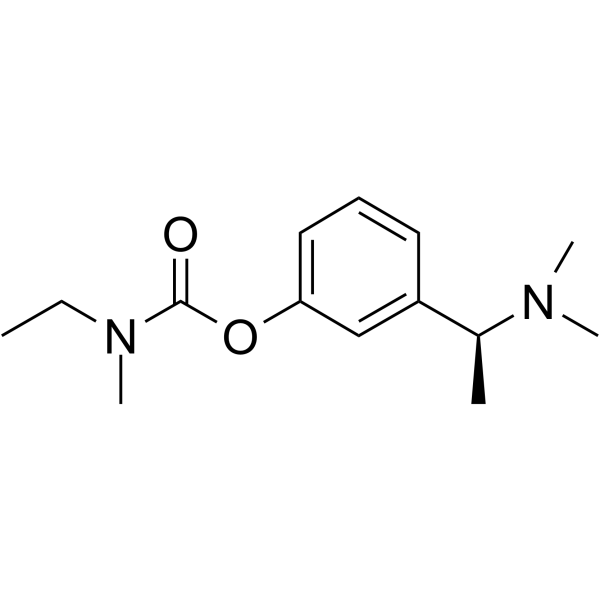
    Rivastigmine
    1 Publications Verification

    ENA 713 free base; SDZ-ENA 713 free base

    Cholinesterase (ChE) Neurological Disease
    Rivastigmine (ENA 713 free base) is an orally active and potent cholinesterase (ChE) inhibitor and inhibits butyrylcholinesterase (BChE) and acetylcholinesteras (AChE) with IC50s of 0.037 μM , 4.15 μM, respectively. Rivastigmine can pass the blood brain barrier (BBB). Rivastigmine is a parasympathomimetic or cholinergic agent used for the research of mild to moderate dementia of the Alzheimer's type and dementia due to Parkinson's disease .
    Rivastigmine
  • HY-11017
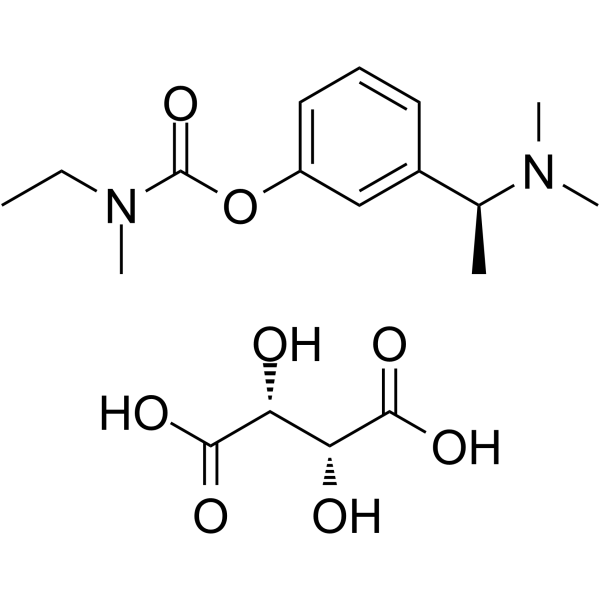
    Rivastigmine tartrate
    1 Publications Verification

    ENA 713; SDZ-ENA 713

    Cholinesterase (ChE) Neurological Disease
    Rivastigmine tartrate (ENA 713; SDZ-ENA 713) is an orally active and potent cholinesterase (ChE) inhibitor and inhibits butyrylcholinesterase (BChE) and acetylcholinesteras (AChE) with IC50s of 0.037 μM, 4.15 μM, respectively. Rivastigmine tartrate can pass the blood brain barrier (BBB). Rivastigmine tartrate is a parasympathomimetic or cholinergic agent used for the research of mild to moderate dementia of the Alzheimer's type and dementia due to Parkinson's disease .
    Rivastigmine tartrate
  • HY-B1339

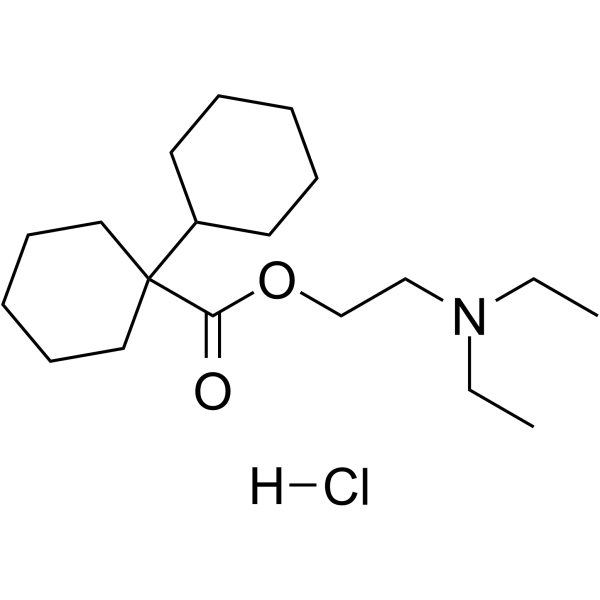
    Dicycloverine hydrochloride

    mAChR Neurological Disease
    Dicyclomine hydrochloride is a potent and orally active muscarinic cholinergic receptors antagonist. Dicyclomine hydrochloride shows high affinity for muscarinic M1 receptor subtype (Ki=5.1 nM) and M2 receptor subtype (Ki=54.6 nM) in brush-border membrane and basal plasma membranes, respectively . Dicyclomine is an antispasmodic agent and relieves smooth muscle spasm of the gastrointestinal tract in vivo .
    Dicyclomine hydrochloride
  • HY-114269

    nAChR Neurological Disease Inflammation/Immunology
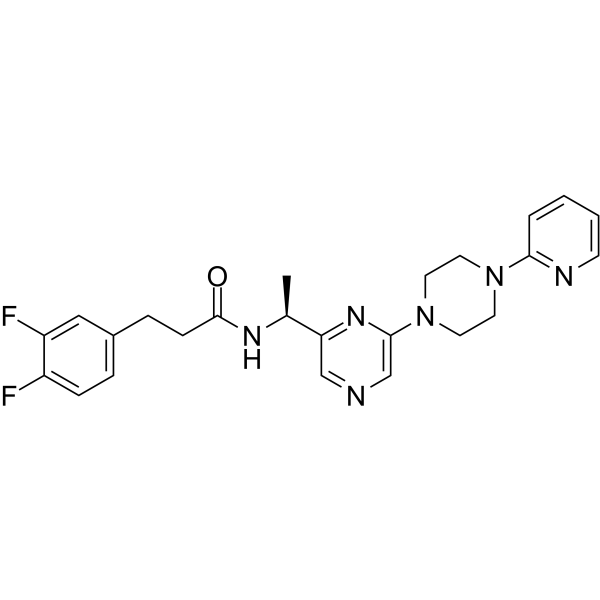
    (-)-(S)-B-973B is an allosteric activator of α7 nicotinic acetylcholine receptor (α7 nAChR). (-)-(S)-B-973B alleviates pain behaviors. (-)-(S)-B-973B can be used for the research of inflammatory pain .
    (-)-(S)-B-973B
  • HY-B2198

    Actinomin chloride

    Cholinesterase (ChE) Neurological Disease
    Carpronium (Actinomin) chloride is an orally active cholinergic agonist, local vasodilator and parasympathomimetic agent. Carpronium chloride is structurally similar to acetylcholine. Carpronium chloride promotes hair growth, and oral overdose induces cholinergic crisis. Carpronium chloride is applicable to research related to alopecia areata .
    Carpronium chloride
  • HY-W987949

    Others Neurological Disease
    Z-4105 is an orally active nootropic agent. Z-4105 reverses the amnesic effects of electroconvulsive shock (ECS) and methylazoxymethanol acetate (MAM), and improves learning and memory functions. Z-4105 enhances the activity of the brain cholinergic system without affecting other neurotransmitter systems. Z-4105 significantly alleviates neuropathic pain in rats. Z-4105 can be used in the research of neuropathic pain and brain dysfunction .
    Z-4105
  • HY-17368R

    ENA 713 free base(Standard); SDZ-ENA 713 free base(Standard)

    Reference Standards Cholinesterase (ChE) Neurological Disease
    Rivastigmine (Standard) is the analytical standard of Rivastigmine. This product is intended for research and analytical applications. Rivastigmine (ENA 713 free base) is an orally active and potent cholinesterase (ChE) inhibitor and inhibits butyrylcholinesterase (BChE) and acetylcholinesteras (AChE) with IC50s of 0.037 μM , 4.15 μM, respectively. Rivastigmine can pass the blood brain barrier (BBB). Rivastigmine is a parasympathomimetic or cholinergic agent used for the research of mild to moderate dementia of the Alzheimer's type and dementia due to Parkinson's disease .
    Rivastigmine (Standard)
  • HY-B1585B

    Parpanil (edisylate)

    iGluR Neurological Disease
    Caramiphen edisylate (Parpanil edisylate) is an anticholinergic agent with NMDA receptor antagonist activity. Caramiphen edisylate can be used to inhibit diseases related to cholinergic neurotransmission. Caramiphen edisylate exerts its pharmacological effects by blocking cholinergic effects .
    Caramiphen (edisylate)
  • HY-155822

    Cholinesterase (ChE) Apoptosis Caspase Neurological Disease
    TZ3O is an anticholinergic agent with neuroprotective effects. TZ3O inhibits acetylcholinesterase (AChE) activity in human plasma with an IC50 of 304.5 μM. TZ3O can improve memory impairment and cognitive decline in rats in the Scopolamine (HY-N0296)-induced Alzheimer-type model. TZ3O could be used in Alzheimer’s research .
    TZ3O
  • HY-B1339A

    Dicycloverine

    mAChR Neurological Disease
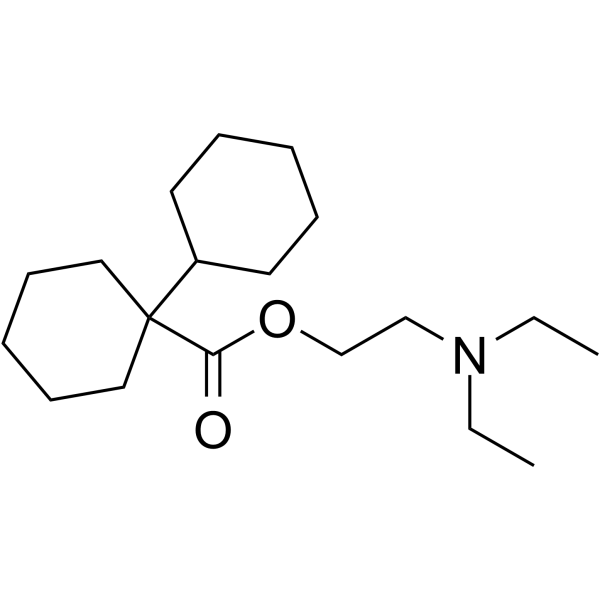
    Dicyclomine (Dicycloverine) is a potent and orally active muscarinic cholinergic receptors antagonist. Dicyclomine (Dicycloverine) shows high affinity for muscarinic M1 receptor subtype (Ki=5.1 nM) and M2 receptor subtype (Ki=54.6 nM) in brush-border membrane and basal plasma membranes, respectively . Dicyclomine is an antispasmodic agent and relieves smooth muscle spasm of the gastrointestinal tract in vivo .
    Dicyclomine
  • HY-165600A

    TMB-4

    Cholinesterase (ChE) Others
    Trimedoxime (TMB-4) is a blood-brain barrier-permeable cholinesterase reactivator . Trimedoxime reactivates cholinesterase inhibited by paraoxon, sarin, tabun and other agents, restricts the breakdown of acetylcholine and alleviates excessive cholinergic stimulation. Trimedoxime reduces mortality and prolongs survival time. Trimedoxime exhibits reactivation efficacy against AChE in rat tissues. Trimedoxime can be used in research related to organophosphate (paraoxon) poisoning and tabun poisoning .
    Trimedoxime
  • HY-14565

    ABT-089

    nAChR Neurological Disease
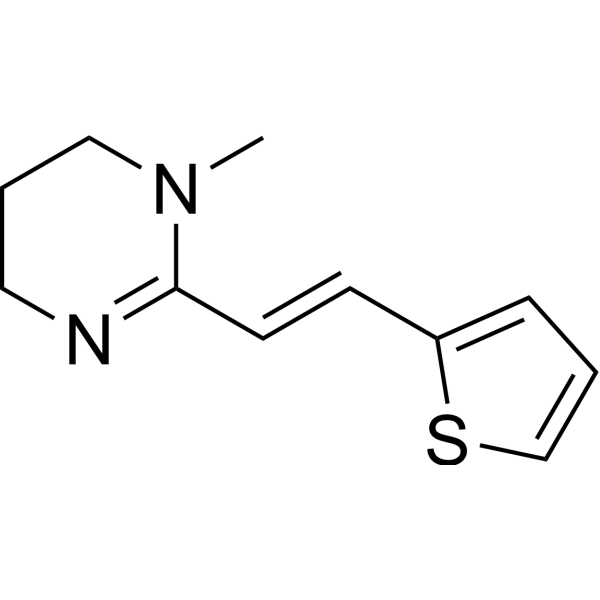
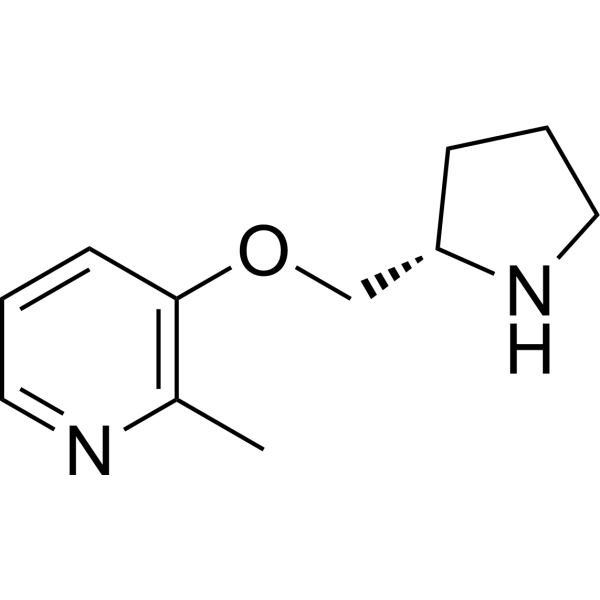
    Pozanicline (ABT-089) selectively activate neuronal nicotinic acetylcholine receptor (nAChR) subtypes, is a novel cholinergic agent that is a partial agonist at α4β2* nAChRs (Ki=16 nM) and shows high selectivity for α6β2* and α4α5β2 nAChR subtypes, the binding affinity (Ki, rat) for Pozanicline to [ 3H] cytisine sites is 16.7 nM. Pozanicline reverses nicotine withdrawal-induced cognitive deficits, may be an effective component of novel therapeutic strategies for nicotine addiction .
    Pozanicline
  • HY-B1585

    Parpanil

    iGluR Neurological Disease
    Parpanil is an anticholinergic agent with NMDA receptor antagonist activity. Parpanil can be used to inhibit diseases related to cholinergic neurotransmission. Parpanil exerts its pharmacological effects by blocking cholinergic effects .
    Caramiphen
  • HY-109006

    mAChR Neurological Disease
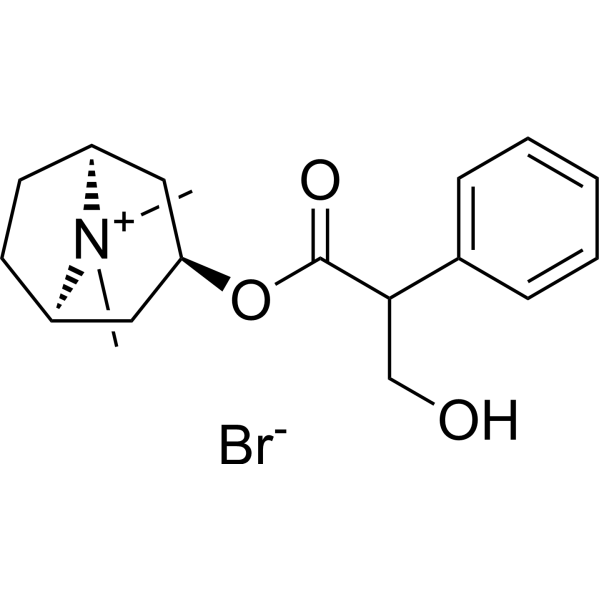
    Ilmetropium iodide is an anticholinergic agent. Ilmetropium iodide selectively blocks M-cholinergic receptors of bronchial muscle, reduces or prevents bronchoconstrictor response associated with both cholinergic stimulation, as well as the impact of the factors that provoke bronchospasm. Strength and selectivity of ilmetropium iodide action substantially exceeds Atropine sulfate (HY-B1205A) and Ipratropium bromide (HY-B0241) .
    Ilmetropium iodide
  • HY-A0215

    BW-A 938U; Nuromax

    nAChR Neurological Disease
    Doxacurium chloride (BW A938U) is a potent non-depolarizing neuromuscular blocking agent. Doxacurium chloride binds to cholinergic receptors to antagonize acetylcholine, resulting in a block of neuromuscular transmission. Doxacurium chloride can be used for the research of neurological diseases .
    Doxacurium chloride
  • HY-N11872

    Others Neurological Disease
    Suffruticosol A is a neuroprotective agent that restores scopolamine-induced cellular neurodegenerative damage. Suffruticosol A ameliorates hippocampal cholinergic deficits and partially enhances BDNF signaling. Suffruticosol A has neuromodulatory effects in a Scopolamine (HY-N0296)-induced model, restoring memory and cognitive performance in mice. Suffruticosol A can be isolated from seeds of P. lactiflora .
    Suffruticosol A
  • HY-155823

    Cholinesterase (ChE) Neurological Disease
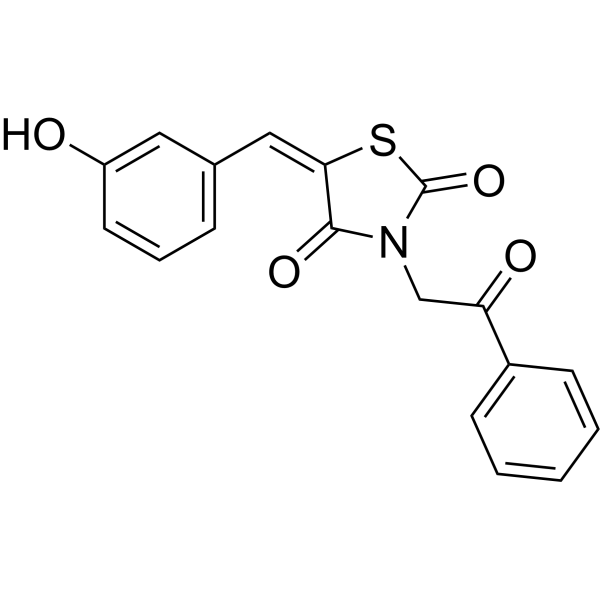
    TZ4M is a 2,4-thiazolidinedione (TZD)-based anti-ADV agent with neuroprotective effects. TZ4M exhibits AChE inhibition in human plasma. TZ4M improves memory and cognitive impairment in adult rats in a scopolamine (HY-N0296)-induced Alzheimer-type model .
    TZ4M
  • HY-105793

    mAChR Neurological Disease
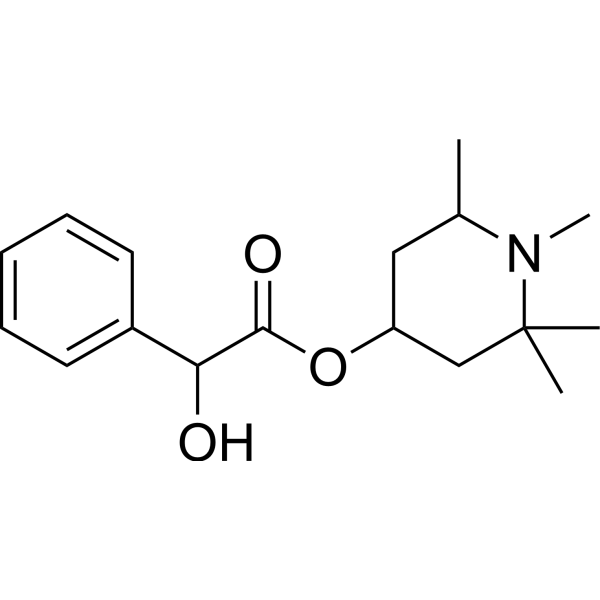
    Mazaticol is an anticholinergic agent. Mazaticol blocks the muscarinic acetylcholine receptors and cholinergic nerve activity. Mazaticol is a potent 3H-QNB and 3H-PZ binding inhibitor, can bind to the M2 receptors with high affinity. Mazaticol exhibits inhibitory effects on dopamine uptake in the striatal nerve terminal. Mazaticol can be used for parkinsonian syndrome research .
    Mazaticol
  • HY-17368S1

    (Rac)-ENA 713-d6 free base; (Rac)-SDZ-ENA 713-d6 free base

    Isotope-Labeled Compounds Cholinesterase (ChE) Neurological Disease
    (Rac)-Rivastigmine-d6 is a labelled racemic Rivastigmine. Rivastigmine (ENA 713 free base) is an orally active and potent cholinesterase (ChE) inhibitor and inhibits butyrylcholinesterase (BChE) and acetylcholinesteras (AChE) with IC50s of 0.037 μM , 4.15 μM, respectively. Rivastigmine can pass the blood brain barrier (BBB). Rivastigmine is a parasympathomimetic or cholinergic agent used for the research of mild to moderate dementia of the Alzheimer's type and dementia due to Parkinson's disease .
    (Rac)-Rivastigmine-d6
  • HY-B1339AS

    Dicycloverine-d4

    mAChR Neurological Disease
    Dicyclomine-d4 is the deuterium labeled Dicyclomine . Dicyclomine (Dicycloverine) is a potent and orally active muscarinic cholinergic receptors antagonist. Dicyclomine (Dicycloverine) shows high affinity for muscarinic M1 receptor subtype (Ki=5.1 nM) and M2 receptor subtype (Ki=54.6 nM) in brush-border membrane and basal plasma membranes, respectively . Dicyclomine is an antispasmodic agent and relieves smooth muscle spasm of the gastrointestinal tract in vivo .
    Dicyclomine-d4
  • HY-B1339R

    Dicycloverine hydrochloride (Standard)

    Reference Standards mAChR Neurological Disease
    Dicyclomine (hydrochloride) (Standard) is the analytical standard of Dicyclomine (hydrochloride). This product is intended for research and analytical applications. Dicyclomine hydrochloride is a potent and orally active muscarinic cholinergic receptors antagonist. Dicyclomine hydrochloride shows high affinity for muscarinic M1 receptor subtype (Ki=5.1 nM) and M2 receptor subtype (Ki=54.6 nM) in brush-border membrane and basal plasma membranes, respectively . Dicyclomine is an antispasmodic agent and relieves smooth muscle spasm of the gastrointestinal tract in vivo .
    Dicyclomine hydrochloride (Standard)
  • HY-17368S2

    ENA 713-d3 hydrochloride; SDZ-ENA 713-d3 hydrochloride

    Cholinesterase (ChE) Isotope-Labeled Compounds Neurological Disease
    Rivastigmine-d3 hydrochloride is deuterated labeled Rivastigmine (HY-17368). Rivastigmine (ENA 713 free base) is an orally active and potent cholinesterase (ChE) inhibitor and inhibits butyrylcholinesterase (BChE) and acetylcholinesteras (AChE) with IC50s of 0.037 μM , 4.15 μM, respectively. Rivastigmine can pass the blood brain barrier (BBB). Rivastigmine is a parasympathomimetic or cholinergic agent used for the research of mild to moderate dementia of the Alzheimer's type and dementia due to Parkinson's disease .
    Rivastigmine-d3 hydrochloride
  • HY-B1339S

    Dicycloverine-d4 hydrochloride

    Isotope-Labeled Compounds mAChR Neurological Disease
    Dicyclomine-d4 hydrochloride (Dicycloverine-d4 hydrochloride) is the deuterium labeled Dicyclomine hydrochloride (HY-B1339). Dicyclomine hydrochloride is a potent and orally active muscarinic cholinergic receptors antagonist. Dicyclomine hydrochloride shows high affinity for muscarinic M1 receptor subtype (Ki=5.1 nM) and M2 receptor subtype (Ki=54.6 nM) in brush-border membrane and basal plasma membranes, respectively . Dicyclomine is an antispasmodic agent and relieves smooth muscle spasm of the gastrointestinal tract in vivo .
    Dicyclomine-d4 hydrochloride
  • HY-161118

    nAChR Neurological Disease
    MB327 is a bipyridine nonoxime compound that restores neuromuscular function. MB327 restores the activity of nicotinamide acetylcholine receptors (nAChRs) for carbachol desensitization in a typical type II PAM manner. MB327 can neutralize nerve agent poisoning .
    MB327
  • HY-11017R

    ENA 713 (Standard); SDZ-ENA 713 (Standard)

    Reference Standards Cholinesterase (ChE) Neurological Disease
    Rivastigmine (tartrate) (Standard) is the analytical standard of Rivastigmine (tartrate). This product is intended for research and analytical applications. Rivastigmine tartrate (ENA 713; SDZ-ENA 713) is an orally active and potent cholinesterase (ChE) inhibitor and inhibits butyrylcholinesterase (BChE) and acetylcholinesteras (AChE) with IC50s of 0.037 μM, 4.15 μM, respectively. Rivastigmine tartrate can pass the blood brain barrier (BBB). Rivastigmine tartrate is a parasympathomimetic or cholinergic agent used for the research of mild to moderate dementia of the Alzheimer's type and dementia due to Parkinson's disease .
    Rivastigmine tartrate (Standard)
  • HY-W654335

    Isotope-Labeled Compounds Cholinesterase (ChE) Neurological Disease
    Rivastigmine-d4 (tartrate) is deuterium labeled Rivastigmine (tartrate). Rivastigmine tartrate (ENA 713; SDZ-ENA 713) is an orally active and potent cholinesterase (ChE) inhibitor and inhibits butyrylcholinesterase (BChE) and acetylcholinesteras (AChE) with IC50s of 0.037 μM, 4.15 μM, respectively. Rivastigmine tartrate can pass the blood brain barrier (BBB). Rivastigmine tartrate is a parasympathomimetic or cholinergic agent used for the research of mild to moderate dementia of the Alzheimer's type and dementia due to Parkinson's disease .
    Rivastigmine-d4 tartrate
  • HY-15116

    Prolyl Endopeptidase (PREP) Neurological Disease
    ONO 1603, a novel prolyl endopeptidase inhibitor investigated as a potential antidementia drug, demonstrated neuroprotective and neurotrophic effects in cerebellar granule cells similar to tetrahydroaminoacridine (THA). At a concentration of 0.03 microM, ONO 1603 promoted neuronal survival, enhanced neurite outgrowth, increased m3-muscarinic acetylcholine receptor (mAChR) mRNA levels, and stimulated mAChR-mediated signaling pathways. These findings suggest that ONO 1603 shares pharmacological similarities with THA, indicating its potential as a therapeutic agent for Alzheimer's disease by enhancing cholinergic neurotransmission and neuronal function .
    ONO 1603
  • HY-118275

    Cholinesterase (ChE) Neurological Disease
    FK960 is a potential anti-dementia agent that reverses the reduction in cerebral blood flow (rCBF) caused by sensory stimulation by enhancing cholinergic neurotransmission. In macaque experiments, physostigmine (AChE inhibitor; HY-N6608) was able to completely eliminate the rCBF in the sensory cortex increased by vibrotactile stimulation. FK960 (1-1000 μg/kg) can restore the eliminated rCBF response, and the action time can last for 1 hour. However, FK960 cannot restore the rCBF response eliminated by HA-966 (NMDA modulator; HY-100822), indicating that its function is not dependent on non-glutamatergic neurotransmission.
    FK960
  • HY-117284A

    mAChR Neurological Disease
    Eucatropine hydrochloride is a potent muscarinic acetylcholine receptor (mAChR) inhibitor with an IC50 value of 0.583 μM. Eucatropine hydrochloride acts as an anticholinergic agent. Eucatropine hydrochloride produces behavioral effects via central cholinergic receptive sites in cats .
    Eucatropine hydrochloride
  • HY-14287

    5-HT Receptor Others
    KW-5092 fumarete is a gastrokinetic agent. KW-5092 fumarete can increase intraluminal 5-HT release via the stimulation of cholinergic neurons .
    KW-5092 (fumarete)
  • HY-N8421

    Potassium Channel Cardiovascular Disease
    Tabernanthine is a negative chronotropic and negative inotropic agent that selectively acts on sinoatrial node receptors, regulating heart rhythm and myocardial contractility. Tabernanthine exhibits atropine resistance and direct non-cholinergic binding properties, acting directly on the sinoatrial node rather than relying on vagal nerve or cholinergic pathways to exert its key activity of slowing heart rate and weakening myocardial contractility. Tabernanthine is useful in cardiovascular pharmacology research, particularly in the areas of sinoatrial node function regulation, mechanisms related to bradycardia, and studies of cardiac receptor subtype differences .
    Tabernanthine
  • HY-107042

    NRM-331

    Tau Protein Amyloid-β Neurological Disease
    trans-Sobrerol (NRM-331) is a potent mucofluidifying agent. trans-Sobrerol demonstrates an anti-amnesic effect by enhancing hippocampal cholinergic signaling, alongside exhibiting anti-tau and anti- synthesis properties. trans-Sobrerol mitigates memory impairment induced by Scopolamine (HY-N0296). trans-Sobrerol can be used in the research of Alzheimer's disease .
    trans-Sobrerol
  • HY-W754293

    V0191; DMAE pidolate; DMAE PCA

    mAChR Neurological Disease
    Deanol pidolate (V0191; DMAE pidolate) is an orally active pro-cholinergic agent that improves cognitive symptoms by increasing the release of acetylcholine (Ach) and avoids the typical side effects of cholinesterase inhibitors. Deanol pidolate can alleviate the harmful effects of scopolamine on long-term memory and restore to baseline levels more quickly. Deanol pidolate can be used in research on Alzheimer's disease .
    Deanol pidolate
  • HY-165600

    TMB-4 dichloride

    Cholinesterase (ChE) Others
    Trimedoxime dichloride (TMB-4 dichloride) is a blood-brain barrier-permeable cholinesterase reactivator . Trimedoxime dichloride reactivates cholinesterase inhibited by paraoxon, sarin, tabun and other agents, restricts the breakdown of acetylcholine and alleviates excessive cholinergic stimulation. Trimedoxime dichloride reduces mortality and prolongs survival time. Trimedoxime dichloride exhibits reactivation efficacy against AChE in rat tissues. Trimedoxime dichloride can be used in research related to organophosphate (paraoxon) poisoning and tabun poisoning .
    Trimedoxime dichloride
  • HY-W654336

    Isotope-Labeled Compounds Cholinesterase (ChE) Neurological Disease
    (S)-Rivastigmine-d4 is deuterium labeled Rivastigmine. Rivastigmine (ENA 713 free base) is an orally active and potent cholinesterase (ChE) inhibitor and inhibits butyrylcholinesterase (BChE) and acetylcholinesteras (AChE) with IC50s of 0.037 μM , 4.15 μM, respectively. Rivastigmine can pass the blood brain barrier (BBB). Rivastigmine is a parasympathomimetic or cholinergic agent used for the research of mild to moderate dementia of the Alzheimer's type and dementia due to Parkinson's disease .
    (S)-Rivastigmine-d4

Inquiry Online

Your information is safe with us. * Required Fields.

Salutation


Country or Region *

Applicant Name *


Organization Name *

Department *


Email Address *


Product Name *

Cat. No.


Requested quantity *

Phone Number *


Remarks

Inquiry Online

Inquiry Information

Product Name:
Cat. No.:
Quantity:
MCE Japan Authorized Agent:

