1. Search Result
Search Result
Results for "

cigarette

" in MedChemExpress (MCE) Product Catalog:

31

Inhibitors & Agonists

5

Natural
Products

5

Isotope-Labeled Compounds

1

Oligonucleotides

Cat. No. Product Name Target Research Areas Chemical Structure
  • HY-19644
    GSK2256294A
    2 Publications Verification

    GSK 2256294

    Epoxide Hydrolase Cardiovascular Disease
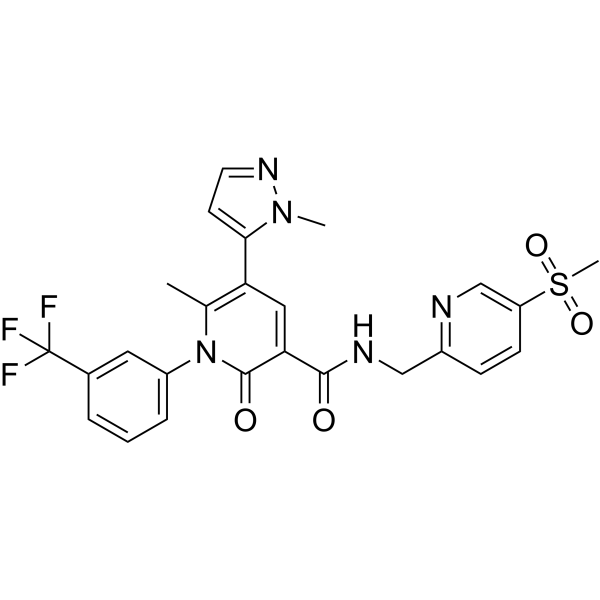
    GSK2256294A (GSK 2256294) is a selective and orally active inhibitor of soluble epoxide hydrolase (sEH). GSK2256294A inhibits recombinant human sEH, rat sEH orthologs and murine sEH orthologs with IC50s of 27, 61 and 189 pM, respectively. GSK2256294A can be used for the research of chronic obstructive pulmonary disease (COPD) and cardiovascular disease .
    GSK2256294A
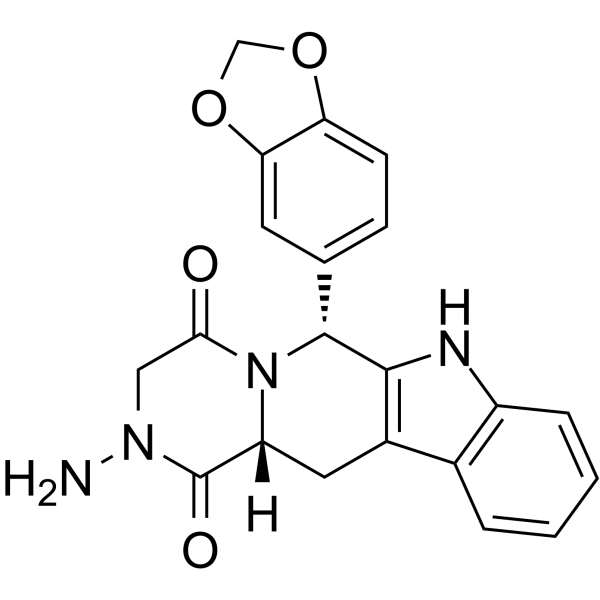
  • HY-117109

    Drug Derivative Others
    Amino Tadalafil is a phosphodiesterase type 5 (PDE5) inhibitor analog and tadalafil structural analog. Amino Tadalafil can be specifically detected by anti-tadalafil polyclonal antibodies, with a cross-reactivity of 105.2% with tadalafil. Amino Tadalafil can be incorporated into dietary supplements .
    Amino Tadalafil
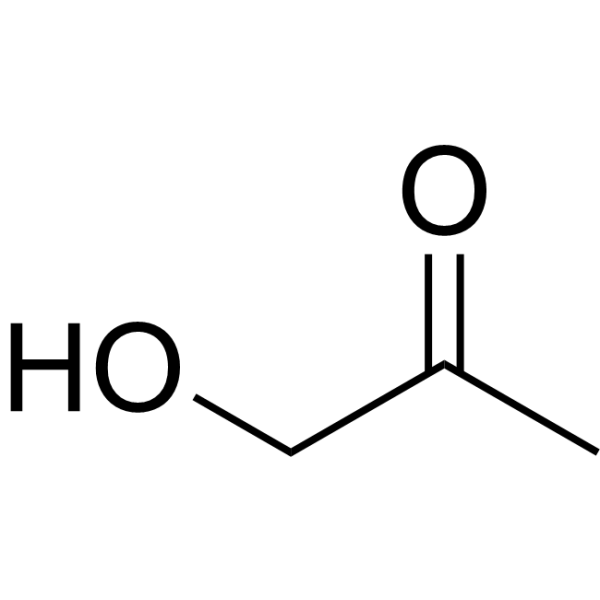
  • HY-Y1366

    Mitochondrial Metabolism Reactive Oxygen Species (ROS) Arp2/3 Complex Apoptosis Inflammation/Immunology
    Hydroxyacetone is a toxic compound. Hydroxyacetone can be isolated from e-cigarette aerosols. Hydroxyacetone reduces the activity of cellular Mitochondrial reductase (with an IC50 of 5.53 mg/mL for mitochondrial reductase in BEAS-2B cells) and increases ROS levels. Hydroxyacetone induces mitochondrial stress and oxidative damage. Hydroxyacetone induces destabilization of F-actin. At high concentrations, Hydroxyacetone promotes cell rounding and Apoptotic body formation. Hydroxyacetone exerts toxic effects on cells including airway epithelial cells and possesses respiratory toxicity potential .\n


    Hydroxyacetone
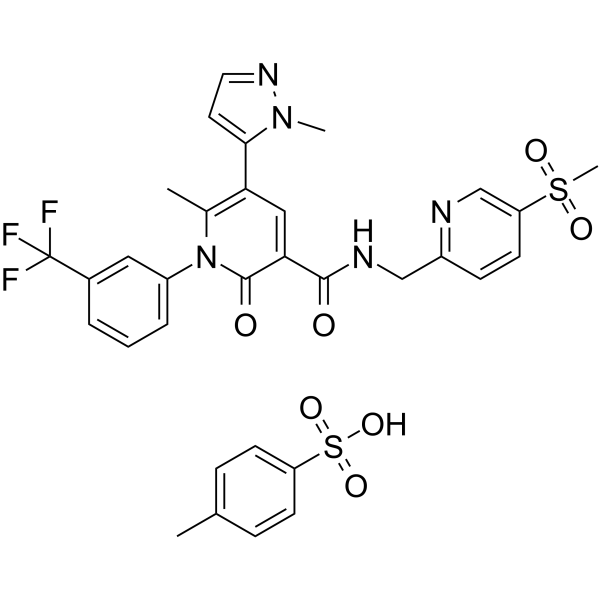
  • HY-14180
    PHA 408
    1 Publications Verification

    IKK Inflammation/Immunology
    PHA 408 (PHA-408) is a potent, selective and orally active IκB kinase-2 (IKK-2) inhibitor. PHA 408 is a powerful anti-inflammatory agent against lipopolysaccharide (LPS)- and cigarette smoke (CS)-mediated lung inflammation .
    PHA 408
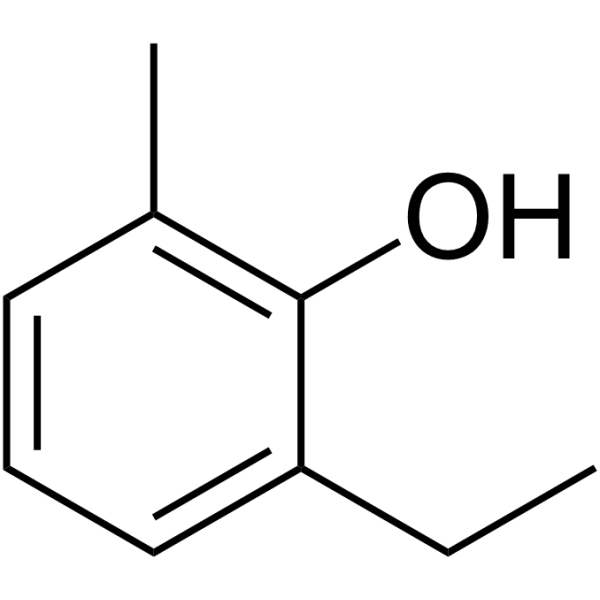
  • HY-W089538

    Bacterial Infection
    2-Ethyl-6-methylphenol, an alkylphenol, is isolated form the tumorigenic neutral subfraction of cigarette smoke condensate. 2-Ethyl-6-methylphenol exhibits insecticidal and bactericidal activities .
    2-Ethyl-6-methylphenol
  • HY-145476

    N-NAT; N'-Nitrosoanatabine

    Biochemical Assay Reagents Cancer
    (R,S)-N-Nitrosoanatabine (N-NAT) is a tobacco-specific nitrosamine (TSNA) that has been found in tobacco, tobacco products, and electronic cigarettes. The (S) enantiomer comprises approximately 80% of the N-NAT found in commercial and research cigarettes and smokeless tobacco.3 Unlike other TSNAs, N-NAT is not carcinogenic in rats when administered at doses of 1, 3, and 9 mmol/kg.
    N-Nitrosoanatabine
  • HY-118614

    Drug Metabolite Neurological Disease
    β-Nicotyrine is a metabolite of Nicotine.β-Nicotyrine, isolated from the leaves of Nicotiana tabacum plants and from cigarette smoke condensate, is a minor tobacco alkaloid .
    β-Nicotyrine
  • HY-W775262

    Cannabinoid Receptor Neurological Disease
    Δ9-Tetrahydrocannabinolic acid (Δ9-THCA) is a phytocannabinoid that can be heated by cigarette carriers to produce Δ9-THC, thus having psychoactive properties .
    Δ9-Tetrahydrocannabinolic acid
  • HY-W008030

    Bacterial Infection
    3-Aminobiphenyl is a chemical isomer of 4-ABP. 3-Aminobiphenyl can inhibit the growth of human intestinal bacteria Bifidobacterium infantis ATCC 15697, B. bifidium ATCC 11863, Clostridium perfringens ATCC 13124, Escherichia coli ATCC 25922, E. coli ATCC 35218, Enterobacter cloacae ATCC 13047 and Salmonella typhimurium TA98, TA100, YG1041. 3-Aminobiphenyl can be used as a biomarker of exposure to aromatic amines from cigarette smoke .
    3-Aminobiphenyl
  • HY-114652

    2-Amino-α-carboline; AαC

    Endogenous Metabolite Cancer
    AalphaC (AαC) is a potential carcinogen with carcinogenic activity. AalphaC is an important biomarker in tobacco smoke and is associated with tobacco smoke exposure. Urinary concentrations of AalphaC are significantly higher in dedicated smokers than in non-smokers, indicating its importance in monitoring tobacco exposure. AalphaC levels increase significantly with increasing serum nicotine levels, indicating its close relationship with tobacco use. In addition, consuming high-temperature cooked beef significantly increases the amount of AalphaC in urine, while consuming vegetables is associated with a decrease in AalphaC concentrations. Smoking half a pack of cigarettes is associated with a significant increase in the amount of AalphaC, which further confirms the biological activity of AalphaC and its association with dietary habits .
    AalphaC
  • HY-W587741

    Dihydroxybutyl mercapturic acid; DHBMA

    Drug Metabolite Others
    N-Acetyl-S-(3,4-dihydroxybutyl)-L-cysteine (Dihydroxybutyl mercapturic acid) is a biomarkersof 1,3-butadiene exposure. 1,3-Butadiene is a known human carcinogen present in cigarette smoke and in automobile exhaust.
    N-Acetyl-S-(3,4-dihydroxybutyl)-L-cysteine
  • HY-113086

    16:1(9Z) CE; 16:1(9Z) Cholesterol ester; Cholesterol Palmitoleate

    Endogenous Metabolite Cardiovascular Disease
    CE(16:1(9Z)) (16:1(9Z) CE) is a cholesterol ester. Plasma levels of cholesteryl palmitoleate are increased in ApoE -/- mice exposed to cigarette smoke and in pediatric patients with biliary atresia. Cholesteryl palmitoleate has been used as a standard for the identification of cholesterol esters in human meibomian gland secretions.
    CE(16:1(9Z))
  • HY-W004681

    6-Methyl-3-pyridinol

    Drug Intermediate Inflammation/Immunology
    6-Methyl-3-pyridinol (5-hydroxy-2-methylpyridine) is a starting compound for the synthesis of L-azatyrosine (HY-W048303). 6-Methyl-3-pyridinol can be isolated from cigarette smoke condensate. 6-Methyl-3-pyridinol aggravates Collagen-induced arthritis in mice .
    5-Hydroxy-2-methylpyridine
  • HY-B1290S2

    Phenylethyl alcohol-d5; Phenethyl alcohol-d5; Benzyl carbinol-d5

    Bacterial Virus Protease Antibiotic Infection
    2-Phenylethanol-d5 is the deuterium labeled 2-Phenylethanol . 2-Phenylethanol (Phenethyl alcohol), extracted from rose, carnation, hyacinth, Aleppo pine, orange blossom and other organisms, is a colourless liquid. It has a pleasant floral odor and also an autoantibiotic produced by the fungus Candida albicans . It is used as an additive in cigarettes and also used as a preservative in soaps due to its stability in basic conditions.
    2-Phenylethanol-d5
  • HY-B1290S1

    Phenylethyl alcohol-d9; Phenethyl alcohol-d9; Benzyl carbinol-d9

    Bacterial Virus Protease Antibiotic Infection
    2-Phenylethanol-d9 is the deuterium labeled 2-Phenylethanol . 2-Phenylethanol (Phenethyl alcohol), extracted from rose, carnation, hyacinth, Aleppo pine, orange blossom and other organisms, is a colourless liquid. It has a pleasant floral odor and also an autoantibiotic produced by the fungus Candida albicans . It is used as an additive in cigarettes and also used as a preservative in soaps due to its stability in basic conditions.
    2-Phenylethanol-d9
  • HY-B1290S

    Phenylethyl alcohol-d4; Phenethyl alcohol-d4; Benzyl carbinol-d4

    Bacterial Virus Protease Antibiotic Infection
    2-Phenylethanol-d4 is the deuterium labeled 2-Phenylethanol . 2-Phenylethanol (Phenethyl alcohol), extracted from rose, carnation, hyacinth, Aleppo pine, orange blossom and other organisms, is a colourless liquid. It has a pleasant floral odor and also an autoantibiotic produced by the fungus Candida albicans . It is used as an additive in cigarettes and also used as a preservative in soaps due to its stability in basic conditions.
    2-Phenylethanol-d4
  • HY-168750

    Cannabinoid Receptor Neurological Disease
    MDMB-FUBICA is a potent agonist of the cannabinoid receptors with psychoactive properties. MDMB-FUBICA can be used in the study of electronic cigarette .
    MDMB-FUBICA
  • HY-W089538R

    Reference Standards Bacterial Infection
    2-Ethyl-6-methylphenol, an alkylphenol, is isolated form the tumorigenic neutral subfraction of cigarette smoke condensate. 2-Ethyl-6-methylphenol exhibits insecticidal and bactericidal activities .
    2-Ethyl-6-methylphenol (Standard)
  • HY-N15755

    Bacterial Fungal Infection
    Sepiumol A is a polyphenolic compound that can be isolated from the bark of Periploca sepium Bunge. Sepiumol A has antibacterial and antifungal activities. Sepiumol A can be added to e-cigarette liquid to exert antibacterial effects and reduce the sweetness and greasiness during smoking .
    Sepiumol A
  • HY-100702

    Akt Apoptosis Cancer
    SH-5 is a potent AKT inhibitor. SH-5 potentiates the apoptosis induced by tumor necrosis factor. SH-5 blocks NF-kB activation induced by TNF-a, lipopolysaccharide (HY-D1056), phorbol ester (HY-18739), and cigarette smoke .
    SH-5
  • HY-122010

    VEGFR Others
    NVP-AAD777 is a specific inhibitor of VEGFR-2, demonstrated in vivo by its effective suppression of phospho-VEGFR-2 (Tyr1175) signaling in rat lung tissues. Unlike the nonspecific VEGFR inhibitor SUG-5416, NVP-AAD777 did not induce emphysematous changes in the lungs after three weeks of treatment, even when combined with exposure to cigarette smoke. Additionally, there were no alterations observed in vascular density compared to control animals. This indicates NVP-AAD777's targeted action in inhibiting VEGFR-2 without adverse pulmonary effects, highlighting its potential therapeutic utility in managing conditions associated with aberrant VEGFR-2 signaling .
    NVP-AAD777
  • HY-W700491

    2-Amino-α-carboline-15N3; AαC-15N3

    Isotope-Labeled Compounds Endogenous Metabolite Cancer
    AalphaC- 15N3 (2-Amino-α-carboline- 15N3) is 15N labeled AalphaC. AalphaC (AαC) is a potential carcinogen with carcinogenic activity. AalphaC is an important biomarker in tobacco smoke and is associated with tobacco smoke exposure. Urinary concentrations of AalphaC are significantly higher in dedicated smokers than in non-smokers, indicating its importance in monitoring tobacco exposure. AalphaC levels increase significantly with increasing serum nicotine levels, indicating its close relationship with tobacco use. In addition, consuming high-temperature cooked beef significantly increases the amount of AalphaC in urine, while consuming vegetables is associated with a decrease in AalphaC concentrations. Smoking half a pack of cigarettes is associated with a significant increase in the amount of AalphaC, which further confirms the biological activity of AalphaC and its association with dietary habits .
    AalphaC-15N3
  • HY-135446

    Endothelin Receptor Cardiovascular Disease Endocrinology
    BQ-610 is a selective antagonist of the endothelin A receptor (ETA receptor). BQ-610 specifically blocks the ETA receptor, competitively inhibiting the binding of endothelin-1 (ET-1) (a vasoconstrictive peptide) to the receptor, thereby blocking the effects of ET-1 such as vascular smooth muscle contraction, cell mitosis, and inhibition of hormone secretion. BQ-610 significantly alleviates cerebral vasospasm in rabbits. BQ-610 blocks the bronchial epithelial and pulmonary vascular cell proliferation caused by cigarette smoke in rat models. BQ-610 can delay the natural luteal regression in the cow's uterus. BQ-610 can be used for research on vasospasm, abnormal cell proliferation, and reproductive endocrine disorders .
    BQ-610
  • HY-160844

    Prostaglandin Receptor TNF Receptor Interleukin Related Inflammation/Immunology
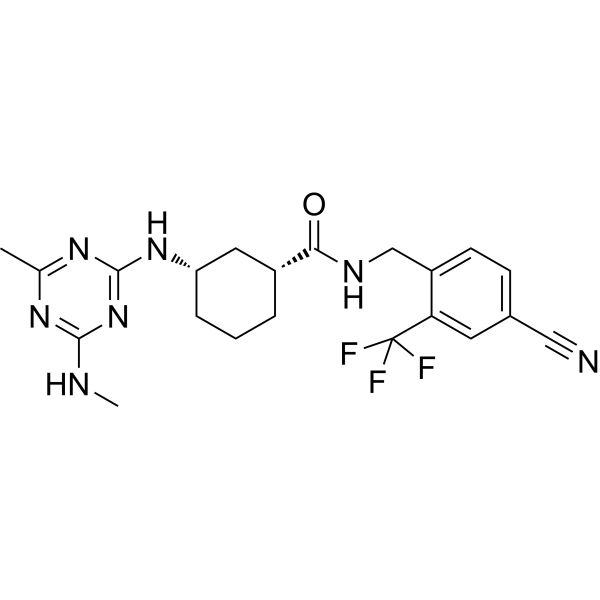
    CT-133 is a selective and potent CRTH2 Receptor antagonist, with a Ki value of 2.2 nM. The Ki value for the DP1 receptor is greater than 3800 nM. CT-133 inhibits neutrophil migration induced by PGD2 (HY-101988). CT-133 significantly alleviates lung inflammation and improves lung function impairment in a mouse model of acute lung injury (ALI) induced by cigarette smoke. CT-133 effectively inhibits the excessive expression of pro-inflammatory cytokines (TNF-α, IL-1β, and IL-6) and chemokines (KC), and reverses the inhibition of the anti-inflammatory factor IL-10. CT-133 can be used for the study of ALI .
    CT-133
  • HY-W697750

    Tiglaldehyde

    Biochemical Assay Reagents Cancer
    trans-2-Methyl-2-butenal (Tiglaldehyde) is an adduct former that can be found in cigarette smoke, and very weakly inhibits growth of cancer cells and normal mouse cells. trans-2-Methyl-2-butenal forms adducts with glutathione (GSH) via Michael addition.trans-2-Methyl-2-butenal is an α,β-unsaturated carbonyl compound .
    trans-2-Methyl-2-butenal
  • HY-W653722

    (S)-N-NAT; (S)-N'-Nitrosoanatabine

    Drug Isomer Cancer
    (S) -N-Nitrosoanatabine ( (S) -N-NAT) is a potent carcinogen and biomarker of exposure to cigarette smoke. It′s found in a variety of tobacco products and oral snuff.
    (S)-N-Nitrosoanatabine
  • HY-145476S2

    N-NAT-d3; N'-Nitrosoanatabine-d3

    Isotope-Labeled Compounds Biochemical Assay Reagents Cancer
    N-Nitrosoanatabine-d3 (N-NAT-d3) is the deuterium labeled N-Nitrosoanatabine (HY-145476). (R,S)-N-Nitrosoanatabine (N-NAT) is a tobacco-specific nitrosamine (TSNA) that has been found in tobacco, tobacco products, and electronic cigarettes. The (S) enantiomer comprises approximately 80% of the N-NAT found in commercial and research cigarettes and smokeless tobacco.3 Unlike other TSNAs, N-NAT is not carcinogenic in rats when administered at doses of 1, 3, and 9 mmol/kg.
    N-Nitrosoanatabine-d3
  • HY-118614R

    Reference Standards Drug Metabolite Neurological Disease
    β-Nicotyrine (Standard) is the analytical standard of β-Nicotyrine. This product is intended for research and analytical applications. β-Nicotyrine is a metabolite of Nicotine.β-Nicotyrine, isolated from the leaves of Nicotiana tabacum plants and from cigarette smoke condensate, is a minor tobacco alkaloid .
    β-Nicotyrine (Standard)
  • HY-121621

    Endogenous Metabolite Inflammation/Immunology
    RO5101576 is a potent LTB4 receptor antagonist with activity to inhibit LTB4-induced calcium mobilization and chemotaxis of human neutrophils. RO5101576 significantly attenuated LTB4-induced pulmonary eosinophilia in guinea pigs. RO5101576 inhibited allergen- and ozone-induced pulmonary neutrophilia in nonhuman primates with efficacy comparable to that of budesonide. RO5101576 had no effect on LPS-induced neutrophilia in guinea pigs and cigarette smoke-induced neutrophilia in mice and rats. RO5101576 performed well in toxicology studies and was well tolerated .
    RO5101576
  • HY-181646

    Phosphodiesterase (PDE) TNF Receptor Inflammation/Immunology
    PDE4-IN-34 is a phosphodiesterase 4 (PDE4) inhibitor, with IC50 values of 19 pM and 14 pM against PDE4B1 and PDE4D2, respectively. PDE4-IN-34 shows weak inhibitory activity against PDE8A1, with an IC50 value of 4.092 μM, and exhibits significant selectivity over other subtypes (IC50 > 10 μM). PDE4-IN-34 improves pulmonary function, reduces inflammatory responses and alleviates lung tissue damage in a rat model induced by cigarette smoke combined with LPS (HY-D1056). PDE4-IN-34 can be used for research related to chronic obstructive pulmonary disease .
    PDE4-IN-34
  • HY-183648

    Endogenous Metabolite Others
    N-Acetyl-S-(3-hydroxy-1-methylpropyl)-L-cysteine (3HMPMA) is a mercapturic acid and biomarker for crotonaldehyde exposure. N-Acetyl-S-(3-hydroxy-1-methylpropyl)-L-cysteine helps distinguish smokers from non-smokers .
    N-Acetyl-S-(3-hydroxy-1-methylpropyl)-L-cysteine

Inquiry Online

Your information is safe with us. * Required Fields.

Salutation


Country or Region *

Applicant Name *


Organization Name *

Department *


Email Address *


Product Name *

Cat. No.


Requested quantity *

Phone Number *


Remarks

Inquiry Online

Inquiry Information

Product Name:
Cat. No.:
Quantity:
MCE Japan Authorized Agent:

