



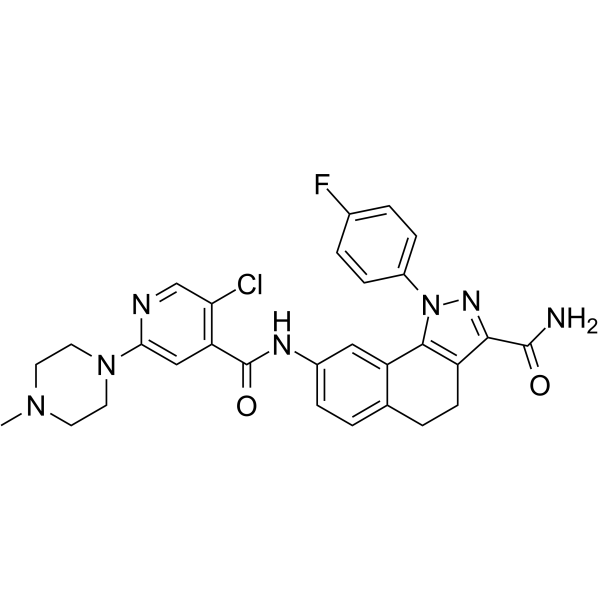
PHA 408
Based on 1 publication(s) in Google Scholar
PHA-408 is a highly selective, orally active and ATP-competitive IKK-2 inhibitor with an IC50 of 40 nM. PHA-408 blocks NF-κB signaling by suppressing IκBα phosphorylation and degradation, p65 phosphorylation, and pro-inflammatory cytokine production, and prevents TNF-α-induced premature senescence in HUVECs. PHA-408 alleviates LPS-and cigarette smoke-triggered pulmonary inflammation, reduces LPS-stimulated serum TNF-α release, and ameliorates joint damage in SCW-induced arthritis in rats. PHA-408 is applicable for the research of rheumatoid arthritis, chronic obstructive pulmonary disease (COPD), and Duchenne muscular dystrophy.
For research use only. We do not sell to patients.
- Purity : 99.40%
- CAS No.: 503555-55-3
- Formula: C29H27ClFN7O2
- Molecular Weight:560.02
-
Storage:Powder -20°C, 3 years , 4°C, 2 years ; In solvent -80°C, 6 months , -20°C, 1 month

To place orders, for customer services and technical support, please contact: MedChemExpress USA
Tel: 609-228-6898 E-mail: [email protected] [email protected]


-
 Biological Activity
-
Chemical Information
-
Solvent & Solubility
- Protocols
- Purity & Documentation
- References
-
 Help & FAQs


-
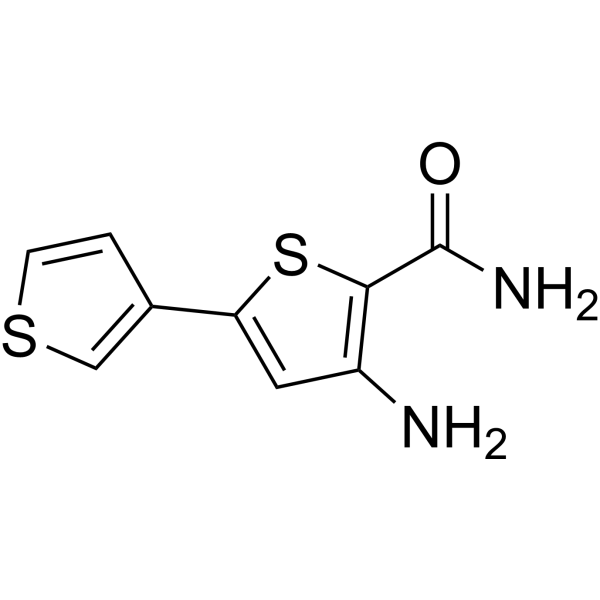
HY-13802
SC-514IKK Inhibitor -
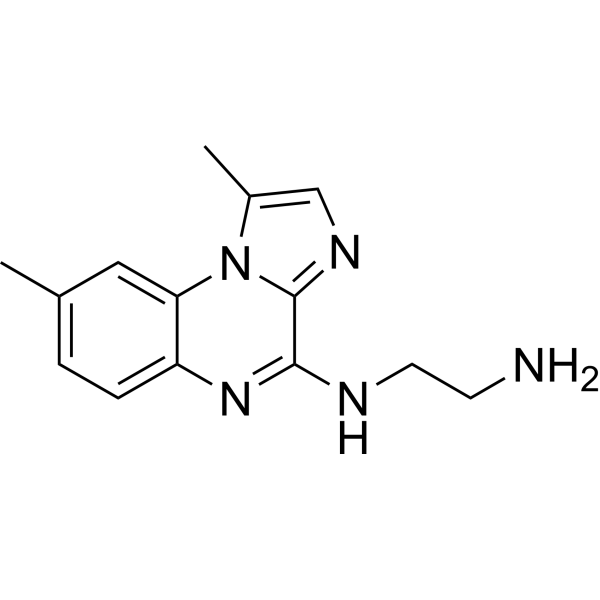
HY-10519
BMS-345541IKK-1/IKK-2 Inhibitor -
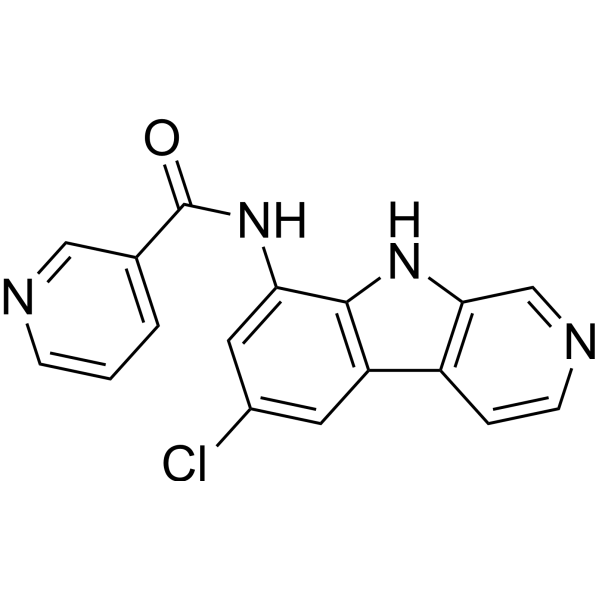
HY-18008
PS-1145Apoptosis Inducer -
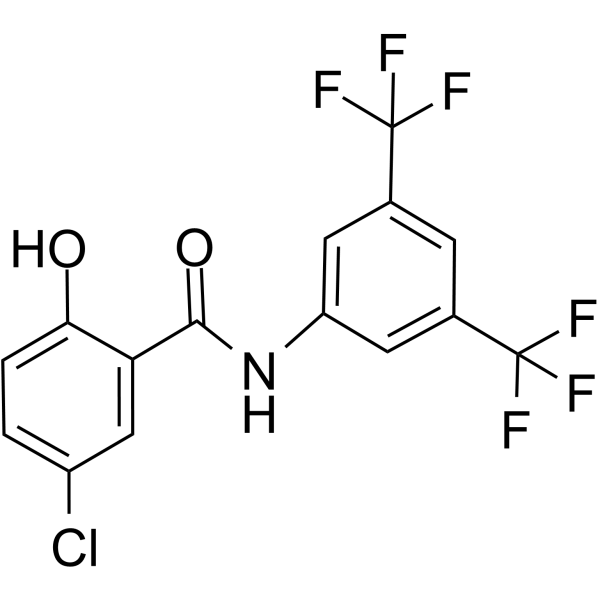
HY-10172
IMD-0354IKKβ Inhibitor -
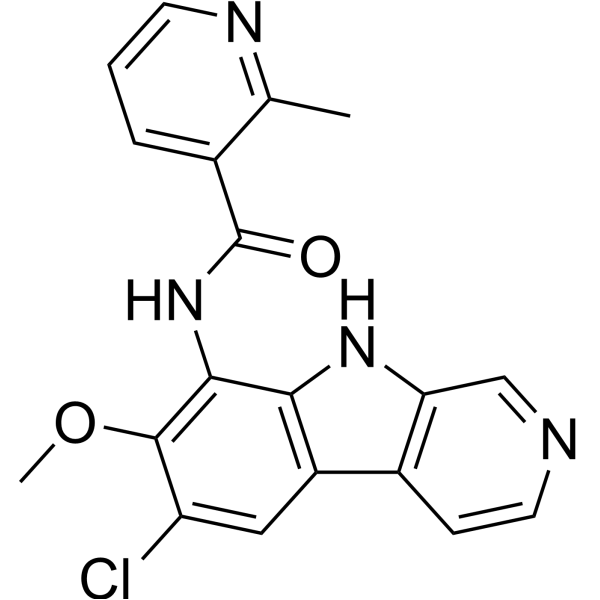
HY-15473
MLN120BIKKβ Inhibitor -
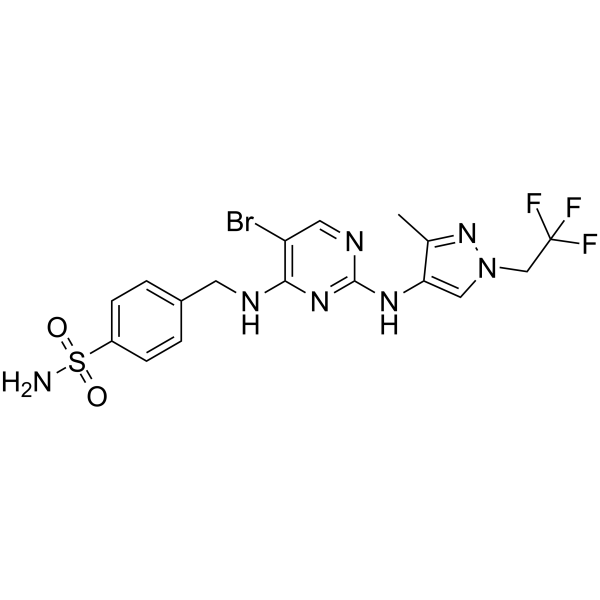
HY-111941
GSK8612TBK1 Inhibitor -
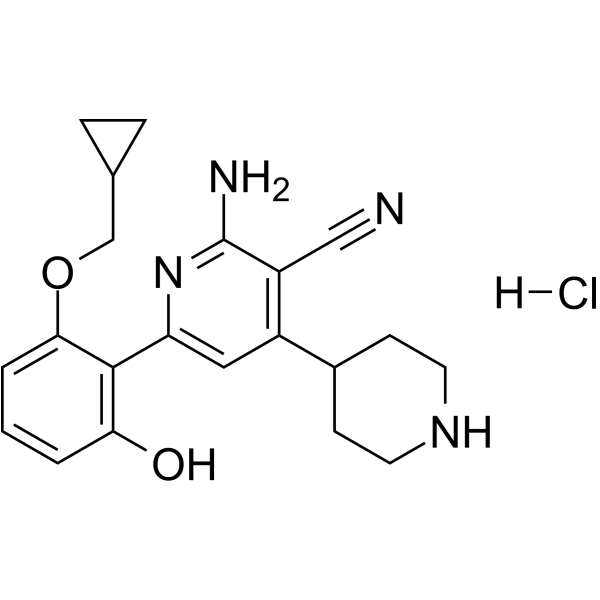
HY-13060
ACHP HydrochlorideIKKβ Inhibitor -
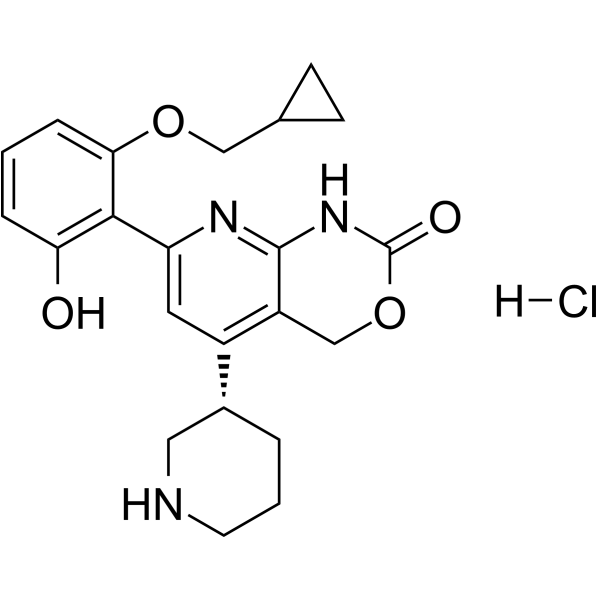
HY-50948
Bay 65-1942 hydrochlorideIKK Inhibitor -
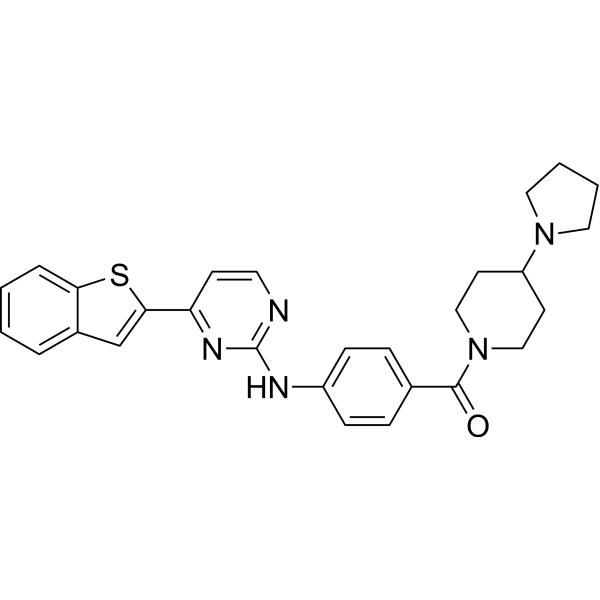
HY-13687
IKK 16IKK Inhibitor -
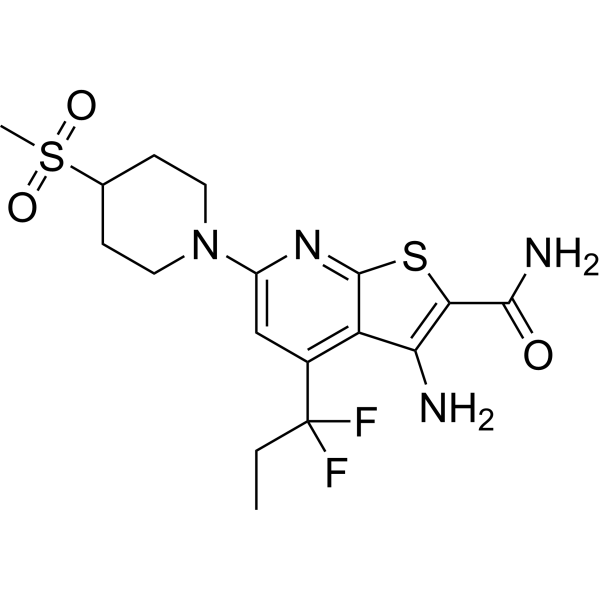
HY-13019
BI605906IKK Inhibitor -
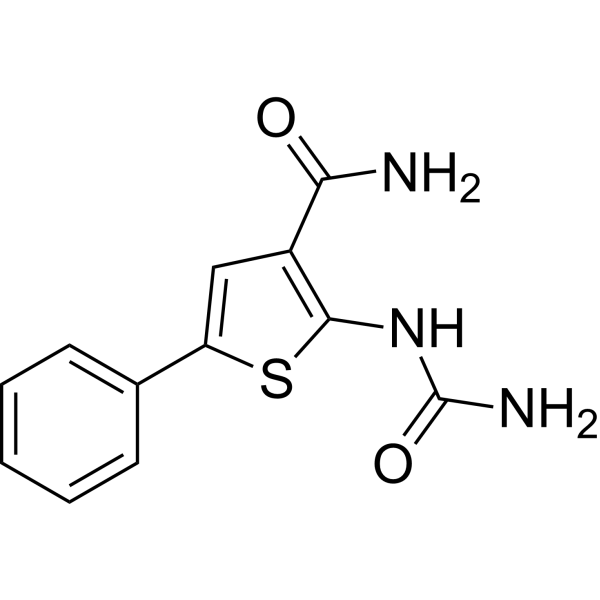
HY-112456
IKK2-IN-4IKK-2 Inhibitor -
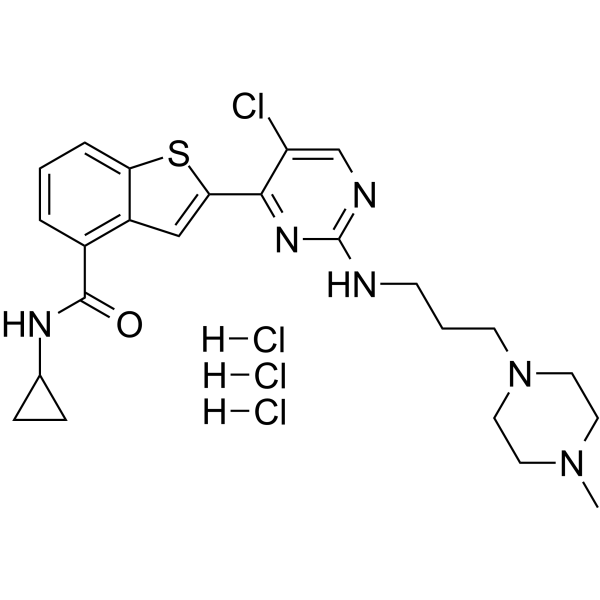
HY-B0788A
LY2409881 trihydrochlorideIKK2 Inhibitor
Publications Citing Use of MedChemExpress (MCE) PHA 408
More

Biological Activity
Description
IC50 & Target
|
IKK-2 |
Cellular Effect
|
Cell Line

|
Type | Value | Description | References |
|---|---|---|---|---|
| PBMC | IC50 |
39 nM
Compound: PHA-408
|
Inhibition of LPS-stimulated TNFalpha release in human PBMC.
Inhibition of LPS-stimulated TNFalpha release in human PBMC.
|
21236687 |
| HUVEC | IC50 |
2 μM
|
Prevention of senescence markers.
Prevention of senescence markers.
|
28045034 |
In Vitro
PHA-408 (2 μM; 6 days co-treatment with TNF-α) prevents TNF-α-induced premature senescence in HUVECs, as evidenced by reduced p16 and p21 expression, restored Ki-67 levels, and decreased senescence-associated secretory phenotype (SASP) markers including E-selectin, ICAM-1, IL-6, and IL-8[1].
PHA-408 (0-10000 nM) inhibits recombinant human IKK-2 homodimer and IKK-2/IKK-1 heterodimer with IC50 values of 10-40 nM, weakly suppresses IKK-1 (IC50 = 14 μM, > 350-fold selectivity), and displays no obvious activity against a panel of 30 tyrosine and serine/threonine kinases except PIM1, with a 15-fold selectivity over PIM1 relative to IKK-2[3].
PHA-408 (0.001-3 μM; 1 h preincubation; 20 min LPS stimulation) suppresses LPS-induced IKK-2 activity in immunoprecipitated IKK complexes from PBMCs and blocks LPS-triggered IκBα phosphorylation as well as p65 phosphorylation at Ser536 in PBMCs[3].
PHA-408 (0.001-3 μM; 1 h preincubation; 18 h LPS stimulation) inhibits LPS-induced TNF-α, IL-6 and IL-8 production in PBMCs and human whole blood in a concentration-dependent manner[3].
PHA-408 (0.001-3 μM; 1 h preincubation; 18 h IL-1β stimulation) inhibits IL-1β-induced IL-8, PGE2 production, and NF-κB-dependent SEAP reporter activity in RASFs without affecting cell viability[3].
PHA-408 (0.001-3 μM; 1 h preincubation; 45 min IL-1β stimulation) shows no effect on IL-1β-induced JNK and p38 MAPK pathways in RASFs[3].
PHA-408 (10 μM; 1 h preincubation; 20 min LPS stimulation) maintains inhibition of IKK-2 activity for up to 4 h following extensive washing of PBMCs[3].
PHA-408 (20 μM; 6 h) increases cytosolic IκB-α expression and reduces nuclear p65 expression in freshly isolated adult mdx costal diaphragm[4].
PHA-408 (20 μM; 52 h) reduces nuclear p65 immunofluorescence intensity in cultured mdx myotubes[4].
PHA-408 (1, 10 μM; 6 h) shows no significant effect on cytosolic IκB-α or nuclear p65 expression at lower concentrations in freshly isolated adult mdx costal diaphragm[4].
MedChemExpress (MCE) has not independently confirmed the accuracy of these methods. They are for reference only.
-
Cell Line:PBMCs
-
Concentration:0.001-3 μM
-
Incubation Time:1 h preincubation + 20 min LPS
-
Result:Inhibited IκBα and p65 (Ser536) phosphorylation.
-
Cell Line:RASFs
-
Concentration:10 μM
-
Incubation Time:1 h preincubation + IL-1β
-
Result:Showed no effect on JNK or p38 MAPK pathways.
-
Cell Line:Freshly isolated mdx costal diaphragm
-
Concentration:1, 10, 20 μM
-
Incubation Time:6 h
-
Result:Increased cytosolic IκB-α expression and reduces nuclear p65 expression.
-
Cell Line:Cultured mdx myotubes
-
Concentration:20 μM
-
Incubation Time:52 h
-
Result:Reduced nuclear p65 immunofluorescence intensity.
In Vivo
PHA-408 (0.5-50 mg/kg; p.o.; single dose) inhibits LPS-induced serum TNF-α production, with an EC50 of approximately 27-29 mg/kg and an IC50 of approximately 2-3.4 μM based on plasma concentration in male Lewis rats[3].
PHA-408 (10 mg/kg; p.o.; t.i.d. for 11 days) reduces paw swelling, suppresses IKK-2 activity in immunoprecipitates from paw tissues and blocks bone destruction in streptococcal cell wall (SCW)-induced chronic arthritis in female Lewis rats (125-140 g)[3].
PHA-408 (15-60 mg/kg/day; p.o.; t.i.d. for 14 days) exhibits good tolerability at efficacious doses with an ED90 of 30 mg/kg/day and a corresponding NOAEL of 30 mg/kg/day, induces mild and reversible adverse responses including transient body weight loss, neutrophilia, reduced liver enzyme levels and lymphoid depletion (45-60 mg/kg/day) in female Lewis rats (approximately 200 g)[3].
PHA-408 (50 mg/kg; p.o.; once daily for 30 days) in mdx mice (1 month old, male) slightly increases cytosolic IκB-α expression in costal diaphragm, but does not significantly reduce nuclear p65 expression[4].
PHA-408 (100 mg/kg; p.o.; single dose) in mdx mice shows no reduction in nuclear p65 expression at 5 h post-administration[4].
PHA-408 (0.8 mg/kg/day; i.p.; twice daily for 30 days) in mdx mice (1 month old, male) significantly reduces nuclear p65 expression by approximately 50% in costal diaphragm[4].
MedChemExpress (MCE) has not independently confirmed the accuracy of these methods. They are for reference only.
-
Animal Model:LPS/CS-induced acute lung inflammation in Male Sprague-Dawley rats(280 g)[2]
-
Dosage:15, 45 mg/kg
-
Administration:p.o.; once daily for 3 days
-
Result:Attenuated LPS-and cigarette smoke-triggered pulmonary inflammatory responses, including neutrophil influx and elevated CINC-1 levels in BAL fluid as well as increased pro-inflammatory cytokines (IL-6, TNF-α, IL-1β, GM-CSF).
-
Animal Model:LPS/CS-induced NF-κB activation in lung in Male Sprague-Dawley rats(280 g) [2]
-
Dosage:15, 45 mg/kg
-
Administration:p.o.; once daily for 3 days
-
Result:Reduced IκBα degradation, nuclear translocation of NF-κB p65, and NF-κB DNA binding activity in lung tissues at 1 h after exposure.
-
Animal Model:LPS/CS-induced acute lung inflammation in Male Sprague-Dawley rats(280 g)[2]
-
Dosage:15, 45 mg/kg
-
Administration:p.o.; once daily for 3 days
-
Result:Attenuated LPS- and cigarette smoke-triggered pulmonary inflammatory responses, including neutrophil influx and elevated CINC-1 levels in BAL fluid as well as increased pro-inflammatory cytokines (IL-6, TNF-α, IL-1β, GM-CSF).
-
Animal Model:LPS-induced serum TNF-α production in male Lewis rats[3]
-
Dosage:0.5-50 mg/kg
-
Administration:p.o.; single dose
-
Result:Inhibited LPS-induced serum TNF-α production with an EC50 of approximately 27-29 mg/kg and an IC50 of approximately 2-3.4 μM based on plasma concentration.
-
Animal Model:SCW-induced chronic arthritis in female Lewis rats (125-140 g)[3]
-
Dosage:10 mg/kg
-
Administration:p.o.; t.i.d. for 11 days
-
Result:Reduced paw swelling.
Suppressed IKK-2 activity in immunoprecipitates from paw tissues and blocks bone destruction.
-
Animal Model:Safety study in female Lewis rats (approximately 200 g)[3]
-
Dosage:15, 30, 45, 60 mg/kg/day
-
Administration:p.o.; t.i.d. for 14 days
-
Result:Exhibited good tolerability at efficacious doses with an ED90 of 30 mg/kg/day and a corresponding NOAEL of 30 mg/kg/day.
Induced mild and reversible adverse responses including transient body weight loss, neutrophilia, reduced liver enzyme levels and lymphoid depletion (45-60 mg/kg/day).
-
Animal Model:mdx muscular dystrophy model in mdx mice[4]
-
Dosage:100 mg/kg
-
Administration:p.o.; single dose
-
Result:Showed no reduction in nuclear p65 expression at 5 h post-administration.
-
Animal Model:mdx muscular dystrophy model in mdx mice (1 month old, male) [4]
-
Dosage:0.8 mg/kg/day
-
Administration:i.p.; twice daily for 30 days
-
Result:Reduced nuclear p65 expression by approximately 50%.


Chemical Information
-
CAS No. 503555-55-3
-
Appearance Solid
-
Molecular Weight 560.02
-
Formula C29H27ClFN7O2
-
Color Off-white to light yellow
-
SMILES
O=C(C1=NN(C2=CC=C(F)C=C2)C3=C1CCC4=CC=C(NC(C5=C(Cl)C=NC(N6CCN(C)CC6)=C5)=O)C=C43)N
-
Shipping
Room temperature in continental US; may vary elsewhere.
-
Storage
Powder -20°C 3 years 4°C 2 years In solvent -80°C 6 months -20°C 1 month


Publications (1)
-
Journal Impact Factor
-
Most Recent
-
Sci Transl Med
PP2A inhibition is a druggable MEK inhibitor resistance mechanism in KRAS-mutant lung cancer cells. [Abstract]2018 Jul 18;10(450):eaaq1093. PMID: 30021885


Solvent & Solubility
In Vitro:
DMSO : 50 mg/mL (89.28 mM; Need ultrasonic; Hygroscopic DMSO has a significant impact on the solubility of product, please use newly opened DMSO)
Please refer to the solubility information to select the appropriate solvent. Once prepared, please aliquot and store the solution to prevent product inactivation from repeated freeze-thaw cycles.
Storage method and period of stock solution: -80°C, 6 months; -20°C, 1 month. When stored at -80°C, please use it within 6 months. When stored at -20°C, please use it within 1 month.
Please refer to the solubility information to select the appropriate solvent. Once prepared, please aliquot and store the solution to prevent product inactivation from repeated freeze-thaw cycles.
Storage method and period of stock solution: -80°C, 6 months; -20°C, 1 month. When stored at -80°C, please use it within 6 months. When stored at -20°C, please use it within 1 month.
Concentration (start) × Volume (start) = Concentration (final) × Volume (final)


Purity & Documentation
-
Data Sheet (291 KB)
-
SDS (394 KB)
- English - EN (394 KB)
- Français - FR (394 KB)
- Deutsch - DE (394 KB)
- Norwegian - NO (394 KB)
- Español - ES (394 KB)
- Swedish - SV (394 KB)
- Italian - IT (394 KB)
- Korean - KR (394 KB)
- Portuguese - PT (394 KB)
-
Handling Instructions (2659 KB)
References
[1]. Khan SY, et al. Premature senescence of endothelial cells upon chronic exposure to TNFα can be prevented by N-acetyl cysteine and plumericin. Sci Rep. 2017 Jan 3;7:39501. [Content Brief]
[2]. Rajendrasozhan S, et al. Anti-inflammatory effect of a selective IkappaB kinase-beta inhibitor in rat lung in response to LPS and cigarette smoke. Pulm Pharmacol Ther. 2010 Jun;23(3):172-81. [Content Brief]
[3]. Mbalaviele G, et al. A novel, highly selective, tight binding IkappaB kinase-2 (IKK-2) inhibitor: a tool to correlate IKK-2 activity to the fate and functions of the components of the nuclear factor-kappaB pathway in arthritis-relevant cells and animal models. J Pharmacol Exp Ther. 2009 Apr;329(1):14-25. [Content Brief]


Complete Stock Solution Preparation Table
Please refer to the solubility information to select the appropriate solvent. Once prepared, please aliquot and store the solution to prevent product inactivation from repeated freeze-thaw cycles.
Storage method and period of stock solution: -80°C, 6 months; -20°C, 1 month. When stored at -80°C, please use it within 6 months. When stored at -20°C, please use it within 1 month.
| Optional Solvent | Concentration Solvent Mass | 1 mg | 5 mg | 10 mg | 25 mg |
|---|---|---|---|---|---|
| DMSO | 1 mM | 1.7857 mL | 8.9283 mL | 17.8565 mL | 44.6413 mL |
| 5 mM | 0.3571 mL | 1.7857 mL | 3.5713 mL | 8.9283 mL | |
| 10 mM | 0.1786 mL | 0.8928 mL | 1.7857 mL | 4.4641 mL | |
| 15 mM | 0.1190 mL | 0.5952 mL | 1.1904 mL | 2.9761 mL | |
| 20 mM | 0.0893 mL | 0.4464 mL | 0.8928 mL | 2.2321 mL | |
| 25 mM | 0.0714 mL | 0.3571 mL | 0.7143 mL | 1.7857 mL | |
| 30 mM | 0.0595 mL | 0.2976 mL | 0.5952 mL | 1.4880 mL | |
| 40 mM | 0.0446 mL | 0.2232 mL | 0.4464 mL | 1.1160 mL | |
| 50 mM | 0.0357 mL | 0.1786 mL | 0.3571 mL | 0.8928 mL | |
| 60 mM | 0.0298 mL | 0.1488 mL | 0.2976 mL | 0.7440 mL | |
| 80 mM | 0.0223 mL | 0.1116 mL | 0.2232 mL | 0.5580 mL |


PHA 408 Related Classifications
HY-14180 Related Classifications
 Powered by Bioz