1. Search Result
Search Result
Results for "

contact hypersensitivity

" in MedChemExpress (MCE) Product Catalog:

15

Inhibitors & Agonists

3

Fluorescent Dye

1

Peptides

1

Natural
Products

Cat. No. Product Name Target Research Areas Chemical Structure
  • HY-66019
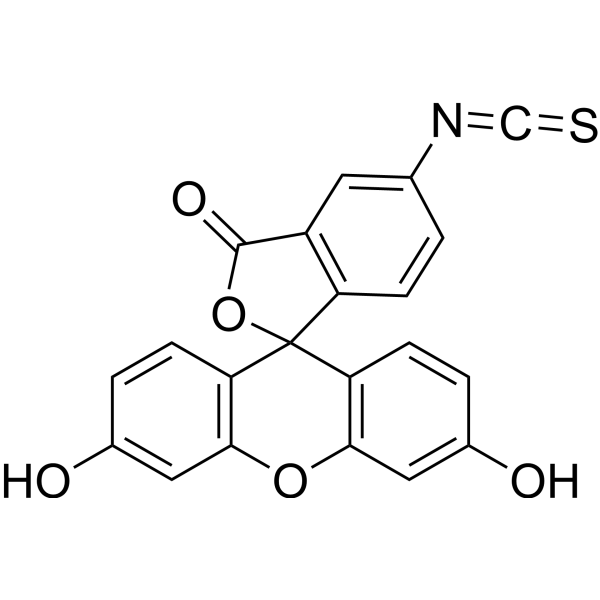
    FITC
    90+ Cited Publications

    Fluorescein 5-isothiocyanate

    Fluorescent Dye Inflammation/Immunology
    FITC (Fluorescein Isothiocyanate), is one of the green fluorescein derivatives widely used in biology. FITC has the characteristics of high absorptivity and excellent fluorescence quantum yield. The isothiocyanate group of FITC can be combined with amino, sulfhydryl, imidazole, tyrosyl, carbonyl and other groups on the protein, so as to achieve protein labeling including antibodies and lectins. In addition to its use as a protein marker, FITC can also be used as a fluorescent protein tracer to rapidly identify pathogens by labeling antibodies, or for microsequencing of proteins and peptides (HPLC). The maximum excitation wavelength of FITC is 494 nm. Once excited, it fluoresces yellow-green at a maximum emission wavelength of 520 nm. In addition, FITC is also a hapten that can induce contact hypersensitivity (CHS) and induce an atopic dermatitis model .
    FITC
  • HY-114348

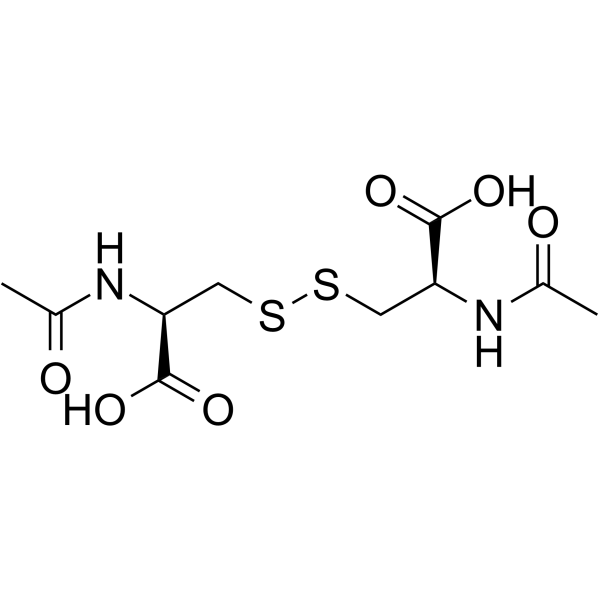
    DiNAC; (Ac-Cys-OH)2

    Amino Acid Derivatives Cardiovascular Disease
    N,N'-diacetyl-L-cystine (DiNAC) is the disulphide dimer of N-acetylcysteine with immunomodulating properties. N,N'-diacetyl-L-cystine is a potent, orally active modulator of contact sensitivity/delayed type hypersensitivity reactions in rodents. N,N'-diacetyl-L-cystine also has antiatherosclerotic effects in Watanabe-heritable hyperlipidemic rabbit (WHHL) rabbits .
    N,N'-Diacetyl-L-cystine
  • HY-116835
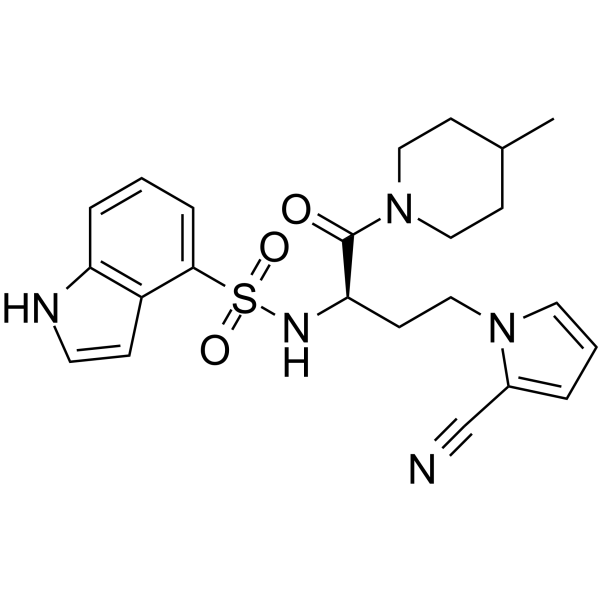
    BI-6901
    1 Publications Verification

    CCR Inflammation/Immunology
    BI 6901 is a potent, selective CCR10 antagonist (pIC50=9.0). BI 6901 shows high selectivity over other GPCRs, including a number of other chemokine receptors. BI 6901 is efficacious in the murine DNFB model of contact hypersensitivity and can be used for inflammation research .
    BI-6901
  • HY-DY1007

    Fluorescent Dye Inflammation/Immunology
    FITC (Fluorescein Isothiocyanate) (solution) , is one of the green fluorescein derivatives widely used in biology. FITC has the characteristics of high absorptivity and excellent fluorescence quantum yield. The isothiocyanate group of FITC can be combined with amino, sulfhydryl, imidazole, tyrosyl, carbonyl and other groups on the protein, so as to achieve protein labeling including antibodies and lectins. In addition to its use as a protein marker, FITC can also be used as a fluorescent protein tracer to rapidly identify pathogens by labeling antibodies, or for microsequencing of proteins and peptides (HPLC). The maximum excitation wavelength of FITC is 494 nm. Once excited, it fluoresces yellow-green at a maximum emission wavelength of 520 nm. In addition, FITC is also a hapten that can induce contact hypersensitivity (CHS) and induce an atopic dermatitis model .
    Solvent and concentration: DMSO: 20 mM
    The 1 mL volume is defined as the base specification. All larger sizes correspond to incremental volumes of this base.
    FITC (solution)
  • HY-164894

    Antibody-Drug Conjugates (ADCs) TNF Receptor Glucocorticoid Receptor Inflammation/Immunology
    ABBV-3373 is an anti-TNF antibody-drug conjugate (ADC). ABBV-3373 consists of a humanized TNF antibody Adalimumab (HY-P9908) conjugated to a glucocorticoid receptor agonist (HY-148436). ABBV-3373 can be used for the research of rheumatoid arthritis .
    ABBV-3373
  • HY-13706A

    TM30089

    Prostaglandin Receptor Inflammation/Immunology
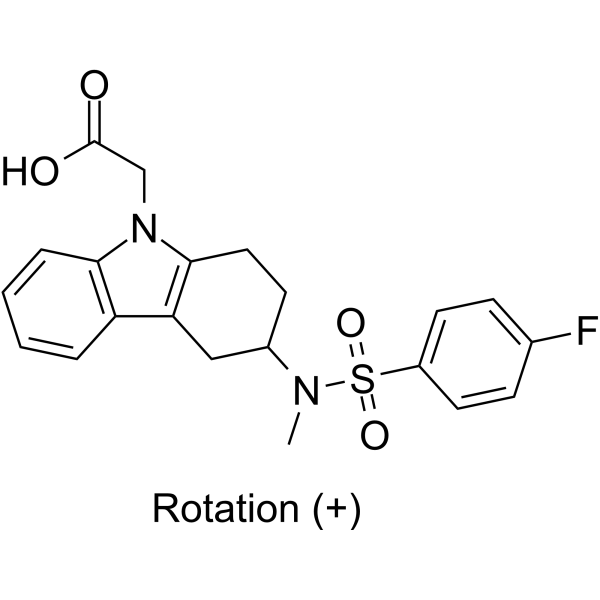
    CAY10471 (TM30089) is a potent, selective, and orally active prostaglandin D2 receptor CRTH2 antagonist. CAY10471 attenuates the progression of tubulointerstitial fibrosis and chronic contact hypersensitivity (CHS) in animal model .
    CAY10471
  • HY-134098

    Adipic acid diisopropyl ester

    Environmental Pollutants TRP Channel Others
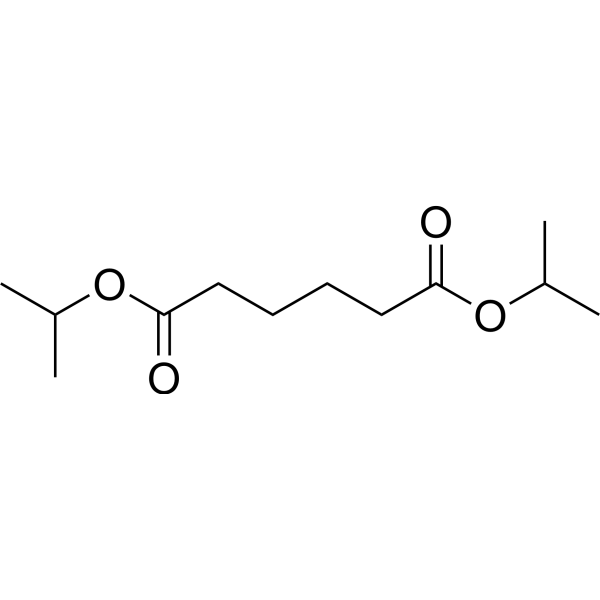
    Diisopropyl adipate is an alternative plasticizer and a TRPA1 activator. Diisopropyl adipate activates TRPA1 and enhances FITC-induced contact hypersensitivity (CHS).Diisopropyl adipate also serves as an ingredient in cosmetics and drug formulations topically applied to the skin. Diisopropyl adipate can be used as an excipient, such as emollients, plasticizers. Pharmaceutical excipients, or pharmaceutical auxiliaries, refer to other chemical substances used in the pharmaceutical process other than pharmaceutical ingredients. Pharmaceutical excipients generally refer to inactive ingredients in pharmaceutical preparations, which can improve the stability, solubility and processability of pharmaceutical preparations. Pharmaceutical excipients also affect the absorption, distribution, metabolism, and elimination (ADME) processes of co-administered drugs .
    Diisopropyl adipate
  • HY-17484
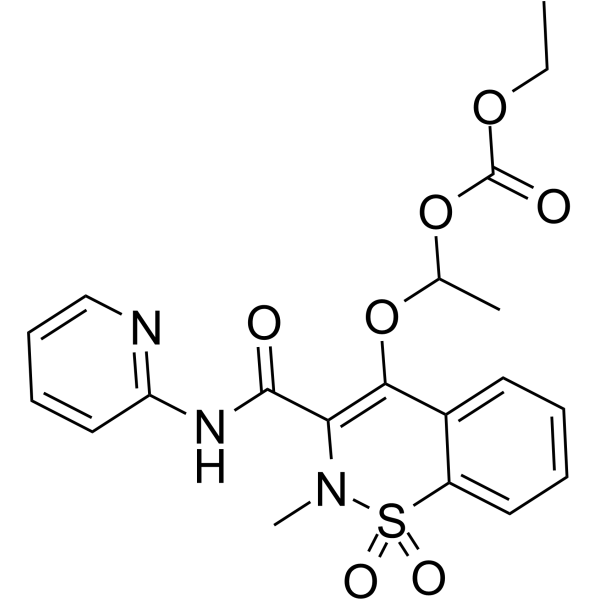
    Ampiroxicam
    2 Publications Verification

    CP 65703

    Drug Derivative Inflammation/Immunology
    Ampiroxicam is an orally active prodrug of non-steroidal anti-inflammatory drug (NSAID). Ampiroxicam inhibits paw swelling in adjuvant-induced arthritis and acute inflammation models, and suppresses phenylbenzoquinone-induced stretching responses in mice. Ampiroxicam is rapidly and completely converted to Piroxicam (HY-B0253) via non-specific esterases and first-pass metabolism. Ampiroxicam induces contact hypersensitivity and photosensitivity reactions through photoproducts generated by UVA. Ampiroxicam can be used in research related to photosensitivity, adjuvant-induced arthritis, rheumatism, osteoarthritis and other inflammatory diseases .
    Ampiroxicam
  • HY-P5352

    CD44 Inflammation/Immunology Cancer
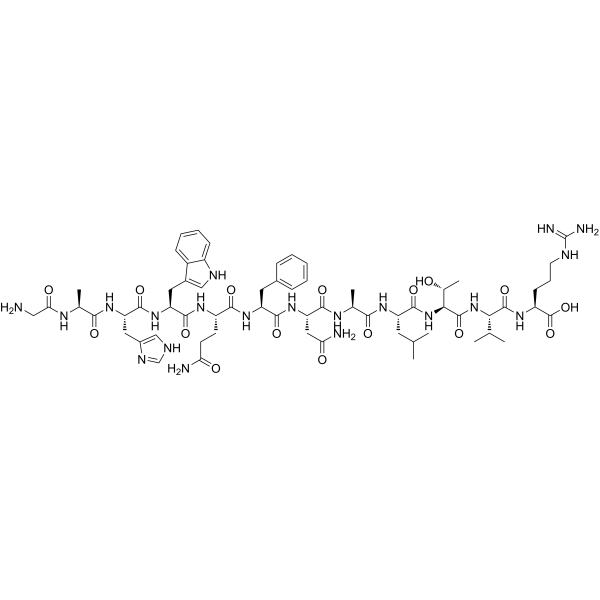
    Hyaluronan-IN-1 (Pep-1) is a Hyaluronan inhibitor with a Kd value of 1.65 μM. Hyaluronan-IN-1 blocks CD44-dependent cell adhesion. Hyaluronan-IN-1 inhibits cell adhesion to hyaluronan substrates. Hyaluronan-IN-1 suppresses the development of contact hypersensitivity in mice by blocking the homing process of inflammatory cells to the skin. Hyaluronan-IN-1 also inhibits responses during the sensitization phase. Hyaluronan-IN-1 reduces lung metastasis of melanoma and prolongs the survival of mice. Hyaluronan-IN-1 can be used in research related to contact hypersensitivity, chronic skin inflammation, and melanoma .
    Hyaluronan-IN-1
  • HY-163673

    Glucocorticoid Receptor Drug-Linker Conjugates for ADC Inflammation/Immunology
    Glucocorticoid receptor modulator 4 (Compound DL5) is a conjugate of a linker and a glucocorticoid receptor modulator. Glucocorticoid receptor modulator 4 exhibits GRE Reporter activity in mTNF expressing K562 cell with an EC50 of 40 μM. Glucocorticoid receptor modulator 4 binds with an anti-tumor necrosis factor (TNF) antibody, and exhibits anti-inflammtory activity against arthritis in mouse models .
    Glucocorticoid receptor modulator 4
  • HY-114348R

    DiNAC (Standard); (Ac-Cys-OH)2 (Standard)

    Amino Acid Derivatives Reference Standards Cardiovascular Disease
    N,N'-Diacetyl-L-cystine (Standard) is the analytical standard of N,N'-Diacetyl-L-cystine. This product is intended for research and analytical applications. N,N'-diacetyl-L-cystine (DiNAC) is the disulphide dimer of N-acetylcysteine with immunomodulating properties. N,N'-diacetyl-L-cystine is a potent, orally active modulator of contact sensitivity/delayed type hypersensitivity reactions in rodents. N,N'-diacetyl-L-cystine also has antiatherosclerotic effects in Watanabe-heritable hyperlipidemic rabbit (WHHL) rabbits .
    N,N'-Diacetyl-L-cystine (Standard)
  • HY-17484R

    CP 65703 (Standard)

    Reference Standards Inflammation/Immunology
    Ampiroxicam (Standard) is the analytical standard of Ampiroxicam. This product is intended for research and analytical applications. Ampiroxicam is an orally active prodrug of non-steroidal anti-inflammatory drug (NSAID). Ampiroxicam inhibits paw swelling in adjuvant-induced arthritis and acute inflammation models, and suppresses phenylbenzoquinone-induced stretching responses in mice. Ampiroxicam is rapidly and completely converted to Piroxicam (HY-B0253) via non-specific esterases and first-pass metabolism. Ampiroxicam induces contact hypersensitivity and photosensitivity reactions through photoproducts generated by UVA. Ampiroxicam can be used in research related to photosensitivity, adjuvant-induced arthritis, rheumatism, osteoarthritis and other inflammatory diseases.
    Ampiroxicam (Standard)
  • HY-W040536

    Dimethyloldimethyl hydantoin

    Environmental Pollutants Bacterial Fungal Infection
    DMDM hydantoin (Glydant) is an allergen and formaldehyde-releasing preservative. DMDM hydantoin releases formaldehyde under regulation by multiple factors and with enhanced release in alkaline environments. DMDM hydantoin induces allergic contact dermatitis via type-IV delayed hypersensitivity, either directly or through released formaldehyde. DMDM hydantoin is a broad-spectrum preservative that is effective against fungi, yeast, and gram-positive and gram-negative bacteria. DMDM hydantoin can be used in cosmetics industry production research (e.g., shampoos, hairsprays, and skincare products) and can be used for research on allergic contact dermatitis .
    DMDM hydantoin
  • HY-119167

    F 1686

    COX Inflammation/Immunology
    Lotifazole (F 1686) is a non-steroidal anti-inflammatory agent. Lotifazole exhibits specific inhibition of delayed-type hypersensitivity and does not rely on the prostaglandin synthesis inhibition pathway at low doses. Lotifazole shows significant efficacy in treating paw edema induced by carrageenan in rats, erythema induced by ultraviolet radiation in guinea pigs, and pleurisy at high doses. Lotifazole can be used for the study of T-cell-mediated diseases .
    Lotifazole
  • HY-N19844

    Others Cardiovascular Disease
    3-Heptadecylcatechol is an urushiphenol compound found in Toxicodendron vernicifluum resin and poison oak urushiol. 3-Heptadecylcatechol exhibits anti-platelet aggregation and immune regulation activity. 3-Heptadecylcatechol can be used for the research of thrombotic disorders .
    3-Heptadecylcatechol

Inquiry Online

Your information is safe with us. * Required Fields.

Salutation


Country or Region *

Applicant Name *


Organization Name *

Department *


Email Address *


Product Name *

Cat. No.


Requested quantity *

Phone Number *


Remarks

Inquiry Online

Inquiry Information

Product Name:
Cat. No.:
Quantity:
MCE Japan Authorized Agent:

