

1. Search Result
Search Result
Results for "

cosmetic

" in MedChemExpress (MCE) Product Catalog:

509

Inhibitors & Agonists

4

Screening Libraries

56

Fluorescent Dyes

134

Biochemical Assay Reagents

107

Peptides

123

Natural
Products

42

Isotope-Labeled Compounds

18

Oligonucleotides

Cat. No. Product Name
  • HY-L221
    622 compounds

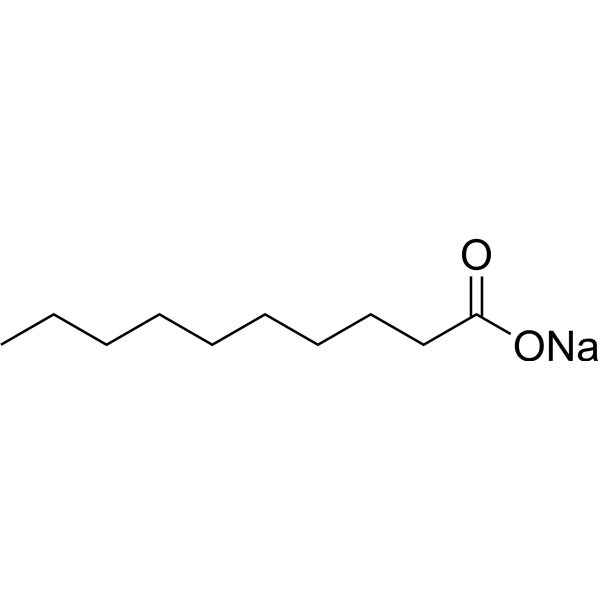
    Cosmetics are complex mixtures formulated through the rational blending and processing of various natural, synthetic, or extracted raw materials. The ingredients used in cosmetics are diverse in type and functionality. Based on their properties and applications, cosmetic ingredients can generally be classified into two main categories: base materials and auxiliary ingredients. The former constitutes the primary component of cosmetics, accounting for a significant proportion in formulations and serving as the key functional substances. Auxiliary ingredients, on the other hand, play roles in shaping the product, ensuring stability, or imparting color, fragrance, and other specific characteristics.Establishing a systematic ingredient database is of great significance for cosmetic research and development. By analyzing the physicochemical properties (such as oil-water partition coefficients and molecular weight distribution), biological activity mechanisms (such as antioxidant pathways and cellular signaling regulation), and compatibility of ingredients, the database can provide precise guidance for formulation design. This approach helps shorten the development cycle of cosmetic/skincare products and reduces trial-and-error costs.

    MCE offers 622 types of cosmetic ingredient compounds, including antioxidants, humectants, emulsifiers, film-forming agents, and more.

  • HY-L242
    500 compounds

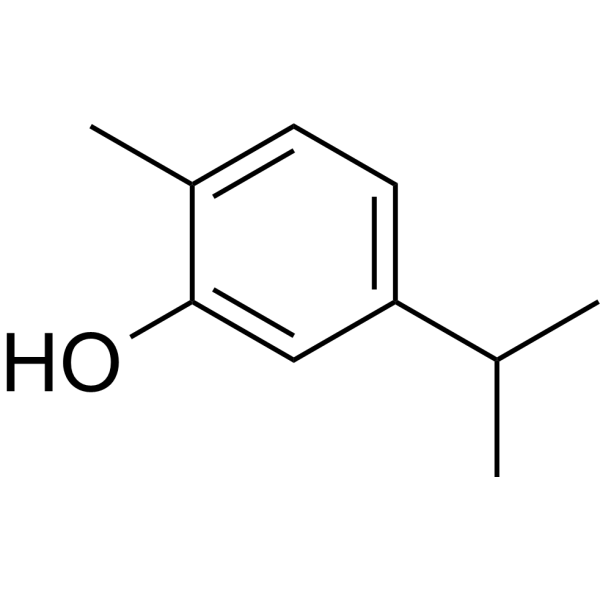
    Flavors and fragrances serve as indispensable enhancing elements in modern industries, playing multidimensional roles in the fields of food, cosmetics, and pharmaceutical development. In the food industry, flavors and fragrances are not only used to compensate for flavor loss during processing but also to create novel sensory experiences and enhance product appeal. Natural flavors such as vanilla and citrus oils impart rich, layered aromas to foods, while synthetic flavors can precisely replicate specific tastes, meeting the demands of standardized production and extending the flavor stability of food products. In the cosmetics sector, flavors and fragrances are key to emotional design. They enhance product recognition and elevate the pleasure of use through pleasant scents. In pharmaceutical development, the application of flavors and fragrances focuses on improving compliance. Especially in formulations such as oral liquids and chewable tablets, the addition of mint, fruit, and other flavoring components effectively masks the bitter or irritating taste of medications, increasing patient acceptance. Additionally, some natural flavors may themselves possess auxiliary therapeutic benefits.

    MCE contains 500 kinds of flavors and fragrances, which can be used in fields such as food, cosmetics and drug development.

  • HY-L235
    20 compounds

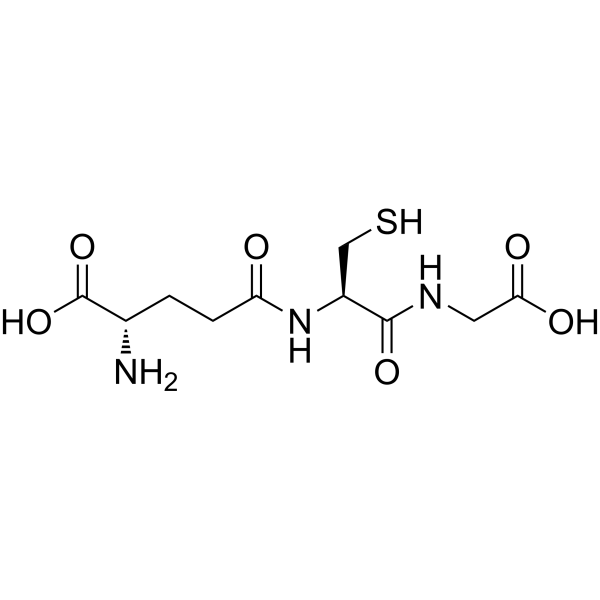
    Amino acids are indispensable building blocks for life activities and are widely involved in key biological processes such as cell signal transduction, energy metabolism, gene expression regulation, and neurotransmitter synthesis. As components of proteins, 20 kinds of amino acids make up over one million kinds of proteins in the human body. These amino acids can be classified into nine types of "essential amino acids" that the human body cannot synthesize on its own and must obtain from food, as well as eleven types of "non-essential amino acids" that the human body can synthesize on its own.

    MCE offers 20 kinds of amino acids provided which can be applied in research fields such as the study of amino acid metabolic processes, metabolite identification, food/cosmetic ingredient research, and the development of nutritional supplements.

  • HY-L068
    576 compounds

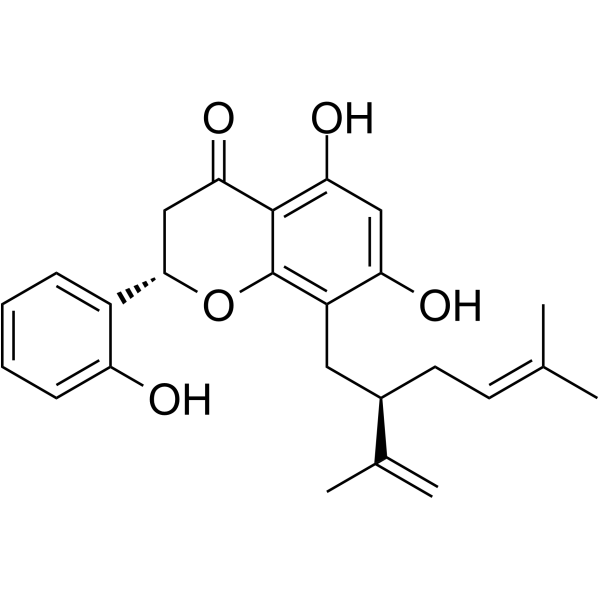
    Flavonoids are an important class of natural products; particularly, they belong to a class of plant secondary metabolites having a polyphenolic structure, widely found in fruits, vegetables and certain beverages. Flavonoids can be subdivided into different subgroups depending on the carbon of the C ring on which the B ring is attached and the degree of unsaturation and oxidation of the C ring. These subgroups are: flavones, flavonols, flavanones, flavanonols, flavanols or catechins, anthocyanins and chalcones. Flavonoids are now considered as an indispensable component in a variety of nutraceutical, pharmaceutical, medicinal and cosmetic applications. This is attributed to their anti-oxidative, anti-inflammatory, anti-mutagenic and anti-carcinogenic properties coupled with their capacity to modulate key cellular enzyme function. Naturally occurring flavonoids are known to have biological activities for use as drugs, for example, in diseases like cancer, Alzheimer’s disease (AD), atherosclerosis, etc.

    MCE offers a unique collection of 576 natural flavonoid compounds which is a useful tool for drug discovery as an important source of lead compounds.

Inquiry Online

Your information is safe with us. * Required Fields.

Salutation


Country or Region *

Applicant Name *


Organization Name *

Department *


Email Address *


Product Name *

Cat. No.


Requested quantity *

Phone Number *


Remarks

Inquiry Online

Inquiry Information

Product Name:
Cat. No.:
Quantity:
MCE Japan Authorized Agent:

