1. Search Result
Search Result
Results for "

degree of polymerization

" in MedChemExpress (MCE) Product Catalog:

21

Inhibitors & Agonists

10

Biochemical Assay Reagents

8

Natural
Products

4

Oligonucleotides

Cat. No. Product Name Target Research Areas Chemical Structure
  • HY-Y0850E

    PVA (Mw 30000-70000, 87-90% hydrolyzed); Poly(Ethenol) (Mw 30000-70000, 87-90% hydrolyzed)

    Environmental Pollutants Biochemical Assay Reagents Cardiovascular Disease Cancer
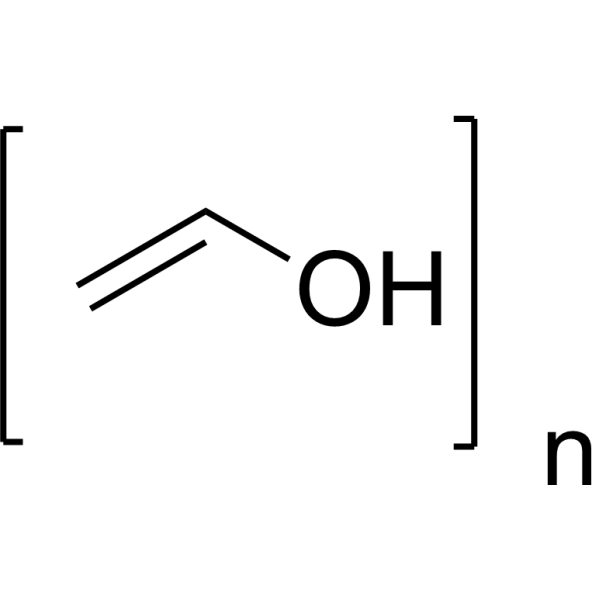
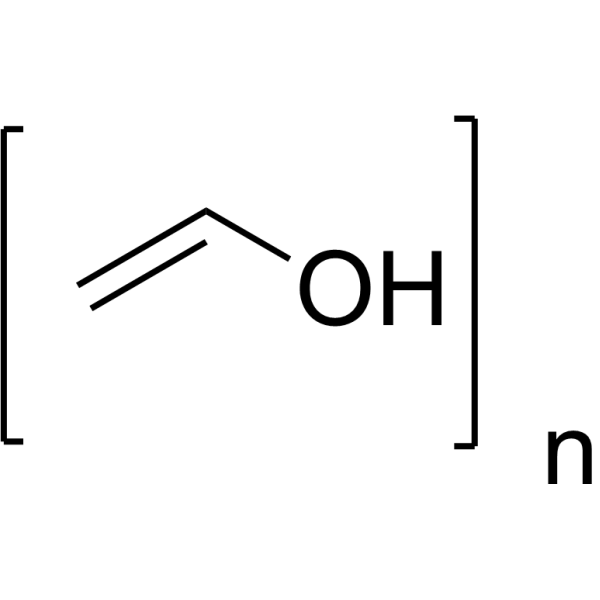
    Polyvinyl alcohol (Mw 30000-70000, 87-90% hydrolyzed) is a polyvinyl alcohol with a molecular weight of 30000-70000 and hydrolytic properties. The degree of hydrolysis refers to the degree to which the acetate groups in the original polyvinyl acetate are converted into hydroxyl groups during the hydrolysis process. Polyvinyl alcohol (Mw 30000-70000, 87-90% hydrolyzed) is the hydrolysis and removal of acetate groups after the polymerization of ethylene acetate. And polyvinyl alcohol is obtained. A degree of hydrolysis of 87-90% indicates that a large part of the acetate groups have been removed, resulting in a large number of hydroxyl groups in the PVA structure. Polyvinyl alcohol with different degrees of hydrolysis can be used to self-crosslink to form cryogel, which can be used as biological excipients .
    Polyvinyl alcohol (Mw 30000-70000, 87-90% hydrolyzed)
  • HY-Y0850J

    PVA (Mw 13000-23000, 87-89% hydrolyzed); Poly(Ethenol) (Mw 13000-23000, 87-89% hydrolyzed)

    Environmental Pollutants Biochemical Assay Reagents Cancer
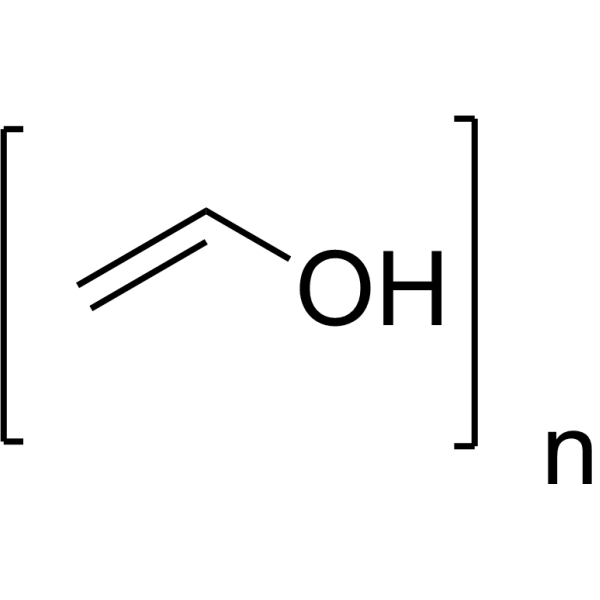
    Polyvinyl alcohol (Mw 13000-23000, 87-89% hydrolyzed) is a polyvinyl alcohol with a molecular weight of 130000-23000 and hydrolytic properties. Polyvinyl alcohol (Mw 13000-23000, 87-89% hydrolyzed) is the hydrolysis and removal of acetate groups after the polymerization of ethylene acetate and polyvinyl alcohol is obtained. A degree of hydrolysis of 87-89% indicates that a large part of the acetate groups have been removed, resulting in a large number of hydroxyl groups in the PVA structure. Polyvinyl alcohol with different degrees of hydrolysis can be used to self-crosslink to form cryogel, which can be used as biological excipient. Polyvinyl alcohol can be used in tissue engineering by electrospinning. Polyvinyl alcohol can achieve high cellular density, infiltration, and uniform distribution, facilitating functional connections between cells. Polyvinyl alcohol can improve cell vitality through in vitro cultivation. Polyvinyl alcohol demonstrates promising inhibition of ostersarcoma cancer cells with Doxorubicin (HY-15142A) .
    Polyvinyl alcohol (Mw 13000-23000, 87-89% hydrolyzed)
  • HY-Y0850M

    PVA (Mw 85000-124000, 87-89% hydrolyzed); Poly(Ethenol) (Mw 85000-124000, 87-89% hydrolyzed)

    Environmental Pollutants Biochemical Assay Reagents Others
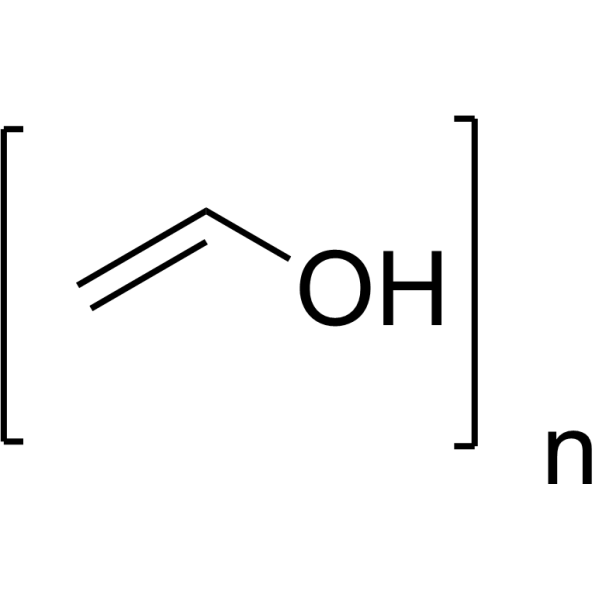
    Polyvinyl alcohol (Mw 85000-124000, 87-89% hydrolyzed) is a polyvinyl alcohol with a molecular weight of 85000-124000 and hydrolytic properties. The degree of hydrolysis refers to the degree to which the acetate groups in the original polyvinyl acetate are converted into hydroxyl groups during the hydrolysis process. Polyvinyl alcohol (Mw 85000-124000, 87-89% hydrolyzed) is the hydrolysis and removal of acetate groups after the polymerization of ethylene acetate. And polyvinyl alcohol is obtained. A degree of hydrolysis of 87-89% indicates that a large part of the acetate groups have been removed, resulting in a large number of hydroxyl groups in the PVA structure. Polyvinyl alcohol with different degrees of hydrolysis can be used to self-crosslink to form cryogel, which can be used as biological excipient .
    Polyvinyl alcohol (Mw 85000-124000, 87-89% hydrolyzed)
  • HY-Y0850P

    PVA (Mw 146000-186000, 87-89% hydrolyzed); Poly(Ethenol) (Mw 146000-186000, 87-89% hydrolyzed)

    Environmental Pollutants Biochemical Assay Reagents Cancer
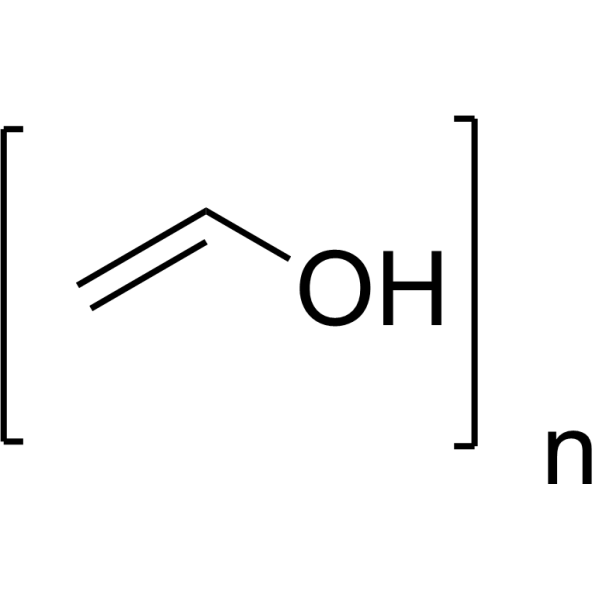
    Polyvinyl alcohol (Mw 146000-186000, 87-89% hydrolyzed) is a polyvinyl alcohol with a molecular weight of 146000-186000 and hydrolytic properties. Polyvinyl alcohol (Mw 146000-186000, 87-89% hydrolyzed) is the hydrolysis and removal of acetate groups after the polymerization of ethylene acetate. And polyvinyl alcohol is obtained. Polyvinyl alcohol with different degrees of hydrolysis can be used to self-crosslink to form cryogel, which can be used as biological excipient. Polyvinyl alcohol can be used in tissue engineering by electrospinning. Polyvinyl alcohol can achieve high cellular density, infiltration, and uniform distribution, facilitating functional connections between cells. Polyvinyl alcohol can improve cell vitality through in vitro cultivation. Polyvinyl alcohol demonstrates promising inhibition of ostersarcoma cancer cells with Doxorubicin (HY-15142A) .
    Polyvinyl alcohol (Mw 146000-186000, 87-89% hydrolyzed)
  • HY-W440548

    Ethylene diacrylate

    Biochemical Assay Reagents Others
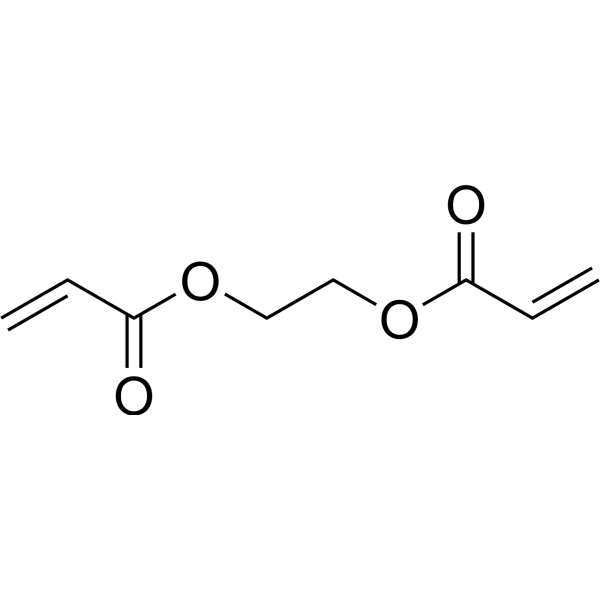
    Ethylene glycol diacrylate (Ethylene diacrylate) is a polymer precursor used to form covalently crosslinked hydrogels with a degree of polymerization of 13 .
    Ethylene glycol diacrylate
  • HY-Y0850U9

    Polyvinyl alcohol (Mw 67000, 87-89% hydrolyzed, ~1400 polymerization); Poly(Ethenol) (Mw 67000, 87-89% hydrolyzed, ~1400 polymerization)

    Biochemical Assay Reagents Others
    PVA (Mw 67000, 87-89% hydrolyzed, ~1400 polymerization) is a polyvinyl alcohol with a molecular weight of 67000 and hydrolytic properties. Degree of hydrolysis refers to the conversion rate of acetate groups in the original polyvinyl acetate to hydroxyl groups; PVA (Mw 67000, 87-89% hydrolyzed, ~1400 polymerization) is obtained by hydrolyzing and removing acetate groups after the polymerization of vinyl acetate. Polyvinyl alcohol with different degrees of hydrolysis can be used to form self-crosslinked cryogels and is applied as a biological adjuvant .
    PVA (Mw 67000, 87-89% hydrolyzed, ~1400 polymerization)
  • HY-Y0850O

    PVA (Mw 31000-50000, 87-89% hydrolyzed); Poly(Ethenol) (Mw 31000-50000, 87-89% hydrolyzed)

    Environmental Pollutants Biochemical Assay Reagents Cancer
    Polyvinyl alcohol (PVA; Poly (Ethenol)) (Mw 31000-50000, 87-89% hydrolyzed) is a polymer with emulsifying and stabilizing properties, with a degree of hydrolysis of 87-89%. Polyvinyl alcohol (Mw 31000-50000, 87-89% hydrolyzed) mainly acts as a stabilizer in the preparation of nanomedicines; it not only maintains the structural integrity of PEGylated PLGA nanoparticles during double emulsion synthesis, but also facilitates the preparation of chitosan/matrine-PLGA nanoparticle aqueous solutions and lipid-polymer nanoparticles. Polyvinyl alcohol (Mw 31000-50000, 87-89% hydrolyzed) can be widely used in research related to fields such as breast cancer .
    Polyvinyl alcohol (Mw 31000-50000, 87-89% hydrolyzed)
  • HY-109536B

    Biochemical Assay Reagents Others
    Ammonium polyphosphate, n<20, water solubility>90 g/100 mL, a low-polymerization-degree ammonium polyphosphate (APP), is an important raw material in chelated, and controlled-release fertilizers .
    Ammonium polyphosphate, n<20, water solubility>90 g/100 mL
  • HY-N7697B

    Others Others
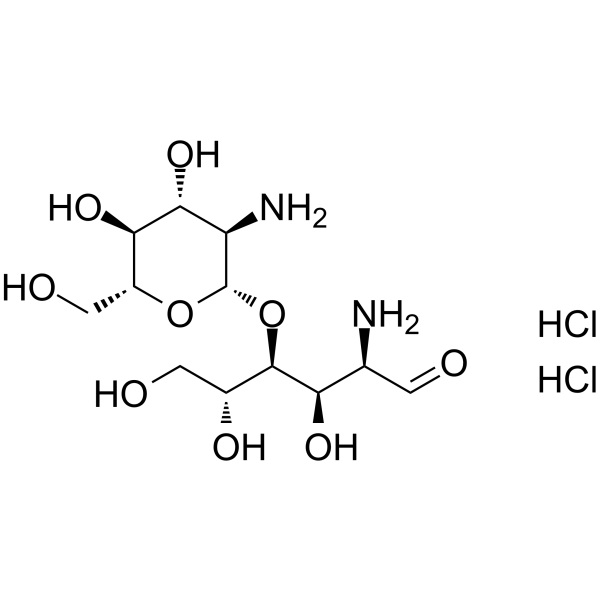
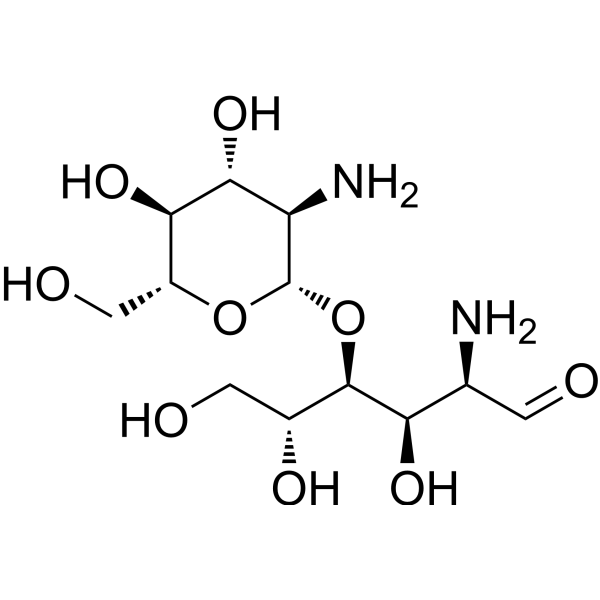
    Chitobiose dihydrochloride is an orally active chitosan oligosaccharide (degree of polymerization 2). Chitobiose dihydrochloride shows hepatoprotective activity and counteracts CCl4-induced elevation of plasma aspartate transaminase and alanine transaminase activities in rats. Chitobiose dihydrochloride can be used for the research of carbon tetrachloride-induced acute hepatotoxicity .
    Chitobiose dihydrochloride
  • HY-N6836

    Others Others
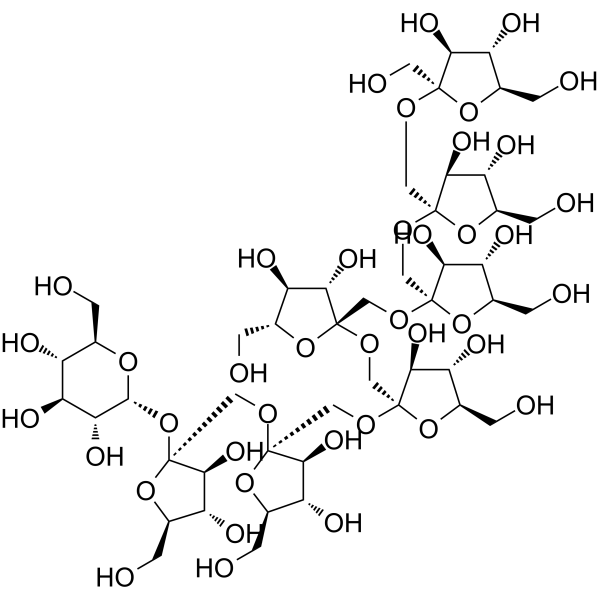
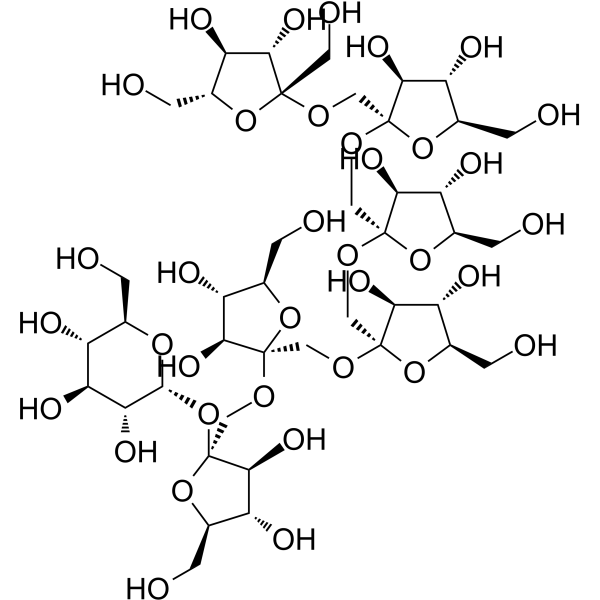
    Fructo-oligosaccharide DP8/GF7 belongs to fructooligosaccharides (FOS) with degree of polymerization (DP=8). Fructo-oligosaccharides (FOS) are composed of 7 fructose units linked by (2→1)-β-glycosidic bonds and having a single D-glucosyl unit at the non-reducing end .
    Fructo-oligosaccharide DP8/GF7
  • HY-W111692

    Biochemical Assay Reagents Others
    Sodium polyphosphate, crystal,+200 mesh, 96% is an inorganic polyphosphate that also serves as a stabilizer, dispersant, chelating agent, and coacervate-forming agent. Sodium polyphosphate provides electrostatic stabilization for mineral and material suspensions, but its dispersing efficacy decreases under acidic pH, high temperature, high calcium concentration, or a combination of these conditions. Sodium polyphosphate can chelate alkaline earth metals, reduce solution pH, and alter the rate of pH decline at a divalent cation/phosphorus molar ratio of 0.18. Sodium polyphosphate forms coacervates with smaller divalent cations and precipitates with larger divalent cations, where the functional requirements of cations depend on polyphosphate concentration, average degree of polymerization, and cation type .
    Sodium polyphosphate, crystal,+200 mesh, 96%
  • HY-N7697F

    Others Metabolic Disease
    Chitobiose is an orally active chitosan oligosaccharide (degree of polymerization 2). Chitobiose shows hepatoprotective activity and counteracts CCl4-induced elevation of plasma aspartate transaminase and alanine transaminase activities in rats. Chitobiose can be used for the research of carbon tetrachloride-induced acute hepatotoxicity .
    Chitobiose
  • HY-N6835

    Others Others
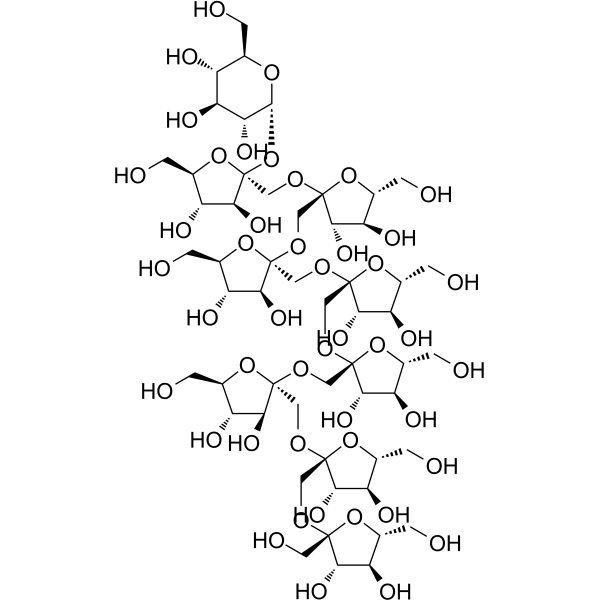
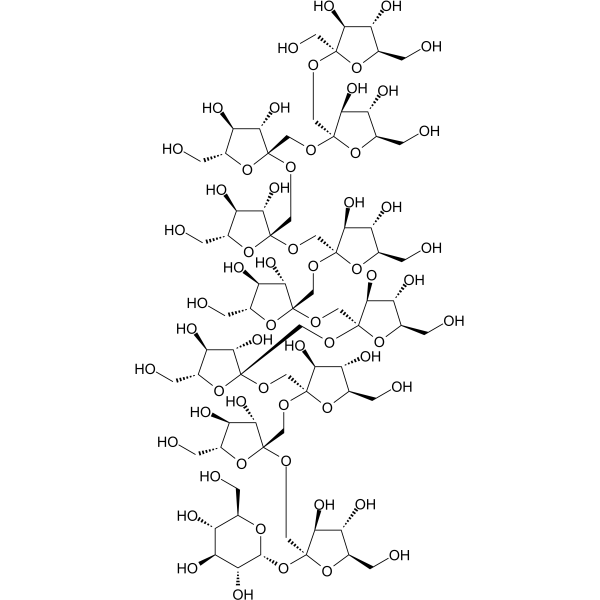
    Fructo-oligosaccharide DP9/GF8 belongs to fructooligosaccharides (FOS) with degree of polymerization (DP=9). Fructo-oligosaccharides (FOS) are composed of 8 fructose units linked by (2→1)-β-glycosidic bonds and having a single D-glucosyl unit at the non-reducing end .
    Fructo-oligosaccharide DP9/GF8
  • HY-N6837

    Others Others
    Fructo-oligosaccharide DP7/GF6 belongs to fructooligosaccharides (FOS) with degree of polymerization (DP=7). Fructo-oligosaccharides (FOS) are composed of 6 fructose units linked by (2→1)-β-glycosidic bonds and having a single D-glucosyl unit at the non-reducing end .
    Fructo-​oligosaccharide DP7/GF6
  • HY-Y0850U8

    Polyvinyl alcohol (Mw 47000, 98-99% hydrolyzed, ~1000 polymerization); Poly(Ethenol) (Mw 47000, 98-99% hydrolyzed, ~1000 polymerization)

    Biochemical Assay Reagents Others
    PVA (Mw 47000, 98-99% hydrolyzed, ~1000 polymerization) is a polyvinyl alcohol with molecular weight of 47000 with hydrolysis properties. Hydrolysis degree refers to the conversion rate of acetic acid group hydrolysis to hydroxyl group in the original polyvinyl acetate, PVA (Mw 47000, 98-99% hydrolyzed, ~1000 polymerization). In addition, polyvinyl alcohol is obtained from polymerization of vinyl acetate to remove acetic acid group by hydrolysis. Polyvinyl alcohol with different degrees of hydrolysis can be self-crosslinked to form frozen gels and used as biological excipients .
    PVA (Mw 47000, 98-99% hydrolyzed, ~1000 polymerization)
  • HY-N6834

    Others Others
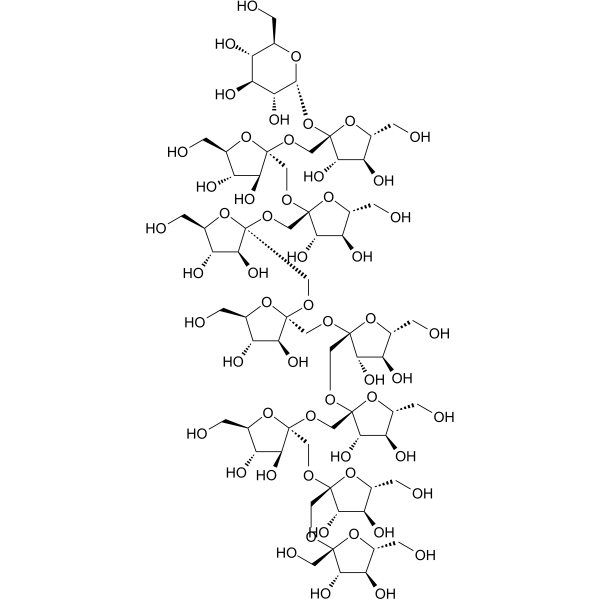
    Fructo-oligosaccharide DP10/GF9 belongs to fructooligosaccharides (FOS) with degree of polymerization (DP=10). Fructo-oligosaccharides (FOS) are composed of 9 fructose units linked by (2→1)-β-glycosidic bonds and having a single D-glucosyl unit at the non-reducing end .
    Fructo-​oligosaccharide DP10/GF9
  • HY-N7009

    Others Metabolic Disease
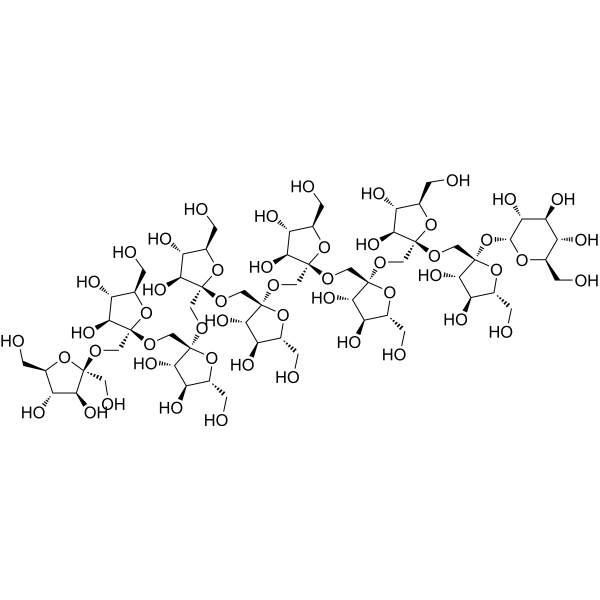
    Fructo-oligosaccharide DP12/GF11 belongs to fructooligosaccharides (FOS) with degree of polymerization (DP=12). Fructo-oligosaccharides (FOS) are composed of 11 fructose units linked by (2→1)-β-glycosidic bonds and having a single D-glucosyl unit at the non-reducing end .
    Fructo-oligosaccharide DP12/GF11
  • HY-W145695

    Biochemical Assay Reagents Apoptosis Interleukin Related IFNAR Cardiovascular Disease Inflammation/Immunology
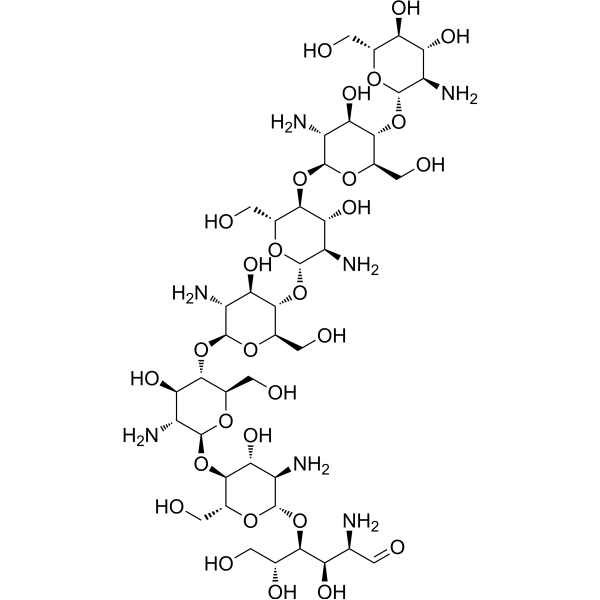
    Chitoheptaose is an orally active chitooligosaccharide (degree of polymerization = 7). Chitoheptaose can be extracted from the exoskeletons of crustaceans, such as the shells of crabs, shrimps and lobsters. Chitoheptaose reduces pro-inflammatory cytokines while increasing the levels of anti-inflammatory cytokines (decreasing the levels of pro-inflammatory cytokines IL-1β, IL-17A and IFN-γ, and increasing the level of the anti-inflammatory cytokine IL-10). Chitoheptaose possesses antioxidant, anti-inflammatory and anti-Apoptotic activities. Chitoheptaose improves cardiac parameters, alleviates myocarditis injury, and exerts cardioprotective effects in a rat model of myocarditis. Chitoheptaose can be used in studies related to myocarditis .
    Chitoheptaose
  • HY-N7008

    Others Metabolic Disease
    Fructo-oligosaccharide DP11/GF10 belongs to fructooligosaccharides (FOS) with degree of polymerization (DP=11). Fructo-oligosaccharides (FOS) are composed of 10 fructose units linked by (2→1)-β-glycosidic bonds and having a single D-glucosyl unit at the non-reducing end .
    Fructo-oligosaccharide DP11/GF10
  • HY-E70316

    Endogenous Metabolite Others
    Endo-chitosanase is an endochitosanase belonging to the GH46 family that catalyzes chitosan substrate to produce chitobiose and D-glucosamine (GlcN). Endo-chitosanase acts in a stochastic intra-action manner, producing chitosan derivatives with different degrees of polymerization (DP) ≤2 .
    Endo-chitosanase
  • HY-E71146

    Biochemical Assay Reagents Others
    1,2-β-Oligomannan phosphorylase (EC 2.4.1.340) catalyses a reversible reaction. In the synthetic direction it produces oligosaccharides with a degree of polymerization (DP) of 3, 4 and 5. The phosphorolysis reaction proceeds to completion, although activity is highest when the substrate has at least three residues.
    1,2-β-Oligomannan phosphorylase

Inquiry Online

Your information is safe with us. * Required Fields.

Salutation


Country or Region *

Applicant Name *


Organization Name *

Department *


Email Address *


Product Name *

Cat. No.


Requested quantity *

Phone Number *


Remarks

Inquiry Online

Inquiry Information

Product Name:
Cat. No.:
Quantity:
MCE Japan Authorized Agent:

