1. Search Result
Search Result
Results for "

depressive-like

" in MedChemExpress (MCE) Product Catalog:

11

Inhibitors & Agonists

1

Biochemical Assay Reagents

2

Natural
Products

Cat. No. Product Name Target Research Areas Chemical Structure
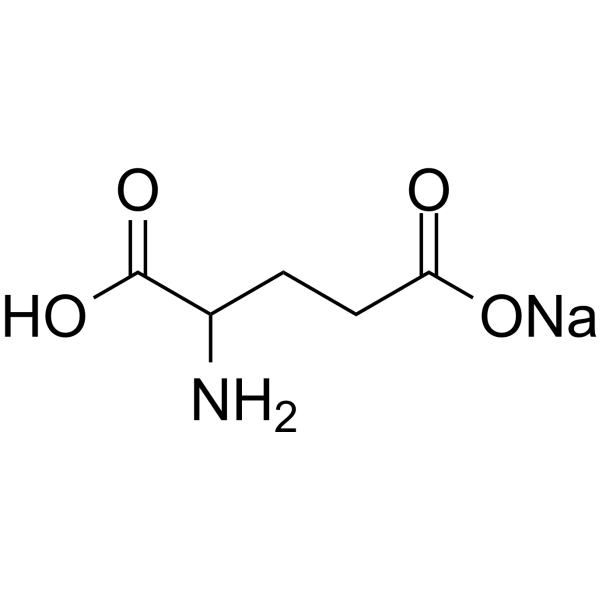
  • HY-W250122
    Glutamic acid sodium salt
    1 Publications Verification

    Monosodium glutamate

    Biochemical Assay Reagents Reactive Oxygen Species (ROS) Mitochondrial Metabolism Apoptosis HSP Bcl-2 Family Neurological Disease Metabolic Disease Inflammation/Immunology
    Glutamic acid sodium salt (Monosodium glutamate) is an orally active food flavor enhancer. Glutamic acid sodium salt causes ROS generation, mitochondrial dysfunction, and Apoptosis. Glutamic acid sodium salt upregulates CHOP, Grp78, and Bcl-2. Glutamic acid sodium salt impairs cognition, induces depressive-like behavior, induces hyperalgesia, and induces obesity and insulin resistance. Glutamic acid sodium salt can be used to study neurotoxicity (e.g., brain damage, cognitive impairment), metabolic disorders (e.g., obesity, insulin resistance), hepatotoxicity, and renal toxicity, as well as pain-related disorders .
    Glutamic acid sodium salt
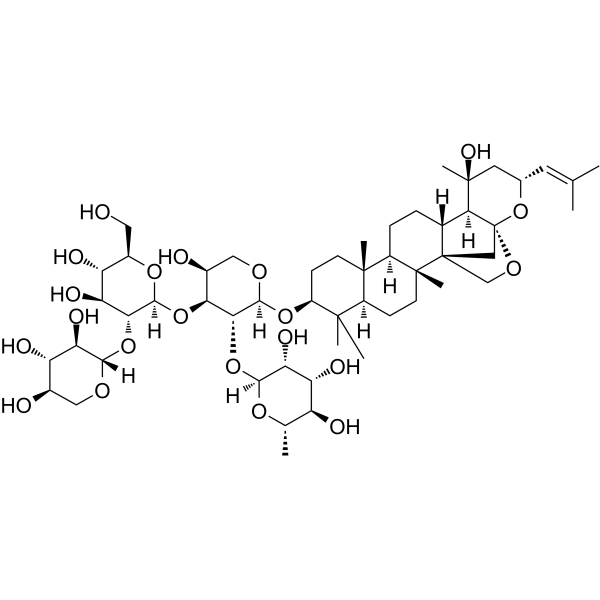
  • HY-N0660

    Apoptosis PARP Caspase AMPK Autophagy VEGFR Keap1-Nrf2 STING 11β-HSD Ferroptosis PI3K Akt p38 MAPK ERK Neurological Disease Metabolic Disease Inflammation/Immunology Cancer
    Jujuboside B is a bioactive saponin component isolated from Ziziphi Spinosae Semen (sour jujube seed), with oral efficacy and blood-brain barrier permeability. Jujuboside B induces acute leukemia cell death and drives necroptosis apoptosis by activating the RIPK1/RIPK3/MLKL pathway. Jujuboside B upregulates the expression of NOXA, PARP and caspase-3, activates AMPK, inhibits the proliferation of breast cancer cells, and induces cell apoptosis and autophagy. Jujuboside B inhibits angiogenesis and tumor growth by blocking the VEGFR-2 signaling pathway. Jujuboside B alleviates liver injury in mice by regulating the Nrf2-STING signaling pathway . Jujuboside B alleviates liver injury by regulating anti-inflammatory responses and downregulating the expression of 11β-HSD2. Jujuboside B induces ferroptosis and overcomes radioresistance in non-small cell lung cancer via the PPARγ-ATF3-Gpx4 signaling pathway. Jujuboside B exerts inhibitory effects on platelet aggregation. Jujuboside B inhibits febrile seizures by suppressing the activity of AMPA receptors. Jujuboside B reverses chronic unpredictable mild stress-promoted tumor progression by blocking the PI3K/Akt and MAPK/ERK pathways and dephosphorylating CREB signaling. Jujuboside B is applicable to related studies on acute leukemia, breast cancer, PM2.5-induced lung injury, hepatotoxicity, liver injury, colorectal cancer, non-small cell lung cancer, thromboembolic diseases, cardiovascular diseases associated with high platelet aggregation, febrile seizures, and depressive-like phenotypes .
    Jujuboside B
  • HY-19358

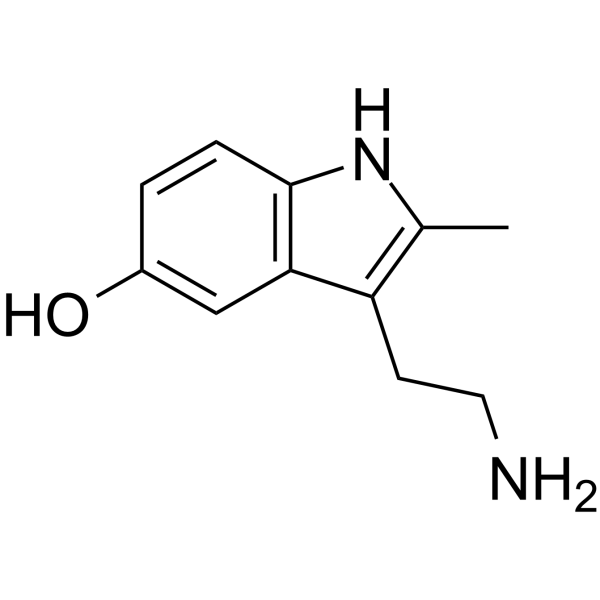
    2-Methyl-5-hydroxytryptamine; 2-Methylserotonin; 2-Me-5-HT

    5-HT Receptor Neurological Disease
    2-Methyl-5-HT (2-Methyl-5-hydroxytryptamine) is a potent and selective 5-HT3 receptor agonist. 2-Methyl-5-HT is shown to display anti-depressive-like effects .
    2-Methyl-5-HT
  • HY-18137

    5-HT Receptor Neurological Disease
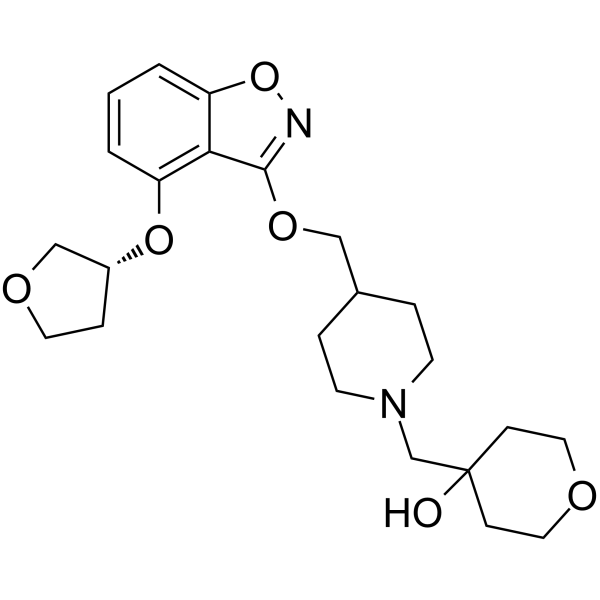
    PF-04995274 is a potent, high-affinity, orally active and partial serotonin 4 receptor (5-HT4R) agonist. PF-04995274 has an EC50 range of 0.26-0.47 nM for human 5-HT4A/4B/4D/4E (Ki range of 0.15-0.46 nM), and has an EC50 range of 0.59-0.65 nM for rat 5-HT4S/4L/4E (Ki of 0.30 nM for rat 5-HT4S). PF-04995274 is brain penetrant and can be used for cognitive disorders associated with Alzheimer's disease .
    PF-04995274
  • HY-10174
    PD184161
    2 Publications Verification

    MEK Apoptosis Neurological Disease Cancer
    PD184161 is an orally active MEK inhibitor. PD184161 inhibits MEK activity (IC50=10-100 nM) in a time- and concentration-dependent manner. PD184161 inhibits cell proliferation and induces apoptosis. PD184161 produces depressive-like behavior .
    PD184161
  • HY-19358B

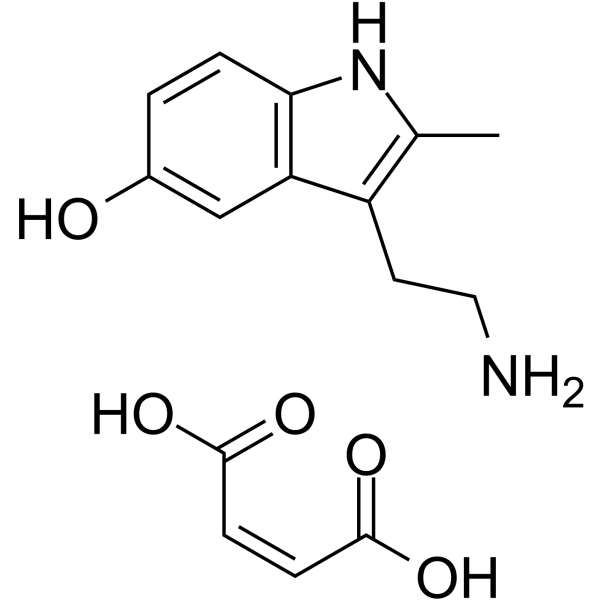
    2-Methyl-5-hydroxytryptamine maleate; 2-Methylserotonin maleate; 2-Me-HT maleate

    5-HT Receptor Neurological Disease
    2-Methyl-5-HT maleate (2-Methyl-5-hydroxytryptamine maleate) is a potent and selective 5-HT3 receptor agonist. 2-Methyl-5-HT maleate is shown to display anti-depressive-like effects .
    2-Methyl-5-HT maleate
  • HY-103375

    CRFR Neurological Disease
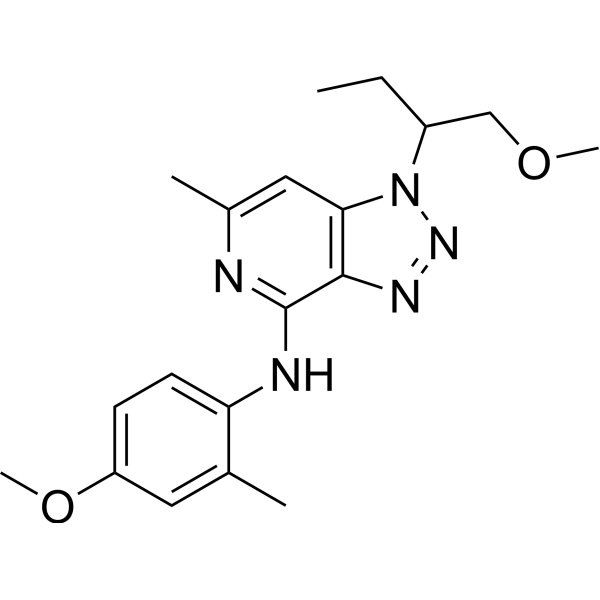
    SN003 is a reversible antagonist of corticotropin releasing factor receptor 1 (CRFR 1) (IC50 = 241 nM) that displays more than 1000-fold selectivity over CRFR 2. SN003 suppresses CRF-induced ACTH release in vitro. SN003 attenuates depressive-like behavior in rat .
    SN003
  • HY-19358A

    2-Methyl-5-hydroxytryptamine hydrochloride; 2-Methylserotonin hydrochloride; 2-Me-HT hydrochloride

    5-HT Receptor Neurological Disease
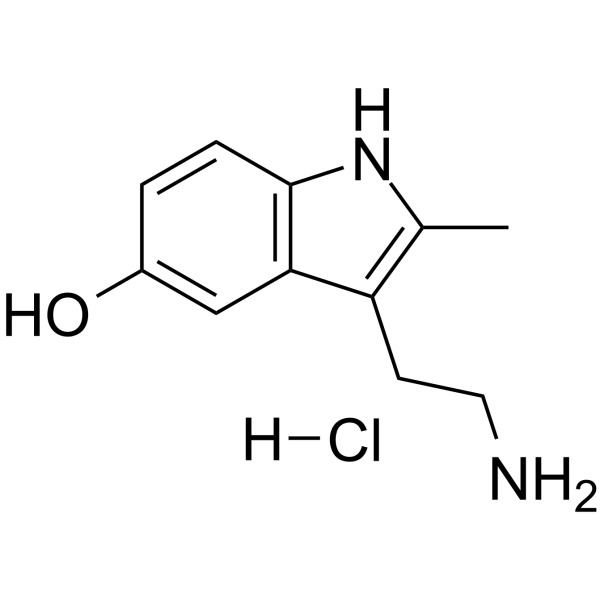
    2-Methyl-5-HT hydrochloride (2-Methyl-5-hydroxytryptamine hydrochloride) is a potent and selective 5-HT3 receptor agonist. 2-Methyl-5-HT hydrochloride is shown to display anti-depressive-like effects .
    2-Methyl-5-HT hydrochloride
  • HY-149538

    Potassium Channel Neurological Disease
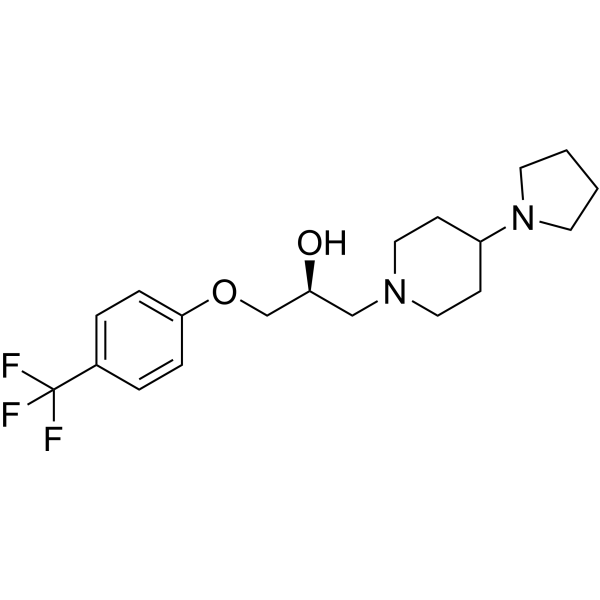
    TWIK-1/TREK-1-IN-3 (compound 2h) is an inhibitor of TWIK-related potassium channel (Potassium Channel) TREK-1. TREK-1 contains a two-pore domain potassium (K2p) channel that dimerizes into TREK-1 homodimer and TWIK-1/TREK-1 heterodimer, and is an important antidepressant target. TWIK-1/TREK-1-IN-3 targets TREK-1 homodimer and TWIK-1/TREK-1 heterodimer with IC50s of 9.74 μM and 16.5 μM, respectively, and has antidepressant-like effects .
    TWIK-1/TREK-1-IN-3
  • HY-N0660R

    Reference Standards ERK p38 MAPK Akt PI3K 11β-HSD STING VEGFR Ferroptosis Autophagy Apoptosis Keap1-Nrf2 Caspase PARP AMPK Neurological Disease Metabolic Disease Inflammation/Immunology Cancer
    Jujuboside B (Standard) is the analytical standard of Jujuboside B. This product is intended for research and analytical applications. Jujuboside B is a bioactive saponin component isolated from Ziziphi Spinosae Semen (sour jujube seed), with oral efficacy and blood-brain barrier permeability. Jujuboside B induces acute leukemia cell death and drives necroptosis apoptosis by activating the RIPK1/RIPK3/MLKL pathway. Jujuboside B upregulates the expression of NOXA, PARP and caspase-3, activates AMPK, inhibits the proliferation of breast cancer cells, and induces cell apoptosis and autophagy. Jujuboside B inhibits angiogenesis and tumor growth by blocking the VEGFR-2 signaling pathway. Jujuboside B alleviates liver injury in mice by regulating the Nrf2-STING signaling pathway . Jujuboside B alleviates liver injury by regulating anti-inflammatory responses and downregulating the expression of 11β-HSD2. Jujuboside B induces ferroptosis and overcomes radioresistance in non-small cell lung cancer via the PPARγ-ATF3-Gpx4 signaling pathway. Jujuboside B exerts inhibitory effects on platelet aggregation. Jujuboside B inhibits febrile seizures by suppressing the activity of AMPA receptors. Jujuboside B reverses chronic unpredictable mild stress-promoted tumor progression by blocking the PI3K/Akt and MAPK/ERK pathways and dephosphorylating CREB signaling. Jujuboside B is applicable to related studies on acute leukemia, breast cancer, PM2.5-induced lung injury, hepatotoxicity, liver injury, colorectal cancer, non-small cell lung cancer, thromboembolic diseases, cardiovascular diseases associated with high platelet aggregation, febrile seizures, and depressive-like phenotypes.
    Jujuboside B (Standard)
  • HY-181703

    Na+/K+ ATPase NF-κB Neurological Disease Inflammation/Immunology
    4-PSQ is an orally active neuroprotective agent. 4-PSQ possesses both antioxidant and anti-inflammatory activities. 4-PSQ improves cognitive impairment and depressive- and anxiety-like emotional abnormalities in mice by regulating the activity of Na +, K +-ATPase, the NFκB signaling pathway, and the expression of p21. 4-PSQ can be used for the research of neurological diseases .
    4-PSQ

Inquiry Online

Your information is safe with us. * Required Fields.

Salutation


Country or Region *

Applicant Name *


Organization Name *

Department *


Email Address *


Product Name *

Cat. No.


Requested quantity *

Phone Number *


Remarks

Inquiry Online

Inquiry Information

Product Name:
Cat. No.:
Quantity:
MCE Japan Authorized Agent:

