1. Search Result
Search Result
Results for "

diagnostic imaging

" in MedChemExpress (MCE) Product Catalog:

33

Inhibitors & Agonists

1

Screening Libraries

5

Fluorescent Dye

5

Biochemical Assay Reagents

5

Peptides

2

Natural
Products

Cat. No. Product Name Target Research Areas Chemical Structure
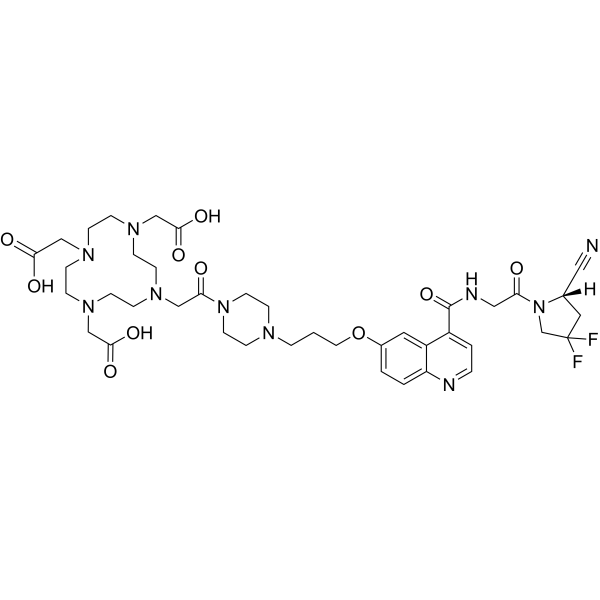
  • HY-128643
    FAPI-4
    Maximum Cited Publications
    31 Publications Verification

    FAP Cancer
    FAPI-4 is a potent fibroblast activation protein (FAP) inhibitor for the targeting FAP. FAPI-4 can be used in cancer research. 68Ga-FAPI-4 PET/CT is a promising new diagnostic method for imaging various kinds of cancer, with good tumor-to-background contrast ratios .
    FAPI-4
  • HY-B1292
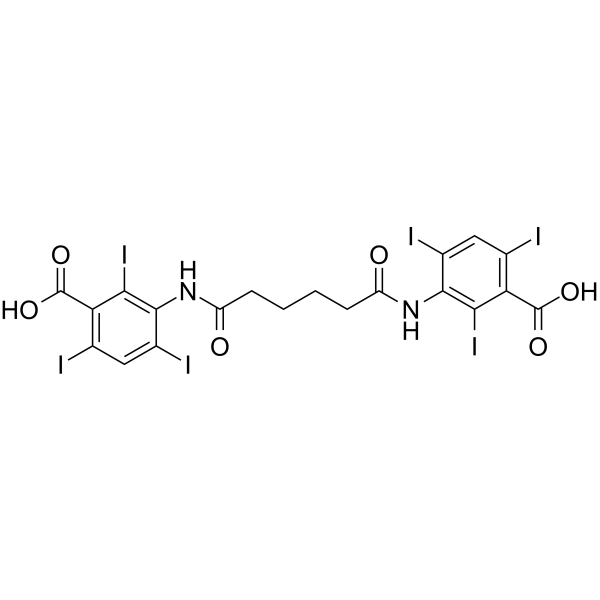
    Iodipamide
    1 Publications Verification

    Adipiodone

    Biochemical Assay Reagents Inflammation/Immunology
    Iodipamide (Adipiodone) is an ionic iodinated contrast agent. Iodipamide is used for diagnostic imaging to visualize the bile ducts and gallbladder during X-ray examinations .
    Iodipamide
  • HY-N9459

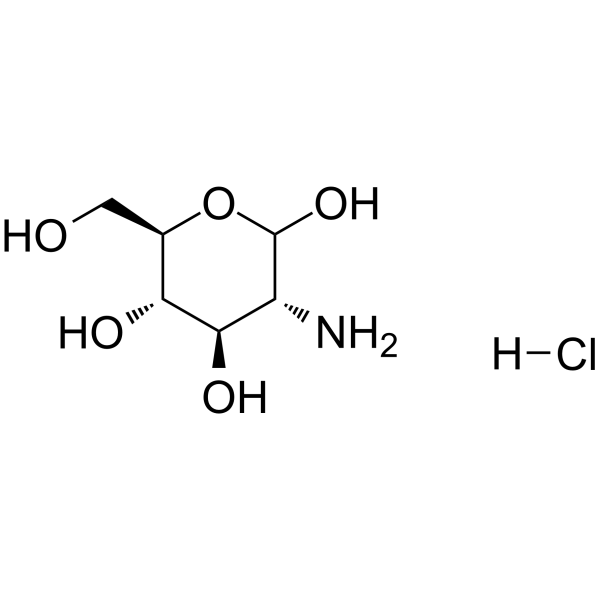
    D-Glucosamine Hydrochloride

    GLUT Infection Neurological Disease Cancer
    2-Amino-2-deoxyglucose hydrochloride (D-Glucosamine Hydrochloride) is a glucose analog that is specifically recognized and transported by the cell membrane GLUT1. 2-Amino-2-deoxyglucose hydrochloride acts as a tumor-targeting ligand and a guiding molecule for the synthesis of prodrug conjugates, thus delivering drugs precisely to tumor cells. 2-Amino-2-deoxyglucose hydrochloride is applicable to diagnostic imaging and therapeutic efficacy monitoring of solid tumors and various cancers (e.g., breast cancer, glioblastoma). 2-Amino-2-deoxyglucose hydrochloride also helps bacteria resist lysozyme digestion by integrating into the non-N-acetylated residues of Streptococcus pneumoniae peptidoglycan. 2-Amino-2-deoxyglucose hydrochloride is used in studies on tumor metabolism and the exploration of bacterial drug resistance mechanisms .
    2-Amino-2-deoxyglucose hydrochloride
  • HY-153552A

    FAP Cancer
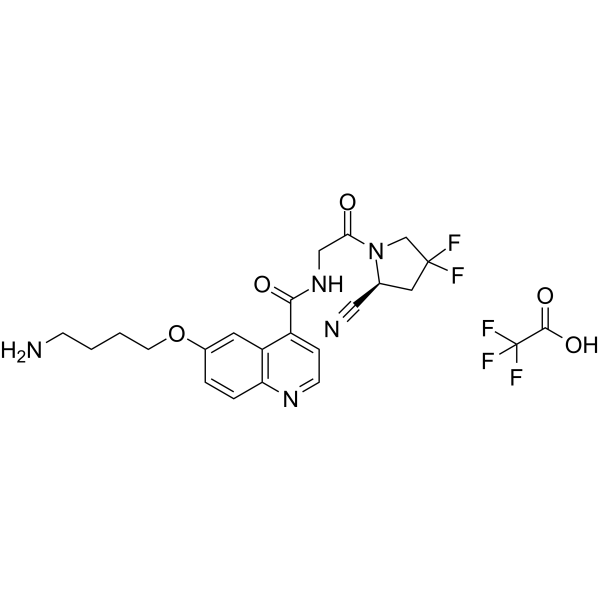
    NH2-UAMC1110 TFA is an aminobutoxy derivative of the fibroblast activation protein (FAP) inhibitor UAMC1110 (HY-100684), and is a precursor compound for the synthesis of FAP inhibitor probes, not directly used in bioactivity experiments. For example, NH2-UAMC1110 TFA is involved in the synthesis of the radiotracer FAPI-QS, which exhibits high tumor selectivity and high dose effect, and has been used in tumor diagnosis. NH2-UAMC1110 TFA structurally incorporates an active amino group, allowing it to form covalent bonds with various molecules (such as DOTA, DATA5m, radionuclide chelators, etc.) to synthesize molecular imaging probes or targeted compounds with the ability to target FAP. NH2-UAMC1110 TFA specifically binds to the FAP active site, inhibiting its proline-selective serine protease activity (including dipeptidyl peptidase and endopeptidase activity), blocking FAP-mediated tissue remodeling-related processes. Its key activity is high targeting and high affinity, and its core function is to act as a targeting module coupled with bifunctional chelators (such as DOTA, DATA5m). NH2-UAMC1110 TFA can be applied to diagnostic imaging studies of tumors expressing FAP (such as colorectal cancer, pancreatic cancer, etc.), and also provides molecular tools for targeted research of FAP-related diseases with high FAP expression, such as fibrosis and arthritis .
    NH2-UAMC1110 TFA
  • HY-153552

    FAP Cancer
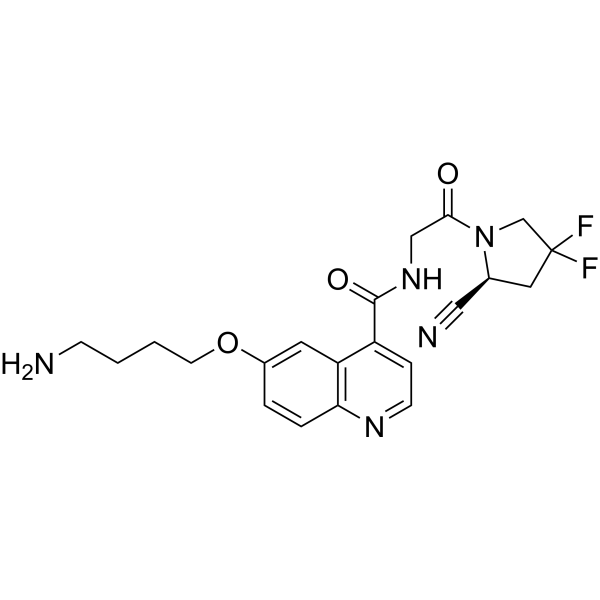
    NH2-UAMC1110 is an aminobutoxy derivative of the fibroblast activation protein (FAP) inhibitor UAMC1110 (HY-100684), and is a precursor compound for the synthesis of FAP inhibitor probes, not directly used in bioactivity experiments. For example, NH2-UAMC1110 is involved in the synthesis of the radiotracer FAPI-QS, which exhibits high tumor selectivity and high dose-response, and has been used for tumor diagnosis. NH2-UAMC1110 introduces an active amino group into its structure, enabling it to form covalent bonds with various molecules (such as DOTA, DATA5m, radionuclide chelators, etc.), thereby synthesizing molecular imaging probes or targeted compounds with the ability to target FAP. NH2-UAMC1110 specifically binds to the FAP active site, inhibiting its proline-selective serine protease activity (including dipeptidyl peptidase and endopeptidase activity), blocking FAP-mediated tissue remodeling processes. Its key activity is high targeting and high affinity, and its core function is to be coupled with bifunctional chelators (such as DOTA, DATA5m) as a targeting module. NH2-UAMC1110 can be applied to diagnostic imaging studies of tumors expressing FAP (such as colorectal cancer, pancreatic cancer, etc.), and also provides molecular tools for targeted research of FAP-related diseases with high FAP expression, such as fibrosis and arthritis .
    NH2-UAMC1110
  • HY-B1684

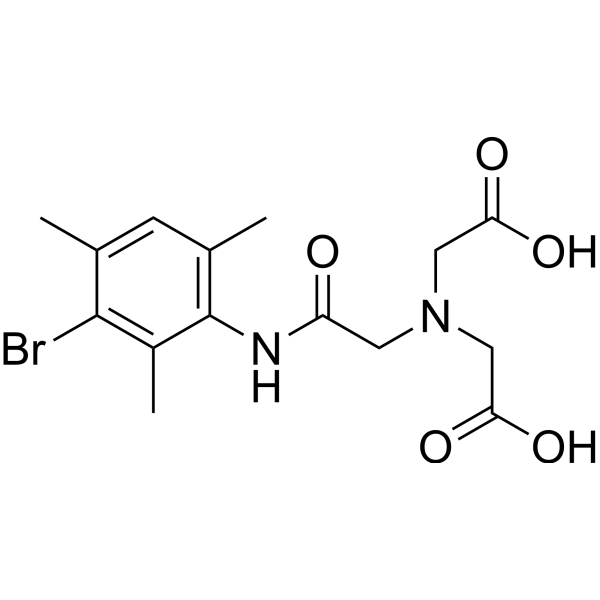
    SQ 26962

    Biochemical Assay Reagents Others
    Mebrofenin (SQ 26962) is a type of iminodiacetic acid (IDA). Mebrofenin is available as a ready to use the kit for radio-labeling with Tc-99m. Tc-99m Mebrofenin, a diagnostic agent, is used for hepatobiliary imaging. Tc-99m Mebrofenin is the radiopharmaceutical of choice for the evaluation of hepatic function .
    Mebrofenin
  • HY-D1072

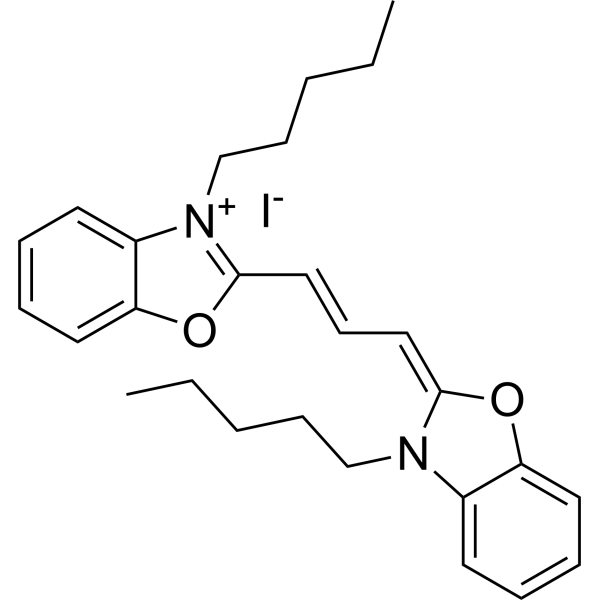
    3,3′-Dipentyloxacarbocyanine iodide

    Fluorescent Dye Others
    DiOC5(3) is the membrane potential (MP)-modifying fluorochrome. DiOC5(3) is an anti-LSC compound available for diagnostic imaging. DiOC5(3) has the advantage of being a single fluorescent chemical .
    DiOC5(3)
  • HY-P11236

    LS301

    Biochemical Assay Reagents Others
    Cronexitide lanocianine is a diagnostic imaging agent.
    Cronexitide lanocianine
  • HY-109513
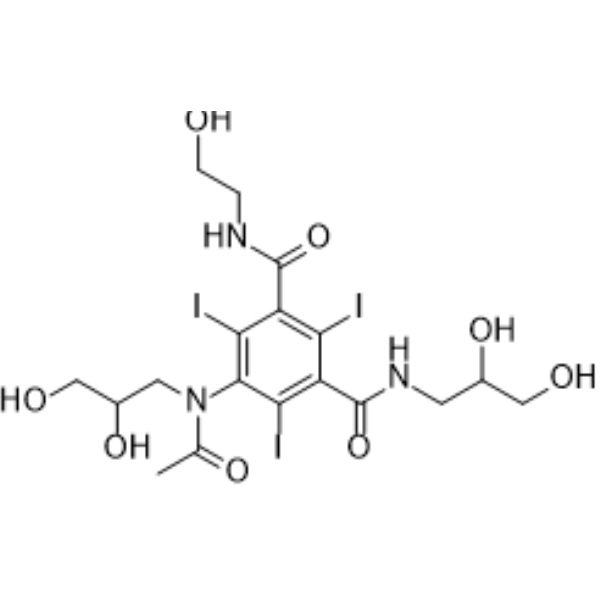
    Ioxilan
    1 Publications Verification

    Biochemical Assay Reagents Others
    Ioxilan is a low-osmolar, nonionic and tri-iodinated diagnostic contrast agent. Ioxilan is also an X-ray contrast agent for excretory urography and contrast enhanced computed tomographic (CECT) imaging of the head and body. Intravascular injection results in opacification of vessels in the path of flow of the contrast medium, permitting radiographic visualization of the internal structures of the human body until significant hemodilution occurs .
    Ioxilan
  • HY-170779

    FAP Cancer
    DOTA-NI-FAPI-04 is a FAP inhibitor (IC50 = 7.44 nM). By integrating FAP targeting with hypoxia-sensitive groups (nitroimidazole), DOTA-NI-FAPI-04 significantly enhances tumor uptake and retention capabilities. DOTA-NI-FAPI-04 chelates metallic isotopes (such as 68Ga and 177Lu) through DOTA to produce radioactive probes ([68Ga]Ga/DOTA-NI-FAPI-04 and [177Lu]Lu/DOTA-NI-FAPI-04), which can be used for research in tumor diagnostics and therapeutic agents. DOTA-NI-FAPI-04 holds dual targeting potential in the fields of cancer imaging, tumor microenvironment analysis, and radionuclide therapy, particularly suitable for scenarios where the tumor stroma and hypoxic regions synergistically interact .
    DOTA-NI-FAPI-04
  • HY-131673

    Biochemical Assay Reagents Others
    p-SCN-Bn-TCMC tetrahydrochloride is a bifunctional chelator that exhibits high reactivity due to its powerful TCMC component, making it effective for binding radio-isotopic heavy metal ions, which are essential in radio-diagnostic imaging applications.
    p-SCN-Bn-TCMC tetrahydrochloride
  • HY-P10590

    Fluorescent Dye Cancer
    Talogreptide mesaroxetan is a diagnostic imaging agent, with antineoplastic effect .
    Talogreptide mesaroxetan
  • HY-129040
    m-Iodobenzylguanidine
    1 Publications Verification

    MIBG; Iobenguane

    Monoamine Transporter Neurological Disease Endocrinology Cancer
    m-Iodobenzylguanidine (Iobenguane) is a ligand with high affinity against norepinephrine transporter (NET). m-Iodobenzylguanidine is used as an imaging agent in the diagnostic imaging and radionuclide studies of neuroendocrine tumors, such as neuroblastoma, pheochromocytoma and carcinoid tumor .
    m-Iodobenzylguanidine
  • HY-168947

    Fluorescent Dye Others
    Green Fluorescent PLGA nanoparticles, 100nm is a PLGA nanoparticle labeled with a green fluorescent dye and is commonly used in imaging and diagnostic applications.
    Green Fluorescent PLGA nanoparticles, 100nm
  • HY-P10012

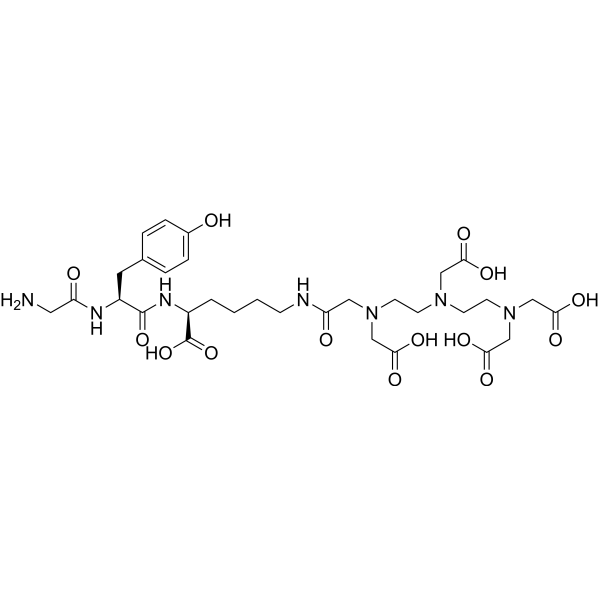
    GYK-DTPA

    Biochemical Assay Reagents Radionuclide-Drug Conjugates (RDCs) Cancer
    Pendetide is a chelating agent, can be conjugated with Indium (111In) Capromab for further diagnostic use. Capromab pendetide is a FDA-approved imaging agent for the detection of soft tissue metastases in prostate carcinoma . Pendetide can be used for the synthesis/research of Radionuclide-Drug Conjugates (RDCs).
    Pendetide
  • HY-147721

    Bacterial Infection
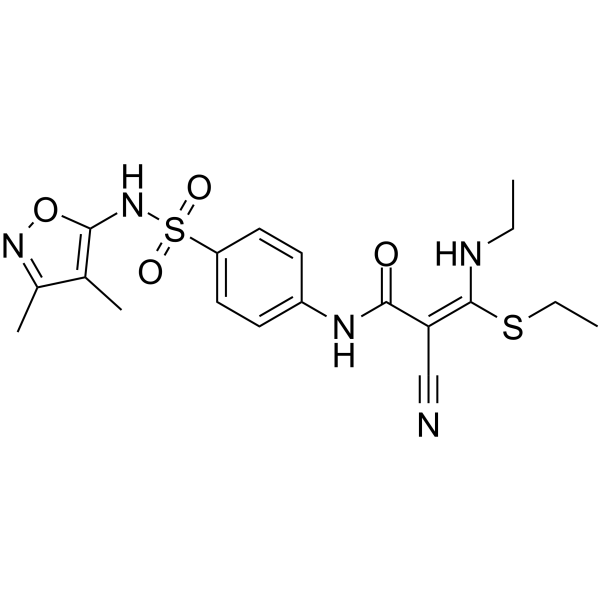
    Dihydropteroate synthase-IN-1 (compound 5g) is a potent dihydropteroate synthase (DHPS) inhibitor. Dihydropteroate synthase-IN-1 shows antimicrobial activities and antifungal activity. Dihydropteroate synthase-IN-1 inhibits cytochromes P450. Dihydropteroate synthase-IN-1 can bu used as diagnostic radio imaging material .
    Dihydropteroate synthase-IN-1
  • HY-D2378

    Biochemical Assay Reagents Cancer
    Abenacianine is a diagnostic imaging agent .
    Abenacianine
  • HY-159841

    Biochemical Assay Reagents Others
    Filricianine is a diagnostic imaging agent .
    Filricianine
  • HY-19311

    Drug Intermediate Others
    Upenazime is a non-radioactive precursor agent for diagnostic imaging .
    Upenazime
  • HY-159526

    DOTA-AE105

    Biochemical Assay Reagents Others
    Copper adarulatidum tetraxetanum (Copper adarulatide tetraxetan) is a diagnostic imaging agent .
    Adarulatide tetraxetan
  • HY-168947A

    Fluorescent Dye Others
    Green Fluorescent PLGA nanoparticles, 200nm is a PLGA nanoparticle labeled with a green fluorescent dye and is commonly used in imaging and diagnostic applications.
    Green Fluorescent PLGA nanoparticles, 200nm
  • HY-168947B

    Fluorescent Dye Others
    Green Fluorescent PLGA nanoparticles, 500nm is a PLGA nanoparticle labeled with a green fluorescent dye and is commonly used in imaging and diagnostic applications.
    Green Fluorescent PLGA nanoparticles, 500nm
  • HY-109153

    Biochemical Assay Reagents Others
    Nerindocianine is a fluorescent diagnostic contrast agent. Nerindocianine is highly hydrophilic and is primarily metabolized by the kidneys, allowing for a non-invasive intraoperative ureteral imaging .
    Nerindocianine
  • HY-D3005

    Fluorescent Dye Autophagy Inflammation/Immunology
    NpCy-4 is a reliable reporter for monitoring lysosomal pH and viscosity changes in real time during Autophagy (λex = 650 nm; λem = 660-740 nm). NpCy-4 demonstrates a superior signal-to-background ratio (SBR) for cellular imaging. NpCy-4 facilitates real-time, noninvasive diagnostic imaging of acute gastritis model with high contrast .
    NpCy-4
  • HY-153127

    AV-133

    Biochemical Assay Reagents Neurological Disease
    Florbenazine (AV-133) is a diagnostic imaging agent targeting the central nervous system monoamine transporter VMAT2, and its F-18 labeled form can be used for PET scanning. The biodistribution of [18F]Florbenazine in mice shows a high striatum/cerebellum ratio (0.48), which can be used for the diagnostic research of neurodegenerative diseases (including dementia with Lewy bodies and Parkinson's disease) .
    Florbenazine
  • HY-106586A

    P-286 sodium

    Biochemical Assay Reagents Cardiovascular Disease Cancer
    Ioxaglate sodium (P-286 sodium) is an ionic, dimeric diagnostic contrast agent whose activity is mainly reflected in its ability to provide sufficient X-ray absorption to enhance visualization of blood vessels and other structures during imaging. Ioxaglate sodium is used to study the anatomical structure and functional status of cardiac vessels, especially in the diagnosis of coronary artery disease .
    Ioxaglate sodium
  • HY-W009310R

    Reference Standards Endogenous Metabolite Organoid Others
    Mebrofenin (Standard) is the analytical standard of Mebrofenin. This product is intended for research and analytical applications. Mebrofenin (SQ 26962) is a type of iminodiacetic acid (IDA). Mebrofenin is available as a ready to use the kit for radio-labeling with Tc-99m. Tc-99m Mebrofenin, a diagnostic agent, is used for hepatobiliary imaging. Tc-99m Mebrofenin is the radiopharmaceutical of choice for the evaluation of hepatic function .
    9-cis-Retinal (Standard)
  • HY-B1684R

    SQ 26962 (Standard)

    Biochemical Assay Reagents Reference Standards Others
    Mebrofenin (Standard) is the analytical standard of Mebrofenin. This product is intended for research and analytical applications. Mebrofenin (SQ 26962) is a type of iminodiacetic acid (IDA). Mebrofenin is available as a ready to use the kit for radio-labeling with Tc-99m. Tc-99m Mebrofenin, a diagnostic agent, is used for hepatobiliary imaging. Tc-99m Mebrofenin is the radiopharmaceutical of choice for the evaluation of hepatic function .
    Mebrofenin (Standard)
  • HY-109513R

    Biochemical Assay Reagents Reference Standards Others
    Ioxilan (Standard) is the analytical standard of Ioxilan. This product is intended for research and analytical applications. Ioxilan is a low-osmolar, nonionic and tri-iodinated diagnostic contrast agent. Ioxilan is also an X-ray contrast agent for excretory urography and contrast enhanced computed tomographic (CECT) imaging of the head and body. Intravascular injection results in opacification of vessels in the path of flow of the contrast medium, permitting radiographic visualization of the internal structures of the human body until significant hemodilution occurs .
    Ioxilan (Standard)
  • HY-185550

    Drug Intermediate Neurological Disease
    ACI-19626 precursor (Compound 20) is the precursor of the TDP-43 protein probe ACI-19626 (HY-163575). ACI-19626 is a TDP-43 aggregation inhibitor that can be used in imaging diagnostics such as positron emission tomography (PET) to detect and distinguish related neurodegenerative diseases .
    ACI-19626 precursor
  • HY-P11591

    PSMA-DOTA-PEI2

    Radionuclide-Drug Conjugates (RDCs) PSMA Cancer
    PDI2 (PSMA-DOTA-PEI2) is a prostate-specific membrane antigen (PSMA) ligand that acts as a tumor retention agent, renal uptake reducer, imaging agent and antitumor agent, applicable in SPECT diagnostic imaging and radiotheranostics. PDI2 specifically binds to PSMA on prostate cancer cells, enters cells via clathrin-dependent endocytosis, and exhibits higher tumor retention rate and lower renal uptake level. PDI2 is applicable in research related to prostate cancer and castration-resistant metastatic prostate cancer .
    PDI2
  • HY-D2962

    Fluorescent Dye Neurological Disease
    CAQ is a near-infrared fluorescent probe based on a curcumin scaffold (Ex/Em = 565/635). CAQ exhibits high affinity for Aβ1-42 aggregates (Kd = 78.89 nM) and excellent selectivity toward common biomolecules. CAQ’s emission wavelength shows significant solvent dependence. CAQ, by incorporating intramolecular rotation donors and quinoline functional groups, can be used for the specific detection and imaging of Aβ aggregates in Alzheimer's disease .
    CAQ
  • HY-D3195

    Fluorescent Dye Bacterial Infection
    CDr15 is a deep-red fluorescent probe (Ex=733 nm) that can selectively intercalate into and label bacterial extracellular DNA (eDNA). CDr15 exhibits extremely high specificity for biofilm imaging and cannot effectively bind to mammalian nuclear DNA. CDr15 enables real-time visualization of the microcolony structure and developmental process of three-dimensional *Pseudomonas aeruginosa* biofilms, and accurately localizes biofilm-forming regions of microorganisms in a mouse corneal infection model. With low background interference signals, CDr15 serves as an ideal diagnostic tool for research fields including bacterial biofilms and corneal infections .
    CDr15

Inquiry Online

Your information is safe with us. * Required Fields.

Salutation


Country or Region *

Applicant Name *


Organization Name *

Department *


Email Address *


Product Name *

Cat. No.


Requested quantity *

Phone Number *


Remarks

Inquiry Online

Inquiry Information

Product Name:
Cat. No.:
Quantity:
MCE Japan Authorized Agent:

