
19 Results for "

disassembly

" in MedChemExpress (MCE) Product Catalog:
Products (19)

19 Results for "disassembly" in MCE Product Catalog:

128
128 Publications Verification
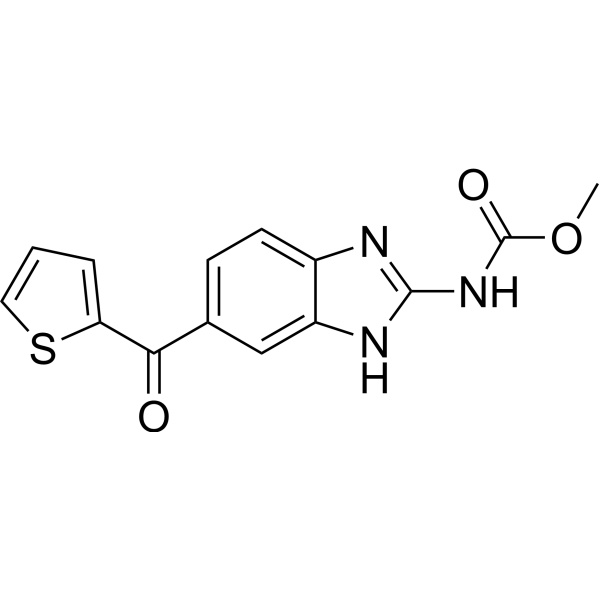
Cat. No.: HY-13520
CAS No.: 31430-18-9
Purity:  99.59%
Synonyms: Oncodazole; R17934
Research Areas:  

Cancer

Nocodazole (Oncodazole) is a rapidly-reversible inhibitor of microtubule. Nocodazole binds to β-tubulin and disrupts microtubule assembly/disassembly dynamics, which prevents mitosis and induces apoptosis in tumor cells. Nocodazole inhibits Bcr-Abl.
loading...
    loading...
2
2 Cited Publications
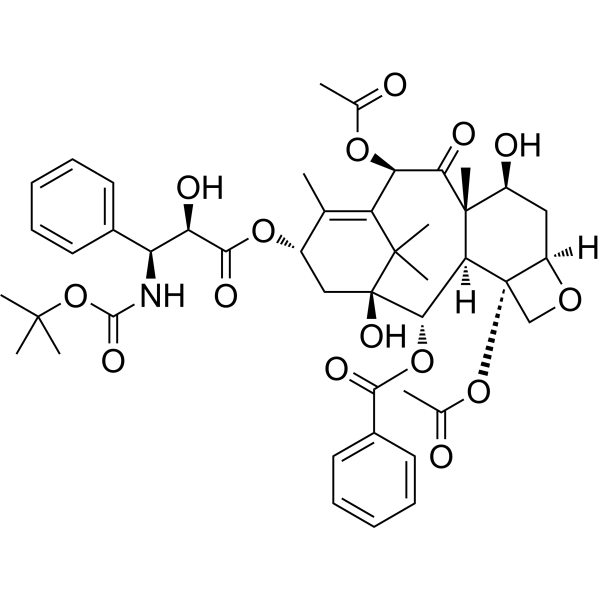
Cat. No.: HY-B0018
CAS No.: 125354-16-7
Synonyms: PNU-101383
Target:  

ADC Payloads

Research Areas:  

Cancer

10-Acetyl docetaxel (PNU-101383) is an analog of Docetaxel (HY-B0011), with anticancer activity. 10-Acetyl docetaxel is a microtubule disassembly inhibitor, with antimitotic activity .
loading...
    loading...
2
2 Cited Publications
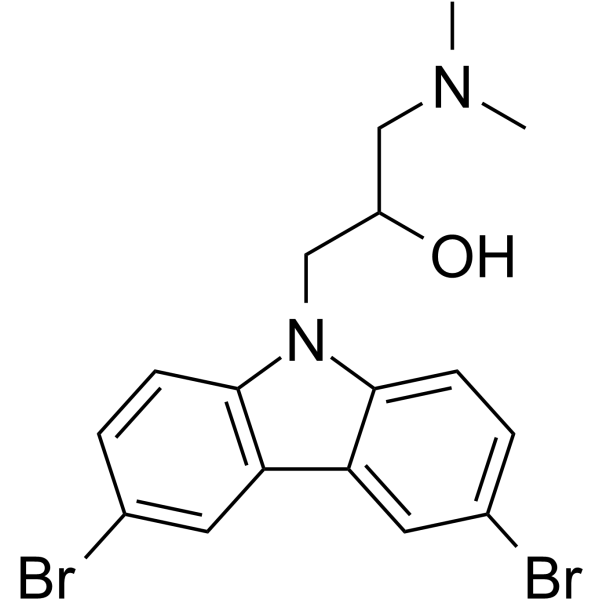
Cat. No.: HY-12534
CAS No.: 253449-04-6
Purity:  99.87%
Target:  

Arp2/3 Complex

Research Areas:  

Neurological Disease

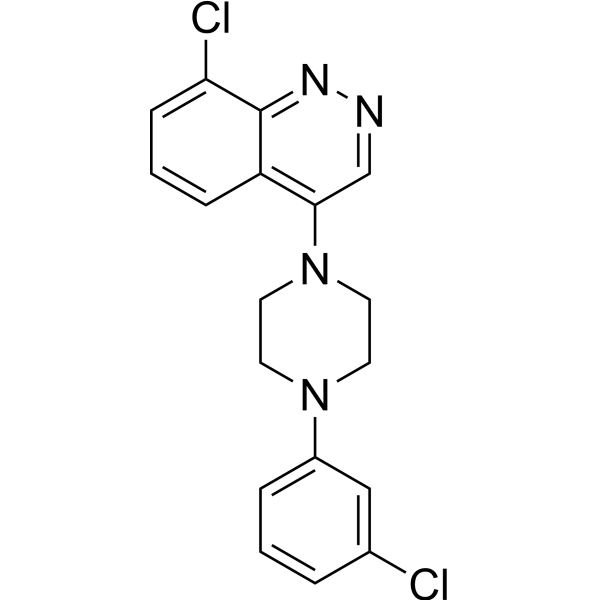
Wiskostatin is a potent and selective inhibitor of neuronal Wiskott-Aldrich syndrome protein (N-WASP)-mediated actin polymerization by stabilization of the closed, autoinhibited conformation, thereby preventing Arp2/3 complex activation. Wiskostatin is also a dynamin inhibitor with an IC50 value of 20.7 μM and a potent inhibitor of clathrin-mediated endocytosis with an IC50 value of 6.9 μM. Wiskostatin causes a rapid, profound, and irreversible decrease in cellular ATP levels. Wiskostatin also induces disassembly of podosomes in a murine monocyte cell line .
loading...
    loading...
2
2 Cited Publications
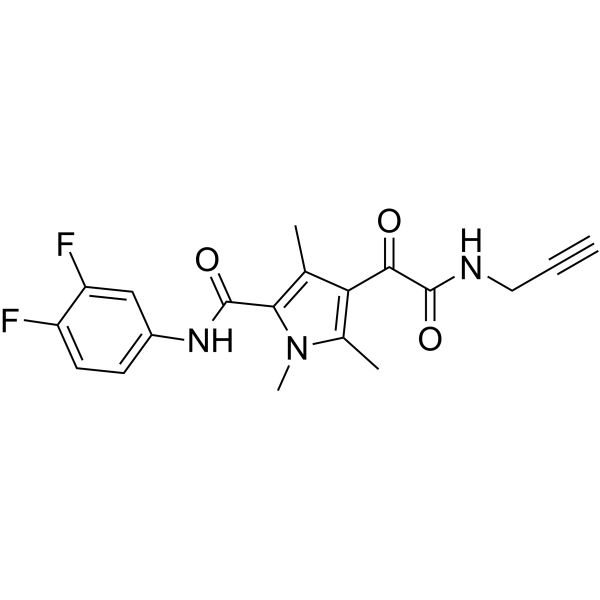
Cat. No.: HY-124614
CAS No.: 2133017-36-2
Purity:  98.36%
Target:  

HBV

Research Areas:  

Infection

GLP-26 is a HBV capsid assembly modulators (CAM), inhibits HBV DNA replication in Hep AD38 system (IC50=3 nM), and reduces cccDNA by >90% at 1 μM. GLP-26 disrupts the encapsidation of pre-genomic RNA, causes nucleocapsid disassembly and reduces cccDNA pools . GLP-26 is a click chemistry reagent, it contains an Alkyne group and can undergo copper-catalyzed azide-alkyne cycloaddition (CuAAc) with molecules containing Azide groups.
loading...
    loading...
1
1 Cited Publications
Cat. No.: HY-124757
CAS No.: 932359-76-7
Purity:  99.87%
Target:  

Proteasome Mitosis

Research Areas:  

Cancer

FiVe1 is a vimentin (VIM) inhibitor. FiVe1 binds to the rod domain of VIM, causing metaphase VIM disassembly and hyperphosphorylation at Ser56, ultimately leading to mitotic catastrophe, multinucleation, and loss of stemness. FiVe1 has anticancer activity against soft tissue sarcomas. FiVe1 increases the sensitivity of ovarian cancer to Cisplatin (HY-17394). FiVe1 can be used for researches of mesenchymal cancers (including breast cancer and soft tissue sarcoma) and ovarian cancers .
loading...
    loading...
1
1 Cited Publications
Cat. No.: HY-137441
CAS No.: 1000999-96-1
Purity:  99.52%
Synonyms: PU-HZ151
Target:  

HSP

Research Areas:  

Neurological Disease Cancer

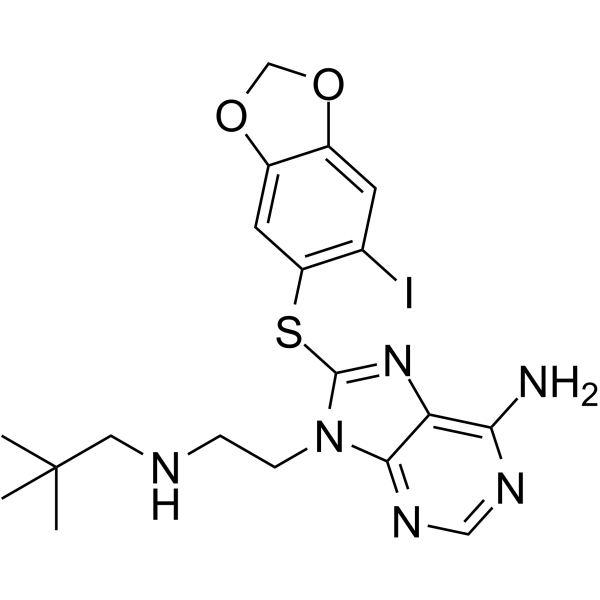
Icapamespib (PU-HZ151; PU-AD) is a selective, orally active inhibitor of Epichaperomes assembled by HSP90 with slow dissociation kinetics. Icapamespib can cross the blood-brain barrier (BBB) ??and induce epichaperome disassembly by non-covalently binding to HSP90, restoring the normal protein-protein interaction network. Icapamespib can specifically disrupt disease-related abnormal protein interaction networks, reduce neurotoxic protein aggregation and tumor cell survival signals. Icapamespib can be used in the research of neurodegenerative diseases such as Alzheimer's disease, as well as cancers such as glioblastoma and metastatic breast cancer .
loading...
    loading...
1
1 Cited Publications
Cat. No.: HY-138208
CAS No.: 114014-15-2
Purity:  98.04%
Target:  

Cathepsin SARS-CoV

Research Areas:  

Infection

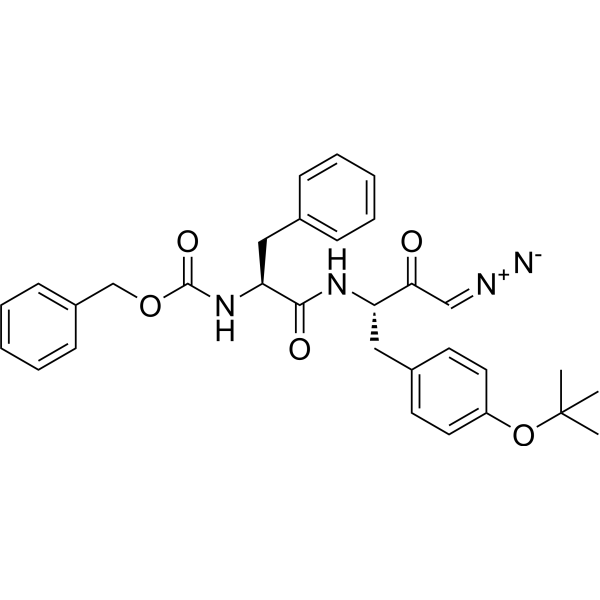
Z-Phe-Tyr(tBu)-diazomethylketone is a potent cathepsin L inhibitor. Z-Phe-Tyr(tBu)-diazomethylketone mediates reovirus disassembly. Z-Phe-Tyr(tBu)-diazomethylketone decreases viral detection .
loading...
    loading...
1
1 Cited Publications
Cat. No.: HY-137441A
CAS No.: 2267287-26-1
Purity:  98.67%
Synonyms: PU-HZ151 hydrochloride
Target:  

HSP

Research Areas:  

Neurological Disease Cancer

Icapamespib (PU-HZ151; PU-AD) hydrochloride is a selective, orally active inhibitor of Epichaperomes assembled by HSP90 with slow dissociation kinetics. Icapamespib hydrochloride can cross the blood-brain barrier (BBB) ??and induce epichaperome disassembly by non-covalently binding to HSP90, restoring the normal protein-protein interaction network. Icapamespib hydrochloride can specifically disrupt disease-related abnormal protein interaction networks, reduce neurotoxic protein aggregation and tumor cell survival signals. Icapamespib hydrochloride can be used in the research of neurodegenerative diseases such as Alzheimer's disease, as well as cancers such as glioblastoma and metastatic breast cancer .
loading...
    loading...
Cat. No.: HY-121447
CAS No.: 2363-71-5
Purity:  ≥98.0%
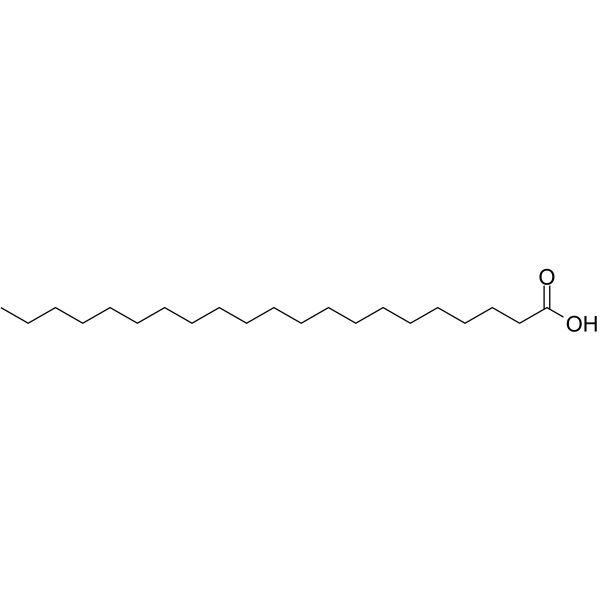
Heneicosanoic acid is an odd-chain saturated fatty acid widely present in human milk, fish, seeds, and cerebrosides in the cell membranes of the nervous system. Heneicosanoic acid can form Langmuir monolayers and is often used as a model to study lipid self-assembly and disassembly processes in biological membranes and drug delivery systems. In the low-temperature L'2 and CS crystalline phases, Heneicosanoic acid undergoes local oscillations, which in turn drive the spontaneous formation and expulsion of micelles and vesicles .
loading...
    loading...
Cat. No.: HY-N10341
CAS No.: 17313-52-9
Centaureidin is an orally active IFN-promoter that can be isolated from Bidens pilosa with an EC50 of 0.9 μg/mL. Centaureidin activates the Rho signal pathway, leading to actin and tubulin disassembly, and resulting in dendrite retraction and stress fiber formation in melanocytes. Centaureidin shows high tumor cell growth inhibitory activities. Centaureidin significantly inhibits paw edema in mice [1][2][3][4][5].
loading...
    loading...
Cat. No.: HY-P4130
CAS No.: 1180485-56-6
Target:  

Peptides

Research Areas:  

Infection

MPS-Gαi2 is a membrane-permeable inhibitory peptide corresponding to the C-terminal sequence of Gαi2 involved in receptor interaction. MPS-Gαi2 blocks Hep I-induced binding of Gαi2 to LRP, thereby inhibiting pertussis toxin-sensitive Gαi2 signaling and focal adhesion disassembly mediated by thrombospondin/Hep I-calreticulin-LRP. MPS-Gαi2 can be used in studies on G protein signaling and cell adhesion regulation .
loading...
    loading...
Cat. No.: HY-13520R
CAS No.: 31430-18-9
Synonyms: Oncodazole (Standard); R17934 (Standard)
Nocodazole (Standard) is the analytical standard of Nocodazole. This product is intended for research and analytical applications. Nocodazole (Oncodazole) is a rapidly-reversible inhibitor of microtubule. Nocodazole binds to β-tubulin and disrupts microtubule assembly/disassembly dynamics, which prevents mitosis and induces apoptosis in tumor cells. Nocodazole inhibits Bcr-Abl.
loading...
    loading...
Cat. No.: HY-147658
CAS No.: 1321361-13-0
AChE/BChE/BACE-1-IN-1 (Compound 4k) is an orally active inhibitor of AChE, BChE, and BACE-1 with IC50 values of 0.058, 0.082 and 0.115 μM against hAChE, hBChE and hBACE-1, respectively. AChE/BChE/BACE-1-IN-1 shows considerable PAS-AChE binding capability, excellent brain permeation, potential disassembly of Aβ aggregates, and neuroprotective activity against Aβ-induced stress. AChE/BChE/BACE-1-IN-1 has remarkable antioxidant potential .
loading...
    loading...
Cat. No.: HY-147659
CAS No.: 1877000-20-8
AChE/BChE/BACE-1-IN-2 (Compound 4o) is an orally active inhibitor of AChE, BChE, and BACE-1 with IC50 values of 0.069, 0.127 and 0.097 μM against hAChE, hBChE and hBACE-1, respectively. AChE/BChE/BACE-1-IN-2 shows considerable PAS-AChE binding capability, excellent brain permeation, potential disassembly of Aβ aggregates, and neuroprotective activity against Aβ-induced stress. AChE/BChE/BACE-1-IN-2 has remarkable antioxidant potential .
loading...
    loading...
Cat. No.: HY-154871
CAS No.: 2152-75-2
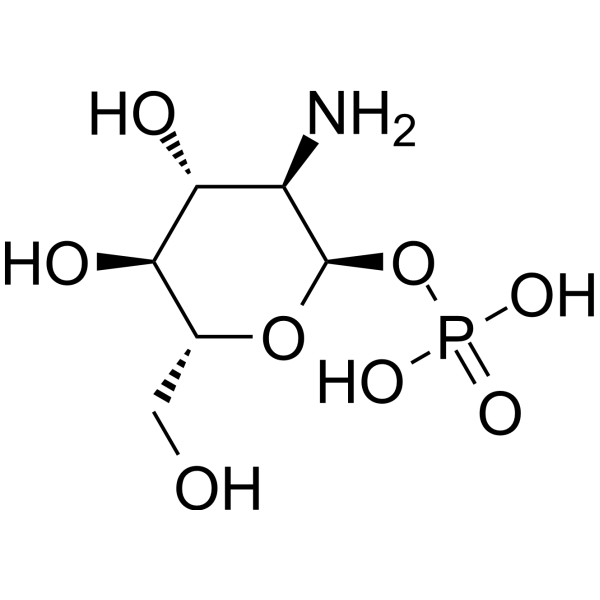
α-D-Glucosamine 1-phosphate is a glycosyl donor analog of Glc-1-P. α-D-Glucosamine 1-phosphate acts as a glycosyl donor to produce α(1→4)-linked glucosamine chains in the enzyme-catalyzed polymerization reaction mediated by thermostable α-glucan phosphorylase. α-D-Glucosamine 1-phosphate serves as a glycosyl donor analog to generate a pentasaccharide with a glucosamine residue at the non-reducing end in the maltotetraose glucosamination reaction catalyzed by potato α-glucan phosphorylase. α-D-Glucosamine 1-phosphate is used for the synthesis of amphiphilic block polysaccharides with pH-responsive assembly/disassembly properties .
loading...
    loading...
Cat. No.: HY-P11784
CAS No.: 1423724-82-6
Target:  

Peptides

Research Areas:  

Others

p5RHH is an acid-activated membrane-lytic peptide derived from melittin. p5RHH, as a siRNA delivery vector, initiates synchronous disassembly of nanocomplexes and endosome lysis in response to acidic pH, and triggers the release of siRNA into the cytoplasm following macropinocytosis .
loading...
    loading...
Cat. No.: HY-P11800A
CAS No.: 1257658-47-1
Target:  

Exosomes MMP

Research Areas:  

Inflammation/Immunology

GPLGVRGC is a cysteine-tagged variant of GPLGVRG (HY-P11800). GPLGVRGC is hydrolyzable by MMP13. GPLGVRGC mediates the disassembly of micelle-exosome systems, enhances chondrocyte endocytosis, and promotes responsive system uptake. GPLGVRGC confers targeted delivery and responsive release properties to micelle-exosome systems. GPLGVRGC is applicable to the research of osteoarthritis .
loading...
    loading...
Cat. No.: HY-186250
CAS No.: 3055559-33-3
Research Areas:  

Cancer

TRIM21 ligand-1 is a TRIM21 ligand. TRIM21 ligand-1 mediates the degradation of nuclear pore complex proteins GLE1 and NUP155. TRIM21 ligand-1 induces the disassembly of nuclear pore complexes, which in turn leads to cell death. TRIM21 ligand-1 can be used in cancer research .
loading...
    loading...
Cat. No.: HY-185483
AMG-172 is an antibody-drug conjugate (ADC) composed of a fully human IgG1 monoclonal anti-CD27L antibody conjugated to DM1 (HY-19792) via the non-cleavable linker MCC. AMG-172 releases the intracellular active component Lysine-MCC-DM through catabolism. Lysine-MCC-DM inhibits the assembly and disassembly dynamics of Microtubule and induces cell arrest at metaphase. AMG-172 can be used for research on relapsed/refractory clear cell renal cell carcinoma .
loading...
    loading...
  • 1

