1. Search Result
Search Result
Results for "

driven

" in MedChemExpress (MCE) Product Catalog:

304

Inhibitors & Agonists

12

Screening Libraries

4

Fluorescent Dyes

38

Biochemical Assay Reagents

7

Peptides

12

Inhibitory Antibodies

5

Natural
Products

7

Isotope-Labeled Compounds

22

Click Chemistry

2

Oligonucleotides

Cat. No. Product Name Target Research Areas Chemical Structure
  • HY-13323
    CX-5461
    Maximum Cited Publications
    66 Publications Verification

    DNA/RNA Synthesis Cancer
    CX-5461 is a potent and oral rRNA synthesis inhibitor. It inhibits RNA polymerase I-driven transcription of rRNA with IC50s of 142, 113, and 54 nM in HCT-116, A375, and MIA PaCa-2 cells, respectively .
    CX-5461
  • HY-136270
    Gartisertib
    5 Publications Verification

    VX-803; M4344; ATR inhibitor 2

    ATM/ATR Cancer
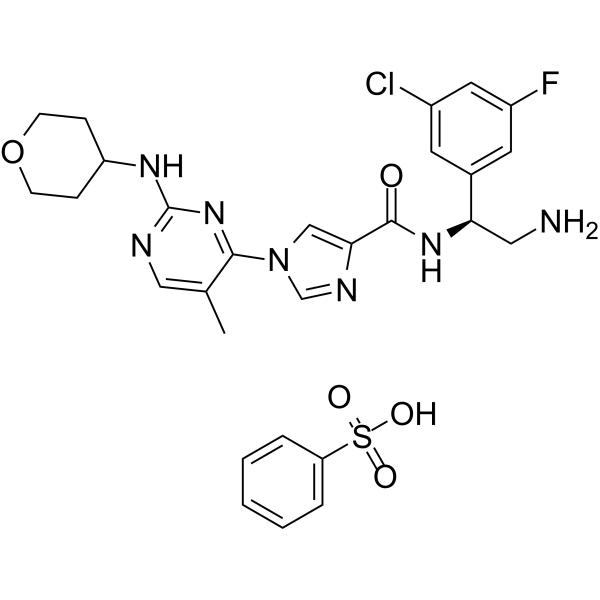
    Gartisertib (VX-803) is an ATP-competitive, orally active, and selective ATR inhibitor, with a Ki of <150 pM. Gartisertib potently inhibits ATR-driven phosphorylated checkpoint kinase-1 (Chk1) phosphorylation with an IC50 of 8 nM. Antitumor activity .
    Gartisertib
  • HY-145010
    SN-011
    10+ Cited Publications

    STING Inflammation/Immunology
    SN-011 is a potent and selective mouse and human STING inhibitor, with an IC50 of 76 nM for STING signaling. SN-011 competes with cyclic dinucleotide (CDN) for the binding pocket of the STING dimer, blocking CDN binding and STING activation. SN-011 can be used for the research of STING-driven autoimmune and inflammatory disease .
    SN-011
  • HY-139361
    Sulfopin
    3 Publications Verification

    PIN1-3

    PIN1 Cancer
    Sulfopin (PIN1-3) is a highly selective covalent inhibitor of Pin1 with an apparent Ki of 17 nM. Sulfopin blocks Myc-driven tumors in vivo. The peptidyl-prolyl isomerase, Pin1, is exploited in cancer to activate oncogenes and inactivate tumor suppressors .
    Sulfopin
  • HY-112929
    DT-061
    15+ Cited Publications

    Phosphatase Cancer
    DT-061 is an orally bioavailable activator of protein phosphatase 2A (PP2A) and could be applied in the therapy of KRAS-mutant and MYC-driven tumorigenesis .
    DT-061
  • HY-W099535

    Biochemical Assay Reagents Others
    Lithium dodecyl sulfate is an anionic hydrocarbon surfactant with both surface tension reduction and interfacial adsorption capabilities. Lithium dodecyl sulfate induces low surface viscosity; it forms micelles in aqueous solutions through entropy-driven (low temperature) and enthalpy-driven (high temperature) mechanisms. When acting synergistically with tetrabutylammonium bromide, Lithium dodecyl sulfate exhibits cloud point behavior due to micelle aggregation and phase separation. Lithium dodecyl sulfate can form an adsorption layer at the air-water interface with quantifiable surface excess and minimum area per molecule, and it has higher equilibrium surface tension and foamability compared to other dodecyl sulfate counterion variants. The foam stability of Lithium dodecyl sulfate above its critical micelle concentration is low, and its dynamic surface tension pattern changes dynamically with bubble frequency .
    Lithium dodecyl sulfate
  • HY-121802
    Dynarrestin
    4 Publications Verification

    Hedgehog Cancer
    Dynarrestin is a aminothiazole inhibitor of cytoplasmic dyneins 1 and 2. Dynarrestin rapidly and reversibly inhibits dynein 1-driven microtubule gliding in vitro plus a range of dynein 1- and 2-dependent processes in cells without affecting ATP hydrolysis and interfering with ciliogenesis. Dynarrestin suppresses hedgehog (Hh)-dependent proliferation of neuronal precursors and tumor cells .
    Dynarrestin
  • HY-131968
    BMS-986202
    1 Publications Verification

    JAK Cytochrome P450 Inflammation/Immunology
    BMS-986202 is a potent, selective and orally active Tyk2 inhibitor that binds to Tyk2 JH2 with an IC50 value of 0.19 nM and a Ki of 0.02 nM. BMS-986202 is remarkably selective over other kinases including Jak family members. BMS-986202 is also a weak inhibitor of CYP2C19 with an IC50 value of 14 μM. BMS-986202 can be used for IL-23-driven acanthosis, anti-CD40-induced colitis, and spontaneous lupus research. BMS-986202 is a de novo deuterium .
    BMS-986202
  • HY-134978A
    (+)SHIN2
    2 Publications Verification

    SHMT Cancer
    (+)SHIN2 is a serine hydroxymethyltransferase (SHMT) inhibitor, whose target can be traced with 13C-serine. (+)SHIN2 increases survival in NOTCH1-driven mouse primary acute lymphoblastic leukemia (T-ALL) in vivo with a synergistic effect with Methotrexate (HY-14519) . (+)SHIN2 is a click chemistry reagent, it contains an Alkyne group and can undergo copper-catalyzed azide-alkyne cycloaddition (CuAAc) with molecules containing Azide groups.
    (+)SHIN2
  • HY-19350
    BML-210
    2 Publications Verification

    HDAC Apoptosis Cancer
    BML-210 is a potent HDAC inhibitor. BML-210 can inhibit the HDAC4-VP16-driven reporter signal with an apparent IC50 of ∼5 µM. BML-210 has a specific disruptive effect on the HDAC4:MEF2 interaction. BML-210 causes an increase in the G0/G1 phase. BML-210 induces apoptosis and displays antitumour activities in orthotopic mammary tumours in mice .
    BML-210
  • HY-W096983

    Dodecyltrimethylammonium chloride,for IPC,≥99%

    Environmental Pollutants Biochemical Assay Reagents Others
    DTAC (Dodecyltrimethylammonium chloride), for IPC, ≥99% is a quaternary ammonium cationic surfactant. DTAC, for IPC, ≥99% can form micelles in aqueous media, which interact with and encapsulate Diclofenac sodium (HY-15037) molecules; the micellization process is entropy-driven at lower temperatures and enthalpy-driven at higher temperatures .
    DTAC,for IPC,≥99%
  • HY-D1459

    Fluorescent Dye Metabolic Disease
    BODIPY 665/676 is a lipophilic radical-sensitive fluorescent probe that can be used to study radical-driven lipid autoxidation (Ex/Em=665/676 nm) .
    BODIPY 665/676
  • HY-179078

    OLIG2 Apoptosis Caspase PARP Neurological Disease Cancer
    CT-179 is a brain-penetrant and orally active OLIG2 inhibitor with a human IC50 of 1250 nM. CT-179 disrupts OLIG2 dimerization, phosphorylation, and DNA binding, blocking OLIG2-driven transcription. CT-179 induces G2/M phase arrest and increases G0 population. CT-179 induces apoptosis by reducing anti-apoptotic proteins and increasing cleaved caspase-3 and cleaved PARP. CT-179 can be used for the research of subgroup medulloblastoma .
    CT-179
  • HY-136788

    AKST4290; BI144807

    CCR Neurological Disease Inflammation/Immunology Cancer
    ALK4290 (AKST4290) is a potent, orally active and selective CCR3 inhibitor with a Ki of 3.2 nM. ALK4290 blocks CCR3-mediated signaling, abrogates macrophage supernatant-driven mesothelial-to-mesenchymal transition, and decreases p38 phosphorylation. ALK4290 inhibits CCL26-CCR3 axis-driven GPX2-mediated B-cell activation, and targets B cells to inhibit activation by GPX2-overexpressing tumor cells. ALK4290 can be used for the research of hepatocellular carcinome and Parkinson’s disease .
    ALK4290
  • HY-19706
    ARS-853
    5 Publications Verification

    Ras Apoptosis Cancer
    ARS-853 is a cell-active, selective, covalent KRAS G12C inhibitor with an IC50 of 2.5 μM. ARS-853 inhibits mutant KRAS-driven signaling by binding to the GDP-bound oncoprotein and preventing activation .
    ARS-853
  • HY-123905

    MicroRNA Parasite Infection Cancer
    LIN28 inhibitor LI71 is a LIN28 inhibitor that effectively inhibits LIN28:let-7 binding (IC50: 7 μM). LIN28 inhibitor LI71 can abolish LIN28-mediated oligouridylation of let-7 precursor (IC50: 27 μM). LIN28 inhibitor LI71 has potential application value in LIN28-driven cancer research. LIN28 inhibitor LI71 inhibits the interaction of cold shock protein of Plasmodium falciparum (PfCoSP) with DNA and α/β tubulin and has an inhibitory effect on Plasmodium falciparum .
    LIN28 inhibitor LI71
  • HY-P99217

    AMG 102

    c-Met/HGFR Cancer
    Rilotumumab (AMG 102) is an anti-HGF (anti-hepatocyte growth factor) monoclonal antibody, inhibits HGF/MET-driven signaling. Rilotumumab shows anti-tumor activity, and can be used in castration-resistant prostate cancer (CRPC) and solid tumor research .
    Rilotumumab
  • HY-P99450

    IPH 5401; Anti-C5aR1 mAb

    Complement System Inflammation/Immunology Cancer
    Avdoralimab (IPH 5401) is a fully human IgGκ monoclonal antibody that targets the complement C5a receptor 1 (C5aR1) that prevents its binding to C5a. Avdoralimab can be used for complement-driven inflammatory diseases and solid tumours research .
    Avdoralimab
  • HY-106228

    Fungal Bacterial Glutathione Peroxidase Infection
    HLF1-11, a human lactoferrin-derived peptide, is a broad spectrum antimicrobial agent. HLF1-11 inhibits human MPO activity. HLF1-11 also directs GM-CSF-driven monocyte differentiation toward macrophages, and enhances immune responses .
    HLF1-11
  • HY-116785

    DNA/RNA Synthesis Cancer
    BRD32048 is a direct binder of ETV1 with a KD of 17.1 μM. BRD32048 modulates both ETV1-mediated transcriptional activity and invasion of ETV1-driven cancer cells. BRD32048 inhibits ETV1 acetylation and promotes its degradation. BRD32048 acts as a top candidate ETV1 perturbagen .
    BRD32048
  • HY-176792

    PROTACs Ras Cancer
    ACBI-4 is a selective GTP-loaded active state of KRAS (KRAS(on)) PROTAC degrader, with Kd values of 141 nM against KRAS G12R. ACBI-4 forms a stable ternary complex with VHL, triggering ubiquitination and KRAS degradation via the ubiquitin-proteasome system. ACBI-4 induces antiproliferative effects in KRAS mutant-driven cancer cells. ACBI-4 can be used for the research of KRAS mutant-driven cancer .
    ACBI-4
  • HY-156632

    KIN-3248

    FGFR Cancer
    Resigratinib (KIN-3248) is an irreversible and orally active covalent inhibitor of FGFR1-4 that effectively inhibits wild-type and drug-resistant mutations (such as FGFR2 V565F, FGFR3 V555M). Resigratinib covalently binds to the Cys492 site of FGFR, blocks the FGFR signaling pathway, inhibits tumor cell proliferation and induces apoptosis. Resigratinib can be used for the study of FGFR2/3-driven solid tumors (such as cholangiocarcinoma and bladder cancer) .
    Resigratinib
  • HY-151881

    SOS1 Ras Cancer
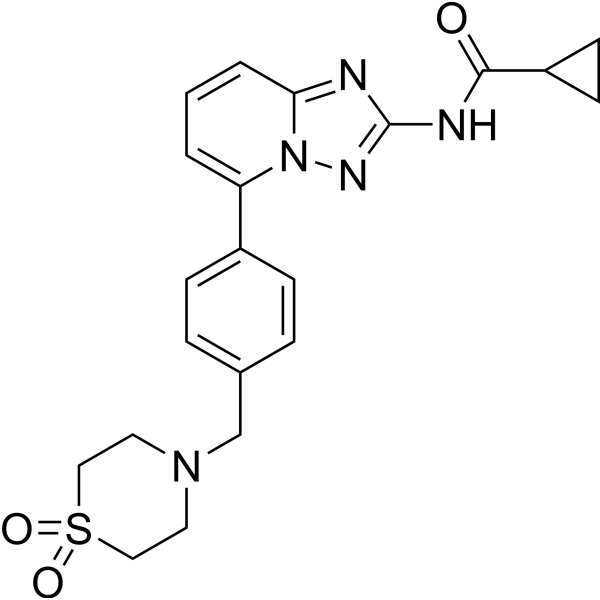
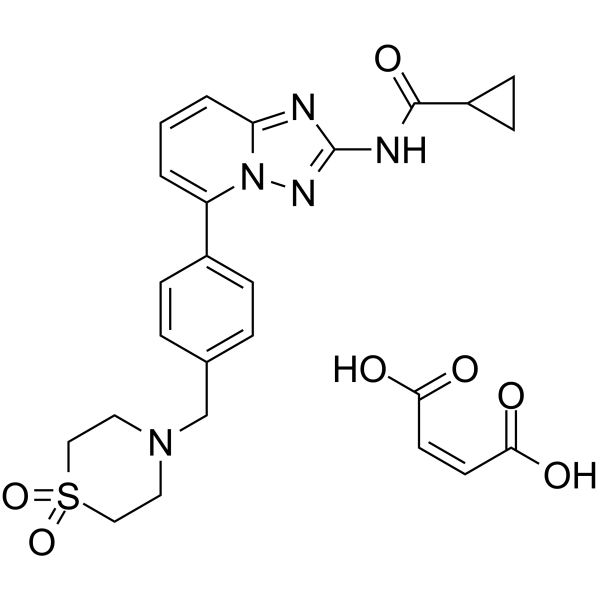
    SOS1-IN-15 (Compound 37) is an orally active SOS1 inhibitor with an IC50 of 5 nM. SOS1-IN-15 is a promising agent candidate for the research of KRAS-driven cancer .
    SOS1-IN-15
  • HY-107730

    Neuropeptide Y Receptor Neurological Disease
    NPY5RA-972 is an orally active, central nervous system (CNS) penetrating, potent and selective NPY Y5 receptor antagonist that prevents feeding driven by activation of this receptor .
    NPY5RA-972
  • HY-128777
    WEHI-9625
    1 Publications Verification

    VDAC Apoptosis Cancer
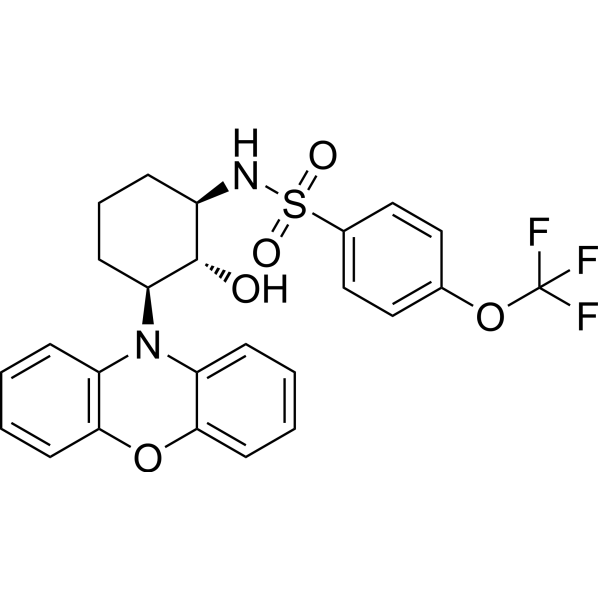
    WEHI-9625 is a tricyclic sulfone, first-in-class inhibitor of apoptosis with an EC50 of 69 nM. WEHI-9625 binds to VDAC2 and promotes its ability to inhibit apoptosis driven by mouse BAK. WEHI-9625 is completely inactive against both human BAK and the closely related apoptosis effector BAX .
    WEHI-9625
  • HY-175743

    FGFR Cancer
    TYRA-200 is a potent and orally active FGFR2 inhibitor. TYRA-200 inhibits the kinase activity of wild-type FGFR2 and its mutants. TYRA-200 induces significant tumor regression in FGFR2-driven cancer models. TYRA-200 can be used for the research of FGFR2-altered advanced solid tumors, intrahepatic cholangiocarcinoma, and endometrial cancer .
    TYRA-200
  • HY-174270

    NOD-like Receptor (NLR) Interleukin Related NEKs Inflammation/Immunology
    NLRP3-IN-79 is an orally active NLRP3 inhibitor. NLRP3-IN-79 inhibits NLRP3 inflammasome with an IC50 of 10.69 nM. NLRP3-IN-79 blocks NLRP3 inflammasome assembly by directly binding to NLRP3 and disrupting the NEK7-NLRP3 interaction. NLRP3-IN-79 can be used for the study of NLRP3-driven diseases model, including systemic inflammation, peritonitis, and colitis .
    NLRP3-IN-79
  • HY-14460

    FLAP Inflammation/Immunology
    AM679 is a potent, selective 5-lipoxygenase-activating protein (FLAP) inhibitor with an IC50 of 2 nM in a human FLAP membrane binding assay. AM679 markedly reduces the respiratory syncytial virus-driven ocular pathology as well as the synthesis of cysteinyl leukotrienes (CysLTs) in the eye .
    AM679
  • HY-U00461

    Ketohexokinase inhibitor 1

    Ketohexokinase Metabolic Disease
    PF-06835919 (Ketohexokinase inhibitor 1) is an inhibitor of ketohexokinase (KHK), with IC50s of 8.4 nM and 66 nM for KHK-C and KHK-A, respectively. PF-06835919 can be used for the study of metabolic disorders driven by the overconsumption of Fructose (HY-N0395) .
    PF-06835919
  • HY-164304

    Pyroptosis Interleukin Related NOD-like Receptor (NLR) Cardiovascular Disease Inflammation/Immunology
    INF 195 is an NLRP3 inhibitor. INF 195 can inhibit NLRP3 driven macrophage pyroptosis and IL-1β release, with an EC50 value of 0.15 μM. INF 195 can reduce the infarct size of isolated mouse hearts at low doses, effectively preventing myocardial ischemia/reperfusion injury .
    INF 195
  • HY-151335

    HSP Cancer
    KU-177 is a potent inhibitor of Hsp90 ATPase homologue 1 (Aha1), ablates Aha1-driven enhancement of Hsp90-dependent tau aggregation. KU-177 also disrupts Aha1/Hsp90 interactions (IC50=4.08 μM) without inhibition of Hsp90’s ATPase activity. KU-177 can be used for tauopathies research .
    KU-177
  • HY-124674A
    CCT365623 hydrochloride
    1 Publications Verification

    Monoamine Oxidase EGFR Akt TGF-beta/Smad Cancer
    CCT365623 hydrochloride is an orally active lysyl oxidase (LOX) inhibitor, with an IC50 of 0.89 μM. CCT365623 hydrochloride suppresses EGFR (pY1068) and AKT phosphorylation driven by EGF. CCT365623 hydrochloride is extremely well tolerated, and has good pharmacokinetic properties .
    CCT365623 hydrochloride
  • HY-178042

    Ras Akt ERK Cancer
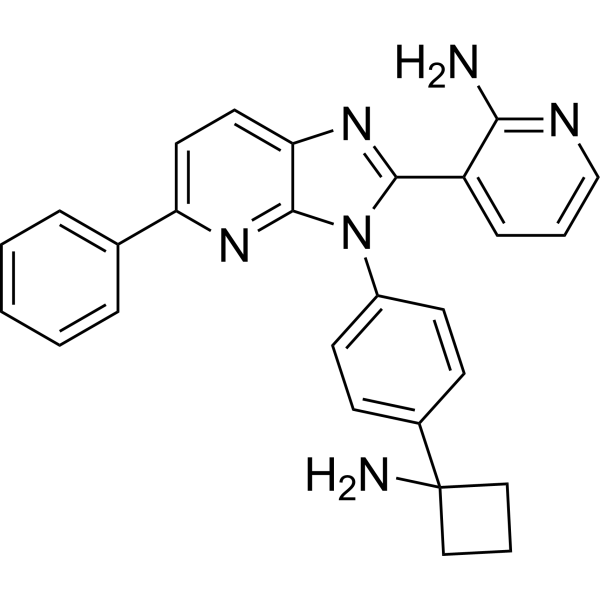
    SS-3091 is a pan-KRas inhibitor active across KRas G12D, KRas G12C, KRas G12V, KRas G12S mutants, with minimal effects on non-KRas-driven cancer cells. SS-3091 binds to the KRas·ARaf interaction interface, destabilizes the complex, and attenuates KRas activity. SS-3091 suppresses phosphorylation of S6K, Akt, and ERK. SS-3091 reduces proliferation and decreases colony formation of cancer cells bearing KRas G12 mutations. SS-3091 can be used for the research of KRas-driven cancers .
    SS-3091
  • HY-W342380

    NSC 5067

    E1/E2/E3 Enzyme Cancer
    SPI-05 (NSC 5067) is a non-competitive SUMO-specific proteases (SENP1/2) inhibitor (IC50=60 μM). SPI-05 is promising for research of cancers, such as prostate cancer and hypoxia-driven solid tumors with SENP1 overexpression .
    SPI-05
  • HY-176875

    Molecular Glues Cancer
    CoREST/LSD1 degrader-1 (Compound 4) is a molecular glue degrader targeting the KBTBD4 E3 ubiquitin ligase. CoREST/LSD1 degrader-1 is promising for research of KBTBD4-mutant driven cancers (e.g., medulloblastoma) and epigenetic dysregulation disorders .
    CoREST/LSD1 degrader-1
  • HY-13459

    Smo Cancer
    PF-5274857 is a potent, selective, orally active and brain-penetrant antagonist of Smo, with an IC50 of 5.8 nM and Ki of 4.6 nM. PF-5274857 has potential for research of tumor types including brain tumors and brain metastasis driven by an activated Hh pathway .
    PF-5274857
  • HY-100849

    JAK Inflammation/Immunology
    JAK3i is a highly selective JAK3 inhibitor (IC50: 0.43 nM). JAK3i forms a covalent bond with a cysteine in JAK3, but not the closely related kinase domains in JAK1, JAK2, or TYK2. JAK3i abolishes IL-2-driven T-cell proliferation in vivo and has the potential for  autoimmune disease research .
    JAK 3i
  • HY-177445

    Histone Acetyltransferase Estrogen Receptor/ERR Cancer
    KAT6-IN-4 (Compound Example 2) is a selective lysine acetyltransferase 6 (KAT6) inhibitor. KAT6-IN-4 suppresses transcription of oncogenes like ERα. KAT6-IN-4 demonstrates potent antitumor efficacy in ER +/HER2 - breast cancer xenografts. KAT6-IN-4 is promising for research of KAT6-driven malignancies (e.g., breast cancer, NSCLC) .
    KAT6-IN-4
  • HY-P3277

    Ras Cancer
    KRpep-2d is a potent K-Ras inhibitor and inhibits proliferation of K-Ras-driven cancer cells. KRpep-2d can be used for cancer research .
    KRpep-2d
  • HY-163299
    pan-KRAS-IN-5
    1 Publications Verification

    Ras Apoptosis PI3K Akt p38 MAPK Cancer
    pan-KRAS-IN-5 is a pan-KRAS translation inhibitor by targeting 5′-UTR RNA G-quadruplexes (rG4s). pan-KRAS-IN-5 strongly binds to and stabilizes KRAS rG4s, inhibits KRAS translation, and blocks the MAPK and PI3K-AKT pathways. pan-KRAS-IN-5 induces cell cycle arrest, prompts apoptosis in KRAS-driven cancer cells. pan-KRAS-IN-5 inhibits tumor growth and KRAS expression in KRAS-mutant xenograft. KRAS-IN-5 can be used for KRAS-driven cancer research .
    pan-KRAS-IN-5
  • HY-175780

    CD28 IFNAR TNF Receptor Interleukin Related Cancer
    CD28-IN-1 (Compound 19MS-5) is a CD28 inhibitor with a KD of 12.48  μM. CD28-IN-1 has a superior binding capacity to CD28 and potently inhibits CD28-B7 interactions. CD28-IN-1 inhibits CD28-driven immune activation and suppresses cytokine (IFN-γ, IL-2 and TNF-α) production in primary human T cells co-cultured with tumor spheroids and human epithelial tissues. CD28-IN-1 can be used for tumor immunity research .
    CD28-IN-1
  • HY-W423595

    EGFR Cancer
    BEBT-109 is a potent pan-mutant-selective EGFR inhibitor. BEBT-109 has improved pharmacokinetic properties. BEBT-109 can be used for multiple mutant-EGFR-driven non-small cell lung cancer (NSCLC) research .
    BEBT-109
  • HY-175022

    PROTACs IRAK Toll-like Receptor (TLR) Interleukin Related Inflammation/Immunology
    PROTAC IRAK4 degrader-13 (Degrader 1) is a selective IRAK4 PROTAC degrader with DC50s of 0.86 and 1.1 nM for monocytes and lymphocytes in PBMCs, respectively. PROTAC IRAK4 degrader-13 significantly induces TIR signal activation, and inhibits the expression of circulating proinflammatory cytokines in Imiquimod (HY-B0180) induced psoriasis mice model. PROTAC IRAK4 degrader-13 can be used for TLR- and IL-1R-driven driven neutrophilic inflammation diseases like hidradenitis suppurativa (HS) and atopic dermatitis (AD) research . Pink: IRAK4 ligand; Blue: E3 ligase ligand; Black: linker
    PROTAC IRAK4 degrader-13
  • HY-122878

    HSP Cancer
    HS-131, a near infrared dye tethered Hsp90 inhibitor, is able to detect oncogene-driven breast cancers, including multiple different molecular subtypes of human breast cancers .
    HS-131
  • HY-178122

    LIM Kinase (LIMK) Cancer
    THNAN69 is a potent chemical probe degrader targeting LIMK2, with a DC50 value of 1 nM. THNAN69 can be used for the study of diseases driven by LIMK2 overexpression or dysregulation, such as cancers and ocular diseases .
    THNAN69
  • HY-123952

    TRC-382

    EGFR Cancer
    RTC-5 (TRC-382) is an optimized phenothiazine with anti-cancer potency. RTC-5 demonstrates efficacy against a xenograft model of an EGFR driven cancer, its effects is attributed to concomitant negative regulation of PI3K-AKT and RAS-ERK signaling .
    RTC-5
  • HY-163620

    FGFR Apoptosis Cancer
    LHQ490 is a selective FGFR2 inhibitor, with an IC50 of 5.2 nM. LHQ490 efficiently inhibits the proliferation of BaF3-FGFR2 cells with an IC50 value of 1.4 nM. LHQ490 inhibits FGFR2-driven cancer cell proliferation and induces apoptosis of FGFR2-driven cancer cells .
    LHQ490
  • HY-145843

    c-Myc Cancer
    c-Myc inhibitor 5 (DA3) is a fluorescent, long chain-bridged bispurine that selectively targets the c-MYC G-quadruplex (KD of 16 μM). c-Myc inhibitor 5 shows inhibition on c-MYC expression rather than other G4-driven oncogenes .
    c-Myc inhibitor 5
  • HY-154313

    Clospirazine

    Ras Cancer
    Spiclomazine (Clospirazine) is a potent mutant KRAS(G12C) inhibitor that selectively inhibits mutant KRAS-driven pancreatic cancer. Spiclomazine can eliminate KRas-GTP levels in KRAS-driven pancreatic cancer and effectively inhibit RAS-mediated signaling. Spiclomazine significantly inhibits tumor progression in mouse renal capsule xenotransplantation models .
    Spiclomazine
  • HY-124826

    NSC 109268

    β-catenin Cancer
    BC21 (NSC 109268) is a β-catenin/Tcf4 inhibitor with an IC50 of 5 μM. BC21 effectively inhibits the binding of β-catenin to Tcf4-derived peptides and suppresses β-catenin/Tcf4-driven reporter gene activity. BC21 can be utilized in cancer research .
    BC21

Inquiry Online

Your information is safe with us. * Required Fields.

Salutation


Country or Region *

Applicant Name *


Organization Name *

Department *


Email Address *


Product Name *

Cat. No.


Requested quantity *

Phone Number *


Remarks

Inquiry Online

Inquiry Information

Product Name:
Cat. No.:
Quantity:
MCE Japan Authorized Agent:

