1. Search Result
Search Result
Results for "

electron acceptor

" in MedChemExpress (MCE) Product Catalog:

21

Inhibitors & Agonists

4

Fluorescent Dye

1

Biochemical Assay Reagents

1

Natural
Products

2

Isotope-Labeled Compounds

Cat. No. Product Name Target Research Areas Chemical Structure
  • HY-D1373
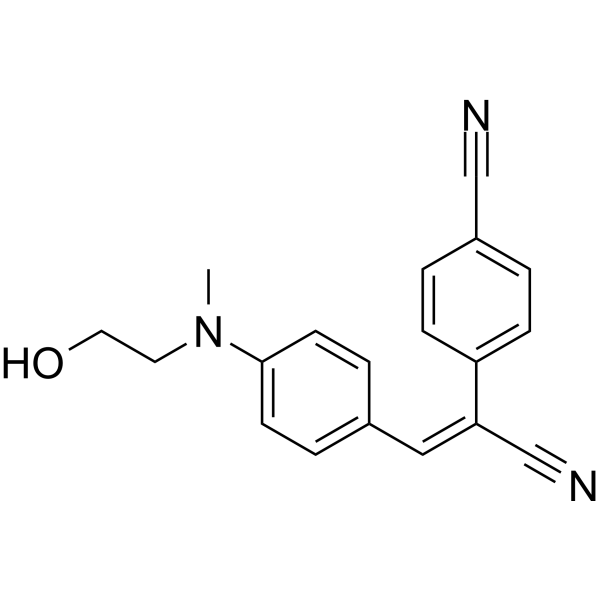
    HBC
    3 Publications Verification

    HBC 530

    Fluorescent Dye Others
    HBC (HBC 530) is a GFP fluorophore-like synthetic dye, with a structurally rigid electron acceptor and a strong electron donor. HBC has a low fluorescence background, and when combined with Pepper (RNA aptamer), HBC forms a tight complex and activates and emits bright fluorescence (Kd of ~3.5 nM). HBC emission peaks vary in different complexes and covers the spectrum from cyan to red. HBC can be used in the live cell imaging of RNA (Em/Ex = 530/485 nm) .
    HBC
  • HY-W015816

    2,6-DMBQ

    Photosystem II Others
    2,6-Dimethylbenzoquinone (2,6-DMBQ) is a benzoquinone derivative. 2,6-Dimethylbenzoquinone promotes Photosystem II-mediated photoelectrochemical water oxidation via electron transfer between spinach chloroplast Photosystem II membranes and carbon paste electrodes, and accepts electrons from Photosystem II during oxygen evolution assays. 2,6-Dimethylbenzoquinone undergoes direct photolysis in aqueous solution under 365 nm conditions, producing 2,6-dimethylhydroquinone and 3-hydroxy-2,6-dimethylbenzoquinone .
    2,6-Dimethylbenzoquinone
  • HY-107869

    Fluorescent Dye Cancer
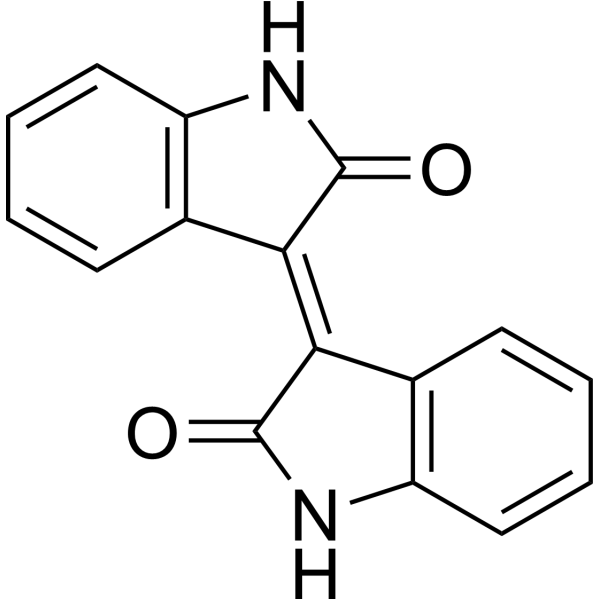
    Isoindigo acts as the acceptor unit in donor-acceptor (D-A) conjugated polymers and belongs to the indigo dye family. Isoindigo contains two lactam rings and exhibits strong electron-withdrawing properties. Isoindigo can be used in dyeing and pigment preparation. Isoindigo shows high mobility and excellent environmental stability in field-effect transistors (FETs). Isoindigo possesses the activity to inhibit tumor cell proliferation and has certain anti-tumor activity .
    Isoindigo
  • HY-D1509

    Fluorescent Dye Others
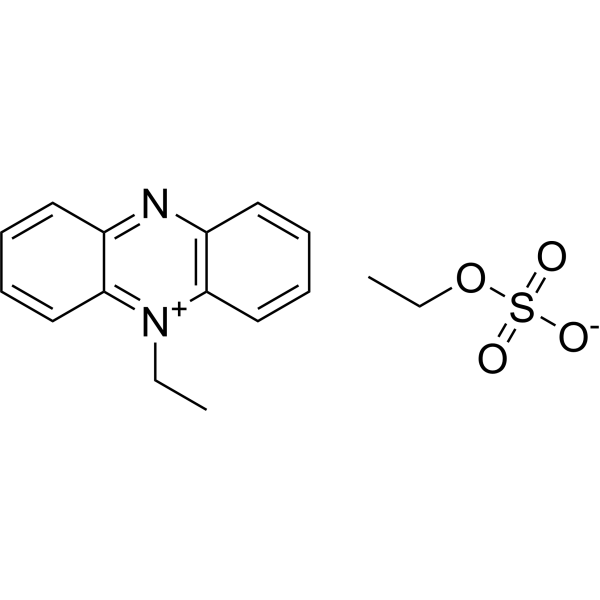
    Phenazine ethosulfate is a cationic dye (Ex=390 nm, Em=530 nm) and an electron acceptor that can be used in dye-linked enzyme assays. Phenazine ethosulfate is an intermediate for detecting nitric oxide reducatase (Nors) activity with the presence of ascorbic acid .
    Phenazine ethosulfate
  • HY-W725574

    BAS 29095

    Photosystem II Others
    Dimidazon (BAS 29095) is a weak electron transport inhibitor targeting photosystem II (PSII). Dimidazon inhibits electron transfer from the primary electron acceptor Q in PSII to photosystem I. Dimidazon is promising for research of photosynthesis regulation and weed control .
    Dimidazon
  • HY-Y0607S1

    Isotope-Labeled Compounds Drug Intermediate Others
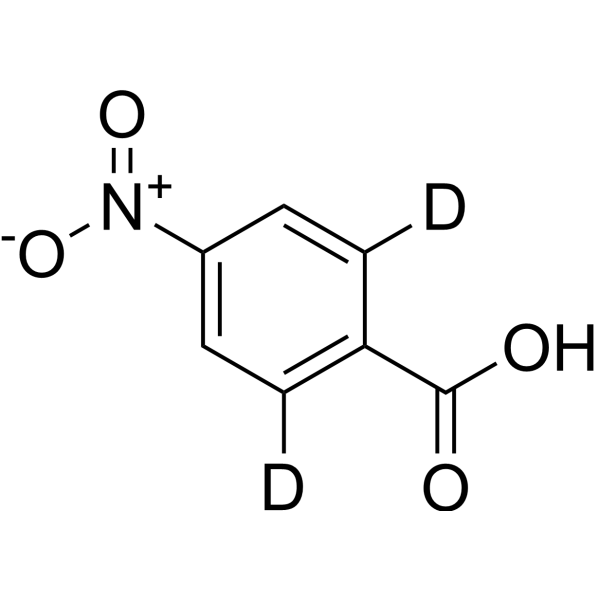
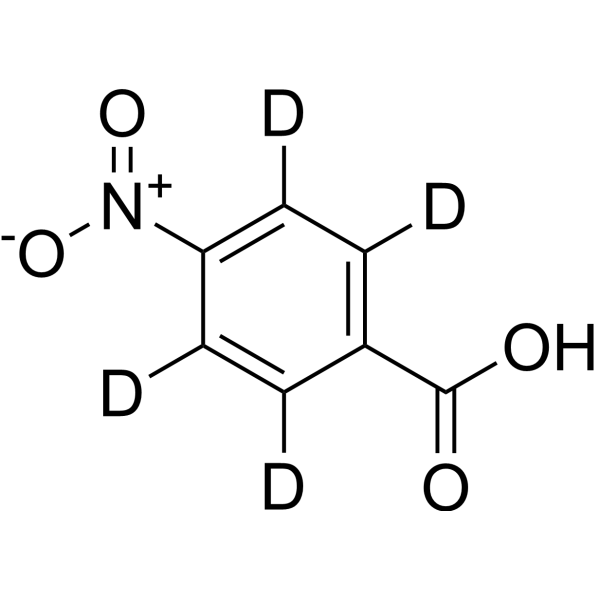
    4-Nitrobenzoic acid-d2 is the deuterium labeled 4-Nitrobenzoic acid (HY-Y0607). 4-Nitrobenzoic acid acts as a redox mediator and electron transfer promoter. 4-Nitrobenzoic acid accepts electrons from reduced glucose oxidase and transfers them to the electrode to facilitate the glucose oxidation reaction, while minimizing the formation of protonated amino groups .
    4-Nitrobenzoic acid-d2
  • HY-137294

    Y6

    Endogenous Metabolite Others
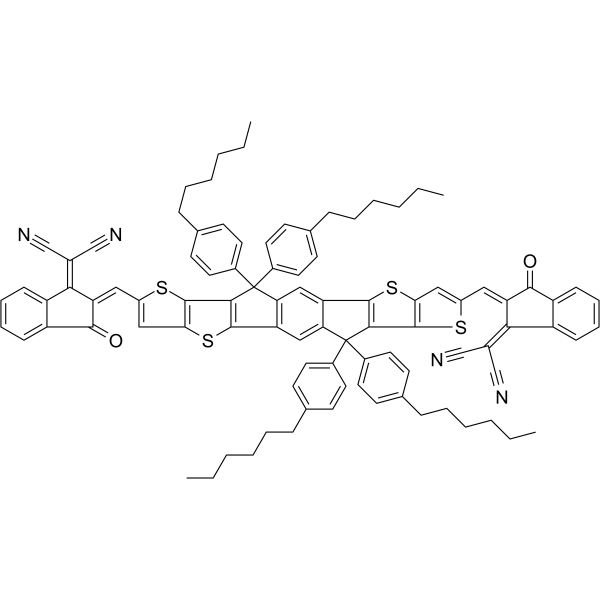
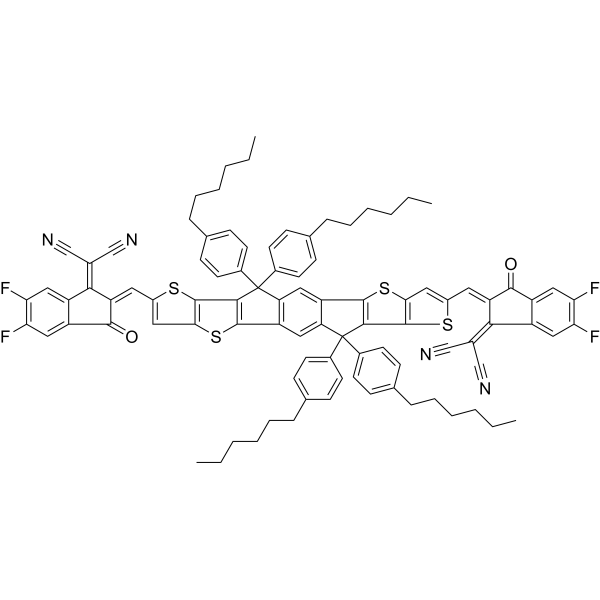
    BTPTT-4F (Y6) is a non-fullerene acceptor-donor-acceptor (A-D-A) type small molecular acceptor (SMA) characterized by its flexible alkyl chains and centrally fused ring structure. Featuring a ladder-type electron-deficient core, BTPTT-4F can be effectively blended with PM6, showcasing significant potential for enhancing the performance of organic photovoltaic applications. Its tailored optical properties and adjustable electronic energy levels contribute to improved thermal and photochemical stability, making it a promising candidate for next-generation high-performance organic solar cells.
    BTPTT-4F
  • HY-114856

    Biochemical Assay Reagents Others
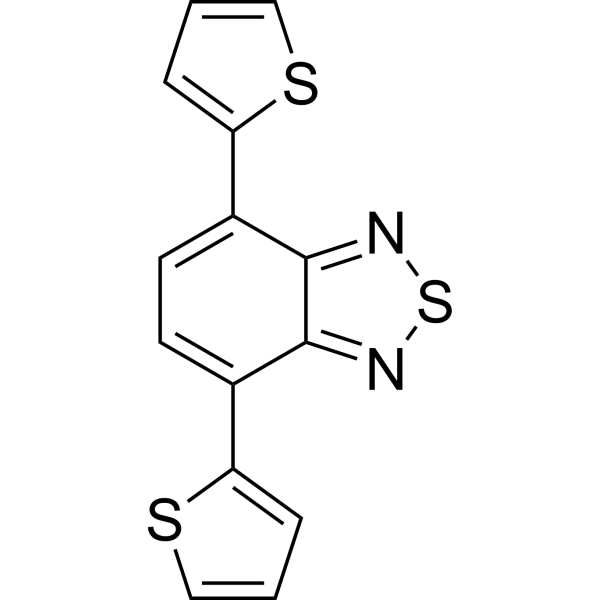
    DTBT is a six-membered heterocyclic ring that is commonly used in the preparation of organic electronic devices, such as P-type organic semiconductors (OFETs) and P-type organic photodiodes (OLEDs). DTBT has good performance in electron transmission and photoelectric conversion. DTBT polymerizes to form donor-acceptor polymers, which are used to prepare solar cells .
    DTBT
  • HY-N10516

    Bacterial Others
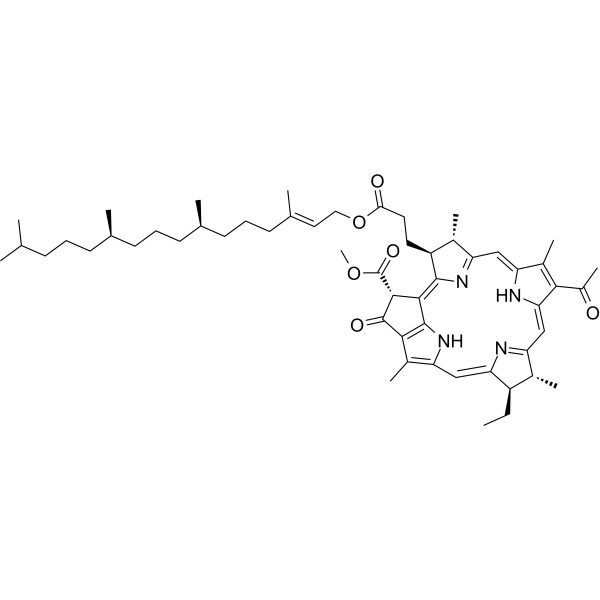
    Bacteriopheophytin, a photosynthetic pigment, is a bacterial demagnetised chlorophyll composed of bacterial chlorophyll in which two hydrogen atoms replace the magnesium center. Bacteriopheophytin acts as an electron acceptor in the purple bacterial reaction center (RC) and is involved in electron transfer .
    Bacteriopheophytin
  • HY-125830

    Biochemical Assay Reagents Others
    ITIC, non-fullerene acceptor, is an indacenodithienothiophene-based postfullerene electron acceptor, crystallizes in a profoundly different way as compared to fullerenes. ITIC has a superior thermal stability and undergoes a glass-crystal transition considerably below its high Tg of 180 °C.
    ITIC
  • HY-Y0607S

    Isotope-Labeled Compounds Drug Intermediate Others
    4-Nitrobenzoic acid-d4 is the deuterium labeled 4-Nitrobenzoic acid (HY-Y0607). 4-Nitrobenzoic acid is an oxidoreduction mediator and an electron transfer promoter. 4-Nitrobenzoic acid accepts electrons from the reduced glucose oxidase and transfers them to the electrode to promote the glucose oxidation reaction, while minimizing the formation of protonated amine groups .
    4-Nitrobenzoic acid-d4
  • HY-Y0607R

    Reference Standards Drug Intermediate Others
    4-Nitrobenzoic acid (Standard) is the analytical standard of 4-Nitrobenzoic acid (HY-Y0607). This product is intended for research and analytical applications. 4-Nitrobenzoic acid is an oxidoreduction mediator and an electron transfer promoter. 4-Nitrobenzoic acid accepts electrons from the reduced glucose oxidase and transfers them to the electrode to promote the glucose oxidation reaction, while minimizing the formation of protonated amine groups .
    4-Nitrobenzoic acid (Standard)
  • HY-125831

    Biochemical Assay Reagents Others
    ITIC-4F is an indacenodithienothiophene (IDTT)-based postfullerene electron acceptor. ITIC-4F has broad applicability in high-efficiency binary and ternary single-junction as well as tandem polymer solar cells (PSCs) .
    ITIC-4F
  • HY-149203

    Fluorescent Dye Others
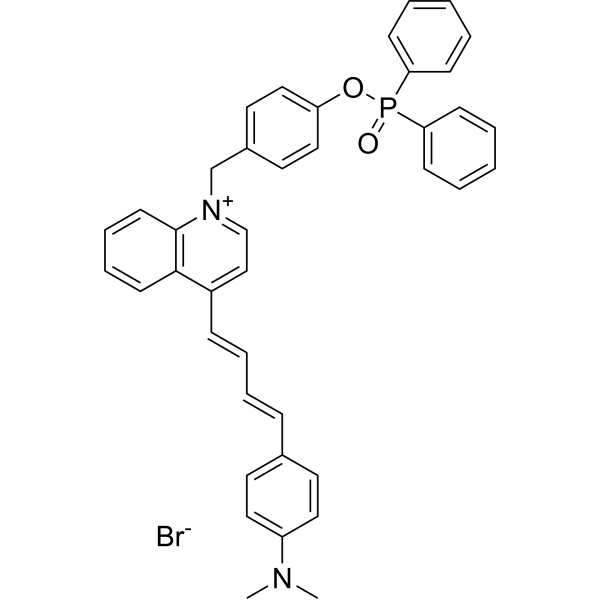
    MQA-P is a multifunctional near-infrared (NIR) fluorescent probe for simultaneously detecting ONOO -, viscosity, and polarity within mitochondria. MQA-P exhibits a remarkable turn-on response to ONOO -em=645 nm) and is highly sensitive to viscosity/polarity in the NIR channel with λem>704 nm. MQA-P exhibits excited-state intramolecular charge transfer (ESICT) feature that is highly polarity-sensitive by engineering N,N-dimethylamino as the electron donor and a quinoline cationic unit as the electron acceptor. MQA-P is used for ferroptosis or cancer diagnosis in vitro and in vivo via dual-channel images .
    MQA-P
  • HY-149203A

    Fluorescent Dye Others
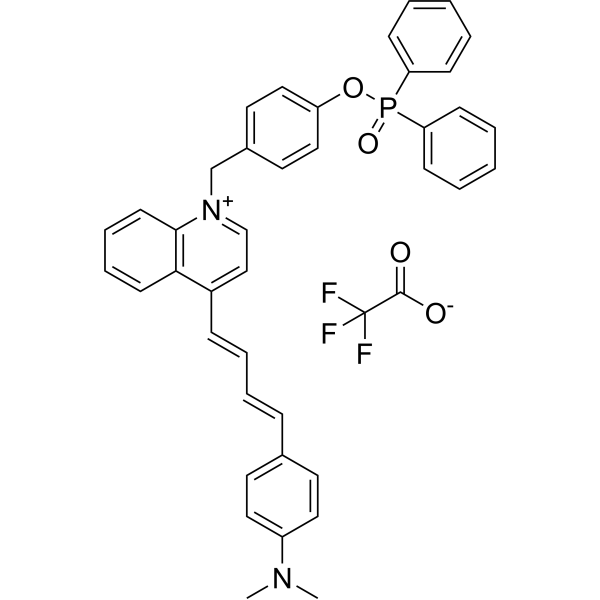
    MQA-P is a multifunctional near-infrared (NIR) fluorescent probe that simultaneously detects ONOO -, viscosity, and polarity within mitochondria. MQA-P exhibits significant response to ONOO -, λem=645 nm; and NIR channel at λem>704 nm Medium is highly sensitive to viscosity/polarity. MQA-P possesses excited-state intramolecular charge transfer (ESICT) properties that are highly sensitive to polarity by designing the N,N-dimethylamino group as the electron donor and the quinoline cation unit as the electron acceptor. MQA-P is used for ferroptosis or cancer diagnosis in vitro and in vivo via dual-channel images .
    MQA-P TFA
  • HY-130439

    SOD Metabolic Disease
    EUK 8 and EUK 134 are synthetic catalytic scavengers of reactive oxygen species with superoxide dismutase (SOD) and catalase mimetic activity.1 EUK 124 is a structural analog of EUK 8 and EUK 134 with significantly reduced activity. EUK 124 and EUK 8 inhibit superoxide-mediated reduction of an electron acceptor (i.e., SOD mimetic activity), with IC50 values of 5 μM and 0.7 μM, respectively.
    EUK-124
  • HY-124357

    S-Norfluoxetine hydrochloride; LY 215229 hydrochloride

    Dopamine Receptor Neurological Disease
    Seproxetine (S-Norfluoxetine) hydrochloride is a selective serotonin reuptake inhibitor (SSRI) that enhances serotonin levels in the brain by specifically inhibiting the serotonin uptake carrier. Seproxetine hydrochloride exhibits strong charge transfer interactions with π-electron acceptors, forming stable complexes that enhance its binding affinity to multiple receptors, including serotonin and dopamine receptors. Seproxetine hydrochloride demonstrates improved biological activity when interacting with charge transfer complexes, leading to increased stability and efficacy in therapeutic applications.
    Seproxetine hydrochloride
  • HY-W142745

    Aldehyde Oxidase (AO) Metabolic Disease
    Phenanthridine is an aldehyde oxidase 1 (AOX1) substrate, with oxidation by hAOX1 yielding phenanthridone when molecular oxygen, ferricyanide, or dichlorophenolindophenol serves as electron acceptor .
    Phenanthridine
  • HY-W854727

    Others Others
    N-Methylfulleropyrrolidine serves as an electron acceptor molecule characterized by its fullerene core and a nitrogen-free lone pair associated with the pyrrolidine ring. This compound can act as an intermediate in the synthesis of various functionalized fullerenes and plays a significant role in the development of opto-electronic devices. Comprehensive studies have been conducted on the photoinduced energy and electron transfer processes between oligothienylenevinylenes and N-Methylfulleropyrrolidine (MP-C60).
    N-Methylfulleropyrrolidine
  • HY-107869R

    Reference Standards Fluorescent Dye Cancer
    Isoindigo (Standard) is the analytical standard of Isoindigo (HY-107869). This product is intended for research and analytical applications. Isoindigo acts as the acceptor unit in donor-acceptor (D-A) conjugated polymers and belongs to the indigo dye family. Isoindigo contains two lactam rings and exhibits strong electron-withdrawing properties. Isoindigo can be used in dyeing and pigment preparation. Isoindigo shows high mobility and excellent environmental stability in field-effect transistors (FETs). Isoindigo possesses the activity to inhibit tumor cell proliferation and has certain anti-tumor activity .
    Isoindigo (Standard)
  • HY-W585926

    Reactive Oxygen Species (ROS) Others
    Disperse Polyester Dark Blue is a chemical compound extensively employed in scientific research. It serves as a redox-active agent and functions as a probe for identifying reactive oxygen species (ROS) in cells and tissues. By accepting electrons from ROS and undergoing oxidation, Disperse Polyester Dark Blue demonstrates its redox activity. Consequently, a chemiluminescent signal is generated, which can be measured using a luminometer. The intensity of the signal directly correlates with the quantity of ROS detected within the sample.
    Disperse polyester dark blue

Inquiry Online

Your information is safe with us. * Required Fields.

Salutation


Country or Region *

Applicant Name *


Organization Name *

Department *


Email Address *


Product Name *

Cat. No.


Requested quantity *

Phone Number *


Remarks

Inquiry Online

Inquiry Information

Product Name:
Cat. No.:
Quantity:
MCE Japan Authorized Agent:

