
Search Result
Results for "
extracellular vesicles
" in MedChemExpress (MCE) Product Catalog:
2
Biochemical Assay Reagents
| Cat. No. |
Product Name |
Target |
Research Areas |
Chemical Structure |
-
- HY-D1736
-
|
|
Fluorescent Dye
|
Others
|
|
BODIPY FL-C16 is a BODIPY-labeled analog of Palmitic acid (HY-N0830), which serves as a fluorescent lipid tracer. BODIPY FL-C16 also acts as a ligand for liver fatty acid-binding protein (L-FABP) and intestinal fatty acid-binding protein (I-FABP) , with Kd values of 270 nM and 330 nM, respectively. BODIPY FL-C16 is rapidly taken up by cells, and after metabolic conversion to phospholipids, it is incorporated into the membrane structures of intracellular organelles and extracellular vesicles .
|
-
-
- HY-107588
-
TC-I 15
2 Publications Verification
|
Integrin
|
Cardiovascular Disease
|
|
TC-I 15 (TC-I-15) is a type of allosteric collagen-binding integrin α2β1 inhibitor, and it also inhibits α1β1 and α11β1. TC-I 15 inhibits platelet adhesion to collagen and thrombus deposition. TC-I 15 prevents the formation of a pre-metastatic microenvironment by inhibiting the uptake of cancer-associated fibroblast (CAF) extracellular vesicles (EVs) by lung fibroblasts, which reduces the metastasis of salivary gland adenocystic carcinoma (SACC) to the lungs in mouse models, .
|
-
-
- HY-131002
-
-
-
- HY-W440896
-
|
|
Liposome
|
Others
|
|
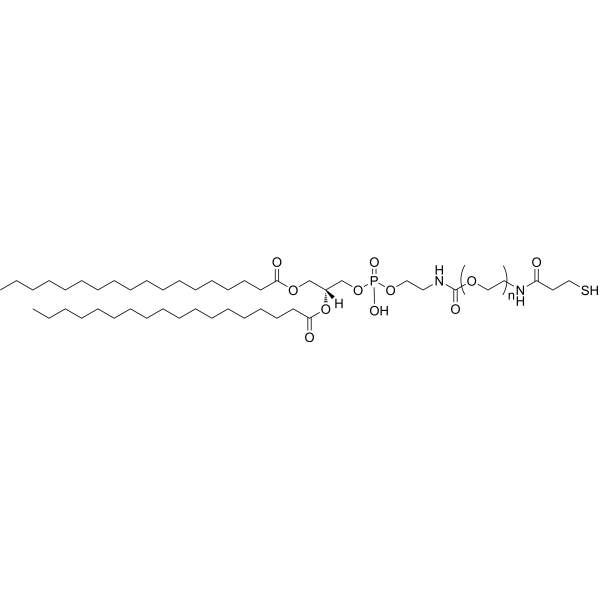
DSPE-PEG2000-SH is an amphiphilic thiol-functionalized DSPE-PEG molecule. DSPE-PEG2000-SH inserts into extracellular vesicle (EV) bilayer membranes via hydrophobic interactions, displaying surface thiol groups to form EV-SH crosslinkers.DSPE-PEG2000-SH enables crosslinking of EV-SH with 8-arm PEG-norbornene via thiol-ene photochemistry to construct hydrogels, with hydrogel mechanical properties tunable via PEG segment molecular weight variation.DSPE-PEG2000-SH can be used to encapsulate agents for drug delivery system, such as mRNA vaccine .
|
-
-
- HY-113227
-
|
|
Endogenous Metabolite
|
Inflammation/Immunology
|
|
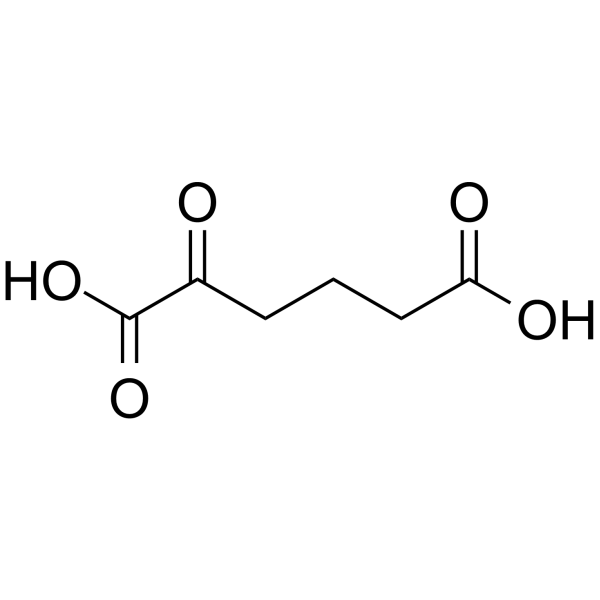
Oxoadipic acid is a key intermediate metabolite in the lysine degradation pathway. The level of Oxoadipic acid is significantly negatively correlated with the abundance of Staphylococcus. That is, the higher the abundance of Staphylococcus-a potential pathogenic bacterium that usually increases in ulcerative colitis-the lower the level of Oxoadipic acid. Oxoadipic acid can be used in the research of ulcerative colitis .
|
-
-
- HY-P10932A
-
|
|
Fluorescent Dye
|
Neurological Disease
|
|
pGk13a TFA is an azide (azide group can be combined with fluorophore)-containing amphiphilic membrane labeling probe. pGk13a TFA enables high-resolution imaging of cell membranes in the ultrastructural membrane expansion microscopy (umExM) technique, facilitating the observation of membrane-associated structures and proteins. pGk13a TFA can be used for neuronal structural studies .
|
-
-
- HY-164390
-
|
Neu5Acα2-6Galβ1-4GlcNAc
|
Endogenous Metabolite
|
Infection
Cancer
|
6′SLN is a cancer-related extracellular vesicle (EVs) surface glycan that serves as a key form of protein glycosylation in EVs. 6′SLN is also a sialic acid derivative that can interact with hemagglutinins (HAs) from human and avian influenza virus strains, making it useful for research into anti-influenza drugs .
|
-
-
- HY-145726
-
|
|
TNF Receptor
|
Cardiovascular Disease
Inflammation/Immunology
|
|
ISIS 104838 is an antisense oligonucleotide targeting TNF-α. ISIS 104838 specifically binds to human TNF-α mRNA via Watson-Crick base pairing to form a DNA:RNA hybrid duplex, thereby recruiting the ubiquitously expressed intracellular enzyme RNase H to degrade the target mRNA and inhibit TNF-α protein synthesis at the transcriptional level. ISIS 104838 induces moderate, self-limiting thrombocytopenia in cynomolgus monkeys. ISIS 104838 can be used for the study of inflammatory diseases .
|
-
-
- HY-P10932
-
|
|
Fluorescent Dye
|
Neurological Disease
|
|
pGk13a is an amphipathic membrane-labeling probe containing an azide group, which can bind to fluorophores. pGk13a enables high-resolution imaging of cell membranes in the ultrastructure expansion microscopy (umExM) technique, facilitating the observation of membrane-associated structures and proteins. pGk13a is applicable to neuronal structure research .
|
-
-
- HY-E70420
-
|
|
Bacterial
|
Inflammation/Immunology
|
|
SpeB cysteine protease is a potent modifier of immunologically important host and bacterial proteins. SpeB cysteine protease degrades streptolysin O (SLO) in extracellular vesicles .
|
-
-
- HY-169819
-
|
|
Exosomes
Calcium Channel
CD28
|
Inflammation/Immunology
|
|
Calcium influx inducer compound 634 is a calcium influx inducer. Calcium influx inducer compound 634 (10 µM) enhances the release of extracellular vesicles (EVs) from mouse bone marrow-derived dendritic cells (mBMDCs). Calcium influx inducer compound 634 (10 µM) also increases the levels of CD86 and CD80 on the surface of mBMDCs, an effect that can be blocked by the calcium release-activated calcium channel inhibitor YM-58483 (HY-100831) .
|
-
-
- HY-131002A
-
-
-
- HY-149025
-
|
P18
|
Phospholipase
|
Inflammation/Immunology
Cancer
|
|
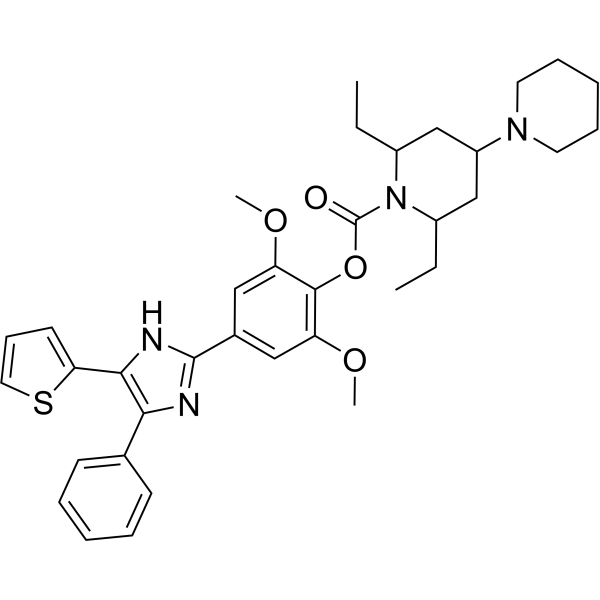
DPTIP-proagent 18 (P18) is a orally active and brain-penetrable proagent of DPTIP (HY-131002). DPTIP-proagent 18 is a potent nSMase2 inhibitor. DPTIP-proagent 18 significantly inhibits IL-1β-induced EV (extracellular vesicle) release by inhibition of nSMase2 (neutral sphingomyelinase-2) activity. DPTIP-proagent 18 can be used for brain injury research .
|
-
-
- HY-P11232
-
|
|
Toll-like Receptor (TLR)
Bacterial
|
Infection
|
|
NAB815 is a specific inhibitor of the Stx2a (Kd = 0.01 μM)/TLR4 interaction. NAB815 inhibits the neutrophil/Stx2a interaction (IC50 = 0.057 μg/mL). NAB815 inhibits the formation of Stx2-containing extracellular vesicles (EVs) produced by leukocytes and platelets and reduces their toxic effects in cellular (Vero cells) and animal models (CD-1 mice). NAB815 reduces bacterial loads in the kidneys, urine, and bladders of Escherichia coli-infected mice. NAB815 is useful in the study of hemolytic uremic syndrome (HUS) .
|
-
-
- HY-W127487
-
|
|
Biochemical Assay Reagents
|
Others
|
|
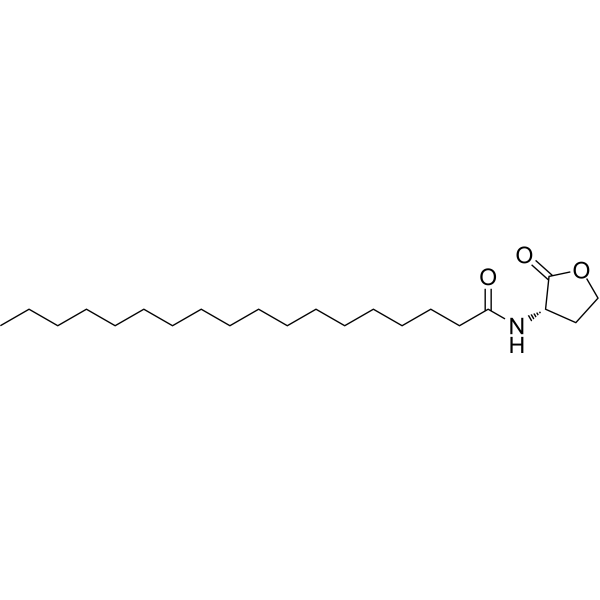
Quorum sensing is a regulatory system used by bacteria to control gene expression in response to increased cell density. This regulatory process manifests itself in a variety of phenotypes, including biofilm formation and virulence factor production. Coordinated gene expression is achieved through the production, release and detection of small diffusible signaling molecules called autoinducers. N-acylated homoserine lactones (AHLs) comprise a class of such autoinducers, each of which generally consists of a fatty acid coupled to a homoserine lactone (HSL). Modulation of bacterial quorum-sensing signaling systems to suppress pathogenesis represents a new approach to antimicrobial research for infectious diseases. AHLs differ in acyl length (C4-C18), C3 substitution (hydrogen, hydroxyl, or oxo group), and the presence or absence of one or more carbon-carbon double bonds in the fatty acid chain. These differences confer signaling specificity through the affinity of the LuxR family of transcriptional regulators. C18-HSL, one of four lipophilic long acyl side chain AHLs produced by the LuxI AHL synthase homolog SinI, is involved in quorum-sensing signaling in strains of Rhizobium meliloti (a nitrogen-fixing bacterial symbiont of the legume M. sativa) . C18-HSL and other hydrophobic AHLs tend to localize in the relatively lipophilic environment of bacterial cells and cannot diffuse freely across the cell membrane. Long-chain N-acyl homoserine lactones can be exported from cells by efflux pumps, or can be transported between communicating cells by extracellular outer membrane vesicles.
|
-
-
- HY-P5423D
-
|
|
Exosomes
|
Others
|
|
Ahx-GALA-Cys is a GALA peptide (HY-P5423) derivative with an N-terminal 6-aminohexanoic acid (Ahx) linker and a C-terminal cysteine residue. Ahx-GALA-Cys possesses strong covalent coupling capacity, which can be used to conjugate fluorophores and targeting ligands for investigating the surface functionalization of small extracellular vesicles (sEV) and lysosomal escape .
|
-
-
- HY-182080
-
|
|
Microtubule/Tubulin
|
Inflammation/Immunology
|
|
EVs inducer-1 is a release inducer of immunostimulatory extracellular vesicles (EVs). EVs inducer-1 inhibits tubulin polymerization. EVs inducer-1 enhances the release of immunostimulatory EVs by antigen-presenting cells, increases the release of EV particles from dendritic cells, and elevates CD63 reporter gene activity. EVs inducer-1 inhibits the viability of proliferating cells. EVs inducer-1 is applicable for research related to immune regulation .
|
-
-
- HY-P11766
-
|
GALA-cholesterol
|
Biochemical Assay Reagents
|
Cancer
|
|
GALA-chol is a cholesterol-conjugated pH-responsive fusion peptide that can serve as a delivery adjuvant. GALA-chol enhances the endocytosis of siRNA RET/PTC1-SQ nanoparticles, inhibits cell viability, and undergoes pH-responsive charge conversion in the acidic lysosomal environment, thereby promoting lysosomal escape of small extracellular vesicle (sEV) cargo. GALA-chol anchors to the sEV membrane and maintains the structural integrity and intrinsic homing activity of sEVs. GALA-chol can be used in studies related to adjuvant delivery .
|
-
-
- HY-182081
-
|
|
Microtubule/Tubulin
Interleukin Related
|
Cancer
|
|
Tubulin polymerization-IN-90 is a tubulin polymerization inhibitor. Tubulin polymerization-IN-90 disrupts tubulin polymerization by binding to the nocodazole-binding site on β-tubulin. Tubulin polymerization-IN-90 induces the release of extracellular vesicles marked by the tetraspanin CD63. Tubulin polymerization-IN-90 induces the release of IL-8 from cells. Tubulin polymerization-IN-90 reduces the viability of cancer cells. Tubulin polymerization-IN-90 can be used in the research of cancers such as acute T-lymphoblastic leukemia .
|
-
-
- HY-DY1102
-
|
|
Fluorescent Dye
|
Others
|
BODIPY FL-C16 (solution) is a BODIPY-labeled analog of Palmitic acid (HY-N0830), which serves as a fluorescent lipid tracer. BODIPY FL-C16 (solution) also acts as a ligand for liver fatty acid-binding protein (L-FABP) and intestinal fatty acid-binding protein (I-FABP) , with Kd values of 270 nM and 330 nM, respectively. BODIPY FL-C16 (solution) is rapidly taken up by cells, and after metabolic conversion to phospholipids, it is incorporated into the membrane structures of intracellular organelles and extracellular vesicles . Solvent and concentration: DMSO: 5 mM
|
-
-
- HY-107588R
-
|
|
Reference Standards
Integrin
|
Cardiovascular Disease
|
|
TC-I 15 (Standard) is the analytical standard of TC-I 15 (HY-107588). This product is intended for research and analytical applications. TC-I 15 (TC-I-15) is a type of allosteric collagen-binding integrin α2β1 inhibitor, and it also inhibits α1β1 and α11β1. TC-I 15 inhibits platelet adhesion to collagen and thrombus deposition. TC-I 15 prevents the formation of a pre-metastatic microenvironment by inhibiting the uptake of cancer-associated fibroblast (CAF) extracellular vesicles (EVs) by lung fibroblasts, which reduces the metastasis of salivary gland adenocystic carcinoma (SACC) to the lungs in mouse models, .
|
-
-
-
HY-L168
-
|
|
643 compounds
|
|
Extracellular vesicles (EVs) are small membrane binding structures that are released from cells into the surrounding environment and play a crucial role in mediating and regulating intercellular communication related to physiological and pathological processes. EVs are lipid membrane vesicles composed of proteins, lipids, and nucleic acids. EVs can be divided into several types based on their source, such as extracellular vesicles, microcapsules, and apoptotic vesicles. The size range of exosomes is 30-150nm, which are endocrine in multi vesicular endosomes (MVEs); microvesicles (50-1000nm) are secreted directly through extracellular interactions, thereby releasing plasma membrane vesicles. In contrast, apoptotic bodies are usually larger, ranging in size from 1 to 5 μ m. This is generated during programmed cell death. EV plays a crucial role in transmitting information between cells and influencing the behavior and function of receptor cells.
MCE designs a unique collection of 643 small molecules related to extracellular vesicles (EVs). It is a good tool to be used for research on metabolize, cancer and other diseases.
|
| Cat. No. |
Product Name |
Type |
-
- HY-D1736
-
|
|
Fluorescent Dyes
|
|
BODIPY FL-C16 is a BODIPY-labeled analog of Palmitic acid (HY-N0830), which serves as a fluorescent lipid tracer. BODIPY FL-C16 also acts as a ligand for liver fatty acid-binding protein (L-FABP) and intestinal fatty acid-binding protein (I-FABP) , with Kd values of 270 nM and 330 nM, respectively. BODIPY FL-C16 is rapidly taken up by cells, and after metabolic conversion to phospholipids, it is incorporated into the membrane structures of intracellular organelles and extracellular vesicles .
|
-
- HY-DY1102
-
|
|
Fluorescent Dyes
|
BODIPY FL-C16 (solution) is a BODIPY-labeled analog of Palmitic acid (HY-N0830), which serves as a fluorescent lipid tracer. BODIPY FL-C16 (solution) also acts as a ligand for liver fatty acid-binding protein (L-FABP) and intestinal fatty acid-binding protein (I-FABP) , with Kd values of 270 nM and 330 nM, respectively. BODIPY FL-C16 (solution) is rapidly taken up by cells, and after metabolic conversion to phospholipids, it is incorporated into the membrane structures of intracellular organelles and extracellular vesicles . Solvent and concentration: DMSO: 5 mM
|
| Cat. No. |
Product Name |
Type |
-
- HY-W440896
-
|
|
Biochemical Assay Reagents
|
|
DSPE-PEG2000-SH is an amphiphilic thiol-functionalized DSPE-PEG molecule. DSPE-PEG2000-SH inserts into extracellular vesicle (EV) bilayer membranes via hydrophobic interactions, displaying surface thiol groups to form EV-SH crosslinkers.DSPE-PEG2000-SH enables crosslinking of EV-SH with 8-arm PEG-norbornene via thiol-ene photochemistry to construct hydrogels, with hydrogel mechanical properties tunable via PEG segment molecular weight variation.DSPE-PEG2000-SH can be used to encapsulate agents for drug delivery system, such as mRNA vaccine .
|
-
- HY-W127487
-
|
|
Biochemical Assay Reagents
|
|
Quorum sensing is a regulatory system used by bacteria to control gene expression in response to increased cell density. This regulatory process manifests itself in a variety of phenotypes, including biofilm formation and virulence factor production. Coordinated gene expression is achieved through the production, release and detection of small diffusible signaling molecules called autoinducers. N-acylated homoserine lactones (AHLs) comprise a class of such autoinducers, each of which generally consists of a fatty acid coupled to a homoserine lactone (HSL). Modulation of bacterial quorum-sensing signaling systems to suppress pathogenesis represents a new approach to antimicrobial research for infectious diseases. AHLs differ in acyl length (C4-C18), C3 substitution (hydrogen, hydroxyl, or oxo group), and the presence or absence of one or more carbon-carbon double bonds in the fatty acid chain. These differences confer signaling specificity through the affinity of the LuxR family of transcriptional regulators. C18-HSL, one of four lipophilic long acyl side chain AHLs produced by the LuxI AHL synthase homolog SinI, is involved in quorum-sensing signaling in strains of Rhizobium meliloti (a nitrogen-fixing bacterial symbiont of the legume M. sativa) . C18-HSL and other hydrophobic AHLs tend to localize in the relatively lipophilic environment of bacterial cells and cannot diffuse freely across the cell membrane. Long-chain N-acyl homoserine lactones can be exported from cells by efflux pumps, or can be transported between communicating cells by extracellular outer membrane vesicles.
|
| Cat. No. |
Product Name |
Target |
Research Area |
-
- HY-P10932A
-
|
|
Fluorescent Dye
|
Neurological Disease
|
|
pGk13a TFA is an azide (azide group can be combined with fluorophore)-containing amphiphilic membrane labeling probe. pGk13a TFA enables high-resolution imaging of cell membranes in the ultrastructural membrane expansion microscopy (umExM) technique, facilitating the observation of membrane-associated structures and proteins. pGk13a TFA can be used for neuronal structural studies .
|
-
- HY-P10932
-
|
|
Fluorescent Dye
|
Neurological Disease
|
|
pGk13a is an amphipathic membrane-labeling probe containing an azide group, which can bind to fluorophores. pGk13a enables high-resolution imaging of cell membranes in the ultrastructure expansion microscopy (umExM) technique, facilitating the observation of membrane-associated structures and proteins. pGk13a is applicable to neuronal structure research .
|
-
- HY-P11232
-
|
|
Toll-like Receptor (TLR)
Bacterial
|
Infection
|
|
NAB815 is a specific inhibitor of the Stx2a (Kd = 0.01 μM)/TLR4 interaction. NAB815 inhibits the neutrophil/Stx2a interaction (IC50 = 0.057 μg/mL). NAB815 inhibits the formation of Stx2-containing extracellular vesicles (EVs) produced by leukocytes and platelets and reduces their toxic effects in cellular (Vero cells) and animal models (CD-1 mice). NAB815 reduces bacterial loads in the kidneys, urine, and bladders of Escherichia coli-infected mice. NAB815 is useful in the study of hemolytic uremic syndrome (HUS) .
|
-
- HY-P11552
-
|
(DSS)6
|
Peptides
|
Metabolic Disease
|
|
(Asp-Ser-Ser)6 ((DSS)6) is an artificially designed bone-targeting peptide. (Asp-Ser-Ser)6 is used as a ligand to modify apoptotic extracellular vesicles (ApoEVs) in order to enhance the bone targeting and efficacy of ApoEVs in the treatment of osteoporosis. (Asp-Ser-Ser)6 can be used for research on osteoporosis .
|
-
- HY-P5423D
-
|
|
Exosomes
|
Others
|
|
Ahx-GALA-Cys is a GALA peptide (HY-P5423) derivative with an N-terminal 6-aminohexanoic acid (Ahx) linker and a C-terminal cysteine residue. Ahx-GALA-Cys possesses strong covalent coupling capacity, which can be used to conjugate fluorophores and targeting ligands for investigating the surface functionalization of small extracellular vesicles (sEV) and lysosomal escape .
|
-
- HY-P11766
-
|
GALA-cholesterol
|
Biochemical Assay Reagents
|
Cancer
|
|
GALA-chol is a cholesterol-conjugated pH-responsive fusion peptide that can serve as a delivery adjuvant. GALA-chol enhances the endocytosis of siRNA RET/PTC1-SQ nanoparticles, inhibits cell viability, and undergoes pH-responsive charge conversion in the acidic lysosomal environment, thereby promoting lysosomal escape of small extracellular vesicle (sEV) cargo. GALA-chol anchors to the sEV membrane and maintains the structural integrity and intrinsic homing activity of sEVs. GALA-chol can be used in studies related to adjuvant delivery .
|
-
- HY-K3118
-
|
|
|
MCE Milk-derived exosomes are high-purity extracellular vesicles isolated and purified from fresh milk, with diameters ranging from approximately 30 to 200 nm.
|
| Cat. No. |
Product Name |
Category |
Target |
Chemical Structure |
| Cat. No. |
Product Name |
|
Classification |
-
- HY-P10932
-
|
|
|
Azide
|
|
pGk13a is an amphipathic membrane-labeling probe containing an azide group, which can bind to fluorophores. pGk13a enables high-resolution imaging of cell membranes in the ultrastructure expansion microscopy (umExM) technique, facilitating the observation of membrane-associated structures and proteins. pGk13a is applicable to neuronal structure research .
|
| Cat. No. |
Product Name |
|
Classification |
-
- HY-W440896
-
|
|
|
Pegylated Lipids
|
|
DSPE-PEG2000-SH is an amphiphilic thiol-functionalized DSPE-PEG molecule. DSPE-PEG2000-SH inserts into extracellular vesicle (EV) bilayer membranes via hydrophobic interactions, displaying surface thiol groups to form EV-SH crosslinkers.DSPE-PEG2000-SH enables crosslinking of EV-SH with 8-arm PEG-norbornene via thiol-ene photochemistry to construct hydrogels, with hydrogel mechanical properties tunable via PEG segment molecular weight variation.DSPE-PEG2000-SH can be used to encapsulate agents for drug delivery system, such as mRNA vaccine .
|
-
- HY-145726
-
|
|
|
Antisense Oligonucleotides
|
|
ISIS 104838 is an antisense oligonucleotide targeting TNF-α. ISIS 104838 specifically binds to human TNF-α mRNA via Watson-Crick base pairing to form a DNA:RNA hybrid duplex, thereby recruiting the ubiquitously expressed intracellular enzyme RNase H to degrade the target mRNA and inhibit TNF-α protein synthesis at the transcriptional level. ISIS 104838 induces moderate, self-limiting thrombocytopenia in cynomolgus monkeys. ISIS 104838 can be used for the study of inflammatory diseases .
|
Your information is safe with us. * Required Fields.
Inquiry Information
- Product Name:
- Cat. No.:
- Quantity:
- MCE Japan Authorized Agent:

