1. Search Result
Search Result
Results for "

hepatocellular

" in MedChemExpress (MCE) Product Catalog:

546

Inhibitors & Agonists

3

Screening Libraries

4

Fluorescent Dye

19

Biochemical Assay Reagents

18

Peptides

2

MCE Kits

28

Inhibitory Antibodies

128

Natural
Products

4

Recombinant Proteins

17

Isotope-Labeled Compounds

4

Antibodies

11

Oligonucleotides

Cat. No. Product Name Target Research Areas Chemical Structure
  • HY-N2334
    Glycochenodeoxycholic acid
    5 Publications Verification

    Chenodeoxycholylglycine

    Endogenous Metabolite Apoptosis STAT BCL6 Interleukin Related Caspase Metabolic Disease Cancer
    Glycochenodeoxycholic acid (Chenodeoxycholylglycine) is a relatively toxic bile salt generated in the liver from chenodeoxycholic acid and glycine. Glycochenodeoxycholic acid inhibits Autophagosome formation and impairs lysosomal function by inhibiting lysosomal proteolysis and increasing lysosomal pH in human normal liver cells, leading to the Apoptosis of human hepatocyte cells. Glycochenodeoxycholic acid induces stemness and chemoresistance via activating STAT3 signaling pathway in hepatocellular carcinoma cells (HCC). Glycochenodeoxycholic acid is promising for research in the field of cholestasis desease, hepatocellular carcinoma and primary sclerosing cholangitis (PSC) .
    Glycochenodeoxycholic acid
  • HY-N7073
    Silymarin
    5+ Cited Publications

    SARS-CoV Infection Neurological Disease Inflammation/Immunology Cancer
    Silymarin is an extract of the milk thistle (Silybum marianum). Silymarin is an effective SARS-CoV-2 main protease (M pro) inhibitor. Silymarin can significantly reduce tumor cell proliferation, angiogenesis as well as insulin resistance. Silymarin has the chemopreventive effect on hepatocellular carcinoma (HCC). Silymarin has the potential for COVID-19 research .
    Silymarin
  • HY-50767C
    Palbociclib hydrochloride
    215+ Cited Publications

    PD-0332991 hydrochloride

    CDK Cancer
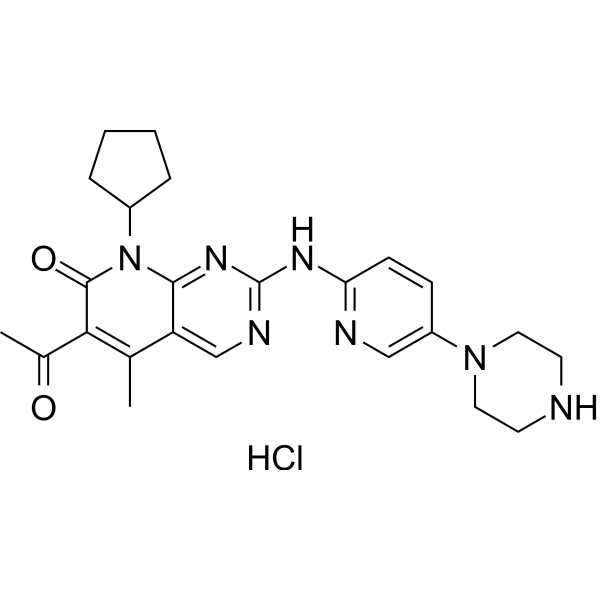
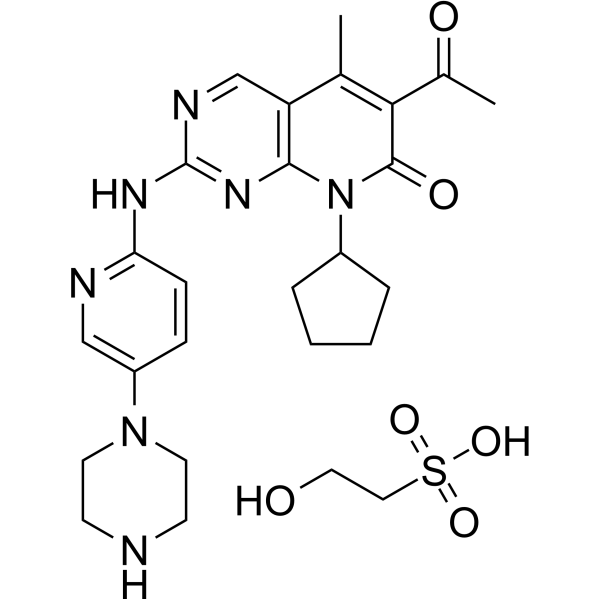
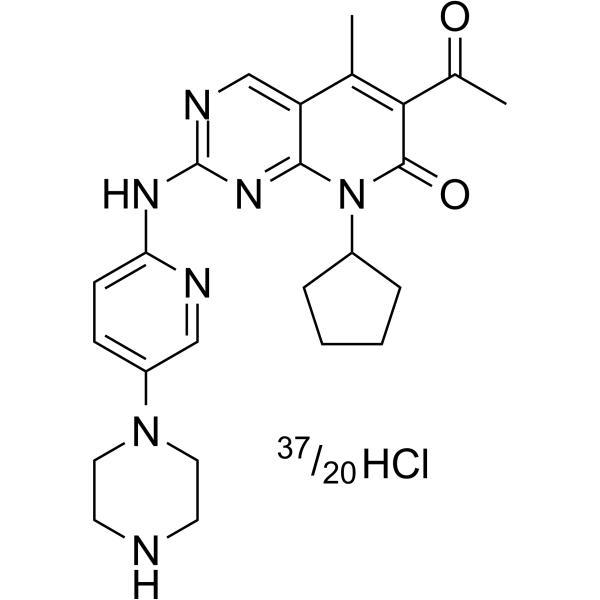
    Palbociclib (PD 0332991) hydrochloride is an orally active selective CDK4 and CDK6 inhibitor with IC50 values of 11 and 16 nM, respectively. Palbociclib hydrochloride has potent anti-proliferative activity and induces cell cycle arrest in cancer cells. Palbociclib hydrochloride can be used in the research of HR-positive and HER2-negative breast cancer and hepatocellular carcinoma .
    Palbociclib hydrochloride
  • HY-N2334A
    Glycochenodeoxycholic acid sodium salt
    5 Publications Verification

    Chenodeoxycholylglycine sodium salt; Sodium glycochenodeoxycholate

    Endogenous Metabolite Apoptosis STAT BCL6 Interleukin Related Caspase Metabolic Disease Cancer
    Glycochenodeoxycholic acid sodium salt (Sodium glycochenodeoxycholate) is a relatively toxic bile salt generated in the liver from chenodeoxycholic acid and glycine. Glycochenodeoxycholic acid sodium salt inhibits Autophagosome formation and impairs lysosomal function by inhibiting lysosomal proteolysis and increasing lysosomal pH in human normal liver cells, leading to the Apoptosis of human hepatocyte cells. Glycochenodeoxycholic acid sodium salt induces stemness and chemoresistance via activating STAT3 signaling pathway in hepatocellular carcinoma cells (HCC). Glycochenodeoxycholic acid sodium salt is promising for research in the field of cholestasis desease, hepatocellular carcinoma and primary sclerosing cholangitis (PSC) .
    Glycochenodeoxycholic acid sodium salt
  • HY-N0462
    Corilagin
    5+ Cited Publications

    NP-004255

    Toll-like Receptor (TLR) Reverse Transcriptase Bacterial Apoptosis Autophagy Infection Inflammation/Immunology Cancer
    Corilagin, a gallotannin, has anti-tumor, anti-inflammatory and hepatoprotective activities. Corilagin inhibits activity of reverse transcriptase of RNA tumor viruses. Corilagin also inhibits the growth of Staphylococcus aureus with a MIC of 25 μg/mL. Corilagin shows anti-tumor activity on hepatocellular carcinoma and ovarian cancer model. Corilagin shows low toxicity to normal cells and tissues .
    Corilagin
  • HY-P99013
    Codrituzumab
    1 Publications Verification

    GC33; RO5137382

    Glycoprotein VI Cancer
    Codrituzumab (GC33) is a humanized monoclonal antibody targeting human GPC3 (glypican-3), with high affinity (Kd of 0.673 nM). GPC3 is an oncofetal protein expressed on the cell surface of hepatocellular carcinoma (HCC). Codrituzumab induces antibody-dependent cellular cytotoxicity (ADCC) and inhibits tumor growth .
    Codrituzumab
  • HY-N6638
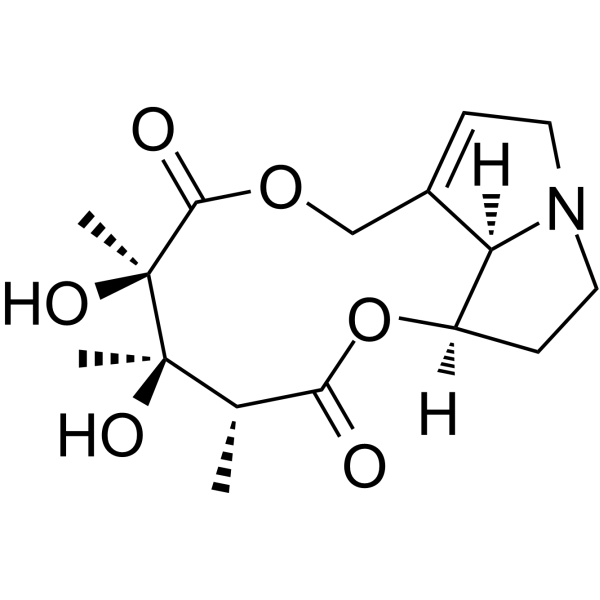
    Retrorsine
    2 Publications Verification

    Others Metabolic Disease
    Retrorsine is a naturally occurring toxic pyrrolizidine alkaloid. Retrorsine can bind with DNA and inhibits the proliferative capacity of hepatocytes. Retrorsine can be used for the research of hepatocellular injury .
    Retrorsine
  • HY-121360

    DNA/RNA Synthesis Reactive Oxygen Species (ROS) Cancer
    Cylindrospermopsin, a cyanotoxin, is a polycyclic uracil derivative containing guanidine and sulfate groups, which can inhibit protein synthesis and covalently modify DNA or RNA. Cylindrospermopsin induces hepatocellular hypertrophy, renal cellular hypertrophy, intracellular reactive oxygen species (ROS), DNA strand breaks, mitochondrial hyperpolarisation, ultrastructural damage, and altered gene expression in liver, kidney, and intestinal cells. Cylindrospermopsin can be used in research including hepatocellular carcinoma and water quality testing .
    Cylindrospermopsin
  • HY-P99758

    CS1003

    PD-1/PD-L1 Cancer
    Nofazinlimab (CS1003) is a humanised IgG4 anti-PD-1 monoclonal antibody. Nofazinlimab shows antitumor activity and can be used for the research of unresectable or metastatic hepatocellular carcinoma .
    Nofazinlimab
  • HY-N2232

    N-trans-Feruloyloctopamine

    Akt p38 MAPK Apoptosis Cadherin Cancer
    N-Feruloyloctopamine (N-trans-Feruloyloctopamine) is an antioxidant component that can be isolated from garlic skin. N-Feruloyloctopamine can inhibit tumor cell proliferation and invasion, and induce apoptosis. N-Feruloyloctopamine has antitumor activity and can be used in the research of tumors such as hepatocellular carcinoma .
    N-​Feruloyloctopamine
  • HY-13267
    Droxinostat
    3 Publications Verification

    NS 41080

    HDAC Apoptosis Cancer
    Droxinostat (NS 41080) is a histone deacetylase (HDAC) inhibitor. Droxinostat selectively inhibits HDAC3, HDAC6, and HDAC8 with IC50 values of 16.9 μM, 2.47 μM, and 1.46 μM, respectively. Droxinostat can be used for the research of hepatocellular carcinoma (HCC) .
    Droxinostat
  • HY-P990220
    Anti-Mouse IL-18 Antibody (YIGIF74-1G7)
    1 Publications Verification

    Interleukin Related Infection Inflammation/Immunology Cancer
    Anti-Mouse IL-18 Antibody (YIGIF74-1G7) is a rat-derived IgG2a κ type antibody inhibitor, targeting to mouse IL-18. Anti-Mouse IL-18 Antibody (YIGIF74-1G7) can neutralize IL-18. Anti-Mouse IL-18 Antibody (YIGIF74-1G7) can be used for the researches of cancer, infection, inflammation and immunology, such as hepatocellular carcinoma and eosinophilic esophagitis .
    Anti-Mouse IL-18 Antibody (YIGIF74-1G7)
  • HY-N6623
    Malvidin-3-galactoside chloride
    1 Publications Verification

    Apoptosis Endogenous Metabolite Reactive Oxygen Species (ROS) Cancer
    Malvidin-3-galactoside chloride, an anthocyanin monomer, induces hepatocellular carcinoma (HCC) cells cycle arrest and apoptosis. Malvidin-3-galactoside chloride inhibits the production and accumulation of ROS. Malvidin-3-galactoside chloride has anti-tumor function .
    Malvidin-3-galactoside chloride
  • HY-145396

    Biochemical Assay Reagents Cancer
    PLGA-PEG-NH2 is a material to synthesis nanomicelles. PLGA-PEG-NH2 nanomicelle is an efficient delivery system of Irinotecan for targeted colorectal cancer and hepatocellular carcinoma .
    PLGA12000-PEG2000-NH2
  • HY-111130

    Histamine Receptor mAChR Neurological Disease Cancer
    Methapyrilene is a histamine antagonist, a pyridine chemical with anticholinergic activity. Methapyrilene can cause target organ-specific epigenetic alterations, such as a decrease in DNA methylation levels. Methapyrilene induces hepatocellular carcinoma in rats .
    Methapyrilene
  • HY-21196A

    Phosphatase Metabolic Disease
    Potassium perfluorohexanesulfonate is an orally active surfactant found in sera of the general population. Potassium perfluorohexanesulfonate induces adaptive hepatocellular hypertrophy, decreases serum cholesterol and increases alkaline phosphatase in male mice .
    Potassium perfluorohexanesulfonate
  • HY-130173
    Bafilomycin C1
    1 Publications Verification

    Bacterial Fungal Na+/K+ ATPase Apoptosis Antibiotic Infection Cancer
    Bafilomycin C1 is a macrolide antibiotic isolated from Streptomyces sp. Bafilomycin C1 is a potent, specific and reversible inhibitor of vacuolar-type H +-ATPases (V-ATPases). Bafilomycin C1 inhibits growth of gram-positive bacteria and fungi . Bafilomycin C1 induces cell apoptosis and can be used for the study of hepatocellular carcinoma (HCC) .
    Bafilomycin C1
  • HY-N15388

    Drug Derivative Cancer
    Hericenone A is an isoindolinone found in the fruiting bodies of Hericium erinaceus. Hericenone A exerts cytotoxic activity against cancer cells. Hericenone A can be used for the research of cancer, such as metastatic human hepatocellular carcinoma .
    Hericenone A
  • HY-D2312

    Fluorescent Dye Ferroptosis Cancer
    Mito-Rh-S is a ratiometric near-infrared (NIR) fluorescent probe that detects the fluctuation of mitochondrial HClO levels during ferroptosis in hepatocellular carcinoma (HCC) .
    Mito-Rh-S
  • HY-132177
    α-L-Fucosidase, Microorganism
    1 Publications Verification

    EC 3.2.1.51; FUC

    Endogenous Metabolite Cancer
    α-L-Fucosidase, Microorganism (EC 3.2.1.51) is an enzyme that catalyzes the chemical reaction. Serum activity of α-L-Fucosidase, Microorganism, a lysosomal enzyme present in all mammalian cells, has been proposed as a marker of hepatocellular carcinoma (HCC) .
    α-L-Fucosidase, Microorganism
  • HY-123901

    Apoptosis Cancer
    Garcinone E is a natural xanthone found in the rind of the mangosteen fruit. Garcinone E induces apoptosis and inhibits cancer cell migration. Garcinone E has anticancer effects on different human cancer cell lines, including colorectal, breast, and hepatocellular carcinomas .
    Garcinone E
  • HY-19345A

    NSC13316 dihydrochloride

    p38 MAPK Neurological Disease Cancer
    Vacquinol-1 (NSC13316) dihydrochloride is a MKK4-specific activator that activates the MAPK pathway. Vacquinol-1 dihydrochloride inhibits the growth, migration and colony formation, and induces apoptosis of cancer cells. Vacquinol-1 dihydrochloride is applicable to research related to cancers such as hepatocellular carcinoma .
    Vacquinol-1 dihydrochloride
  • HY-N4168B

    Others Cancer
    Methyl chlorogenate is an antioxidant, and has radical scavenging activity. Methyl chlorogenate is an anti-inflammatory agent. Methyl chlorogenate also inhibits hepatocellular carcinoma (HCC) cell proliferation and metastasis .
    Methyl chlorogenate
  • HY-P990840

    Glycoprotein VI Cancer
    Anti-GPC3 Antibody (YP7) is a kind of mouse IgG1 κ chimeric antibody, targeting to human GPC3. Anti-GPC3 Antibody (YP7) reacts with the C-lobe of cell surface-associated glypican-3 (GPC3). Anti-GPC3 Antibody (YP7) can be used for the research of cancer, such as hepatocellular carcinoma (HCC) .
    Anti-GPC3 Antibody (YP7)
  • HY-155248

    HDAC Cancer
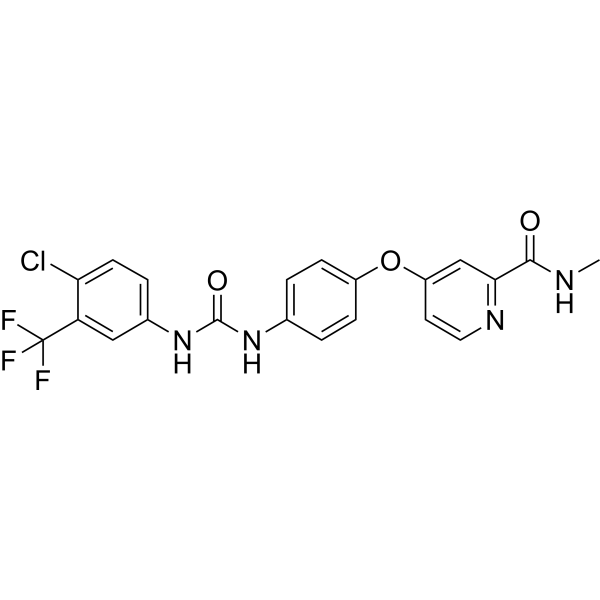
    HL23 is a histone deacetylase (HDAC) inhibitor with activity against hepatocellular carcinoma (HCC). HL23 enhances acetylation of the TXNIP promoter and upregulates TXNIP expression, thereby mediating potassium channel activity and triggering TXNIP-dependent potassium deprivation. HL23 inhibits HCC progression and metastasis and has a synergistic effect with Sorafenib (HY-10201) and is more potent than Sorafenib+Vorinostat (HY-10221) .
    HL23
  • HY-N2334R

    Chenodeoxycholylglycine (Standard)

    Reference Standards Endogenous Metabolite Apoptosis STAT BCL6 Interleukin Related Caspase Metabolic Disease Cancer
    Glycochenodeoxycholic acid (Standard) is the analytical standard of Glycochenodeoxycholic acid. This product is intended for research and analytical applications. Glycochenodeoxycholic acid (Chenodeoxycholylglycine) is a relatively toxic bile salt generated in the liver from chenodeoxycholic acid and glycine. Glycochenodeoxycholic acid inhibits Autophagosome formation and impairs lysosomal function by inhibiting lysosomal proteolysis and increasing lysosomal pH in human normal liver cells, leading to the Apoptosis of human hepatocyte cells. Glycochenodeoxycholic acid induces stemness and chemoresistance via activating STAT3 signaling pathway in hepatocellular carcinoma cells (HCC). Glycochenodeoxycholic acid is promising for research in the field of cholestasis desease, hepatocellular carcinoma and primary sclerosing cholangitis (PSC)[1][2][3][4].
    Glycochenodeoxycholic acid (Standard)
  • HY-N2334AR

    Chenodeoxycholylglycine sodium salt (Standard); Sodium glycochenodeoxycholate (Standard)

    Reference Standards Endogenous Metabolite Apoptosis STAT BCL6 Interleukin Related Caspase Metabolic Disease Cancer
    Glycochenodeoxycholic acid sodium salt (Standard) is the analytical standard of Glycochenodeoxycholic acid sodium salt. This product is intended for research and analytical applications. Glycochenodeoxycholic acid sodium salt (Sodium glycochenodeoxycholate) is a relatively toxic bile salt generated in the liver from chenodeoxycholic acid and glycine. Glycochenodeoxycholic acid sodium salt inhibits Autophagosome formation and impairs lysosomal function by inhibiting lysosomal proteolysis and increasing lysosomal pH in human normal liver cells, leading to the Apoptosis of human hepatocyte cells. Glycochenodeoxycholic acid sodium salt induces stemness and chemoresistance via activating STAT3 signaling pathway in hepatocellular carcinoma cells (HCC). Glycochenodeoxycholic acid sodium salt is promising for research in the field of cholestasis desease, hepatocellular carcinoma and primary sclerosing cholangitis (PSC) .
    Glycochenodeoxycholic acid sodium salt (Standard)
  • HY-N0462R

    NP-004255 (Standard)

    Toll-like Receptor (TLR) Reference Standards Reverse Transcriptase Bacterial Apoptosis Autophagy Infection Inflammation/Immunology Cancer
    Corilagin (Standard) is the analytical standard of Corilagin. This product is intended for research and analytical applications. Corilagin, a gallotannin, has anti-tumor, anti-inflammatory and hepatoprotective activities. Corilagin inhibits activity of reverse transcriptase of RNA tumor viruses. Corilagin also inhibits the growth of Staphylococcus aureus with a MIC of 25 μg/mL. Corilagin shows anti-tumor activity on hepatocellular carcinoma and ovarian cancer model. Corilagin shows low toxicity to normal cells and tissues .
    Corilagin (Standard)
  • HY-P11050A

    Apoptosis Cancer
    SP94 is a peptide ligand with high specificity for hepatocellular carcinoma cells. SP94 selectively binds to multiple hepatocellular carcinoma cell lines in vitro. SP94 inhibits tumor growth in a mouse model of hepatocellular carcinoma by promoting apoptosis and reducing angiogenesis. SP94 can be used as a specific probe for hepatocellular carcinoma imaging. SP94 is useful for hepatocellular carcinoma research .
    SP94
  • HY-103257

    NSC656158

    Microtubule/Tubulin Cancer
    CHM-1, a microtubule-destabilizing agent, inhibits tubulin polymerization. CHM-1 is a potent and selective antimitotic antitumor activity against human hepatocellular carcinoma. CHM-1 induces growth inhibition and apoptosis via G2-M phase arrest in human hepatocellular carcinoma cells by activation of Cdc2 kinase activity .
    CHM-1
  • HY-N11429

    Endogenous Metabolite Metabolic Disease Cancer
    Glycochenodeoxycholic acid 3-glucuronide is a type of steroid glucuronide and a plasma metabolite that can be used in the research of biomarkers for diabetes and hepatocellular carcinoma (HCC) .
    Glycochenodeoxycholic acid 3-glucuronide
  • HY-161679S

    Isotope-Labeled Compounds Cancer
    Pyruvate Carboxylase-IN-3 (Compd 36) is a potent Pyruvate Carboxylase inhibitor. Pyruvate Carboxylase-IN-3 inhibits hepatocellular carcinoma cells activity with an IC50 of 4.3 μM .
    Pyruvate Carboxylase-IN-3
  • HY-W013514

    Environmental Pollutants DNA/RNA Synthesis Cancer
    2-Acetamidofluorene is a potent carcinogenan. 2-Acetamidofluorene is can be used fot induction of hepatocellular carcinoma (HCC) and multiple primary tumours .
    2-Acetamidofluorene
  • HY-N8306

    Bacterial PKC Apoptosis SARS-CoV Cancer
    Isojacareubin can be isolated from Hypericum japonicum. Isojacareubin covalently inhibits SARS-CoV-2 3CLpro. Isojacareubin also has anti-helicobacter activity. Isojacareubin inhibits PKC, and suppresses hepatocellular carcinoma metastasis and induces apoptosis .
    Isojacareubin
  • HY-158099

    Celastrol-Biotin

    Biochemical Assay Reagents Cancer
    Biotin-Cel (Celastrol-Biotin) is a biotin-labeled Celastrol (HY-13067). Celastrol exhibits antitumor, anti-inflammatory, and anti-obesity activities. Biotin-Cel can be used in biotin-affinity pulldown assay to identify the molecular target of Celastrol in hepatocellular carcinoma cells .
    Biotin-Cel
  • HY-179243

    PROTACs STAT MDM-2/p53 Cancer
    S3D5 is a highly efficient and selective PROTAC degrader targeting STAT3 (KD = 4.35 μM). S3D5 induces degradation of STAT3 in HepG2 cells without significant effects on other STAT proteins. S3D5 exhibits good anti-hepatocellular carcinoma cell proliferation activity, which can be explained by activating the p53 pathway. S3D5 degradation of the STAT3 protein is mediated by the ubiquitin–proteasome system (UPS). S3D5 can be used for the study of hepatocellular carcinoma .
    S3D5
  • HY-178205

    CXCR ERK Akt Cancer
    BPRCX 807 is a selective and potent CXCR4 (CXC chemokine receptor type 4) antagonist. BPRCX 807 inhibits CXCL12-mediated ERK and Akt phosphorylation. BPRCX 807 can significantly suppress primary tumor growth. BPRCX 807 can be used for the study of hepatocellular carcinoma .
    BPRCX807
  • HY-16232

    D 19575; Glucosylifosfamide mustard

    Apoptosis Caspase Bcl-2 Family Cancer
    Glufosfamide is a glucose-conjugated alkylating cytotoxic agent and a derivative of Ifosfamide (HY-17419). Glufosfamide induces apoptosis frequency and increase the expression of caspase-9 and caspase-3 in cancer cells. Glufosfamide shows great anti-tumor activity in MiaPaCa-2-RFP mouse model. Glufosfamide can be used for the study of hepatocellular carcinoma, prostate cancer and pancreatic carcinoma .
    Glufosfamide
  • HY-151461

    Arf Family GTPase Cancer
    CHNQD-01255 is an orally active Arf-GEFs inhibitor with potent anti-hepatocellular carcinoma (HCC) efficacy .
    CHNQD-01255
  • HY-179035

    Molecular Glues CXCR Cancer
    TBS6b is a potent and selective ACKR3 molecular glue degrader. TBS6b degrades ACKR3 via the ubiquitin-proteasome pathway. TBS6b inhibits hepatocellular carcinoma cell proliferation, migration, and invasion. TBS6b is relevant to hepatocellular carcinoma (HCC) research .
    TBS6b
  • HY-N1443

    Environmental Pollutants Endogenous Metabolite Apoptosis Metabolic Disease Cancer
    Demethylcantharidate disodium, an endogenous metabolite, induces apoptosis in hepatocellular carcinoma cells via ER stress. Demethylcantharidate disodium shows excellent anticancer activity against multiple types of cancer .
    Demethylcantharidate disodium
  • HY-N10985

    Drug Derivative Cancer
    Xanthone V1a, a derivative of Xanthone (HY-N0126), is an antioxidant that can be found in the roots of Cudrania tricuspidata and twig extracts of Maclura fruticosa. Xanthone V1a exerts cytotoxic effects against colon, hepatocellular, and gastric carcinoma cells. Xanthone V1a exhibits scavenging activitys against DPPH and ABTS. Xanthone V1a can be used for the research of colon carcinoma, hepatocellular carcinoma, and gastric carcinoma .
    Xanthone V1a
  • HY-127108

    Acetyl-CoA Carboxylase Metabolic Disease Cancer
    ND-654 is a highly selective acetyl-CoA carboxylase (ACC) inhibitor (IC50: ACC1=3 nM, ACC2=8 nM). ND-654 reduces hepatic lipogenesis, decreases neutrophil recruitment and promotes anti-inflammatory M2 macrophage polarization. ND-654 is promising for research of nonalcoholic steatohepatitis and hepatocellular carcinoma .
    ND-654
  • HY-146792

    Polo-like Kinase (PLK) Cancer
    PLK1-IN-4 is a potent and selective PLK1 inhibitor with IC50 < 0.508 nM. PLK1-IN-4 has broad antiproliferative activity against a variety of cancer cell lines. PLK1-IN-4 induces mitotic arrest at the G2/M phase checkpoint, leading to cancer cell apoptosis. PLK1-IN-4 can be used for researching hepatocellular carcinoma .
    PLK1-IN-4
  • HY-50767B

    PD-0332991 dihydrochloride

    CDK Cancer
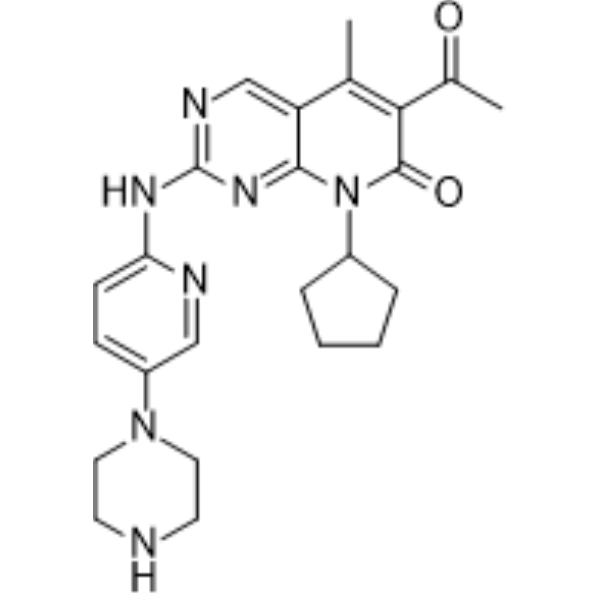
    Palbociclib (PD 0332991) dihydrochloride is an orally active selective CDK4 and CDK6 inhibitor with IC50 values of 11 and 16 nM, respectively. Palbociclib dihydrochloride has potent anti-proliferative activity and induces cell cycle arrest in cancer cells, which can be used in the research of HR-positive and HER2-negative breast cancer and hepatocellular carcinoma .
    Palbociclib dihydrochloride
  • HY-178918

    Acetyl-CoA Carboxylase Cancer
    XZA-1 is a 3-hydroxyacyl-coenzyme A dehydrogenase (HADH) activator. XZA-1 increases the intracellular level of acetoacetyl-CoA, which in turn induces acetoacetylation modification of Chromobox Protein Homolog 4 (CBX4) at lysine 106 (K106). XZA-1 exhibits antitumor effects in a xenograft model of human hepatocellular carcinoma SMMC7721 cells overexpressing CBX4. XZA-1 can be used for the study of hepatocellular carcinoma .
    XZA-1
  • HY-18203

    Apoptosis Akt mTOR Cancer
    HBF-0079 is a selective anti-hepatocellular carcinoma agent. HBF-0079 induces cell cycle arrest and Apoptosis. HBF-0079 modulates cell-growth and anti-apoptotic signaling through AKT and mTOR. HBF-0079 exhibits antitumor activity against hepatocellular carcinoma .
    HBF-0079
  • HY-W013514R

    DNA/RNA Synthesis Reference Standards Cancer
    2-Acetamidofluorene is a potent carcinogenan. 2-Acetamidofluorene is can be used fot induction of hepatocellular carcinoma (HCC) and multiple primary tumours .
    2-Acetamidofluorene (Standard)
  • HY-128366

    Apoptosis Cancer
    Waltonitone is a ursane-type pentacyclic triterpene isolated from Gentian waltonii Burkill. Waltonitone significantly inhibits hepatocellular carcinoma cells growth and induces apoptosis in vitro and in vivo .
    Waltonitone
  • HY-178098

    YAP Cancer
    TEAD-IN-21 is a potent and orally active pan-TEAD inhibitor with an IC50 of 3 nM. TEAD-IN-21 effectively inhibited the proliferation of Huh-7 cells. TEAD-IN-21 selectively downregulates TEAD-dependent downstream genes. TEAD-IN-21 achieves tumor regression in a liver cancer-derived tumor xenograft mice model. TEAD-IN-21 can be used in the research of hepatocellular carcinoma (HCC) .
    TEAD-IN-21

Inquiry Online

Your information is safe with us. * Required Fields.

Salutation


Country or Region *

Applicant Name *


Organization Name *

Department *


Email Address *


Product Name *

Cat. No.


Requested quantity *

Phone Number *


Remarks

Inquiry Online

Inquiry Information

Product Name:
Cat. No.:
Quantity:
MCE Japan Authorized Agent:

