

1. Search Result
Search Result
Results for "

histone H4

" in MedChemExpress (MCE) Product Catalog:

32

Inhibitors & Agonists

1

Fluorescent Dyes

8

Peptides

1

Inhibitory Antibodies

1

Recombinant Proteins

15

Antibodies

1

Click Chemistry

Cat. No. Product Name Target Research Areas Chemical Structure
  • HY-144315

    Snail/HDAC-IN-1

    HDAC Cancer
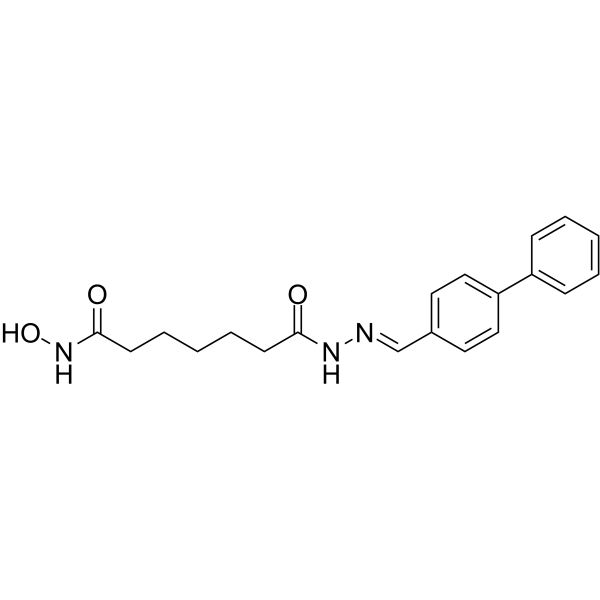
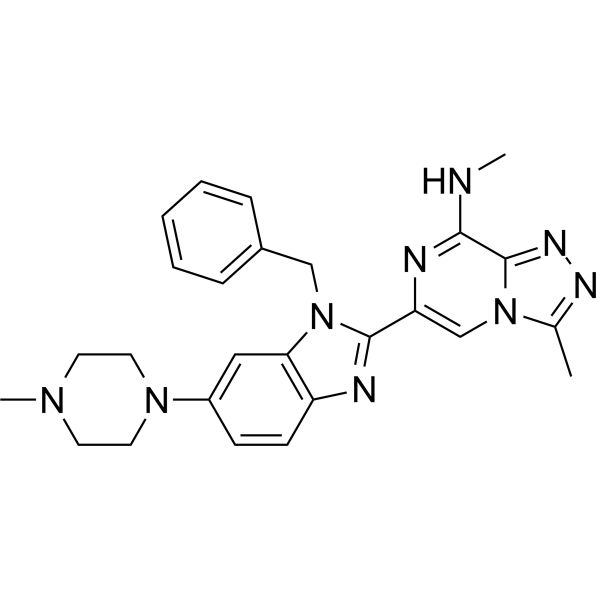
    CYD19 is a potent Snail/HDAC dual target inhibitor. CYD19 displays potent inhibitory activity against HDAC1 with an IC50 of 0.405 μM and potent inhibition against Snail with a Kd of 0.18 μM. CYD19 increases histone H4 acetylation in HCT-116 cells and decreases the expression of Snail protein to induce cell apoptosis .
    CYD19
  • HY-P1958

    HSV Infection
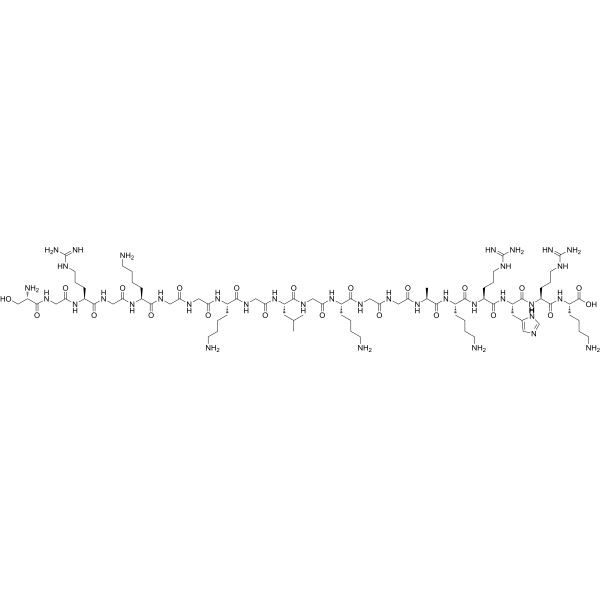
    Histone H4 (2-21) is the core histones associated with chromatinization of herpes simplex virus 1 (HSV-1) genomes .
    Histone H4 (2-21)
  • HY-145550

    BI894999

    Epigenetic Reader Domain Cancer
    Amredobresib (BI894999) is an orally active BET inhibitor. Amredobresib inhibits the binding of BRD4-BD1 and BRD4-BD2 bromodomains to acetylated histones with IC50 values of 5 nM and 41 nM, respectively. Amredobresib exhibits anticancer activity against acute myeloid leukemia (AML) and NUT cancer .
    Amredobresib
  • HY-156257
    UNC9512
    1 Publications Verification

    DNA/RNA Synthesis Cancer
    UNC9512 is a selective 53BP1 inhibitor with an IC50 of 0.46 μM, and a Kd values of 0.17 μM. UNC9512 binds 53BP1 and its tandem Tudor domain, disrupts histone H4 interaction, and inhibits 53BP1 activity. UNC9512 can be used as a probe for DNA damage repair and Gene editing .
    UNC9512
  • HY-117709

    HDAC Neurological Disease
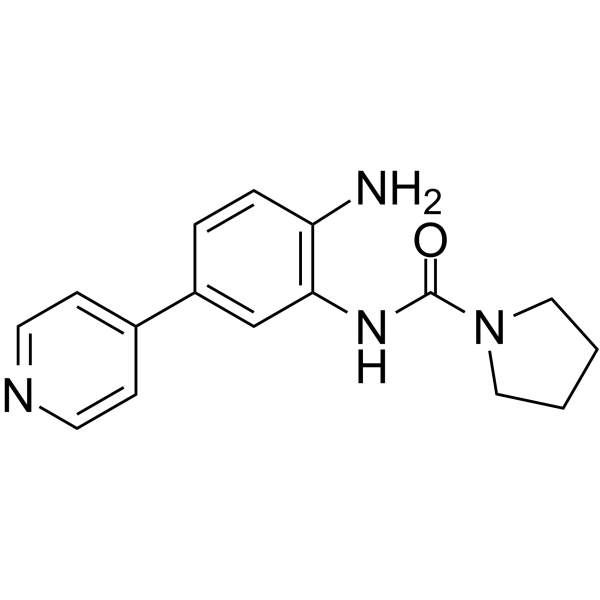
    BRD6688 is a selective HDAC2 inhibitor. BRD6688 increases H4K12 and H3K9 histone acetylation in primary mouse neuronal cells. BRD6688 crosses the blood brain barrier and rescues the memory defects associated with p25 induced neurodegeneration in contextual fear conditioning in a CK-p25 mouse model .
    BRD6688
  • HY-116818

    HDAC Neurological Disease
    Crebinostat is a potent histone deacetylase (HDAC) inhibitor with IC50 values of 0.7 nM, 1.0 nM, 2.0 nM and 9.3 nM for HDAC1, HDAC2, HDAC3 and HDAC6, respectively. Crebinostat potently induces acetylation of both histone H3 and histone H4 as well as enhances the expression of the cAMP response element-binding protein (CREB) target gene Egr1. Crebinostat increases the density of synapsin-1 punctae along dendrites in cultured neurons. Crebinostat can modulate chromatin-mediated neuroplasticity and exhibits enhanced memory in mice .
    Crebinostat
  • HY-130538
    1-Naphthohydroxamic acid
    2 Publications Verification

    HDAC Cancer
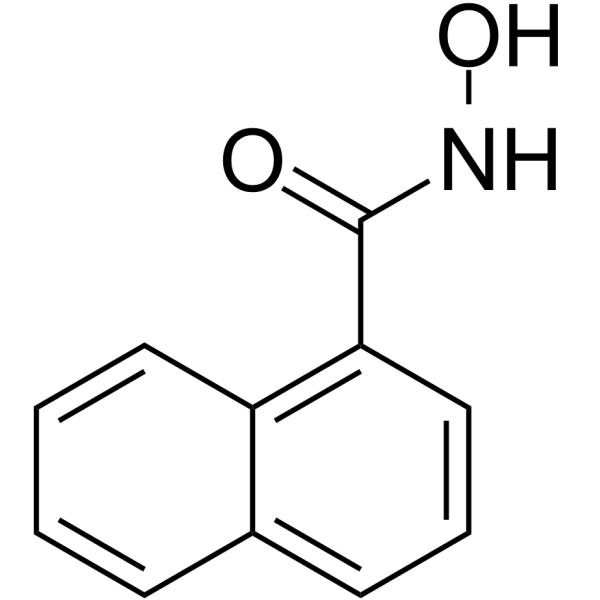
    1-Naphthohydroxamic acid (Compound 2) is a potent and selective HDAC8 inhibitor with an IC50 of 14 μM. 1-Naphthohydroxamic acid is more selectively for HDAC8 than class I HDAC1 and class II HDAC6 (IC50 >100 μM). 1-Naphthohydroxamic acid does not increase global histone H4 acetylation and also does not reduce total intracellular HDAC activity .1-Naphthohydroxamic acid can induce tubulin acetylation .
    1-Naphthohydroxamic acid
  • HY-150249
    GSK3735967
    1 Publications Verification

    DNA Methyltransferase Cancer
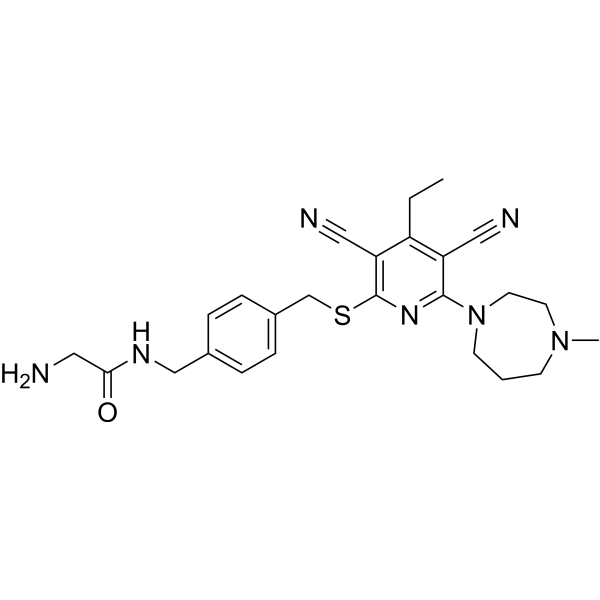
    GSK3735967 is an selective, reversible, non-nucleoside inhibitor of DNMT1 with an IC50 value of 40 nM. GSK3735967 contains a planar dicyanopyridine core that can specifically embed DNMT1 bound hemimethylated CpG dinucleotides. GSK3735967 has three binding sites, one of which can bind to histone H4K20me3 .
    GSK3735967
  • HY-125236

    Epigenetic Reader Domain Cancer
    BET-IN-19 (Compound 146) is a BET inhibitor. BET-IN-19 inhibits hlL-6 mRNA transcription (IC50 ≤0.3 uM), and c-myc activity in human AML MV4-11 cell (IC50 ≤0.3 uM)。BET-IN-19 inhibits tetra-acetylated histone H4 binding to BRD4 bromodomain 1 (IC50 ≤0.3 uM) .
    BET-IN-19
  • HY-P11551

    Histone Acetyltransferase Cancer
    Histone H4 peptide is a peptide that interacts with hNatD. Histone H4 peptide exhibits polar interactions with hNatD. Histone H4 peptide can be used in lung cancer research .
    Histone H4 peptide
  • HY-P10570

    Histone Methyltransferase Cancer
    [Nle20] H4 peptide (16−23) is a peptide with strong inhibitory activity against histone methyltransferase SETD8 (Kd=0.14 μM), which inhibits SETD8's methylation of histone H4 by competing with SETD8's substrate binding site. [Nle20] H4 peptide (16−23) can be used as a lead compound for anticancer therapy .
    [Nle20] H4 peptide (16−23)
  • HY-P2228

    HDAC Apoptosis Cancer
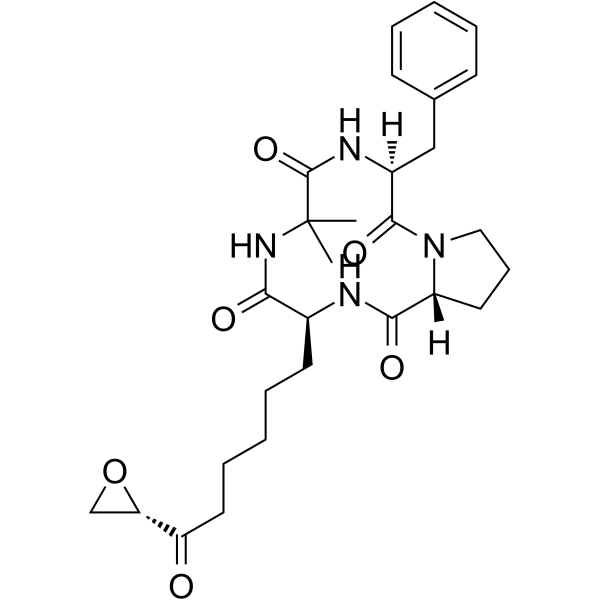
    Chlamydocin (purity≥70%), a fungal metabolite, is a highly potent HDAC inhibitor, with an IC50 of 1.3 nM. Chlamydocin (purity≥70%) exhibits potent antiproliferative and anticancer activities. Chlamydocin (purity≥70%) induces apoptosis by activating caspase-3 .
    Chlamydocin (purity≥70%)
  • HY-P2178

    HDAC Cancer
    Dihydrochlamydocin analog-1 (compound 2) is a Chlamydocin (HY-115761) analogue that inhibits histone H4 peptide deacetylation with IC50 of 30 nM .
    Dihydrochlamydocin analog-1
  • HY-160461

    HDAC Metabolic Disease
    LTK-14A, a derivative of Garcinol (HY-107569), is a selective histone butyrylation inhibitor. LTK-14A does not affect acetylation. LTK-14A significantly inhibits the butyrylation of H4K5 and downregulated the expression of proadipogenic genes, thus culminating in abolished adipogenesis. LTK-14A can be used for the study of obesity .
    LTK-14A
  • HY-120137

    Histone Methyltransferase Cancer
    CMP-5 is a potent, specific, and selective PRMT5 inhibitor, while displays no activity against PRMT1, PRMT4, and PRMT7 enzymes. CMP-5 selectively blocks S2Me-H4R3 by inhibiting PRMT5 methyltransferase activity on histone preparations. CMP-5 prevents Epstein-Barr virus (EBV)-driven B-lymphocyte transformation but leaving normal B cells unaffected .
    CMP-5
  • HY-W013500

    alpha-Nitrostilbene; α-Nitrostilbene; NSC 385

    Histone Methyltransferase Others
    (1-Nitroethene-1,2-diyl)dibenzene (alpha-Nitrostilbene; α-Nitrostilbene) is an inhibitor of protein arginine methyltransferase 1 (PRMT1; IC50=11 μM in histone H4 methylation assay). It also inhibits histone H4 methylation by PRMT8, but not histone H3.1 methylation by CARM1 or Set7/9, at concentrations of 10 and 100 μM.
    (1-Nitroethene-1,2-diyl)dibenzene
  • HY-121512

    HDAC Apoptosis Cancer
    SK-7041 is a HDAC inhibitor with the IC50 of 172 nM. SK-7041 induces the hyperacetylation of histones H3 and H4 .SK-7041 inhibits tumor cell growth in vivo and in vitro, induces cell apoptosis, and arrests cell cycle at the G1 phase .
    SK-7041
  • HY-162060

    HDAC Cardiovascular Disease
    YPX-C-05 is a hydroxamic acid-based HDAC inhibitor. YPX-C-05 exerts significant vasodilatory effects. YPX-C-05 exhibits inhibitory effects on HDACs and increases histone H4 acetylation in endothelial cells. YPX-C-05 can be used for hypertension research .
    YPX-C-05
  • HY-146351

    HDAC Neurological Disease
    HDAC-IN-38 (compound 13) is a potent HDAC inhibitor. HDAC-IN-38 shows similar micro-molar inhibitory activity toward HDAC1, 2, 3, 5, 6, and 8. HDAC-IN-38 increases cerebral blood flow (CBF), attenuates cognitive impairment, and improves hippocampal atrophy. HDAC-IN-38 also increases the level of histone acetylation (H3K14 or H4K5) .
    HDAC-IN-38
  • HY-175821

    Histone Methyltransferase Apoptosis Cancer
    PRMT1-IN-3 is a potent protein arginine methyltransferase 1 (PRMT1) inhibitor with an IC50 of 4.11 μM. PRMT1-IN-3 inhibits PRMT6 and PRMT8 with IC50s of 23.3 and 30.1 μM. PRMT1-IN-3 suppresses asymmetric dimethylarginine (ADMA) levels and histone H4R3me2a modification in triple-negative breast cancer (TNBC) cells. PRMT1-IN-3 induces cell cycle arrest, apoptosis, and inhibits migration and colony formation in MDA-MB-231 cells. PRMT1-IN-3 acts as chemotherapeutic sensitizers for Paclitaxel (HY-B0015). PRMT1-IN-3 can be used for the study of TNBC .
    PRMT1-IN-3
  • HY-156091

    PI3K HDAC Cancer
    PI3Kα/HDAC6-IN-1 (compound 21j) is a dual PI3Kα/HDAC6 inhibitor with IC50 of 2.9 and 26 nM, respectively. PI3Kα/HDAC6-IN-1 also inhibits AKT(Ser473) phosphorylation and induces the accumulation of acetylated α-tubulin without affecting acetylated histones H3 and H4. PI3Kα/HDAC6-IN-1 efficiently inhibits L-363 cell line (IC50=0.17 μM) and has good anti-cancer activity .
    PI3Kα/HDAC6-IN-1
  • HY-123699

    HDAC Cancer
    NCT-10b (compound 17b) is a selective HDAC6 inhibitor.NCT-10b mediates preferential α-tubulin acetylation without major histone H4 acetylation.NCT-10b can be used for the research of multiple myeloma .
    NCT-10b
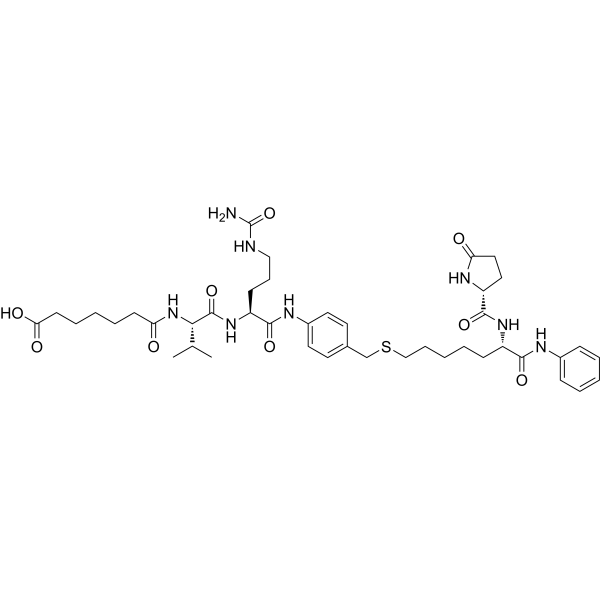
  • HY-P11724

    Histone H4 peptide substrate (1-21)
  • HY-121009

    Histone Acetyltransferase Microtubule/Tubulin Cancer
    CCT077791 is a PCAF (IC50: 7.3 μM (FlashPlate); 2.2 μM (Filter assay)) and p300 histone acetyltransferase inhibitor. CCT077791 reduces total acetylation of histones H3 and H4, levels of specific acetylated lysine marks, and acetylation of α-tubulin. CCT077791 can be used in the research of colorectal cancer .
    CCT077791
  • HY-182275

    PROTACs Histone Methyltransferase Cancer
    PROTAC PRMT1 degrader-1 (compound 4) is a PRMT1 PROTAC degrader, with a DC50 of 0.77 μM (MCF-7 cells). PROTAC PRMT1 degrader-1 recruits the CRBN E3 ubiquitin ligase to induce proteasome-dependent degradation of PRMT1; it also forms a ternary complex with PRMT1 and CRBN, promoting ubiquitination and subsequent proteasomal degradation of PRMT1. PROTAC PRMT1 degrader-1 reduces the level of asymmetric dimethylarginine in cancer cells, as well as the level of asymmetric dimethylation of arginine 3 on histone H4, while inhibiting the growth of various cancer cells. PROTAC PRMT1 degrader-1 can be used in the research of breast cancer and melanoma .
    PROTAC PRMT1 degrader-1
  • HY-116267

    HDAC Apoptosis PARP Bcl-2 Family Androgen Receptor Cancer
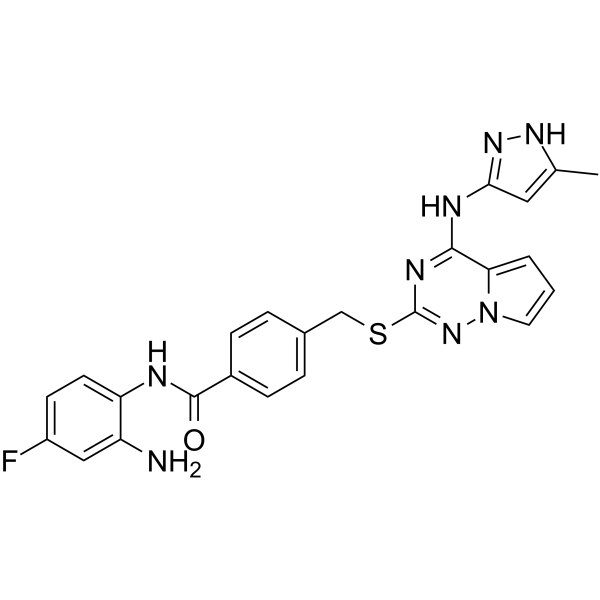
    MHY219 is a histone deacetylase (HDAC) inhibitor with an IC50 of 0.276 μM. MHY219 inhibits total HDAC enzyme activity, increases histone H3 and H4 hyperacetylation. MHY219 induces cance cells phase arrest, apoptosis and inhibits proliferationin. MHY219 increases cleavage of PARP, Bax, cytochrome c levels, androgen receptor expression and decreases Bcl-2 expression. MHY219 can be used for the research of prostate cancer .
    MHY219
  • HY-113846A

    Histone Methyltransferase Cancer
    CMP-5 dihydrochloride is a potent, specific, and selective PRMT5 inhibitor, while displays no activity against PRMT1, PRMT4, and PRMT7 enzymes. CMP-5 dihydrochloride selectively blocks S2Me-H4R3 by inhibiting PRMT5 methyltransferase activity on histone preparations. CMP-5 dihydrochloride prevents EBV-driven B-lymphocyte transformation but leaving normal B cells unaffected .
    CMP-5 dihydrochloride
  • HY-113846

    Histone Methyltransferase Cancer
    CMP-5 hydrochloride is a potent, specific, and selective PRMT5 inhibitor, while displays no activity against PRMT1, PRMT4, and PRMT7 enzymes. CMP-5 hydrochloride selectively blocks S2Me-H4R3 by inhibiting PRMT5 methyltransferase activity on histone preparations. CMP-5 hydrochloride prevents EBV-driven B-lymphocyte transformation but leaving normal B cells unaffected .
    CMP-5 hydrochloride
  • HY-181843

    HDAC Apoptosis Histone Acetyltransferase Microtubule/Tubulin Caspase Cancer
    HDAC-IN-99 is a histone deacetylase (HDAC) inhibitor with an IC50 of 37.73 nM, and it exhibits potent inhibitory activity against HDAC1 (IC50 = 48.09 nM), HDAC2 (IC50 = 300.28 nM) and HDAC6 (IC50 = 9.16 nM). HDAC-IN-99 exerts broad-spectrum antiproliferative activity in various cancer cell lines. HDAC-IN-99 induces S-phase cell cycle arrest and apoptosis in colon cancer cells, increases the acetylation levels of histone H3, histone H4 and α-tubulin, and upregulates the expression of p21 as well as the cleavage of caspase-3. HDAC-IN-99 displays antitumor activity in colon cancer xenograft models. HDAC-IN-99 can be used for the research of colon cancer .
    HDAC-IN-99
  • HY-181957

    Epigenetic Reader Domain Histone Acetyltransferase Apoptosis IKZF Family Cancer
    KB528 is a p300/CBP histone acetyltransferase (KAT) inhibitor with low nM IC50 values against human p300 and CBP, and exhibits selectivity over other KAT family members. KB528 modulates the IRF4 transcriptional network, downregulates the expression of IRF4, MYC, CAV2 and IGLL5, and reduces the protein level of IKZF3. KB528 potently induces apoptosis in multiple myeloma cells. KB528 is applicable to research related to multiple myeloma .
    KB528
  • HY-114510

    Discoidin Domain Receptor Histone Acetyltransferase Sirtuin Fungal Apoptosis Infection Cancer
    PRMT/HKMT-IN-1 is an epigenetic multi-target protein arginine methyltransferases (PRMTs) and histone lysine methyltransferases (HKMTs) inhibitor. PRMT/HKMT-IN-1 inhibits Aspergillus nidulans RmtA with an IC50 of 29 μM. PRMT/HKMT-IN-1 inhibits human PRMT1, p300/CBP HAT, CARM1, SET7, SIRT1 and SIRT2. PRMT/HKMT-IN-1 inhibits methylation of histone H3K4, H4R3, and H3R17 residues. CBP/p300-IN-23 induces apoptosis, arrests cell cycle in S phase, and triggers granulocytic differentiation in leukemia cells. PRMT/HKMT-IN-1 can be used for the research of leukemia .
    PRMT/HKMT-IN-1
  • HY-181849

    Histone Methyltransferase Cancer
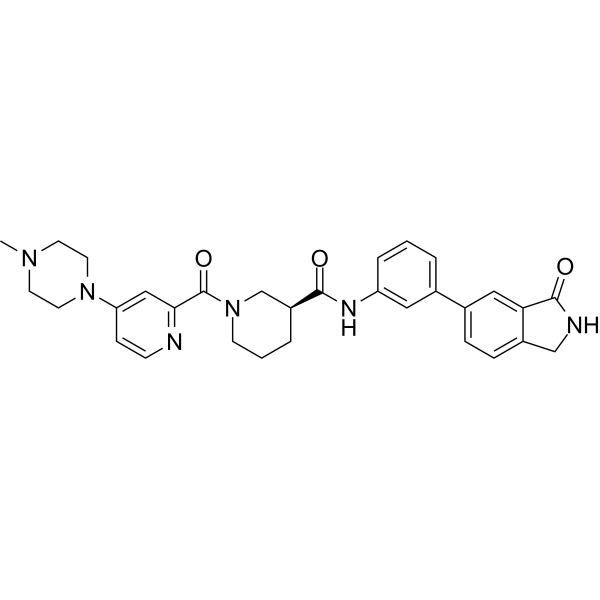
    MS2928 is a selective SETD8 inhibitor with an IC50 of 0.14 μM against SETD8 methyltransferase activity. MS2928 reduces cellular H4K20me1 levels and inhibits proliferation of SETD8-overexpressing multiple myeloma cells. MS2928 inhibits tumor growth in xenograft mouse models of SETD8-overexpressing multiple myeloma. MS2928 can be used for the study of SETD8 biological functions and multiple myeloma .
    MS2928

Inquiry Online

Your information is safe with us. * Required Fields.

Salutation


Country or Region *

Applicant Name *


Organization Name *

Department *


Email Address *


Product Name *

Cat. No.


Requested quantity *

Phone Number *


Remarks

Inquiry Online

Inquiry Information

Product Name:
Cat. No.:
Quantity:
MCE Japan Authorized Agent: