1. Search Result
Search Result
Results for "

horses

" in MedChemExpress (MCE) Product Catalog:

39

Inhibitors & Agonists

2

Biochemical Assay Reagents

2

Peptides

15

Natural
Products

Cat. No. Product Name Target Research Areas Chemical Structure
  • HY-B2114
    Escin
    3 Publications Verification

    Apoptosis Metabolic Disease Inflammation/Immunology Cancer
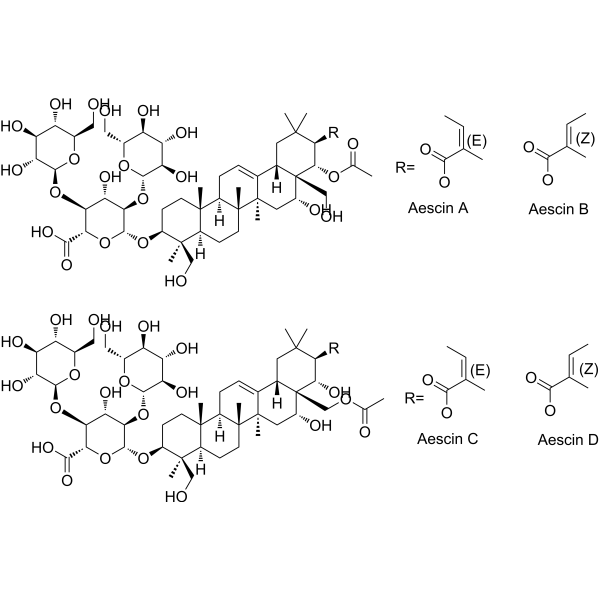
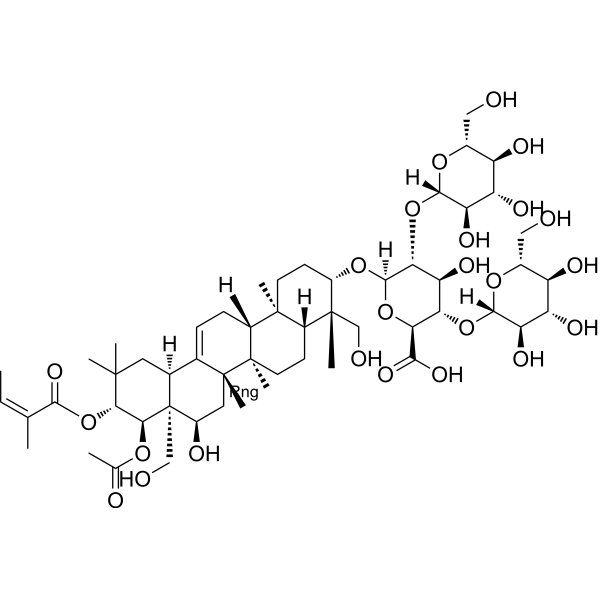
    Escin, a natural compound of triterpenoid saponins that can be isolated from horse chestnut (Aesculus hippocastanum) seeds, can be used as a vasoprotective anti-inflammatory, anti-edematous and anti-nociceptive agent .
    Escin
  • HY-E70362

    BCHE, BuChE, PCHE, pseudocholinesterase, plasma cholinesterase, Acylcholine acyl-hydrolase, Choline esterase, butyryl

    Others Others
    Butyrylcholinesterase (BCHE), Horse Serum (BCHE, BuChE, PCHE, pseudocholinesterase, plasma cholinesterase, Acylcholine acyl-hydrolase, Choline esterase, butyryl) is a biological material or organic compound that can be used in life science research .
    Butyrylcholinesterase (BCHE), Horse Serum
  • HY-NP002J

    Biochemical Assay Reagents Others
    Horse Serum Albumin is an abundant, multifunctional mammalian plasma protein and transport molecule. Horse Serum Albumin acts as an allergen, exhibits high cross-reactivity with serum albumins from other mammals, and contains epitope regions recognizable by antibodies. Horse Serum Albumin binds a variety of metabolites, drugs, nutrients, metals and other molecules .
    Horse Serum Albumin
  • HY-P2798

    EC 3.1.1.8; BCHE, Horse serum

    Cholinesterase (ChE) Neurological Disease
    Cholinesterase, Horse serum infers to acetylcholinesterase (AChE) and butyryl cholinesterase (BChE). AChE and BChE catalyze the hydrolysis of 6-MAM to morphine .
    Cholinesterase, Horse serum
  • HY-17428

    Histamine Receptor Neurological Disease Inflammation/Immunology
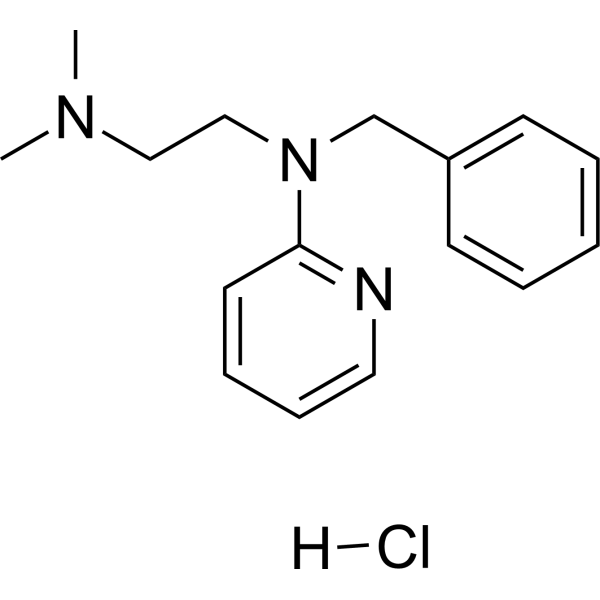
    Tripelennamine hydrochloride is a histamine H1-receptor antagonist. Tripelennamine hydrochloride effectively reverses histamine-induced bronchoconstriction, increased transpulmonary pressure, elevated pulmonary vascular resistance and reduced dynamic compliance. Tripelennamine hydrochloride does not significantly affect arterial hypoxemia, hemoglobin desaturation and hypercapnia in horses undergoing short-term high-intensity exercise. Tripelennamine hydrochloride exhibits local and central analgesic activity. Tripelennamine hydrochloride can be used in studies related to emphysema, urticaria and acute laminitis .
    Tripelennamine hydrochloride
  • HY-N7120

    PGP hydrate

    Bacterial Antibiotic Infection
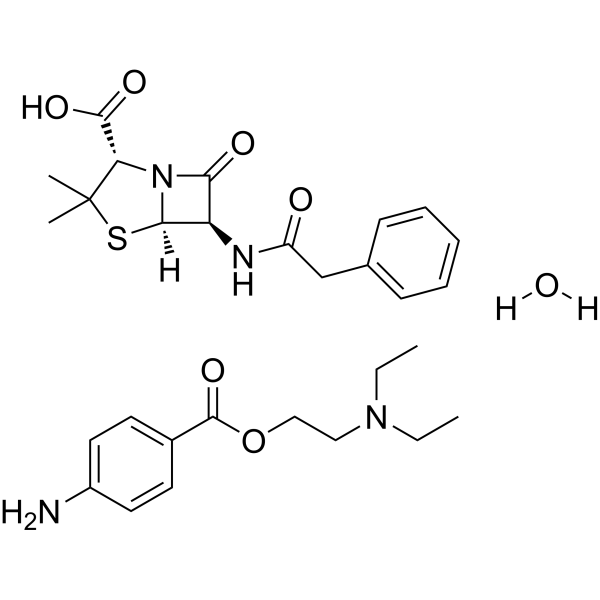
    Penicillin G Procaine hydrate (PGP hydrate) is a β-lactam antibiotic and sustained-release formulation. Penicillin G procaine (hydrate) hydrolyzes in vivo to release penicillin G and Procaine (HY-B0546), thereby delaying the absorption of penicillin G .
    Penicillin G procaine hydrate
  • HY-134116

    Glucocorticoid Receptor Infection Inflammation/Immunology
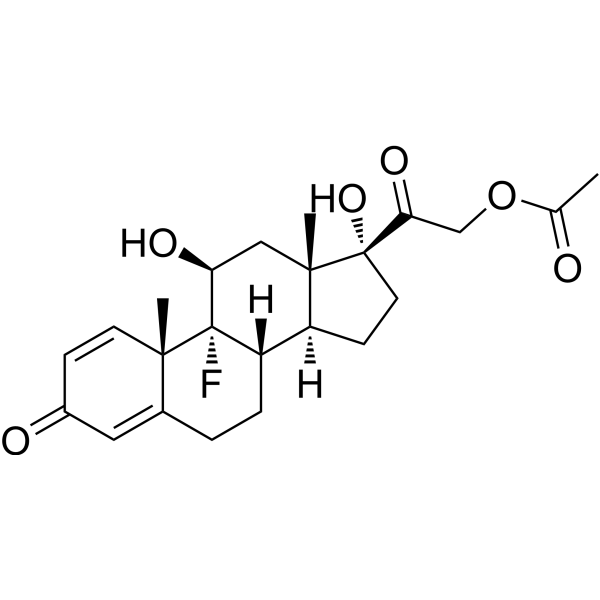
    Isoflupredone acetate is a corticosteroids with anti-inflammatory activity. Isoflupredone acetate can be used for research ketosis, musculoskeletal disorders, hypersensitivity, infections, inflammatory diseases in cows, horse, pigs, et al. .
    Isoflupredone acetate
  • HY-N0555

    Lipase Metabolic Disease
    Escin IB is a saponin isolated from skin and the endosperm of seeds of horse chestnut (Aesculus hippocastanum). Escin IB shows inhibitory effect on pancreatic lipase activity .
    Escin IB
  • HY-132269

    Glucocorticoid Receptor Inflammation/Immunology
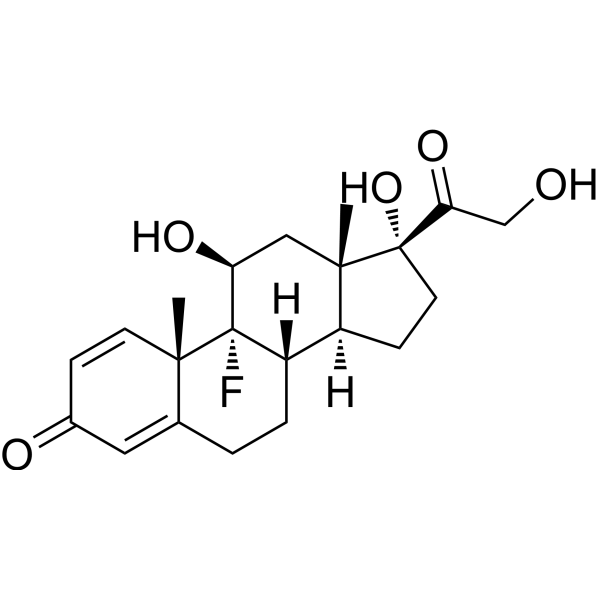
    Isoflupredone belongs to the class of corticosteroids and exerts its effect by binding to glucocorticoid and mineralocorticoid receptors of animals, such as horses. Isoflupredone can be used in wide range of conditions, such as infection and inflammatory diseases .
    Isoflupredone
  • HY-W015050

    1-Aminoanthracene

    GABA Receptor Chloride Channel Fluorescent Dye Neurological Disease
    1-Anthramine (1-aminoanthracene) is a fluorescent general anesthetic. potentiates GABAergic transmission with Kd = 0.1 mM, for binding to the general anesthetic site in horse spleen apoferritin (HSAF). 1-Anthramine fluorescence is enhanced when bound to HSAF. 1-Anthramine potentiates chloride currents elicited by GABA. 1-Anthramine can reversibly inhibit the movement of Xenopus laevis, with an EC50 value of 16 μM .
    1-Anthramine
  • HY-N10917

    Drug Derivative Infection Cancer
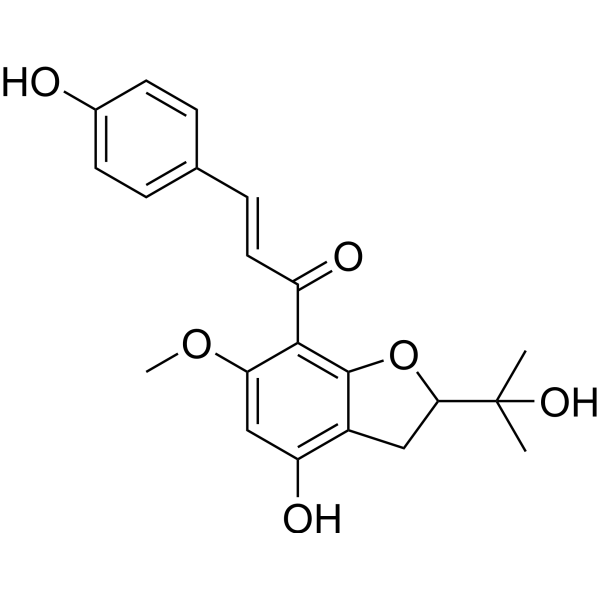
    Xanthohumol I is a derivative of Chalcone (HY-121054) that can be isolated from Humulus lupulus L. (hops). Xanthohumol I exhibits free radical scavenging activity .
    Xanthohumol I
  • HY-119456A

    Adrenergic Receptor Neurological Disease
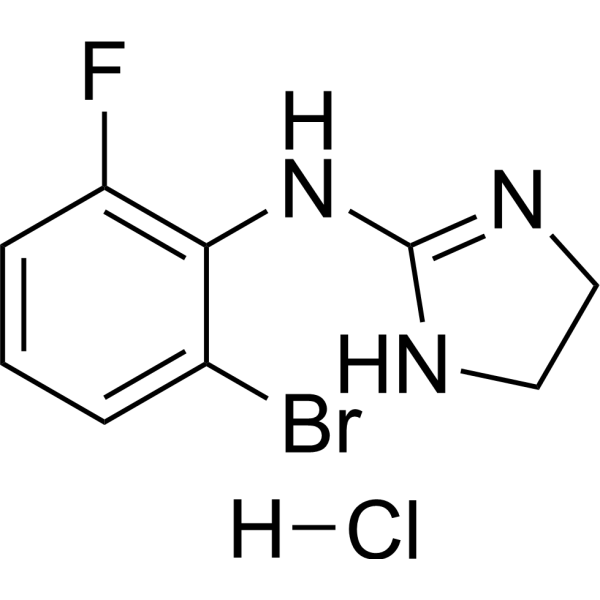
    Romifidine hydrochloride is an α2 adrenergic receptor agonist. Romifidine hydrochloride shows sedation effects in vivo .
    Romifidine hydrochloride
  • HY-P4798

    Human PTHrP(107-111) amide

    PTHR Others
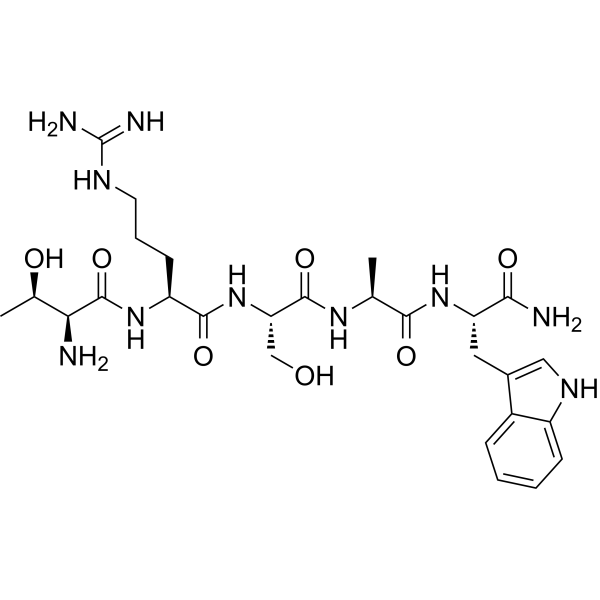
    Osteostatin (1-5) amide (human, bovine, dog, horse, mouse, rabbit, rat) (Human PTHrP (107-111) amide) is a C-terminal parathyroid hormone-related protein fragment that can inhibit bone resorption .
    Osteostatin (1-5) amide (human, bovine, dog, horse, mouse, rabbit, rat)
  • HY-N7497

    Others Others
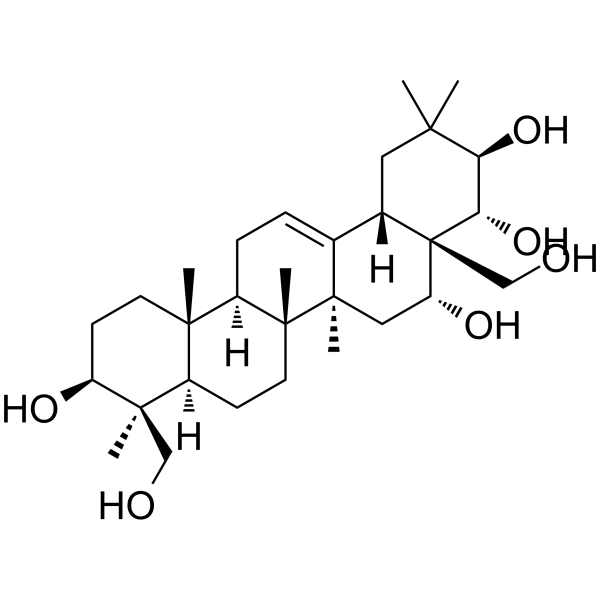
    Protoescigenin is the main aglycone of horse chestnut saponin mixture known as escin. Protoescigenin is selected as substrate for exploratory chemistry towards selective protection, followed by propargyl ether formation and subsequent condensation with azido-monosaccharides, to obtain novel triazole linked conjugates of the triterpene .
    Protoescigenin
  • HY-W016083

    β-Naphthoxyethanol

    Biochemical Assay Reagents Neurological Disease
    Anavenol (β-Naphthoxyethanol) is an anesthetic. Anavenol exerts anesthetic effects on horses. Anavenol can be used in studies on adverse events associated with equine anesthesia .
    Anavenol
  • HY-119456

    Adrenergic Receptor Neurological Disease
    Romifidine is an α2 adrenergic receptor agonist. Romifidine shows sedation effects in vivo .
    Romifidine
  • HY-134116R

    Glucocorticoid Receptor Reference Standards Infection Inflammation/Immunology
    Isoflupredone acetate (Standard) is the analytical standard of Isoflupredone acetate. This product is intended for research and analytical applications. Isoflupredone acetate is a corticosteroids with anti-inflammatory activity. Isoflupredone acetate can be used for research ketosis, musculoskeletal disorders, hypersensitivity, infections, inflammatory diseases in cows, horse, pigs, et al. .
    Isoflupredone acetate (Standard)
  • HY-126897

    Lolinine

    Others Others
    N-Acetylloline (Lolinine) is a lolinine-type alkaloid detected in horse urine. Its specific mechanism of activity and application details are not described in detail from the existing information.
    N-Acetylloline
  • HY-P11166

    Bacterial Infection
    eCATH-1 is an antimicrobial peptide derived from horses. eCATH-1 is significantly effective against both Gram-positive and Gram-negative bacteria .
    eCATH-1
  • HY-107248

    Others Inflammation/Immunology
    Escin IIa, isolated from horse chestnut, the seeds of Aesculus hippocastanum L., has positive effects on acute inflammation in animals. Escin IIa has gastroprotections on ethanol-induced gastric mucosal lesions in rats .
    Escin IIa
  • HY-120955

    Prostaglandin Receptor Others
    Cloprostol, a synthetic derivative of prostaglandin F2α, is used as an ossified in veterinary medicine and the research of reproductive disorders in cattle, pigs and horses. (+)-5-trans Cloprostenol is a secondary impurity produced during the synthesis of (+) -cloprostenol .
    (+)-5-trans Cloprostenol
  • HY-107247

    Others Inflammation/Immunology
    Escin IIb, isolated from horse chestnut, the seeds of Aesculus hippocastanum L., has positive effects on acute inflammation in animals . Escin IIb showed potent protective effects against ethanol-induced gastric mucosal lesions .
    Escin IIb
  • HY-132269R

    Glucocorticoid Receptor Reference Standards Inflammation/Immunology
    Isoflupredone (Standard) is the analytical standard of Isoflupredone. This product is intended for research and analytical applications. Isoflupredone belongs to the class of corticosteroids and exerts its effect by binding to glucocorticoid and mineralocorticoid receptors of animals, such as horses. Isoflupredone can be used in wide range of conditions, such as infection and inflammatory diseases .
    Isoflupredone (Standard)
  • HY-N0555R

    Lipase Reference Standards Metabolic Disease
    Escin IB (Standard) is the analytical standard of Escin IB. This product is intended for research and analytical applications. Escin IB is a saponin isolated from skin and the endosperm of seeds of horse chestnut (Aesculus hippocastanum). Escin IB shows inhibitory effect on pancreatic lipase activity .
    Escin IB (Standard)
  • HY-100125

    SR1368

    COX Inflammation/Immunology
    Timegadine, a new antiinflammatory agent, is found to be a potent, competitive inhibitor of cyclo-oxygenase (COX) and lipo-oxygenase, with IC50s ranging from 5 nM (washed rabbit platelets) to 20 μM (rat brain) for COX and 100 μM for lipo-oxygenase both in the cytosol fraction of horse platelet homogenates, and in washed rabbit platelets.
    Timegadine
  • HY-100125A

    SR1368 hydrochloride

    COX Inflammation/Immunology
    Timegadine hydrochloride (SR1368 hydrochloride) is the hydrochloride salt form of Timegadine (HY-100125). Timegadine hydrochloride is an orally active inhibitor for COX and lipo-oxygenase, that inhibits COX in washed rabbit platelets and rat brain with IC50 of 5 nM and 20 μM, inhibits lipo-oxygenase in in horse and washed rabbit platelets with IC50 of 100 μM. Timegadine hydrochloride exhibits anti-arthritis activity .
    Timegadine hydrochloride
  • HY-W011340

    Drug Metabolite Endogenous Metabolite Inflammation/Immunology
    5-Hydroxy flunixin, the principal metabolite of Flunixin (HY-121046), retains the Flunixin's anti-inflammatory properties and plays a significant role in mitigating pain and inflammation in various veterinary applications. It assists in alleviating conditions such as colic in horses, musculoskeletal disorders, and infectious diseases in cattle, while also supporting the management of mastitis-metritis-agalactia syndrome in sows.
    5-Hydroxy flunixin
  • HY-N7497R

    Reference Standards Others Others
    Protoescigenin (Standard) is the analytical standard of Protoescigenin. This product is intended for research and analytical applications. Protoescigenin is the main aglycone of horse chestnut saponin mixture known as escin. Protoescigenin is selected as substrate for exploratory chemistry towards selective protection, followed by propargyl ether formation and subsequent condensation with azido-monosaccharides, to obtain novel triazole linked conjugates of the triterpene .
    Protoescigenin (Standard)
  • HY-118848

    Lipoxygenase Leukotriene Receptor Inflammation/Immunology
    A63162 is a specific 5-lipoxygenase (5-LOX) inhibitor. A63162 inhibits mitogen (PHA)-induced horse mononuclear cell (BMC) proliferation and inhibits Calcimycin (HY-N6687)-induced leukotriene LTB4 synthesis at the same concentration. A63162 can be used in the study of chronic obstructive pulmonary disease, arthritis and inflammatory bowel disease .
    A63162
  • HY-W011340R

    Endogenous Metabolite Reference Standards Inflammation/Immunology
    5-Hydroxy flunixin (Standard) is the analytical standard of 5-Hydroxy flunixin. This product is intended for research and analytical applications. 5-Hydroxy flunixin, the principal metabolite of Flunixin (HY-121046), retains the Flunixin's anti-inflammatory properties and plays a significant role in mitigating pain and inflammation in various veterinary applications. It assists in alleviating conditions such as colic in horses, musculoskeletal disorders, and infectious diseases in cattle, while also supporting the management of mastitis-metritis-agalactia syndrome in sows.
    5-Hydroxy flunixin (Standard)
  • HY-17428A

    Histamine Receptor Neurological Disease Inflammation/Immunology
    Tripelennamine is a histamine H1-receptor antagonist. Tripelennamine effectively reverses histamine-induced bronchoconstriction, increased transpulmonary pressure, elevated pulmonary vascular resistance and reduced dynamic compliance. Tripelennamine does not significantly affect arterial hypoxemia, hemoglobin desaturation and hypercapnia in horses undergoing short-term high-intensity exercise. Tripelennamine exhibits local and central analgesic activity. Tripelennamine can be used in studies related to emphysema, urticaria and acute laminitis .
    Tripelennamine
  • HY-17428B

    Histamine Receptor Neurological Disease Inflammation/Immunology
    Tripelennamine citrate is a histamine H1-receptor antagonist. Tripelennamine citrate effectively reverses histamine-induced bronchoconstriction, increased transpulmonary pressure, elevated pulmonary vascular resistance and reduced dynamic compliance. Tripelennamine citrate does not significantly affect arterial hypoxemia, hemoglobin desaturation and hypercapnia in horses undergoing short-term high-intensity exercise. Tripelennamine citrate exhibits local and central analgesic activity. Tripelennamine citrate can be used in studies related to emphysema, urticaria and acute laminitis .
    Tripelennamine citrate
  • HY-17428R

    Reference Standards Histamine Receptor Neurological Disease Inflammation/Immunology
    Tripelennamine hydrochloride (Standard) is the analytical standard of Tripelennamine hydrochloride (HY-17428). This product is intended for research and analytical applications. Tripelennamine hydrochloride is a histamine H1-receptor antagonist. Tripelennamine hydrochloride effectively reverses histamine-induced bronchoconstriction, increased transpulmonary pressure, elevated pulmonary vascular resistance and reduced dynamic compliance. Tripelennamine hydrochloride does not significantly affect arterial hypoxemia, hemoglobin desaturation and hypercapnia in horses undergoing short-term high-intensity exercise. Tripelennamine hydrochloride exhibits local and central analgesic activity. Tripelennamine hydrochloride can be used in studies related to emphysema, urticaria and acute laminitis .
    Tripelennamine hydrochloride (Standard)
  • HY-NP0217

    Biochemical Assay Reagents Inflammation/Immunology
    Horse Immunoglobulin G is a horse serum immunoglobulin that can be used in immunolabeling and coating protein in a variety of immunoassays including ELISA .
    Horse Immunoglobulin G
  • HY-183760

    Cholinesterase (ChE) HSP GSK-3 Amyloid-β Neurological Disease Inflammation/Immunology
    AChE/BChE-IN-37 is a blood-brain barrier-permeable AChE/BChE inhibitor, with an IC50 of 73.65 μM against electric eel-derived AChE and an IC50 of 82.93 μM against horse-derived BChE. AChE/BChE-IN-37 exhibits chelating activity towards Cu 2+, Ca 2+, Mg 2+, Fe 2+ and Zn 2+. AChE/BChE-IN-37 interacts with HSP90AA1 and GSK-3β. AChE/BChE-IN-37 inhibits the self-induced aggregation of 1-42. AChE/BChE-IN-37 suppresses LPS-induced NO production in cells. AChE/BChE-IN-37 can be used in research related to Alzheimer's disease and inflammatory diseases .
    AChE/BChE-IN-37
  • HY-N17394

    Cholinesterase (ChE) Neurological Disease
    Melineurine is a reversible mixed-type acetylcholinesterase inhibitor, with an IC50 of 95.3 μM against AChE and an IC50 of 28.0 μM against BChE. Melineurine is applicable to the research of Alzheimer's disease .
    Melineurine
  • HY-N18676

    Others Metabolic Disease
    Dolichos Biflorus Extract, derived from the seeds of the Dolichos biflorus plant (commonly known as horse gram), is a nutrient-dense herb widely used in Ayurvedic and traditional medicine for its numerous health benefits. Dolichos biflorus extract contains alkaloids, saponins, flavonoids, carbohydrates, proteins, and tannins. It is known for its digestive support, as it promotes healthy digestion, alleviates bloating, and helps with constipation, along with mild diuretic effects that aid detoxification by eliminating excess fluids and waste products from the body.
    Dolichos biflorus extract
  • HY-181851

    Cholinesterase (ChE) Neurological Disease
    AChE-IN-109 is a potent mixed-type cholinesterase inhibitor with significantly stronger inhibitory activity against AChE than BChE. AChE-IN-109 has IC50 values of 0.55 μM and 12.45 μM against AChE and BChE, respectively. AChE-IN-109 inhibits cholinesterases through a mixed-type mechanism, binds to both the catalytic active site (CAS) and peripheral anionic site (PAS) of AChE. AChE-IN-109 can be used for the study of Alzheimer’s disease (AD) .
    AChE-IN-109
  • HY-Y0282

    NSC 77384; Sanibrom 40

    Environmental Pollutants Neurological Disease
    Sodium bromide (NSC 77384; Sanibrom 40) is a GABA-ergic system modulator that crosses the blood-brain barrier, and it effectively reduces and blocks epileptiform discharges. Sodium bromide exerts significant anticonvulsant effects by enhancing GABA-ergic inhibitory functions, such as increasing the amplitude of inhibitory postsynaptic currents and paired-pulse inhibition. Sodium bromide specifically enhances stimulation-induced extracellular alkalosis without affecting baseline pH or subsequent acidosis processes. Sodium bromide exhibits species-specific pharmacokinetic characteristics, competes with chloride ions for renal tubular reabsorption sites, and serves as a marker for extracellular fluid volume. Sodium bromide can be used in the research of epilepsy and related neurological diseases .
    Sodium bromide

Inquiry Online

Your information is safe with us. * Required Fields.

Salutation


Country or Region *

Applicant Name *


Organization Name *

Department *


Email Address *


Product Name *

Cat. No.


Requested quantity *

Phone Number *


Remarks

Inquiry Online

Inquiry Information

Product Name:
Cat. No.:
Quantity:
MCE Japan Authorized Agent:

