

1. Search Result
Search Result
Results for "

hydrolytic activity

" in MedChemExpress (MCE) Product Catalog:

24

Inhibitors & Agonists

1

Fluorescent Dyes

2

Peptides

7

Natural
Products

1

Isotope-Labeled Compounds

Cat. No. Product Name Target Research Areas Chemical Structure
  • HY-129217
    Naringinase
    2 Publications Verification

    Glycosidase Others
    Naringinase, a hydrolytic enzymatic complex, possesses the activity of both α-L-rhamnosidase and β-D-glucosidase. Naringinase has wide occurrence in nature. Naringinase can be used in the biotransformation of steroids, antibiotics, and mainly on glycosides hydrolysis .
    Naringinase
  • HY-N1181
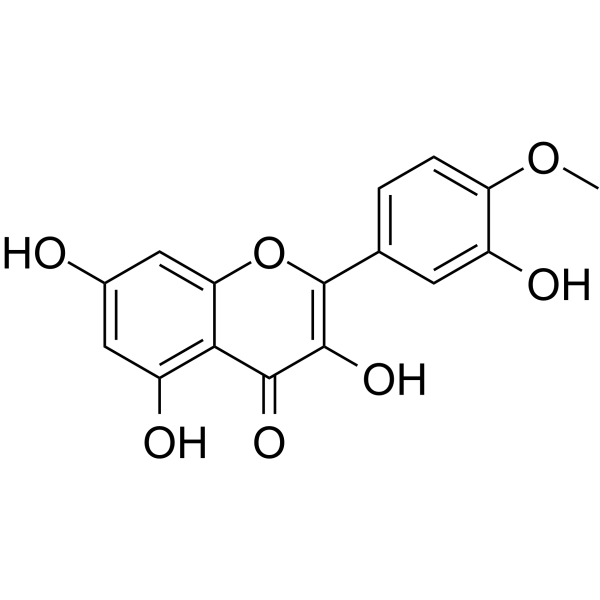
    Tamarixetin
    2 Publications Verification

    4'-O-Methyl Quercetin

    Endogenous Metabolite ClpP Bacterial Apoptosis Akt Interleukin Related COX JNK p38 MAPK Reactive Oxygen Species (ROS) Infection Cardiovascular Disease Inflammation/Immunology Cancer
    Tamarixetin (4'-O-Methyl Quercetin) is an orally active natural flavonoid derivative of quercetin and caseinolytic protease p (ClpP) inhibitor with anti-inflammatory, antioxidant and antitumor effects. Tamarixetin inhibits the hydrolytic activity of ClpP to the fluorescent substrate Suc-LY-AMC with an IC50 of 49.73 μM, which can be used for the study of Staphylococcus aureus infection. Tamarixetin inhibits tumor cell growth, induces apoptosis, and cell cycle arrest. Tamarixetin prevents cardiac hypertrophy by inhibiting the NFAT and AKT pathways .
    Tamarixetin
  • HY-133668

    Drug Metabolite Cytochrome P450 PPAR Endocrinology Cancer
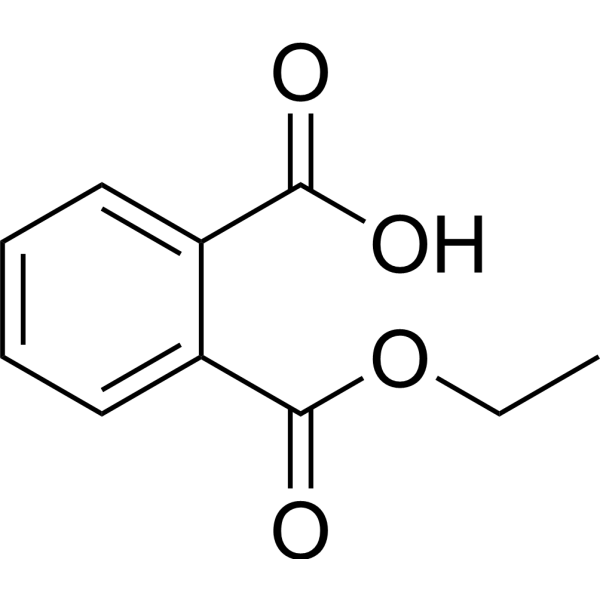
    Monoethyl phthalate is an orally active PDX-1 activator and the major hydrolytic metabolite of Diethyl phthalate (HY-Y0284) in vivo, with reproductive toxicity. Monoethyl phthalate targets aromatase (aromatase/CYP19A1) and PPAR to induce cell proliferation. The plasma protein binding rate of Monoethyl phthalate in rats and humans is lower than that of Diethyl phthalate. It exhibits significant enterohepatic circulation in rats and mainly accumulates in liver tissues. Monoethyl phthalate shows no estrogenic activity in estrogen-dependent human breast cancer cells. Monoethyl phthalate can be used in studies of reproductive toxicity and related environmental endocrine disruption mechanisms .
    Monoethyl phthalate
  • HY-N0886
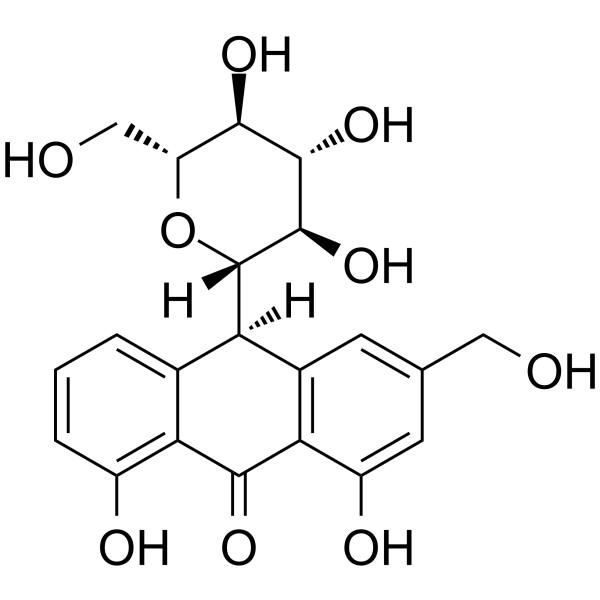
    Aloin B
    3 Publications Verification

    Isobarbaloin

    SARS-CoV Virus Protease Infection Endocrinology Cancer
    Aloin B (Isobarbaloin) is an orally active SARS-CoV-2 papain-like protease (PLpro) inhibitor with an IC50 of 16.08 μM (hydrolytic activity) and 17.51 μM (deubiquitinase activity). Aloin B is metabolized by rat intestinal flora into aloe-emodin-9-anthrone to exert laxative effects. Aloin B inhibits TPA (HY-18739)-induced ear edema, putrescine elevation, and tumor promotion in mouse skin. Aloin B can be used in research related to anti-inflammation, tumor promotion inhibition, coronavirus disease 2019 (COVID-19) and constipation .
    Aloin B
  • HY-P2895

    Clostridiopeptidase B

    Endogenous Metabolite Others
    Clostripain (Clostridiopeptidase B) is a thiol protease isolated from Clostridium histolyticum. Clostripain exhibits proteolytic activity as well as amidase-esterase activity. The specificity of Clostripain is primarily restricted to arginine residues, but it also shows minor hydrolytic activity toward most lysine-containing substrates. Clostripain catalyzes the ammonolysis of Carbobenzoxyarginyl methyl ester to generate various dipeptides .
    Clostripain
  • HY-178208

    Poly(ADP-ribose) Glycohydrolase (PARG) Cancer
    MDOLL-0286 is a selective Poly(ADP-ribose) Glycohydrolase (PARG) (ARH3) inhibitor with an IC50 of 2.3μM. MDOLL-0286 can inhibit ARH3’s poly-ADP-ribose hydrolytic activity on cellular substrates. MDOLL-0286 can inhibit DNA damage response. MDOLL-0286 can be used for the research of cancer .
    MDOLL-0286
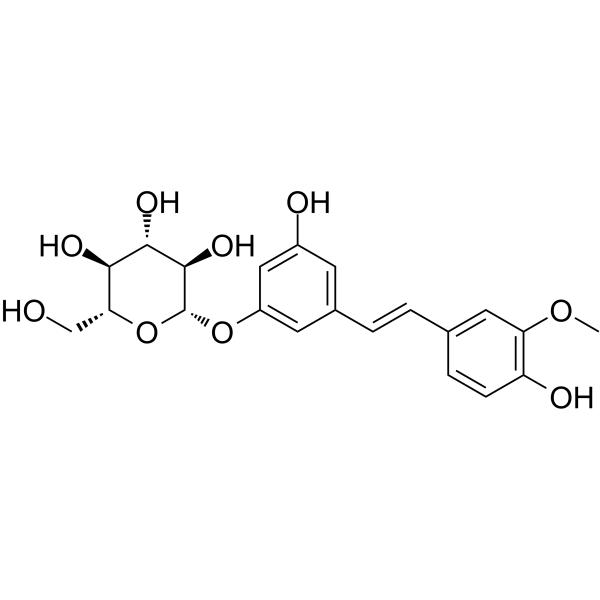
  • HY-N10418

    Fungal Infection
    Isorhapontin is an antifungal agent. Isorhapontin inhibits the hydrolytic activity of Trichoderma cellobiohydrolase I (CBH I) with a Ki of 57.2 μM. Isorhapontin also inhibits the activity of Trichoderma endoglucanase I .
    Isorhapontin
  • HY-108960

    P2X Receptor Interleukin Related Neurological Disease
    PPADS is a P2X receptor (P2X Receptor) antagonist and a reversible competitive antagonist of NAADP receptors, with IC50 values of 68 nM (P2X1) and 214 nM (P2X3), respectively. PPADS alleviates pain-related behaviors in the central and peripheral nervous systems of mice after peripheral neuropathy, inhibits the overproduction of IL-1β, IL-6, iNOS and nNOS, and suppresses the hydrolytic activity of extracellular ATPase. PPADS blocks ATP-mediated inward currents on recombinant rat P2X1 and P2X3 receptors, and inhibits purinergic nerve stimulation-induced contraction of rabbit bladder detrusor muscle. PPADS is applicable to research related to neuropathic pain .
    PPADS
  • HY-W004812

    (1S,3S)-3-[(tert-Butoxycarbonyl)amino]cyclopentanecarboxylic acid

    Drug Intermediate SARS-CoV Infection
    BOC-(1R,3S)-3-aminocyclopentane carboxylic acid ((1S,3S)-3-[(tert-Butoxycarbonyl)amino]cyclopentanecarboxylic acid) is a conformationally constrained peptide building block and a key component of SARS-CoV-2 main protease (Mpro) inhibitors. When incorporated into macrocyclic peptides, BOC-(1R,3S)-3-aminocyclopentane carboxylic acid not only helps generate high-affinity Mpro inhibitors by preorganizing the secondary structure of peptides, but also exerts sequence-dependent functional inhibition on the hydrolytic activity of Mpro. BOC-(1R,3S)-3-aminocyclopentane carboxylic is widely used in COVID-19-related research .
    BOC-(1R,3S)-3-aminocyclopentane carboxylic acid
  • HY-P2648

    N-Succinyl-AAPL-p-nitroanilide

    Aminopeptidase Endocrinology
    Suc-Ala-Ala-Pro-Leu-pNA (N-Succinyl-AAPL-p-nitroanilide) is a tripeptidyl p-nitroanilide substrate that can be catalytically hydrolyzed by acyl amidase-like leucine aminopeptidase in seminal plasma. Amastatin (HY-129298) and Actinonin (HY-113952) exert potent inhibitory effects on this hydrolytic activity. Suc-Ala-Ala-Pro-Leu-pNA can be used for the research of diseases such as azoospermia .
    Suc-Ala-Ala-Pro-Leu-pNA
  • HY-P2769A

    Biochemical Assay Reagents Others
    Thermostable β-Agarase is a hydrolase that can hydrolyze the β-1,4 linkages in agarose to produce neoagaro-oligosaccharides, and it can be used to extract DNA and RNA from gels. Compared to conventional β-Agarase, Thermostable β-Agarase exhibits higher heat resistance and stronger hydrolytic activity. The thermostable properties of Thermostable β-Agarase simplify experimental procedures and make it suitable for the rapid purification of intact large DNA molecules .
    Thermostable β-Agarase
  • HY-N1181R

    4'-O-Methyl Quercetin (Standard)

    Reference Standards Endogenous Metabolite ClpP Bacterial Apoptosis Akt Interleukin Related COX JNK p38 MAPK Reactive Oxygen Species (ROS) Infection Cardiovascular Disease Inflammation/Immunology Cancer
    Tamarixetin (Standard) is the analytical standard of Tamarixetin. This product is intended for research and analytical applications. Tamarixetin (4'-O-Methyl Quercetin) is an orally active natural flavonoid derivative of quercetin and caseinolytic protease p (ClpP) inhibitor with anti-inflammatory, antioxidant and antitumor effects. Tamarixetin inhibits the hydrolytic activity of ClpP to the fluorescent substrate Suc-LY-AMC with an IC50 of 49.73 μM, which can be used for the study of Staphylococcus aureus infection. Tamarixetin inhibits tumor cell growth, induces apoptosis, and cell cycle arrest. Tamarixetin prevents cardiac hypertrophy by inhibiting the NFAT and AKT pathways .
    Tamarixetin (Standard)
  • HY-135886

    Biochemical Assay Reagents Others
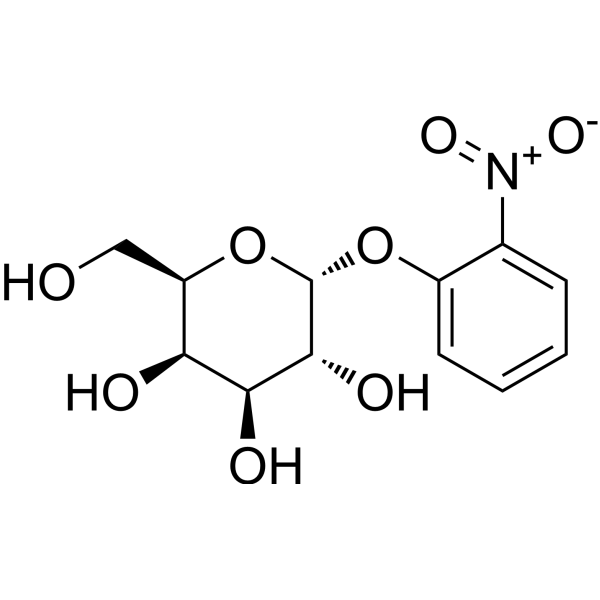
    2-Nitrophenyl α-D-galactopyranoside, a nitrophenyl derivative, is a substrate to test for hydrolytic activity of glycosyl hydrolase .
    2-Nitrophenyl α-D-galactopyranoside
  • HY-W354821

    4-MUD

    Fluorescent Dye Metabolic Disease
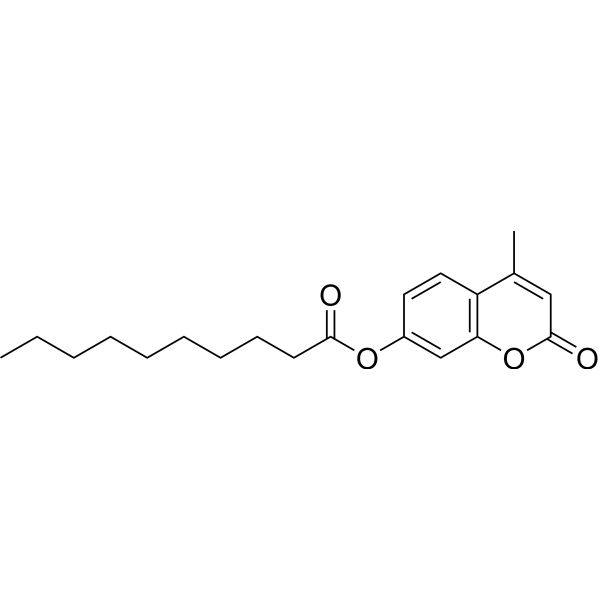
    4-Methyl-2-oxo-2H-1-benzopyran-7-yl decanoate is a fluorogenic substrate used to follow the hydrolytic activity of carboxylesterases .
    4-Methylumbelliferyl Decanoate
  • HY-120195

    Phosphodiesterase (PDE) Neurological Disease
    PF-04677490 is a PDE1 inhibitor (IC50: 21 nM). PF-04677490 has IC50s of 21 nM, 83 nM, and 118 nM for PDE1B1, PDE1C, and PDE1A, respectively. PF-04677490 efficaciously inhibits cAMP- and cGMP-hydrolytic activity .
    PF-04677490
  • HY-W856819

    Opioid Receptor Cholinesterase (ChE) Drug Metabolite nAChR Neurological Disease
    Eseroline is a potent μ-opioid receptor agonist, which is the hydrolytic metabolite of Physostigmine (HY-N6608). Eseroline is a selective and competitive acetylcholinesterase (AChE) inhibitor, with its Ki values for AChE and BuChE being 0.1 μM and 200 μM respectively. Eseroline has nicotinic acetylcholine receptor allosteric enhancing ligand (nAChR-APL) activity, meaning it does not activate the receptor but significantly enhances the signal transduction of Ach triggered by the receptor. Eseroline is neurotoxic, causing cell membrane damage (LDH leakage) and energy metabolism collapse (ATP depletion). Eseroline can be used for the study of Alzheimer's disease .
    Eseroline
  • HY-131824

    Phosphodiesterase (PDE) Others
    5,6-DM-cBIMP, a cyclic nucleotide analog, is an agonist of PDE2 that can significantly enhance the cAMP and cGMP hydrolytic activities of PDE2 [2.
    5,6-DM-cBIMP
  • HY-131823

    Phosphodiesterase (PDE) Others
    5,6-DCl-cBIMP, a cyclic adenosine monophosphate analog, can act as an agonist of PDE2 and significantly enhance the cAMP and cGMP hydrolytic activities of PDE2 .
    5,6-DCl-cBIMP
  • HY-P10615

    Fluorescent Dye Transthyretin (TTR) Others
    Abz-YGGRASDQ-EDDnp is a fluorescent substrate of transthyretin (TTR) protein and is used to detect the hydrolytic activity of TTR protein .
    Abz-YGGRASDQ-EDDnp
  • HY-E70413

    Endogenous Metabolite Cardiovascular Disease Metabolic Disease
    Amino acid arylamidase, hog kidney is a metalloprotease that can hydrolyze proteins or peptides containing free α-amino or α-imino groups, playing a crucial role in amino acid metabolism and protein digestion. Its hydrolytic activity can be blocked by acetylation of the N-terminus. Amino acid arylamidase, hog kidney can be used in research on hepatic diseases, biliary diseases, and heart failure .
    Amino acid arylamidase, hog kidney
  • HY-N0886R

    Isobarbaloin (Standard)

    Reference Standards Virus Protease SARS-CoV Infection Metabolic Disease Cancer
    Aloin B (Isobarbaloin) (Standard) is the analytical standard of Aloin B. This product is intended for research and analytical applications. Aloin B is an orally active SARS-CoV-2 papain-like protease (PLpro) inhibitor with an IC50 of 16.08 μM (hydrolytic activity) and 17.51 μM (deubiquitinase activity). Aloin B is metabolized by rat intestinal flora into aloe-emodin-9-anthrone to exert laxative effects. Aloin B inhibits TPA (HY-18739)-induced ear edema, putrescine elevation, and tumor promotion in mouse skin. Aloin B can be used in research related to anti-inflammation, tumor promotion inhibition, coronavirus disease 2019 (COVID-19) and constipation .
    Aloin B (Standard)
  • HY-133668S

    Isotope-Labeled Compounds Drug Metabolite Cytochrome P450 PPAR Cancer
    Monoethyl phthalate-d4 is the deuterium labeled Monoethyl phthalate. Monoethyl phthalate is an orally active PDX-1 activator and the major hydrolytic metabolite of Diethyl phthalate (HY-Y0284) in vivo, with reproductive toxicity. Monoethyl phthalate targets aromatase (aromatase/CYP19A1) and PPAR to induce cell proliferation. The plasma protein binding rate of Monoethyl phthalate in rats and humans is lower than that of Diethyl phthalate. It exhibits significant enterohepatic circulation in rats and mainly accumulates in liver tissues. Monoethyl phthalate shows no estrogenic activity in estrogen-dependent human breast cancer cells. Monoethyl phthalate can be used in studies of reproductive toxicity and related environmental endocrine disruption mechanisms .
    Monoethyl phthalate-d4
  • HY-105223A

    Drug Intermediate Cancer
    Pibrozelesin hydrobromide is a hydrolytic prodrug of Carzelesin (HY-19601). Pibrozelesin hydrobromide has an anticancer activity. Carzelesin is a cyclopropylpyrroloindole precursor molecule and effectively inhibits tumor growth. Carzelesin may be used in cancer research .
    Pibrozelesin hydrobromide
  • HY-182280

    Insulin Receptor Metabolic Disease
    BDM71230 is an orally active inducer of insulin-degrading enzyme (IDE), with an EC50 of 1.9 μM against human IDE. BDM71230 binds to the interface of IDE dimers and enhances the catalytic activity of IDE via steric effects. BDM71230 can potentiate the hydrolytic effect of IDE on insulin and slightly attenuate the hypoglycemic effect of insulin. BDM71230 serves as a pharmacological tool for investigating IDE function and is applicable to studies related to glucose intolerance .
    BDM71230

Inquiry Online

Your information is safe with us. * Required Fields.

Salutation


Country or Region *

Applicant Name *


Organization Name *

Department *


Email Address *


Product Name *

Cat. No.


Requested quantity *

Phone Number *


Remarks

Inquiry Online

Inquiry Information

Product Name:
Cat. No.:
Quantity:
MCE Japan Authorized Agent:

