1. Search Result
Search Result
Results for "

hypocotyl

" in MedChemExpress (MCE) Product Catalog:

18

Inhibitors & Agonists

10

Natural
Products

Cat. No. Product Name Target Research Areas Chemical Structure
  • HY-122308

    NF-κB Apoptosis Interleukin Related COX Reactive Oxygen Species (ROS) Inflammation/Immunology
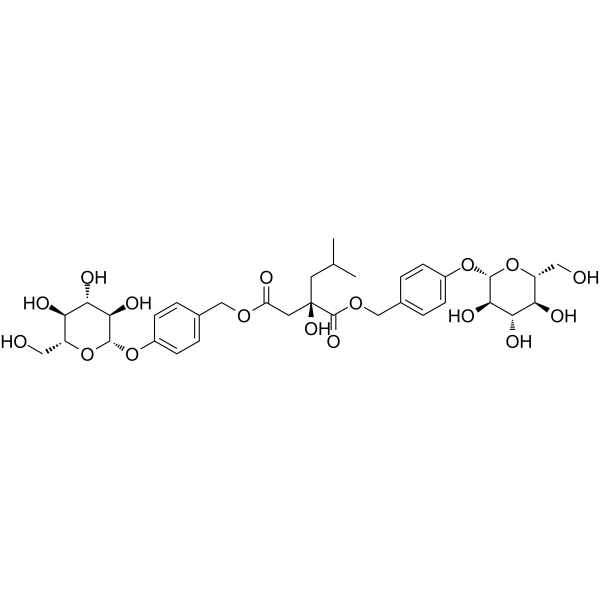
    Militarine is a plant growth inhibitor and anti-inflammatory agent. Militarine inhibits the elongation of radicles and hypocotyls in seedlings of lettuce, Italian ryegrass and timothy grass. Militarine alleviates PM2.5-induced inflammatory injury and inhibits cell migration in human alveolar epithelial A549 cells by inhibiting the NF-κB signaling pathway, reducing oxidative stress and the release of inflammatory factors. Militarine can be used in studies related to PM2.5-induced pulmonary diseases .
    Militarine
  • HY-W016393

    Endogenous Metabolite Others
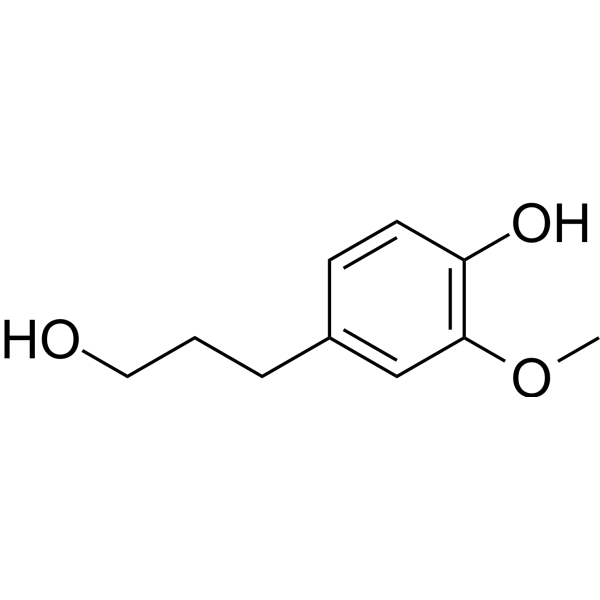
    Dihydroconiferyl alcohol is a cell division factor. Dihydroconiferyl alcohol can be isolated from the American sycamore (Acer pseudoplatanus L.). Dihydroconiferyl alcohol inhibits the degradation of Indole-3-acetic acid (HY-18569). Dihydroconiferyl alcohol can stimulate the growth of soybean and tobacco callus tissue and synergistically enhance Indole-3-acetic acid-induced hypocotyl elongation in cucumber. Dihydroconiferyl alcohol can be used in the research of plant growth regulation .
    Dihydroconiferyl alcohol
  • HY-W016289

    3,4,5-Trimethoxyphenol

    Glycosidase Others
    Antiarol (3,4,5-Trimethoxyphenol) is a natural compound. Antiarol can be extracted from Cochlospermum vitifolium. Antiarol can be used to study plant seed germination and root and hypocotyl growth .
    Antiarol
  • HY-B2062
    Chlorthal-dimethyl
    1 Publications Verification

    Dimethyl tetrachloroterephthalate

    Environmental Pollutants Biochemical Assay Reagents Others
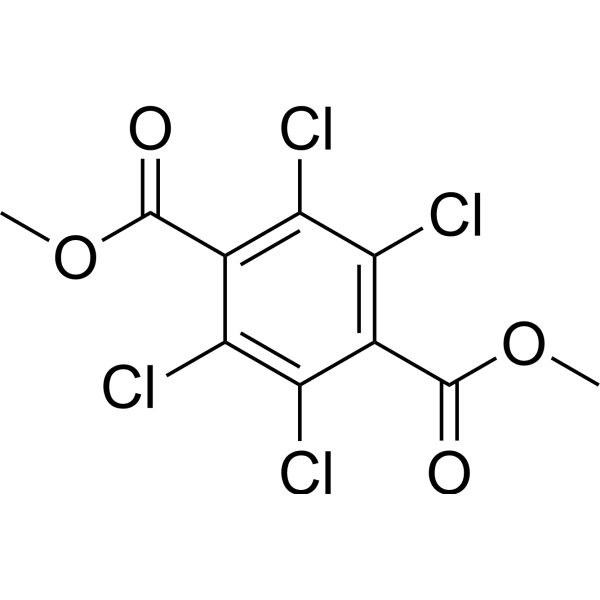
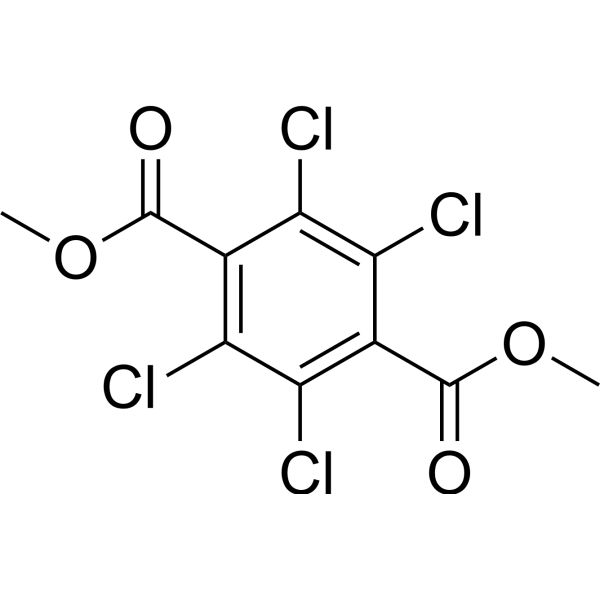
    Chlorthal-dimethyl (Dimethyl tetrachloroterephthalate) is a plant growth regulator. Chlorthal-dimethyl affects cell division and differentiation, interfering with the normal development of vascular tissue. Chlorthal-dimethyl causes localized swelling of tomato hypocotyls and disrupts normal mitosis in germinating millet seedlings .
    Chlorthal-dimethyl
  • HY-123351

    Fungal Infection Cancer
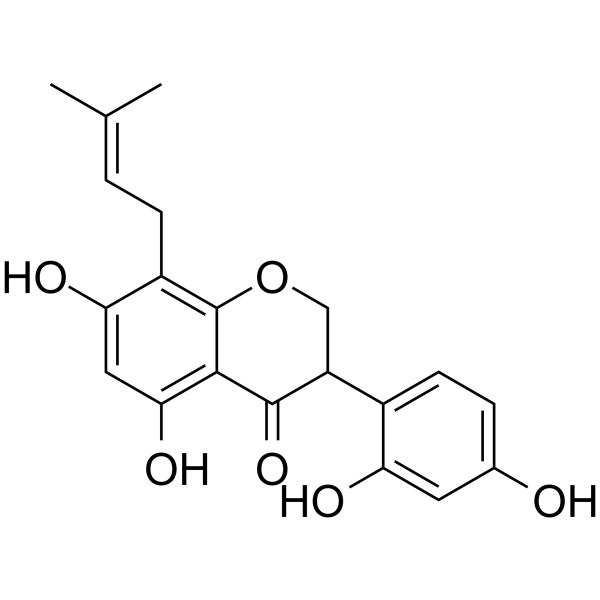
    Kievitone, an isoflavanone, could be isolated from hypocotyls of Phaseolus vulgaris L. infected with Rhizoctonia solani Kühn. Kievitone has antifungal activity and antitumor activity .
    Kievitone
  • HY-N3087
    Phaseollin
    1 Publications Verification

    Others Others
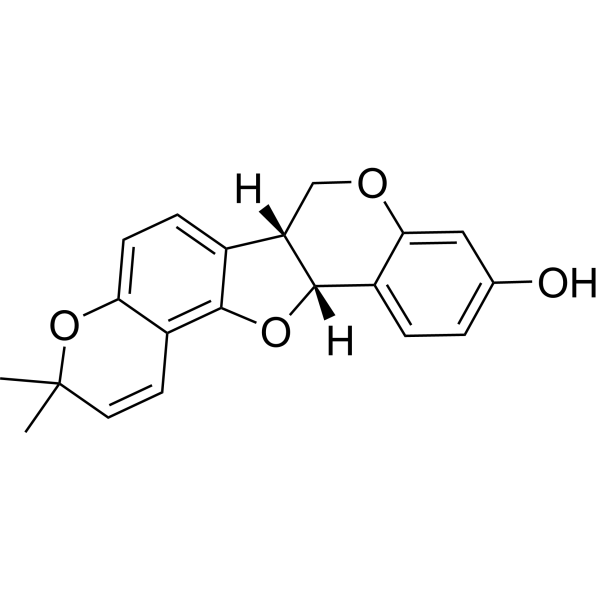
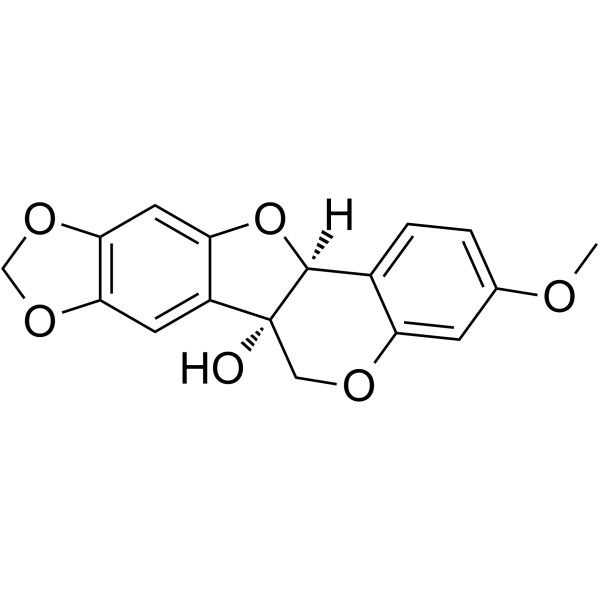
    Phaseollin is an isoflavonoid phytoalexin that can be isolated from Phaseolus vulgaris . Phaseollin is toxic to bean hypocotyl and endocarp cells, and causes a complete lysis of sheep erythrocytes .
    Phaseollin
  • HY-B2062R

    Dimethyl tetrachloroterephthalate (Standard)

    Drug Intermediate Mitosis Reference Standards Others
    Chlorthal-dimethyl (Standard) is the analytical standard of Chlorthal-dimethyl. This product is intended for research and analytical applications. Chlorthal-dimethyl (Dimethyl tetrachloroterephthalate) is a plant growth regulator. Chlorthal-dimethyl affects cell division and differentiation, interfering with the normal development of vascular tissue. Chlorthal-dimethyl causes localized swelling of tomato hypocotyls and disrupts normal mitosis in germinating millet seedlings .
    Chlorthal-dimethyl (Standard)
  • HY-W016393R

    Reference Standards Endogenous Metabolite Others
    Dihydroconiferyl alcohol (Standard) is an analytical standard of Dihydroconiferyl alcohol (HY-W016393). This product is intended for research and analytical applications. Dihydroconiferyl alcohol is a cell division factor. Dihydroconiferyl alcohol can be isolated from the American sycamore (Acer pseudoplatanus L.). Dihydroconiferyl alcohol inhibits the degradation of Indole-3-acetic acid (HY-18569). Dihydroconiferyl alcohol can stimulate the growth of soybean and tobacco callus tissue and synergistically enhance Indole-3-acetic acid-induced hypocotyl elongation in cucumber. Dihydroconiferyl alcohol can be used in the research of plant growth regulation .
    Dihydroconiferyl alcohol (Standard)
  • HY-165255

    Biochemical Assay Reagents NO Synthase Others
    N-Isobutyl decanamide is a plant growth regulator. N-Isobutyl decanamide promotes the development of adventitious roots in hypocotyl explants of A. thaliana and lateral roots in taproot explants. N-Isobutyl decanamide induces the accumulation of NO in the proliferative sites of adventitious roots .
    N-Isobutyl decanamide
  • HY-116833

    Drug Derivative Metabolic Disease
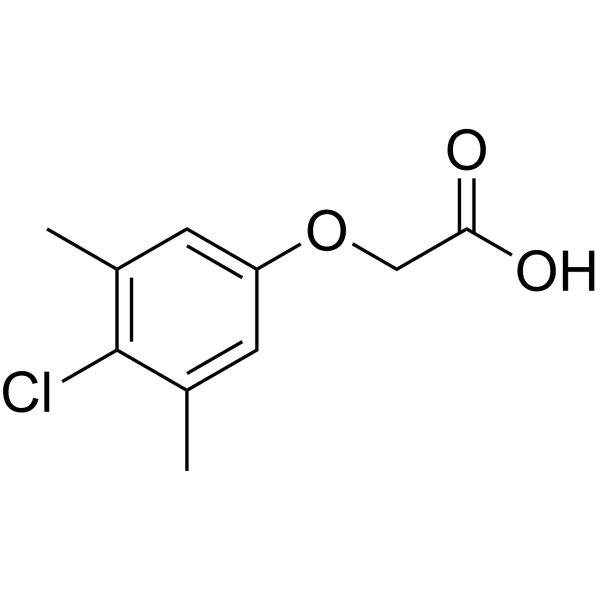
    4-Chloro-3,5-dimethylphenoxyacetic acid (compound 602 UC) is a product of masked amide bond hydrolysis of auxin analog 602 (compound 602). Auxin can effectively stimulate hypocotyl growth in wild-type seedlings .
    4-Chloro-3,5-dimethylphenoxyacetic acid
  • HY-122308R

    Reference Standards Others Inflammation/Immunology
    Militarine (Standard) is the analytical standard of Militarine (HY-122308). This product is intended for research and analytical applications. Militarine is a plant growth inhibitor and anti-inflammatory agent. Militarine inhibits the elongation of radicles and hypocotyls in seedlings of lettuce, Italian ryegrass and timothy grass. Militarine alleviates PM2.5-induced inflammatory injury and inhibits cell migration in human alveolar epithelial A549 cells by inhibiting the NF-κB signaling pathway, reducing oxidative stress and the release of inflammatory factors. Militarine can be used in studies related to PM2.5-induced pulmonary diseases .
    Militarine (Standard)
  • HY-W720329

    Herbicide DNA/RNA Synthesis Others
    Indaziflam is an alkyltriazine herbicide. Indaziflam targets the cellulose synthase complex and inhibits cellulose biosynthesis in plant cell walls. Indaziflam induces radial swelling of plants, ectopic lignification, inhibition of root and hypocotyl elongation, abnormal root and cell morphology, and also induces DNA strand breaks and micronucleus formation in HepG2 cells. Indaziflam can be used for research on monocot weed control .
    Indaziflam
  • HY-N15007

    Drug Derivative Others
    6-Ethoxyethyl-5-hydroxy-2,7-dime-thoxy-1,4-naphtoquinone is a naphthoquinone compound that causes branch wilt in larch and inhibits seed germination and growth in lettuce. 6-Ethoxyethyl-5-hydroxy-2,7-dime-thoxy-1,4-naphtoquinone completely inhibits hypocotyl and root growth at 100 ppm and more than 95% at 50 ppm .
    6-Ethoxyethyl-5-hydroxy-2,7-dime-thoxy-1,4-naphtoquinone
  • HY-N12990

    MyA

    Herbicide Fungal Others
    Myrigalone A (MyA) is a plant ethylene biosynthesis inhibitor and natural herbicide . Myrigalone A possesses antioxidant, antifungal, and antimicrobial activities. Myrigalone A interferes with auxin homeostasis during seed germination. Myrigalone A delays seed germination, inhibits the formation of roots, hypocotyls, and root hairs, and causes developmental delay in specific organisms. Myrigalone A triggers the induction of detoxification programs, alters the metabolism of gibberellins, cis-(+)-12-oxophytodienoic acid, and jasmonic acid, disrupts the antioxidant system and oxidative signaling, and impairs the function of aquaporins and water uptake in imbibed seeds. Myrigalone A can be used in studies related to herbicides and plant growth regulators .
    Myrigalone A
  • HY-E71366

    Glycosidase Endogenous Metabolite Metabolic Disease
    Endo-1,4-β-D-glucanase is a glycoside hydrolase that cleaves internal β-1,4-glycosidic bonds in cellulose and related β-D-glucans (β-D-Glucan) (HY-139413). Endo-1,4-β-D-glucanase randomly cuts long, insoluble cellulose polymer chains into shorter, soluble fragments such as oligosaccharides, thereby paving the way for further digestion into glucose .
    Endo-1,4-β-D-glucanase
  • HY-N16818

    Herbicide Others
    9-epi-Blumenol C is a C13-norisoprenoid (carotenoid derivative) compound with allelopathic and antifungal activities, and can regulate plant growth. The IC50 values ??of 9-epi-Blumenol C for watercress roots and hypocotyls are 2780 μM and 2240 μM, respectively, and for perennial ryegrass roots and coleoptiles are 3290 μM and 2950 μM, respectively. 9-epi-Blumenol C exhibits allelopathic activity through a mechanism involving direct inhibition of plant growth and degradation of arbuscular mycorrhizal fungi (AMF) colonization, thereby weakening nutrient uptake and stress resistance in neighboring plants. 9-epi-Blumenol C can be used in herbicide development and research related to plant competition mechanisms. 9-epi-Blumenol C can be obtained from the dried fallen leaves of Metasequoia glyptostroboides (a plant of the cypress family, genus Metasequoia) through extraction with 70% methanol and purification by ethyl acetate extraction .
    9-epi-Blumenol C
  • HY-182303

    CATR

    Methionine Adenosyltransferase (MAT) Neurological Disease
    Carboxyatractyloside (CATR) is a tight-binding inhibitor of adenine nucleotide translocase, and represents the major toxic component of Xanthium sibiricum. Carboxyatractyloside competes with ADP for binding to the translocase, blocks the translocation of ADP/ATP across the inner mitochondrial membrane, and thereby inhibits ADP-stimulated respiration. In the presence of Cyclosporin A (HY-B0579), Carboxyatractyloside still induces permeability transition in liver mitochondria of aged rats, exhibiting significant hepatotoxicity and nephrotoxicity. Carboxyatractyloside is widely used in studies related to hepatotoxicity, nephrotoxicity and Alzheimer's disease .
    Carboxyatractyloside
  • HY-N18032

    Others Infection
    Glyceollin II is a glyceollin found in soybean cotyledons (CY. Harosoy 63) inoculated with Phytophthora megaspenna f.sp. glycinea race 1. Glyceollin II inhibits the radial mycelial growth of P. megasperma f.sp. gbcinea race 1. Glyceollin II inhbiits zoospore germination (ED50 = 7 μg/mL) and causes zoospores to burst. Glyceollin II can be used for the research of Phytophthora megasperma f.sp. glycinea infection in soybeans .
    Glyceollin II

Inquiry Online

Your information is safe with us. * Required Fields.

Salutation


Country or Region *

Applicant Name *


Organization Name *

Department *


Email Address *


Product Name *

Cat. No.


Requested quantity *

Phone Number *


Remarks

Inquiry Online

Inquiry Information

Product Name:
Cat. No.:
Quantity:
MCE Japan Authorized Agent:

