







1. Search Result
Search Result
Results for "

insulinotropic

" in MedChemExpress (MCE) Product Catalog:

69

Inhibitors & Agonists

1

Fluorescent Dyes

32

Peptides

2

Natural
Products

5

Recombinant Proteins

9

Isotope-Labeled Compounds

Cat. No. Product Name Target Research Areas Chemical Structure
  • HY-P3506
    Retatrutide
    3 Publications Verification

    LY3437943

    GCGR GLP Receptor Metabolic Disease
    Retatrutide (LY3437943) is a triple agonist peptide of the glucagon receptor (GCGR), glucosedependent insulinotropic polypeptide receptor (GIPR), and glucagon-like peptide-1 receptor (GLP-1R). Retatrutide binds human GCGR, GIPR, and GLP-1R with EC50 values of 5.79, 0.0643 and 0.775 nM, respectively. Retatrutide can be used for the research of obesity .
    Retatrutide
  • HY-13749
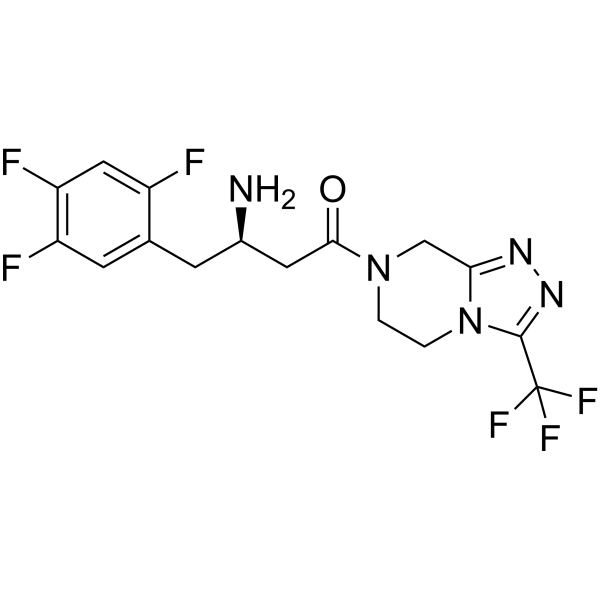
    Sitagliptin
    Maximum Cited Publications
    30 Publications Verification

    MK-0431

    Dipeptidyl Peptidase GLP Receptor Endogenous Metabolite PKA ERK Metabolic Disease
    Sitagliptin (MK-0431) is an orally active and highly selective DPP4 inhibitor with an IC50 value of 19 nM. Sitagliptin blocks the degradation of glucagon-like peptide-1 (GLP-1) and glucose-dependent insulinotropic peptide (GIP) by competing inhibition mechanism (Kᵢ = 1 nM), thereby increasing the level of active incretin. Sitagliptin can also directly stimulate the secretion of GLP-1 by intestinal L cells by activating the cAMP/PKA and ERK1/2 pathways, and this effect is independent of DPP-4. Sitagliptin shows protective effects on pancreatic islet grafts in 1-type diabetes models. Sitagliptin can be used for the study of 1-type and 2-type diabetes .
    Sitagliptin
  • HY-P0055
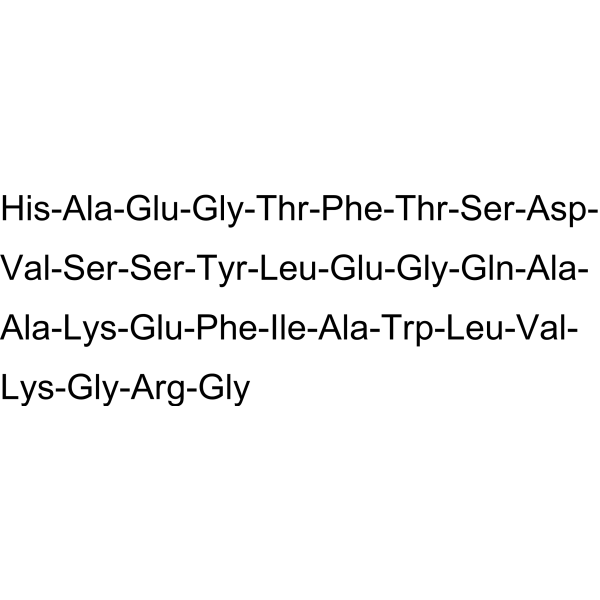
    GLP-1(7-37)
    Maximum Cited Publications
    8 Publications Verification

    GLP Receptor Metabolic Disease
    GLP-1(7-37) is an intestinal insulinotropic hormone that augments glucose induced insulin secretion.
    GLP-1(7-37)
  • HY-P10138
    human GIP(3-30), amide
    1 Publications Verification

    Insulin Receptor Metabolic Disease
    Human GIP(3-30), amide is a high affinity antagonist of the human GIP receptor in vitro. Human GIP(3-30), amide has potential anti-obesity and anti-diabetic effects .
    human GIP(3-30), amide
  • HY-164535

    AMG 133

    Antibody-Drug Conjugates (ADCs) GLP Receptor Insulin Receptor Metabolic Disease
    Maridebart cafraglutide (AMG 133) is a long-acting peptide-antibody conjugate that combines GLP-1 receptor agonist with glucose-dependent insulinotropic polypeptide (GIP) receptor antagonism. Maridebart cafraglutide shows antagonist activity against human, cynomolgus monkey and rat GIPR with IC50 values of 46.4 nM, 26.5 nM, 822.3 nM, respectively. Maridebart cafraglutide shows agonist activity against human, cynomolgus monkey, rat and mouse GLP-1R with EC50 values of 24.4 pM, 5.7 pM, 2.4 pM and 123 pM, respectively. Maridebart cafraglutide can be used for the study of obesity and type 2 diabetes .
    Maridebart cafraglutide
  • HY-13749A
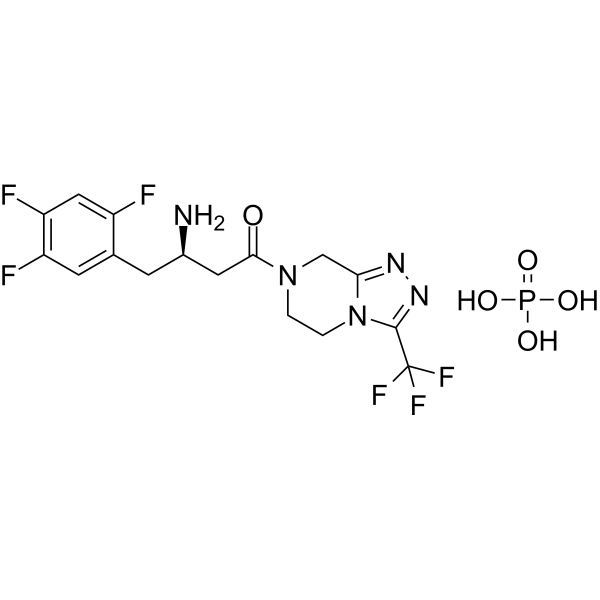
    Sitagliptin phosphate
    Maximum Cited Publications
    30 Publications Verification

    MK-0431 phosphate

    Dipeptidyl Peptidase GLP Receptor Endogenous Metabolite PKA ERK Metabolic Disease
    Sitagliptin (MK-0431) phosphate is an orally active and highly selective DPP4 inhibitor with an IC50 value of 19 nM. Sitagliptin phosphate blocks the degradation of glucagon-like peptide-1 (GLP-1) and glucose-dependent insulinotropic peptide (GIP) by competing inhibition mechanism (Kᵢ = 1 nM), thereby increasing the level of active incretin. Sitagliptin phosphate can also directly stimulate the secretion of GLP-1 by intestinal L cells by activating the cAMP/PKA and ERK1/2 pathways, and this effect is independent of DPP-4. Sitagliptin phosphate shows protective effects on pancreatic islet grafts in 1-type diabetes models. Sitagliptin phosphate can be used for the study of 1-type and 2-type diabetes .
    Sitagliptin phosphate
  • HY-13749B
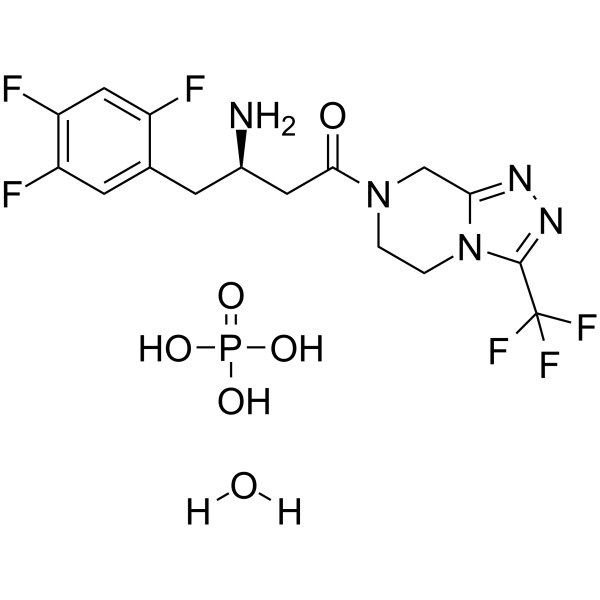
    Sitagliptin phosphate monohydrate
    Maximum Cited Publications
    30 Publications Verification

    MK-0431 phosphate monohydrate

    Dipeptidyl Peptidase GLP Receptor Endogenous Metabolite PKA ERK Metabolic Disease
    Sitagliptin (MK-0431) phosphate monohydrate is an orally active and highly selective DPP4 inhibitor with an IC50 value of 19 nM. Sitagliptin phosphate monohydrate blocks the degradation of glucagon-like peptide-1 (GLP-1) and glucose-dependent insulinotropic peptide (GIP) by competing inhibition mechanism (Kᵢ = 1 nM), thereby increasing the level of active incretin. Sitagliptin phosphate monohydrate can also directly stimulate the secretion of GLP-1 by intestinal L cells by activating the cAMP/PKA and ERK1/2 pathways, and this effect is independent of DPP-4. Sitagliptin phosphate monohydrate shows protective effects on pancreatic islet grafts in 1-type diabetes models. Sitagliptin phosphate monohydrate can be used for the study of 1-type and 2-type diabetes .
    Sitagliptin phosphate monohydrate
  • HY-P3506A
    Retatrutide TFA
    3 Publications Verification

    LY3437943 TFA

    GLP Receptor GCGR Metabolic Disease
    Retatrutide (LY3437943) TFA is a triple agonist peptide of the glucagon receptor (GCGR), glucosedependent insulinotropic polypeptide receptor (GIPR), and glucagon-like peptide-1 receptor (GLP-1R). Retatrutide TFA binds human GCGR, GIPR, and GLP-1R with EC50 values of 5.79, 0.0643 and 0.775 nM, respectively. Retatrutide TFA can be used for the research of obesity .
    Retatrutide TFA
  • HY-P2542

    Insulin Receptor Metabolic Disease
    GIP (3-42), human acts as a glucose-dependent insulinotropic polypeptide (GIP) receptor antagonist, moderating the insulin secreting and metabolic actions of GIP in vivo .
    GIP (3-42), human
  • HY-P10959

    LY3532226

    Insulin Receptor Metabolic Disease
    Macupatide is a glucose-dependent insulinotropic polypeptide (GIP) receptor agonist. Macupatide improves insulin secretion responses and insulin sensitivity.Macupatide can be used for the research of type 2 diabetes .
    Macupatide
  • HY-P0055A
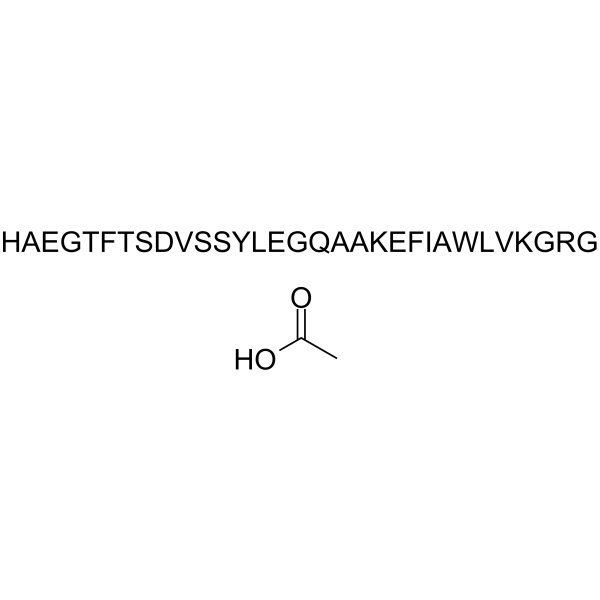
    GLP-1(7-37) acetate
    Maximum Cited Publications
    8 Publications Verification

    GLP Receptor Metabolic Disease
    GLP-1(7-37) acetate is an intestinal insulinotropic hormone that augments glucose induced insulin secretion .
    GLP-1(7-37) acetate
  • HY-B0422

    A4166; Senaglinide

    Potassium Channel Dipeptidyl Peptidase Metabolic Disease
    Nateglinide, a D-phenylalanine derivative, is an orally active and short-acting insulinotropic agent and a DPP IV inhibitor. Nateglinide inhibits ATP-sensitive K + channels in pancreatic β-cells. Nateglinide is used for the treatment of type 2 (non-insulin-dependent) diabetes mellitus .
    Nateglinide
  • HY-129658A

    GCGR Metabolic Disease
    TT-OAD2 is a non-peptide glucagon-like peptide-1 (GLP-1) receptor agonist with an EC50 of 5 nM. TT-OAD2 has the potential for diabetes treatment .
    TT-OAD2
  • HY-P2080B

    Insulin Receptor Metabolic Disease
    GIP (1-30) amide,human acetate is a glucose-dependent insulinotropic polypeptide (GIP) fragment. GIP is an incretin hormone that stimulates insulin secretion and reduces postprandial glycaemic excursions. GIP (1-30) amide,human acetate dose-dependently promotes insulin secretion over the range 10 -9-10 -6 M .
    GIP (1-30) amide,human acetate
  • HY-N6858

    4-​Hydroxy-​L-​isoleucine

    Others Metabolic Disease
    4-Hydroxyisoleucine is an orally active amino acid that can be isolated from fenugreek seeds. 4-Hydroxyisoleucine displays insulinotropic and antidiabetic properties .
    4-Hydroxyisoleucine
  • HY-P10929

    Drug Intermediate Others
    Fmoc-Lys(tBuO-Ara-Glu(AEEA-AEEA)-OtBu)-OH is a drug intermediate in the synthesis of Tirzepatide. Tirzepatide is a dual glucose-dependent insulinotropic peptide (GIP) and glucagon-like peptide-1 receptor (GLP-1R) agonist .
    Fmoc-Lys(tBuO-Ara-Glu(AEEA-AEEA)-OtBu)-OH
  • HY-P10138A
    human GIP(3-30), amide TFA
    1 Publications Verification

    Insulin Receptor Metabolic Disease
    Human GIP(3-30), amide TFA is the TFA salt form of human GIP(3-30), amide (HY-P10138). Human GIP(3-30), amide TFA is a high affinity antagonist of the human GIP receptor in vitro. Human GIP(3-30), amide TFA has potential anti-obesity and anti-diabetic effects .
    human GIP(3-30), amide TFA
  • HY-108448

    OLDA

    TRP Channel Lipoxygenase Cardiovascular Disease Neurological Disease Metabolic Disease
    N-Oleoyldopamine (OLDA) is an orally active TRPV1 activator and 5-LOX inhibitor with blood-brain barrier permeability. N-Oleoyldopamine excites histaminergic neurons in the tuberomammillary nucleus via a dopamine receptor mechanism, a process independent of TRPV1 and cannabinoid receptors. On one hand, N-Oleoyldopamine promotes the release of insulin and glucose-dependent insulinotropic polypeptide through a GPR119-dependent pathway to improve glucose tolerance; on the other hand, N-Oleoyldopamine improves left ventricular function and reduces myocardial infarction size by triggering the release of substance P and calcitonin gene-related peptide. N-Oleoyldopamine is used in studies related to glycemic abnormalities and myocardial ischemia-reperfusion injury .
    N-Oleoyldopamine
  • HY-B0682A
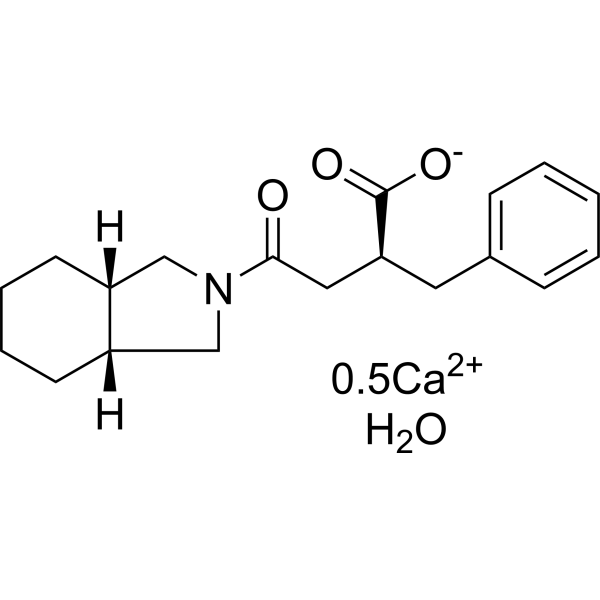
    Mitiglinide calcium hydrate
    2 Publications Verification

    KAD-1229; S-21403

    Potassium Channel Metabolic Disease
    Mitiglinide calcium hydrate (KAD-1229), an insulinotropic agent, is an ATP-sensitive K + (KATP) channel antagonist. Mitiglinide calcium hydrate is highly specific to the Kir6.2/SUR1 complex (the pancreatic beta-cell KATP channel). Mitiglinide Calcium hydrate can be used for the research of type 2 diabetes .
    Mitiglinide calcium hydrate
  • HY-17398
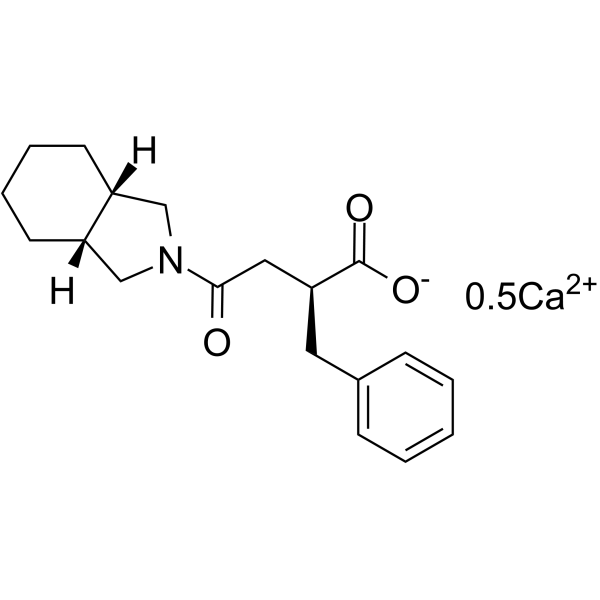
    Mitiglinide calcium
    2 Publications Verification

    KAD-1229 anhydrous; S21403 anhydrous

    Potassium Channel Metabolic Disease
    Mitiglinide Calcium (KAD-1229 anhydrous), an insulinotropic agent, is an ATP-sensitive K + (KATP) channel antagonist. Mitiglinide Calcium is highly specific to the Kir6.2/SUR1 complex (the pancreatic beta-cell KATP channel). Mitiglinide Calcium can be used for the research of type 2 diabetes .
    Mitiglinide calcium
  • HY-P3579

    GIP (1-42), porcine

    Insulin Receptor Metabolic Disease
    Gastric Inhibitory Peptide (GIP (1-42)), porcine is a porcine glucose-dependent insulinotropic polypeptide and inhibitor of pentagastrin-stimulated gastric acid secretion. Gastric Inhibitory Peptide, porcine stimulates endogenous somatostatin release. Gastric Inhibitory Peptide, porcine acts in a dose- and time-dependent manner in conscious, chronic gastric fistula-equipped rats .
    Gastric Inhibitory Peptide, porcine
  • HY-P10271

    NNC0090-2746; MAR709; RO6811135

    GLP Receptor Metabolic Disease
    RG7697 is a dual agonist for glucagon-like peptide receptor (GLP Receptor) and glucosedependent insulinotropic polypeptide receptor (GIPR), with EC50 of 5 and 3 pM, respectively. RG7697 exhibits antihyperglycemic property .
    RG7697
  • HY-108767

    B28Asp; B28-Asp-insulin; INA-X 14; Insulin X 14

    Insulin Receptor Drug Derivative Metabolic Disease
    Insulin aspart (B28Asp) is a rapid-acting h-Insulin (HY-P0035) analog. Insulin aspart induces a faster hypoglycemic effect. Insulin aspart can be used in diabetes-related research .
    Insulin aspart
  • HY-P3622

    GCGR Metabolic Disease
    (Ser8)-GLP-1 (7-36) amide, human is a glucagon-like peptide 1 amide derived from glucagonogen, a cleavage product of the GLP-1 (1-36) amide peptide. (Ser8)-GLP-1 (7-36) amide, human is an entero-insulinotropic hormone that causes glucose-dependent release of insulin from pancreatic β-cells and affects gastrointestinal motility and secretion .
    (Ser8)-GLP-1 (7-36) amide, human
  • HY-W017387
    Sodium α-ketoisocaproate
    1 Publications Verification

    Sodium 4-methyl-2-oxopentanoate; 2-Ketoisocaproic acid sodium salt

    Branched Chain Amino Acid Transaminase (BCAT) Potassium Channel Na+/Ca2+ Exchanger Metabolic Disease
    Sodium α-ketoisocaproate (Sodium 4-methyl-2-oxopentanoate) is an insulin secretagogue. Sodium α-ketoisocaproate undergoes transamination catalyzed by BCAT and BCATm to produce α-ketoglutarate and leucine; it also binds to the SUR1 site to inhibit KATP channel activity, but does not directly affect the Kir6.2 subunit. Sodium α-ketoisocaproate regulates Ca 2+ influx. Sodium α-ketoisocaproate exerts insulinotropic activity in pancreatic islets and intact mouse pancreata with sufficient BCATm expression. Sodium α-ketoisocaproate can be used in research related to type 2 diabetes .
    Sodium α-ketoisocaproate
  • HY-13749AS

    MK-0431-d4 phosphate

    Dipeptidyl Peptidase GLP Receptor Endogenous Metabolite PKA ERK Metabolic Disease
    Sitagliptin-d4 phosphate (MK-0431-d4) is the deuterium labeled Sitagliptin phosphate (HY-13749A). Sitagliptin phosphate is an orally active and highly selective DPP4 inhibitor with an IC50 value of 19 nM. Sitagliptin phosphate blocks the degradation of glucagon-like peptide-1 (GLP-1) and glucose-dependent insulinotropic peptide (GIP) by competing inhibition mechanism (Kᵢ = 1 nM), thereby increasing the level of active incretin. Sitagliptin phosphate can also directly stimulate the secretion of GLP-1 by intestinal L cells by activating the cAMP/PKA and ERK1/2 pathways, and this effect is independent of DPP-4. Sitagliptin phosphate shows protective effects on pancreatic islet grafts in 1-type diabetes models. Sitagliptin phosphate can be used for the study of 1-type and 2-type diabetes.
    Sitagliptin-d4 phosphate
  • HY-P2541A

    Insulin Receptor Metabolic Disease
    GIP (1-30) amide, porcine TFA is a full glucose-dependent insulinotropic polypeptide (GIP) receptor agonist with high affinity equal to native GIP(1-42) . GIP (1-30) amide, porcine is a weak inhibitor of gastric acid secretion and potent stimulator of insulin.
    GIP (1-30) amide, porcine TFA
  • HY-P3580A

    Human N-acetyl GIP TFA

    Insulin Receptor Metabolic Disease Endocrinology
    Acetyl Gastric Inhibitory Peptide (human) TFA is a fatty acid derivatized analog of glucose-dependent insulinotropic polypeptide with improved antihyperglycaemic and insulinotropic properties. Acetyl Gastric Inhibitory Peptide (human) TFA can be used for research of diabetes, insulin resistance and obesity .
    Acetyl Gastric Inhibitory Peptide (human) TFA
  • HY-P10959A

    LY3532226 acetate

    Insulin Receptor Metabolic Disease
    Macupatide acetate is a glucose-dependent insulinotropic polypeptide (GIP) receptor agonist. Macupatide acetate improves insulin secretion responses and insulin sensitivity.Macupatide acetate can be used for the research of type 2 diabetes .
    Macupatide acetate
  • HY-P1141A

    GCGR Metabolic Disease
    GLP-1(9-36)amide TFA is a major metabolite of glucagon-like peptide-1-(7-36) amide formed by the enzyme dipeptidyl peptidase-4 (DPP-4). GLP-1(9-36)amide TFA acts as an antagonist to the human pancreatic GLP-1 receptor .
    GLP-1(9-36)amide TFA
  • HY-13749S1

    MK-0431-d4 hydrochloride

    Isotope-Labeled Compounds Dipeptidyl Peptidase GLP Receptor Endogenous Metabolite PKA ERK Metabolic Disease
    Sitagliptin-d4 hydrochloride is the deuterium labeled Sitagliptin hydrochloride (HY-13749E). Sitagliptin hydrochloride is an orally active and highly selective DPP4 inhibitor with an IC50 value of 19 nM. Sitagliptin hydrochloride blocks the degradation of glucagon-like peptide-1 (GLP-1) and glucose-dependent insulinotropic peptide (GIP) by competing inhibition mechanism (Kᵢ = 1 nM), thereby increasing the level of active incretin. Sitagliptin hydrochloride can also directly stimulate the secretion of GLP-1 by intestinal L cells by activating the cAMP/PKA and ERK1/2 pathways, and this effect is independent of DPP-4. Sitagliptin hydrochloride shows protective effects on pancreatic islet grafts in 1-type diabetes models. Sitagliptin hydrochloride can be used for the study of 1-type and 2-type diabetes.
    Sitagliptin-d4 hydrochloride
  • HY-P3506B

    LY3437943 acetate

    GCGR GLP Receptor Metabolic Disease
    Retatrutide (LY3437943) acetate is a triple agonist peptide of the glucagon receptor (GCGR), glucosedependent insulinotropic polypeptide receptor (GIPR), and glucagon-like peptide-1 receptor (GLP-1R). Retatrutide acetate inhibits human GCGR, GIPR, and GLP-1R with EC50 values of 5.79, 0.0643 and 0.775 nM, respectively. Retatrutide acetate can be used for the research of obesity .
    Retatrutide acetate
  • HY-179041

    PGE synthase Prostaglandin Receptor MDM-2/p53 Amino acid Transporter Glutathione Peroxidase Ferroptosis Metabolic Disease Endocrinology
    SZ0232 is a selective mPGES-2 inhibitor. SZ0232 binds to the active site of mPGES-2 via hydrogen bonds and π-π stacking, reduces the production of prostaglandin E2 (PGE2) and blocks the PGE2-EP3 pathway. SZ0232 regulates Ferroptosis by activating the heme-dependent p53/SLC7A11/GPX4 axis, inhibits lipid peroxidation, and protects renal tubules. SZ0232 enhances glucose-stimulated insulin secretion, inhibits β-cell senescence, and improves glucose homeostasis. SZ0232 reduces renal lipid accumulation, alleviates fibrosis, and ameliorates renal dysfunction in diabetic mice. SZ0232 inhibits renal cyst growth in polycystic kidney disease models. SZ0232 exhibits an insulinotropic effect that strengthens with the increase of animal age. SZ0232 can be used in studies related to type 2 diabetes, acute kidney injury, diabetic kidney disease, and autosomal dominant polycystic kidney disease .
    SZ0232
  • HY-B0682

    KAD-1229 free acid anhydrous; S21403 free acid anhydrous

    Potassium Channel Metabolic Disease
    Mitiglinide (KAD-1229), an insulinotropic agent, is an ATP-sensitive K + (KATP) channel antagonist. Mitiglinide is highly specific to the Kir6.2/SUR1 complex (the pancreatic beta-cell KATP channel). Mitiglinide can be used for the research of type 2 diabetes .
    Mitiglinide
  • HY-B0422S

    A4166 d5; Senaglinide d5

    Potassium Channel Dipeptidyl Peptidase Metabolic Disease
    Nateglinide-d5 is a deuterium labeled Nateglinide. Nateglinide, a D-phenylalanine derivative, is an orally active and short-acting insulinotropic agent and a DPP IV inhibitor. Nateglinide inhibits ATP-sensitive K+ channels in pancreatic β-cells. Nateglinide is used for the treatment of type 2 (non-insulin-dependent) diabetes mellitus[1][2].
    Nateglinide-d5
  • HY-P11321A

    acyl-GIP hydrochloride

    Insulin Receptor Metabolic Disease
    IUB0271 (acyl-GIP) hydrochloride is a fatty acylated and long-acting glucose-dependent insulinotropic polypeptide (GIP). IUB0271 hydrochloride increases cFos neuronal activity in hypothalamic feeding centers and decreases body weight, food intake and glycemia in DIO mouse models, and these effects depend on CNS-GIPR signaling. IUB0271 hydrochloride can be used for type 2 diabetes mellitus (T2DM) and obesity research .
    IUB0271 hydrochloride
  • HY-P11321

    acyl-GIP

    Insulin Receptor Metabolic Disease
    IUB0271 (acyl-GIP) is a fatty acylated and long-acting glucose-dependent insulinotropic polypeptide (GIP). IUB0271 increases cFos neuronal activity in hypothalamic feeding centers and decreases body weight, food intake and glycemia in DIO mouse models, and these effects depend on CNS-GIPR signaling. IUB0271 can be used for type 2 diabetes mellitus (T2DM) and obesity research .
    IUB0271
  • HY-129658

    GCGR Metabolic Disease
    TT-OAD2 free base is a non-peptide glucagon-like peptide-1 (GLP-1) receptor agonist with an EC50 of 5 nM. TT-OAD2 free base has the potential for diabetes treatment .
    TT-OAD2 free base
  • HY-13749E

    MK-0431 hydrochloride

    Dipeptidyl Peptidase GLP Receptor Endogenous Metabolite PKA ERK Metabolic Disease
    Sitagliptin (MK-0431) hydrochloride is an orally active and highly selective DPP4 inhibitor with an IC50 value of 19 nM. Sitagliptin hydrochloride blocks the degradation of glucagon-like peptide-1 (GLP-1) and glucose-dependent insulinotropic peptide (GIP) by competing inhibition mechanism (Kᵢ = 1 nM), thereby increasing the level of active incretin. Sitagliptin hydrochloride can also directly stimulate the secretion of GLP-1 by intestinal L cells by activating the cAMP/PKA and ERK1/2 pathways, and this effect is independent of DPP-4. Sitagliptin hydrochloride shows protective effects on pancreatic islet grafts in 1-type diabetes models. Sitagliptin hydrochloride can be used for the study of 1-type and 2-type diabetes .
    Sitagliptin hydrochloride
  • HY-P10972

    Glucose-dependent insulinotropic Peptide (22-51) (human)

    NF-κB MMP Calcium Channel Cardiovascular Disease Neurological Disease
    GIP (22-51) human (Glucose-dependent Insulinotropic Peptide (22-51) human) is a potent proatherosclerotic peptide hormone consisting of 30 amino acids. GIP (22-51) human can activate the NF-κB signaling pathway, promote the expression of MMP-8, and induce the expression of proinflammatory and proatherosclerotic proteins. GIP (22-51) human can also increase the level of intracellular free Ca 2+ in THP-1-induced macrophages. GIP (22-51) human can be used in the research of atherosclerosis .
    GIP (22-51) human
  • HY-P2541

    Insulin Receptor Metabolic Disease
    GIP (1-30) amide, porcine is a full glucose-dependent insulinotropic polypeptide (GIP) receptor agonist with high affinity equal to native GIP(1-42) . GIP (1-30) amide, porcine is a weak inhibitor of gastric acid secretion and potent stimulator of insulin.
    GIP (1-30) amide, porcine
  • HY-146455

    Dipeptidyl Peptidase Reactive Oxygen Species (ROS) Metabolic Disease
    DPP-4-IN-3 (Compound 5a) is a potent dipeptidyl peptidase IV (DPP-IV) inhibitor with an IC50 of 0.75 nM. DPP-4-IN-3 shows excellent antioxidant and insulinotropic activity .
    DPP-4-IN-3
  • HY-P2080

    Insulin Receptor Metabolic Disease
    GIP (1-30) amide,human is a glucose-dependent insulinotropic polypeptide (GIP) fragment. GIP is an incretin hormone that stimulates insulin secretion and reduces postprandial glycaemic excursions. GIP (1-30) amide,human dose-dependently promotes insulin secretion over the range 10 -9-10 -6 M .
    GIP (1-30) amide,human
  • HY-103545

    Gastric inhibitory peptide (1-39) (porcine)

    Insulin Receptor Metabolic Disease
    GIP (1-39) (Gastric inhibitory peptide (1-39) (porcine)) is an insulinotropic peptide that stimulats insulin secretion from rat pancreatic islets. GIP (1-39) at 100 nM was able to significantly increase intracellular Ca 2+ concentration ([Ca 2+]i), and capable of enhancing exocytosis .
    GIP (1-39)
  • HY-P3580

    Human N-acetyl GIP

    Insulin Receptor Metabolic Disease Endocrinology
    Acetyl Gastric Inhibitory Peptide (human) is a fatty acid derivatized analog of glucose-dependent insulinotropic polypeptide with improved antihyperglycaemic and insulinotropic properties. Acetyl Gastric Inhibitory Peptide (human) can be used for research of diabetes, insulin resistance and obesity .
    Acetyl Gastric Inhibitory Peptide (human)
  • HY-13749R

    MK-0431 (Standard)

    Reference Standards Dipeptidyl Peptidase GLP Receptor Endogenous Metabolite PKA ERK Metabolic Disease
    Sitagliptin (Standard) is the analytical standard of Sitagliptin (HY-13749). This product is intended for research and analytical applications. Sitagliptin is an orally active and highly selective DPP4 inhibitor with an IC50 value of 19 nM. Sitagliptin blocks the degradation of glucagon-like peptide-1 (GLP-1) and glucose-dependent insulinotropic peptide (GIP) by competing inhibition mechanism (Kᵢ = 1 nM), thereby increasing the level of active incretin. Sitagliptin can also directly stimulate the secretion of GLP-1 by intestinal L cells by activating the cAMP/PKA and ERK1/2 pathways, and this effect is independent of DPP-4. Sitagliptin shows protective effects on pancreatic islet grafts in 1-type diabetes models. Sitagliptin can be used for the study of 1-type and 2-type diabetes.
    Sitagliptin (Standard)
  • HY-P10881

    Peptide-Drug Conjugates (PDCs) Metabolic Disease
    Ganipatide is a 1-31-Glucose-dependent insulinotropic polypeptide. Ganipatide is promising for research of diabetes .
    Ganipatide
  • HY-12413A

    Free Fatty Acid Receptor Metabolic Disease
    BMS-986118 is a potent, orally active, and selective GPR40 agonist with an EC50 of 0.07 µM. BMS-986118 has dual insulinotropic and GLP-1 secretory effects, resulting in robust plasma glucose lowering effects in acute animal models .
    BMS-986118
  • HY-P2080C

    Insulin Receptor Metabolic Disease
    GIP (1-30)-Myr is the Myr-modified GIP (1-30), which is a glucose-dependent insulinotropic polypeptide (GIP) fragment. GIP is an incretin hormone that stimulates insulin secretion and reduces postprandial glycaemic excursions. GIP (1-30) dose-dependently promotes insulin secretion over the range 10 -9-10 -6 M .
    GIP (1-30)-Myr
  • HY-17398R

    KAD-1229 anhydrous (Standard); S21403 anhydrous (Standard)

    Potassium Channel Reference Standards Metabolic Disease
    Mitiglinide (calcium) (Standard) is the analytical standard of Mitiglinide (calcium). This product is intended for research and analytical applications. Mitiglinide Calcium (KAD-1229 anhydrous), an insulinotropic agent, is an ATP-sensitive K+ (KATP) channel antagonist. Mitiglinide Calcium is highly specific to the Kir6.2/SUR1 complex (the pancreatic beta-cell KATP channel). Mitiglinide Calcium can be used for the research of type 2 diabetes .
    Mitiglinide calcium (Standard)

Inquiry Online

Your information is safe with us. * Required Fields.

Salutation


Country or Region *

Applicant Name *


Organization Name *

Department *


Email Address *


Product Name *

Cat. No.


Requested quantity *

Phone Number *


Remarks

Inquiry Online

Inquiry Information

Product Name:
Cat. No.:
Quantity:
MCE Japan Authorized Agent:

