1. Search Result
Search Result
Results for "

kinase-associated

" in MedChemExpress (MCE) Product Catalog:

12

Inhibitors & Agonists

1

Peptides

2

Natural
Products

2

Recombinant Proteins

10

Antibodies

Cat. No. Product Name Target Research Areas Chemical Structure
  • HY-B1028
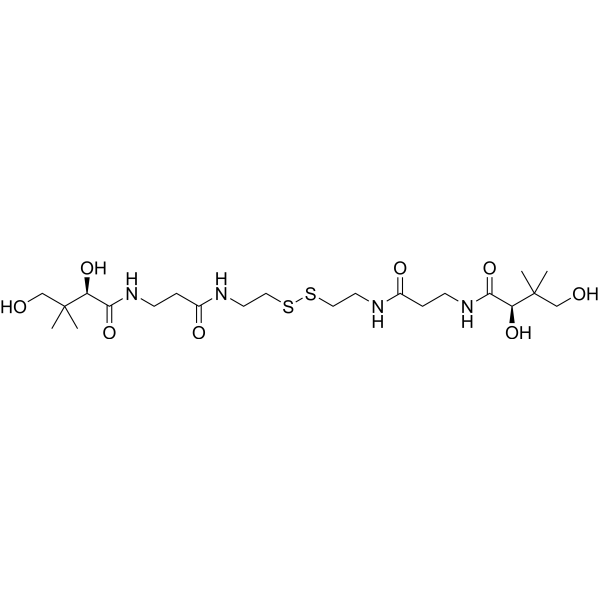
    Pantethine
    5 Publications Verification

    D-Pantethine; LBF disulfide

    Endogenous Metabolite SARS-CoV Cardiovascular Disease Neurological Disease Inflammation/Immunology Endocrinology Cancer
    Pantethine is an orally active lipid-lowering agent. Pantethine has anti-tumor, anti-inflammatory and anti-SARS-COV virus activities. Pantethine is also a neuroprotective agent. Pantethine can be used in the study of Alzheimer's disease, Parkinson's disease, major depression, systemic sclerosis and pantothenate kinase-related neurodegeneration .
    Pantethine
  • HY-126542
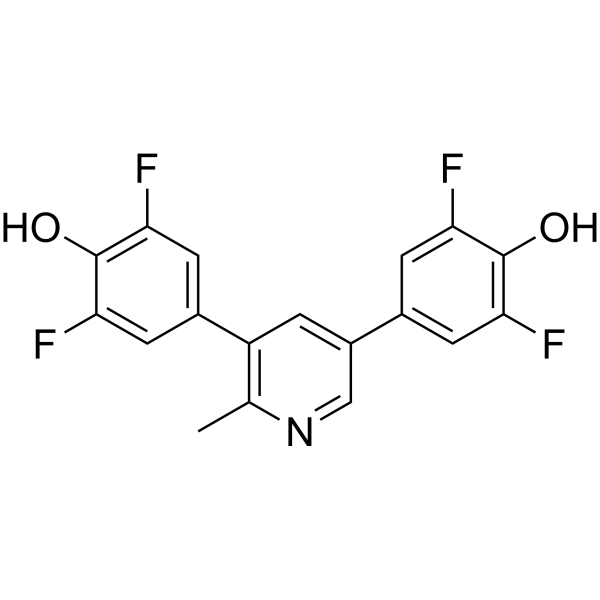
    VRK-IN-1
    5 Publications Verification

    VRK Neurological Disease
    VRK-IN-1 is a potent and selective inhibitor of vaccinia-related kinases 1 (VRK1), with an IC50 of 150 nM. VRK1 is human Ser/Thr protein kinases associated with increased cell division and neurological disorders .
    VRK-IN-1
  • HY-P5979

    LRRK2 Neurological Disease
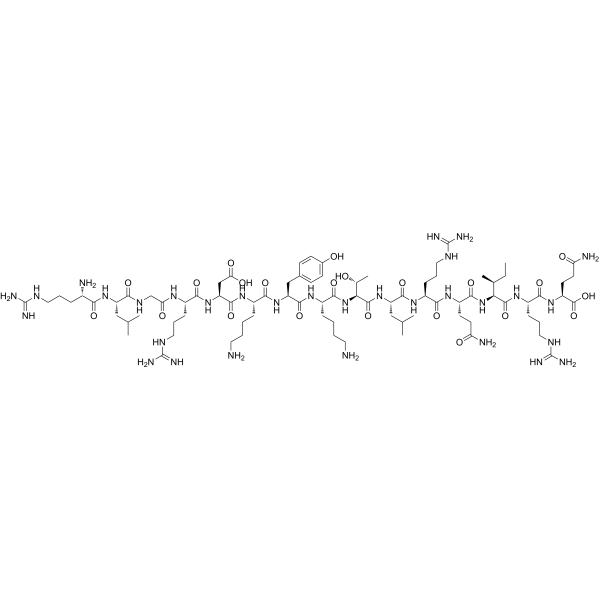
    LRRKtide is a polypeptide substrate. LRRKtide is a specific phosphorylation substrate of LRRK2, a kinase associated with Parkinson's disease, and its phosphorylation site is a threonine residue. LRRKtide can be used for characterization of the catalytic properties of LRRK2, as well as studies on kinase activity and inhibition. LRRKtide is applicable to research related to Parkinson's disease .
    LRRKtide
  • HY-109033

    RE-024

    Drug Intermediate Neurological Disease
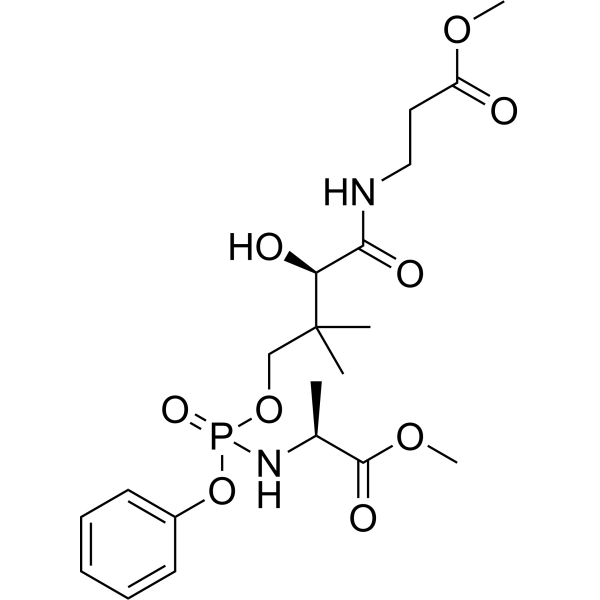
    Fosmetpantotenate is a phosphopantothenic acid (PPA) precursor designed to release PPA intracellularly, leading to restoration of CoA levels. Fosmetpantotenate is used to research pantothenate kinase-associated neurodegeneration.
    Fosmetpantotenate
  • HY-159509

    Claziprotamide; BBP-671

    PANK Neurological Disease Metabolic Disease
    Claziprotamidum (Claziprotamide; BBP-671) is a panthothenate kinase (PANK) activator with oral activity and blood-brain barrier permeability. Claziprotamidum binds to and activates all PANK isoforms, with the highest affinity for PANK3 (KD = 97 pM; IC50 = 1.39 nM). Claziprotamidum increases the intracellular biosynthesis of Coenzyme A (HY-128851) and restores mitochondrial function. Claziprotamidum can be used in the research of pantothenate kinase-associated neurodegeneration and propionic acidemia .
    Claziprotamidum
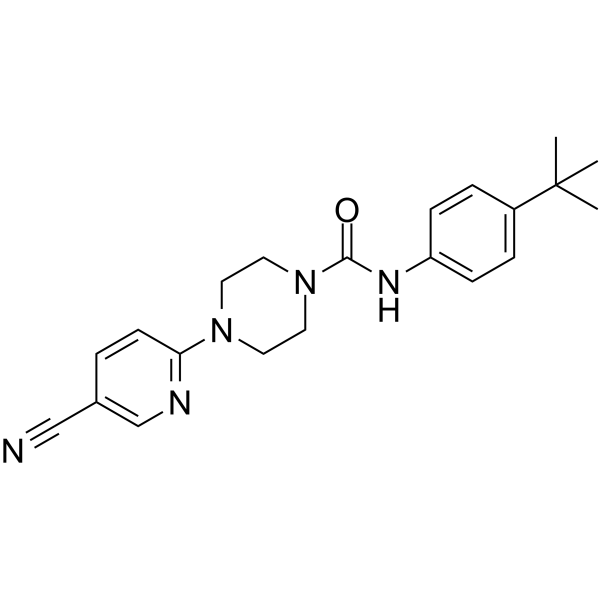
  • HY-144734

    PANK Neurological Disease Metabolic Disease
    Pantothenate kinase-IN-1 is a PANK3 inhibitor with an IC50 of 0.51 μM. Pantothenate kinase-IN-1 acts as a pantothenate-competitive inhibitor, which occupies the pantothenate-binding site of PANK3 and binds to both protomers in the PANK3 dimer. Pantothenate kinase-IN-1 exhibits metabolic stability in mouse and rat plasma. Pantothenate kinase-IN-1 can be used in the research of pantothenate kinase-associated neurodegenerative diseases and metabolic diseases .
    Pantothenate kinase-IN-1
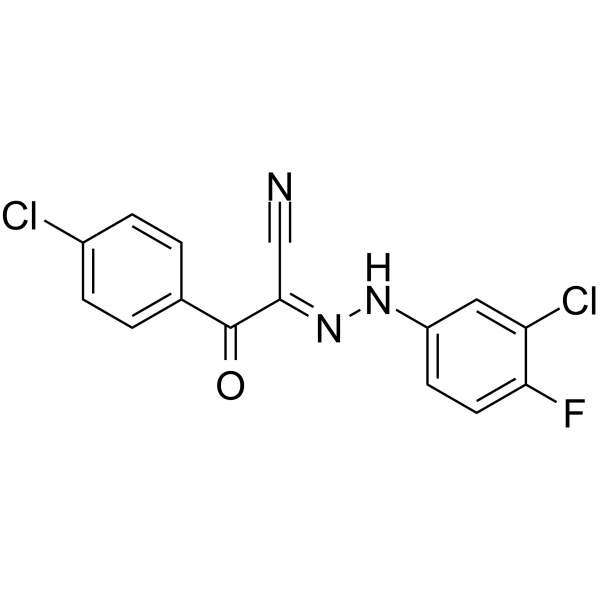
  • HY-124858

    STAT JAK Apoptosis Cardiovascular Disease Cancer
    SC99 is an orally active, selective STAT3 inhibitor targeting JAK2-STAT3 pathway. SC99 docks into the ATP-binding pocket of JAK2. SC99 inhibits phosphorylation of JAK2 and STAT3 with no effects on the other kinases associated with STAT3 signaling. SC99 inhibits platelet activation, aggregation and displays potent anti-myeloma, anti-thrombotic activities .
    SC99
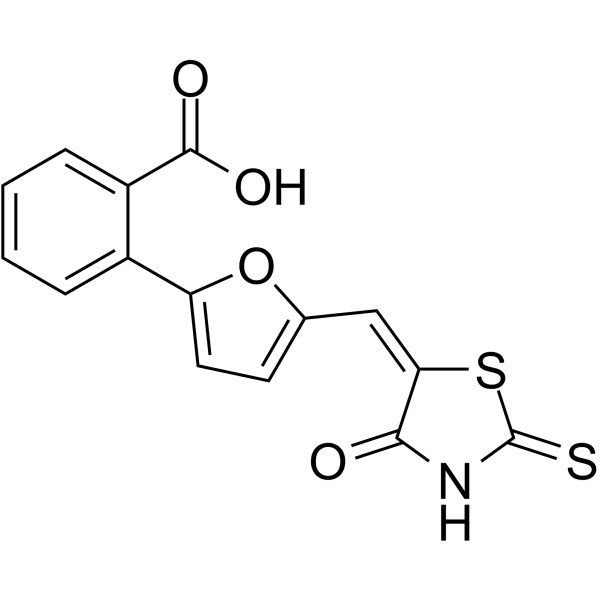
  • HY-174346

    E1/E2/E3 Enzyme Apoptosis DNA/RNA Synthesis Cancer
    Skp2-IN-4 is an Skp2 inhibitor with a IC50 of 0.38  μM for Skp2-Cks1 binding. Skp2-IN-4 improves anti-tumor activity, inhibits the proliferation and induces S phase arrest by targeting Skp2. Skp2-IN-4 significantly enhances Cisplatin (HY-17394) chemosensitivity by suppressing the tumor cell stemness in NCl-H1299 xenograft mice model, promising for lung cancer and esophageal cancer research .
    Skp2-IN-4
  • HY-156792

    RIO Kinase Cancer
    RIOK2-IN-1 (com 4) is a potent and selective RIOK2 inhibitor (Kd=150 nM), but has low cellular activity (IC50=14,600 nM). RIOK2 is an atypical kinase associated with a variety of human cancers and is involved in ribosome maturation and cell cycle progression. The small molecule inhibitor CQ211 (HY-147655), an improvement of RIOK2-IN-1 as the lead compound, has good in vivo and in vitro activity, inhibits the proliferation of MKN-1 and HT-29 cancer cells, and can xenograft MKN in mice -1 model inhibits tumor progression .
    RIOK2-IN-1
  • HY-B1028R

    D-Pantethine (Standard); LBF disulfide (Standard)

    Reference Standards Endogenous Metabolite SARS-CoV Cardiovascular Disease Neurological Disease Inflammation/Immunology Endocrinology Cancer
    Pantethine (Standard) is the analytical standard of Pantethine. This product is intended for research and analytical applications. Pantethine is an orally active lipid-lowering agent. Pantethine has anti-tumor, anti-inflammatory and anti-SARS-COV virus activities. Pantethine is also a neuroprotective agent. Pantethine can be used in the study of Alzheimer's disease, Parkinson's disease, major depression, systemic sclerosis and pantothenate kinase-related neurodegeneration .
    Pantethine (Standard)
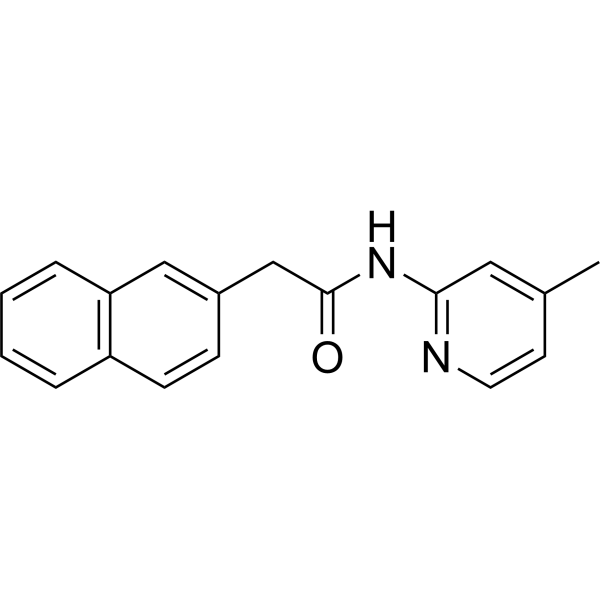
  • HY-135816

    Casein Kinase Pim Inflammation/Immunology Cancer
    CK2/PIM1-IN-1 is an inhibitor of CK2 and PIM1, with IC50s of 3.787 μM and 4.327 μM for CK2 and PIM1, respectively. CK2/PIM1-IN-1 is developed for the research of proliferative disorders such as cancer, as well as other kinase-associated conditions including inflammation, pain, vascular disorders, pathogenic infections and certain immunological disorders .
    CK2/PIM1-IN-1
  • HY-183584

    GSK-3 Src DYRK Tau Protein Microtubule/Tubulin Neurological Disease
    ARN25699 is a kinase inhibitor with an IC50 of 5.5 nM against GSK-3β, 2.2 nM against FYN-α, and 242.3 nM against DYRK1A, and it exhibits oral bioavailability. ARN25699 reduces hyperphosphorylation of tau protein and promotes microtubule bundle formation. ARN25699 has a broader kinome inhibitory profile and targets kinases associated with the pathogenic mechanisms linked to Alzheimer's disease. ARN25699 can be used in the research of Alzheimer's disease and related tauopathies .
    ARN25699

Inquiry Online

Your information is safe with us. * Required Fields.

Salutation


Country or Region *

Applicant Name *


Organization Name *

Department *


Email Address *


Product Name *

Cat. No.


Requested quantity *

Phone Number *


Remarks

Inquiry Online

Inquiry Information

Product Name:
Cat. No.:
Quantity:
MCE Japan Authorized Agent:

