

1. Search Result
Search Result
Results for "

lubricant additives

" in MedChemExpress (MCE) Product Catalog:

23

Inhibitors & Agonists

9

Biochemical Assay Reagents

2

Natural
Products

7

Isotope-Labeled Compounds

1

Oligonucleotides

Cat. No. Product Name Target Research Areas Chemical Structure
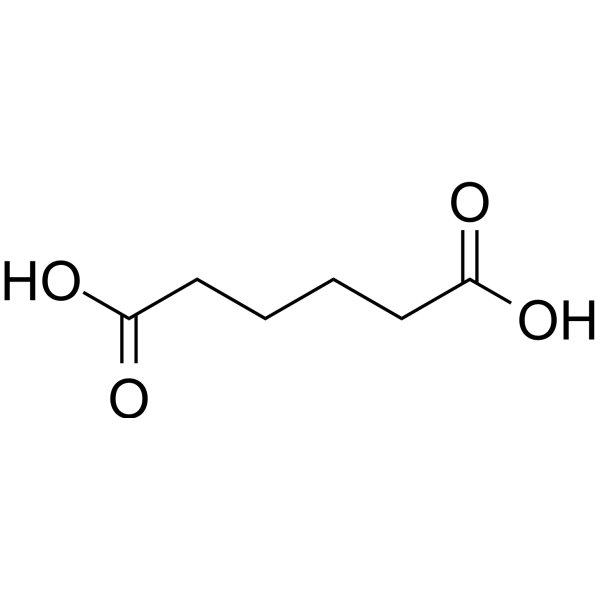
  • HY-W017522

    Hexanedioic acid

    Environmental Pollutants Endogenous Metabolite HSV Infection Metabolic Disease
    Adipic acid (Hexanedioic acid) is an orally active compound with anti-HSV-1 activity. Adipic acid has low toxicity and can be used as a food additive and a gelling agent. Adipic acid can also be used in the synthesis of lubricants, artificial resins, plastics, etc .
    Adipic acid
  • HY-W010807

    Environmental Pollutants Biochemical Assay Reagents Others
    Hexadecyl palmitate is an organic compound commonly used in the cosmetic industry as an emollient, thickener and skin conditioning agent. Cetyl palmitate is derived from a mixture of cetyl alcohol (a fatty alcohol) and palmitic acid (a saturated fatty acid). It is often used in skin care products such as moisturizers, lotions, and creams to improve their texture and Helps them glide smoothly on the skin. In addition to its use in cosmetics, cetyl palmitate is used in other industries including pharmaceuticals, food additives and lubricants. Overall, it's considered safe for use in personal care products, but like any other ingredient, it may cause irritation or an allergic reaction in some people.
    Hexadecyl palmitate
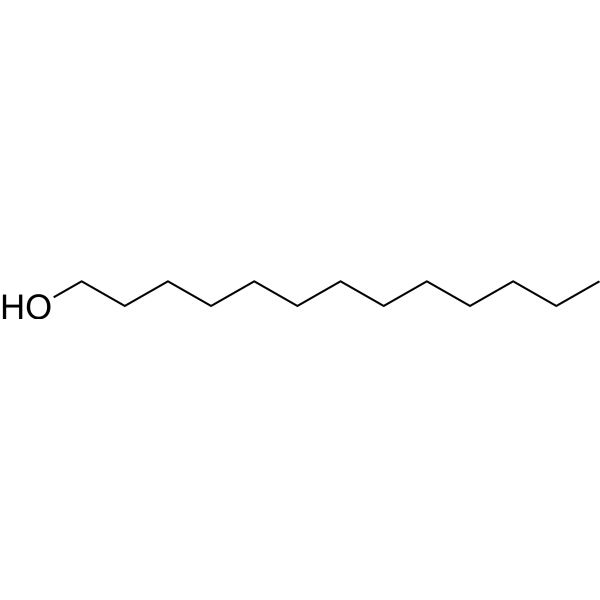
  • HY-W004293

    Tridecyl Alcohol

    Environmental Pollutants Biochemical Assay Reagents Others
    1-Tridecanol is an organic compound commonly used as a surfactant, lubricant, and stabilizer, among others. It can be used in some cleaning products, preservatives and plastic additives, and can help enhance their performance and stability. In addition, the compound is used in some industrial fields, for example in the manufacture of products such as cellulose and paints. Although the compound has no direct medical application, it plays an important role in consumer products and industrial production.
    1-Tridecanol
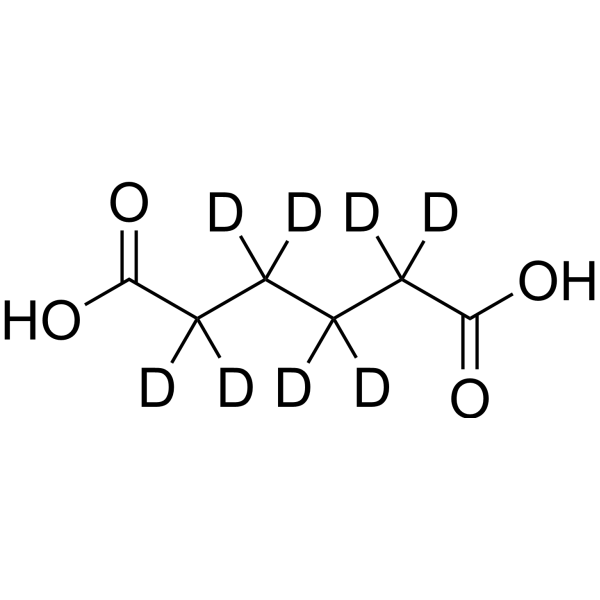
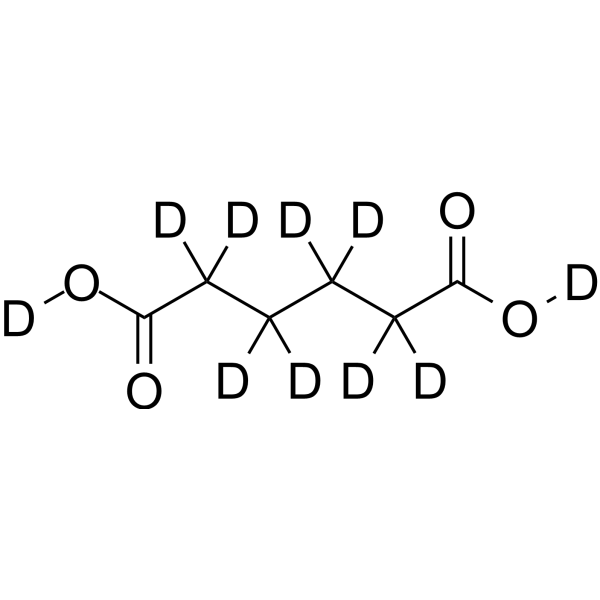
  • HY-W017522S4

    Hexanedioic acid-d8

    Isotope-Labeled Compounds Endogenous Metabolite HSV Infection Metabolic Disease
    Adipic acid-d8 (Hexanedioic acid-d8) is the deuterium labeled Adipic acid (HY-W017522). Adipic acid (Hexanedioic acid) is an orally active compound with anti-HSV-1 activity. Adipic acid has low toxicity and can be used as a food additive and a gelling agent. Adipic acid can also be used in the synthesis of lubricants, artificial resins, plastics, etc .
    Adipic acid-d8
  • HY-W099538

    Dilauryl 3,3'-Thiodipropionate

    Environmental Pollutants Biochemical Assay Reagents Others
    Dilauryl thiodipropionate (DLTDP), which is a sulfur-containing antioxidant commonly used to stabilize polymers and plastics against degradation caused by heat, oxygen, and UV light, acts to scavenge free radicals and others that may cause polymer chain scission and cross-linked active substances, in addition, DLTDP has been used as an additive to lubricants, oils and other industrial fluids to improve their oxidation stability, the long hydrocarbon chain in DLTDP makes it low volatility and compatible with many materials and Good compatibility with substrates.
    Dilauryl thiodipropionate
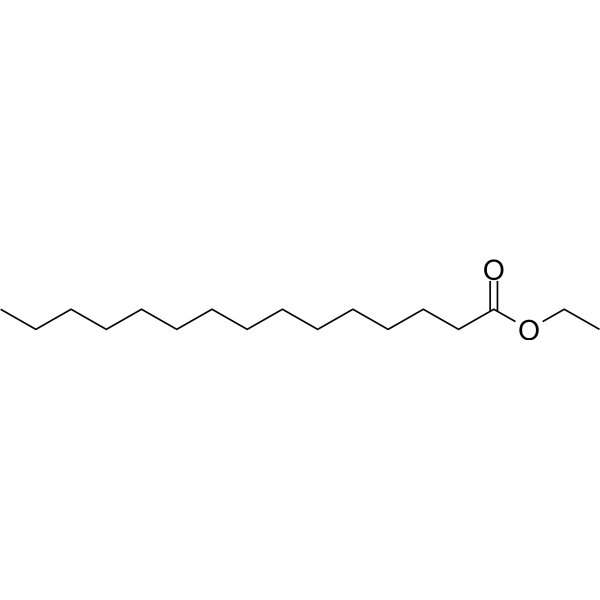
  • HY-W127474

    Biochemical Assay Reagents Others
    Ethyl pentadecanoate is an organic compound that is commonly used as a flavoring and food additive, and can also be used in industrial manufacturing, such as the production of lubricants and surfactants. In addition, Ethyl pentadecanoate has biological activities such as antibacterial, insecticidal and antiseptic.
    Ethyl pentadecanoate
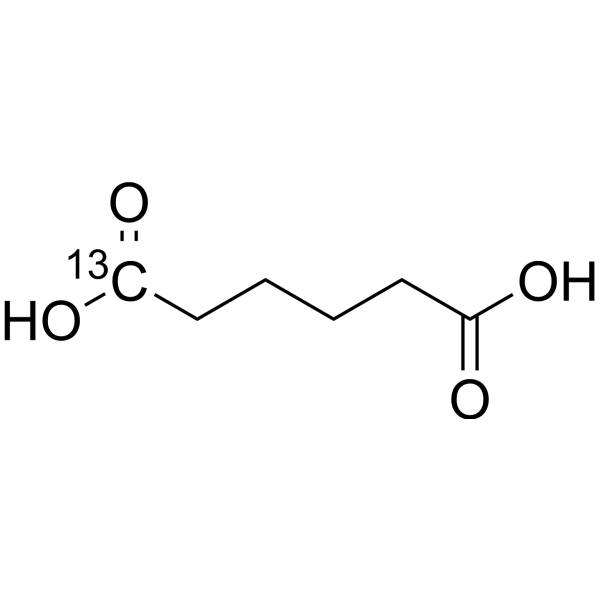
  • HY-W017522S3

    Hexanedioic acid-13C

    Isotope-Labeled Compounds Endogenous Metabolite HSV Infection Metabolic Disease
    Adipic acid- 13C (Hexanedioic acid- 13C) is the 13C labeled Adipic acid (HY-W017522). Adipic acid (Hexanedioic acid) is an orally active compound with anti-HSV-1 activity. Adipic acid has low toxicity and can be used as a food additive and a gelling agent. Adipic acid can also be used in the synthesis of lubricants, artificial resins, plastics, etc .
    Adipic acid-13C
  • HY-W099583

    Myristic acid amide

    Drug Intermediate Metabolic Disease
    Myristic amide (Myristic acid amide) is an ester product. Myristic amide can be used as a chemical additive, lubricant and pharmaceutical intermediate.
    Myristic amide
  • HY-W017522S

    Hexanedioic acid-d10

    Isotope-Labeled Compounds Endogenous Metabolite HSV Infection Metabolic Disease
    Adipic acid-d10 (Hexanedioic acid-d10) is the deuterium labeled Adipic acid (HY-W017522). Adipic acid (Hexanedioic acid) is an orally active compound with anti-HSV-1 activity. Adipic acid has low toxicity and can be used as a food additive and a gelling agent. Adipic acid can also be used in the synthesis of lubricants, artificial resins, plastics, etc .
    Adipic acid-d10
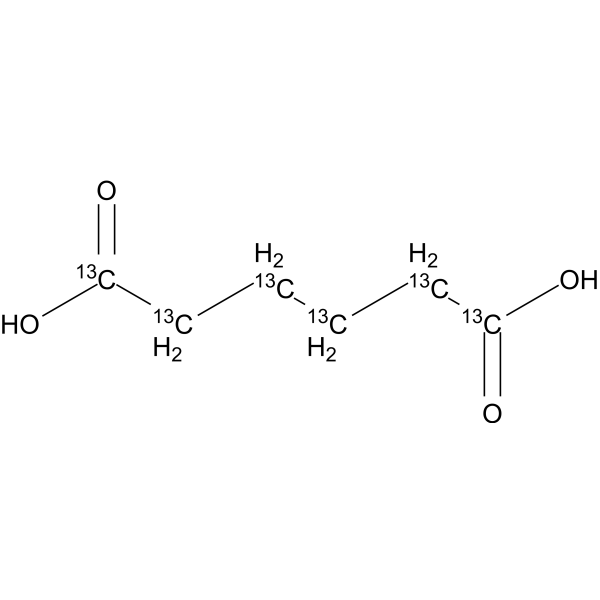
  • HY-W017522S1

    Hexanedioic acid-13C6

    Isotope-Labeled Compounds Endogenous Metabolite HSV Infection Metabolic Disease
    Adipic acid- 13C6 (Hexanedioic acid- 13C6) is the 13C labeled Adipic acid (HY-W017522). Adipic acid (Hexanedioic acid) is an orally active compound with anti-HSV-1 activity. Adipic acid has low toxicity and can be used as a food additive and a gelling agent. Adipic acid can also be used in the synthesis of lubricants, artificial resins, plastics, etc .
    Adipic acid-13C6
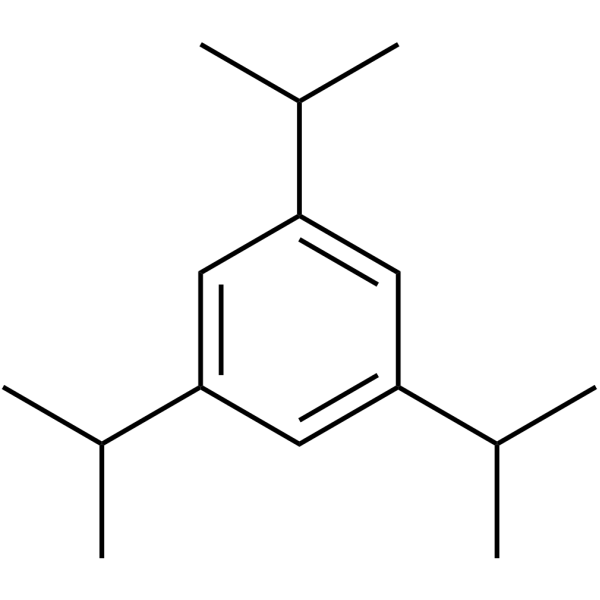
  • HY-W012472

    Environmental Pollutants Biochemical Assay Reagents Others
    1,3,5-Triisopropylbenzene is a symmetric aromatic hydrocarbon compound. 1,3,5-Triisopropylbenzene serves as a saturated crosslinker to participate in the "inverse vulcanization" reaction of elemental sulfur. 1,3,5-Triisopropylbenzene acts as a probe molecule to evaluate the external surface acidity and accessibility of zeolite materials. 1,3,5-Triisopropylbenzene is also used as fuel and fuel additive, lubricant and lubricant additive, as well as micelle swelling agent .
    1,3,5-Triisopropylbenzene
  • HY-W017522S2

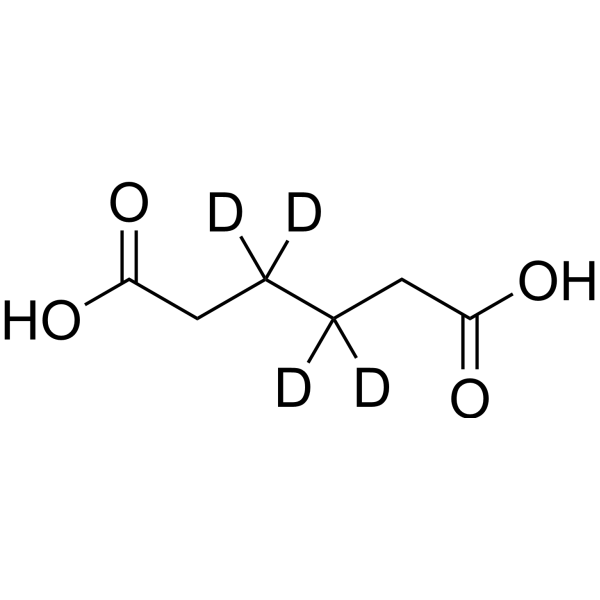
    Hexanedioic acid-d4

    Isotope-Labeled Compounds Endogenous Metabolite HSV Infection Metabolic Disease
    Adipic acid-d4 (Hexanedioic acid-d4) is the deuterium labeled Adipic acid (HY-W017522). Adipic acid (Hexanedioic acid) is an orally active compound with anti-HSV-1 activity. Adipic acid has low toxicity and can be used as a food additive and a gelling agent. Adipic acid can also be used in the synthesis of lubricants, artificial resins, plastics, etc .
    Adipic acid-d4
  • HY-W016656

    4-Phenyl-1,2,4-triazolidine-3,5-dione

    Drug Intermediate Others
    4-Phenylurazole (4-Phenyl-1,2,4-triazolidine-3,5-dione) is an important intermediate. 4-Phenylurazole also serves as a photographic emulsion stabilizer and a lubricant additive .
    4-Phenylurazole
  • HY-W018561

    p,p'-Dioctyldiphenylamine; 4,4'-Dioctyldiphenylamine; DODPA

    Biochemical Assay Reagents Reactive Oxygen Species (ROS) Others
    Bis(4-octylphenyl)amine is an nitrogen-containing anthropogenic organic contaminant. Bis(4-octylphenyl)amine can be used as a high-temperature antioxidant additive in lubricants .
    Bis(4-octylphenyl)amine
  • HY-W017522R

    Hexanedioic acid (Standard)

    Reference Standards Endogenous Metabolite HSV Infection Metabolic Disease
    Adipic acid (Standard) (Hexanedioic acid (Standard)) is the analytical standard of Adipic acid (HY-W017522). This product is intended for research and analytical applications. Adipic acid (Hexanedioic acid) is an orally active compound with anti-HSV-1 activity. Adipic acid has low toxicity and can be used as a food additive and a gelling agent. Adipic acid can also be used in the synthesis of lubricants, artificial resins, plastics, etc .
    Adipic acid (Standard)
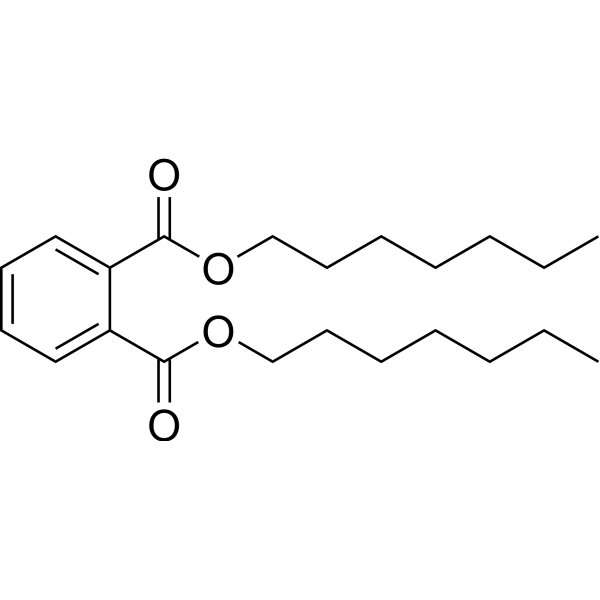
  • HY-W011103

    Biochemical Assay Reagents Environmental Pollutants Others
    Diheptyl phthalate is a class of phthalates consisting of two heptyl (C7) chains attached to a phthalic acid backbone. This compound is commonly used as a plasticizer in various polymer materials such as PVC to increase flexibility and durability. It can also be used as a lubricant, solvent or additive in various industrial applications such as coatings, adhesives and sealants. However, Diheptyl phthalate has been identified as an environmental pollutant and health hazard due to its potential for endocrine disruption and toxicity.
    Diheptyl phthalate
  • HY-W017522S6

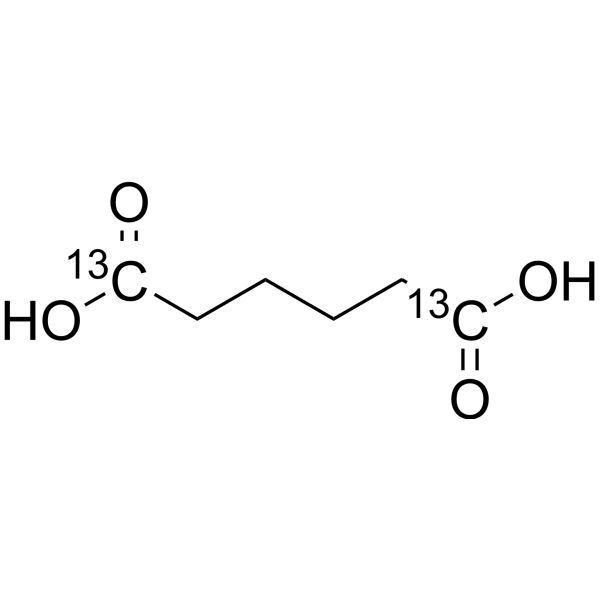
    Hexanedioic acid-13C2

    Isotope-Labeled Compounds Endogenous Metabolite HSV Infection Metabolic Disease
    Adipic acid- 13C2 (Hexanedioic acid- 13C2) is 13C labeled Adipic acid (HY-W017522). Adipic acid (Hexanedioic acid) is an orally active compound with anti-HSV-1 activity. Adipic acid has low toxicity and can be used as a food additive and a gelling agent. Adipic acid can also be used in the synthesis of lubricants, artificial resins, plastics, etc .
    Adipic acid-13C2
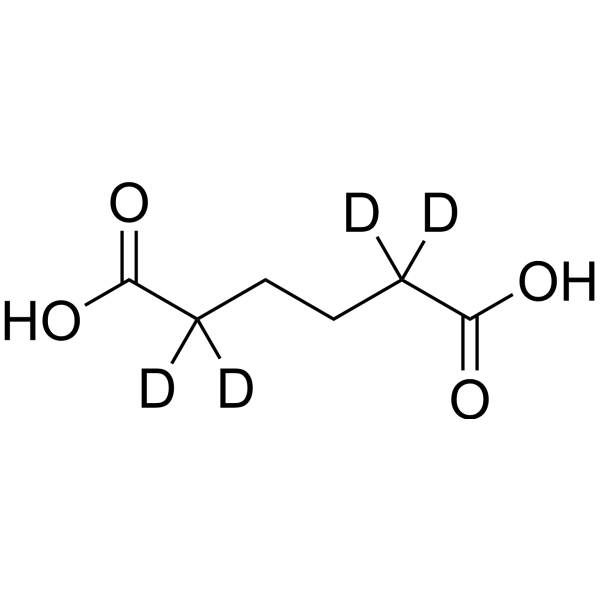
  • HY-W017522S5

    Hexanedioic acid-d4-1

    Isotope-Labeled Compounds Endogenous Metabolite HSV Infection Metabolic Disease
    Adipic acid-d4-1 (Hexanedioic acid-d4-1) is the deuterium labeled Adipic acid (HY-W017522). Adipic acid (Hexanedioic acid) is an orally active compound with anti-HSV-1 activity. Adipic acid has low toxicity and can be used as a food additive and a gelling agent. Adipic acid can also be used in the synthesis of lubricants, artificial resins, plastics, etc .
    Adipic acid-d4-1
  • HY-W900879

    Biochemical Assay Reagents Infection
    Dihexadecylamine is a fatty amine used as a surfactant, emulsifier, lubricant, and defoamer. Dihexadecylamine can also serve as an additive in pesticides and herbicides .
    Dihexadecylamine
  • HY-W099538R

    Dilauryl 3,3'-Thiodipropionate (Standard)

    Biochemical Assay Reagents Reference Standards Others
    Dilauryl thiodipropionate (Standard) is the analytical standard of Dilauryl thiodipropionate. This product is intended for research and analytical applications. Dilauryl thiodipropionate (DLTDP), which is a sulfur-containing antioxidant commonly used to stabilize polymers and plastics against degradation caused by heat, oxygen, and UV light, acts to scavenge free radicals and others that may cause polymer chain scission and cross-linked active substances, in addition, DLTDP has been used as an additive to lubricants, oils and other industrial fluids to improve their oxidation stability, the long hydrocarbon chain in DLTDP makes it low volatility and compatible with many materials and Good compatibility with substrates.
    Dilauryl thiodipropionate (Standard)
  • HY-W010807R

    Biochemical Assay Reagents Reference Standards Others
    Hexadecyl palmitate (Standard) is the analytical standard of Hexadecyl palmitate. This product is intended for research and analytical applications. Hexadecyl palmitate is an organic compound commonly used in the cosmetic industry as an emollient, thickener and skin conditioning agent. Cetyl palmitate is derived from a mixture of cetyl alcohol (a fatty alcohol) and palmitic acid (a saturated fatty acid). It is often used in skin care products such as moisturizers, lotions, and creams to improve their texture and Helps them glide smoothly on the skin. In addition to its use in cosmetics, cetyl palmitate is used in other industries including pharmaceuticals, food additives and lubricants. Overall, it's considered safe for use in personal care products, but like any other ingredient, it may cause irritation or an allergic reaction in some people.
    Hexadecyl palmitate (Standard)
  • HY-W662724

    Biochemical Assay Reagents Others
    3-Ethyl-2-phenylmorpholine (Phenetrazine) hydrochloride is an organic compound with irritating properties. 3-Ethyl-2-phenylmorpholine hydrochloride can be used as an or feedstock in certain catalysts for the production of specific fine chemicals, such as lubricant additives, surfactants .
    3-Ethyl-2-phenylmorpholine hydrochloride
  • HY-W011086R

    Tri-O-cresyl phosphate (Standard); TOTP (Standard)

    Biochemical Assay Reagents Reference Standards Apoptosis Neurological Disease Metabolic Disease
    Tri-O-tolyl phosphate (Tri-O-cresyl phosphate; TOTP) (Standard) is an analytical standard of Tri-O-tolyl phosphate (HY-W011086). This product is intended for research and analytical applications. Tri-O-tolyl phosphate is an aryl phosphate compounds commonly utilized as flame retardants and lubricant additives across various industrie. Tri-O-tolyl phosphate has neurotoxicity and reproductive toxicity, decreasing cell viability, inhibiting cell proliferation, triggering cell cycle arrest, induceing apoptosis, causing mitochondrial dysfunction, disrupts calcium homeostasis .
    Tri-O-tolyl phosphate (Standard)

Inquiry Online

Your information is safe with us. * Required Fields.

Salutation


Country or Region *

Applicant Name *


Organization Name *

Department *


Email Address *


Product Name *

Cat. No.


Requested quantity *

Phone Number *


Remarks

Inquiry Online

Inquiry Information

Product Name:
Cat. No.:
Quantity:
MCE Japan Authorized Agent:

