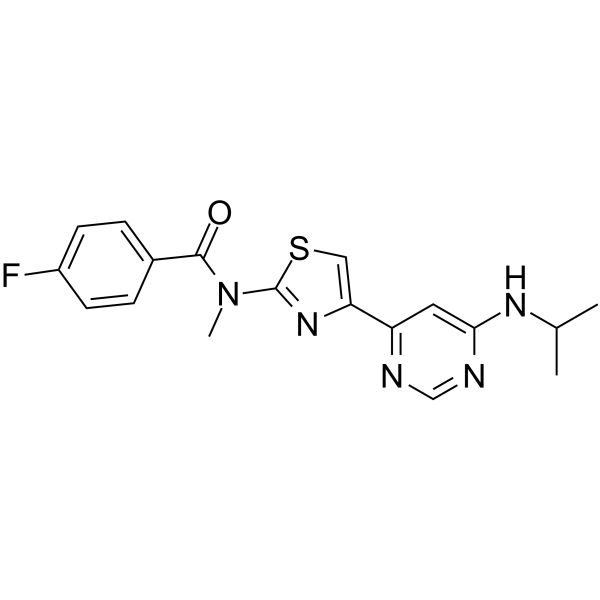
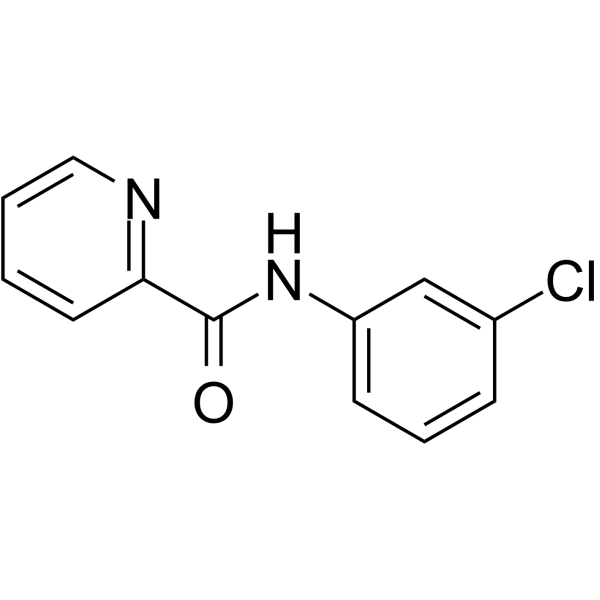
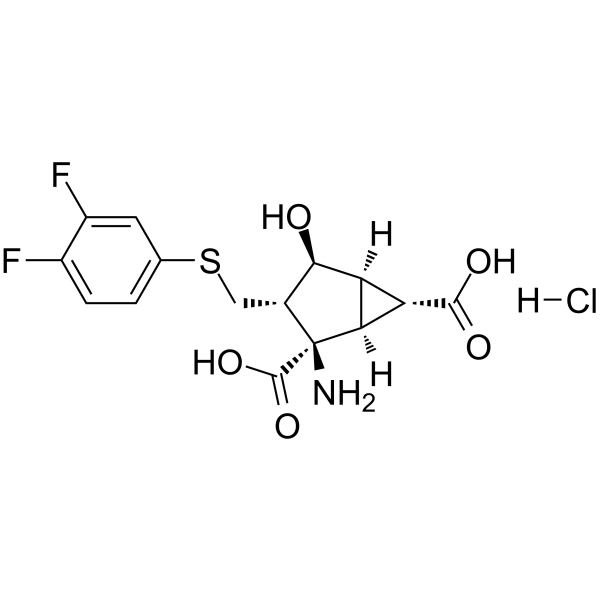
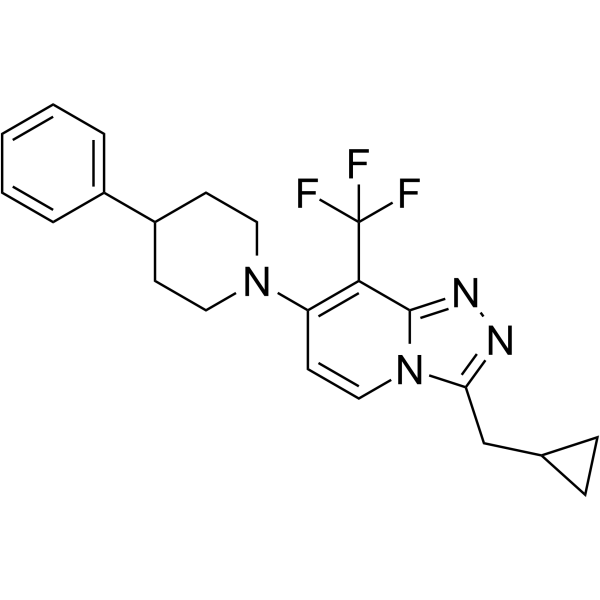
Search Result
Results for "
mGlu Receptor
" in MedChemExpress (MCE) Product Catalog:
| Cat. No. |
Product Name |
Target |
Research Areas |
Chemical Structure |
-
- HY-100407
-
|
|
mGluR
|
Neurological Disease
|
|
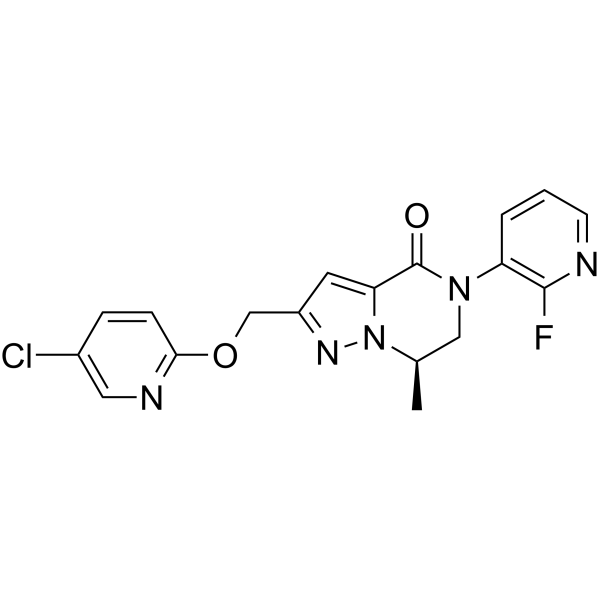
JNJ16259685 is a selective antagonist of mGlu1 receptor, and inhibits the synaptic activation of mGlu1 in a concentration-dependent manner with IC50 of 19 nM.
|
-
-
- HY-70059
-
LY341495
Maximum Cited Publications
14 Publications Verification
|
mGluR
|
Neurological Disease
|
|
LY341495 is a metabotropic glutamate receptor (mGluR) antagonist with IC50s of 21 nM, 14 nM, 7.8 μM, 8.2 μM, 170 nM, 990 nM, 22 μM for mGlu2, mGlu3, mGlu1a, mGlu5a, mGlu8, mGlu7, and mGlu4 receptors, respectively .
|
-
-
- HY-103558
-
|
|
mGluR
|
Neurological Disease
|
|
LY379268 is a potent, selective and brain-penetrant mGlu2/3R agonist with EC50 values of 2.69 nM (mGlu2) and 4.48 nM (mGlu3). LY379268 has no activity on human mGlu 1a, 4a, 5a or 7a receptors. LY379268 has antioxidant and neuroprotective effects .
|
-
-
- HY-100781A
-
L-AP4
1 Publications Verification
L-APB
|
mGluR
|
Neurological Disease
|
|
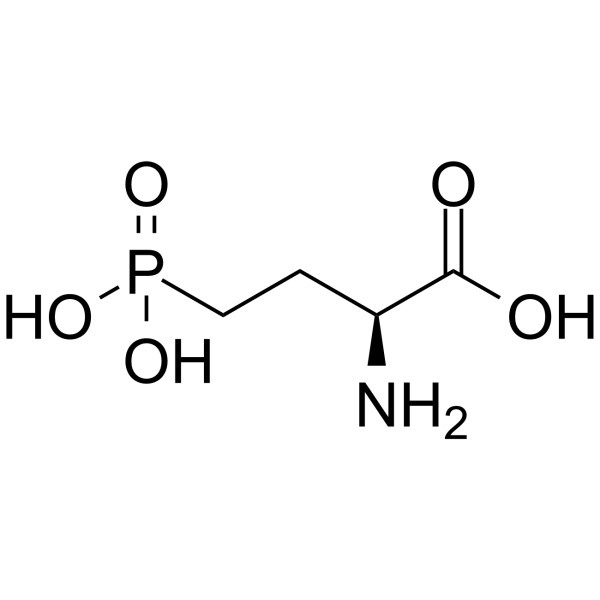
L-AP4 (L-APB) is a potent and specific agonist for the group III mGluRs, with EC50s of 0.13, 0.29, 1.0, 249 μM for mGlu4, mGlu8, mGlu6 and mGlu7 receptors, respectively .
|
-
-
- HY-W011417
-
|
|
Endogenous Metabolite
mGluR
Apoptosis
|
Others
|
|
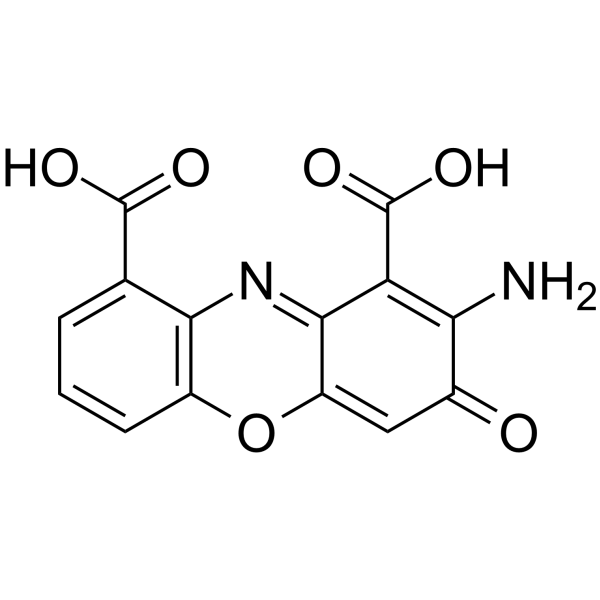
Cinnabarinic acid is a specific orthosteric agonist of mGlu4 by interacting with residues of the glutamate binding pocket of mGlu4, has no activity at other mGlu receptors. Cinnabarinic acid is an endogenous metabolite of the kynurenine pathway of tryptophan. Cinnabarinic acid induces cell apoptosis .
|
-
-
- HY-15445
-
CTEP
2 Publications Verification
RO 4956371; mGluR5 inhibitor
|
mGluR
|
Neurological Disease
|
|
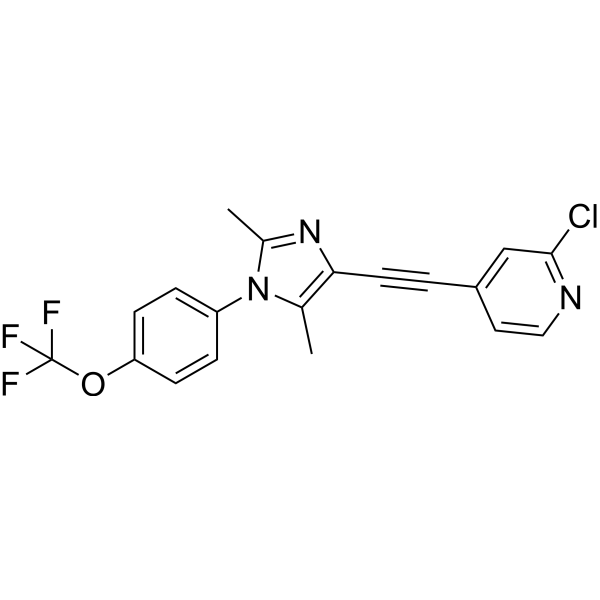
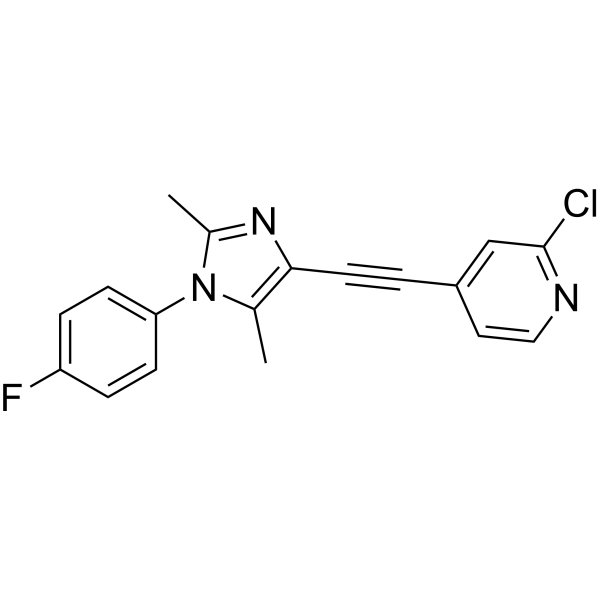
CTEP (RO 4956371) is a novel, long-acting, orally bioavailable allosteric antagonist of mGlu5 receptor with IC50 of 2.2 nM, and shows > 1000-fold selectivity over other mGlu receptors. CTEP is a click chemistry reagent, it contains an Alkyne group and can undergo copper-catalyzed azide-alkyne cycloaddition (CuAAc) with molecules containing Azide groups.
|
-
-
- HY-101335
-
|
|
mGluR
|
Neurological Disease
|
|
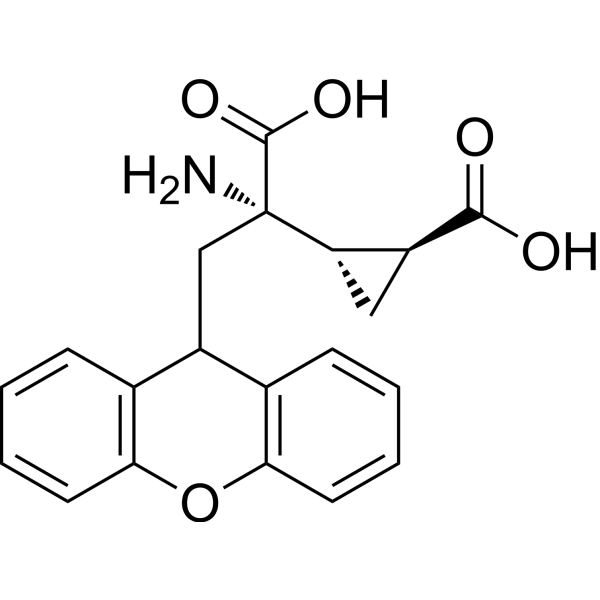
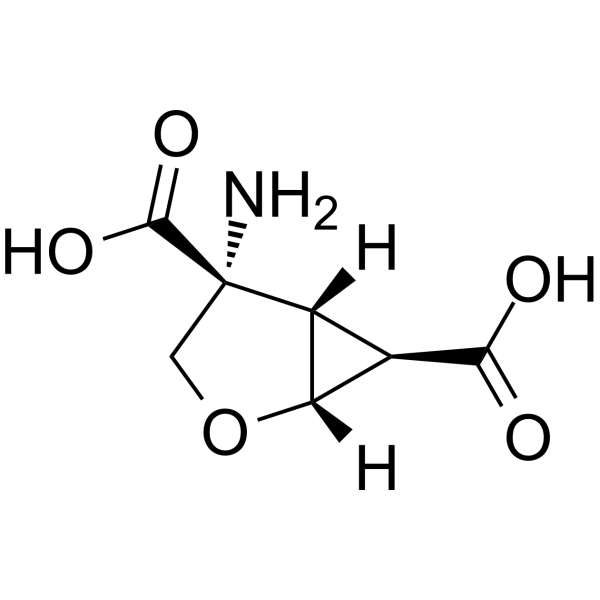
DCG-IV is a potent agonist of group II mGluRs with EC50s of 0.35 and 0.09 μM for mGlu2R and mGlu3R, reapectively. DCG-IV is also a competitive antagonist at group I (IC50: mGlu1R/5R=389/630 μM) and III receptors (IC50: mGlu4R/6R/7R/8R= 22.5/39.6/40.1/32 μM). DCG-IV has anticonvulsive and neuroprotective effects .
|
-
-
- HY-18941
-
|
LY354740; Eglumetad
|
mGluR
|
Neurological Disease
|
|
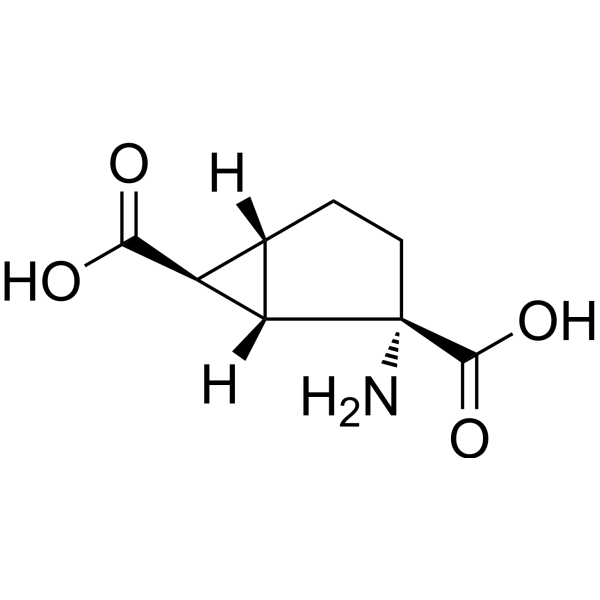
Eglumegad (LY354740) is a highly potent and selective group II (mGlu2/3) receptor agonist with IC50s of 5 nM and 24 nM on transfected human mGlu2 and mGlu3 receptors, respectively.
|
-
-
- HY-124419
-
|
|
mGluR
|
Neurological Disease
|
|
RO0711401 is a selective and orally active positive allosteric modulator of mGlu1 receptor with an EC50 of 56 nM .
|
-
-
- HY-108710
-
|
|
mGluR
|
Neurological Disease
|
|
VU0650786 is a potent and selective CNS penetrant negative allosteric modulator of metabotropic glutamate receptor subtype 3 (mGlu3 NAM), with an IC50 of 392 nM. VU0650786 has antidepressant and anxiolytic activity in rodents .
|
-
-
- HY-119243
-
|
|
mGluR
|
Neurological Disease
|
|
LY2794193 is a highly potent and selective mGlu3 receptor agonist (hmGlu3 Ki=0.927 nM,EC50=0.47 nM; hmGlu2 Ki=412 nM,EC50=47.5 nM) .
|
-
-
- HY-107982
-
|
|
mGluR
|
Neurological Disease
|
|
VU6005649 is a blood-brain-barrier penetrant mGlu7/8 receptor agonist with EC50s of 0.65 μM and 2.6 μM for mGlu7 receptor and mGlu8 receptor, respectively.
|
-
-
- HY-100366
-
|
|
mGluR
|
Neurological Disease
|
|
Lu AF21934 is a selective and brain-penetrant mGlu4 receptor positive allosteric modulator with an EC50 of 500 nM for mGlu4 receptor .
|
-
-
- HY-101333
-
|
(RS)-CPPG
|
mGluR
|
Neurological Disease
|
|
CPPG ((RS)-CPPG) is a potent group II/III mGlu receptors antagonist. CPPG exhibits some selectivity (approximately 20 fold) for group III (IC50=2.2 nM) over group II (IC50=46.2 nM) mGlu receptors in the rat cerebral cortex. CPPG has weak effects at group I mGlu receptors .
|
-
-
- HY-101845
-
FITM
1 Publications Verification
|
mGluR
|
Cancer
|
|
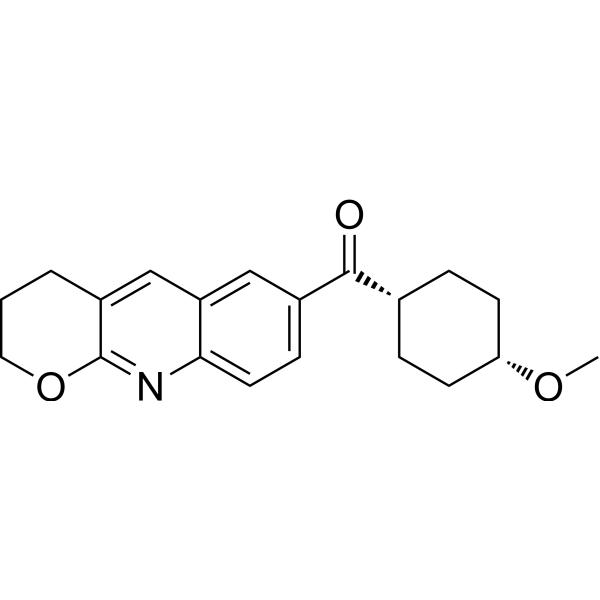
FITM is a negative allosteric modulator of mGlu1 receptor with a Ki of 2.5 nM.
|
-
-
- HY-W011417R
-
|
|
Endogenous Metabolite
Reference Standards
mGluR
Apoptosis
|
Others
|
|
Cinnabarinic acid (Standard) is the analytical standard of Cinnabarinic acid. This product is intended for research and analytical applications. Cinnabarinic acid is a specific orthosteric agonist of mGlu4 by interacting with residues of the glutamate binding pocket of mGlu4, has no activity at other mGlu receptors. Cinnabarinic acid is an endogenous metabolite of the kynurenine pathway of tryptophan. Cinnabarinic acid induces cell apoptosis .
|
-
-
- HY-102095
-
|
|
mGluR
|
Neurological Disease
|
|
SIB-1757 is a highly selective and noncompetitive antagonist of mGlu5 receptor with an IC50 of 0.4 μM .
|
-
-
- HY-100588
-
|
|
mGluR
|
Neurological Disease
|
|
VU0364770 is a selective and potent positive allosteric modulator (PAM) of mGlu4. VU0346770 exhibits EC50s of 290 nM and 1.1 μM at rat mGlu4 and human mGlu4 receptor, respectively. VU0364770 exhibits antagonist activity at mGlu5 with a potency of 17.9 μM and PAM activity at mGlu6 with a potency of 6.8 μM. VU0364770 also possesses activity at MAO with Ki values of 8.5 and 0.72 μM for human MAO-A and human MAO-B, respectively .
|
-
-
- HY-117764
-
|
|
mGluR
|
Neurological Disease
|
|
LSP4-2022 is a potent and brain-penetrant mGlu4-selective orthosteric agonist, with an EC50 of 0.11 μM. LSP4-2022 inhibits neurotransmission in cerebellar slices from wild-type but not mGlu4 receptor-knockout mice. LSP4-2022 shows pro-depressant activity .
|
-
-
- HY-123820
-
|
|
mGluR
|
Neurological Disease
|
|
LY3020371 hydrochloride is a potent, selective metabotropic glutamate 2/3 receptor (mGlu2/3) antagonist with Ki of 5.3 and 2.5 nM, potently blocks cAMP formation with IC50 of 16.2 nM . LY3020371 hydrochloride exerts an antidepressant-like signature in vivo .
|
-
-
- HY-120589
-
|
|
mGluR
|
Neurological Disease
|
|
VU0360172 is a potent and selective mGlu5 receptor positive allosteric modulator with an EC50 value of 16 nM and a Ki of 195 nM, respectively. VU0360172 stimulates polyphosphoinositide (PI) hydrolysis in vivo, which is abrogated in mGlu5 receptors gene deleted mice . VU0360172 is a click chemistry reagent, it contains an Alkyne group and can undergo copper-catalyzed azide-alkyne cycloaddition (CuAAc) with molecules containing Azide groups.
|
-
-
- HY-122255
-
|
|
mGluR
|
Neurological Disease
|
|
LY487379 is a selective human mGluR2 positive allosteric modulator (PAM). LY487379 potentiates glutamate-stimulated [ 35S]GTPγS binding with EC50 values of 1.7 μM and >10 μM for mGlu2 and mGlu3 receptors respectively. LY487379 promotes cognitive flexibility and facilitates behavioral inhibition in a rat model. LY487379 can be used for schizophrenia research .
|
-
-
- HY-110278
-
|
|
mGluR
|
Neurological Disease
|
|
ADX71743 is a highly selective, noncompetitive and brain-penetrant metabotropic glutamate receptor 7 negative allosteric modulator (mGlu7 NAM). ADX71743 can cross the blood-brain barrier (BBB) and possesses anxiolytic activity. .
|
-
-
- HY-18941C
-
|
LY354740 hydrochloride; Eglumetad hydrochloride
|
mGluR
|
Neurological Disease
|
|
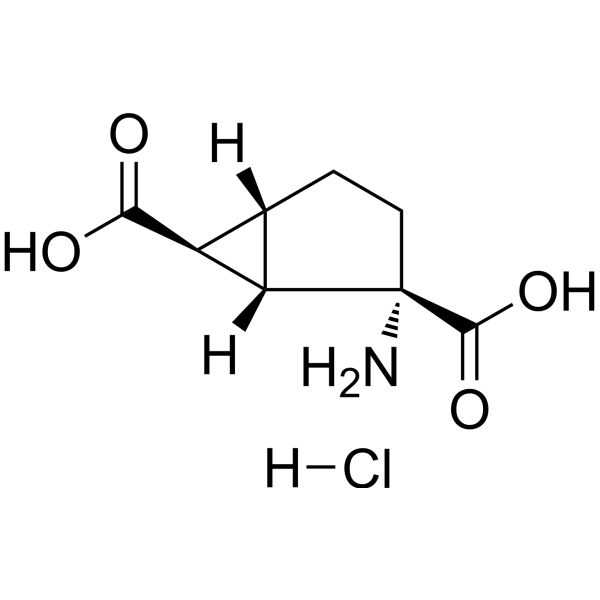
Eglumegad (LY354740) hydrochloride is a highly potent and selective group II (mGlu2/3) receptor agonist with IC50s of 5 and 24 nM on transfected human mGlu2 and mGlu3 receptors, respectively. Eglumegad hydrochloride protects neurons from NMDA toxicity. Eglumegad hydrochloride has anxiolytic- and antipsychotic-like effects .
|
-
-
- HY-110146
-
|
|
mGluR
|
Neurological Disease
|
|
XAP044 is a potent and selective antagonist of mGlu7. The metabotropic glutamate receptor subtype 7 (mGlu7) is an important presynaptic regulator of neurotransmission in the mammalian CNS. XAP044 demonstrates good brain exposure and wide spectrum anti-stress and antidepressant- and anxiolytic-like efficacy in rodent behavioral paradigms .
|
-
-
- HY-114403
-
|
|
mGluR
|
Neurological Disease
|
|
VU6012962 is an orally bioavailable and CNS-penetrant metabotropic glutamate receptor 7 negative allosteric modulator (mGlu7 NAM) with an IC50 of 347 nM .
|
-
-
- HY-120717
-
|
|
mGluR
Cytochrome P450
|
Neurological Disease
|
|
VU6001966 is a brain-penetrant and selective mGlu2 receptor inhibitor. VU6001966 blocks mGlu2 receptor activity, counteracts LY379268 (HY-103558)-mediated blood-brain barrier protection and inflammatory cytokine dampening in microglia under inflammatory conditions. VU6001966 enhances antidepressant effects when combined with Scopolamine (HY-N0296). VU6001966 can be used for the research of major depressive disorder .
|
-
-
- HY-110254
-
|
|
mGluR
|
Neurological Disease
|
|
AZD 9272 is a selective, orally active and brain penetrant mGluR5 antagonist with IC50s of 2.6 nM and 7.6 nM for rat and human receptors, respectively. AZD 9272 shows >3900-fold selectivity over other mGlu receptors 2].
|
-
-
- HY-70059A
-
|
|
mGluR
|
Neurological Disease
|
|
(Rac)-LY341495 is the isomers of LY341495 (HY-70059) can be used as control compounds in experiments. LY341495 is a metabotropic glutamate receptor (mGluR) antagonist with IC50s of 21 nM, 14 nM, 7.8 μM, 8.2 μM, 170 nM, 990 nM, 22 μM for mGlu2, mGlu3, mGlu1a, mGlu5a, mGlu8, mGlu7, and mGlu4 receptors, respectively .
|
-
-
- HY-18760
-
|
|
mGluR
|
Neurological Disease
|
|
LY2812223 is a highly potent, functionally selective mGlu2 receptor agonist with mGlu2 binding affinity for mGlu2 and mGlu3 (Ki=144 nM and 156 nM, respectively) .
|
-
-
- HY-101311
-
|
AIDA
|
mGluR
|
Inflammation/Immunology
Cancer
|
|
UPF-523 (AIDA), a rigid (carboxyphenyl) glycine derivative, is a relatively potent and selective antagonist of group I metabotropic glutamate receptors (mGlu1a) with an IC50 of 214 μM. But UPF-523 has no effect on group II (mGlu2), group III (mGlu4) receptors or ionotropic glutamate receptors. UPF-523 has the potential for the research of the acute arthritis .
|
-
-
- HY-103550
-
|
|
mGluR
|
Neurological Disease
|
|
A-841720 is a potent, non-competitive and selective mGlu1 receptor antagonist with an IC50 of 10 nM for human mGlu1 receptor. A-841720 displays 34-fold selectivity over mGlu5 (IC50 of 342 nM), and no significant activity at a range of other neurotransmitter receptors, ion channels, and transporters. A-841720 has the potential for chronic pain research .
|
-
-
- HY-15393
-
|
|
mGluR
|
Neurological Disease
|
|
VU 0357121 is a positive and highly selective mGlu5R allosteric modulator (PAM) with an EC50 of 33 nM. VU 0357121 is inactive or very weakly antagonizing at other mGlu receptor subtypes .
|
-
-
- HY-105040C
-
|
LY2140023 hydrochloride
|
mGluR
|
Neurological Disease
|
|
Pomaglumetad methionil hydrochloride (LY2140023 hydrochloride) is an orally active, methionine prodrug of the selective mGlu2/3 receptor agonist LY404039. Pomaglumetad methionil hydrochloride has the potential for schizophrenia research .
|
-
-
- HY-100605
-
|
|
mGluR
|
Others
|
|
VU0483605 is a potent and brain-penetrated mGlu1 receptor positive allosteric modulator (PAM). VU0483605 shows excellent mGlu1 PAM activity at both human and rat, with EC50 values of 390 and 356 nM, respectively .
|
-
-
- HY-13239
-
|
|
mGluR
|
Neurological Disease
|
|
LY2979165 is the alanine proagent of 2812223, a selective and potent orthosteric mGlu2 receptor agonist .
|
-
-
- HY-18162
-
|
|
mGluR
|
Neurological Disease
|
|
JNJ-42153605 is a positive allosteric modulator of the metabotropic glutamate 2 (mGlu2) receptor with an EC50 of 17 nM.
|
-
-
- HY-100409
-
|
|
mGluR
|
Cancer
|
|
PHCCC is a Group I mGluR antagonist with an IC50 of 3 μM. PHCCC is a selective positive modulator of mGlu4 receptor. Antiparkinsonian effect .
|
-
-
- HY-103549
-
|
|
mGluR
|
Neurological Disease
|
|
Z-Cyclopentyl-AP4 is a kainate-type glutamate receptor agonist (orthosteric agonist). Z-Cyclopentyl-AP4 is more selective for mGlu4 than mGlu8 .
|
-
-
- HY-14419
-
|
|
mGluR
|
Neurological Disease
|
|
TCN238 is an orally bioavailable mGlu4 receptor positive allosteric modulator (PAM) with an EC50 of 1 μM .
|
-
-
- HY-110141
-
|
|
mGluR
|
Others
|
|
ABP688 is a high affinity human mGluR5 antagonist with anKi of 1.7 nM. Radioisotope-labeled ABP688 can be used as a PET tracer for clinical imaging of the mGlu5 receptor .
|
-
-
- HY-14866
-
|
ADX-10059
|
mGluR
|
Neurological Disease
|
|
Raseglurant (ADX-10059) is a mGlu5 receptor negative allosteric modulator. Raseglurant is effective against migraine. Raseglurant reduces the Haloperidol (HY-14538)-induced catalepsy in mice .
|
-
-
- HY-103559
-
|
|
mGluR
|
Neurological Disease
|
|
HexylHIBO is a potent group I mGluR antagonist with Kbs of 140 μM and 110 μM at mGlu1a and mGlu5a receptors, respectively. HexylHIBO does not inhibits mGlu2 and mGlu4a. HexylHIBO decreased spontaneous excitatory postsynaptic currents (sEPSCs) in rat .
|
-
-
- HY-100781B
-
|
L-APB monohydrate
|
mGluR
|
Neurological Disease
|
|
L-AP4 (L-APB) monohydrate is a potent and specific agonist for the group III mGluRs, with EC50s of 0.13, 0.29, 1.0, 249 μM for mGlu4, mGlu8, mGlu6 and mGlu7 receptors, respectively .
|
-
-
- HY-116855
-
|
|
mGluR
|
Neurological Disease
|
|
TASP0433864 is a selective positive allosteric modulator (PAM) of metabotropic glutamate 2 (mGlu2) receptor with EC50 values of 199 nM and 206 nM against human and rat mGlu2 receptors, respectively. TASP0433864 has antipsychotic activity .
|
-
-
- HY-14554
-
|
LY2140023
|
mGluR
|
Neurological Disease
|
|
Pomaglumetad methionil anhydrous (LY2140023) is an orally active, methionine prodrug of the selective mGlu2/3 receptor agonist LY404039. LY2140023 has the potential for schizophrenia research .
|
-
-
- HY-105040
-
|
LY2140023 hydrate
|
mGluR
|
Neurological Disease
|
|
Pomaglumetad methionil (LY2140023 hydrate) is an oral methionine prodrug of the potent specific mGlu2/3 receptor agonist LY404039 (HY-50906). Pomaglumetad methionil is well-tolerated and has a distinct safety profile, and can be used for schizophrenia .
|
-
-
- HY-110191
-
|
|
mGluR
|
Neurological Disease
Cancer
|
|
VU0469650 is a potent, selective and brain-penetrant negative allosteric modulator of mGlu1 receptor, with an IC50 of 99 nM .
|
-
-
- HY-W565924
-
|
|
mGluR
ERK
|
Neurological Disease
|
|
STX107 is a metabotropic glutamate 5 (mGlu5) receptor negative allosteric modulator (NAM) with a pKi of 8.32. STX107 inhibits glutamate-induced Ca 2+ mobilization, IP1 accumulation, and ERK1/2 phosphorylation. STX107 also inhibits glutamate-induced mGlu5 internalization .
|
-
-
- HY-124372
-
|
|
mGluR
|
Neurological Disease
|
|
JNJ-46356479 is a selective and orally bioavailable mGlu2 receptor positive allosteric modulator (PAM), with the EC50 of 78 nM. JNJ-46356479 shows active in vivo .
|
-
- HY-103551
-
|
|
mGluR
|
Neurological Disease
|
|
(±)-LY395756 is an agonist of mGlu2 receptor and an antagonist of mGlu3 receptor. (±)-LY395756 can distinguish the native mGlu2 and mGlu3 receptors .
|
-
- HY-131289
-
|
|
mGluR
|
Neurological Disease
|
|
LY3020371 is a potent and selective antagonist of glutamate (mGlu) 2/3 receptor, with Kis of 5.26 and 2.50 nM for hmGluR2 and hmGluR3, respectively. LY3020371 can be used for the research of depression .
|
-
- HY-144698
-
|
|
mGluR
|
Neurological Disease
|
|
mGlu4 receptor agonist 1 (compound 62) is a potent mGlu4 receptor positive allosteric modulator, with an EC50 of 308 nM. mGlu4 receptor agonist 1 shows significant anxiolytic- and antipsychotic-like effect .
|
-
- HY-118238
-
|
MRZ-8456
|
mGluR
|
Neurological Disease
|
|
Remeglurant (MRZ-8456) acts as a selective, orally active and allosteric antagonist of the mGlu5 receptor, with an IC50 of 13 nM. Remeglurant (MRZ-8456) can be used in the research for dyskinesia in Parkinson’s disease (PD) .
|
-
- HY-107505
-
|
|
mGluR
|
Neurological Disease
|
|
CBiPES hydrochloride is a mGlu2 receptor positive allosteric modulator (EC50: 92.8 nM). CBiPES hydrochloride attenuates stress-induced hyperthermia and PCP-induced hyperlocomotor activity. CBiPES hydrochloride can be used for research of neurological disease, such as Parkinson's disease (PD) .
|
-
- HY-115782
-
|
|
mGluR
|
Neurological Disease
|
|
VU6001192 is a potent and selective mGlu2 (metabotropic glutamate receptor 2) negative allosteric modulator. VU6001192 has potent inhibitory activity against the mGlu2 receptor (IC50 = 207 nM), but no activity against the mGlu3 receptor and the other 6 mGlu subtypes. VU6001192 can be used for the research of neurological disease, such as depression .
|
-
- HY-18941B
-
|
(rel)-LY354740; (rel)-Eglumetad
|
mGluR
|
Neurological Disease
|
|
(rel)-Eglumegad ((rel)-LY354740) is a relative configuration of Eglumegad (HY-18941). Eglumegad is a highly potent and selective group II (mGlu2/3) receptor agonist with EC50s of 5 and 24 nM for transfected human mGlu2 and mGlu3 receptors, respectively .
|
-
- HY-117697
-
|
|
mGluR
|
Others
|
|
Lu AF11205 is a mGlu5 receptor positive allosteric modulator with activity modulating mGlu5 receptor activity. Optimization of Lu AF11205 resulted in a series of potent fused thiazole analogs whose structures and activities were influenced by substituents and which could affect receptor function in cell lines expressing mGlu5 receptors.
|
-
- HY-114589
-
|
|
mGluR
|
Others
|
|
VU0240382 is a metabotropic glutamate receptor subtype 5 modulator whose activity differs depending on whether it has allosteric agonist activity. VU0240382 with allosteric agonist activity can activate mGlu(5) receptors in cell lines, but has no agonist activity in natural systems and has similar efficacy to mGlu(5) modulators without allosteric agonist activity in animal models.
|
-
- HY-131336
-
|
|
mGluR
|
Neurological Disease
|
|
MGS0274, an ester-based lipophilic proagent of a metabotropic glutamate (mGlu)2 and mGlu3 receptor agonist MGS0008, shows improved oral bioavailability. MGS0274 has the potential for the research of schizophrenia .
|
-
- HY-131287
-
|
|
mGluR
|
Neurological Disease
|
|
MGS0028 is a selective metabotropic glutamate 2/3 (mGlu2/3) receptor agonist. MGS0028 can be used for psychiatric disorders research .
|
-
- HY-103551A
-
|
|
mGluR
|
Neurological Disease
|
|
LY 541850 is claimed from human ionotropic and metabotropic glutamate (mGlu) receptors expressed in non-neuronal cells. LY541850 is a selective orthosteric mGlu2 agonist and mGlu3 antagonist with IC50 values of 0.161 μM and 0.038 μM, respectively .
|
-
- HY-107517
-
|
|
mGluR
|
Neurological Disease
|
|
UBP 1112 is a selective group III mGluR antagonist, with a Kd of 5.1 μM.UBP 1112 shows 96-fold affinity for group III over group II mGlu receptor (Kd, 488 μM), and shows no significant activity at group I mGlu receptor or iGlu receptor .
|
-
- HY-107504
-
|
|
mGluR
|
Neurological Disease
|
|
VU0360172 hydrochloride is a potent and selective mGlu5 receptor positive allosteric modulator (PAM) with an EC50 value of 16 nM and a Ki of 195 nM, respectively. VU0360172 hydrochloride stimulates polyphosphoinositide (PI) hydrolysis in vivo, which is abrogated in mGlu5 receptors gene deleted mice .
|
-
- HY-169345
-
|
|
mGluR
|
Neurological Disease
|
|
VU6043653 is a potent, selective and cross the blood-brain barrier metabotropic glutamate receptor subtype 5 (mGlu5) negative allosteric modulator with an IC50 value of 325 nM for h mGlu5 .
|
-
- HY-117606
-
|
|
mGluR
|
Neurological Disease
|
|
LY3027788, a diester analog of LY3020371 which is an mGlu2/3 receptor antagonist, is a potent and orally active prodrug of LY3020371. LY3027788 has antidepressant efficacy .
|
-
- HY-117606A
-
|
|
mGluR
|
Neurological Disease
|
|
LY3027788 hydrochloride, a diester analog of LY3020371 which is an mGlu2/3 receptor antagonist, is a potent and orally active prodrug of LY3020371. LY3027788 hydrochloride has antidepressant efficacy .
|
-
- HY-18679
-
|
|
mGluR
|
Neurological Disease
|
|
TC-N 22A is a potent, selective, orally active and brain-permeable mGlu4 PAM with an EC50 of 9 nM in human mGlu4-expressing BHK cells. TC-N 22A is less active (EC50>10 μM) in agonist and PAM model at mGlu 1, 2, 3, 5, and 7 receptors. TC-N 22A has the potential for research of CNS disease in vivo .
|
-
- HY-103562
-
|
3,3'-Dimethoxybenzaldazine
|
mGluR
|
Neurological Disease
|
|
DMeOB (3,3'-Dimethoxybenzaldazine) is a mGluR5 receptor negative allosteric modulator with an IC50 of 3 μM. DMeOB displays reversible non-competitive inhibition of mGlu5-mediated responses .
|
-
- HY-12510
-
-
- HY-100588A
-
|
|
mGluR
|
Neurological Disease
|
|
VU0364770 hydrochloride is a selective and potent positive allosteric modulator (PAM) of mGlu4. VU0346770 hydrochloride exhibits EC50s of 290 nM and 1.1 μM at rat mGlu4 and human mGlu4 receptor, respectively. VU0364770 hydrochloride exhibits antagonist activity at mGlu5 with a potency of 17.9 μM and PAM activity at mGlu6 with a potency of 6.8 μM. VU0364770 hydrochloride also possesses activity at MAO with Ki values of 8.5 and 0.72 μM for human MAO-A and human MAO-B, respectively .
|
-
- HY-123433
-
|
|
mGluR
|
Neurological Disease
|
|
JNJ-40068782 is a potent positive allosteric modulator of the mGlu2 receptor, with the IC50 of 38 nM .
|
-
- HY-11041
-
|
|
mGluR
|
Neurological Disease
|
|
LSP1-2111 is a phosphinic glutamate derivative that agonists metabotropic glutamate (mGlu) receptor .
|
-
- HY-13239A
-
|
|
mGluR
|
Neurological Disease
|
|
LY2979165 free base is the alanine proagent of 2812223, a selective and potent orthosteric mGlu2 receptor agonist .
|
-
- HY-119941
-
|
|
mGluR
|
Neurological Disease
|
|
VU0652835 is a metabotropic glutamate receptor subtype 5 (mGlu5) negative allosteric modulator with an IC50 of 81 nM .
|
-
- HY-129274
-
|
|
mGluR
|
Neurological Disease
|
|
RO4988546 is a negative allosteric modulator (NAM) that targets metabotropic glutamate receptors 2 and 3 (mGlu2, mGlu3). RO4988546 can reduce the binding of [ 3h]-LY354740 at the positive binding site, while affecting the receptor's G protein coupling and intracellular signaling. RO4988546 can be used in the development of antidepressants and cognitive enhancers .
|
-
- HY-115796
-
|
|
mGluR
|
Others
|
|
VU0477886 is a metabotropic glutamate receptor subtype 4 (mGlu4) positive allosteric modulator with potent activating activity on mGlu4 (EC50 = 95nM, 89% Glu Max), good pharmacokinetic characteristics (brain: plasma Kp = 1.3), and significant therapeutic efficacy in Parkinson's disease models.
|
-
- HY-112814
-
|
|
mGluR
|
Neurological Disease
|
|
VU6001376 is a potent and selective positive allosteric modulator of the metabotropic glutamate receptor 4 (mGlu4 PAM) with an EC50 of 50.1 nM .
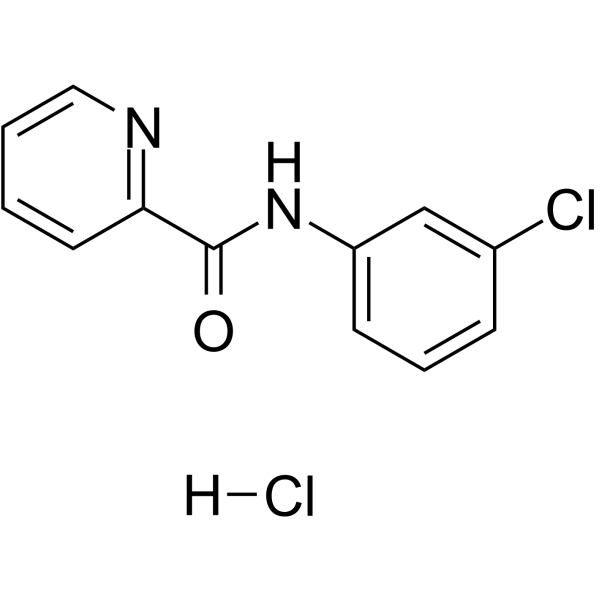
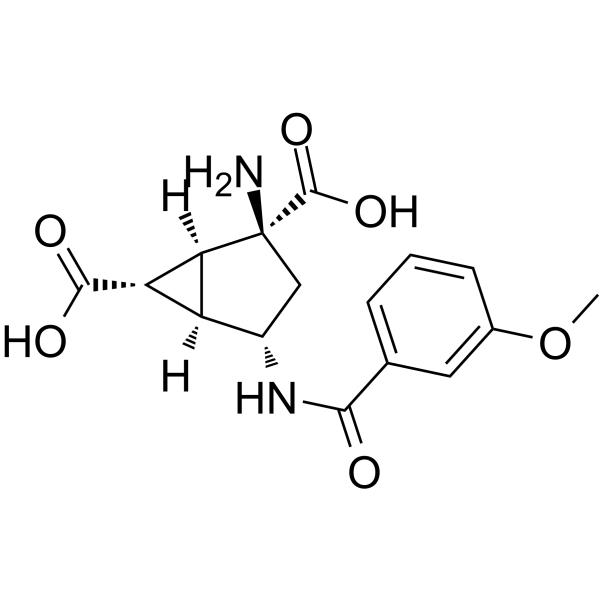
|
-
- HY-162117
-
|
|
mGluR
|
Neurological Disease
|
|
LBG30300 is a subtype-selective mGlu2 receptor agonist EC50 0.6 nM. LBG30300 is blood-brain barrier permeable .
|
-
- HY-107510
-
|
|
mGluR
|
Neurological Disease
|
|
YM-230888 is an orally active, selective and allosteric mGlu1 receptor antagonist with a Ki of 13 nM. YM-230888 inhibits mGlu1-mediated inositol phosphate production in rat cerebellar granule cells with an IC50 of 13 nM. YM-230888 shows antinociceptive response in Streptozotocin (HY-13753)-induced hyperalgesia models. YM-230888 significantly reduces pain parameters in complete Freund's adjuvant (HY-153808)-induced arthritic pain models .
|
-
- HY-131293
-
|
|
mGluR
|
Neurological Disease
|
|
MGS0008 is an orally active and brain-penetrant metabotropic glutamate receptor 2/3 (mGlu2/3) agonist with EC50 values of 29.4 nM and 45.4 nM for mGluR2 and mGluR3, respectively. MGS0008 is promising for research of central nervous system disorders, including schizophrenia, anxiety, and neurodegenerative diseases .
|
-
- HY-123667
-
|
|
mGluR
|
Neurological Disease
|
|
NCFP is a metabotropic glutamate receptor 5 (mGlu5) positive allosteric modulator (PAM). NCFP can be used in the study of central nervous system diseases .
|
-
- HY-103552
-
|
|
mGluR
|
Neurological Disease
|
|
LY487379 hydrochloride is a selective human mGluR2 positive allosteric modulator (PAM). LY487379 hydrochloride potentiates glutamate-stimulated [ 35S]GTPγS binding with EC50 values of 1.7 μM and >10 μM for mGlu2 and mGlu3 receptors respectively. LY487379 hydrochloride promotes cognitive flexibility and facilitates behavioral inhibition in a rat model. LY487379 hydrochloride can be used for schizophrenia research .
|
-
- HY-124406
-
|
|
mGluR
|
Neurological Disease
|
|
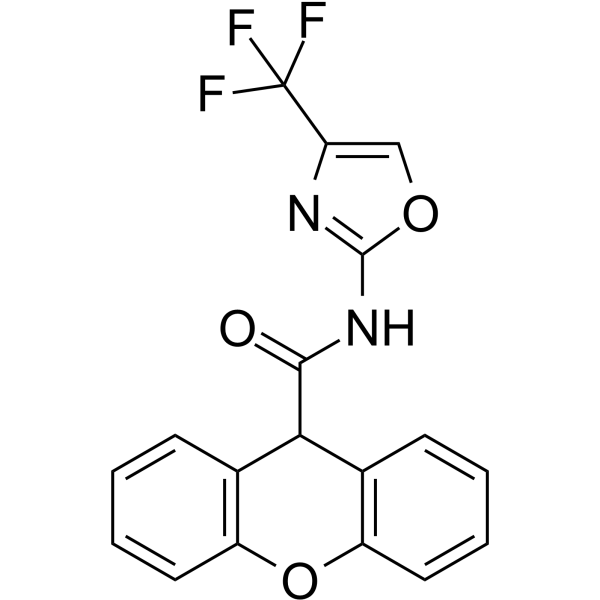
A-794282 is a compound with analgesic activity and is a selective mGlu1 receptor antagonist that significantly reduces pain behaviors in a postoperative pain model, but motor side effects may occur at higher doses.
|
-
- HY-116236
-
|
LY2607540
|
mGluR
|
Others
|
|
THIIC (LY2607540) is a compound with anxiolytic and antidepressant potential. It is a positive allosteric modulator of mGlu receptors, exhibits anxiolytic and antidepressant-like activities in multiple animal models, and can also affect sleep and neurochemical changes.
|
-
- HY-120567
-
|
ML182
|
mGluR
|
Neurological Disease
|
|
VU0400195 (ML182) is a oral active and allosteric modulator of the metabotropic glutamate receptor 4 (mGlu4) with the EC50 of 291 nM. VU0400195 can be used for study of antiparkinsonian animal model .
|
-
- HY-107513
-
|
|
mGluR
|
Neurological Disease
Cancer
|
|
BAY 36-7620 is a potent and noncompetitive antagonist of mGlu1 Receptor (IC50=0.16 μM) with inverse agonist activity. BAY 36-7620 inhibits tumor growth and prolongs the survival of mice with tumors by inhibiting mGlu1 receptor. BAY 36-7620 suppresses AKT phosphorylation in A549 tumors. BAY 36-762 has neuroprotective effect in acute subdural hematoma rat model.BAY 36-7620 is used in non-small cell lung cancer and breast cancer research .
|
-
- HY-131288
-
|
|
mGluR
|
Neurological Disease
|
|
LY2934747 is a selective and blood-brain barrier-permeable dual mGlu2/mGlu3 receptor agonist, with Ki values of 260 nM and 177 nM, and EC50 values of 8.4 nM and 62.4 nM against human receptors, respectively. LY2934747 exhibits antipsychotic and analgesic activities in in vivo animal models. LY2934747 can be used in studies related to psychosis and pain .
|
-
- HY-107982R
-
|
|
Reference Standards
mGluR
|
Neurological Disease
|
|
VU6005649 (Standard) is the analytical standard of VU6005649 (HY-107982). This product is intended for research and analytical applications. VU6005649 is a blood-brain-barrier penetrant mGlu7/8 receptor agonist with EC50s of 0.65 μM and 2.6 μM for mGlu7 receptor and mGlu8 receptor, respectively.
|
-
- HY-175100
-
|
|
mGluR
|
Neurological Disease
|
|
HexylHIBO hydrobromide is a potent group I mGluR antagonist with Kbs of 140 μM and 110 μM at mGlu1a and mGlu5a receptors, respectively. HexylHIBO hydrobromide does not inhibits mGlu2 and mGlu4a. HexylHIBO hydrobromide decreases spontaneous excitatory postsynaptic currents (sEPSCs) in rat .
|
-
- HY-117450
-
|
|
Endogenous Metabolite
|
Others
|
|
VU0415374 is a positive allosteric modulator that modulates mGlu4 receptor activity. VU0415374 could help achieve precise light control of physiological responses. VU0415374 has high selectivity and can be used to further study the role of mGlu4 in co-expression of other mGlu receptor systems. The improved properties of VU0415374 make it an important candidate for studying mGlu4 with high precision in space and time .
|
-
- HY-114891
-
|
|
mGluR
|
Neurological Disease
|
|
R214127 is a selective mGlu1 receptor antagonist with IC50 values of 6 and 14 nM for rat and human mGlu1a. R214127 acts on a site from the glutamate binding pocket, and competes for the same transmembrane segment VII as other noncompetitive mGlu1 antagonists .
|
-
- HY-103558R
-
|
|
Reference Standards
mGluR
|
Neurological Disease
|
|
LY379268 (Standard) is the analytical standard of LY379268 (HY-103558). This product is intended for research and analytical applications. LY379268 is a potent, selective and brain-penetrant mGlu2/3R agonist with EC50 values of 2.69 nM (mGlu2) and 4.48 nM (mGlu3). LY379268 has no activity on human mGlu 1a, 4a, 5a or 7a receptors. LY379268 has antioxidant and neuroprotective effects .
|
-
- HY-100366R
-
|
|
mGluR
Reference Standards
|
Neurological Disease
|
|
Lu AF21934 (Standard) is the analytical standard of Lu AF21934 (HY-100366). This product is intended for research and analytical applications. Lu AF21934 is a selective and brain-penetrant mGlu4 receptor positive allosteric modulator with an EC50 of 500 nM for mGlu4 receptor .
|
-
- HY-100407R
-
|
|
mGluR
Reference Standards
|
Neurological Disease
|
|
JNJ16259685 (Standard) is the analytical standard of JNJ16259685 (HY-100407). This product is intended for research and analytical applications. JNJ16259685 is a selective antagonist of mGlu1 receptor, and inhibits the synaptic activation of mGlu1 in a concentration-dependent manner with IC50 of 19 nM.
|
-
- HY-100588AR
-
|
|
mGluR
Reference Standards
|
Neurological Disease
|
|
VU0364770 (hydrochloride) (Standard) is the analytical standard of VU0364770 (hydrochloride) (HY-100588A). This product is intended for research and analytical applications. VU0364770 hydrochloride is a selective and potent positive allosteric modulator (PAM) of mGlu4. VU0346770 hydrochloride exhibits EC50s of 290 nM and 1.1 μM at rat mGlu4 and human mGlu4 receptor, respectively. VU0364770 hydrochloride exhibits antagonist activity at mGlu5 with a potency of 17.9 μM and PAM activity at mGlu6 with a potency of 6.8 μM. VU0364770 hydrochloride also possesses activity at MAO with Ki values of 8.5 and 0.72 μM for human MAO-A and human MAO-B, respectively .
|
-
- HY-100588R
-
|
|
mGluR
Reference Standards
|
Neurological Disease
|
|
VU0364770 (Standard) is the analytical standard of VU0364770 (HY-100588). This product is intended for research and analytical applications. VU0364770 is a selective and potent positive allosteric modulator (PAM) of mGlu4. VU0346770 exhibits EC50s of 290 nM and 1.1 μM at rat mGlu4 and human mGlu4 receptor, respectively. VU0364770 exhibits antagonist activity at mGlu5 with a potency of 17.9 μM and PAM activity at mGlu6 with a potency of 6.8 μM. VU0364770 also possesses activity at MAO with Ki values of 8.5 and 0.72 μM for human MAO-A and human MAO-B, respectively .
|
-
- HY-129794
-
|
|
mGluR
|
Neurological Disease
|
|
YM-298198 is a potent mGlu1 receptor with an IC50 of 24 nM. YM-298198 can be used in the study of neurological disease .
|
-
- HY-131292
-
|
|
mGluR
|
Neurological Disease
|
|
Ro-65-3479 is a selective metabotropic glutamate receptor (mGlu2/3) antagonist. Ro-65-3479 blocks glutamate-induced signaling and modulates calcium channel activity. Ro-65-3479 is promising for research of disorders involving glutamatergic dysregulation, such as anxiety, schizophrenia, and neurodegenerative diseases .
|
-
- HY-105040CR
-
|
LY2140023 hydrochloride (Standard)
|
Reference Standards
mGluR
|
Neurological Disease
|
|
Pomaglumetad methionil hydrochloride (Standard) is the analytical standard of Pomaglumetad methionil hydrochloride (HY-105040C). This product is intended for research and analytical applications. Pomaglumetad methionil hydrochloride (LY2140023 hydrochloride) is an orally active, methionine prodrug of the selective mGlu2/3 receptor agonist LY404039. Pomaglumetad methionil hydrochloride has the potential for schizophrenia research .
|
-
- HY-102095R
-
|
|
Reference Standards
mGluR
|
Neurological Disease
|
|
SIB-1757 (Standard) is the analytical standard of SIB-1757 (HY-102095). This product is intended for research and analytical applications. SIB-1757 is a highly selective and noncompetitive antagonist of mGlu5 receptor with an IC50 of 0.4 μM .
|
-
- HY-100409R
-
|
|
mGluR
Reference Standards
|
Cancer
|
|
PHCCC (Standard) is the analytical standard of PHCCC (HY-100409). This product is intended for research and analytical applications. PHCCC is a Group I mGluR antagonist with an IC50 of 3 μM. PHCCC is a selective positive modulator of mGlu4 receptor. Antiparkinsonian effect .
|
-
- HY-103563
-
|
|
mGluR
|
Neurological Disease
|
|
3-MATIDA is a metabolic glutamate 1 (mGlu1) receptor antagonist. 3-MATIDA alleviates neuronal death in cerebral ischemia models. 3-MATIDA can be used in the study of neuronal injury and epileptiform activity after ischemia .
|
-
- HY-176122
-
|
|
mGluR
|
Neurological Disease
|
|
VU6024945 is an orally active negative allosteric modulator of metabotropic glutamate receptor subtype 5 (mGlu5 NAM) with an IC50 value of 110 nM. VU6024945 can be used in the research of anti-anxiety, anti-depression and Parkinson's disease and other neurological diseases .
|
-
- HY-15257A
-
|
AFQ-056 racemate
|
mGluR
|
Neurological Disease
|
|
Mavoglurant racemate (AFQ-056 racemate) is the racemate of Mavoglurant. Mavoglurant is a novel, non-competitive mGlu5 receptor antagonist . Mavoglurant (racemate) is a click chemistry reagent, it contains an Alkyne group and can undergo copper-catalyzed azide-alkyne cycloaddition (CuAAc) with molecules containing Azide groups.
|
-
- HY-15446
-
|
RG7090; RO4917523
|
mGluR
|
Neurological Disease
|
|
Basimglurant (RG7090; RO4917523) is a selective, orally active, blood-brain barrier permeable negative allosteric modulator of metabotropic glutamate receptor 5 (mGluR5), with a Ki of 1.4 nM (against [ 3H]-ABP688 (HY-110141)) and 35.6 nM (against [ 3H]-MPEP (HY-14609A)). Basimglurant inhibits mGlu5-mediated signaling pathways and receptor constitutive activity, regulates dopamine levels in the nucleus accumbens, exerts anxiolytic, antidepressant-like, analgesic and arousal-promoting effects, and alters δ-wave power during non-rapid eye movement sleep. Basimglurant can be used in research on depression, fragile X syndrome, anxiety disorders, etc .
|
-
- HY-114515
-
|
RG7090 sulfate; RO4917523 sulfate
|
mGluR
|
Neurological Disease
|
|
Basimglurant (RG7090; RO4917523) sulfate is a selective, orally active, blood-brain barrier permeable negative allosteric modulator of metabotropic glutamate receptor 5 (mGluR5), with a Ki of 1.4 nM (against [ 3H]-ABP688 (HY-110141)) and 35.6 nM (against [ 3H]-MPEP (HY-14609A)). Basimglurant sulfate inhibits mGlu5-mediated signaling pathways and receptor constitutive activity, regulates dopamine levels in the nucleus accumbens, exerts anxiolytic, antidepressant-like, analgesic and arousal-promoting effects, and alters δ-wave power during non-rapid eye movement sleep. Basimglurant sulfate can be used in research on depression, fragile X syndrome, anxiety disorders, etc .
|
-
- HY-15748
-
|
ADX-71149
|
mGluR
|
Neurological Disease
|
|
JNJ-40411813 (ADX-71149) is a novel positive allosteric modulator of the metabotropic Glutamate 2 receptor (mGlu2R) with EC50 of 147 nM. JNJ-40411813 has orally bioactivity and penetrate the blood-brain barriers. JNJ-40411813 has the potential property of anti-depression .
|
-
- HY-15446R
-
|
RG7090 (Standard); RO4917523 (Standard)
|
Reference Standards
mGluR
|
Neurological Disease
|
|
Basimglurant (RG7090; RO4917523) (Standard) is the analytical standard of Basimglurant. This product is intended for research and analytical applications. Basimglurant is a selective, orally active, blood-brain barrier permeable negative allosteric modulator of metabotropic glutamate receptor 5 (mGluR5), with a Ki of 1.4 nM (against [ 3H]-ABP688 (HY-110141)) and 35.6 nM (against [ 3H]-MPEP (HY-14609A)). Basimglurant inhibits mGlu5-mediated signaling pathways and receptor constitutive activity, regulates dopamine levels in the nucleus accumbens, exerts anxiolytic, antidepressant-like, analgesic and arousal-promoting effects, and alters δ-wave power during non-rapid eye movement sleep. Basimglurant can be used in research on depression, fragile X syndrome, anxiety disorders, etc.
|
-
- HY-107506
-
|
|
mGluR
|
Neurological Disease
|
|
Ro 67-4853 is a positive allosteric modulator (PAM) of mGluR1 (pEC50=7.16 for rmGlu1a receptor). Ro67-4853 exhibits activity at all group I mGlu receptors including hmGlu1, rmGlu1, and rmGlu5. Ro 67-4853 enhances the potency of L-Glu by interacting with the transmembrane domain (TMD) of the receptor. Ro 67-4853 potentiates sensory synaptic responses to repetitive vibrissa stimulation .
|
-
- HY-131019
-
|
|
mGluR
|
Neurological Disease
|
|
JF-NP-26, an inactive photocaged derivative of raseglurant, is the first caged mGlu5 receptor negative allosteric modulator. Uncaging of JF-NP-26 is elicited with light pulses in the visible spectrum (405 nm). JF-NP-26 induces light-dependent analgesia in models of inflammatory and neuropathic pain in freely behaving animals .
|
-
- HY-108710R
-
|
|
Reference Standards
mGluR
|
Neurological Disease
|
|
VU0650786 (Standard) is the analytical standard of VU0650786 (HY-108710). This product is intended for research and analytical applications. VU0650786 is a potent and selective CNS penetrant negative allosteric modulator of metabotropic glutamate receptor subtype 3 (mGlu3 NAM), with an IC50 of 392 nM. VU0650786 has antidepressant and anxiolytic activity in rodents .
|
-
- HY-14609
-
|
|
mGluR
|
Neurological Disease
|
|
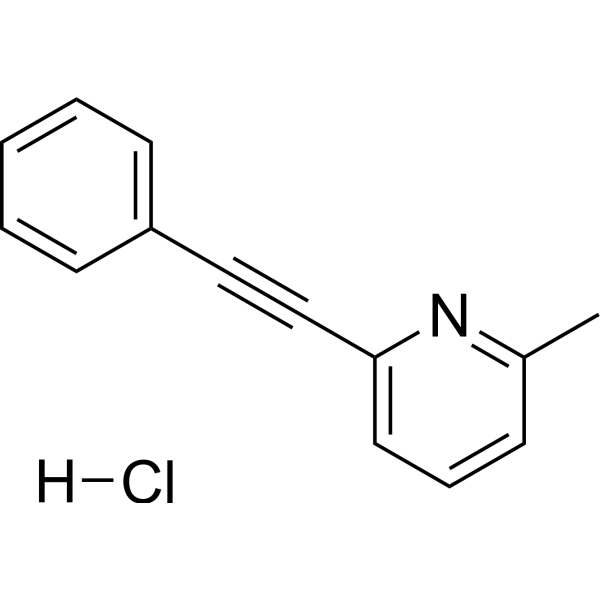
MPEP Hydrochloride is a potent, selective, noncompetitive, orally active and systemically active mGlu5 receptor antagonist, with an IC50 of 36 nM for completely inhibiting quisqualate-stimulated phosphoinositide (PI) hydrolysis. MPEP Hydrochloride has anxiolytic-or antidepressant-like effects . MPEP (Hydrochloride) is a click chemistry reagent, it contains an Alkyne group and can undergo copper-catalyzed azide-alkyne cycloaddition (CuAAc) with molecules containing Azide groups.
|
-
- HY-14609A
-
|
|
mGluR
|
Neurological Disease
|
|
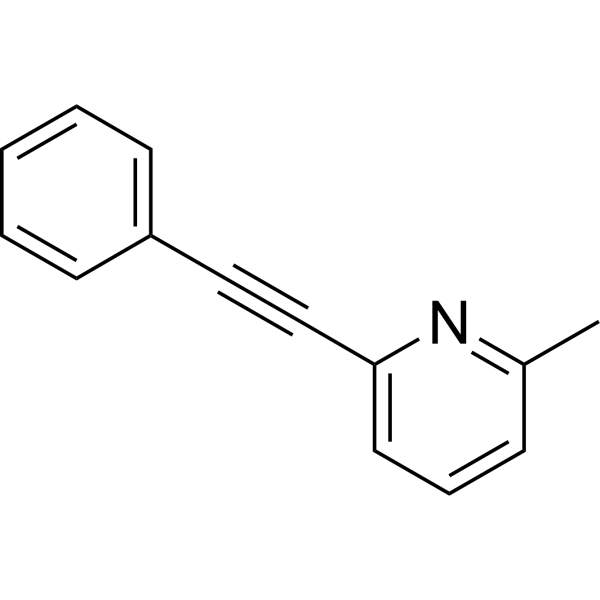
MPEP is a potent, selective, noncompetitive, orally active and systemically active mGlu5 receptor antagonist, with an IC50 of 36 nM for completely inhibiting quisqualate-stimulated phosphoinositide (PI) hydrolysis. MPEP has anxiolytic-or antidepressant-like effects . MPEP is a click chemistry reagent, it contains an Alkyne group and can undergo copper-catalyzed azide-alkyne cycloaddition (CuAAc) with molecules containing Azide groups.
|
-
- HY-107508
-
|
|
mGluR
|
Neurological Disease
|
|
VU-29 is a positive allosteric modulator of metabotropic glutamate 5 (mGlu5) receptor (EC50=9 nM and Ki=244 nM for rmGluR5). VU-29 is selective for mGluR5 relative to other mGluR subtypes (EC50: rmGluR1/rmGluR2=557 nM/1.5 μM; hmGluR4=154 nM) .
|
-
- HY-101478
-
|
|
mGluR
Apoptosis
|
Neurological Disease
Cancer
|
|
Fenobam is a selective and orally active mGluR5 antagonist (IC50=84 nM) that can penetrate the blood-brain barrier. Fenobam shows the Kd values of 54 nM and 31 nM on rat and human recombinant mGlu5 receptors, respectively. Fenobam has anxiolytic activity, inhibits self-administration behavior in mice, and induces apoptosis in cancer cells. Fenobam can be used for research on neurological diseases, cancer and drug addiction .
|
-
- HY-101478A
-
|
|
mGluR
Apoptosis
|
Neurological Disease
Cancer
|
|
Fenobam hydrate is a selective and orally active mGluR5 antagonist (IC50=84 nM) that can penetrate the blood-brain barrier. Fenobam hydrate shows the Kd values of 54 nM and 31 nM on rat and human recombinant mGlu5 receptors, respectively. Fenobam hydrate has anxiolytic activity, inhibits self-administration behavior in rat, and induces apoptosis in cancer cells. Fenobam hydrate can be used for research on neurological diseases, cancer and drug addiction .
|
-
- HY-110152
-
|
|
mGluR
|
Neurological Disease
|
|
LSN2463359 is positive allosteric modulator of metabotropic glutamate 5 (mGlu5). LSN2463359 attenuates aspects of the behavioral response to administration of the competitive NMDA receptor antagonist. LSN2463359 selectively attenuates reversal learning deficits observed in the neurodevelopmental MAM E17 model . LSN2463359 is a click chemistry reagent, it contains an Alkyne group and can undergo copper-catalyzed azide-alkyne cycloaddition (CuAAc) with molecules containing Azide groups.
|
-
- HY-103566
-
|
|
mGluR
EGFR
p38 MAPK
Apoptosis
|
Infection
Neurological Disease
Metabolic Disease
Inflammation/Immunology
Cancer
|
|
LY456236 is a selective, non-competitive and orally active antagonist of glutamate receptor 1 (mGlu1), which can inhibit phosphatidylinositol hydrolysis with an IC50 of 0.145 μM. LY456236 can also inhibit EGFR, with an IC50 of 0.918 μM. LY456236 blocks cell proliferation by inhibiting the MAPK pathway, reversing the anti-apoptotic effect of DHPG (HY-12598A). LY456236 can be used in epilepsy research .
|
-
- HY-14609R
-
|
|
mGluR
|
Neurological Disease
|
|
MPEP (Hydrochloride) (Standard) is the analytical standard of MPEP (Hydrochloride). This product is intended for research and analytical applications. MPEP Hydrochloride is a potent, selective, noncompetitive, orally active and systemically active mGlu5 receptor antagonist, with an IC50 of 36 nM for completely inhibiting quisqualate-stimulated phosphoinositide (PI) hydrolysis. MPEP Hydrochloride has anxiolytic-or antidepressant-like effects . MPEP (Hydrochloride) is a click chemistry reagent, it contains an Alkyne group and can undergo copper-catalyzed azide-alkyne cycloaddition (CuAAc) with molecules containing Azide groups.
|
-
- HY-101478R
-
|
|
Reference Standards
mGluR
Apoptosis
|
Neurological Disease
Cancer
|
|
Fenobam (Standard) is the analytical standard of Fenobam. This product is intended for research and analytical applications. Fenobam is a selective and orally active mGluR5 antagonist (IC50=84 nM) that can penetrate the blood-brain barrier. Fenobam shows the Kd values of 54 nM and 31 nM on rat and human recombinant mGlu5 receptors, respectively. Fenobam has anxiolytic activity, inhibits self-administration behavior in mice, and induces apoptosis in cancer cells. Fenobam can be used for research on neurological diseases, cancer and drug addiction .
|
-
- HY-103566A
-
|
|
mGluR
EGFR
p38 MAPK
Apoptosis
|
Neurological Disease
|
|
LY456236 free base is a selective, non-competitive and orally active antagonist of glutamate receptor 1 (mGlu1), which can inhibit phosphatidylinositol hydrolysis with an IC50 of 0.145 μM. LY456236 free base can also inhibit EGFR, with an IC50 of 0.918 μM. LY456236 free base blocks cell proliferation by inhibiting the MAPK pathway, reversing the anti-apoptotic effect of DHPG (HY-12598A). LY456236 free base can be used in epilepsy research .
|
-
- HY-18654A
-
|
|
mGluR
|
Neurological Disease
|
|
ADX88178 TFA is an orally active, blood-brain barrier-penetrant, selective positive allosteric modulator of mGluR4, with an EC50 of 3.5 nM against hmGluR4. ADX88178 TFA modulates mGlu4 activity, enhances glutamate-mediated receptor activation, and increases the apparent affinity of glutamate for the receptor. ADX88178 TFA reverses haloperidol-induced catalepsy, potentiates the effects of levodopa (L-DOPA) and quinpirole, but fails to alleviate established abnormal involuntary movements, does not exacerbate L-DOPA-induced dyskinesia, and does not affect forelimb akinesia when administered alone. ADX88178 TFA can be used in research related to L-DOPA-induced dyskinesia and Parkinson's disease .
|
-
- HY-107508R
-
|
|
Reference Standards
mGluR
|
Neurological Disease
|
|
VU-29 (Standard) is the analytical standard of VU-29 (HY-107508). This product is intended for research and analytical applications. VU-29 is a positive allosteric modulator of metabotropic glutamate 5 (mGlu5) receptor (EC50=9 nM and Ki=244 nM for rmGluR5). VU-29 is selective for mGluR5 relative to other mGluR subtypes (EC50: rmGluR1/rmGluR2=557 nM/1.5 μM; hmGluR4=154 nM) .
|
-
- HY-103566R
-
|
|
Reference Standards
mGluR
EGFR
p38 MAPK
Apoptosis
|
Infection
Neurological Disease
Metabolic Disease
Inflammation/Immunology
Cancer
|
|
LY456236 (Standard) is the analytical standard of LY456236 (HY-103566). This product is intended for research and analytical applications. LY456236 is a selective, non-competitive and orally active antagonist of glutamate receptor 1 (mGlu1), which can inhibit phosphatidylinositol hydrolysis with an IC50 of 0.145 μM. LY456236 can also inhibit EGFR, with an IC50 of 0.918 μM. LY456236 has anticonvulsant effects and blocks cell proliferation by inhibiting the MAPK pathway, reversing the anti-apoptotic effect of DHPG (HY-12598A). LY456236 can be used in epilepsy research .
|
-
Your information is safe with us. * Required Fields.
Inquiry Information
- Product Name:
- Cat. No.:
- Quantity:
- MCE Japan Authorized Agent:

