


Search Result
Results for "
matrix material
" in MedChemExpress (MCE) Product Catalog:
15
Biochemical Assay Reagents
| Cat. No. |
Product Name |
Target |
Research Areas |
Chemical Structure |
-
- HY-Y1365
-
|
|
Environmental Pollutants
Biochemical Assay Reagents
|
Metabolic Disease
Cancer
|
|
Gelatins is a non-toxic, non carcinogenic, biodegradable, and non irritating natural polymer derived from partial hydrolysis of collagen. Due to its strong liquid absorption and swelling ability, Gelatins has excellent hemostatic properties and can be used as a matrix material for the reduction, growth, and stability of metal nanoparticles. Gelatins can also be used for tumor cell culture and tumor therapy .
|
-
-
- HY-Y1310A
-
|
|
Environmental Pollutants
Biochemical Assay Reagents
|
Others
|
|
Sodium alginate is an anionic straight chain polysaccharide. Sodium alginate can be obtained from different species of algae. Sodium alginate has different properties, such as pH-sensitivity, nontoxicity, nonimmunogenicity. Sodium alginate has weak gelation, viscosity, and film-forming properties. Sodium alginate can be utilized to prepare gels and film materials for food preservation. Sodium alginate is a versatile functional biomaterial for viscosity enhancement, stabilizer, matrixing agent, encapsulation polymer, bioadhesive and film former .
|
-
-
- HY-W110542J
-
|
PEGDA (MW 700)
|
Biochemical Assay Reagents
|
Others
|
|
Poly(ethylene glycol) diacrylate (PEGDA) (MW 700) is a versatile polymer material that is widely used as a building material for hydrogel scaffolds, especially in the fields of tissue engineering and regenerative medicine. Poly(ethylene glycol) diacrylate (MW 700) mimics the extracellular matrix (ECM), providing support and growth space for cells .
|
-
-
- HY-W250313
-
|
PLA
|
Biochemical Assay Reagents
|
Others
Cancer
|
|
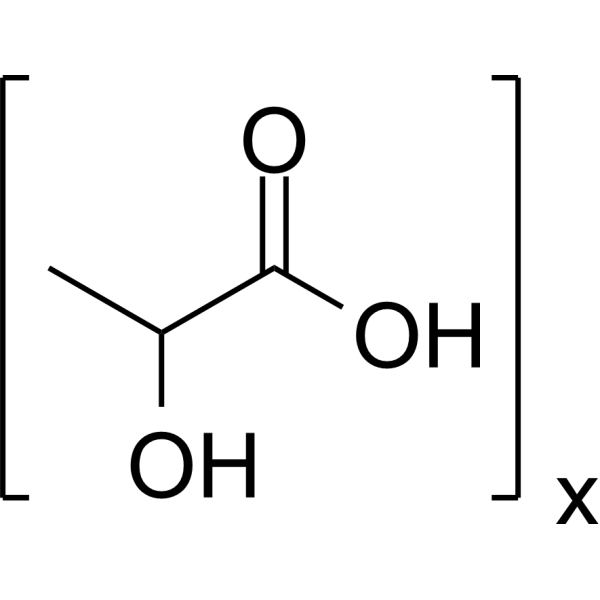
Polylactic acid (PLA) is a biodegradable and biocompatible polymer widely used as a carrier for drug delivery systems and a structural material for tissue engineering and medical implants. Polylactic acid acts as a controlled release matrix through the hydrolysis mechanism of ester bonds, gradually releasing the encapsulated drug and metabolizing to non-toxic lactic acid. Polylactic acid has adjustable degradation rate, mechanical properties and the ability to composite with other polymers, and can be used in local or systemic drug delivery, orthopedic fixation devices and 3D printed bone regeneration scaffolds .
|
-
-
- HY-W096178B
-
|
|
Biochemical Assay Reagents
|
Others
|
|
Silica sand, 1-2 mm is an inorganic, inert, and biocompatible (under certain conditions) solid matrix composed of high-purity silica particles. Silica sand, 1-2 mm is primarily used as a physical functional material in biochemical research .
|
-
-
- HY-B2221C
-
|
Carboxymethyl cellulose CM-32; CM-32
|
Environmental Pollutants
Biochemical Assay Reagents
|
Others
|
|
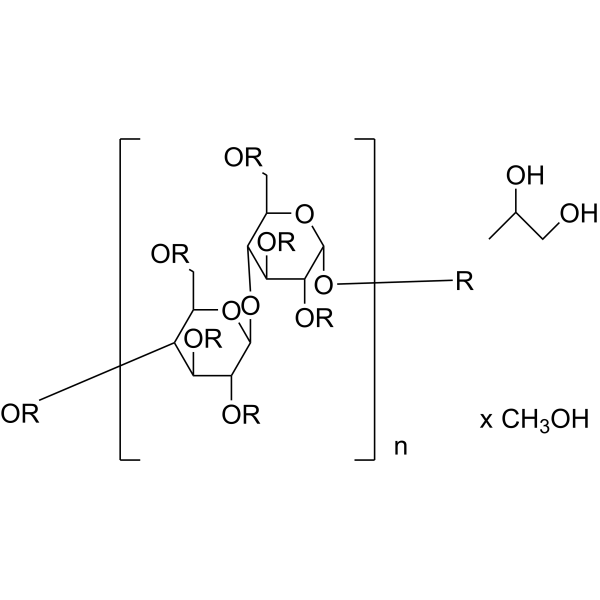
CM Cellulose CM-32 (Carboxymethyl cellulose) is a cellulose derivative. CM Cellulose CM-32 has a wide range of applications in the biomedical field, including tissue engineering, wound dressing, absorbent nonwovens, fabrication of 3D-scaffolds for biocompatible implants, artificial organs or mimics of extracellular polymeric matrix and diagnosis of various diseases. CM Cellulose CM-32 can decrease osteoclasts formation. CM Cellulose CM-32 can be used as a biological material or organic compound for life science related research .
|
-
-
- HY-A0104K
-
|
Hypromellose (Type II,Viscosity:3mPa.s); (Hydroxypropyl)methyl cellulose (Type II,Viscosity:3mPa.s); Celacol HPM 5000 (Type II,Viscosity:3mPa.s)
|
Environmental Pollutants
Biochemical Assay Reagents
|
Others
|
|
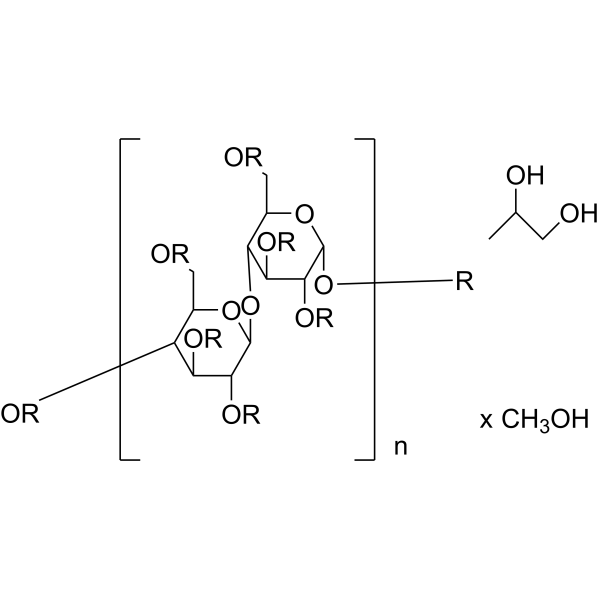
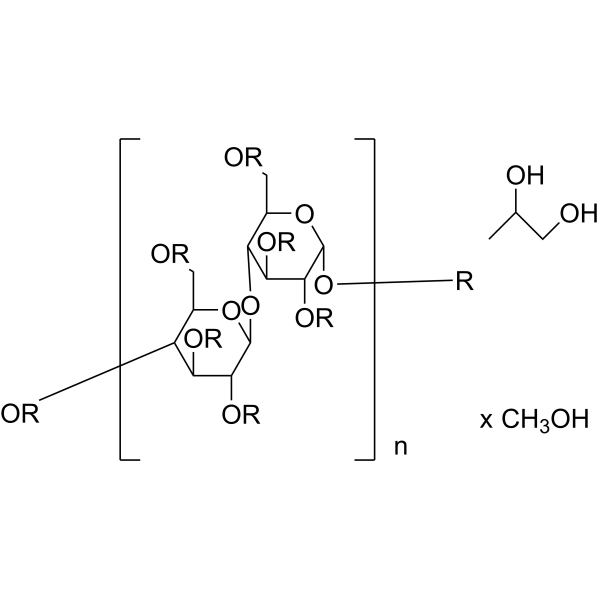
HPMC (Type II, Viscosity: 3 mPa.s) is a nonionic polymer prepared via synthetic modification of cellulose. As a hydrophilic matrix material, HPMC prolongs drug release through non-Fickian diffusion, which includes the diffusion of drugs in the hydrated matrix and the polymer relaxation process .
|
-
-
- HY-A0104B
-
|
Hypromellose (Type I,Viscosity:100mPa.s); (Hydroxypropyl)methyl cellulose (Type I,Viscosity:100mPa.s); Celacol HPM 5000 (Type I,Viscosity:100mPa.s)
|
Environmental Pollutants
Biochemical Assay Reagents
|
Others
|
|
HPMC (Type I, Viscosity: 100 mPa·s) is a nonionic polymer obtained via synthetic modification of cellulose. As a hydrophilic matrix material, HPMC prolongs drug release through non-Fickian diffusion, including the diffusion of drugs within the hydrated matrix and the polymer relaxation process .
|
-
-
- HY-A0104E
-
|
Hypromellose (Type II,Viscosity:100mPa.s); (Hydroxypropyl)methyl cellulose (Type II,Viscosity:100mPa.s); Celacol HPM 5000 (Type II,Viscosity:100mPa.s)
|
Environmental Pollutants
Biochemical Assay Reagents
|
Others
|
|
HPMC (Hypromellose; (Hydroxypropyl)methyl cellulose; Celacol HPM 5000) (Type II,Viscosity:100mPa.s) is a non-ionic polymer obtained via synthetic modification of cellulose. As a hydrophilic matrix material, HPMC prolongs drug release through non-Fickian diffusion, including the diffusion of drugs in the hydrated matrix and the polymer relaxation process .
|
-
-
- HY-101530B
-
|
PEG 40 stearate
|
Biochemical Assay Reagents
|
Others
|
|
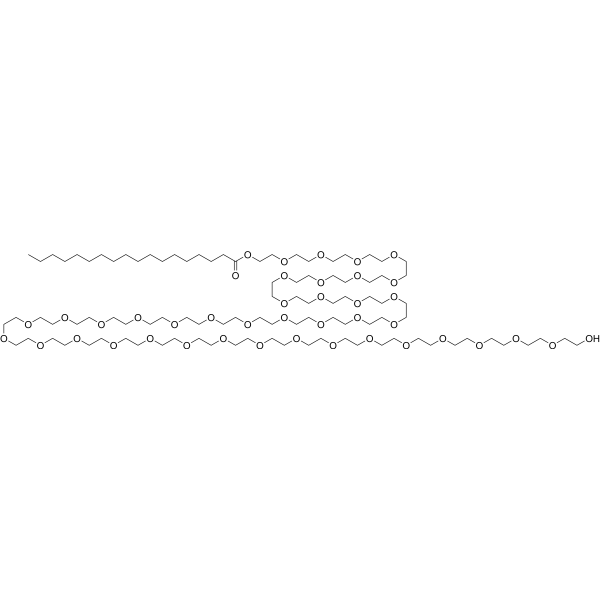
Polyoxyl 40 stearate (PEG 40 stearate) is a nonionic surfactant formed by the esterification of stearic acid with polyethylene glycol (PEG) containing approximately 40 ethoxy units, it is widely used in pharmaceutical preparations, nanodrug carriers, emulsification systems and biomedical materials. Polyoxyl 40 stearate can serve as a matrix component of solid lipid nanoparticles to achieve controlled release of encapsulated antifungal drugs; it can also act as a base material for solid lipid nanoparticles for vaginal administration, and polymerizable groups can be introduced via modification with acryloyl chloride .
|
-
-
- HY-A0104I
-
|
Hypromellose (Type II,Viscosity:100000mPa.s); (Hydroxypropyl)methyl cellulose (Type II,Viscosity:100000mPa.s); Celacol HPM 5000 (Type II,Viscosity:100000mPa.s)
|
Biochemical Assay Reagents
|
Others
|
|
HPMC (Hypromellose; (Hydroxypropyl)methyl cellulose; Celacol HPM 5000) (Type II,Viscosity:100000mPa.s) is a non-ionic polymer obtained via synthetic modification of cellulose. As a hydrophilic matrix material, HPMC prolongs drug release through non-Fickian diffusion, including the diffusion of drugs in the hydrated matrix and the polymer relaxation process .
|
-
-
- HY-159621
-
|
ES5
|
Annexin A
|
Endocrinology
|
|
Endosidine 5 (ES5) inhibits EPS (extracellular polymeric substance) secretion and cell wall expansion. Endosidine 5 alters secretion of ECM (extracellular matrix) material in Penium margaritaceum by affecting the Golgi apparatus. Endosidine 5 interferes with recycling endosomes through Annexin A6, thereby promoting the release and expression of mRNA into the cytoplasm .
|
-
-
- HY-W019901B
-
|
Gypsum ustum (97%)
|
Environmental Pollutants
Biochemical Assay Reagents
RUNX
|
Metabolic Disease
|
|
Anhydrous calcium sulfate (97%) serves as an oil-based drilling fluid additive and an osteogenic material. Anhydrous calcium sulfate (97%) increases the plastic viscosity, yield point, apparent viscosity and gel strength of oil-based drilling fluids. Anhydrous calcium sulfate (97%) upregulates the expression of bone-related genes FOSL1, RUNX2 and SPP1. Anhydrous calcium sulfate (97%) significantly affects the behavior of dental pulp stem cells, enhancing their proliferation, differentiation and matrix deposition .
|
-
-
- HY-158220
-
|
HAMA (MW 400 kDa)
|
Biochemical Assay Reagents
|
Others
|
|
Hyaluronic acid Methacryloyl (HAMA) is methacrylated hyaluronic acid that is biocompatible. Hyaluronic acid Methacryloyl is also used as a 3D printing hydrogel ink, which has the characteristics of fast photosensitive response, fast gelation speed and stable hydrogel performance. Hyaluronic acid Methacryloyl can quickly induce gelation with lithium phenyl-2,4,6-trimethylbenzoylphosphinate (LAP) under UV irradiation. The combination of Hyaluronic acid Methacryloyl and tissue-specific extracellular matrix (ECM) materials (such as pancreatic extracellular matrix (pECM)) will become an important source material for organoid culture .
|
-
-
- HY-158220A
-
|
HAMA (MW 150 kDa)
|
Biochemical Assay Reagents
|
Others
|
|
Hyaluronic acid Methacryloyl (HAMA) MW 150 kDa is methacrylated hyaluronic acid that is biocompatible. Hyaluronic acid Methacryloyl is also used as a 3D printing hydrogel ink, which has the characteristics of fast photosensitive response, fast gelation speed and stable hydrogel performance. Hyaluronic acid Methacryloyl can quickly induce gelation with lithium phenyl-2,4,6-trimethylbenzoylphosphinate (LAP) under UV irradiation. The combination of Hyaluronic acid Methacryloyl and tissue-specific extracellular matrix (ECM) materials (such as pancreatic extracellular matrix (pECM)) will become an important source material for organoid culture .
|
-
-
- HY-46846
-
|
|
Environmental Pollutants
Biochemical Assay Reagents
|
Others
|
|
Styrene-divinylbenzene sulfonated copolymer is a cation exchange resin prepared from sulfonic acid group-containing microporous styrene/divinylbenzene (DVB) copolymer. Styrene-divinylbenzene sulfonated copolymer serves as the core matrix material for most bilirubin adsorbents. It also acts as a hydrophilic cell immobilization carrier, whose porous structure provides an ideal environment for microbial growth and biochemical reactions .
|
-
-
- HY-W096178C
-
|
|
Biochemical Assay Reagents
|
Others
|
|
Silica sand, 2-7 mm is an inorganic, inert, and biocompatible (under certain conditions) solid matrix composed of high-purity silica particles. Silica sand, 2-7 mm is primarily used as a physical functional material in biochemical research .
|
-
-
- HY-Y0425
-
|
|
Drug Intermediate
Biochemical Assay Reagents
|
Others
|
|
Terephthalaldehyde is a crosslinking agent. Terephthalaldehyde forms a crosslinked structure inside the gelatin matrix by forming Schiff base imines with the amino groups of gelatin, thereby constructing a three-dimensional network. Terephthalaldehyde improves the hydrophobicity of the gelatin matrix, delays water vapor penetration and enhances the liquid water resistance of gelatin films. Terephthalaldehyde can be used as a crosslinking agent to prepare crosslinked chitosan hydrogel (CAAT) via ultrasound-induced synthesis. Terephthalaldehyde helps CAAT hydrogels selectively adsorb anionic dyes from aqueous media, including multi-component systems containing cationic dyes. Terephthalaldehyde serves as a starting material for the synthesis of bis-heterocyclic compounds (including bis-thiazole and bis-triazolopyrimidine compounds) .
|
-
-
- HY-W009048
-
|
DCH18C6; Perhydrodibenzo-18-crown-6
|
Biochemical Assay Reagents
|
Others
|
|
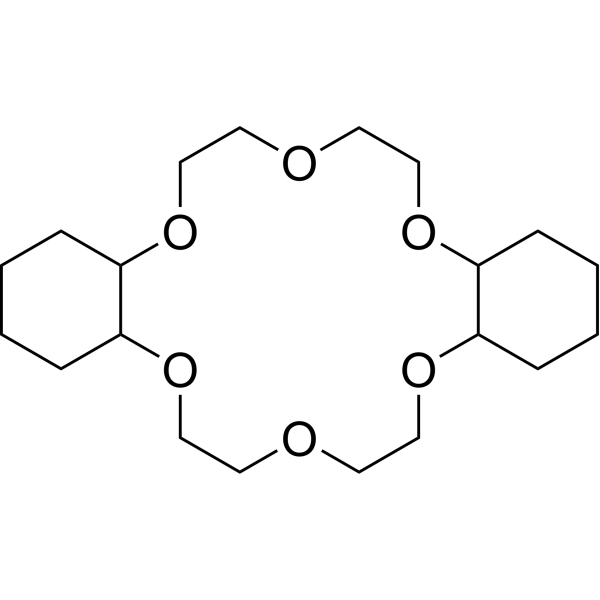
Dicyclohexano-18-crown-6-ether (DCH18C6) is an excellent strontium chelating agent. Dicyclohexano-18-crown-6-ether exhibits favorable extraction capacity and selectivity toward Sr (II). After chemical modification, Dicyclohexano-18-crown-6-ether is covalently bonded to an organosilicon matrix via co-condensation. DCH18C6-functionalized organosilicon materials are expected to be applied to the extraction and separation of strontium from radioactive waste liquid .
|
-
-
- HY-27979
-
|
|
Biochemical Assay Reagents
|
Others
|
|
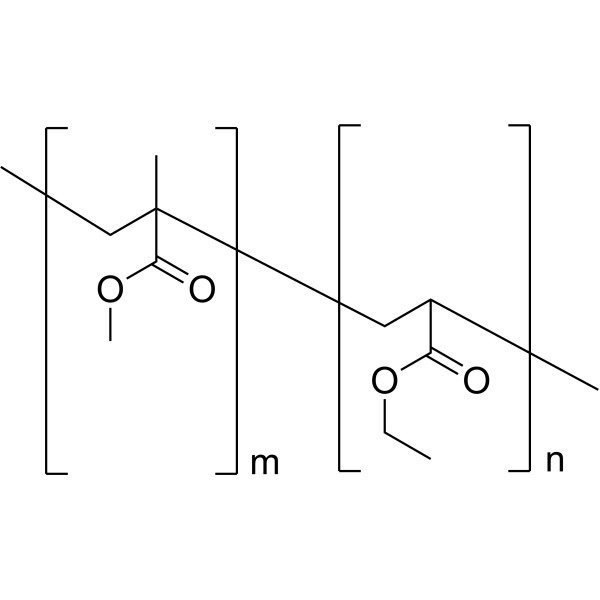
Ethyl acrylate-methyl methacrylate copolymer can be used as an excipient, such as sustained-release coating materials, matrix sustained-release tablet binders and retarders. Pharmaceutical excipients, or pharmaceutical auxiliaries, refer to other chemical substances used in the pharmaceutical process other than pharmaceutical ingredients. Pharmaceutical excipients generally refer to inactive ingredients in pharmaceutical preparations, which can improve the stability, solubility and processability of pharmaceutical preparations. Pharmaceutical excipients also affect the absorption, distribution, metabolism, and elimination (ADME) processes of co-administered drugs .
|
-
-
- HY-W583729
-
|
|
Biochemical Assay Reagents
|
Others
|
|
DL-Poly (lactic acid) is a biodegradable poly (α-hydroxy acid) matrix and a coating material for controlled drug release. DL-Poly (lactic acid) is classified as a drug release retardant, which degrades into natural lactic acid monomers, an intermediate product of carbohydrate metabolism, enabling complete drug delivery that lasts for several weeks. Its drug release rate is affected by the pH of the surrounding environment .
|
-
| Cat. No. |
Product Name |
Type |
-
- HY-Y1365
-
|
|
Biochemical Assay Reagents
|
|
Gelatins is a non-toxic, non carcinogenic, biodegradable, and non irritating natural polymer derived from partial hydrolysis of collagen. Due to its strong liquid absorption and swelling ability, Gelatins has excellent hemostatic properties and can be used as a matrix material for the reduction, growth, and stability of metal nanoparticles. Gelatins can also be used for tumor cell culture and tumor therapy .
|
-
- HY-Y1310A
-
|
|
Biochemical Assay Reagents
|
|
Sodium alginate is an anionic straight chain polysaccharide. Sodium alginate can be obtained from different species of algae. Sodium alginate has different properties, such as pH-sensitivity, nontoxicity, nonimmunogenicity. Sodium alginate has weak gelation, viscosity, and film-forming properties. Sodium alginate can be utilized to prepare gels and film materials for food preservation. Sodium alginate is a versatile functional biomaterial for viscosity enhancement, stabilizer, matrixing agent, encapsulation polymer, bioadhesive and film former .
|
-
- HY-W110542J
-
|
PEGDA (MW 700)
|
Biochemical Assay Reagents
|
|
Poly(ethylene glycol) diacrylate (PEGDA) (MW 700) is a versatile polymer material that is widely used as a building material for hydrogel scaffolds, especially in the fields of tissue engineering and regenerative medicine. Poly(ethylene glycol) diacrylate (MW 700) mimics the extracellular matrix (ECM), providing support and growth space for cells .
|
-
- HY-W250313
-
|
PLA
|
Biochemical Assay Reagents
|
|
Polylactic acid (PLA) is a biodegradable and biocompatible polymer widely used as a carrier for drug delivery systems and a structural material for tissue engineering and medical implants. Polylactic acid acts as a controlled release matrix through the hydrolysis mechanism of ester bonds, gradually releasing the encapsulated drug and metabolizing to non-toxic lactic acid. Polylactic acid has adjustable degradation rate, mechanical properties and the ability to composite with other polymers, and can be used in local or systemic drug delivery, orthopedic fixation devices and 3D printed bone regeneration scaffolds .
|
-
- HY-W096178B
-
|
|
Biochemical Assay Reagents
|
|
Silica sand, 1-2 mm is an inorganic, inert, and biocompatible (under certain conditions) solid matrix composed of high-purity silica particles. Silica sand, 1-2 mm is primarily used as a physical functional material in biochemical research .
|
-
- HY-B2221C
-
|
Carboxymethyl cellulose CM-32; CM-32
|
Biochemical Assay Reagents
|
|
CM Cellulose CM-32 (Carboxymethyl cellulose) is a cellulose derivative. CM Cellulose CM-32 has a wide range of applications in the biomedical field, including tissue engineering, wound dressing, absorbent nonwovens, fabrication of 3D-scaffolds for biocompatible implants, artificial organs or mimics of extracellular polymeric matrix and diagnosis of various diseases. CM Cellulose CM-32 can decrease osteoclasts formation. CM Cellulose CM-32 can be used as a biological material or organic compound for life science related research .
|
-
- HY-A0104B
-
|
Hypromellose (Type I,Viscosity:100mPa.s); (Hydroxypropyl)methyl cellulose (Type I,Viscosity:100mPa.s); Celacol HPM 5000 (Type I,Viscosity:100mPa.s)
|
Biochemical Assay Reagents
|
|
HPMC (Type I, Viscosity: 100 mPa·s) is a nonionic polymer obtained via synthetic modification of cellulose. As a hydrophilic matrix material, HPMC prolongs drug release through non-Fickian diffusion, including the diffusion of drugs within the hydrated matrix and the polymer relaxation process .
|
-
- HY-A0104E
-
|
Hypromellose (Type II,Viscosity:100mPa.s); (Hydroxypropyl)methyl cellulose (Type II,Viscosity:100mPa.s); Celacol HPM 5000 (Type II,Viscosity:100mPa.s)
|
Biochemical Assay Reagents
|
|
HPMC (Hypromellose; (Hydroxypropyl)methyl cellulose; Celacol HPM 5000) (Type II,Viscosity:100mPa.s) is a non-ionic polymer obtained via synthetic modification of cellulose. As a hydrophilic matrix material, HPMC prolongs drug release through non-Fickian diffusion, including the diffusion of drugs in the hydrated matrix and the polymer relaxation process .
|
-
- HY-A0104I
-
|
Hypromellose (Type II,Viscosity:100000mPa.s); (Hydroxypropyl)methyl cellulose (Type II,Viscosity:100000mPa.s); Celacol HPM 5000 (Type II,Viscosity:100000mPa.s)
|
Biochemical Assay Reagents
|
|
HPMC (Hypromellose; (Hydroxypropyl)methyl cellulose; Celacol HPM 5000) (Type II,Viscosity:100000mPa.s) is a non-ionic polymer obtained via synthetic modification of cellulose. As a hydrophilic matrix material, HPMC prolongs drug release through non-Fickian diffusion, including the diffusion of drugs in the hydrated matrix and the polymer relaxation process .
|
-
- HY-W019901B
-
|
Gypsum ustum (97%)
|
Biochemical Assay Reagents
|
|
Anhydrous calcium sulfate (97%) serves as an oil-based drilling fluid additive and an osteogenic material. Anhydrous calcium sulfate (97%) increases the plastic viscosity, yield point, apparent viscosity and gel strength of oil-based drilling fluids. Anhydrous calcium sulfate (97%) upregulates the expression of bone-related genes FOSL1, RUNX2 and SPP1. Anhydrous calcium sulfate (97%) significantly affects the behavior of dental pulp stem cells, enhancing their proliferation, differentiation and matrix deposition .
|
-
- HY-158220
-
|
HAMA (MW 400 kDa)
|
Biochemical Assay Reagents
|
|
Hyaluronic acid Methacryloyl (HAMA) is methacrylated hyaluronic acid that is biocompatible. Hyaluronic acid Methacryloyl is also used as a 3D printing hydrogel ink, which has the characteristics of fast photosensitive response, fast gelation speed and stable hydrogel performance. Hyaluronic acid Methacryloyl can quickly induce gelation with lithium phenyl-2,4,6-trimethylbenzoylphosphinate (LAP) under UV irradiation. The combination of Hyaluronic acid Methacryloyl and tissue-specific extracellular matrix (ECM) materials (such as pancreatic extracellular matrix (pECM)) will become an important source material for organoid culture .
|
-
- HY-158220A
-
|
HAMA (MW 150 kDa)
|
Biochemical Assay Reagents
|
|
Hyaluronic acid Methacryloyl (HAMA) MW 150 kDa is methacrylated hyaluronic acid that is biocompatible. Hyaluronic acid Methacryloyl is also used as a 3D printing hydrogel ink, which has the characteristics of fast photosensitive response, fast gelation speed and stable hydrogel performance. Hyaluronic acid Methacryloyl can quickly induce gelation with lithium phenyl-2,4,6-trimethylbenzoylphosphinate (LAP) under UV irradiation. The combination of Hyaluronic acid Methacryloyl and tissue-specific extracellular matrix (ECM) materials (such as pancreatic extracellular matrix (pECM)) will become an important source material for organoid culture .
|
-
- HY-W096178C
-
|
|
Biochemical Assay Reagents
|
|
Silica sand, 2-7 mm is an inorganic, inert, and biocompatible (under certain conditions) solid matrix composed of high-purity silica particles. Silica sand, 2-7 mm is primarily used as a physical functional material in biochemical research .
|
-
- HY-Y0425
-
|
|
Biochemical Assay Reagents
|
|
Terephthalaldehyde is a crosslinking agent. Terephthalaldehyde forms a crosslinked structure inside the gelatin matrix by forming Schiff base imines with the amino groups of gelatin, thereby constructing a three-dimensional network. Terephthalaldehyde improves the hydrophobicity of the gelatin matrix, delays water vapor penetration and enhances the liquid water resistance of gelatin films. Terephthalaldehyde can be used as a crosslinking agent to prepare crosslinked chitosan hydrogel (CAAT) via ultrasound-induced synthesis. Terephthalaldehyde helps CAAT hydrogels selectively adsorb anionic dyes from aqueous media, including multi-component systems containing cationic dyes. Terephthalaldehyde serves as a starting material for the synthesis of bis-heterocyclic compounds (including bis-thiazole and bis-triazolopyrimidine compounds) .
|
-
- HY-W009048
-
|
DCH18C6; Perhydrodibenzo-18-crown-6
|
Biochemical Assay Reagents
|
|
Dicyclohexano-18-crown-6-ether (DCH18C6) is an excellent strontium chelating agent. Dicyclohexano-18-crown-6-ether exhibits favorable extraction capacity and selectivity toward Sr (II). After chemical modification, Dicyclohexano-18-crown-6-ether is covalently bonded to an organosilicon matrix via co-condensation. DCH18C6-functionalized organosilicon materials are expected to be applied to the extraction and separation of strontium from radioactive waste liquid .
|
| Cat. No. |
Product Name |
|
Classification |
-
- HY-Y1365
-
|
|
|
Emulsifiers
Disintegrants
|
|
Gelatins is a non-toxic, non carcinogenic, biodegradable, and non irritating natural polymer derived from partial hydrolysis of collagen. Due to its strong liquid absorption and swelling ability, Gelatins has excellent hemostatic properties and can be used as a matrix material for the reduction, growth, and stability of metal nanoparticles. Gelatins can also be used for tumor cell culture and tumor therapy .
|
-
- HY-101530B
-
|
PEG 40 stearate
|
|
Emulsifiers
Bases
Solubilizing Agents
|
|
Polyoxyl 40 stearate (PEG 40 stearate) is a nonionic surfactant formed by the esterification of stearic acid with polyethylene glycol (PEG) containing approximately 40 ethoxy units, it is widely used in pharmaceutical preparations, nanodrug carriers, emulsification systems and biomedical materials. Polyoxyl 40 stearate can serve as a matrix component of solid lipid nanoparticles to achieve controlled release of encapsulated antifungal drugs; it can also act as a base material for solid lipid nanoparticles for vaginal administration, and polymerizable groups can be introduced via modification with acryloyl chloride .
|
Your information is safe with us. * Required Fields.
Inquiry Information
- Product Name:
- Cat. No.:
- Quantity:
- MCE Japan Authorized Agent:

