Search Result
Results for "
molecular dynamics
" in MedChemExpress (MCE) Product Catalog:
1
Biochemical Assay Reagents
| Cat. No. |
Product Name |
Target |
Research Areas |
Chemical Structure |
-
- HY-W007729
-
|
|
Biochemical Assay Reagents
|
Others
|
|
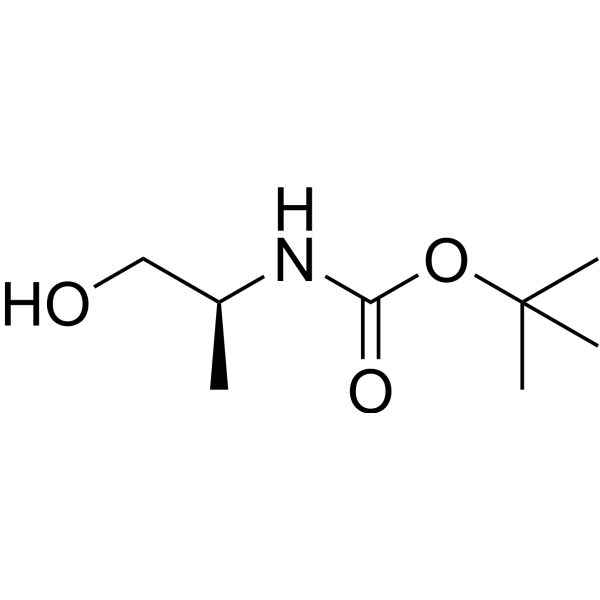
Boc-L-Alaninol is a Boc-protected chiral amino alcohol. Boc-L-Alaninol can be used in the synthesis of optically active bipyridine-containing polymers .
|
-
-
- HY-163109
-
|
|
Carbonic Anhydrase
|
Infection
|
|
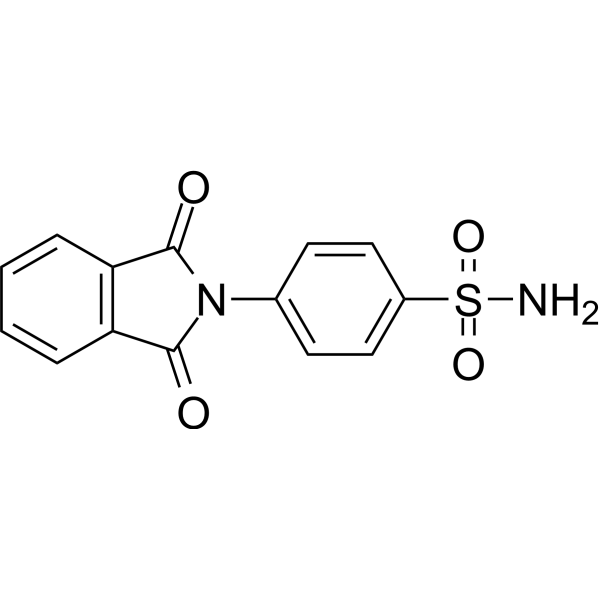
Carbonic anhydrase inhibitor 16 (compound 1) is a dengue protease inhibitor with inhibitory activity against carbonic anhydrase hCA I and hCA II (Ki: 28.5 nM, 2.2 nM) .
|
-
-
- HY-169056
-
|
|
Reactive Oxygen Species (ROS)
|
Cancer
|
|
SLC7A11-IN-2 (Compound 1) is an SLC7A11/xCT inhibitor. SLC7A11-IN-2 induces cell death in HeLa cells by lowering intracellular glutathione levels and increasing oxidative stress, thereby disrupting the oxidative balance within the cells, with an IC50 value of 10.23 μM. Molecular dynamics simulation analysis indicates that SLC7A11-IN-2 has a stronger binding affinity to SLC7A11 compared to Erastin (HY-15763). SLC7A11-IN-2 can be utilized in research within the field of cervical cancer .
|
-
-
- HY-P10424
-
|
|
PD-1/PD-L1
|
Cancer
|
|
OPBP-1 is a D-peptide obtained by phage display screening, molecular docking and molecular dynamics simulation. OPBP-1 has high stability and strong antitumor and oral activity. OPBP-1 can selectively bind PD-L1 protein, significantly block the interaction between PD-1 and PD-L1, and this blocking effect helps to restore and improve the function of T lymphocytes and reduce the proportion of bone marrow derived suppressor cells (MDSCs) to combat tumor-induced immune escape. OPBP-1 can be used in cancer immunotherapy research .
|
-
-
- HY-P10053
-
|
|
Phospholipase
|
Metabolic Disease
|
|
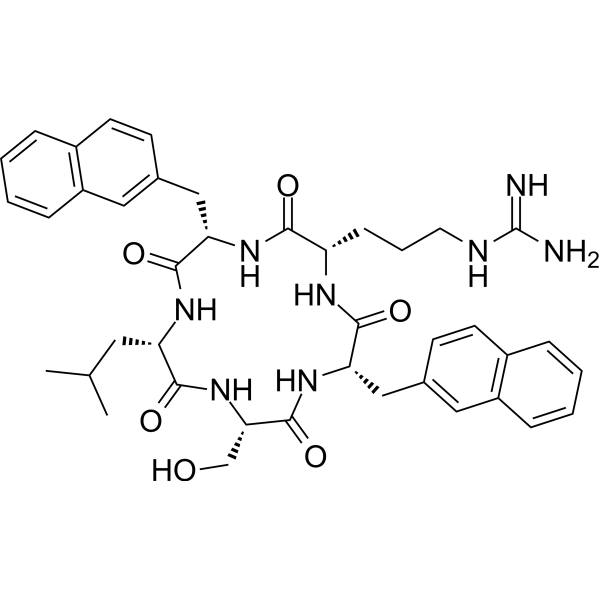
sPLA2-IIA Inhibitor is a cyclic pentapeptide analog of FLSYK (cyclic 2-Nal-Leu-Ser-2-Nal-Arg (c2)), that binds to hGIIA (human IIA phospholipase A2) and inhibits its hydrolytic ability. sPLA2 is a member of the esterase superfamily that catalyzes the hydrolysis of the ester bond at the sn-2 position of glycerophospholipids, releasing free fatty acids such as arachidonic acid and lysophospholipids .
|
-
-
- HY-153338
-
|
|
DNA/RNA Synthesis
Apoptosis
|
Cancer
|
|
C791-0064 is a RAD52 inhibitor. C791-0064 specifically binds to RAD52 and disrupts its single-strand annealing activity. C791-0064 specifically inhibits the proliferation of cancer cells with BRCA2 deficiency, inducing DNA damage and apoptosis (apoptosis). C791-0064 can be used for the study of BRCA mutation-related cancers (such as breast cancer and ovarian cancer) .
|
-
-
- HY-179023
-
|
|
CDK
Apoptosis
Reactive Oxygen Species (ROS)
Caspase
Bcl-2 Family
c-Myc
IAP
|
Cancer
|
|
CDK9-IN-45 (Compound B11) is a highly selective CDK9 inhibitor with IC50 values for CDK9 and CDK1 of 7.13 and 489.5 nM respectively. CDK9-IN-45 exhibits a potent inhibitory effect on colorectal cancer cells. CDK9-IN-45 induces cell apoptosis and leads to significant accumulation of ROS. CDK9-IN-45 activates Caspase-3, downregulates Mcl-1, XIAP, and c-Myc. CDK9-IN-45 can be used for research on colorectal cancer .
|
-
-
- HY-Y0661
-
|
|
Biochemical Assay Reagents
|
Others
|
|
4-Methylbenzyl cyanide is an organic chemical probe used to study intramolecular rotation properties. 4-Methylbenzyl cyanide is promising for research of NMR spectroscopy and physical chemistry research on molecular dynamics .
|
-
-
- HY-59024
-
|
|
Drug Intermediate
|
Infection
Cancer
|
|
δ-Carboline is a nitrogen-containing heterocyclic compound, and its derivatives all exhibit anti-cancer and antibacterial activities .
|
-
-
- HY-178948
-
|
|
HDAC
|
Cancer
|
HDAC10-IN-3 (Compound 2a) is a potent HDAC10 inhibitor with an IC50s of 0.41, 37, 350 and 4500 nM against HDAC10, HDAC6, HDAC8 and HDAC1. HDAC10-IN-3 exhibits moderate cytotoxicity in KB and SK-OV-3 cells, but does not show significant cytotoxicity against most cancer cell lines. HDAC10-IN-3 can be used for the study of cancers .
|
-
-
- HY-176744
-
|
|
EGFR
Apoptosis
|
Cancer
|
|
HER2-IN-22 is a potent and selective HER2 inhibitor with an IC50 of 215 μM. HER2-IN-22 possesses killing activity against various tumor cells and can induce cell apoptosis. HER2-IN-22 significantly inhibits tumor growth. HER2-IN-22 can be used in the study for tumors such as HER2+ breast cancer .
|
-
-
- HY-P1704
-
|
11-Demethylcyclosporin A
|
Biochemical Assay Reagents
|
Infection
|
|
Cyclosporin E (11-Demethylcyclosporin A) is a cyclic oligopeptide that can be isolated from fungi such as TTrichoderma polysporum and other imperfect fungi. Cyclosporin E belongs to the Cyclosporins family. Cyclosporin E can be used for studying the structure-activity relationships and molecular dynamic properties of cyclosporin compounds. As a structural control compound, Cyclosporin E holds significant research value in the fields of medicinal chemistry and biophysics .
|
-
-
- HY-170955
-
|
|
Transmembrane Glycoprotein
|
Cancer
|
|
HA-CD44 interaction inhibitor 3 (compound 5d) is a Hyaluronic acid (HY-B0633A) (HA)-CD44 interaction inhibitor with antiproliferative activities. HA-CD44 interaction inhibitor 3 inhibits MDA-MB-231 (CD44++) cells and MCF-7 cells (CD44--) with EC50s of 4.24 μM and 14.74 μM, respectively. HA-CD44 interaction inhibitor 3 shows the potential for cancer research .
|
-
-
- HY-178447
-
|
|
PPAR
Glutathione Peroxidase
SOD
TNF Receptor
Interleukin Related
NF-κB
|
Infection
Metabolic Disease
Endocrinology
|
|
PPARγ agonist 20 is a potent, orally active PPAR-γ agonist. PPARγ agonist 20 effectively increases antioxidant defenses (SOD, GSH) and reduces lipid peroxidation. PPARγ agonist 20 can upregulate of Pparg, Glut4, and AdipoQ, suppresses of TNF-α, IL-6, and NF-κB p65. PPARγ agonist 20 significantly lowers fasting blood glucose, improving glucose tolerance, and restoring metabolic balance in Streptozotocin (HY-13753)-Nicotinamide (HY-B0150)-induced diabetic rats. PPARγ agonist 20 can be used for the study of type 2 diabetes .
|
-
-
- HY-178994
-
|
|
Flavivirus
Dengue Virus
|
Infection
|
|
DENV-IN-14 (Compound 3c) is a thiazole hydrazone derivative with anti-dengue virus (DENV) activity with an EC50 of 0.01 μM and the selectivity index (SI) of 200. DENV-IN-14 exhibits rapid plasma clearance and its metabolic stability is limited. DENV-IN-14 can be used for research on dengue fever .
|
-
-
- HY-147036
-
|
|
Orthopoxvirus
|
Infection
|
|
TTP-6171 is a non-covalent inhibitor of Monkeypox virus I7L protease, and it can be used for research on poxvirus infections .
|
-
-
- HY-179240
-
|
|
Dopamine Receptor
|
Neurological Disease
|
|
UNC9815 is a D1 dopamine receptor (D1R) orthosteric allosteric modulator (PAM). UNC9815 can dose-dependently enhance the functional efficacy of dopamine in β-inhibitory protein recruitment experiments and cAMP accumulation experiments. When used in combination with other PAMs, UNC9815 exhibits a significant synergistic enhancement effect. UNC9815 can be used to study neurological and psychiatric diseases such as Parkinson's disease and schizophrenia .
|
-
-
- HY-N12410
-
|
|
Others
|
Others
|
|
3,5-Diprenyl-4-hydroxyacetophenone (compound 8) is a calmodulin-targeting molecule compound isolated from the aerial parts of Ageratina grandifolia .
|
-
-
- HY-179493
-
|
|
Dihydrofolate reductase (DHFR)
Bacterial
Fungal
|
Infection
|
|
DHFR-IN-25 (Compound N2) is a type of inhibitor of dihydrofolate reductase (DHFR). DHFR-IN-25 is a broad-spectrum and highly effective antibacterial agent, particularly showing significant effects on Candida albicans and Staphylococcus aureus. DHFR-IN-25 can be used for the study of local anti-infection .
|
-
-
- HY-163360
-
|
|
PI3K
|
Cancer
|
|
PI3Kα-IN-19 (Compound 1) is a PI3Kα inhibitor with a targeted binding site at the p110α catalytic subunit. PI3Kα is one of the most common dysregulated kinases used in cancer research .
|
-
-
- HY-162339
-
|
|
Cholinesterase (ChE)
|
Neurological Disease
|
|
BChE-IN-30 (compound (R)-37a) is a BChE inhibitor (IC50: 5 nM) with anti-inflammatory activity and low toxicity. BChE-IN-30 can improve cognitive deficits induced by scopolamine and Aβ1-42 peptide and can be used in the study of late-stage AD .
|
-
-
- HY-179032
-
|
|
VEGFR
PI3K
Akt
mTOR
Apoptosis
|
Cancer
|
|
VEGFR-2-IN-77 (Compound 10) is a VEGFR-2 inhibitor with an IC50 value of 139 nM. VEGFR-2-IN-77 inhibits the PI3K/AKT/mTOR pathway. VEGFR-2-IN-77 exhibits selective cytotoxicity, being particularly sensitive to leukemia and prostate cancer cells. VEGFR-2-IN-77 causes cell cycle arrest and apoptosis, inhibiting cell migration and invasion. VEGFR-2-IN-77 can be used for the study of leukemia and prostate cancer.
|
-
-
- HY-162518
-
|
|
Kinesin
Microtubule/Tubulin
|
Cancer
|
|
Eg5-IN-3 (5) is an Eg5 inhibitor that targets the novel allosteric pocket (α4/α6/L11). Eg5-IN-3 (5) causes tubulin assembly distortion with irregular morphology, resulting in a typical mitotic arrest similar to Monastrol (HY-101071A) .
|
-
-
- HY-155349
-
-
-
- HY-117093
-
|
|
HDAC
|
Cancer
|
|
H8-A5 is a novel human histone deacetylase 8 (HDAC8) inhibitor. A highly specific ZBG-based pharmacophore model was developed by incorporating a custom zinc-binding group (ZBG) feature. Pharmacophore-based virtual screening identified three novel HDAC8 inhibitors with low micromolar IC50 values (1.8-1.9 μM). Further studies showed that H8-A5 was more selective for HDAC8 than HDAC1/4 and exhibited antiproliferative activity in MDA-MB-231 cancer cells. Molecular docking and molecular dynamics studies showed that H8-A5 could bind to HDAC8, providing a good starting point for the development of HDAC8 inhibitors for cancer treatment.
|
-
-
- HY-144718
-
|
|
Phosphatase
|
Metabolic Disease
|
|
PTP1B-IN-17 (Compound 45), a potential selective benzimidazole derivative, acts as a protein tyrosine phosphatase 1B (PTP1B) inhibitor with a Ki of 30.2 μM. PTP1B-IN-17 can be used for the research of type 2 diabetes.
|
-
-
- HY-144716
-
|
|
Phosphatase
|
Metabolic Disease
|
|
PTP1B-IN-19 (Compound 43), a potential selective benzimidazole derivative, acts as a protein tyrosine phosphatase 1B (PTP1B) inhibitor with a Ki of 23.3 μM. PTP1B-IN-19 can be used for the research of type 2 diabetes.
|
-
-
- HY-144713
-
|
|
Phosphatase
|
Metabolic Disease
|
|
PTP1B-IN-16 (Compound 46), a potential selective benzimidazole derivative, acts as a protein tyrosine phosphatase 1B (PTP1B) inhibitor with a Ki of 12.6 μM. PTP1B-IN-16 can be used for the research of type 2 diabetes.
|
-
-
- HY-155137
-
|
|
Monoamine Oxidase
Reactive Oxygen Species (ROS)
|
Neurological Disease
|
|
CHBO4 is a potent, reversible, competitive, and selective hMAO-B inhibitor with an IC50 value of 0.031 μM in CHBO subseries and an Ki value of 0.010 ± 0.005 μM. CHBO4 reduce cell damage by scavenging intracellular reactive oxygen species (ROS). CHBO4 can be used for Parkinson's Disease (PD) research .
|
-
-
- HY-162509
-
|
|
VEGFR
|
Cancer
|
|
YS07 is a potent VEGFR-2 inhibitor. Molecular dynamics simulation study revealed sustained interactions of YS07 with key amino acids of VEGFR-2 at a run time of 100 ns. YS07 can be used for anticancer research .
|
-
-
- HY-121042
-
|
|
Amyloid-β
|
Others
|
|
BSBM6 is a compound with the activity of inhibiting Aβ aggregation and regulating Aβ aggregation. BSBM6 can be demonstrated to inhibit Aβ aggregation through molecular dynamics simulation and related experiments, reducing soluble oligomers, and providing structural guidance for the design of new aggregation regulating ligands.
|
-
-
- HY-158792
-
|
|
Others
|
Others
|
|
GK241 (compound 31a-c) is a 2-oxoamide-based compound that has inhibitory activity against human and mouse group IIA secretory phospholipase A2 (GIIA sPLA2) (IC50 of 143 nM and 68 nM, respectively), and its inhibitory mechanism was studied by molecular dynamics simulation.
|
-
-
- HY-180819
-
|
|
Cholinesterase (ChE)
|
Neurological Disease
|
|
AChE/BChE-IN-33 (Compound 3N) is a dual-target inhibitor of AChE and BChE, with IC50 values of 12.81 and 44.54 nM respectively. AChE/BChE-IN-33 exhibits selective cytotoxicity against SH-SY5Y cells. AChE/BChE-IN-33 can be used for the study of Alzheimer's disease and neuroblastoma .
|
-
-
- HY-179602
-
|
|
PROTACs
11β-HSD
|
Metabolic Disease
|
|
PROTAC 11β-HSD1 Degrader 1 is a highly efficient PROTAC targeting 11β-HSD1 (Hydroxysteroid 11-beta dehydrogenase 1). PROTAC 11β-HSD1 Degrader 1 demonstrates ubiquitin-proteasome-dependent degradation of 11β-HSD1. PROTAC 11β-HSD1 Degrader 1 can be used for the study of type 2 diabetes mellitus (T2DM) .
|
-
-
- HY-180836
-
|
|
Molecular Glues
IKZF Family
Apoptosis
|
Cancer
|
|
DIX-01 is a molecular gel degrader that can simultaneously induce the degradation of IKZF1/3 and GSPT1 mediated by CRBN. Its DC50 values are: IKZF1 (19.80 nM), IKZF3 (45.31 nM), and GSPT1 (120.1 nM). DIX-01 exhibits nanomolar-level potent anti-proliferative activity in various cancer cell lines. DIX-01 induces apoptosis in MV4-11 cells and significantly inhibits the growth of leukemia cells in zebrafish. DIX-01 can be used for the study of malignant hematological tumors .
|
-
-
- HY-180824
-
|
|
p38 MAPK
|
Neurological Disease
|
|
P38-α MAPK-IN-11 (Compound 4C) is a selective inhibitor of P38α MAPK that can cross the blood-brain barrier with an IC50 value of 43 nM. P38-α MAPK-IN-11 has extremely low inhibitory activity against other MAPK subtypes, namely p38β, p38γ, and p38δ, with IC50 values of > 100 nM, > 100 nM, and 48.6 mM respectively. P38-α MAPK-IN-11 exhibits outstanding neuroprotective effects and anti-neuroinflammatory effects in Alzheimer's disease-like rat models. P38-α MAPK-IN-11 can be used for the study of Alzheimer's disease .
|
-
-
- HY-180854
-
|
|
Bacterial
|
Infection
|
|
Antitubercular agent-55 (Compound 2e) is an anti-tuberculous agent. Antitubercular agent-55 exhibits significant inhibitory activity against the standard strain of Mycobacterium tuberculosis H37Rv and also has moderate inhibitory activity against multidrug-resistant TB (MDR-TB). Antitubercular agent-55 has a strong affinity for the key enzyme InhA involved in the biosynthesis of mycotic acids. Antitubercular agent-55 can be used for research on tuberculosis infection caused by Mycobacterium tuberculosis.
|
-
-
- HY-180674
-
|
|
STING
|
Inflammation/Immunology
|
|
LA24 is a potent STING allosteric agonist, with an EC₅₀ of 0.82 μM. LA24 induces the phosphorylation of STING and IRF3. LA24 can be used for the study of STING-targeted immunotherapies .
|
-
-
- HY-N9664
-
|
|
SARS-CoV
Virus Protease
|
Infection
|
|
Crepidiaside B is a plant-derived active component that can be found in Cichorium intybus. Crepidiaside B acts as a SARS-CoV-2 spike glycoprotein inhibitor and is used in research related to coronavirus disease 2019 (COVID-19) .
|
-
-
- HY-179487
-
|
|
Glycosidase
|
Metabolic Disease
|
|
α-Glucosidase-IN-102 (Compound 8e) is a competitive inhibitor of α-glucosidase with an IC50 value of 36.2 μM. α-Glucosidase-IN-102 can be used for research on diabetes .
|
-
-
- HY-179521
-
|
|
CDK
Apoptosis
|
Cancer
|
|
CDK1-IN-8 is a CDK1 inhibitor. CDK1-IN-8 inhibits cell migration, induces apoptosis, and arrests the cell cycle at the G2/M phase. CDK1-IN-8 leads to a significant downregulation of CDK1 protein levels in HepG2 cells. CDK1-IN-8 can be used for the study of hepatocellular carcinoma .
|
-
-
- HY-180816
-
|
|
Histone Methyltransferase
|
Cancer
|
|
PRMT5-MTA-IN-7 (Compound 14) is a selective PRMT5-MTA inhibitor. PRMT5-MTA-IN-7 exhibits KD values of PRMT5-MTA-IN-7 for PRMT5-MTA and PRMT5-SAM of 236 nM and 2.84 μM respectively, and the IC50 values of 4.08 and 13.6 μM respectively. PRMT5-MTA-IN-7 can selectively inhibit the proliferation of MTAP-deficient cancer cells. PRMT5-MTA-IN-7 can be used for the study of colon cancer .
|
-
-
- HY-179527
-
|
|
ROS Kinase
|
Cancer
|
|
LIG48 is ROS1 kinase domain and its mutant (G2032R ROS1 kinase domain) inhibitor. LIG48 remains within the mutated and wild-type ROS1 kinase domains. LIG48 can be used for the study of non-small cell lung cancer .
|
-
-
- HY-180900
-
|
|
LAG-3
|
Inflammation/Immunology
|
|
Z3071585108 is a small molecule binder of the LAG-3 D1 domain with Kd values measured for the MST-TRIC channel and spectral shift detection of 59.2 and 56.1 μM respectively. Z3071585108 partially inhibits the binding of LAG-3 to MHCII, with an EC₅₀ of 42.9 μM. Z3071585108 can be used for the study of small molecule immunotherapies targeting LAG-3 .
|
-
-
- HY-180541
-
|
|
COX
EGFR
Apoptosis
|
Cancer
|
|
EGFR-IN-190 (Compound 3o) is an inhibitor that targets both EGFR (IC₅₀ = 0.028 μM) and COX-2 (IC₅₀ = 0.208 μM). EGFR-IN-190 exhibits potent inhibitory activity against MCF-7 cells and induces apoptosis (apoptosis). EGFR-IN-190 can be used for research on breast cancer .
|
-
-
- HY-164641
-
-
-
- HY-183701
-
|
|
NTPDase
CD73
|
Inflammation/Immunology
Cancer
|
|
CD73/NTPDase1-IN-1 is a dual NTPDase1 and CD73 inhibitor, with IC50 values of 2.20 μM and 1.70 μM against human targets, respectively. CD73/NTPDase1-IN-1 can be used in the research of diseases such as inflammation, immunity and tumors .
|
-
-
- HY-180369
-
|
|
SARS-CoV
Virus Protease
|
Infection
|
|
SIMR-2418 is an effective inhibitor of the main protease (M pro) of SARS-CoV-2, with an IC50 value of 20.7 μM. SIMR-2418 can be used for research on SARS-CoV-2 virus infection .
|
-
-
- HY-180114
-
|
|
Cholinesterase (ChE)
Monoamine Oxidase
Amyloid-β
Reactive Oxygen Species (ROS)
|
Neurological Disease
|
|
NSS-18 is a potent and reversible inhibitor of AChE and MAO-B, with IC50 values of 1.53 and 1.51 μM respectively. NSS-18 can inhibit the self-aggregation of Aβ. NSS-18 inhibits the intracellular generation of ROS induced by Aβ. NSS-18 shows a moderate neuroprotective effect against 6-OHDA (HY-B1081)-induced neurotoxicity. NSS-18 can form chelates with metal ions such as Cu²⁺, Fe³⁺, and Zn²⁺, with the strongest chelation being with Cu²⁺. NSS-18 can be used for the study of Alzheimer's disease .
|
-
-
- HY-179729
-
|
|
Glycosidase
|
Metabolic Disease
|
|
α-Glucosidase-IN-106 (Compound 17F) is an inhibitor of α-glucosidase with an IC50 of 14.9 μM. α-Glucosidase-IN-106 can effectively inhibit the peak of blood glucose after sucrose loading in normal mice, and shows a more significant anti-hyperglycemic effect in diabetic mice. α-Glucosidase-IN-106 can be used for research on diabetes .
|
-
- HY-P11831
-
|
|
Cannabinoid Receptor
PERK
|
Inflammation/Immunology
|
|
RD-pepcan-11 is a CB1 receptor agonist. RD-pepcan-11 increases the relative phosphorylation level of ERK1/2. RD-pepcan-11 mediates analgesic effects through interaction with CB1 receptors in a carrageenan-induced mouse inflammatory pain model. RD-pepcan-11 can be used in studies related to inflammatory pain .
|
-
- HY-180850
-
|
|
PROTACs
Estrogen Receptor/ERR
Reactive Oxygen Species (ROS)
Apoptosis
|
Cancer
|
|
ERB-2 is a selective ERβ PROTAC degrader. ERB-2 removes the inhibitory effect of ERβ on ROS, leading to the accumulation of ROS, mitochondrial damage, and ultimately triggering cell apoptosis (apoptosis). ERB-2 significantly inhibits tumor growth in the nude mouse model of NCI-H1975OR tumors. ERB-2 can be used for the study of non-small cell lung cancer .
|
-
- HY-182006
-
|
|
TNF Receptor
NF-κB
|
Inflammation/Immunology
|
|
TNF-α-IN-28 (compound 4ea) is a TNF-α and NF-κB inhibitor with anti-inflammatory activity. TNF-α-IN-28 inhibits TNF-α and NF-κB expression. TNF-α-IN-28 interacts with TNF-α dimer .
|
-
- HY-181689
-
|
|
Carbonic Anhydrase
|
Others
|
|
CAII/lX-IN-1 (compound 14 (21,301,644)) is an inhibitor belonging to the N-acyl sulfonamides class, which selectively targets Carbonic Anhydrase IX and II. The IC50 values of CAII/lX-IN-1 against hCA-IX and hCA-II are 1.2 μM and 6.7 μM, respectively, with corresponding Ki values of 0.9 and 4.8 .
|
-
- HY-182687
-
|
|
Adenosine Receptor
|
Neurological Disease
|
|
MRS7469 is a highly selective A1 adenosine receptor (A1AR) agonist with over 2000-fold selectivity over other adenosine receptor subtypes. MRS7469 stably binds to the orthosteric binding site of A1AR, and exhibits extremely high affinity for both humans and mice (e.g., human pKi is 8.67, mouse pKi is 9.43). By activating central A1AR, MRS7469 significantly induces hypothermia, motor inhibition and psychomotor dysfunction, and can be widely used in research related to depression and other relevant fields .
|
-
- HY-182001
-
|
|
Cholinesterase (ChE)
GSK-3
|
Neurological Disease
|
|
Multi-kinase-IN-13 (Compound 10F) is an inhibitor of AChE, BuChE, and GSK-3β, with an IC50 of 3 nM against hAChE, 303 nM against hBuChE, and 7.58 nM against GSK-3β. Multi-kinase-IN-13 exhibits in vitro iron chelating activity. AChE-IN-110 can be used in the research of Alzheimer's disease .
|
-
- HY-181962
-
|
|
RNA MTase
|
Cancer
|
|
ZINC-1000507789 is a non-covalent and reversible RNA cytosine-5 methyltransferase NSUN2 inhibitor. ZINC-1000507789 is applicable to the research of NSUN2-driven malignancies .
|
-
- HY-183293
-
|
|
E1/E2/E3 Enzyme
|
Others
|
|
Cbl-b-IN-32 is a Cbl-b inhibitor with an IC50 of 6.83 μM. Cbl-b-IN-32 binds to the TKB-LH interface, stabilizes the inactive conformation of Cbl-b, engages Tyr363 via hydrogen bonds and water bridges, and forms hydrogen bonds with Phe261 and Phe263 .
|
-
- HY-181963
-
|
|
DNA Methyltransferase
PI3K
Akt
p38 MAPK
ERK
|
Cancer
|
|
ZINC-1000507824 is a non-covalent reversible RNA cytosine-5 methyltransferase NSUN2 inhibitor. ZINC-1000507824 targets the SAM cofactor binding pocket of NSUN2 and forms stable NSUN2-ligand complexes. ZINC-1000507824 destabilizes oncogenic mRNAs encoding PI3K/AKT and MAPK/ERK pathway components, attenuates growth signals, reduces proliferative drive, and restores therapy sensitivity in cancer cells. ZINC-1000507824 can be used for the research of NSUN2-driven malignancies .
|
-
- HY-183675
-
|
|
Insecticide
|
Infection
|
|
SfUAP-IN-1 is an inhibitor of SfUAP (UDP-N-acetylglucosamine pyrophosphorylase from Spodoptera frugiperda) with an IC50 value of 108 nM. As a growth and development inhibitor, SfUAP-IN-1 impairs larval growth and development of Plutella xylostella (diamondback moth), Spodoptera frugiperda (fall armyworm) and Spodoptera litura (tobacco cutworm). SfUAP-IN-1 can be used in research on green pesticides targeting insect UAP .
|
-
- HY-115373
-
|
|
MMP
|
Inflammation/Immunology
|
|
RO314724 is a selective MMP-1 inhibitor. RO314724 chelates to the catalytic zinc ion within the active site of MMP-1 and forms a stable complex with MMP-1. RO314724 can be used for the research of osteoarthritis .
|
-
- HY-183066
-
|
|
Insecticide
Cholinesterase (ChE)
|
Infection
|
|
AChE-IN-115 is an acetylcholinesterase (AChE) inhibitor. AChE-IN-115 forms stable complexes with AChE from Spodoptera litura (tobacco cutworm) and Tribolium castaneum (red flour beetle). AChE-IN-115 exhibits insecticidal activity .
|
-
- HY-179706
-
|
|
YAP
|
Cancer
|
|
VS3 is a YAP-TEAD interaction inhibitor. VS3 directly disrupts the interaction between YAP-TEAD by binding to TEAD4 Interface 3 (Kd = 6 μM) on the surface. VS3 exhibits anti-proliferative activity against HT29, HCT116, and A2780. VS3 can be used for research on colorectal adenocarcinoma and ovarian cancer .
|
-
- HY-183303
-
-
- HY-181980
-
|
|
Glyoxalase (GLO)
|
Cancer
|
|
SPB07393SC is a glyoxalase-I (Glo-I) inhibitor with an IC50 of 11.1 μM. SPB07393SC is applicable for cancer research .
|
-
- HY-181699
-
|
|
ULK
|
Cancer
|
|
ULK1-IN-5 (Compound D1) is a selective ULK1 inhibitor with an IC50 of 14.91 nM. ULK1-IN-5 functionally inhibits the kinase activity of ULK1. ULK1-IN-5 reduces the phosphorylation level of ATG13. ULK1-IN-5 exerts antiproliferative effects on cervical cancer cells. ULK1-IN-5 is applicable to relevant research on cervical cancer .
|
-
- HY-181824
-
|
|
Bacterial
|
Infection
|
|
Cholera toxin-IN-1 is a potent competitive inhibitor of cholera toxin B subunit (CTB) with an IC50 value of 11.78 μM. Cholera toxin-IN-1 forms stable hydrogen bonds and hydrophobic interactions. Cholera toxin-IN-1 competitively blocks the binding of CTB to GM1 ganglioside. Cholera toxin-IN-1 can be used for the research of cholera .
|
-
- HY-182346
-
|
|
FBPase
|
Metabolic Disease
|
|
FBPase-IN-7 is a fructose-1,6-bisphosphatase (FBPase) inhibitor with an IC50 of 0.75 μM. FBPase-IN-7 binds to a cryptic allosteric pocket of FBPase, induces conformational rearrangement of key residues, forms a hydrogen-bond network, and disrupts substrate catalysis. FBPase-IN-7 confirms cellular stabilizes HuFBPase in hepatic cells. FBPase-IN-7 has hypoglycemic activity. FBPase-IN-7 can be used for the research of type 2 diabetes .
|
-
| Cat. No. |
Product Name |
Type |
-
- HY-W007729
-
|
|
Biochemical Assay Reagents
|
|
Boc-L-Alaninol is a Boc-protected chiral amino alcohol. Boc-L-Alaninol can be used in the synthesis of optically active bipyridine-containing polymers .
|
| Cat. No. |
Product Name |
Target |
Research Area |
-
- HY-P10424
-
|
|
PD-1/PD-L1
|
Cancer
|
|
OPBP-1 is a D-peptide obtained by phage display screening, molecular docking and molecular dynamics simulation. OPBP-1 has high stability and strong antitumor and oral activity. OPBP-1 can selectively bind PD-L1 protein, significantly block the interaction between PD-1 and PD-L1, and this blocking effect helps to restore and improve the function of T lymphocytes and reduce the proportion of bone marrow derived suppressor cells (MDSCs) to combat tumor-induced immune escape. OPBP-1 can be used in cancer immunotherapy research .
|
-
- HY-P10053
-
|
|
Phospholipase
|
Metabolic Disease
|
|
sPLA2-IIA Inhibitor is a cyclic pentapeptide analog of FLSYK (cyclic 2-Nal-Leu-Ser-2-Nal-Arg (c2)), that binds to hGIIA (human IIA phospholipase A2) and inhibits its hydrolytic ability. sPLA2 is a member of the esterase superfamily that catalyzes the hydrolysis of the ester bond at the sn-2 position of glycerophospholipids, releasing free fatty acids such as arachidonic acid and lysophospholipids .
|
-
- HY-P1704
-
|
11-Demethylcyclosporin A
|
Biochemical Assay Reagents
|
Infection
|
|
Cyclosporin E (11-Demethylcyclosporin A) is a cyclic oligopeptide that can be isolated from fungi such as TTrichoderma polysporum and other imperfect fungi. Cyclosporin E belongs to the Cyclosporins family. Cyclosporin E can be used for studying the structure-activity relationships and molecular dynamic properties of cyclosporin compounds. As a structural control compound, Cyclosporin E holds significant research value in the fields of medicinal chemistry and biophysics .
|
-
- HY-P11831
-
|
|
Cannabinoid Receptor
PERK
|
Inflammation/Immunology
|
|
RD-pepcan-11 is a CB1 receptor agonist. RD-pepcan-11 increases the relative phosphorylation level of ERK1/2. RD-pepcan-11 mediates analgesic effects through interaction with CB1 receptors in a carrageenan-induced mouse inflammatory pain model. RD-pepcan-11 can be used in studies related to inflammatory pain .
|
| Cat. No. |
Product Name |
Category |
Target |
Chemical Structure |
-
- HY-P1704
-
|
11-Demethylcyclosporin A
|
Microorganisms
Cyclopeptides
Source Classification
|
Biochemical Assay Reagents
|
|
Cyclosporin E (11-Demethylcyclosporin A) is a cyclic oligopeptide that can be isolated from fungi such as TTrichoderma polysporum and other imperfect fungi. Cyclosporin E belongs to the Cyclosporins family. Cyclosporin E can be used for studying the structure-activity relationships and molecular dynamic properties of cyclosporin compounds. As a structural control compound, Cyclosporin E holds significant research value in the fields of medicinal chemistry and biophysics .
|
-
-
- HY-N12410
-
-
-
- HY-N9664
-
-
| Cat. No. |
Product Name |
|
Classification |
-
- HY-180114
-
|
|
|
Alkynes
|
|
NSS-18 is a potent and reversible inhibitor of AChE and MAO-B, with IC50 values of 1.53 and 1.51 μM respectively. NSS-18 can inhibit the self-aggregation of Aβ. NSS-18 inhibits the intracellular generation of ROS induced by Aβ. NSS-18 shows a moderate neuroprotective effect against 6-OHDA (HY-B1081)-induced neurotoxicity. NSS-18 can form chelates with metal ions such as Cu²⁺, Fe³⁺, and Zn²⁺, with the strongest chelation being with Cu²⁺. NSS-18 can be used for the study of Alzheimer's disease .
|
Your information is safe with us. * Required Fields.
Inquiry Information
- Product Name:
- Cat. No.:
- Quantity:
- MCE Japan Authorized Agent:

