1. Search Result
Search Result
Results for "

mutagenic compound

" in MedChemExpress (MCE) Product Catalog:

26

Inhibitors & Agonists

2

Screening Libraries

2

Fluorescent Dyes

9

Natural
Products

6

Isotope-Labeled Compounds

Cat. No. Product Name Target Research Areas Chemical Structure
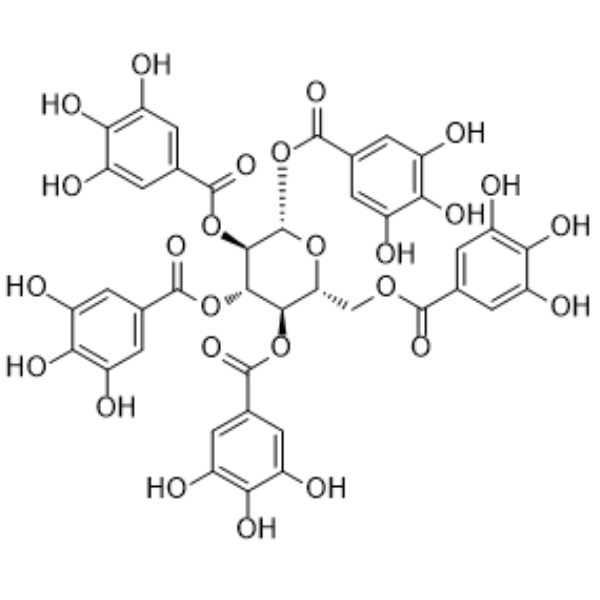
  • HY-N0527
    Pentagalloylglucose
    10+ Cited Publications

    Penta-O-galloyl-β-D-glucose; 1,2,3,4,6-Pentagalloyl glucose

    JAK Keap1-Nrf2 Apoptosis β-catenin Reactive Oxygen Species (ROS) E1/E2/E3 Enzyme Neurological Disease Inflammation/Immunology Cancer
    Pentagalloylglucose (Penta-O-galloyl-β-D-glucose) is an orally active gallic tannin compound and an inducer of apoptosis and autophagy. Pentagalloglucose induces cell apoptosis and autophagy through the GSK3β/β-catenin pathway. Pentagalloylglucose inhibits UBE2T-mediated p53 ubiquitination, upregulates p53, downregulates RRM1/RRM2 in pancreatic cancer organoids. Pentagalloglucose has antioxidant, anti mutagenic, anti-inflammatory, anticonvulsant, cardioprotective, anti allergic, cholesterol lowering, and anti-tumor activities .
    Pentagalloylglucose
  • HY-103609
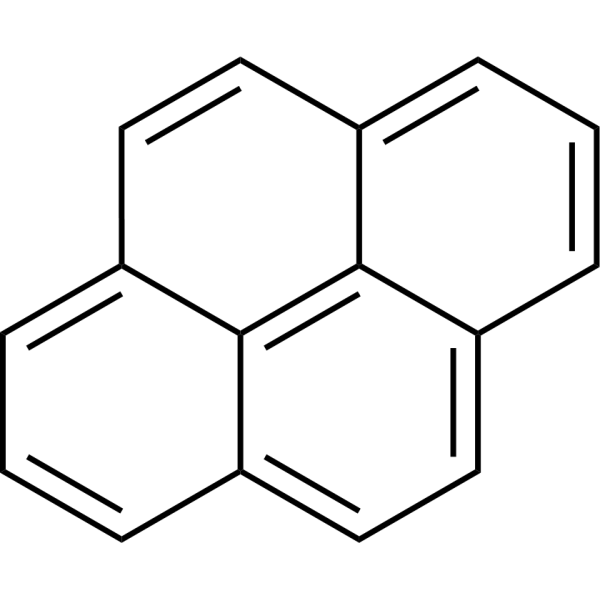
    Pyrene
    1 Publications Verification

    Benzo[def]phenanthrene

    Environmental Pollutants Biochemical Assay Reagents Others
    Pyrene is a polycyclic aromatic hydrocarbon (PAH) composed of four fused benzene rings. It has a distinct aromatic odor, produced by incomplete combustion of organic matter. Pyrene exhibits strong fluorescence, emitting in the blue region of the spectrum, making it useful as a probe for studying molecular interactions in solution and on surfaces. Pyrene is also used as a model compound for the study of PAHs in various environments and biological systems because of its ubiquity in these environments. However, long-term exposure to pyrene has been associated with potential health risks, including carcinogenicity and mutagenicity.
    Pyrene
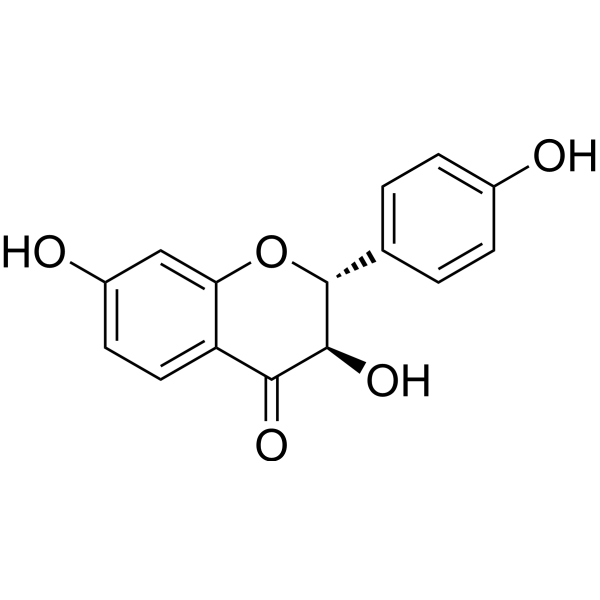
  • HY-N3926

    Drug Intermediate Others
    Garbanzol is an orally active natural flavonoid compound. Garbanzol is one of the key intermediates in the flavonoid biosynthetic pathway. Garbanzol exhibits anti-mutagenic activity .
    Garbanzol
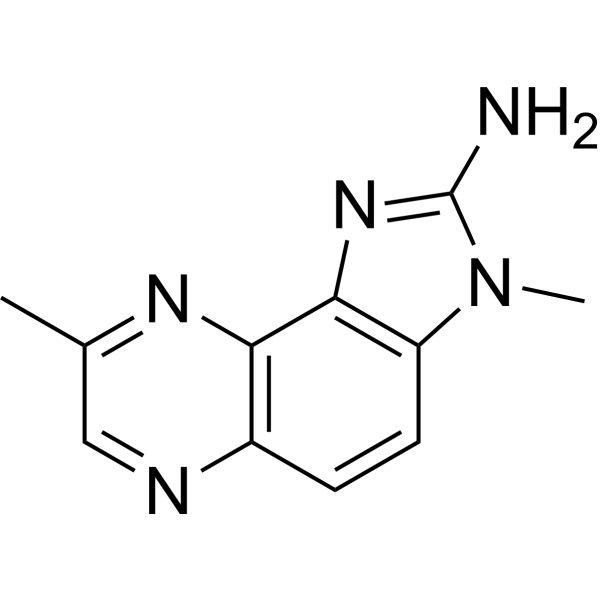
  • HY-W355129

    2-Amino-3,8-dimethylimidazo[4,5-f]quinoxaline-2

    Cytochrome P450 Cancer
    MeIQx, a dietary aromatic amine, is mutagenic compound could be isolated from present in fried beef and beef extracts. MeIQx binds covalently to hemoglobin. MeIQx induces liver tumors .
    MeIQx
  • HY-N4279

    Others Cardiovascular Disease
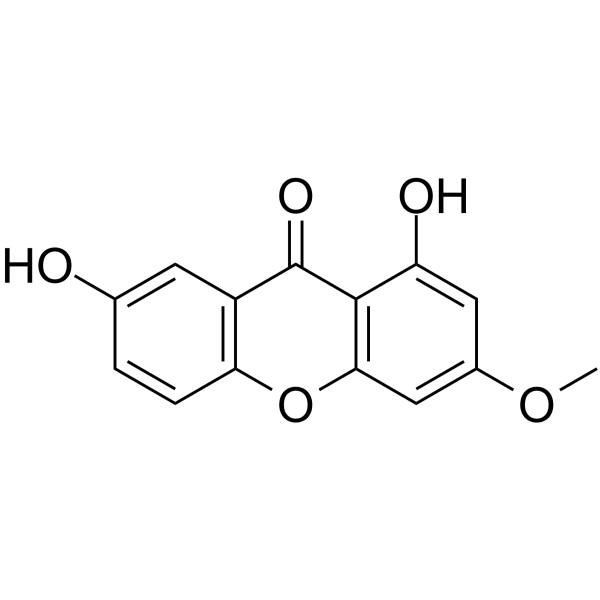
    Gentisin is a natural compound. Gentisin can be extracted from Gentianae radix (Gentianaceae). Gentisin has mutagenic activity. Gentisin can be used in vascular smooth muscle research .
    Gentisin
  • HY-W355129S

    Isotope-Labeled Compounds Cancer
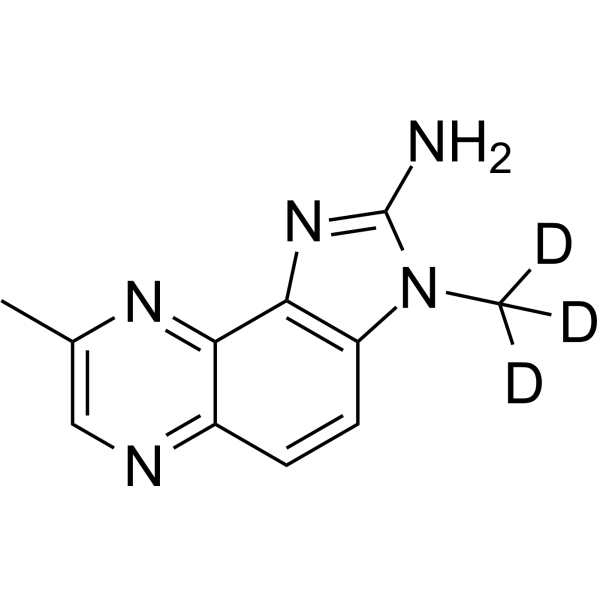
    MeIQx-d3 is the deuterium labeled MeIQx (HY-W355129) . MeIQx is a heterocyclic amine (HAs) compound and a dietary aromatic amine, which can bind covalently to hemoglobin. MeIQx is a mutagenic compound that induces liver tumors .
    MeIQx-d3
  • HY-W275553

    DNA Alkylator/Crosslinker Infection
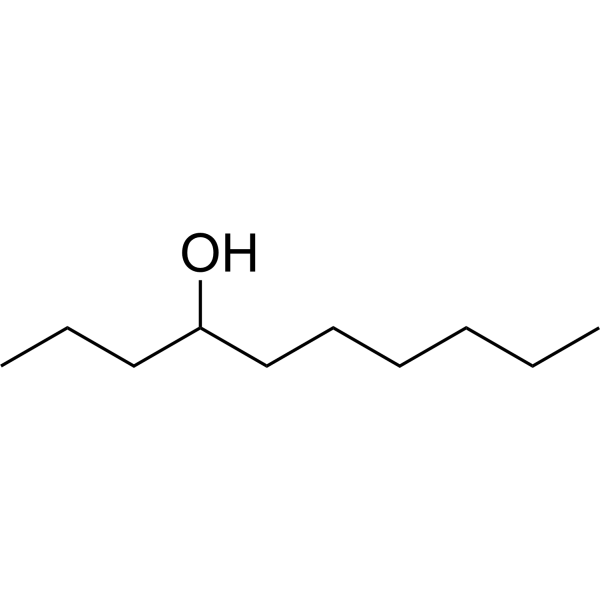
    4-Decanol is an antimutagenic compound, that can be isolated from mustard leaves. 4-Decanol inhibits mutagenic activities of Aflatoxin B1 (HY-N6615) and MNNG (HY-128612) in Salmonella typhimurium TA100 .
    4-Decanol
  • HY-W281364

    MDM-2/p53 Cancer
    2-Ammo-3-memyl-imidazo-[4,5-f]-quinoIine is a mutagenic compound .
    2-Ammo-3-memyl-imidazo-[4,5-f]-quinoIine
  • HY-135212S

    Isotope-Labeled Compounds Endogenous Metabolite Metabolic Disease
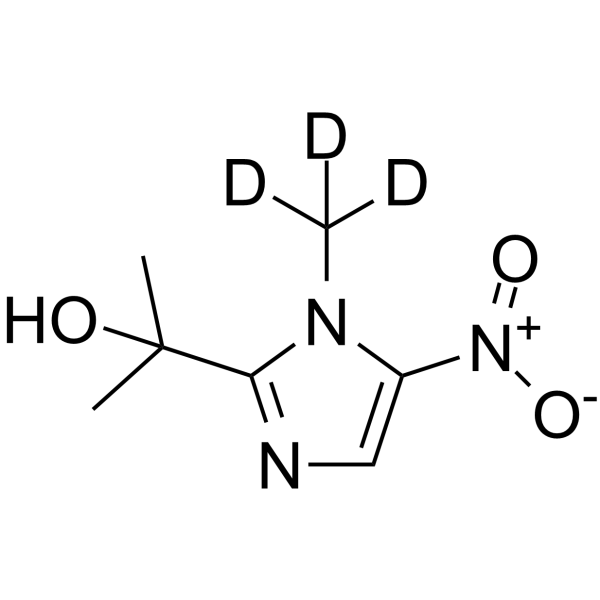
    Hydroxy ipronidazole-d3 is the deuterium labeled Hydroxy ipronidazole. Hydroxy ipronidazole (Ipronidazole-OH) is a metabolite of nitroimidazole antibiotics, such as ipronidazole (IPZ). Hydroxy ipronidazole may has similar mutagenic potential as the parent compound .
    Hydroxy ipronidazole-d3
  • HY-154171

    Nucleoside Antimetabolite/Analog Others
    Deoxyribosyl dihydropyrimido[4,5-c][1,2]oxazin-7-one (Compound dP) exhibits mutagenicity for Escherichia coli and Salmonella typhimurium, that induces the conversion between GC and AT through replication error. eoxyribosyl dihydropyrimido[4,5-c][1,2]oxazin-7-one is stable in Escherichia coli, and can be detected at wavelength >300 nM .
    Deoxyribosyl dihydropyrimido[4,5-c][1,2]oxazin-7-one
  • HY-135212

    Endogenous Metabolite Metabolic Disease
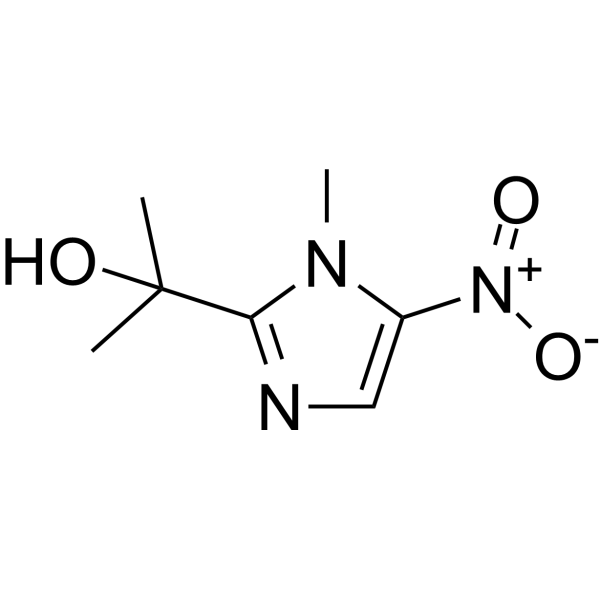
    Hydroxy ipronidazole (Ipronidazole-OH) is a metabolite of nitroimidazole antibiotics, such as ipronidazole (IPZ). Hydroxy ipronidazole may has similar mutagenic potential as the parent compound .
    Hydroxy ipronidazole
  • HY-105740

    DNA/RNA Synthesis Cancer
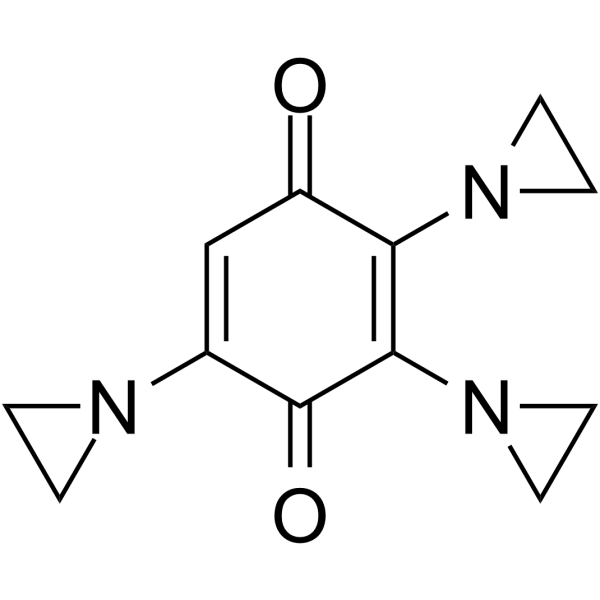
    Trenimon is a compound with anti-cancer effects. Trenimon shows mutagenic actions in many species by inducing point and chromosomal mutations, sister-chromatid exchanges, recombination phenomena and phage induction. Trenimon can be used for the research of cancer .
    Trenimon
  • HY-N0527R

    Penta-O-galloyl-β-D-glucose (Standard); 1,2,3,4,6-Pentagalloyl glucose (Standard)

    Reference Standards JAK Keap1-Nrf2 Apoptosis β-catenin Reactive Oxygen Species (ROS) Neurological Disease Inflammation/Immunology Cancer
    Pentagalloylglucose (Standard) is the analytical standard of Pentagalloylglucose. This product is intended for research and analytical applications. Pentagalloylglucose (Penta-O-galloyl-β-D-glucose) is an orally active gallic tannin compound and an inducer of apoptosis and autophagy. Pentagalloglucose induces cell apoptosis and autophagy through the GSK3β/β-catenin pathway. Pentagalloylglucose inhibits UBE2T-mediated p53 ubiquitination, upregulates p53, downregulates RRM1/RRM2 in pancreatic cancer organoids. Pentagalloglucose has antioxidant, anti mutagenic, anti-inflammatory, anticonvulsant, cardioprotective, anti allergic, cholesterol lowering, and anti-tumor activities .
    Pentagalloylglucose (Standard)
  • HY-135212R

    Reference Standards Endogenous Metabolite Metabolic Disease
    Hydroxy ipronidazole (Standard) is the analytical standard of Hydroxy ipronidazole. This product is intended for research and analytical applications. Hydroxy ipronidazole (Ipronidazole-OH) is a metabolite of nitroimidazole antibiotics, such as ipronidazole (IPZ). Hydroxy ipronidazole may has similar mutagenic potential as the parent compound .
    Hydroxy ipronidazole (Standard)
  • HY-147835

    Bacterial Infection
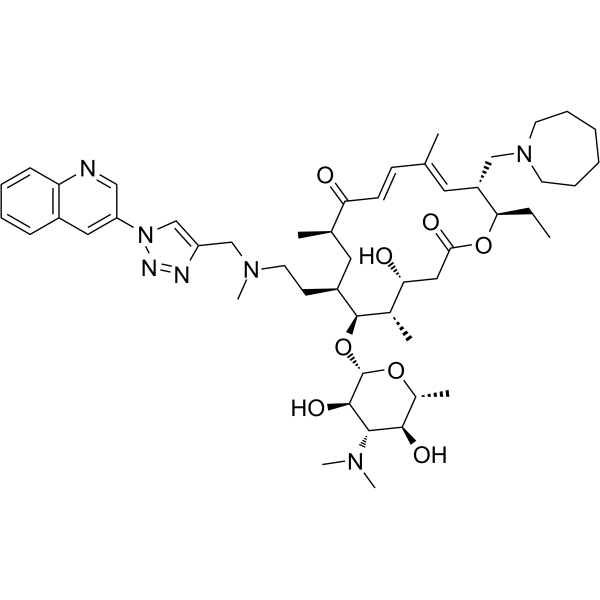
    Antibacterial agent 109 (Compound C-2) is a potent antibacterial agent against both gram-positive and gram negative bacteria, and non-mutagenic. Antibacterial agent 109 inhibits protein synthesis by blocking the extension of new peptide chains .
    Antibacterial agent 109
  • HY-119827

    F 860191

    Topoisomerase Cancer
    Moflomycin (F 860191) is a compound with strong anti-leukemic activity and low mutagenicity. Moflomycin has an antiproliferative effect on the leukemic cell line HL60 in vitro (IC50=2.9 nM) . Moflomycin enhances topoisomerase II-induced DNA breaks and free radical production .
    Moflomycin
  • HY-W779191

    2-Amino-3,8-dimethylimidazo[4,5-f]quinoxaline-2-13C

    Isotope-Labeled Compounds Cytochrome P450 Cancer
    MeIQx- 13C (2-Amino-3,8-dimethylimidazo[4,5-f]quinoxaline-2- 13C) is the 13C-labeled MeIQx (HY-W355129). MeIQx, a dietary aromatic amine, is mutagenic compound could be isolated from present in fried beef and beef extracts. MeIQx binds covalently to hemoglobin. MeIQx induces liver tumors .
    MeIQx-13C
  • HY-W281364S

    Isotope-Labeled Compounds MDM-2/p53 Cancer
    2-Ammo-3-memyl-imidazo-[4,5-f]-quinoIine- 13C is the 13C-labeled 2-Ammo-3-memyl-imidazo-[4,5-f]-quinoIine (HY-W281364). 2-Ammo-3-memyl-imidazo-[4,5-f]-quinoIine is a mutagenic compound .
    2-Ammo-3-memyl-imidazo-[4,5-f]-quinoIine-13C
  • HY-W779193

    Isotope-Labeled Compounds Cancer
    2-Amino-3-methyl-3H-imidazo[4,5-f]quinoline-2- 13C is 13C labeled 2-Ammo-3-memyl-imidazo-[4,5-f]-quinoIine. 2-Ammo-3-memyl-imidazo-[4,5-f]-quinoIine is a mutagenic compound .
    2-Amino-3-methyl-3H-imidazo[4,5-f]quinoline-2-13C
  • HY-103609R

    Benzo[def]phenanthrene (Standard)

    Biochemical Assay Reagents Reference Standards Others
    Pyrene (Standard) is the analytical standard of Pyrene. This product is intended for research and analytical applications. Pyrene is a polycyclic aromatic hydrocarbon (PAH) composed of four fused benzene rings. It has a distinct aromatic odor, produced by incomplete combustion of organic matter. Pyrene exhibits strong fluorescence, emitting in the blue region of the spectrum, making it useful as a probe for studying molecular interactions in solution and on surfaces. Pyrene is also used as a model compound for the study of PAHs in various environments and biological systems because of its ubiquity in these environments. However, long-term exposure to pyrene has been associated with potential health risks, including carcinogenicity and mutagenicity.
    Pyrene (Standard)
  • HY-B1509A

    Parasite Infection Endocrinology
    Trypaflavin is an acridine compound and antimalarial agent. Trypaflavin invades germ cells. Trypaflavin induces aberrations in unfertilized oocytes. Trypaflavin increases the frequency of chromosomal aberrations. Trypaflavin shows weak mutagenicity. Trypaflavin is highly toxic to Leishmania, causing immediate lysis of the leptomonads .
    Trypaflavin
  • HY-B1509B

    Parasite Infection Endocrinology
    Trypaflavin bromide is an orally active acridine compound and antimalarial agent. Trypaflavin bromide invades germ cells. Trypaflavin bromide induces aberrations in unfertilized oocytes. Trypaflavin bromide increases the frequency of chromosomal aberrations. Trypaflavin bromide shows weak mutagenicity. Trypaflavin bromide is highly toxic to Leishmania, causing immediate lysis of the leptomonads .
    Trypaflavin bromide
  • HY-126563

    Others Others
    Phyllospadine (Compound I) is a flavonoidal alkaloid found in the sea-grass Phyllospadix iwatensis. Flavonoids constitute a class of plant secondary metabolites characterized by a polyphenolic structure; they possess antioxidant, anti-inflammatory, anti-mutagenic, and anti-carcinogenic properties, as well as the capacity to modulate the functions of key cellular enzymes, finding application in the treatment of diseases such as cancer, Alzheimer's disease, and atherosclerosis .
    Phyllospadine
  • HY-W275553R

    DNA Alkylator/Crosslinker Reference Standards Infection
    4-Decanol (Standard) is the analytical standard of 4-Decanol (HY-W275553). This product is intended for research and analytical applications. 4-Decanol is an antimutagenic compound, that can be isolated from mustard leaves. 4-Decanol inhibits mutagenic activities of Aflatoxin B1 (HY-N6615) and MNNG (HY-128612) in Salmonella typhimurium TA100 .
    4-Decanol (Standard)
  • HY-W706319

    Isotope-Labeled Compounds Others Cancer
    2-Amino-3-methyl-3H-imidazo[4,5-f]quinoline-d3 is deuterium labeled 2-Ammo-3-memyl-imidazo-[4,5-f]-quinoIine. 2-Ammo-3-memyl-imidazo-[4,5-f]-quinoIine is a mutagenic compound .
    2-Amino-3-methyl-3H-imidazo[4,5-f]quinoline-d3
  • HY-134273A

    8-Bromo-dGTP sodium

    Nucleoside Antimetabolite/Analog Others
    8-Br-dGTP (8-Bromo-dGTP) sodium (Compound 5), an 8-brominated purine nucleotide, is a syn-oriented analog of dGTP. 8-Br-dGTP sodium can be hydrolyzed by the enzyme hMTH1 protein (HY-P74740). 8-Br-dGTP sodium inhibits dGTP-activated ADP reduction with a Ki of 56  μM. 8-Br-dGTP sodium has no significant genotoxicity and mutagenic potentials during DNA synthesis .
    8-Br-dGTP sodium

Inquiry Online

Your information is safe with us. * Required Fields.

Salutation


Country or Region *

Applicant Name *


Organization Name *

Department *


Email Address *


Product Name *

Cat. No.


Requested quantity *

Phone Number *


Remarks

Inquiry Online

Inquiry Information

Product Name:
Cat. No.:
Quantity:
MCE Japan Authorized Agent: