5 Results for "

nasal fibroblasts

" in MedChemExpress (MCE) Product Catalog:
Products (5)

5 Results for "nasal fibroblasts" in MCE Product Catalog:

5
5 Cited Publications
Cat. No.: HY-B0801
CAS No.: 83799-24-0
Synonyms: MDL-16455; Terfenadine carboxylate
Target:  

Histamine Receptor

Research Areas:  

Inflammation/Immunology Cancer

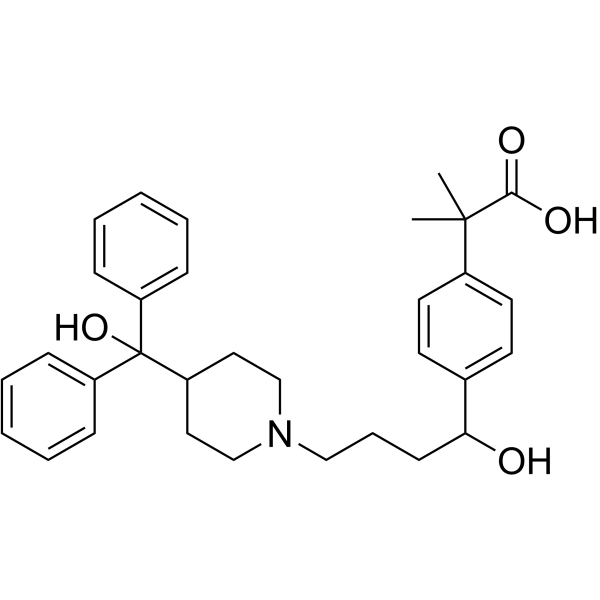
Fexofenadine (MDL-16455) is an orally active and nonsedative H1 receptor antagonist. Fexofenadine can be used in allergic rhinitis and chronic idiopathic urticarial research .
loading...
    loading...
5
5 Cited Publications
Cat. No.: HY-B0801A
CAS No.: 153439-40-8
Synonyms: MDL-16455 hydrochloride; Terfenadine carboxylate hydrochloride
Target:  

Histamine Receptor

Research Areas:  

Inflammation/Immunology Cancer

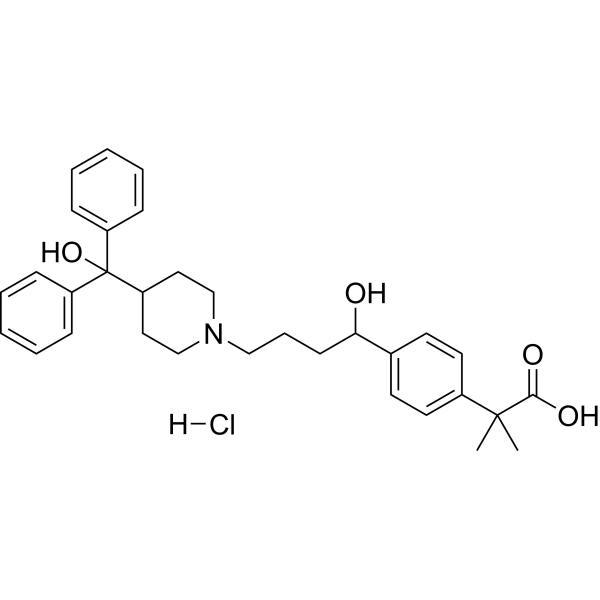
Fexofenadine (MDL-16455) hydrochloride is an orally active and nonsedative H1 receptor antagonist. Fexofenadine hydrochloride can be used in allergic rhinitis and chronic idiopathic urticarial research .
loading...
    loading...
Cat. No.: HY-B0801R
CAS No.: 83799-24-0
Synonyms: MDL-16455 (Standard); Terfenadine carboxylate (Standard)
Fexofenadine (Standard) is the analytical standard of Fexofenadine. This product is intended for research and analytical applications. Fexofenadine (MDL-16455) is an orally active and nonsedative H1 receptor antagonist. Fexofenadine can be used in allergic rhinitis and chronic idiopathic urticarial research .
loading...
    loading...
Cat. No.: HY-B0801S4
Synonyms: MDL-16455-d3-1; Terfenadine carboxylate-d3-1
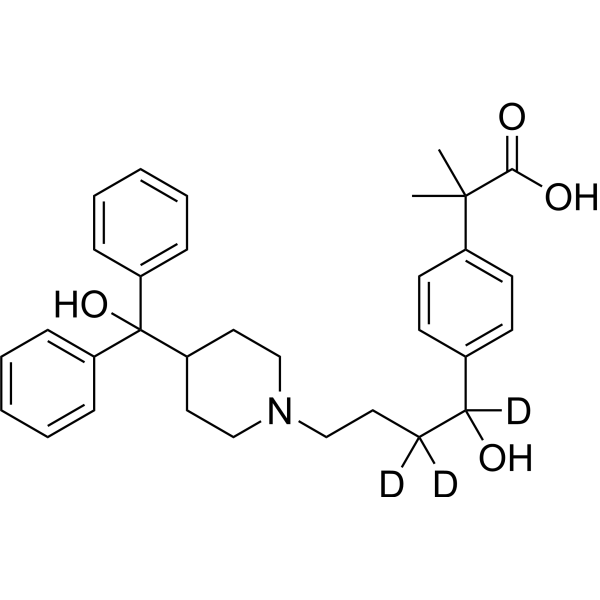
Fexofenadine-d3-1 fumarate is deuterated labeled Fexofenadine (HY-B0801). Fexofenadine (MDL-16455) is an orally active and nonsedative H1 receptor antagonist. Fexofenadine can be used in allergic rhinitis and chronic idiopathic urticarial research .
loading...
    loading...
Cat. No.: HY-117007
CAS No.: 106-91-2
Research Areas:  

Others

Glycidyl methacrylate is a bifunctional monomer containing both a polymerizable methacrylate double bond and a reactive epoxy group. Glycidyl methacrylate can be introduced into polymer backbones via free radical polymerization, and its epoxy group undergoes ring-opening reactions with nucleophilic groups such as amines, carboxylic acids and thiols, thus being used for the preparation of functional polymers, surface-grafted materials and crosslinkable biomaterials. Glycidyl methacrylate is applicable to research related to polymer chemistry, biomaterials, surface modification and drug delivery materials .
loading...
    loading...

