



83799-24-0
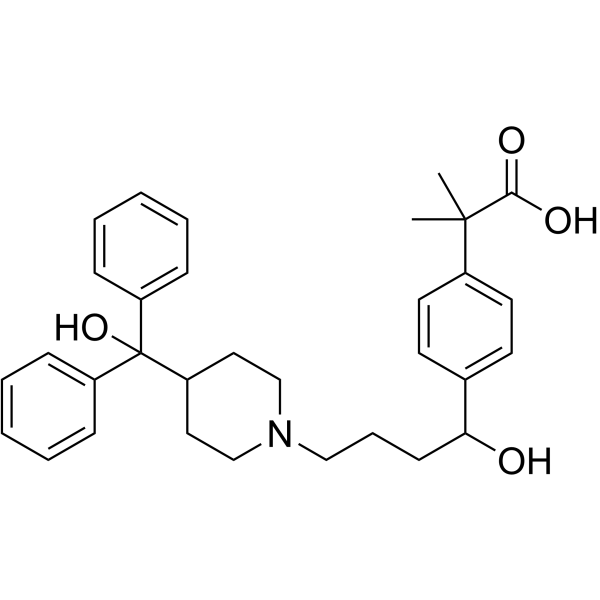
83799-24-0
Chemical Structure
Fexofenadine
Synonym(s): MDL-16455; Terfenadine carboxylate
- CAS No.: 83799-24-0
- Formula:C32H39NO4
- Molecular Weight:501.66
IUPAC Name: 2-(4-(1-hydroxy-4-(4-(hydroxydiphenylmethyl)piperidin-1-yl)butyl)phenyl)-2-methylpropanoic acid
InChIKey: RWTNPBWLLIMQHL-UHFFFAOYSA-N
SMILES: OC(C1=CC=CC=C1)(C2=CC=CC=C2)C3CCN(CCCC(C4=CC=C(C(C(O)=O)(C)C)C=C4)O)CC3
Biological Activity: Fexofenadine (MDL-16455) is an orally active and nonsedative H1 receptor antagonist. Fexofenadine can be used in allergic rhinitis and chronic idiopathic urticarial research[1][2][3].
| Cat. No. | Product Name | Purity | Description | Pricing | |||||||||||||||||||
|---|---|---|---|---|---|---|---|---|---|---|---|---|---|---|---|---|---|---|---|---|---|---|---|
|
|
Fexofenadine | 99.96% | Fexofenadine (MDL-16455) is an orally active and nonsedative H1 receptor antagonist. Fexofenadine can be used in allergic rhinitis and chronic idiopathic urticarial research. | ||||||||||||||||||||
|
loading...
/
|
|||||||||||||||||||||||
|
|
Fexofenadine (Standard) | ≥98% | Fexofenadine (Standard) is the analytical standard of Fexofenadine. This product is intended for research and analytical applications. Fexofenadine (MDL-16455) is an orally active and nonsedative H1 receptor antagonist. Fexofenadine can be used in allergic rhinitis and chronic idiopathic urticarial research. | ||||||||||||||||||||
|
loading...
/
|
|||||||||||||||||||||||
|
|
Fexofenadine-d10 | Fexofenadine-d10 is deuterium labeled Fexofenadine. | |||||||||||||||||||||
|
loading...
/
|
|||||||||||||||||||||||
|
|
Fexofenadine-d6 | 99.28% | Fexofenadine-d6 (MDL-16455-d6) is deuterium labeled Fexofenadine, which is an antihistamine pharmaceutical agent. | ||||||||||||||||||||
|
loading...
/
|
|||||||||||||||||||||||
|
|
Fexofenadine-d3 | Fexofenadine-d3 is the deuterium labeled Fexofenadine. Fexofenadine (MDL-16455) is an orally active and nonsedative H1 receptor antagonist. Fexofenadine can be used in allergic rhinitis and chronic idiopathic urticarial research. | |||||||||||||||||||||
|
loading...
/
|
|||||||||||||||||||||||
|
|
Fexofenadine-d3-1 | Fexofenadine-d3-1 fumarate is deuterated labeled Fexofenadine (HY-B0801). Fexofenadine (MDL-16455) is an orally active and nonsedative H1 receptor antagonist. Fexofenadine can be used in allergic rhinitis and chronic idiopathic urticarial research. | |||||||||||||||||||||
|
loading...
/
|
|||||||||||||||||||||||
Structural Analogs
-
Similarity Score 0.99
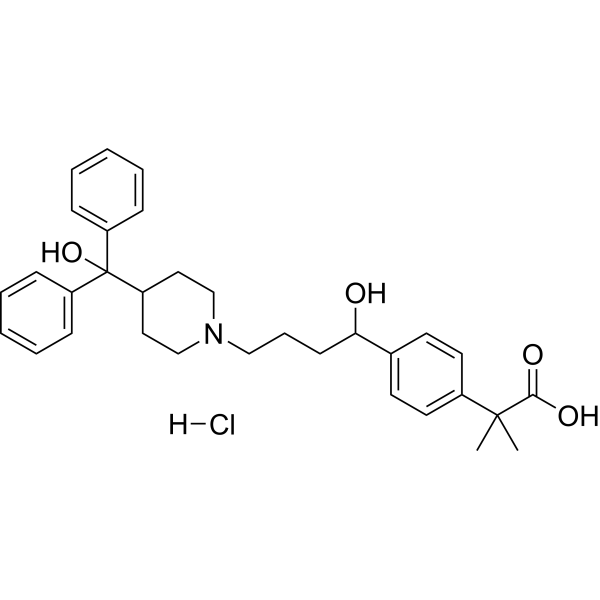 HY-B0801AFexofenadine hydrochloride
-
Similarity Score 0.92
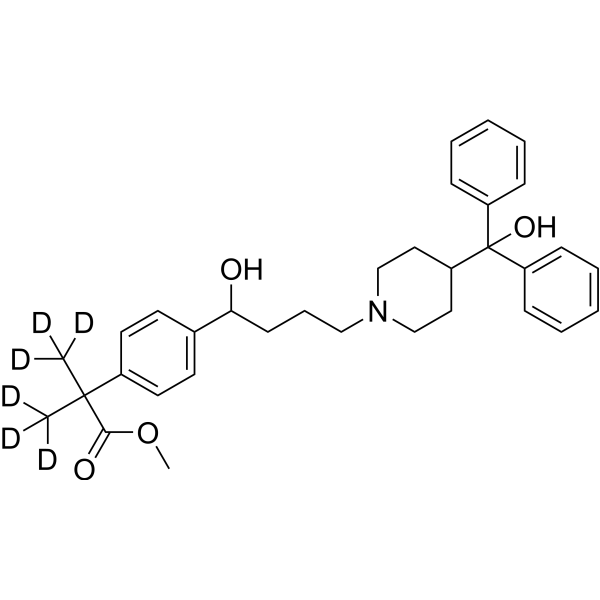 HY-B0801S1Fexofenadine-d6 Methyl Ester
-
Similarity Score 0.88
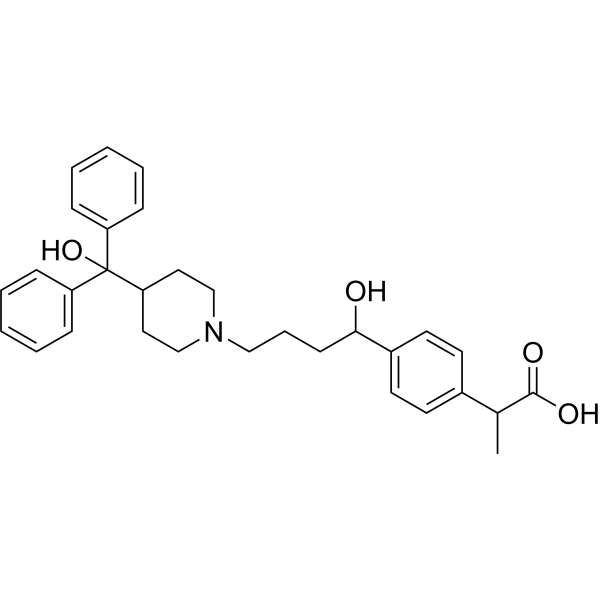 HY-131274Fexofenadine Impurity F
-
Similarity Score 0.88
 HY-100657Rmeta-Fexofenadine (Standard)
-
Similarity Score 0.87
 HY-B1193RTerfenadine (Standard)
-
Similarity Score 0.81
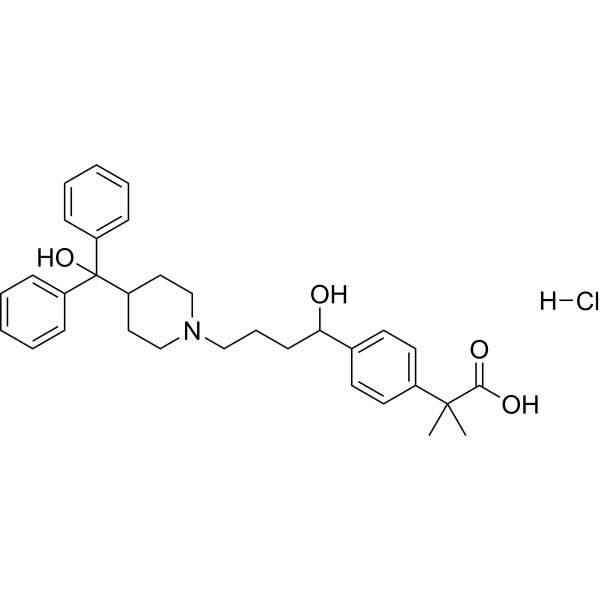 HY-B0801ARFexofenadine hydrochloride (Standard)
-
Similarity Score 0.76
 HY-133727Terfenadine N-oxide
-
Similarity Score 0.75
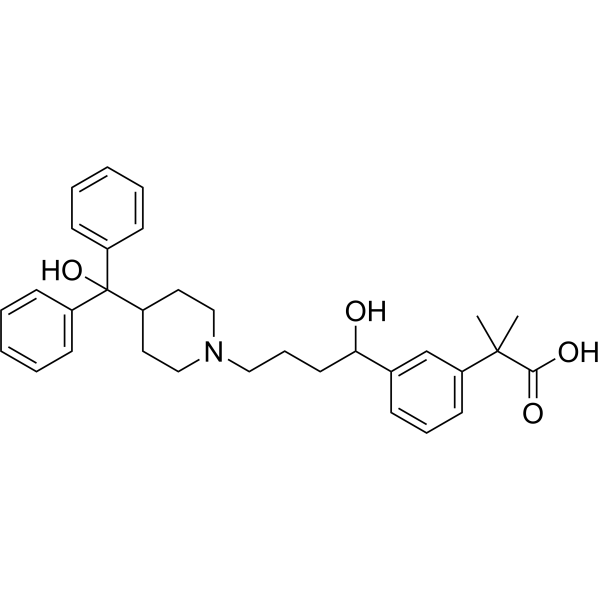 HY-100657meta-Fexofenadine
-
Similarity Score 0.68
 HY-B1193STerfenadine-d3
-

Explore the MedChemAI to find more analogs


References
- [1]. Watanabe N, et al. The effects of fexofenadine on eosinophilia and systemic anaphylaxis in mice infected with Trichinella spiralis. Int Immunopharmacol. 2004 Mar;4(3):367-75. [Content Brief]
- [2]. Park IH, et al. Histamine Promotes the Release of Interleukin-6 via the H1R/p38 and NF-κB Pathways in Nasal Fibroblasts. Allergy Asthma Immunol Res. 2014 Nov;6(6):567-72. [Content Brief]
- [3]. Ming X, et al. Vectorial transport of fexofenadine across Caco-2 cells: involvement of apical uptake and basolateral efflux transporters. Mol Pharm. 2011 Oct 3;8(5):1677-86. [Content Brief]



