1. Search Result
Search Result
Results for "

oleoresin

" in MedChemExpress (MCE) Product Catalog:

9

Inhibitors & Agonists

6

Natural
Products

Cat. No. Product Name Target Research Areas Chemical Structure
  • HY-N0448
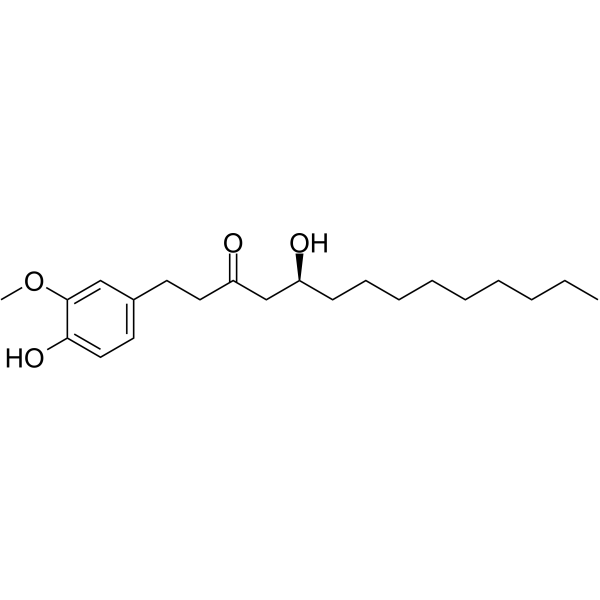
    10-Gingerol
    4 Publications Verification

    AMPK Reactive Oxygen Species (ROS) Akt PI3K Interleukin Related TNF Receptor Apoptosis Neurological Disease Inflammation/Immunology Cancer
    10-Gingerol is an AMPK agonist, which is found in the ginger oleoresin from fresh rhizome with anti-inflammatory, antioxidant and anti-proliferative activities. 10-Gingerol suppresses neointimal hyperplasia and inhibits vascular smooth muscle cell proliferation. 10-Gingerol exhibits substantial scavenging activities with an IC50 value of 10.47 μM against DPPH radical, an IC50 value of 1.68 μM against superoxide radical and an IC50 value of 1.35 μM against hydroxyl radical. 10-Gingerol inhibits the proliferation of MDA-MB-231 tumor cell line with an IC50 of 12.1 μM. 10-Gingerol suppresses the proliferation, migration, invasion, and induced apoptosis through targeting the PI3K/Akt signaling pathway in MDA-MB-231/IR cells. 10-Gingerol can be used in research on various common cancers such as ovarian cancer and colon cancer, as well as colitis and neurodegenerative diseases .
    10-Gingerol
  • HY-204591

    Drug Derivative Others
    Black pepper oleoresin is a substance extracted from the pepper plant (Piper nigrum), which has aroma, spiciness, and bioactive components. It is widely used in food, health products, cosmetics, and daily chemical products.
    Black pepper oleoresin
  • HY-133592R

    Reference Standards Bacterial Infection
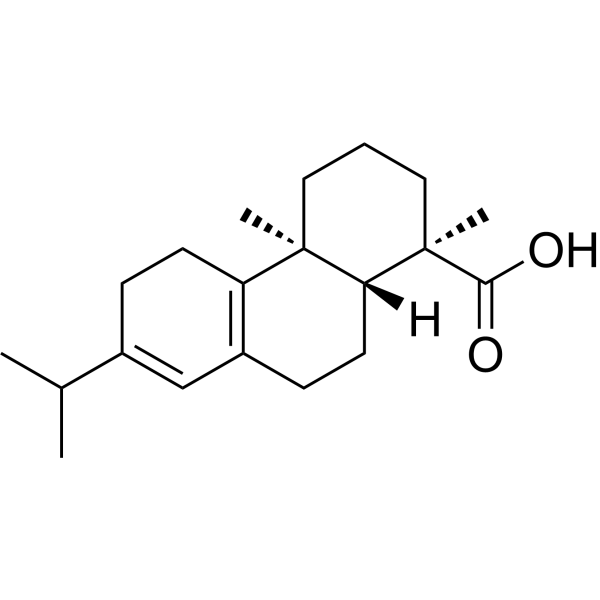
    Neoabietic acid (Standard) is the analytical standard of Neoabietic acid. This product is intended for research and analytical applications. Neoabietic acid, an abietic-type acid, is a nature product that could be isolated from the oleoresin and rosin of Pinus palustris. Neoabietic acid is highly susceptible to mineral acid. Neoabietic acid has antibacterial activity .
    Neoabietic acid (Standard)
  • HY-133592

    Bacterial Infection
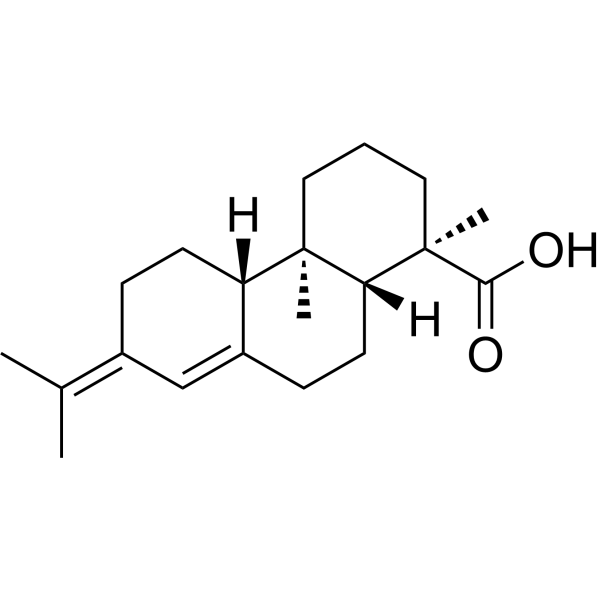
    Neoabietic acid, an abietic-type acid, is a nature product that could be isolated from the oleoresin and rosin of Pinus palustris. Neoabietic acid is highly susceptible to mineral acid. Neoabietic acid has antibacterial activity .
    Neoabietic acid
  • HY-N0448R

    Reference Standards Others Neurological Disease Inflammation/Immunology Cancer
    10-Gingerol (Standard) is the analytical standard of 10-Gingerol (HY-N0448). This product is intended for research and analytical applications. 10-Gingerol is an AMPK agonist, which is found in the ginger oleoresin from fresh rhizome with anti-inflammatory, antioxidant and anti-proliferative activities. 10-Gingerol suppresses neointimal hyperplasia and inhibits vascular smooth muscle cell proliferation. 10-Gingerol exhibits substantial scavenging activities with an IC50 value of 10.47 μM against DPPH radical, an IC50 value of 1.68 μM against superoxide radical and an IC50 value of 1.35 μM against hydroxyl radical. 10-Gingerol inhibits the proliferation of MDA-MB-231 tumor cell line with an IC50 of 12.1 μM. 10-Gingerol suppresses the proliferation, migration, invasion, and induced apoptosis through targeting the PI3K/Akt signaling pathway in MDA-MB-231/IR cells. 10-Gingerol is promising for research of ulcerative colitis .
    10-Gingerol (Standard)
  • HY-N8800

    Others Neurological Disease
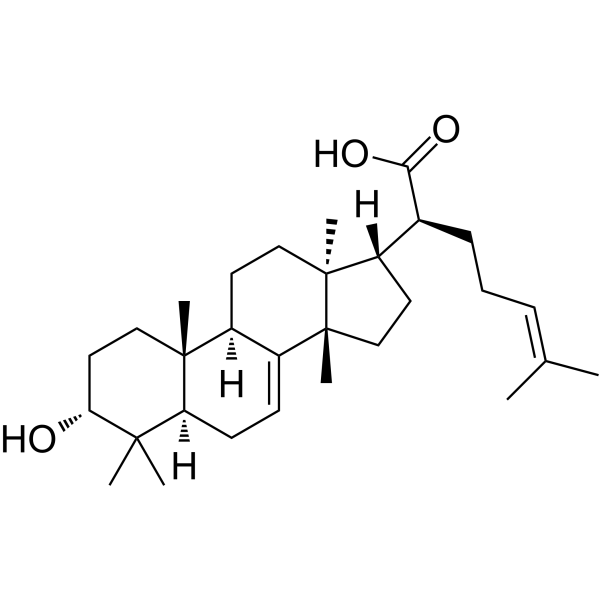
    3α-Hydroxytirucalla-7,24-dien-21-oic acid is a tirucallane triterpene isolated from the oleoresin of Protium hebetatum Daly .
    3α-Hydroxytirucalla-7,24-dien-21-oic acid
  • HY-148925

    Glycosidase Inflammation/Immunology
    α-Amyrenone is a triterpenoid that occurs naturally in very low concentrations in several oleoresins from Brazilian Amazon species of Protium (Burseraceae). The mixture of α and β-amyrenone inhibits α-glucosidase, and can reduce mechanical hypersensitivity and paw-oedema induced by carrageenan .
    α-Amyrenone
  • HY-N1025

    Others Others
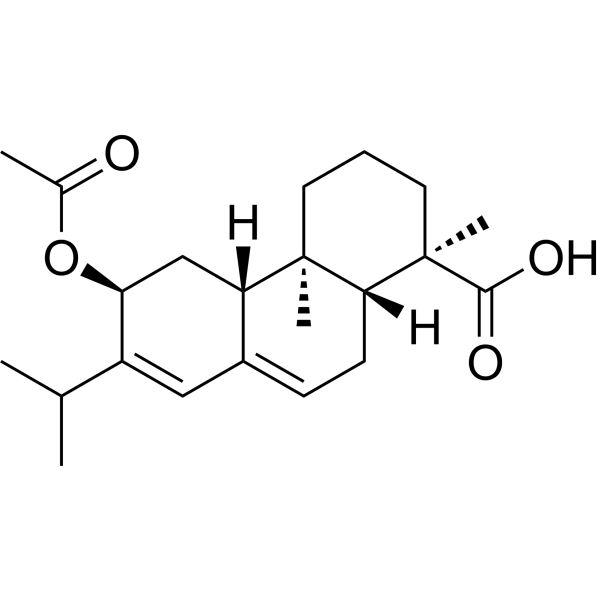
    12-Acetoxyabietic acid is a compound isolated from ponderosa pine oleoresin .
    12-Acetoxyabietic acid
  • HY-N18102

    Bacterial Infection
    3,4-Seco-mansumbinoic acid (Compound 2) is an Antibacterial agent. 3,4-Seco-mansumbinoic acid can be isolated from the oleo-resin of Commiphora molmol. 3,4-Seco-mansumbinoic acid exhibits in vitro anti-staphylococcal activity, with the strongest activity against the multidrug-resistant Staphylococcus aureus strain SA-1199B (MIC 4 μg/mL) 3,4-Seco-mansumbinoic acid displays weak potentiation of Ciprofloxacin (HY-B0356) and Tetracycline (HY-A0107) activity against strains of Salmonella enterica serovar Typhimurium SL1344 and L10. 3,4-Seco-mansumbinoic acid can be used for the research of multidrug-resistant bacterial infection (Staphylococcus aureus, Salmonella enterica serovar Typhimurium) .
    3,4-Seco-mansumbinoic acid

Inquiry Online

Your information is safe with us. * Required Fields.

Salutation


Country or Region *

Applicant Name *


Organization Name *

Department *


Email Address *


Product Name *

Cat. No.


Requested quantity *

Phone Number *


Remarks

Inquiry Online

Inquiry Information

Product Name:
Cat. No.:
Quantity:
MCE Japan Authorized Agent:

