1. Search Result
Search Result
Results for "

photoaffinity

" in MedChemExpress (MCE) Product Catalog:

29

Inhibitors & Agonists

1

Fluorescent Dyes

1

Peptides

10

Click Chemistry

1

Oligonucleotides

Cat. No. Product Name Target Research Areas Chemical Structure
  • HY-W010936
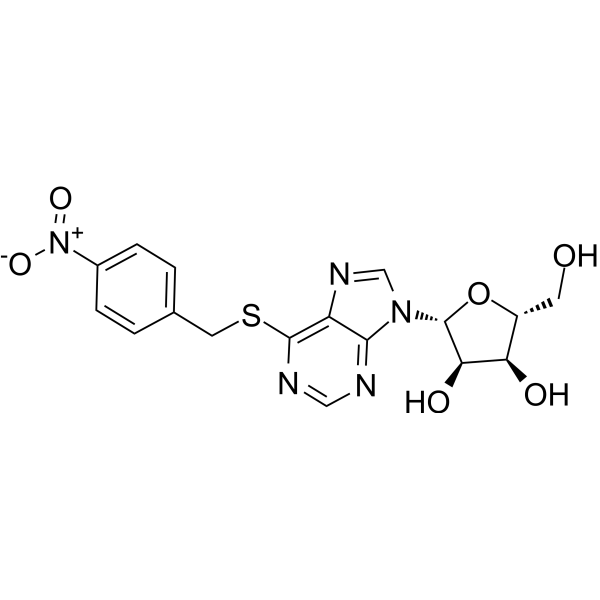
    Nitrobenzylthioinosine
    3 Publications Verification

    NBMPR

    Adenosine Receptor Neurological Disease
    Nitrobenzylthioinosine is an ENT1 transporter inhibitor that binds to ENT1 transporter with high affinity. Nitrobenzylthioinosine is a photoaffinity probe for adenosine uptake sites in brain. Nitrobenzylthioinosine can cross the blood-brain barrier .
    Nitrobenzylthioinosine
  • HY-102023
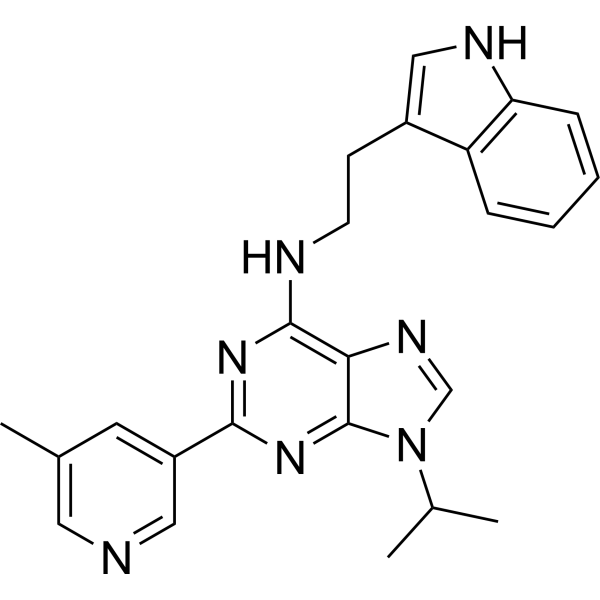
    GNF351
    Maximum Cited Publications
    7 Publications Verification

    Aryl Hydrocarbon Receptor Others
    GNF351 is a full aryl hydrocarbon receptor (AHR) antagonist. GNF351 competes with a photoaffinity AHR ligand for binding to the AHR with an IC50 of 62 nM. GNF351 is minimal toxicity in mouse or human keratinocytes .
    GNF351
  • HY-151662

    N3-TFBA

    ADC Linker Others
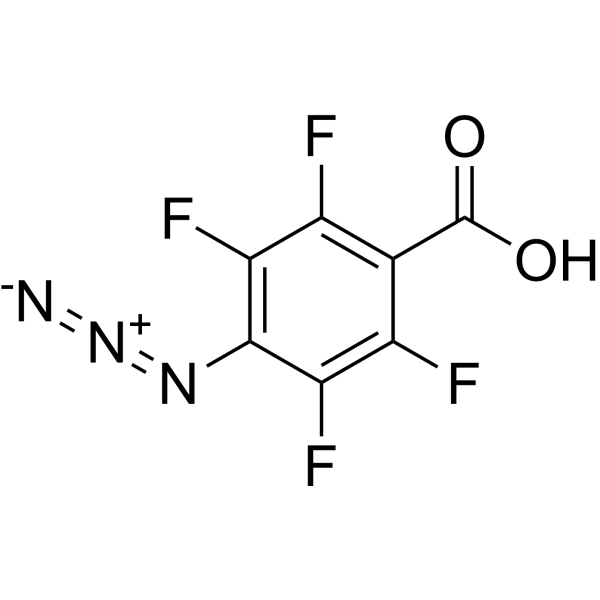
    4-Azido-2,3,5,6-tetrafluorobenzoic Acid (N3-TFBA) is a click chemistry reagent containing an azide group. 4-Azido-2,3,5,6-tetrafluorobenzoic Acid is a complex with FAM-labeled DNA probe. 4-Azido-2,3,5,6-tetrafluorobenzoic Acid can be used as versatile photoaffinity labeling agents to probe biological receptors. It contains an azide group and can undergo copper-catalyzed azide-alkyne cycloaddition (CuAAc) with molecules containing alkyne groups. It can also undergo ring strain-promoted alkyne-azide cycloaddition (SPAAC) with molecules containing DBCO or BCN groups.
    4-Azido-2,3,5,6-tetrafluorobenzoic Acid
  • HY-P1290
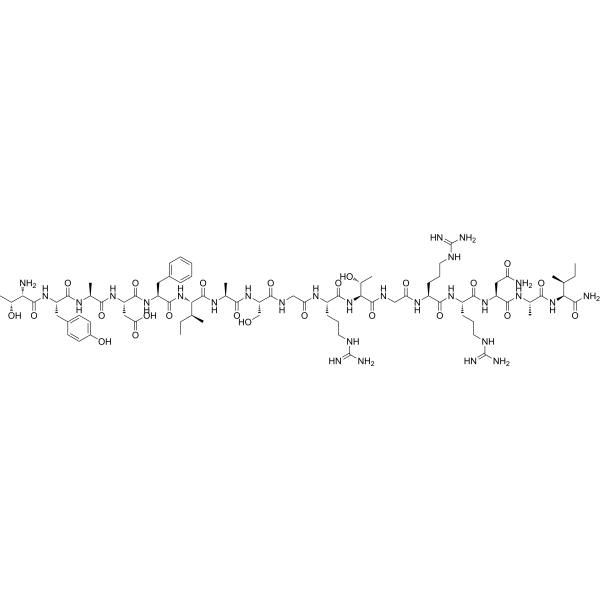
    PKA Inhibitor Fragment (6-22) amide
    5 Publications Verification

    PKI-(6-22)-amide

    PKA Neurological Disease
    PKA Inhibitor Fragment (6-22) amide is a highly potent and specific competitive inhibitor of PKA, with Ki values of 1.7 nM and 1.6 nM against human and bovine PKA catalytic subunits, respectively. The IC50 of PKA Inhibitor Fragment (6-22) amide targeting bovine PKA is 8.6 nM. PKA Inhibitor Fragment (6-22) amide effectively abolishes PKA activity in mouse brain and spinal cord, and exerts in vivo efficacy via intracerebroventricular administration. PKA Inhibitor Fragment (6-22) amide significantly reverses low-dose morphine analgesic tolerance in mice and blocks photoaffinity labeling of cAMP-dependent protein kinase. PKA Inhibitor Fragment (6-22) amide can be applied to research in fields related to the mechanism of morphine analgesic tolerance and skin wound healing .
    PKA Inhibitor Fragment (6-22) amide
  • HY-175636

    Integrin Orthopoxvirus Potassium Channel Infection
    ITGB3-IN-1 is an orally active integrin subunit beta 3 ITGB3 inhibitor with a Kd of 7.26 μM. ITGB3-IN-1 exhibits potent anti-orthopoxvirus effects with an EC50 for vaccinia virus (VACV) of 1.82 μM. ITGB3-IN-1 inhibits hERG with an IC50 of 1.13 μM. ITGB3-IN-1 can be used for the study of orthopoxvirus .
    ITGB3-IN-1
  • HY-145749

    PARP Cancer
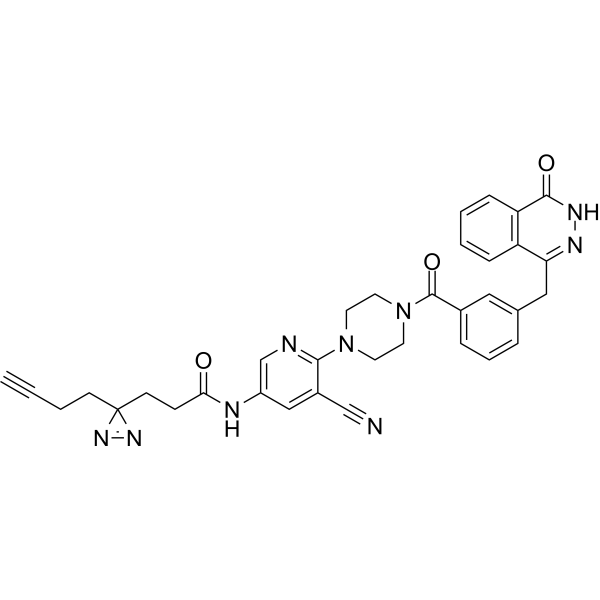
    PARPYnD is a PARP enzyme photoaffinity probe (AfBP) based on the triple PARP1/2/6 inhibitor AZ9482 (HY-119653), which induces breast cancer Formation of multipolar spindles (MPS) in cells. PARPYnD inhibits PAPR wih IC50 of 38 nM (PARP1), 6 nM (PARP2), 230 nM (PARP6), respectively. PARPYnD enriches recombinant PARP6 incorporated into cell lysates and inhibits PARP6 in cell-free assays, but it does not label PARP6 in intact cells .
    PARPYnD
  • HY-W024615

    3-(3-Methyl-3H-diazirin-3-yl)propanoic acid

    Drug Intermediate Biochemical Assay Reagents Others
    Me-diazirine-cooh (3-(3-Methyl-3H-diazirin-3-yl) propanoic acid) is a molecular building block containing an aliphatic diazirine ring. Me-diazirine-cooh undergoes orthogonal coupling in solid-phase peptide synthesis to introduce the Diazirine group into collagen-mimetic peptides. Me-diazirine-cooh is used to construct the photoaffinity probe P1 .
    Me-diazirine-cooh
  • HY-W782122

    Biochemical Assay Reagents Cancer
    Photoclick cholesterol is a photoreactive cholesterol analog capable of undergoing click reactions. Photoclick cholesterol enables specific, saturable photoaffinity labeling of the mitochondrial translocator protein TSPO .
    Photoclick cholesterol
  • HY-151761

    ADC Linker Others
    H-L-Lys(4-N3-Z)-OH hydrochloride is a click chemistry reagent containing an azide group. H-L-Lys(4-N3-Z)-OH hydrochloride contains a lysine-modified azide moiety and as a bioorthogonal ligation handle. H-L-Lys(4-N3-Z)-OH hydrochloride is an infrared probe and a photo-affinity reagent . It contains an azide group and can undergo copper-catalyzed azide-alkyne cycloaddition (CuAAc) with molecules containing alkyne groups. It can also undergo ring strain-promoted alkyne-azide cycloaddition (SPAAC) with molecules containing DBCO or BCN groups.
    H-L-Lys(4-N3-Z)-OH hydrochloride
  • HY-150063

    Penicillin-binding protein (PBP) Bacterial Infection
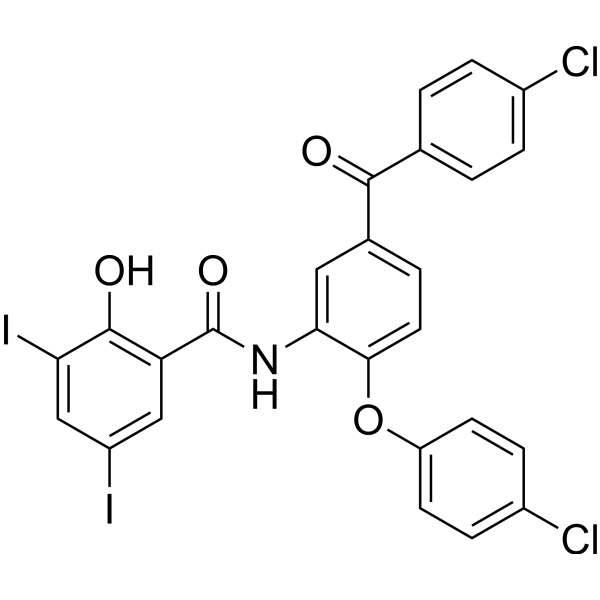
    Antibacterial agent 116 is a benzophenone-containing salicylanilide compound. Antibacterial agent 116 has potent antibacterial activity by inhibiting the peptidoglycan formation. Antibacterial agent 116 is used as a photoaffinity probe to label Acinetobacter baumannii penicillin-binding protein (PBP1b), block the propagation pathway to disrupt the growth of peptidoglycan chain .
    Antibacterial agent 116
  • HY-151679

    ADC Linker Others
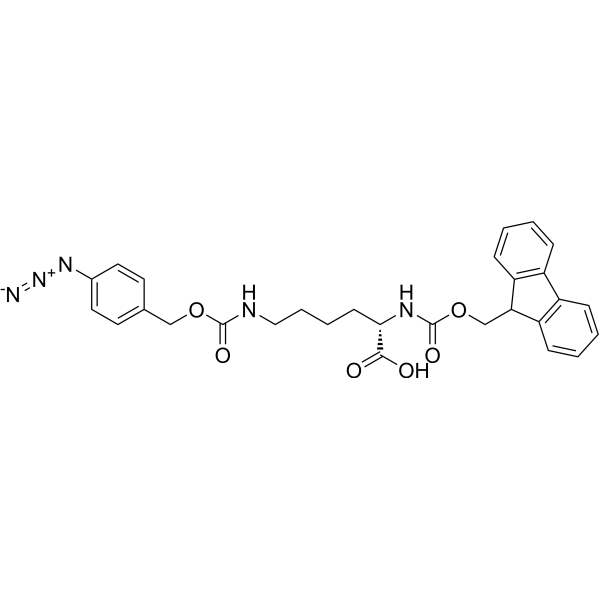
    Fmoc-L-Lys(4-N3-Z)-OH is a click chemistry reagent containing an azide group. Fmoc-L-Lys(4-N3-Z)-OH acts as Lysine building-block for SPPS containing an Azide moiety as a bioorthogonal ligation handle, an infrared probe and a photo-affinity reagent. It can be decaged by trans-cyclooctenols via a strain-promoted 1,3-dipolar cycloaddition . Fmoc-L-Lys(4-N3-Z)-OH is a click chemistry reagent, it contains an Azide group and can undergo copper-catalyzed azide-alkyne cycloaddition reaction (CuAAc) with molecules containing Alkyne groups. It can also undergo strain-promoted alkyne-azide cycloaddition (SPAAC) reactions with molecules containing DBCO or BCN groups.
    Fmoc-L-Lys(4-N3-Z)-OH
  • HY-174821

    CFTR Others
    VU439 is a functionalized photoaffinity ligand of Elexacaftor (HY-111772). VU439 retains the activity of Elexacaftor as a CFTR corrector and can identify SCCPDH as a specific off-target of Elexacaftor through chemoproteomics .
    VU439
  • HY-W005824

    Biochemical Assay Reagents Infection Cancer
    2,6-Dichloropurine riboside is an antitumor and antiviral agent, which can be used for infections caused by mycoplasma. 2,6-Dichloropurine riboside also can be used to synthesize the photoaffinity probes for nucleotide binding sites in proteins .
    2,6-Dichloropurine riboside
  • HY-W142064

    Antibiotic Others
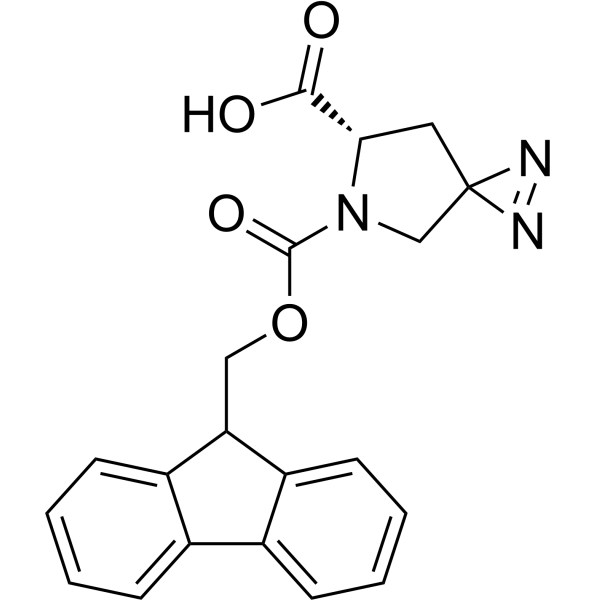
    Fmoc-L-photo-proline is a photo-crosslinking amino acid which can be incorporated into synthetic peptides using solid-phase Fmoc chemistry. Fmoc-L-photo-proline can synthesis of cyclic peptidomimetic antibiotic and be used for preparation of diverse peptide-based photoaffinity probes research .
    Fmoc-L-photo-proline
  • HY-151744

    ADC Linker Others
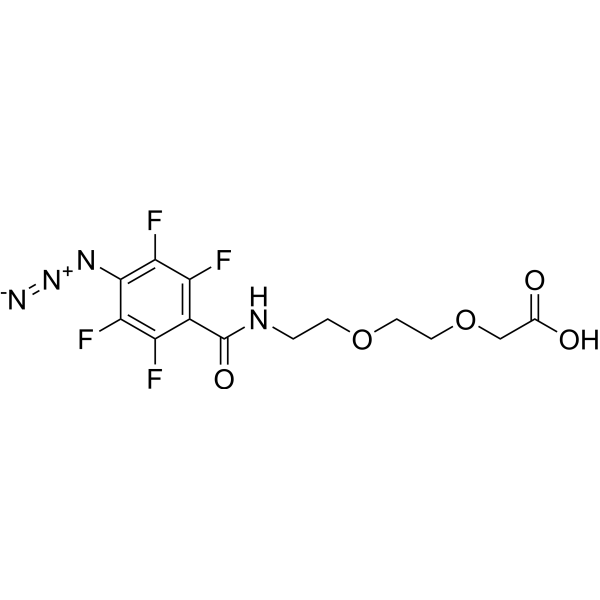
    N3-TFBA-O2Oc is a click chemistry reagent containing an azide group and an aryl group. Aryl azides are well-known precursors of nitrenes and have been introduced by Fleet et al. as versatile photoaffinity labeling agents to probe biological receptors. This type of compounds has been used as photo-cross linker (λmax=258 nm) in estrogen receptor studies and for direct surface coating of carbon and organic based polymers . N3-TFBA-O2Oc is a click chemistry reagent, it contains an Azide group and can undergo copper-catalyzed azide-alkyne cycloaddition reaction (CuAAc) with molecules containing Alkyne groups. It can also undergo strain-promoted alkyne-azide cycloaddition (SPAAC) reactions with molecules containing DBCO or BCN groups.
    N3-TFBA-O2Oc
  • HY-123602

    iGluR Neurological Disease
    CGP 55802A is a novel photoaffinity ligand for in situ labeling of NMDA receptors with high selectivity for the glutamate recognition site .
    CGP 55802A
  • HY-147115

    Fluorescent Dye Others
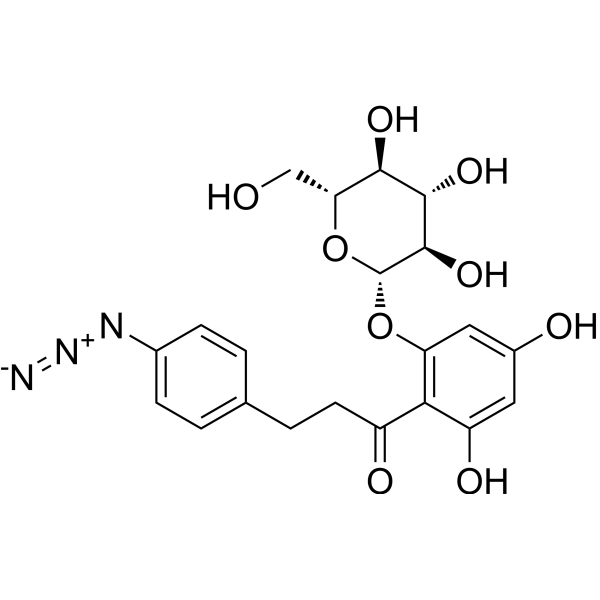
    4-Azidophlorizin is a high affinity probe and photoaffinity label for the glucose transporter in brush border membranes . 4-Azidophlorizin is a click chemistry reagent, it contains an Azide group and can undergo copper-catalyzed azide-alkyne cycloaddition reaction (CuAAc) with molecules containing Alkyne groups. It can also undergo strain-promoted alkyne-azide cycloaddition (SPAAC) reactions with molecules containing DBCO or BCN groups.
    4-Azidophlorizin
  • HY-147150

    Fluorescent Dye Others
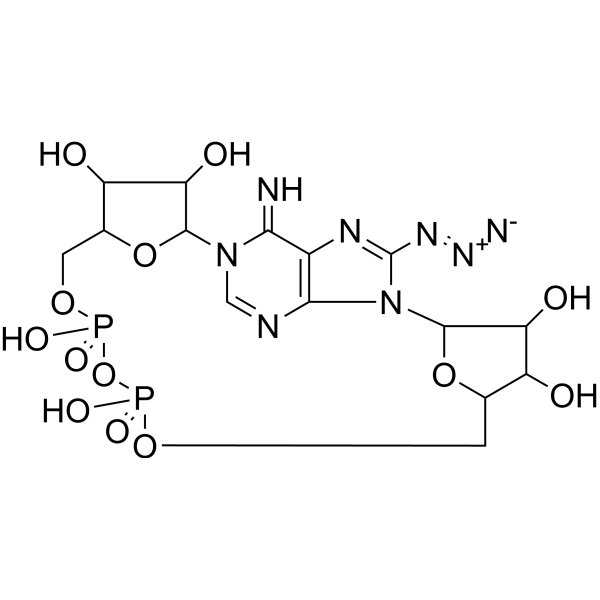
    8-Azido-cADPR, with its photoactive azido group, is a potent photoaffinity probe. 8-Azido-cADPR can be used for the identification and characterization of cADPR-binding proteins . 8-Azido-cADPR is a click chemistry reagent, it contains an Azide group and can undergo copper-catalyzed azide-alkyne cycloaddition reaction (CuAAc) with molecules containing Alkyne groups. It can also undergo strain-promoted alkyne-azide cycloaddition (SPAAC) reactions with molecules containing DBCO or BCN groups.
    8-Azido-cADPR
  • HY-N15937

    Biochemical Assay Reagents Others
    IKS02, a phosphatidylcholine (PC) phospholipid, is a photoaffinity labeling (PAL) probe .
    IKS02
  • HY-129927

    GABA Receptor Others
    Thiomuscimol is a GABAA receptor agonist (IC50=19 nM). It has been used as a photoaffinity label for the purification and identification of GABA binding sites within the GABAA receptor complex.
    Thiomuscimol
  • HY-164910

    DNA/RNA Synthesis Metabolic Disease Inflammation/Immunology
    AHL-Pu-2 is the clickable electrophilic purine. AHL-Pu-2 can be used to directly quantify protein-RNA interactions on proteins through photoaffinity competition with 4-thiouridine (4SU)-labeled RNA in cells .
    AHL-Pu-2
  • HY-176056

    Hedgehog Gli Epigenetic Reader Domain Cancer
    Hedgehog IN-9 (Compound 1) is a Hedgehog inhibitor. Hedgehog IN-9 prevents GLI1 expression and enhances cellular BRD2 protein levels. Hedgehog IN-9 inhibits growth of medulloblastoma spheroid cells and can be used for synthesis of photoaffinity labeling probe .
    Hedgehog IN-9
  • HY-118197

    FLAP Inflammation/Immunology
    L-669083 is a leukotriene biosynthesis inhibitor whose structure is based on a mixture of indole and quinoline. In this study, a potent radioiodinated photoaffinity analog of L-689,037, [125I] L-691,678, was developed and characterized for immunoprecipitation studies showing that the quindole series of leukotriene biosynthesis inhibitors directly interact with FLAP. In addition, the results showed that MK-886, L-674,573, and L-689,037 competed with [125I] L-691,678 and [125I] L-669083 for binding to FLAP in a concentration-dependent manner, indicating that these three leukotriene biosynthesis inhibitors share a binding site on FLAP, further demonstrating that FLAP is a suitable target for structurally diverse leukotriene biosynthesis inhibitors.
    L-669083
  • HY-173542

    P4 Binding Probe

    Drug Derivative Endocrinology
    Progesterone-3-biotinyl Photoaffinity Probe is a compound containing active progesterone (HY-N0437). Progesterone-3-biotinyl Photoaffinity Probe can be used in the research of mechanisms related to sperm activation .
    Progesterone-3-biotinyl Photoaffinity Probe
  • HY-123761

    γ-secretase Neurological Disease
    L505-yne is an active site-directed γ-secretase inhibitor. L505-yne blocks photoaffinity labeling of PS1-NTF, PS1-CTF, and SPP by clickable GSI photoprobes, binds the γ-secretase complex and inhibits Aβ42 production. L458-BPyne can be used for the research of Alzheimer’s disease .
    L505-yne
  • HY-124038

    Biochemical Assay Reagents Neurological Disease
    RX-055 is a diazirine-containing photoaffinity probe. RX-055 can be derived from WOBE437. RX-055 can irreversibly block membrane transport of endocannabinoids. RX-055 exerts site-specific anxiolytic effects in brain .
    RX-055
  • HY-102023R

    Reference Standards Aryl Hydrocarbon Receptor Others
    GNF351 (Standard) is the analytical standard of GNF351 (HY-102023). This product is intended for research and analytical applications. GNF351 is a full aryl hydrocarbon receptor (AHR) antagonist. GNF351 competes with a photoaffinity AHR ligand for binding to the AHR with an IC50 of 62 nM. GNF351 is minimal toxicity in mouse or human keratinocytes .
    GNF351 (Standard)
  • HY-W706341

    Drug Derivative Others
    7,7-Azo-3-α,12-α-dihydroxycholanic acid is a photoinactive (photopolymerization) derivative of Cholic acid (HY-N0324), and it has a relatively low affinity for high-density lipoprotein (HDL) .
    7,7-Azo-3-α,12-α-dihydroxycholanic acid
  • HY-183342

    NO Synthase Drug Derivative Metabolic Disease
    DHEA Benzophenone-biotin is a photoactive DHEA (HY-14650) analog containing Biotin (HY-B0511) and Benzophenone (HY-Y0546) groups. DHEA Benzophenone-biotin inhibits plasma membrane binding of DHEA, activates endothelial NO synthase. DHEA Benzophenone-biotin cross-links to plasma membrane DHEA binding sites upon UV irradiation to identify associated proteins .
    DHEA Benzophenone-biotin

Inquiry Online

Your information is safe with us. * Required Fields.

Salutation


Country or Region *

Applicant Name *


Organization Name *

Department *


Email Address *


Product Name *

Cat. No.


Requested quantity *

Phone Number *


Remarks

Inquiry Online

Inquiry Information

Product Name:
Cat. No.:
Quantity:
MCE Japan Authorized Agent:

