
1. Search Result
Search Result
Results for "

rabbit liver

" in MedChemExpress (MCE) Product Catalog:

30

Inhibitors & Agonists

2

Biochemical Assay Reagents

3

Natural
Products

1

Oligonucleotides

Targets Recommended:
Cat. No. Product Name Target Research Areas Chemical Structure
  • HY-147041
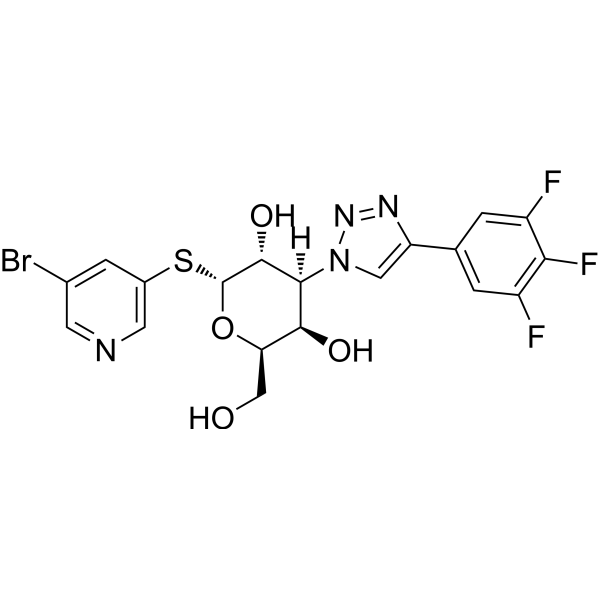
    Selvigaltin
    1 Publications Verification

    GB1211

    Galectin Inflammation/Immunology Cancer
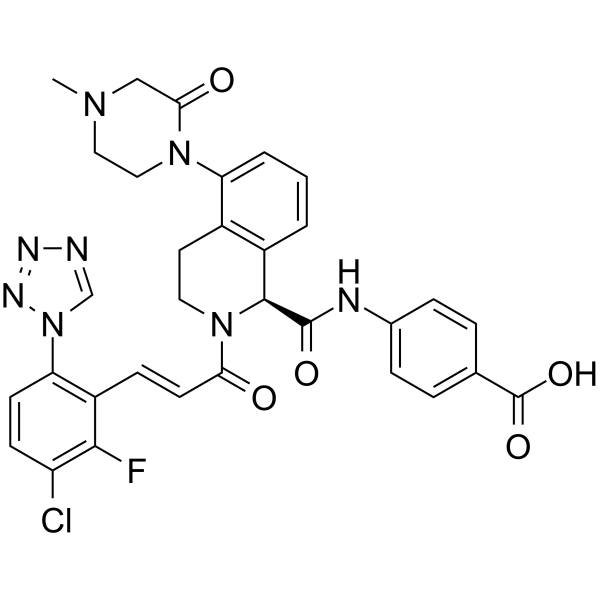
    Selvigaltin (GB1211) is an orally active galectin-3 small molecule inhibitor with an IC50 value of 12 nM in rabbits, showing anti-tumor activity. Selvigaltin decreases galectin-3 levels in the liver and reduces biomarkers of liver function (AST, ALT, bilirubin), inflammation (cells foci) and fibrosis (PSR, SHG), as well as decreasing the mRNA and protein expression of several key inflammation and fibrosis biomarkers (IL6, TGFβ3, SNAI2, collagen). Selvigaltin restores T-cell activity and induces less tumors and metastasis .
    Selvigaltin
  • HY-139838

    Herbicide Others Cancer
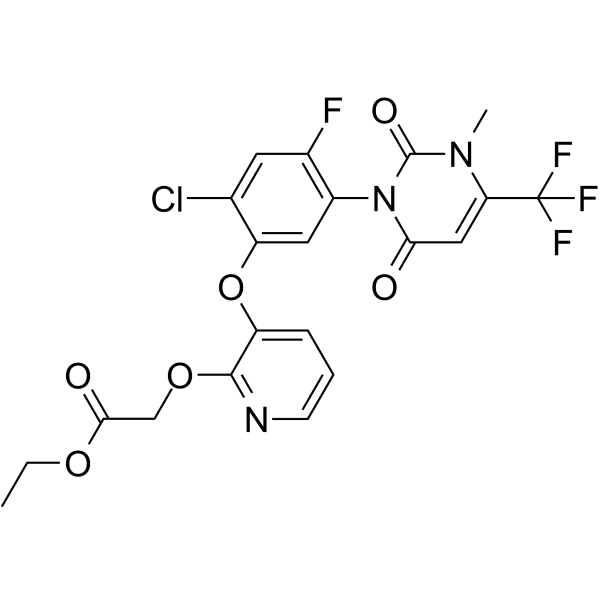
    Epyrifenacil is a protoporphyrinogen oxidase (PPO) inhibiting herbicide, potently targeting the PPO2 isoform from weeds such as Amaranthus palmeri with an IC50 of 0.637 nM. Epyrifenacil also inhibits liver mitochondrial PPO across species, with IC50 values of 2.2 nM (mouse), 2.6 nM (rat), 12.1 nM (rabbit), 7.6 nM (dog), and 10.2 nM (human). Epyrifenacil induces liver tumor development in mice. Epyrifenacil can be used for weed control, and also used as a tool compound in toxicological research to study the mechanism of PPO inhibition, chemical-induced hepatotoxicity, and the mode of action of non-genotoxic carcinogens in rodents [3].
    Epyrifenacil
  • HY-113511B

    Endogenous Metabolite Metabolic Disease
    Glycogen, from rabbit liver, ≥85% is glycogen extracted from rabbit liver. Glycogen, from rabbit liver, ≥85% is a branched polysaccharide condensed from glucose and serves as a storage form of glucose in the body. Glycogen, from rabbit liver, ≥85% plays an important role in physiological processes such as maintaining blood sugar and providing energy .
    Glycogen, from rabbit liver, ≥85%
  • HY-Y0850U3

    Polyvinyl alcohol (Mw 125000, 98-99% hydrolyzed, ~2800 polymerization); Poly(Ethenol) (Mw 125000, 98-99% hydrolyzed, ~2800 polymerization)

    Biochemical Assay Reagents Others
    PVA (Polyvinyl alcohol) (Mw 125000, 98-99% hydrolyzed, ~2800 polymerization) is a water-soluble, biodegradable, biocompatible and non-immunogenic polymer. PVA (Mw 125000, 98-99% hydrolyzed, ~2800 polymerization) causes no irritation to rabbit eyes, no skin sensitization in guinea pigs, promotes the proliferation of human skin keratinocytes, and reduces the loss of corneal endothelial cells. The LD50 of PVA (Mw 125000, 98-99% hydrolyzed, ~2800 polymerization) in rats and dogs is greater than 10 g/kg. PVA (Mw 125000, 98-99% hydrolyzed, ~2800 polymerization) is hardly absorbed by the digestive system, causes no adverse effects upon long-term oral administration, and shows no mutagenicity or carcinogenicity. However, repeated intravenous or portal vein injection of PVA (Mw 125000, 98-99% hydrolyzed, ~2800 polymerization) may induce pathological changes such as glomerular lesions, anemia, hypertension or liver fibrosis in rats or dogs. Crosslinked nanofibers prepared by modifying PVA (Mw 125000, 98-99% hydrolyzed, ~2800 polymerization) can be used in studies related to wound dressings and other applications .
    PVA (Mw 125000, 98-99% hydrolyzed, ~2800 polymerization)
  • HY-114266

    t-TUCB

    Epoxide Hydrolase Cardiovascular Disease Inflammation/Immunology
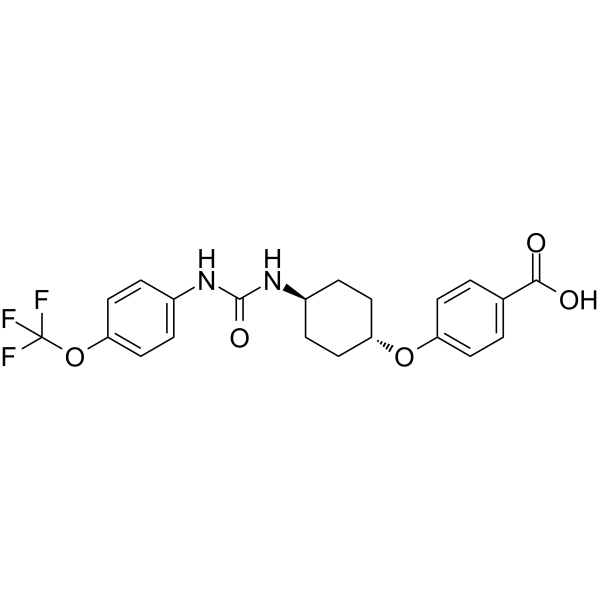
    UC-1728 is a potent rabbit soluble epoxide hydrolase (sEH) inhibitor, with an IC50 of 2 nM on rabbit liver.
    UC-1728
  • HY-117290

    Factor Xa Cardiovascular Disease
    BMS-962212 is a factor XIa (FXIa) inhibitor with a Ki of 0.7 nM against human FXIa and a Ki of 3 nM against rabbit FXIa. BMS-962212 blocks thrombosis while preserving normal hemostatic function. BMS-962212 is applicable to thrombosis-related research .
    BMS-962212
  • HY-141638

    Methyl-IQ

    Biochemical Assay Reagents Cancer
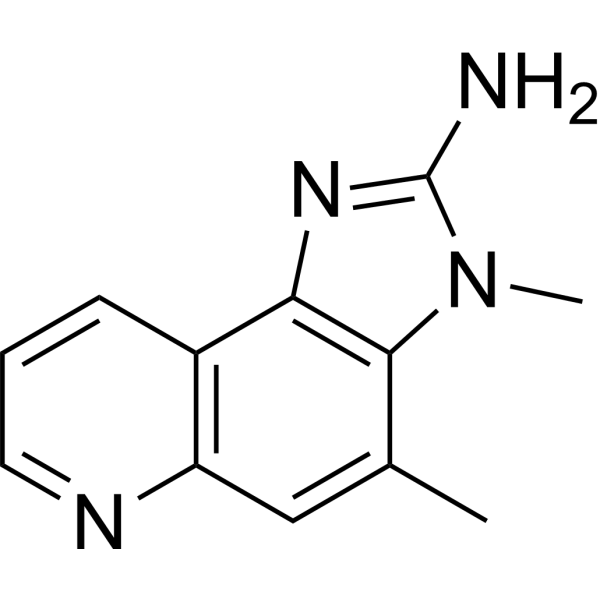
    Me-IQ (Methyl-IQ), an orally active heterocyclic amine, is carcinogenic and mutagenic. Me-IQ is several hundred-fold more mutagenic in liver than in lung microsomal preparations from uninduced mice and rabbits .
    Me-IQ
  • HY-B1087

    Prednisolone 21-hemisuccinate

    Glucocorticoid Receptor Neurological Disease
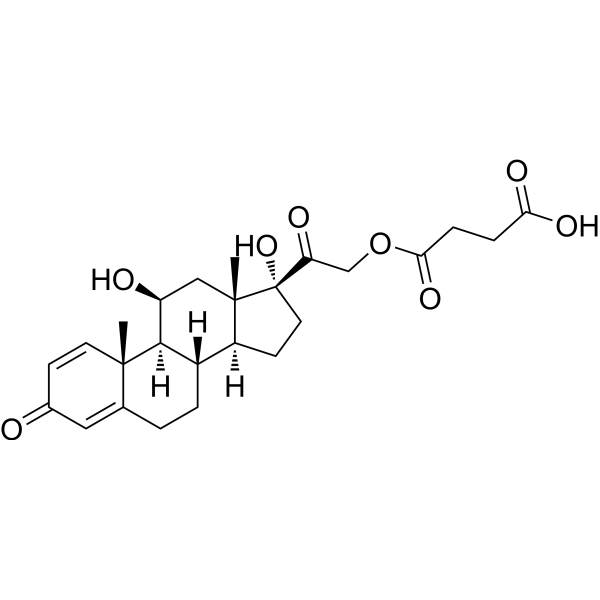
    Prednisolone hemisuccinate (Prednisolone 21-hemisuccinate) is a prodrug of Prednisolone (HY-17463) and a glucocorticoid. Prednisolone hemisuccinate converts to Prednisolone in vivo. Prednisolone hemisuccinate induces the inactivation of glyceraldehyde-3-phosphate dehydrogenase (GAP-DH) in vitro. Prednisolone hemisuccinate can be used in research related to cataracts .
    Prednisolone hemisuccinate
  • HY-110082
    Quinine (hydrochloride)
    5+ Cited Publications

    Flavivirus Dengue Virus Parasite Potassium Channel Cardiovascular Disease Infection Cancer
    Quinine hydrochloride is an alkaloid extracted from cinchona bark and exhibits oral activity, acting as a potassium channel inhibitor. Quinine hydrochloride modulates the tolerance of red blood cells and presents dose-dependent toxicity and embryonic effects. Quinine hydrochloride is a typical hemolysin that directly lyses red blood cells, with cellular components of red blood cell membranes as its action targets. Quinine hydrochloride disrupts red blood cell membranes and induces hemolysis at high concentrations, while merely weakening the anti-hemolytic capacity of red blood cells at low concentrations. Quinine hydrochloride continuously reduces red blood cell tolerance after in vivo administration, and high doses can also alter blood cell counts. Quinine hydrochloride can be applied to researches related to red blood cell hemolysis, cancer and malaria .
    Quinine (hydrochloride)
  • HY-W100234

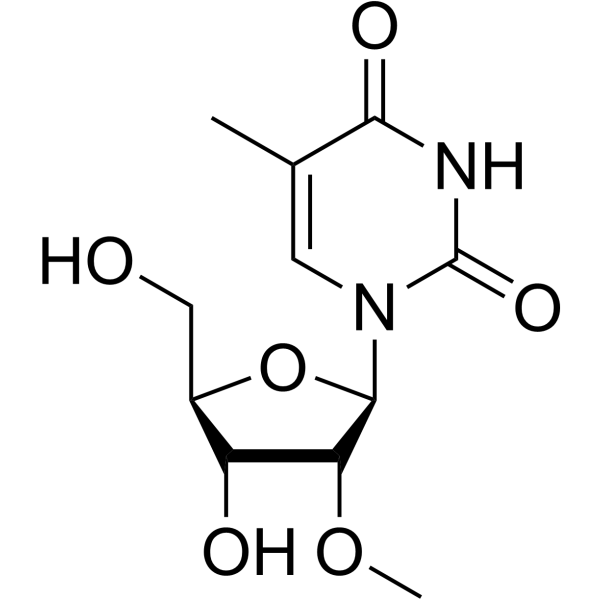
    2'-O-Methyl-5-methyluridine

    Nucleoside Antimetabolite/Analog Cancer
    5-Methyl-2’-O-methyl-uridine (2'-O-methyl-5-methyluridine) is a thymidine analog. Analogs of this series have insertional activity towards replicated DNA. They can be used to label cells and track DNA synthesis. 5-Methyl-2’-O-methyl-uridine is a modified nucleoside that can be found in tRNA isolated from rabbit liver .
    5-Methyl-2′-O-methyl-uridine
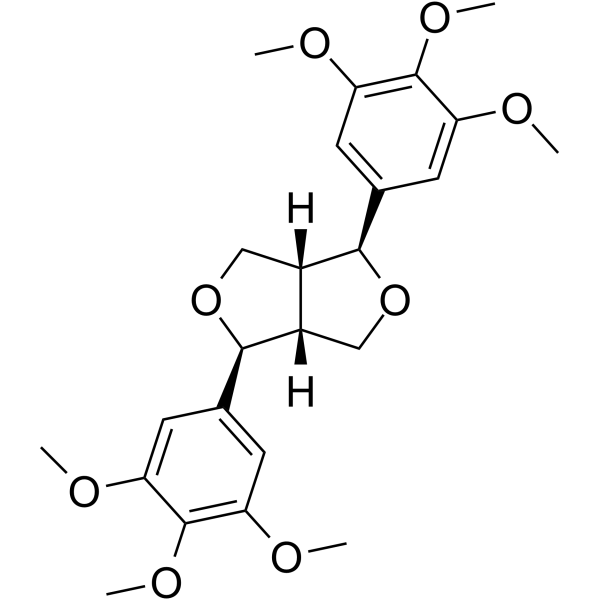
  • HY-N4267

    Calcium Channel Platelet-activating Factor Receptor (PAFR) UGT Leukotriene Receptor TNF Receptor PGE synthase Interleukin Related Cardiovascular Disease Infection Inflammation/Immunology
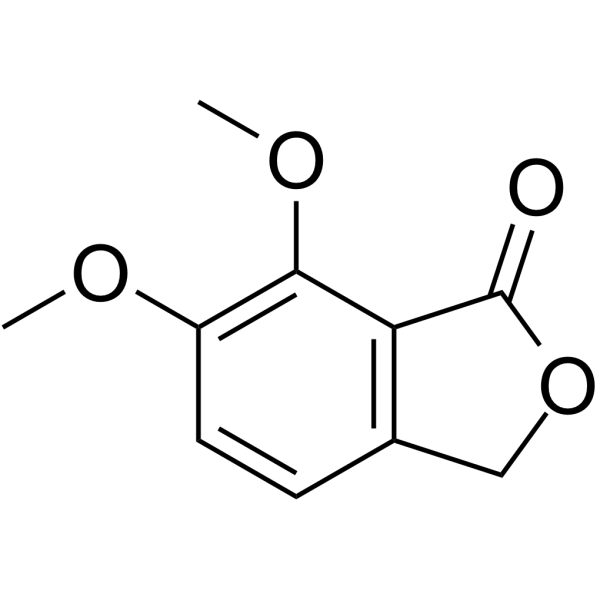
    Yangambin is a PAF receptor antagonist and UGT1A1/UGT1A3 inhibitor, with an IC50 of 29.7 μM and a Ki of 17.1 μM against human UGT1A1, and an IC50 of 56.5 μM and a Ki of 66.8 μM against human UGT1A3. Yangambin blocks PAF-mediated responses, inhibits LTB4-mediated neutrophil infiltration, and suppresses inflammatory events and anaphylactic contraction. Yangambin acts as a central nervous system inhibitor to reduce spontaneous activity, and also exhibits analgesic, anticonvulsant, antileishmanial, vasodilatory and hypotensive effects. Yangambin blocks voltage-gated Ca 2+ channels, reduces the production of NO, TNF-α, IL-6 and PGE2 in cells, increases the production of IL-10, and exerts a protective effect against cardiovascular injury. Yangambin can be used in research related to allergies, cutaneous leishmaniasis, central nervous system diseases and cardiovascular diseases .
    Yangambin
  • HY-W103317

    Indoxazene

    Drug Intermediate Neurological Disease
    1,2-Benzisoxazole (Indoxazene) is a potential substrate of rabbit liver aldehyde oxidase. 1,2-Benzisoxazole was used in the discovery and development of zonisamide (HY-B0124) for the study of epilepsy and Parkinson's disease .
    1,2-Benzisoxazole
  • HY-101627

    Acyltransferase Metabolic Disease
    YM17E is an inhibitor of acyl CoA:cholesterol acyltransferase (ACAT), with IC50 of 44 nM in rabbit liver microsomes in vitro.
    YM17E
  • HY-E70124C

    Biochemical Assay Reagents Metabolic Disease
    Esterase, Rabbit liver is a carboxylate hydrolase. Esterase, Bacillus subtilis accepts a branched alcohol moiety as substrate .
    Esterase, Rabbit liver
  • HY-124446

    Carboxylesterase (CES) Metabolic Disease
    Dibromsalicil (Compound 31) is a carboxylesterase (CES) inhibitor with activity of 72.7 nM against hiCE (human intestinal carboxylesterase) and 53.5 nM against rCE (rabbit liver carboxylesterase). Dibromsalicil has almost no activity against hCE1 (human liver carboxylesterase) and cholinesterase .
    Dibromsalicil
  • HY-123368

    Adrenergic Receptor Cardiovascular Disease
    Zolertine hydrochloride is an α-adrenoceptor antagonist with a pKi of 6.81 in rat liver1B-adrenoceptors) and 6.35 in rabbit liver1A-adrenoceptors) membranes .
    Zolertine hydrochloride
  • HY-U00369

    Acyltransferase Cardiovascular Disease
    FCE 28654 is an inhibitor of acylCoA: cholesterol acyltransferase (ACAT), weakly inhibiting ACAT in microsomes from rabbit aorta and intestine, and monkey liver, with IC50s of 2.55, 1.08 and 5.69 μM, respcetively.
    FCE 28654
  • HY-121762

    Acyltransferase Cardiovascular Disease
    NTE-122 (dihydrochloride) is an inhibitor of acyl-CoA:cholesterol acyltransferase (ACAT), with the IC50 in liver and aorta of cholesterol-fed rabbits of 7.6nM, 4.4nM and 9.6 nM, respectively, that plays an important role in atherosclerosis .
    NTE-122 dihydrochloride
  • HY-177148

    Biochemical Assay Reagents Cardiovascular Disease
    G256 (Compound 1) is an amidinohydrazone. G256 can also be considered as a Schiff’s base of aminoguanidine. G256 exhibits antiarrhythmic activity. G256 is the reduced form of NOH-G256 by microsomal enzyme preparation from rabbit and rat liver homogenates in the presence of NADPH and NADH .
    G256
  • HY-177148A

    Biochemical Assay Reagents Cardiovascular Disease
    G256 (Compound 1) (dihydrochloride) is an amidinohydrazone. G256 (dihydrochloride) can also be considered as a Schiff’s base of aminoguanidine. G256 (dihydrochloride) exhibits antiarrhythmic activity. G256 (dihydrochloride) is the reduced form of NOH-G256 by microsomal enzyme preparation from rabbit and rat liver homogenates in the presence of NADPH and NADH .
    G256 dihydrochloride
  • HY-122224

    Sigma Receptor Cancer
    SW43 is a Sigma-2 selective ligand and agonist. SW43 is an ideal molecule for the development of cancer-targeted drug compounds. SW43 conjugated with DOX-L-NETA ( 89Y) exhibits antitumor activity in a VX2 cancer liver tumor allograft rabbit model. SW 43 conjugated with SW IV-52s to form SW III-123 activates the NF-κB pathway, has potent cytotoxicity against ovarian cancer cell lines, and induces apoptosis .
    SW43
  • HY-101823A

    Abbott 81282

    Angiotensin Receptor Cardiovascular Disease
    A-81282 (Abbott 81282) is an antagonist of angiotensin II's AT1 receptor, with a pA2 value of 9.64 at the AT1 receptor in rabbit aorta. A-81282 also demonstrates significant inhibitory action on the binding of [125i]_Sar1_lle8_Angiotensin_ll to rat liver membranes, with a pKI value of 8.505. A-81282 has antihypertensive activity and can effectively lower blood pressure in renal artery-ligated rats .
    A-81282
  • HY-105572

    MC-838 calcium

    Angiotensin-converting Enzyme (ACE) Cardiovascular Disease
    Moveltipril calcium (MC-838 calcium) is an orally active angiotensin converting enzyme (ACE) inhibitor with antihypertensive activity. Moveltipril calcium binds via a stable thioester bond and exhibits relative resistance to enzymatic hydrolysis in rat liver homogenate. Moveltipril calcium effectively inhibits ACE extracted from rabbit lung in a concentration-dependent manner. Moveltipril calcium is able to highly specifically inhibit the contractile response to angiotensin-I (AI) in free rat aortic rings and guinea pig ileum preparations, while enhancing the contractile response to calcitonin .
    Moveltipril calcium
  • HY-123189

    Dopamine Receptor Neurological Disease
    LY 171859 is a D2 receptor agonist with significant reductase activity. LY 171859 exhibits enzymatic activity in the cytoplasm of liver, lung, and kidney, and also contains significant reductase activity in rat and human blood. LY 171859 has higher hepatic reductase activity in guinea pigs, followed by hamsters, rabbits, rats, and mice. The substrate of LY 171859 shows an apparent Km of 5.6 μM. The reduction reaction of LY 171859 is NADPH-dependent with an apparent Km of 14.8 μM. Only the A-side hydrogen of NADPH is incorporated in the reduction product of LY 171859. The reaction of LY 171859 is inhibited by cyanide and thiol reagents, and phenobarbital does not induce its activity in rats .
    LY 171859
  • HY-W982689

    Biochemical Assay Reagents Metabolic Disease
    Fluindarol is a phenylindandione derivative and an orally active anticoagulant. Fluindarol acts as a toxicant that induces organ and tissue haemorrhages and liver parenchymal necrosis in rats. Fluindarol exhibits acute and cumulative preclinical toxicity in rats, rabbits, and dogs, with higher toxicity in female rats than male rats. Fluindarol lacks analgesic action, produces only minor blood pressure effects, and does not alter circulation, respiration, CNS, or cardiac activity. Fluindarol is considered too toxic for clinical use based on preclinical data .
    Fluindarol
  • HY-183177

    Adrenergic Receptor Cardiovascular Disease
    Zolertine is an α-adrenergic receptor antagonist, with a pKi of 6.35 for rabbit α1A-adrenergic receptor and a pKi of 6.81 for rat α1B-adrenergic receptor. Zolertine competitively blocks α1D-adrenergic receptor-mediated vasoconstriction and α1A-adrenergic receptor-mediated vasoconstriction in arteries. Zolertine can be used in the research of hypertension .
    Zolertine
  • HY-W237019

    Bacterial Infection
    3-Ethoxybenzamide is an alkoxybenzamide compound with antibacterial activity and a FtsZ inhibitor that can cross the blood-brain barrier. 3-Ethoxybenzamide distributes widely and rapidly in vivo, rapidly reaches equilibrium between various tissues and blood, and is linearly taken up by hepatocytes. 3-Ethoxybenzamide is completely dependent on hepatic microsomal oxidation for clearance, with salicylamide as its major metabolite. 3-Ethoxybenzamide can be used for the study of bacterial infections .
    3-Ethoxybenzamide
  • HY-105136A

    Drug Derivative Infection Cancer
    Dezaguanine is a purine analog. Dezaguanine exhibits antitumor activity in leukemia and breast cancer cells. Dezaguanine can be used in cancer-related research .
    Dezaguanine
  • HY-182578

    Tryptophan Hydroxylase Cardiovascular Disease
    Mimosinamine is a hydroxylase inhibitor with Fe 2+ chelating activity. Mimosinamine inhibits bovine adrenal tyrosine hydroxylase, rat liver phenylalanine hydroxylase, and rat brainstem tryptophan hydroxylase. Mimosinamine can be used in the research of hypertension .
    Mimosinamine
  • HY-N19001

    Drug Metabolite Metabolic Disease
    (rac)-5-Hydroxykynurenine is a urinary metabolite. (rac)-5-Hydroxykynurenine is generated via indole ring oxidative cleavage of 5-hydroxytryptophan (HY-N0122) catalyzed by indoleamine 2,3-dioxygenase .
    (rac)-5-Hydroxykynurenine

Inquiry Online

Your information is safe with us. * Required Fields.

Salutation


Country or Region *

Applicant Name *


Organization Name *

Department *


Email Address *


Product Name *

Cat. No.


Requested quantity *

Phone Number *


Remarks

Inquiry Online

Inquiry Information

Product Name:
Cat. No.:
Quantity:
MCE Japan Authorized Agent:

