1. Search Result
Search Result
Results for "

rat polymorphonuclear leukocytes

" in MedChemExpress (MCE) Product Catalog:

8

Inhibitors & Agonists

1

Peptides

3

Natural
Products

Cat. No. Product Name Target Research Areas Chemical Structure
  • HY-W016733

    H-D-Cit-OH

    Endogenous Metabolite Cardiovascular Disease
    D-Citrulline (H-D-Cit-OH) is a stereoisomer of L-citrulline (HY-N0391). D-Citrulline significantly attenuates polymorphonuclear leukocyte (PMN)-induced cardiac contractile dysfunction in the isolated perfused rat heart subjected to ischemia/reperfusion via a non-NO-mediated mechanism .
    D-Citrulline
  • HY-120314

    Apoptosis Caspase Endogenous Metabolite Inflammation/Immunology
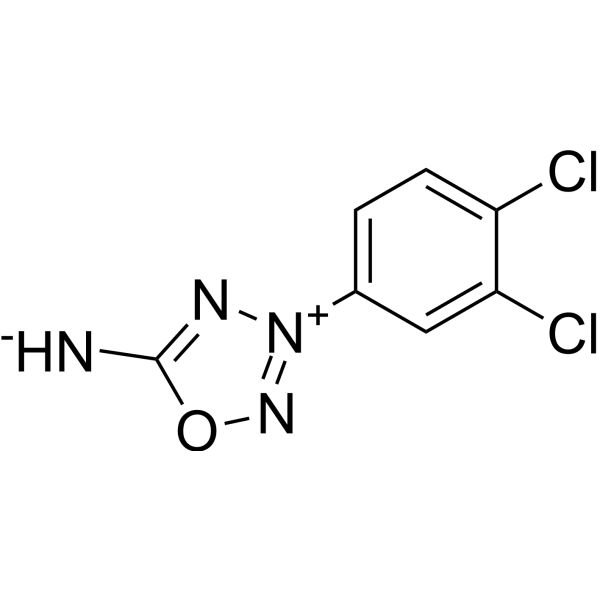
    GEA 3162 is an orally active compound that acts as a NO/ONOO⁻ donor. GEA 3162 significantly inhibits the activation of human polymorphonuclear leukocytes (PMNs) through the cGMP pathway, inhibits the release of inflammatory mediators, and exerts anti-inflammatory and protective effects. GEA 3162 induces apoptosis of neutrophils and bone marrow cells by activating caspase-2/3/8/9 through the ONOO⁻ pathway. GEA 3162 has a bidirectional effect in the rat gastric ulcer model: at low doses, it significantly reduces gastric mucosal damage, while at high doses, it aggravates the ulcer area. GEA 3162 can be used for research on inflammatory conditions such as gastric ulcers .
    GEA 3162
  • HY-N9970

    Others Inflammation/Immunology
    Apigenin 7-O-β-D-glucuronide ethyl ester is a flavonoid glucuronate ester that can be isolated from Scutellaria regeliana. Apigenin 7-O-β-D-glucuronide ethyl ester possesses anti-inflammatory activity on the release of β-glucuronidase from rat polymorphonuclear leukocytes (PNMs) induced by platelet activating-factor. Apigenin 7-O-β-D-glucuronide ethyl ester can be used for anti-inflammatory research .
    Apigenin 7-O-β-D-glucuronide ethyl ester
  • HY-N17236

    β-glucuronidase Influenza Virus RSV Infection
    Foryshiyanine A is a triterpenoid alkaloid. Foryshiyanine A possesses anti-inflammatory activity, inhibiting the release of β-glucuronidase from rat polymorphonuclear leukocytes. Foryshiyanine A exhibits antiviral activity, with an EC50 of 4.5 μM against respiratory syncytial virus (RSV) and an IC50 of 7.3 μM against influenza A virus (H1N1). Foryshiyanine A reduces viral load by disrupting viral replication and entry. Foryshiyanine A may be used for the researches of inflammation and infection .
    Forsyshiyanine A
  • HY-N2247A

    Platelet-activating Factor Receptor (PAFR) Metabolic Disease
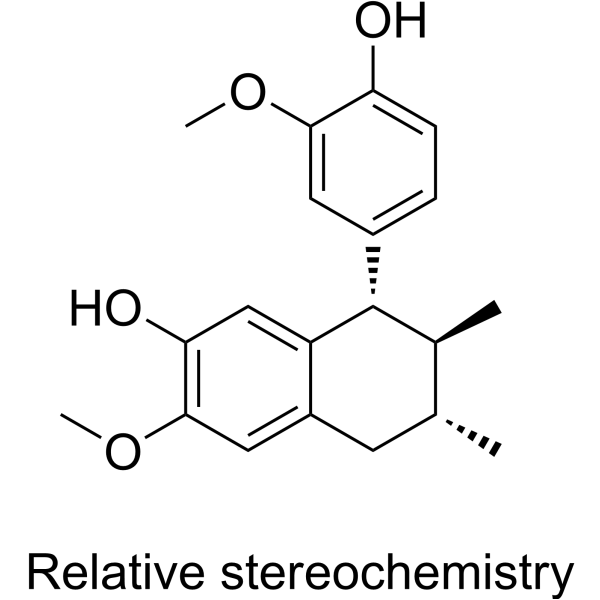
    (+)-Guaiacin is a compound extracted of the bark of Machilus wangchiana Chun. (Lauraceae). (+)-Guaiacin shows potent in vitro activities against the release of β-glucuronidase in rat polymorphonuclear leukocytes (PMNs) induced by platelet-activating factor (PAF) .
    (+)-Guaiacin
  • HY-167715

    Histamine Receptor Phosphodiesterase (PDE) Inflammation/Immunology
    Traxanox is an orally available diuretic that enhances phagocytosis of yeast granules by mouse peritoneal macrophages and rat peritoneal polymorphonuclear leukocytes in vitro. Traxanox inhibits IgE-mediated histamine release and cyclic AMP phosphodiesterase activity.Traxanox exhibits anti-inflammatory activity, as it inhibits the anaphylactoid reaction and reduces pleural fluid accumulation in experimental models of inflammation. Traxanox also demonstrates a synergistic effect when combined with hydrocortisone or indomethacin in suppressing adjuvant arthritis in rats.
    Traxanox
  • HY-120314A

    Apoptosis Caspase Endogenous Metabolite Inflammation/Immunology
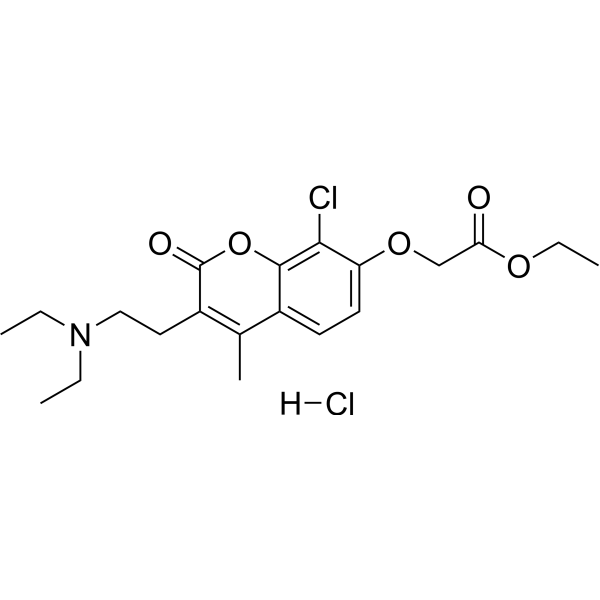
    GEA 3162 hydrochloride is an orally active compound that acts as a NO/ONOO⁻ donor. GEA 3162 hydrochloride significantly inhibits the activation of human polymorphonuclear leukocytes (PMNs) through the cGMP pathway, inhibits the release of inflammatory mediators, and exerts anti-inflammatory and protective effects. GEA 3162 hydrochloride induces apoptosis of neutrophils and bone marrow cells by activating caspase-2/3/8/9 through the ONOO⁻ pathway. GEA 3162 hydrochloride has a bidirectional effect in the rat gastric ulcer model: at low doses, it significantly reduces gastric mucosal damage, while at high doses, it aggravates the ulcer area. GEA 3162 hydrochloride can be used for research on inflammatory conditions such as gastric ulcers .
    GEA 3162 hydrochloride
  • HY-124183

    CXCR Inflammation/Immunology
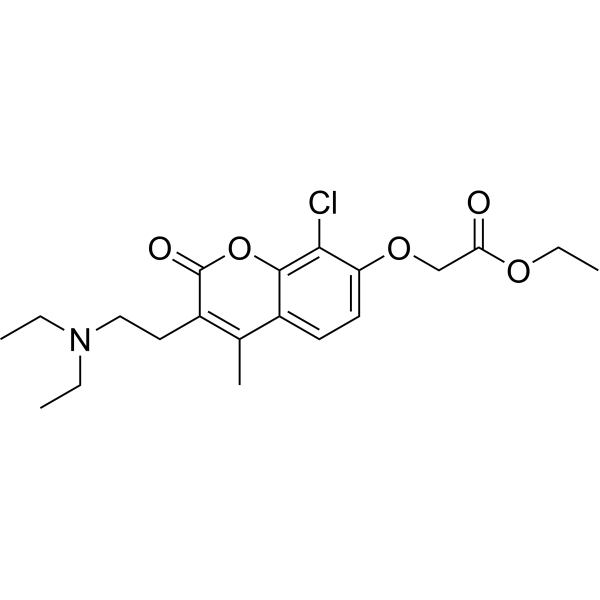
    SX-576 is a CXCR1 and CXCR2 antagonist with IC50 values of 31 nM and 21 nM, respectively. SX-576 inhibits neutrophil infiltration in a rat model of pulmonary inflammation. SX-576 can be used in studies related to pulmonary inflammation .
    SX-576

Inquiry Online

Your information is safe with us. * Required Fields.

Salutation


Country or Region *

Applicant Name *


Organization Name *

Department *


Email Address *


Product Name *

Cat. No.


Requested quantity *

Phone Number *


Remarks

Inquiry Online

Inquiry Information

Product Name:
Cat. No.:
Quantity:
MCE Japan Authorized Agent:

