1. Search Result
Search Result
Results for "

real-time monitoring

" in MedChemExpress (MCE) Product Catalog:

44

Inhibitors & Agonists

14

Fluorescent Dye

14

Biochemical Assay Reagents

Cat. No. Product Name Target Research Areas Chemical Structure
  • HY-116215
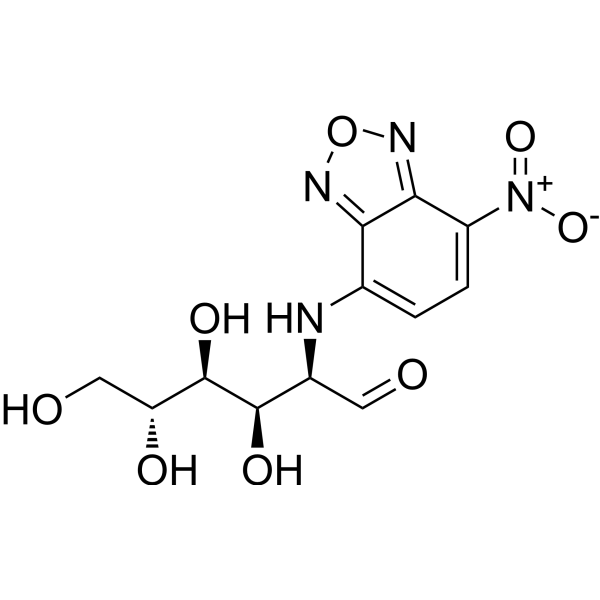
    2-NBDG
    70+ Cited Publications

    Fluorescent Dye Others
    2-NBDG is a fluorescently-labeled deoxyglucose analog that is used primarily to directly monitor glucose uptake by living cells and tissues. It is also used as a topical contrast reagent for the detection of neoplasia. 2-NBDG can be used in real-time confocal, high-resolution, or wide-field fluorescence microscopy as well as in flow cytometry. The probe can be excited by the Argon laser at 488 nm to give the environment-sensitive fluorescence. It has lower photostability than the rhodamine-based fluorescent probes.
    2-NBDG
  • HY-W116606

    Fluorescent Dye Others
    Coumarin boronic acid is a fluorescent probe. The excitation and emission wavelengths of coumarin boronic acid are set to 360 nm and 430 nm, respectively. Coumarin boronic acid can be used to monitor the formation of amino acid and protein hydroxyl peroxides in real time, which is beneficial for understanding the mechanisms of oxidative stress and protein post-translational modification .
    Coumarin boronic acid
  • HY-108715A
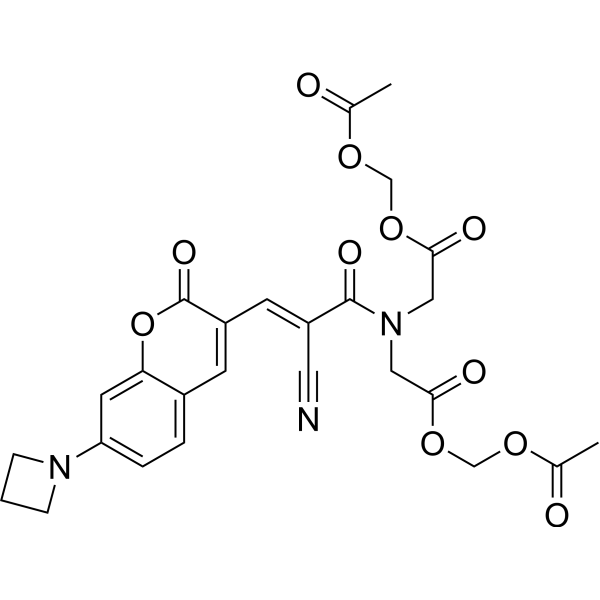
    RT-AM
    5+ Cited Publications

    Fluorescent Dye Neurological Disease
    RT-AM is a pro-agent real thiol. Real Thiol is a reversible reaction-based fluorescent probe which can quantitatively monitor the real-time glutathione dynamics in living cells.
    RT-AM
  • HY-DY1019

    Fluorescent Dye Others
    2-NBDG (solution) is a fluorescently-labeled deoxyglucose analog that is used primarily to directly monitor glucose uptake by living cells and tissues. It is also used as a topical contrast reagent for the detection of neoplasia. 2-NBDG can be used in real-time confocal, high-resolution, or wide-field fluorescence microscopy as well as in flow cytometry. The probe can be excited by the Argon laser at 488 nm to give the environment-sensitive fluorescence. It has lower photostability than the rhodamine-based fluorescent probes.
    Solvent and Concentration: Sterile PBS: 5 mM
    2-NBDG (solution)
  • HY-108715

    Fluorescent Dye Neurological Disease
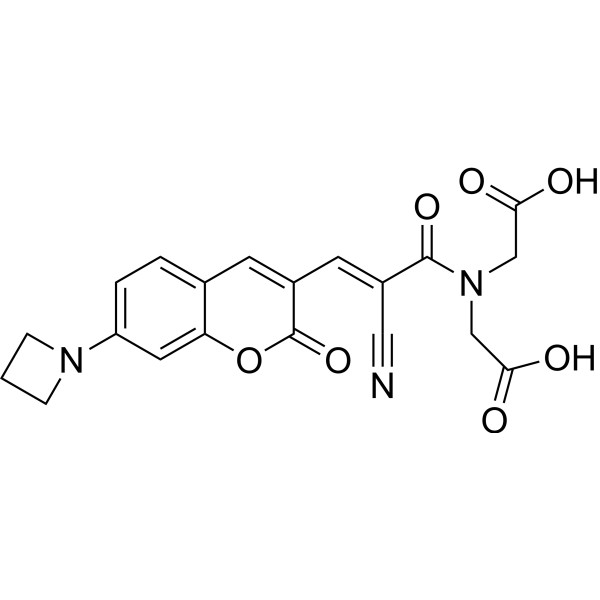
    Real Thiol is a reversible reaction-based fluorescent probe which can quantitatively monitor the real-time glutathione dynamics in living cells.
    Real Thiol
  • HY-D1422

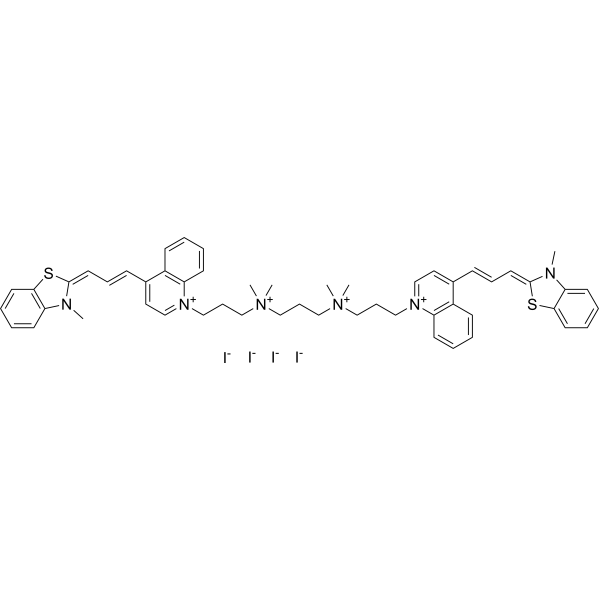
    BDNCA-346

    Fluorescent Dye Others
    ER Tracker Yellow is an endoplasmic reticulum-targeted temperature-visible fluorescent probe. ER Tracker Yellow has high temperature sensitivity (3.9%/°C) and is not affected by pH and Ca 2+ interference. ER Tracker Yellow can be used for real-time monitoring of local temperature changes in the ER area. ER Tracker Yellow maintains its function in fixed cells. ER Tracker Yellow is suitable for various cell lines and primary cells, such as HeLa cells, MEF cells, and other cells .
    ER Tracker Yellow
  • HY-158741

    APG-2 Acetoxymethyl ester

    Fluorescent Dye Potassium Channel Others
    IPG-2 AM (APG-2 Acetoxymethyl ester) is a membrane-permeant acetoxymethyl ester derivative and selective fluorescent potassium ion indicator. IPG-2 AM exhibits fluorescence increases proportional to extracellular potassium ion concentrations. IPG-2 AM enables real-time monitoring of cytosolic free potassium ion fluxes in human platelets and macrophages. IPG-2 AM can be used for the research of intracellular potassium concentration dynamics .
    IPG-2 AM
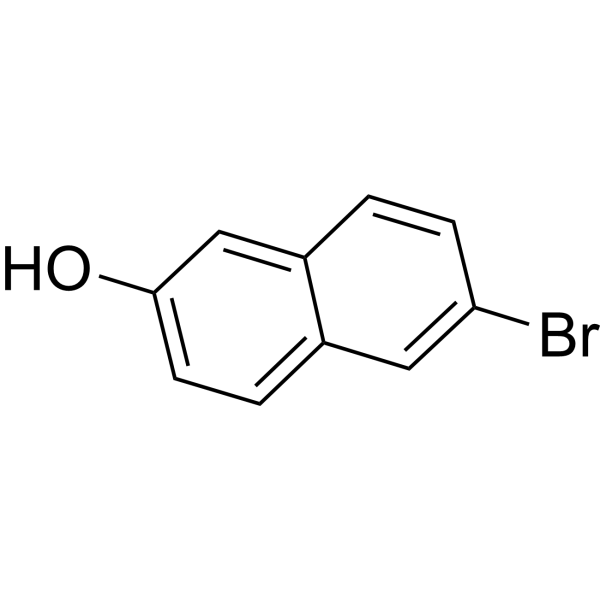
  • HY-W001952

    Fluorescent Dye Drug Intermediate Others
    6-Bromo-2-naphthol is an RTP (real-time polymerase chain reaction) probe that forms a 1:1 or 2:1 complex with β-cyclodextrin (β-CD). 6-Bromo-2-naphthol is capable of real-time monitoring of PCR reactions and quantification of specific nucleic acid sequences. RTP probes are a class of small DNA or RNA sequences labeled with fluorescent dyes and quencher molecules, which can be widely used in gene expression analysis, SNP genotyping, and pathogen detection. 6-Bromo-2-naphthol embeds into the cyclodextrin cavity through hydrophobic interactions, inhibits the oxygen quenching effect, and emits a phosphorescent signal at room temperature. 6-Bromo-2-naphthol can also be used as an intermediate for the synthesis of antibacterial azo dyes, and its derivatives show antibacterial activity against Staphylococcus aureus, Escherichia coli and other bacteria .
    6-Bromo-2-naphthol
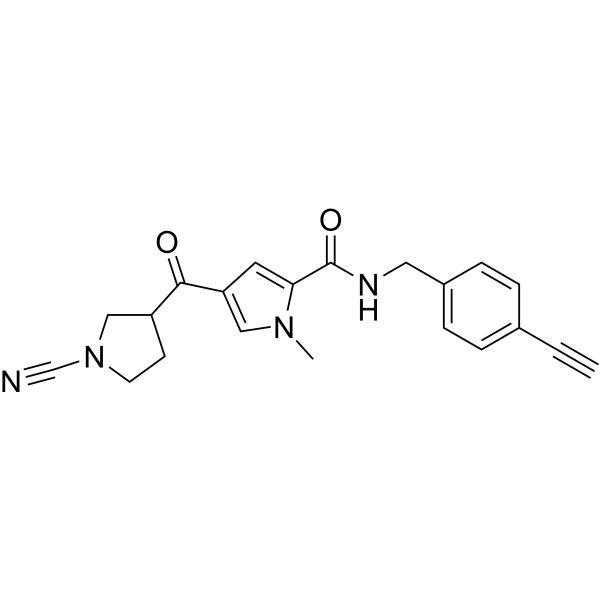
  • HY-D2188

    Deubiquitinase Cancer
    IMP-2373 is a low-toxicity activity-based probe targeting covalent pan-deubiquitinase (DUB), which modulates and monitors DUB activity via covalent binding to the catalytic cysteine and active site of DUB. IMP-2373 enables real-time tracking of dynamic intracellular DUB activity in physiologically relevant living cell systems, and quantitative analysis of activity changes induced by pharmacological inhibition or MYC dysregulation. IMP-2373 can be used for research on related diseases such as B-cell lymphoma .
    IMP-2373
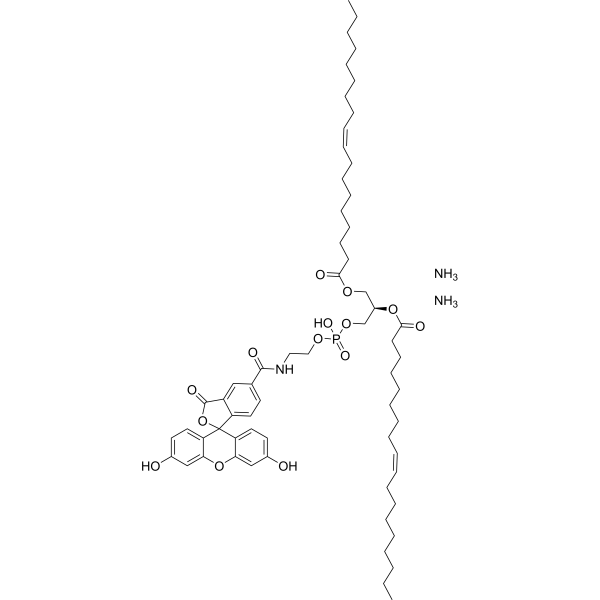
  • HY-D1556

    1,2-dioleoyl-sn-glycero-3-phosphoethanolamine-N-(carboxyfluorescein) ammonium

    Fluorescent Dye Cancer
    18:1 PE CF (1,2-dioleoyl-sn-glycero-3-phosphoethanolamine-N-(carboxyfluorescein) (ammonium)) is a pH-sensitive fluorescent indicator. 18:1 PE CF exhibits changes in fluorescence intensity in response to pH variations and reflects the electrostatic states of cationic liposomes and lipoplexes. 18:1 PE CF supports real-time visualization of pH distribution and membrane deformation in giant unilamellar vesicles and is suitable for steady-state fluorescence testing in large unilamellar vesicle membranes. 18:1 PE CF is capable of monitoring the surface electrical potential of cationic liposomes and lipoplexes and can effectively label lipid bilayers and nanomicelles. 18:1 PE CF can be used for the research of the investigation of lung cancer (Ex = 495 nm; Em = 520 nm) .
    18:1 PE CF
  • HY-171995

    Rotor NO.4 TFA

    Fluorescent Dye Bacterial Infection
    Rf470 (Rotor NO.4) TFA is a FMR-probe-D-lysine conjugate (Max Ex: 470 nM; Max Em: 640 nM) that can be covalently incorporated into peptidoglycan by bacteria. Rf470 TFA has extremely weak fluorescence in the free state, but its fluorescence is significantly enhanced when it is catalytically incorporated into peptidoglycan by transpeptidases. Through fluorescence changes, Rf470 TFA can be used for real-time monitoring of peptidoglycan biosynthesis, detection of transpeptidase activity, and screening of antibiotics, etc .
    Rf470 TFA
  • HY-178819

    Integrin Drug Intermediate Cancer
    NM-001 is a theranostic prodrug that targets ανβ3 integrin. NM-001 consists of cRGD and GFLG peptides, a DCM fluorophore and Chlorambucil (HY-13593). NM-001 internalizes into lysosomes of tumor cells via the cRGD peptide, and generates NM-002 (HY-178820) and Chlorambucil through intracellular cleavage at the GFLG peptide by overexpressed Cathepsin B (CTSB). NM-001 exhibits green fluorescence under physiological conditions, and converts to NIR fluorescence by CTSB activation. NM-001 has significant antitumor activity with low toxicity in HeLa cell xenografts mouse models. NM-001 can be used for real-time drug release monitoring research .
    NM-001
  • HY-143618

    Biochemical Assay Reagents Cancer
    photoCORM-2 (compound 3) is a single carbon monoxide releasing molecule (CORM). photoCORM-2 exhibits good cellular uptake and real-time monitoring ability of CO uncaging by a color change approach. photoCORM-2 has anti-tumor activity .
    photoCORM-2
  • HY-155395

    Fluorescent Dye Infection
    DDAN-MT is an enzymatic activated near-infrared fluorescent probe. DDAN-MT can be used for rapid, highly selective, and real-time monitoring of endogenous MtMET-AP1 activity in M. tuberculosis .
    DDAN-MT
  • HY-147507

    Fluorescent Dye Others
    SBP-1 is a sulfite bioluminescent probe (SBP). SBP-1 exhibits the excellent responsivity, selectivity and sensitivity towards sulfite. The recognition of SBP-1 towards sulfite is based on the mechanism of a sulfite-mediated intramolecular cleavage reaction. SBP-1 can be used for detection of exogenous and endogenous sulfite in living animal. SBP-1 also possesses a capability for quantitatively detecting sulfite within a certain concentration range in solution .
    SBP-1
  • HY-D2338

    Fluorescent Dye Others
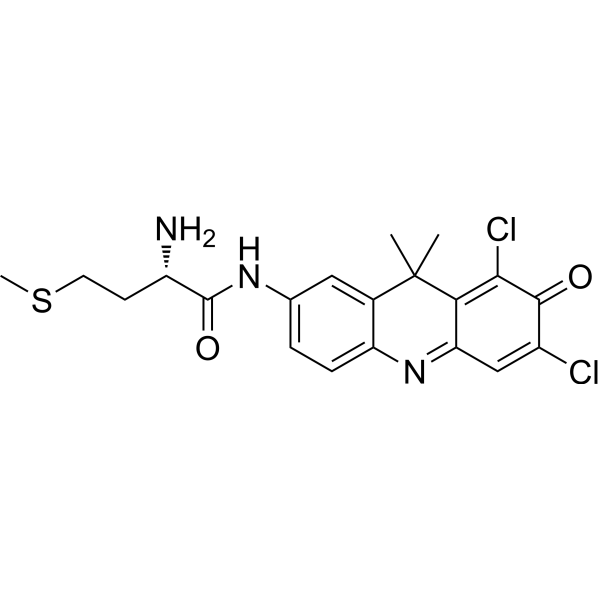
    PMBD is a lysosome (Lyso)-targeting fluorescent probe. PMBD selectively and sensitively detects endogenous N-acylethanolamine amidase (NAAA), allowing real-time visual monitoring of endogenous NAAA in living cells. PMBD has a maximum absorption peak at 350 nm. After the metabolism of NAAA, the maximum absorption peak of the product AMBD shifts red to 450 nm, and a significant fluorescence emission signal appears at 550 nm .
    PMBD
  • HY-W112090

    PdTFPP; 5,10,15,20-Tetrakis(pentafluorophenyl)-21H,23H-porphine palladium(II)

    Fluorescent Dye Others
    Palladium meso-tetra(pentafluorophenyl)porphyrin (PdTFPP) derives from palladium(II), acting as a fluorescence-quenched optical probe and high-performance oxygen concentration sensor with outstanding photostability and antioxidant capacity. Palladium meso-tetra(pentafluorophenyl)porphyrin exhibits reduced luminescence intensity as dissolved oxygen concentration rises. Palladium meso-tetra(pentafluorophenyl)porphyrin can be applied for real-time monitoring of live-cell respiration, hypoxic tissue imaging, and nanofibrous organic semiconductors in photodetectors for ambient oxygen detection .
    Palladium meso-tetra(pentafluorophenyl)porphyrin
  • HY-D1637

    Fluorescent Dye Others
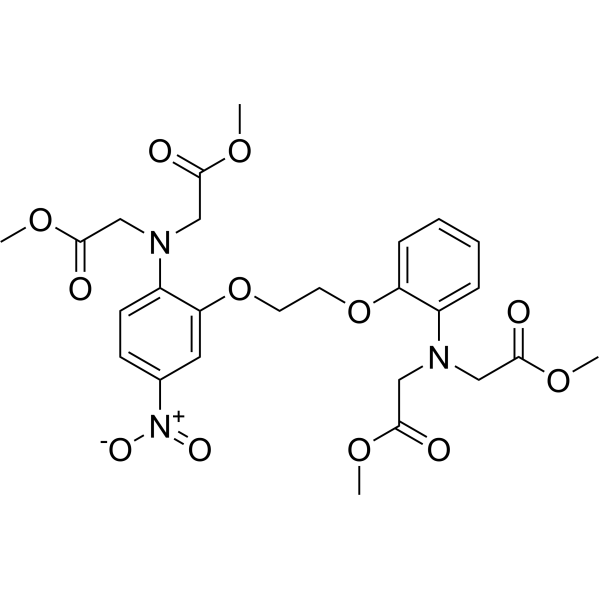
    5-Nitro BAPTA tetramethyl ester is a calcium chelator. 5-Nitro BAPTA tetramethyl ester involves in the two-photon probe synthesis, and is used for real-time imaging of intracellular calcium ions, calcium waves monitoring at a depth of 100-300 μm in liver tissues for 1100-4000 s. 5-Nitro BAPTA tetramethyl ester, together with fluorescent compound 2-Me-substituted TM, can be used to form a red fluorescent probe (CaTM-2 AM) .
    5-Nitro BAPTA tetramethyl ester
  • HY-D3005

    Fluorescent Dye Autophagy Inflammation/Immunology
    NpCy-4 is a reliable reporter for monitoring lysosomal pH and viscosity changes in real time during Autophagy (λex = 650 nm; λem = 660-740 nm). NpCy-4 demonstrates a superior signal-to-background ratio (SBR) for cellular imaging. NpCy-4 facilitates real-time, noninvasive diagnostic imaging of acute gastritis model with high contrast .
    NpCy-4
  • HY-142955

    Biochemical Assay Reagents Cancer
    Dual photoCORM 1 (compound 5) is metal-free, photochemically active dual CORM. Dual photoCORM 1 exhibits good cellular uptake and real-time monitoring ability of CO uncaging by a color change approach in cancerous B16F10 cells .
    Dual photoCORM 1
  • HY-143617

    Photosensitizer Cancer
    photoCORM-1 (compound 8) is a combinatorial carbon monoxide releasing molecule (CORM). photoCORM-1 exhibits good cellular uptake and real-time monitoring ability of CO uncaging by a color change approach. photoCORM-1 has anti-tumor antivity .
    photoCORM-1
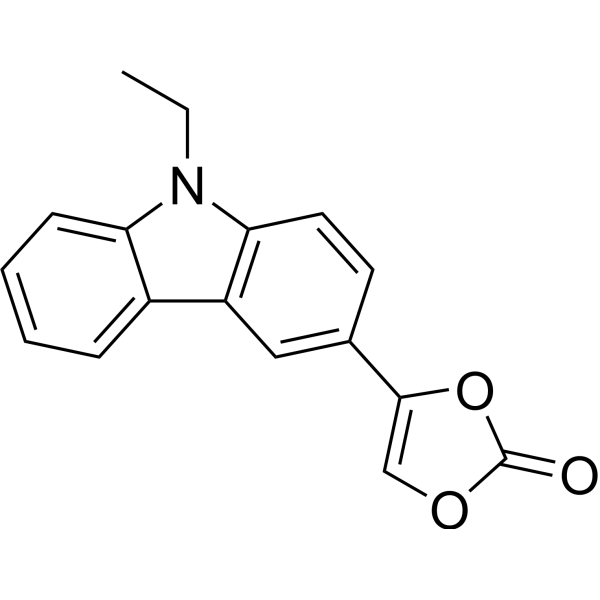
  • HY-145323

    Biochemical Assay Reagents Cancer
    Mitochondria-Targeted Photoactivatable Proagent accumulates in the mitochondria and shows light-triggered temporally controlled cell death. Mitochondria-Targeted Photoactivatable Proagent can be used in a novel drug delivery platform that provides on-demand, real-time, organelle-specific agent release and monitoring upon photoactivation .
    Mitochondria-Targeted Photoactivatable Prodrug
  • HY-D2968

    Fluorescent Dye Neurological Disease
    DCM-ONOO is a near-infrared two-photon fluorescence probe specifically designed for real-time monitoring of the dynamic fluctuations of peroxynitrite (ONOO⁻) in epilepsy models. DCM-ONOO exhibits excellent optical properties, with a single photon excitation (Ex) of 520 nm; a single photon emission (Em) of 685 nm; a two-photon excitation of 820 nm; and a Stokes shift of 165 nm. When DCM-ONOO is combined with ONOO⁻, it shifts from 460 nm to 512 nm, and only generates a significant fluorescence response to ONOO⁻. DCM-ONOO has been successfully applied to rat epilepsy models .
    DCM–ONOO
  • HY-D2266

    Fluorescent Dye Neurological Disease
    FluoBar1 is an imaging fluorescence probe modified by a barbiturate ligand with fluorescent coumarin. FluoBar1 can monitor L-type voltage-gated calcium channels (LTCC) in living cells in real time for the study of neurological diseases .
    FluoBar1
  • HY-178820

    Drug Metabolite Cancer
    NM-002 is a metabolite of prodrug NM-001 (HY-178819), with NIR emission. NM-002 generates through activates the prodrug NM-001 by overexpressed Cathepsin B (CTSB) within tumor cells. NM-002 has no toxicity towards tumor cells and can escape from the lysosomes into the cytoplasm. NM-002 can be used for real-time drug release monitoring research .
    NM-002
  • HY-147508

    Fluorescent Dye Others
    SBP-2 is a sulfite bioluminescent probe (SBP). The recognition of SBP-2 towards sulfite is based on the mechanism of a sulfite-mediated intramolecular cleavage reaction .
    SBP-2
  • HY-147509

    Fluorescent Dye Others
    SBP-3 is a sulfite bioluminescent probe (SBP). The recognition of SBP-3 towards sulfite is based on the mechanism of a sulfite-mediated intramolecular cleavage reaction .
    SBP-3
  • HY-108715R

    Fluorescent Dye Reference Standards Neurological Disease
    Real Thiol (Standard) is the analytical standard of Real Thiol (HY-108715). This product is intended for research and analytical applications. Real Thiol is a reversible reaction-based fluorescent probe which can quantitatively monitor the real-time glutathione dynamics in living cells.
    Real Thiol (Standard)
  • HY-167485

    Biochemical Assay Reagents Others
    PLLA1000-PEG5000-RhB is a terminal rhodamine-labeled polylactic acid derivative. PLLA1000-PEG5000-RhB can be used to label nanomicelles for real-time monitoring of drug release in vivo .
    PLLA1000-PEG5000-RhB
  • HY-167492

    Biochemical Assay Reagents Others
    PLLA10000-PEG1000-RhB is a terminal rhodamine-labeled polylactic acid derivative. PLLA10000-PEG1000-RhB can be used to label nanomicelles for real-time monitoring of drug release in vivo .
    PLLA10000-PEG1000-RhB
  • HY-167482

    Biochemical Assay Reagents Others
    PLLA2000-PEG3000-RhB is a terminal rhodamine-labeled polylactic acid derivative. PLLA2000-PEG3000-RhB can be used to label nanomicelles for real-time monitoring of drug release in vivo .
    PLLA2000-PEG3000-RhB
  • HY-167480

    Biochemical Assay Reagents Others
    PLLA3000-PEG1000-RhB is a terminal rhodamine-labeled polylactic acid derivative. PLLA3000-PEG1000-RhB can be used to label nanomicelles for real-time monitoring of drug release in vivo .
    PLLA3000-PEG1000-RhB
  • HY-167491

    Biochemical Assay Reagents Others
    PLLA10000-PEG2000-RhB is a terminal rhodamine-labeled polylactic acid derivative. PLLA10000-PEG2000-RhB can be used to label nanomicelles for real-time monitoring of drug release in vivo .
    PLLA10000-PEG2000-RhB
  • HY-167488

    Biochemical Assay Reagents Others
    PLLA1000-PEG1000-RhB is a terminal rhodamine-labeled polylactic acid derivative. PLLA1000-PEG1000-RhB can be used to label nanomicelles for real-time monitoring of drug release in vivo .
    PLLA1000-PEG1000-RhB
  • HY-167486

    Biochemical Assay Reagents Others
    PLLA1000-PEG3000-RhB is a terminal rhodamine-labeled polylactic acid derivative. PLLA1000-PEG3000-RhB can be used to label nanomicelles for real-time monitoring of drug release in vivo .
    PLLA1000-PEG3000-RhB
  • HY-167490

    Biochemical Assay Reagents Others
    PLLA10000-PEG3000-RhB is a terminal rhodamine-labeled polylactic acid derivative. PLLA10000-PEG3000-RhB can be used to label nanomicelles for real-time monitoring of drug release in vivo .
    PLLA10000-PEG3000-RhB
  • HY-167484

    Biochemical Assay Reagents Others
    PLLA2000-PEG1000-RhB is a terminal rhodamine-labeled polylactic acid derivative. PLLA2000-PEG1000-RhB can be used to label nanomicelles for real-time monitoring of drug release in vivo .
    PLLA2000-PEG1000-RhB
  • HY-167487

    Biochemical Assay Reagents Others
    PLLA1000-PEG2000-RhB is a terminal rhodamine-labeled polylactic acid derivative. PLLA1000-PEG2000-RhB can be used to label nanomicelles for real-time monitoring of drug release in vivo .
    PLLA1000-PEG2000-RhB
  • HY-167483

    Biochemical Assay Reagents Others
    PLLA2000-PEG2000-RhB is a terminal rhodamine-labeled polylactic acid derivative. PLLA2000-PEG2000-RhB can be used to label nanomicelles for real-time monitoring of drug release in vivo .
    PLLA2000-PEG2000-RhB
  • HY-167489

    Biochemical Assay Reagents Others
    PLLA10000-PEG5000-RhB is a terminal rhodamine-labeled polylactic acid derivative. PLLA10000-PEG5000-RhB can be used to label nanomicelles for real-time monitoring of drug release in vivo .
    PLLA10000-PEG5000-RhB
  • HY-167481

    Biochemical Assay Reagents Others
    PLLA2000-PEG5000-RhB is a terminal rhodamine-labeled polylactic acid derivative. PLLA2000-PEG5000-RhB can be used to label nanomicelles for real-time monitoring of drug release in vivo .
    PLLA2000-PEG5000-RhB
  • HY-172577

    Ion potassium green-4 (TMA)

    Fluorescent Dye Potassium Channel Others
    IPG-4 (Ion potassium green-4) TMA is an extracellular potassium ion fluorescence indicator with an Ex/Em ratio of 525/545 nm. IPG-4 TMA can be used for real-time monitoring and quantitative analysis of the transport of the biological electrochemical ion pump K⁺ .
    IPG-4 (TMA)
  • HY-D2939

    Fluorescent Dye Others
    BGSBD is a SNAP-tag-based fluorescent probe (Ex/Em: 435 nm/516 nm) based on the environmentally sensitive fluorescent group SBD, specifically designed for protein labeling of live cells without washing. BGSBD achieves a 280-fold fluorescence enhancement after labeling by ingeniously utilizing the hydrophobic binding pocket of the SNAP-tag protein, providing an ideal tool for real-time monitoring of protein dynamics within cells .
    BGSBD
  • HY-D3311

    Fluorescent Dye Cancer
    M1219 is a GSH/ATP dual near-infrared activated fluorescent probe that enables independent real-time monitoring of dynamic changes in intracellular GSH and ATP without spectral crosstalk (GSH: Ex=640 nm, Em=740~800 nm; ATP: Ex=594 nm/610 nm, Em=650~700 nm). M1219 not only visualizes the metabolic regulatory mechanism of TNBC under single/dual-target inhibition of SLC7A11/GLUT1 and accurately evaluates its in vivo efficacy, but also achieves precise localization of the TNBC tumor invasion boundary. M1219 can be used for the research of triple-negative breast cancer .
    M1219

Inquiry Online

Your information is safe with us. * Required Fields.

Salutation


Country or Region *

Applicant Name *


Organization Name *

Department *


Email Address *


Product Name *

Cat. No.


Requested quantity *

Phone Number *


Remarks

Inquiry Online

Inquiry Information

Product Name:
Cat. No.:
Quantity:
MCE Japan Authorized Agent:

