


1. Search Result
Search Result
Results for "

reducing carbohydrates

" in MedChemExpress (MCE) Product Catalog:

22

Inhibitors & Agonists

5

Biochemical Assay Reagents

4

Natural
Products

3

Isotope-Labeled Compounds

Cat. No. Product Name Target Research Areas Chemical Structure
  • HY-P2802
    α-Glucosidase, Yeast
    1 Publications Verification

    α-D-Glucosidase, Yeast

    Glycosidase Metabolic Disease
    α-Glucosidase, Yeast (α-D-Glucosidase, Yeast), a carbohydrate hydrolyzing enzyme, catalyzes the liberation of α-glucose from the non-reducing end of the substrate. α-Glucosidase can facilitate the absorption of glucose by the small intestine. Inhibition of α-Glucosidase is an effective management of non-insulin-dependent diabetes mellitus (NIDDM) .
    α-Glucosidase, Yeast
  • HY-W012241

    Endogenous Metabolite PROTAC Linkers Metabolic Disease
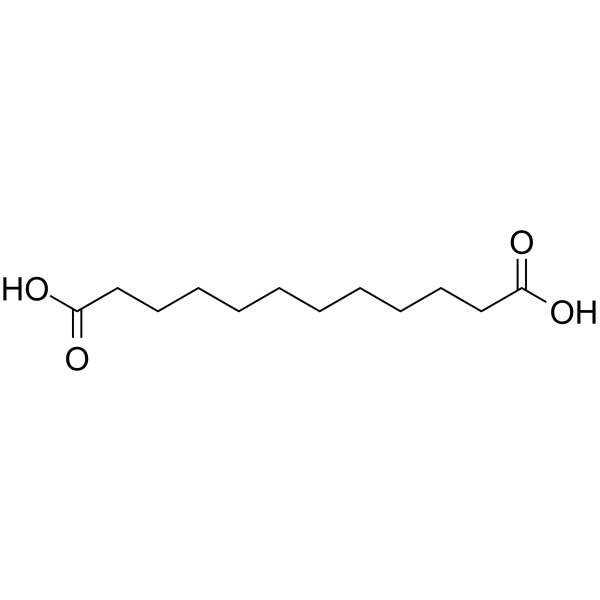
    Dodecanedioic acid is an orally active straight-chain dicarboxylic acid. As an alternative energy substrate between lipids and carbohydrates, Dodecanedioic acid can be rapidly oxidized during exercise, reducing muscle fatigue without stimulating insulin secretion. Dodecanedioic acid also exhibits blood glucose-lowering activity in non-insulin-dependent diabetes mellitus .
    Dodecanedioic acid
  • HY-159069

    Toll-like Receptor (TLR) TNF Receptor Connexin Infection Cancer
    Zymosan (ZM), 95% is a yeast cell wall-derived carbohydrate-rich preparation and immunomodulator. Zymosan (ZM), 95% binds to and activates TLR-2, TLR-4, and Dectin-1 receptor to trigger downstream signaling pathways. Zymosan (ZM), 95% upregulates TLR-2, TLR-4, and TNF-α mRNA expression, increases serum TNF-α levels, and stimulates splenocyte number and viability in mice. Zymosan (ZM), 95% attenuates melanoma growth progression, modulates macrophage marker gene expression, and mediates phagocytosis, ROS generation, and cytokine production. Zymosan (ZM), 95% reduces Connexin 43 protein and mRNA levels, inhibits gap junctional intercellular communication, and induces proinflammatory factor production in human corneal cells. Zymosan (ZM), 95% induces peritoneal inflammation in mice, functions as a drug carrier, and supports fibroblast cell attachment in hydrogel formulations. Zymosan (ZM), 95% can be used for the research of melanoma, tumors, fungal keratitis, ocular surface inflammatory disorders, and peritoneal inflammation .
    Zymosan (ZM), 95%
  • HY-W010341

    Biochemical Assay Reagents Others
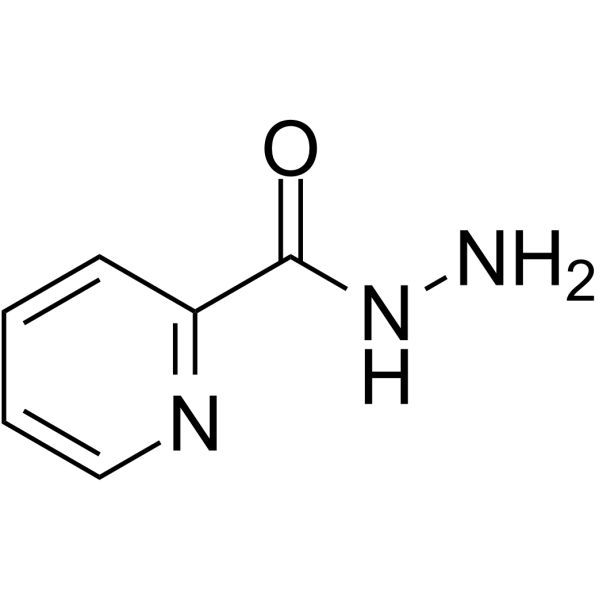
    2-Pyridinecarbohydrazide is a versatile heterocyclic building block widely used in medicinal chemistry and coordination chemistry, and it finds extensive applications in various synthetic fields. 2-Pyridinecarbohydrazide reacts with the reducing end of carbohydrates to enhance mass spectrometry ionization efficiency, enabling isomer-specific identification of monosaccharides, disaccharides, ketoses/aldoses, and quantitative mass spectrometry imaging of biological tissues .
    2-Pyridinecarbohydrazide
  • HY-W009411

    Fluorescent Dye Others
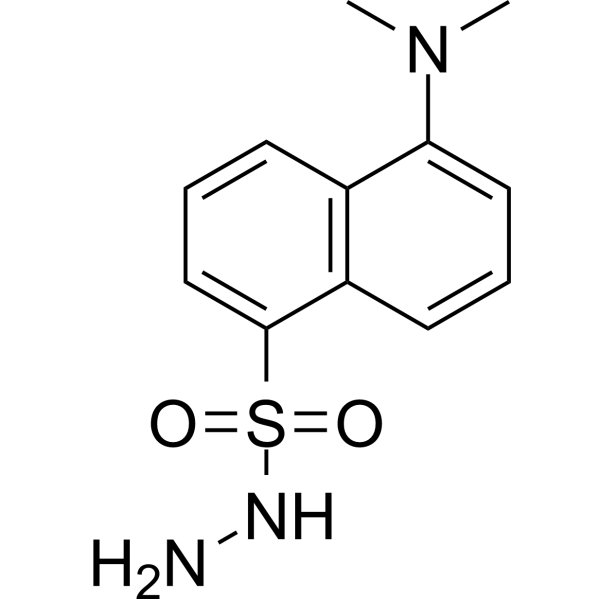
    Dansyl hydrazine is a carbohydrate-specific fluorescent dye (Ex/Em = 340 nm/525 nm). Dansyl hydrazine undergoes a condensation reaction with aldehyde groups generated by periodate oxidation on carbohydrate-containing structures to form fluorescent hydrazone compounds. Dansyl hydrazine selectively stains polysaccharides in formalin-fixed, paraffin-embedded human post-mortem brain tissues, revealing detailed structural features. Dansyl hydrazine is applicable to research related to Alzheimer's disease, Lafora disease, and polyglucosan body disease .
    Dansyl hydrazine
  • HY-P2988A

    Influenza Virus Metabolic Disease
    α2-3,6 Neuraminidase, Bifidobacterium infantis is a highly specific exoglycosidase that catalyzes the hydrolysis of non-reducing terminal α2-3 and α2-6 unbranched sialic acid residues from complex carbohydrates and glycoproteins. α2-3,6 Neuraminidase does not exhibit activity on α2-8 or branched sialic acids .
    α2-3,6 Neuraminidase, Bifidobacterium infantis
  • HY-W012241S1

    Isotope-Labeled Compounds Endogenous Metabolite Metabolic Disease
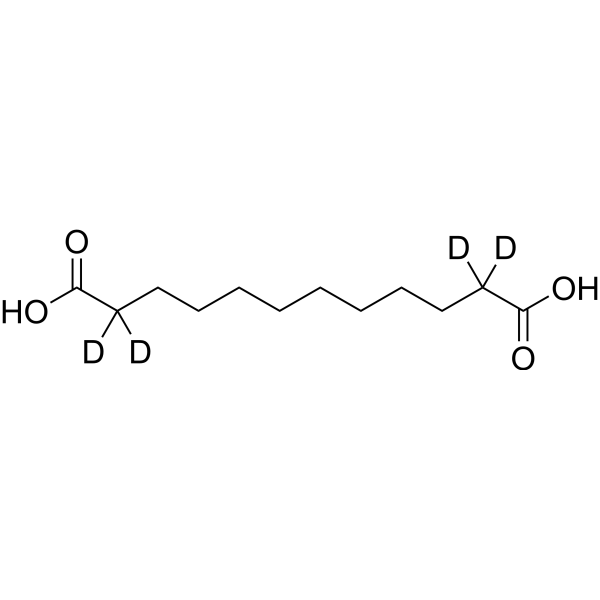
    Dodecanedioic acid-d4 is the deuterium labeled Dodecanedioic acid (HY-W012241). Dodecanedioic acid is an orally active straight-chain dicarboxylic acid. As an alternative energy substrate between lipids and carbohydrates, Dodecanedioic acid can be rapidly oxidized during exercise, reducing muscle fatigue without stimulating insulin secretion. Dodecanedioic acid also exhibits blood glucose-lowering activity in non-insulin-dependent diabetes mellitus .
    Dodecanedioic acid-d4
  • HY-W012241R

    Reference Standards Endogenous Metabolite Metabolic Disease
    Dodecanedioic acid (Standard) is the analytical standard of Dodecanedioic acid (HY-W012241). This product is intended for research and analytical applications. Dodecanedioic acid is an orally active straight-chain dicarboxylic acid. As an alternative energy substrate between lipids and carbohydrates, Dodecanedioic acid can be rapidly oxidized during exercise, reducing muscle fatigue without stimulating insulin secretion. Dodecanedioic acid also exhibits blood glucose-lowering activity in non-insulin-dependent diabetes mellitus .
    Dodecanedioic acid (Standard)
  • HY-W097785

    4-Methoxybenzimidamide

    Biochemical Assay Reagents Metabolic Disease
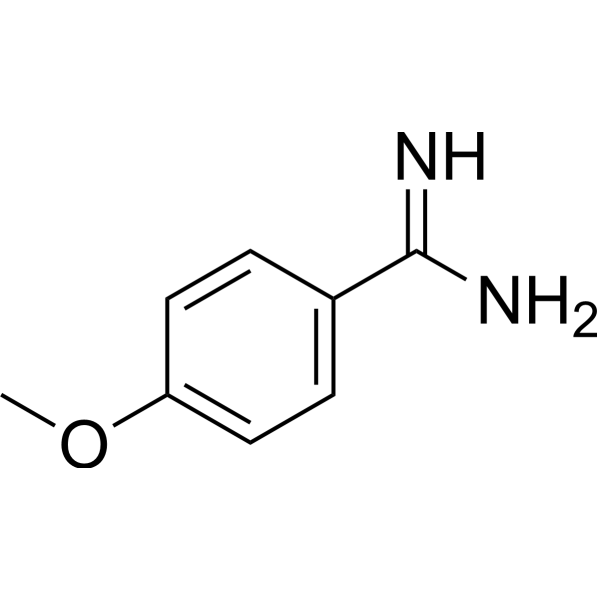
    4-Methoxybenzimidamide is a reagent used for the determination of reducing carbohydrates and glycoproteins.
    4-Methoxybenzamidine
  • HY-E70166

    EC:2.8.2.21; CHST6; GlcNAc6ST-5

    SULT Cancer
    Carbohydrate Sulfotransferase 6 (EC:2.8.2.21) can catalyze sulphate transfer to position 6 of non-reducing GlcNAc residues of keratan .
    Carbohydrate Sulfotransferase 6
  • HY-E70164

    EC:2.8.2.-; CHST4; GlcNAc6ST2

    Biochemical Assay Reagents Cancer
    Carbohydrate Sulfotransferase 4 (EC:2.8.2.-) can catalyze sulphate transfer to the hydroxyl group at C-6 position of the non-reducing GlcNAc residue within O-linked mucin-type glycans .
    Carbohydrate Sulfotransferase 4
  • HY-W012241S

    Isotope-Labeled Compounds Endogenous Metabolite Metabolic Disease
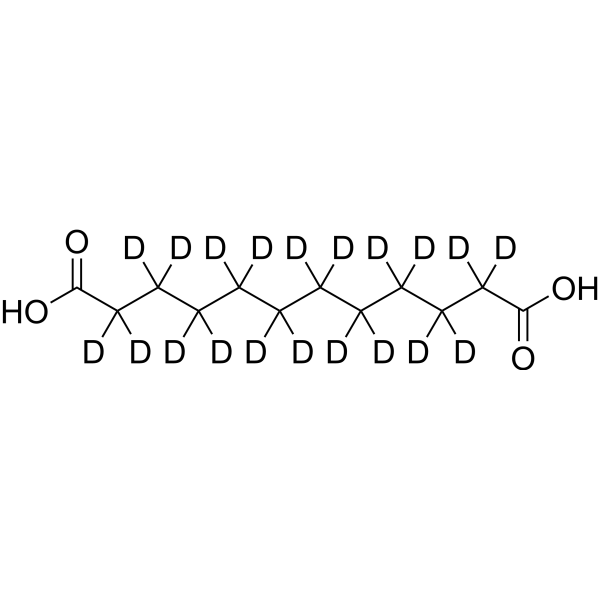
    Dodecanedioic acid-d20 is the deuterium labeled Dodecanedioic acid (HY-W012241). Dodecanedioic acid is an orally active straight-chain dicarboxylic acid. As an alternative energy substrate between lipids and carbohydrates, Dodecanedioic acid can be rapidly oxidized during exercise, reducing muscle fatigue without stimulating insulin secretion. Dodecanedioic acid also exhibits blood glucose-lowering activity in non-insulin-dependent diabetes mellitus .
    Dodecanedioic acid-d20
  • HY-W777762

    Isotope-Labeled Compounds Endogenous Metabolite Metabolic Disease
    Dodecanedioic Acid- 13C12 is the 13C-labeled Dodecanedioic acid (HY-W012241). Dodecanedioic acid is an orally active straight-chain dicarboxylic acid. As an alternative energy substrate between lipids and carbohydrates, Dodecanedioic acid can be rapidly oxidized during exercise, reducing muscle fatigue without stimulating insulin secretion. Dodecanedioic acid also exhibits blood glucose-lowering activity in non-insulin-dependent diabetes mellitus .
    Dodecanedioic Acid-13C12
  • HY-172757

    Glycosidase Metabolic Disease
    α-Glucosidase-IN-88 (Compound 3K) is an orally active and potent α-glucosidase inhibitor with an IC50 value of 6.40 µM. α-Glucosidase-IN-88 inhibits carbohydrate hydrolysis by blocking the enzyme's ability to break down glycosidic bonds, thereby reducing postprandial blood glucose levels. α-Glucosidase-IN-88 is promising for research of type 2 diabetes mellitus (T2DM) .
    α-Glucosidase-IN-88
  • HY-168074

    Amylases Glycosidase Metabolic Disease Inflammation/Immunology
    4″-C18 EGCG is a potent inhibitor of α-amylase and α-glucosidase with IC50 values of 3.74 and 0.81 μM, respectively. 4″-C18 EGCG inhibits carbohydrate hydrolases, reduces oxidative stress and inflammation, and exhibits antidiabetic activity. 4″-C18 EGCG also downregulates proinflammatory cytokines and is cytotoxic to primary human peripheral blood mononuclear cells (PBMCs), non-cancer cell lines 3T3-L1, and HEK 293 at 50 μM .
    4″-C18 EGCG
  • HY-176221

    Glycosidase Metabolic Disease
    α-Glucosidase-IN-92 (compound 14b) is a non-competitive inhibitor targeting α-glucosidase (IC50=64.0 μM), with better inhibitory potency than Acarbose (HY-B0089) (IC50=750 μM). α-Glucosidase-IN-92 has good oral bioavailability and can cross the blood-brain barrier. α-Glucosidase-IN-92 can delay carbohydrate hydrolysis and reduce postprandial blood glucose. α-Glucosidase-IN-92 can be used in anti-glycemic research for type 2 diabetes .
    α-Glucosidase-IN-92
  • HY-N9821

    Glycosidase Metabolic Disease
    Giffonin P is a selective inhibitor targeting α-glucosidase with an IC50 of 55.3 μM. Giffonin P delays carbohydrate hydrolysis and glucose absorption, exerting anti-hyperglycemic activity. Giffonin P reduces postprandial blood glucose levels and is primarily used in research on type 2 diabetes .
    Giffonin P
  • HY-167931

    Drug Derivative Metabolic Disease
    Cinnamohydrazide, an unsaturated carboxylic acid derivative, serves as a precursor to aspartame through enzyme-mediated amination to phenylalanine. This compound may offer potential benefits in the prevention and treatment of diabetes by facilitating insulin secretion, enhancing pancreatic β-cell function, inhibiting hepatic gluconeogenesis, promoting glucose uptake, amplifying insulin signaling pathways, delaying carbohydrate digestion and glucose absorption, and reducing protein glycation and insulin fibrillation.
    Cinnamohydrazide
  • HY-N18049

    Amylases Metabolic Disease
    Decussatin is an α-Amylases inhibitor isolated from the Tibetan medicinal plant Swertia mussotii. By inhibiting the catalytic activity of α-Amylases, Decussatin reduces the hydrolysis of complex carbohydrates such as starch and the intestinal absorption of glucose, thereby lowering blood glucose levels in the body. Decussatin shows no significant in vitro antibacterial or antifungal activity. Decussatin can be used for the research of type 2 diabetes .
    Decussatin
  • HY-181091

    Glycosidase Metabolic Disease
    α-Glucosidase-IN-109 is an orally active α-glucosidase inhibitor with an IC50 of 0.0136 μM. α-Glucosidase-IN-109 modulates carbohydrate and lipid metabolism, reduces fasting blood glucose levels, alleviates weight loss, and exhibits protective effects on liver and kidney function. α-Glucosidase-IN-109 can be used in research related to type 2 diabetes .
    α-Glucosidase-IN-109
  • HY-E71265

    Biochemical Assay Reagents Others
    β-Acetylglucosaminidase 73A, Clostridium perfringensreleases non-reducing terminal β1-2, β1-3, β1-4 and β1-6 linked N-acetylglucosamine from complex carbohydrates. When incubated with oligosaccharides at low concentrations (<50 mU/mL) the enzyme can differentiate between GlcNAcβ1-2Man, GlcNAcβ1-4Man and GlcNAcβ1-6Man linkages.
    β-Acetylglucosaminidase 73A, Clostridium perfringens
  • HY-E71265A

    Biochemical Assay Reagents Others
    β-Acetylglucosaminidase 73A, Lactococcus lactis releases non-reducing terminal β1-2, β1-3, β1-4 and β1-6 linked N-acetylglucosamine from complex carbohydrates. When incubated with oligosaccharides at low concentrations (<50 mU/mL) the enzyme can differentiate between GlcNAcβ1-2Man, GlcNAcβ1-4Man and GlcNAcβ1-6Man linkages.
    β-Acetylglucosaminidase 73A, Lactococcus lactis

Inquiry Online

Your information is safe with us. * Required Fields.

Salutation


Country or Region *

Applicant Name *


Organization Name *

Department *


Email Address *


Product Name *

Cat. No.


Requested quantity *

Phone Number *


Remarks

Inquiry Online

Inquiry Information

Product Name:
Cat. No.:
Quantity:
MCE Japan Authorized Agent:

