1. Search Result
Search Result
Pathways Recommended: Stem Cell/Wnt
Results for "

stems

" in MedChemExpress (MCE) Product Catalog:

889

Inhibitors & Agonists

18

Screening Libraries

32

Fluorescent Dye

31

Biochemical Assay Reagents

52

Peptides

18

MCE Kits

22

Inhibitory Antibodies

370

Natural
Products

30

Isotope-Labeled Compounds

2

Click Chemistry

16

Oligonucleotides

19

GMP Molecules

Cat. No. Product Name Target Research Areas Chemical Structure
  • HY-B0141
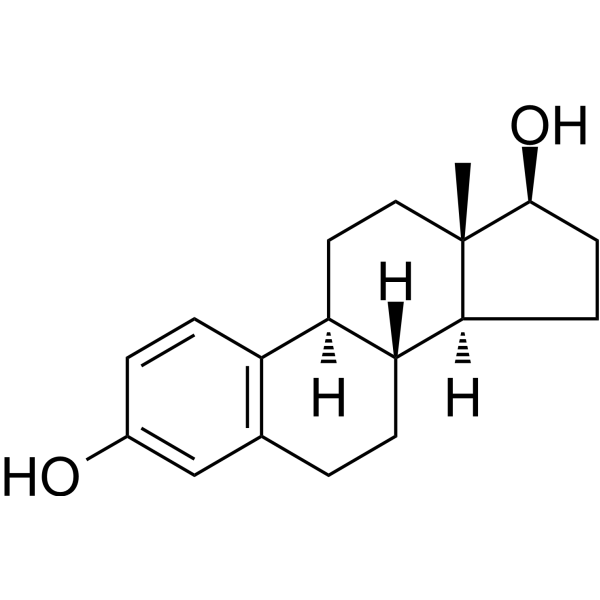
    Estradiol
    Maximum Cited Publications
    122 Publications Verification

    β-Estradiol; E2; 17β-Estradiol; 17β-Oestradiol

    Estrogen Receptor/ERR Endogenous Metabolite Bacterial Endocrinology Cancer
    Estradiol (β-Estradiol) is a steroid hormone and the major female sex hormone. Estradiol can up-regulate the expression of neural markers of human endometrial stem cells (hEnSCs) and promote their neural differentiation. Estradiol can be used for the research of cancers, neurodegenerative diseases and neural tissue engineering .
    Estradiol
  • HY-15372
    GW6471
    65+ Cited Publications

    PPAR Apoptosis Cancer
    GW6471 is a selective peroxisome proliferator-activated receptor α (PPARα) antagonist. GW6471 reduces cancer stem cell viability, proliferation, and spheroid formation. GW6471 induces apoptosis and causes metabolic impairment including energy imbalance. GW6471 can be used for the research of paragangliomas and triple-negative breast cancer .
    GW6471
  • HY-10046
    Plerixafor
    100+ Cited Publications

    AMD 3100; JM3100; SID791

    CXCR HIV Infection Inflammation/Immunology Endocrinology Cancer
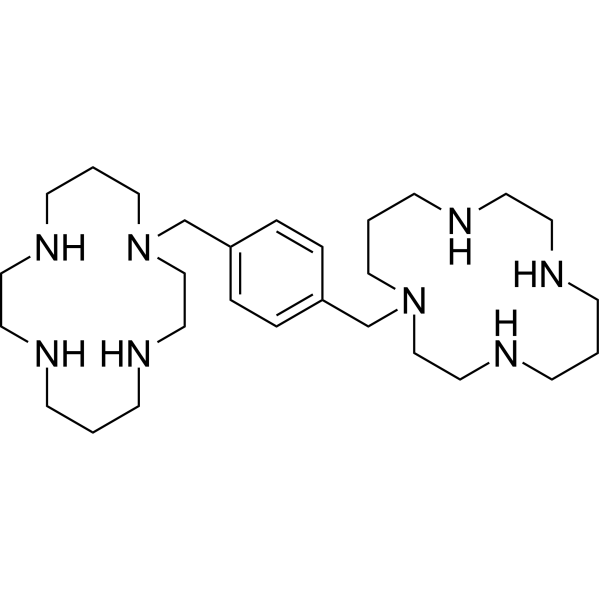
    Plerixafor (AMD 3100) is a selective CXCR4 antagonist with an IC50 of 44 nM. Plerixafor, an immunostimulant and a hematopoietic stem cell (HSC) mobilizer, is an allosteric agonist of CXCR7. Plerixafor inhibits HIV-1 and HIV-2 replication with an EC50 of 1-10 nM .
    Plerixafor
  • HY-N0623
    L-Tryptophan
    Maximum Cited Publications
    14 Publications Verification

    Tryptophan; Tryptophane

    Environmental Pollutants Metabolic Disease Cancer
    L-Tryptophan (Tryptophan) is an orally active and essential amino acid that is the precursor of serotonin, melatonin, and vitamin B3. L-Tryptophan can promote an increase in stemness and osteogenic ability of BMSCs in vitro and in vivo. L-Tryptophan inhibits cell proliferation and induced cell cycle arrest with high levels .
    L-Tryptophan
  • HY-131042
    NNMTi
    5+ Cited Publications

    Amine N-methyltransferase Metabolic Disease
    NNMTi is a potent nicotinamide N-methyltransferase (NNMT) inhibitor (IC50=1.2 μM) and selectively binds to the NNMT substrate-binding site residues . NNMTi  promotes myoblast differentiation in vitro and enhances fusion and regenerative capacity of muscle stem cells (muSCs) in aged mice .
    NNMTi
  • HY-15597
    Salinomycin
    45+ Cited Publications

    Procoxacin

    Bacterial Wnt β-catenin Mitophagy Autophagy Apoptosis Antibiotic Parasite Cancer
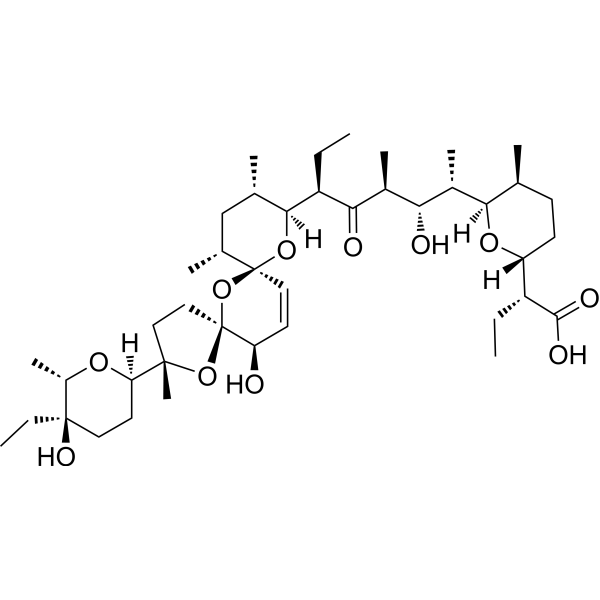
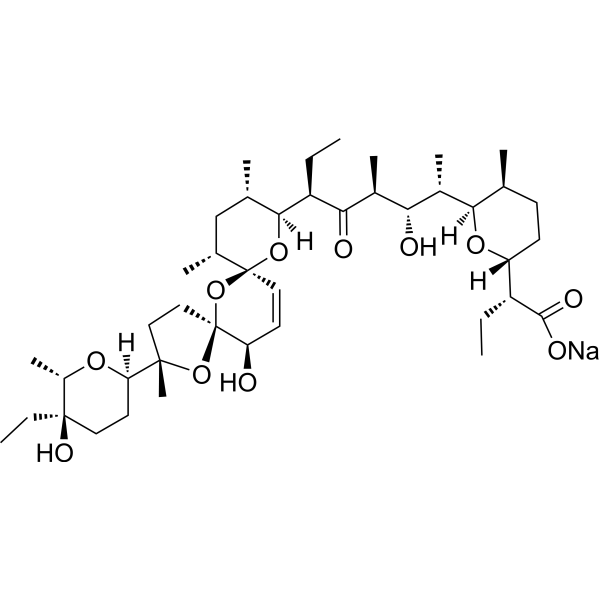
    Salinomycin (Procoxacin), a polyether potassium ionophore antibiotic, selectively inhibits the growth of gram-positive bacteria. Salinomycin is a potent inhibitor of Wnt/β-catenin signaling, blocks Wnt-induced LRP6 phosphorylation. Salinomycin shows selective activity against human cancer stem cells .
    Salinomycin
  • HY-15036
    Diclofenac
    20+ Cited Publications

    COX Apoptosis Inflammation/Immunology Cancer
    Diclofenac is a potent and nonselective anti-inflammatory agent, acts as a COX inhibitor, with IC50s of 4 and 1.3 nM for human COX-1 and COX-2 in CHO cells , and 5.1 and 0.84 μM for ovine COX-1 and COX-2, respectively . Diclofenac induces apoptosis of neural stem cells (NSCs) via the activation of the caspase cascade .
    Diclofenac
  • HY-160769
    NIBR-LTSi
    1 Publications Verification

    Large Tumor Suppressor (LATS) YAP Others
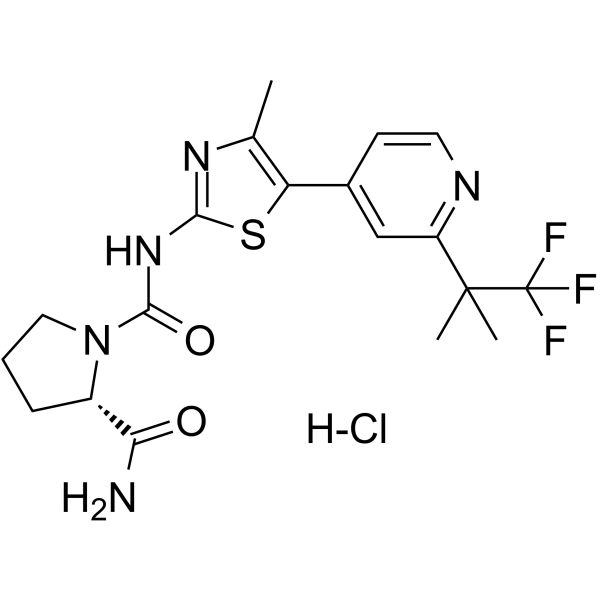
    NIBR-LTSi is an orally active and selective LATS kinase inhibitor. NIBR-LTSi can activate YAP signaling. NIBR-LTSi promotes stem cell proliferation, maintains stemness and blocks differentiation. NIBR-LTSi accelerates liver regeneration following extended hepatectomy in mice .
    NIBR-LTSi
  • HY-14598
    Diethylstilbestrol
    3 Publications Verification

    Estrogen Receptor/ERR Apoptosis Autophagy Endocrinology Cancer
    Diethylstilbestrol is a non-steroidal female hormone that has oral activity and can act on menopausal and postmenopausal disorders. Diethylstilbestrol can induce DNA oxidation and Apoptosis of spermatogonial stem cells. Diethylstilbestrol can induce thymocyte Autophagy Diethylstilbestrol is a 11β-hydroxysteroid dehydrogenase 2 (HSD11B2) inhibitor. .
    Diethylstilbestrol
  • HY-13306
    Pyrintegrin
    4 Publications Verification

    Integrin Metabolic Disease
    Pyrintegrin is an β1-integrin agonist and a 2,4-disubstituted pyrimidine that promotes embryonic stem cells survival. Pyrintegrin enhances cell-extracellular matrix (ECM) adhesion-mediated integrin signaling. Pyrintegrin can be used as a podocyte-protective agent and has robustly adipogenic .
    Pyrintegrin
  • HY-107589
    BIO5192
    2 Publications Verification

    Integrin Inflammation/Immunology
    BIO5192 is a selective and potent integrin α4β1 (VLA-4) inhibitor (Kd<10 pM). BIO5192 selectively binds to α4β1 (IC50=1.8 nM) over a range of other integrins. BIO5192 results in a 30-fold increase in mobilization of murine hematopoietic stem and progenitors (HSPCs) over basal levels .
    BIO5192
  • HY-15038
    Diclofenac potassium
    20+ Cited Publications

    COX Apoptosis Inflammation/Immunology Cancer
    Diclofenac potassium is a potent and nonselective anti-inflammatory agent, acts as a COX inhibitor, with IC50s of 4 and 1.3 nM for human COX-1 and COX-2 in CHO cells , and 5.1 and 0.84 μM for ovine COX-1 and COX-2, respectively . Diclofenac potassium induces apoptosis of neural stem cells (NSCs) via the activation of the caspase cascade .
    Diclofenac potassium
  • HY-W013571

    Cuminic acid; p-Isopropyl benzoic acid

    Fungal Infection
    4-Isopropylbenzoic acid (Cuminic acid; p-Isopropyl benzoic acid) an aromatic monoterpenoid, is isolated from the stem bark of Bridelia retusa. 4-Isopropylbenzoic acid exhibits antifungal activities. 4-Isopropylbenzoic acid is also a reversible and uncompetitive inhibitor of mushroom tyrosinase .
    4-Isopropylbenzoic acid
  • HY-12343
    ML277
    1 Publications Verification

    CID-53347902

    Potassium Channel Cardiovascular Disease
    ML277 (CID-53347902) is a potent and selective activator of K(v)7.1 (KCNQ1) potassium channel activator (EC50=270 nM), rescues function of pathophysiologically important mutant channel complexes in human induced pluripotent stem cell-derived cardiomyocytes .
    ML277
  • HY-106420

    16,16-dimethyl PGE2

    Wnt Prostaglandin Receptor Inflammation/Immunology
    16,16-Dimethyl prostaglandin E2 (16,16-dimethyl PGE2) is an orally active vertebrate Hematopoietic stem cells (HSCs) homeostasis critical regulator. 16,16-Dimethyl prostaglandin E2 can act through EP2/EP4 and has an interaction with the Wnt pathway .
    16,16-Dimethyl prostaglandin E2
  • HY-W011338
    Benzyl butyl phthalate
    1 Publications Verification

    Environmental Pollutants Aryl Hydrocarbon Receptor Cancer
    Benzyl butyl phthalate, a member of phthalic acid esters (PAEs), can trigger the migration and invasion of hemangioma (HA) cells via upregulation of Zeb1. Benzyl butyl phthalate activates aryl hydrocarbon receptor (AhR) in breast cancer cells to stimulate SPHK1/S1P/S1PR3 signaling and enhances formation of metastasis-initiating breast cancer stem cells (BCSCs) .
    Benzyl butyl phthalate
  • HY-15037
    Diclofenac Sodium
    20+ Cited Publications

    GP 45840

    COX Apoptosis Inflammation/Immunology Cancer
    Diclofenac Sodium (GP 45840) is a potent and nonselective anti-inflammatory agent, acts as a COX inhibitor, with IC50s of 4 and 1.3 nM for human COX-1 and COX-2 in CHO cells , and 5.1 and 0.84 μM for ovine COX-1 and COX-2, respectively . Diclofenac Sodium induces apoptosis of neural stem cells (NSCs) via the activation of the caspase cascade .
    Diclofenac Sodium
  • HY-124899
    Hh-Ag1.5
    1 Publications Verification

    SAg1.5

    Hedgehog Metabolic Disease
    Hh-Ag1.5 (SAg1.5) is a potent Hedgehog (Hh) agonist with an EC50 of 1 nM . Hh-Ag1.5 mediated reprogramming breaks the quiescence of noninjured liver stem cells for rescuing liver failure .
    Hh-Ag1.5
  • HY-W587427

    Endogenous Metabolite Monocarboxylate Transporter Neurological Disease Cancer
    D-2-Phosphoglyceric acid trisodium is a glycolysis and gluconeogenesis intermediate with altered levels linked to MCT4-modulated glycolytic pathways. D-2-Phosphoglyceric acid trisodium shows reduced intracellular levels in hypoxic glioblastoma stem cells after MCT4 knockdown. D-2-Phosphoglyceric acid trisodium can be used for the research of glioblastoma .
    D-2-Phosphoglyceric acid trisodium
  • HY-12246
    XEN445
    1 Publications Verification

    Lipase Cardiovascular Disease Metabolic Disease Cancer
    XEN445 is a potent, selective and orally active endothelial lipase (EL) inhibitor with an IC50 value of 0.237 μM. XEN445 selectively inhibits phospholipase enzymatic activity of LIPG. XEN445 raises plasma HDL and cholesterol levles. XEN445 induces G1 cell cycle arrest, reduces cell viability, suppresses cancer stem cell self-renewal, and inhibits tumor formation in LIPG-expressing triple-negative breast cancer cells, while showing no inhibitory effect on invasiveness or cancer stem cell stemness in these cells. XEN445 can be used for the research of cancer and metabolic disease, such as triple-negative breast cancer .
    XEN445
  • HY-B0603

    Smo Glucocorticoid Receptor Infection Inflammation/Immunology Endocrinology
    Fluticasone is an inhaled corticosteroid used for respiratory research. Fluticasone is a Smo agonist with an IC50 value of 99 nM. Fluticasone activates Hedgehog signaling and promotes the proliferation of primary neuronal stem or precursor cells .
    Fluticasone
  • HY-15036A
    Diclofenac diethylamine
    20+ Cited Publications

    COX Apoptosis Inflammation/Immunology Cancer
    Diclofenac diethylamine is a potent and nonselective anti-inflammatory agent, acts as a COX inhibitor, with IC50s of 4 and 1.3 nM for human COX-1 and COX-2 in CHO cells , and 5.1 and 0.84 μM for ovine COX-1 and COX-2, respectively . Diclofenac diethylamine induces apoptosis of neural stem cells (NSCs) via the activation of the caspase cascade .
    Diclofenac diethylamine
  • HY-13894
    Tyrphostin AG1296
    3 Publications Verification

    AG1296

    PDGFR c-Kit FLT3 Apoptosis Cardiovascular Disease Inflammation/Immunology Cancer
    Tyrphostin AG1296 is a potent and selective inhibitor of platelet-derived growth factor receptor (PDGFR), with an IC50 of 0.8 μM. Tyrphostin AG1296 inhibits signaling of human PDGF α- and β-receptors as well as of the related stem cell factor receptor (c-Kit). Tyrphostin AG1296 is also a potent inhibitor of FLT3, with an IC50 in the micromolar range .
    Tyrphostin AG1296
  • HY-17602

    BBI503

    Apoptosis Cancer
    Amcasertib (BBI503) is an orally activate cancer stemness kinase inhibitor that enhances apoptosis. Amcasertib inhibits the expression of NANOG and CD133 and cell viability in PC-9/GR cells.
    Amcasertib
  • HY-15838
    ID-8
    5 Publications Verification

    DYRK Cancer
    ID-8 is an inhibitor of dual-specificity tyrosine phosphorylation-regulated kinase (DYRK). ID-8 sustains embryonic stem cell (ESC) self-renewal and pluripotency. ID-8 enhances Wnt-mediated hESC survival and proliferation via inhibition of DYRKs .
    ID-8
  • HY-114858
    Epiblastin A
    1 Publications Verification

    Casein Kinase Cancer
    Epiblastin A is an ATP competitive casein kinase 1 (CK1) inhibitor with IC50s of 8.9, 0.5, and 4.7 µM for CK1α, CK1δ, and CK1 ɛ, respectively. Epiblastin A induces reprogramming of epiblast stem cells into embryonic stem cells by inhibition of CK1 .
    Epiblastin A
  • HY-147228

    Checkpoint Kinase (Chk) Inflammation/Immunology Cancer
    NR2F6 modulator-1 is a potent nuclear receptor subfamily 2, group F, member 6 (NR2F6) modulator. NR2F6 modulator-1 can be used for researching immune modulation and modulation of cancer stem cell activity .
    NR2F6 modulator-1
  • HY-162153

    FGFR Cancer
    CYY292 is an FGFR1 inhibitor that specifically targets the FGFR1/AKT/Snail pathway in GBM cells. CYY292 dose-dependently inhibits cancer cell proliferation, epithelial-mesenchymal transition, stemness, invasion, and migration in vitro .
    CYY292
  • HY-18959
    CWP232228
    5+ Cited Publications

    β-catenin Wnt Cancer
    CWP232228, a highly potent selective Wnt/β-catenin signaling inhibitor, antagonizes binding of β-catenin to T-cell factor (TCF) in the nucleus. CWP232228 suppresses tumor formation and metastasis without toxicity through the inhibition of the growth of breast and liver cancer stem cells (CSCs) .
    CWP232228
  • HY-Y0278

    Tetrachloro-p-benzoquinone; TCBQ

    Environmental Pollutants JNK Fungal Toll-like Receptor (TLR) Reactive Oxygen Species (ROS) Apoptosis MyD88 Ferroptosis Infection Neurological Disease Metabolic Disease Inflammation/Immunology
    Chloranil (Tetrachloro-p-benzoquinone), an orally active metabolite of pentachlorophenol and hexachlorobenzene, is a widely used fungicide. Chloranil can induce ROS production. Chloranil induces neutrophil extracellular traps through the ROS-JNK-NOX2 pathway. Chloranil induces ferroptosis and neuroinflammation. Chloranil induces apoptosis of mouse embryonic stem cells .
    Chloranil
  • HY-122590

    Gli Cancer
    Glabrescione B is the first compound that binds the Hedgehog (Hh) modulator Gli1. Glabrescione B impairs its activity by interfering with Gli1-DNA interaction. Glabrescione B inhibits the growth of Hedgehog-dependent tumor cells, the self-renewal ability, and clonogenicity of tumor-derived stem cells .
    Glabrescione B
  • HY-107460
    LDN-211904 oxalate
    1 Publications Verification

    Ephrin Receptor Cancer
    LDN-211904 oxalate is a potent and reversible EphB3 inhibitor with an IC50 of 79 nM. LDN-211904 oxalate shows good metabolic stability in mouse liver microsomes. LDN-211904 oxalate with Cetuximab (HY-P9905) could be effective in inhibiting STAT3-activated colorectal cancer (CRC) stemness and Cetuximab resistance in CRC .
    LDN-211904 oxalate
  • HY-B0141C
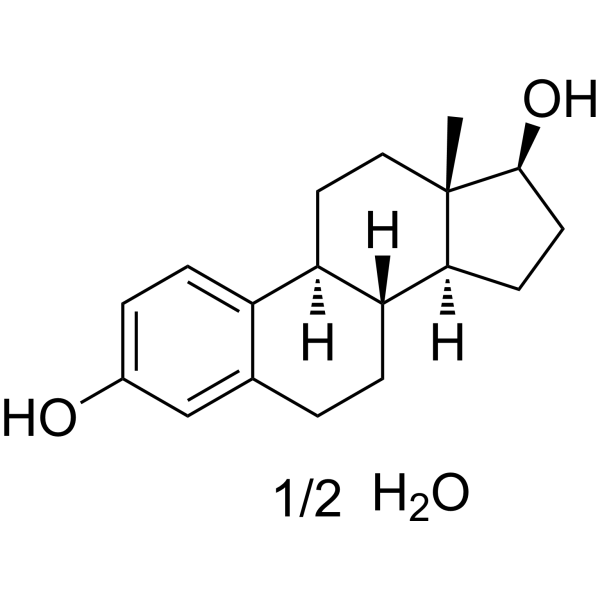
    Estradiol hemihydrate
    Maximum Cited Publications
    122 Publications Verification

    β-Estradiol hemihydrate; 17β-Estradiol hemihydrate; 17β-Oestradiol hemihydrate

    Estrogen Receptor/ERR Endogenous Metabolite Bacterial Neurological Disease Cancer
    Estradiol (β-Estradiol) hemihydrate is a steroid hormone and the major female sex hormone. Estradiol (β-Estradiol) hemihydrate can up-regulate the expression of neural markers of human endometrial stem cells (hEnSCs) and promote their neural differentiation. Estradiol (β-Estradiol) hemihydrate can be used for the research of cancers, neurodegenerative diseases and neural tissue engineering .
    Estradiol hemihydrate
  • HY-N2740

    Sirtuin Neurological Disease
    Agalloside is a neural stem cell differentiation activator that binds to Hes1, and it is found in Aquilaria agallocha. Agalloside promotes the differentiation of neural stem cells and increases the number of neurons. Agalloside can be used in studies related to neural stem cell differentiation .
    Agalloside
  • HY-13973A
    GSK-3 inhibitor 1
    1 Publications Verification

    GSK-3 Metabolic Disease
    GSK-3 inhibitor 1 (compound core 3) is a GSK-3 inhibitor that induces stem/progenitor cell self-renewal (e.g. induces stem/progenitor cell proliferation while maintaining the ability to differentiate into tissue cells in the progeny) .
    GSK-3 inhibitor 1
  • HY-136541
    YB-0158
    2 Publications Verification

    Wnt pathway inhibitor 2

    Wnt Apoptosis Cancer
    YB-0158 (Wnt pathway inhibitor 2) is a reverse-turn peptidomimetic and a potent colorectal cancer stem cell (CSC) targeting agent. YB-0158 disrupts Sam68-Src interactions and induces apoptosis in CRC cells. Anti-cancer activities .
    YB-0158
  • HY-N2732

    6-Prenyl-4',5,7-trihydroxyflavone; 6-C-Prenylapigenin

    Drug Derivative Cancer
    6-Prenylapigenin is a prenylated flavonoid that exists in the stems and leaves of Maclura pomifera. 6-Prenylapigenin exhibits cytotoxicity against cancer cells such as leukemia cells and solid tumor cells .
    6-Prenylapigenin
  • HY-107589A
    BIO5192 hydrate
    2 Publications Verification

    Integrin Inflammation/Immunology
    BIO5192 hydrate is a selective and potent integrin α4β1 (VLA-4) inhibitor (Kd<10 pM). BIO5192 hydrate selectively binds to α4β1 (IC50=1.8 nM) over a range of other integrins. BIO5192 hydrate results in a 30-fold increase in mobilization of murine hematopoietic stem and progenitors (HSPCs) over basal levels .
    BIO5192 hydrate
  • HY-13418G

    Compound C dihydrochloride; BML-275 dihydrochloride

    AMPK Neurological Disease Cancer
    Dorsomorphin dihydrochloride (GMP) is the GMP level of Dorsomorphin dihydrochloride (HY-13418). GMP guidelines are used to produce Dorsomorphin dihydrochloride (GMP). GMP small molecules works appropriately as an auxiliary reagent for cell research manufacture. Dorsomorphin dihydrochloride (GMP) is a potent, selective and ATP-competitive AMPK inhibitor. Dorsomorphin dihydrochloride (GMP) can be used for the research of induced differentiation of pluripotent stem cells (PSCs) .
    Dorsomorphin dihydrochloride
  • HY-176886

    Large Tumor Suppressor (LATS) YAP Others
    LATS-IN-2 is an efficiently acting LATS (large tumor suppressor kinase) inhibitor. LATS-IN-2 shows potent inhibitory activity against LATS1 with an IC50 value of 1.3 nM. LATS-IN-2 suppresses the phosphorylation of YAP by inhibiting LATS kinase activity. LATS-IN-2 increases the thickness of the epidermis in mice. LATS-IN-2 can be used for the study of ocular diseases such as limbal stem cell deficiency and corneal endothelial dysfunction .
    LATS-IN-2
  • HY-12273G

    Organoid TGF-β Receptor Microtubule/Tubulin Cardiovascular Disease Neurological Disease
    DMH-1 (GMP) is GMP grade DMH-1 (HY-12273). DMH-1 (GMP) is a selective BMP inhibitor. DMH-1 (GMP) upregulates the expression of SOX1. DMH-1 (GMP) increases cardiomyocyte progenitor cells and promotes the differentiation of mouse embryonic stem cells into cardiomyocytes. DMH-1 (GMP) induces the differentiation of hiPSC-derived neural progenitor cells into β3-tubulin-positive neurons .
    DMH-1
  • HY-N3540

    Others Inflammation/Immunology
    Caraphenol A is a resveratrol trimer and is able to transiently reduce interferon-induced transmembrane (IFITM) protein expression. Caraphenol A safely enhances lentiviral vector gene delivery to hematopoietic stem and progenitor cells . Caraphenol A also inhibits human cystathionine β-synthase (hCBS) and human cystathionine γ- lyase (hCSE) with IC50s of 5.9 μM and 12.1 μM, respectively .
    Caraphenol A
  • HY-116057

    Apoptosis Others
    Stemazole is a protective agent that promotes stem cell survival. Stemazole has the protective effect of human embryonic stem cells (hESCs). Stemazole enhances clonal expansion of single cells and decreases apoptosis. Stemazole for the study of stem cell survival in starvation culture .
    Stemazole
  • HY-117651

    Acyltransferase Cancer
    2-Fluoropalmitic acid, an acyl-CoA synthetase inhibitor, acts as a candidate anti-glioma agent. 2-Fluoropalmitic acid suppresses the viability and stem-like phenotype of glioma stem cells (GSCs). 2-Fluoropalmitic acid also inhibits proliferation and invasion of glioma cell lines .
    2-Fluoropalmitic acid
  • HY-15893G

    Dimethyloxallyl Glycine

    Autophagy HIF/HIF Prolyl-Hydroxylase Cardiovascular Disease
    DMOG (GMP) is the GMP level of DMOG (HY-15893). GMP small molecules works appropriately as an auxiliary reagent for cell therapy manufacture. DMOG (GMP) is a HIF-1α stabilizer. DMOG (GMP) promotes the osteogenic, angiogenic, and chondrogenic differentiation of stem cells by stabilizing the expression of HIF-1α. DMOG (GMP) can enhance the osteogenic and angiogenic differentiation potential of stem cells, thereby improving bone regeneration in bone defects. DMOG (GMP) can be used in the research of bone defect repair, vascularized bone regeneration, and the treatment of bone-related diseases (such as osteoporosis and femoral head necrosis) .
    DMOG
  • HY-N8502

    Fluorescent Dye Cancer
    Urdamycin A (Compound 3b) is an angucycline antibiotic that can be isolated from Streptomyces fradiae. Urdamycin A is an orange indicator with a change of the color to ultramarine blue at pH 7.7. Urdamycin A has anticancer activity with IC50s of 2.4 and 0.55 μg/mL in proliferation and stem cell assays, respectively .
    Urdamycin A
  • HY-14598R

    Reference Standards Estrogen Receptor/ERR Apoptosis Autophagy Endocrinology Cancer
    Diethylstilbestrol (Standard) is the analytical standard of Diethylstilbestrol. This product is intended for research and analytical applications. Diethylstilbestrol (Stilbestrol) is a non-steroidal female hormone that has oral activity and can act on menopausal and postmenopausal disorders. Diethylstilbestrol can induce DNA oxidation and Apoptosis of spermatogonial stem cells. Diethylstilbestrol can induce thymocyte Autophagy Diethylstilbestrol is a 11β-hydroxysteroid dehydrogenase 2 (HSD11B2) inhibitor. .
    Diethylstilbestrol (Standard)
  • HY-175865

    HSP Apoptosis Cancer
    HSP70-IN-7 is a nonselective HSP70 inhibitor with Kds of 4.71, 2.16 and 2.93μM against HSP70, GRP75, and GRP78. HSP70-IN-7 exhibits selective toxicity against breast cancer cells, induces cell apoptosis and effectively suppresses the properties of breast cancer stem cells (BCSCs). HSP70-IN-7 can be used for the study of breast cancer .
    HSP70-IN-7
  • HY-123298
    Chrysotoxine
    1 Publications Verification

    Src Akt Apoptosis Cancer
    Chrysotoxine is a dual inhibitor of Src/Akt. Chrysotoxine suppresses cancer stem cells (CSCs) phenotypes by down-regulating Src/Akt signaling. Chrysotoxine reduces cell viability and increases apoptosis level in H460 and H23 cells instead of non-tumor cell lines. Chrysotoxine shows rapid excretion and low bioavailability in rats. Chrysotoxine is used in cancer research .
    Chrysotoxine
  • HY-152159

    Cytochrome P450 Cancer
    CYP4Z1-IN-1 (compound 7c) is a potent CYP4Z1 inhibitor, with an IC50 of 41.8 nM. CYP4Z1-IN-1 decreases the expression of breast CSCs stemness markers, spheroid formation, and metastatic ability as well as tumor-initiation capability in a concentration-dependent manner in vitro and in vivo .
    CYP4Z1-IN-1

Inquiry Online

Your information is safe with us. * Required Fields.

Salutation


Country or Region *

Applicant Name *


Organization Name *

Department *


Email Address *


Product Name *

Cat. No.


Requested quantity *

Phone Number *


Remarks

Inquiry Online

Inquiry Information

Product Name:
Cat. No.:
Quantity:
MCE Japan Authorized Agent:

