



1. Search Result
Search Result
Results for "

stroma

" in MedChemExpress (MCE) Product Catalog:

13

Inhibitors & Agonists

1

Biochemical Assay Reagents

3

Peptides

1

Inhibitory Antibodies

11

Recombinant Proteins

Cat. No. Product Name Target Research Areas Chemical Structure
  • HY-P9974
    Vantictumab
    1 Publications Verification

    OMP-18R5

    Wnt Cancer
    Vantictumab (OMP-18R5) is a fully human IgG2 monoclonal antibody. Vantictumab inhibits Wnt pathway signaling by binding to FZD1/2/5/7/8 receptors. Vantictumab can be studied against cancers through direct actions on tumor cells, including CSCs, and effects on the stroma, such as metastatic HER2-negative breast cancer and metastatic pancreatic adenocarcinoma .
    Vantictumab
  • HY-NP199
    Bovine pituitary extract
    1 Publications Verification

    Reactive Oxygen Species (ROS) Inflammation/Immunology
    Bovine pituitary extract is a bovine pituitary extract that can be used as a mitogenic supplement in serum-free growth media. Bovine pituitary extract is rich in growth factors. Bovine pituitary extract not only promotes the proliferation of corneal keratinocytes and maintains their phenotype, but also exerts significant antioxidant stress protective effects on human prostate epithelial cells .
    Bovine pituitary extract
  • HY-109194

    REC 0559

    Trk Receptor Apoptosis Neurological Disease
    Udonitrectag (REC 0559) is a nerve growth factor peptide mimetic and a TrkA receptor binder. Udonitrectag binds to the TrkA receptor, thereby mimicking anti-Apoptotic activity and corneal trophic activity. Udonitrectag promotes the healing of corneal epithelium and stroma. Udonitrectag is applicable to research related to neurotrophic keratitis .
    Udonitrectag
  • HY-P4111

    CXCR Inflammation/Immunology Cancer
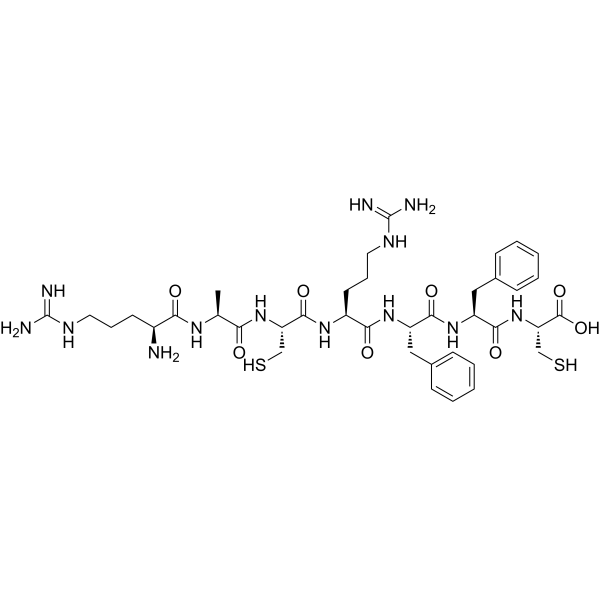
    Peptide R is a cyclic peptide and a specific CXCR4 antagonist. Peptide R exhibits excellent ability to effectively remodel tumor stroma. Peptide R has potential for use in tumor research .
    Peptide R
  • HY-170779

    FAP Cancer
    DOTA-NI-FAPI-04 is a FAP inhibitor (IC50 = 7.44 nM). By integrating FAP targeting with hypoxia-sensitive groups (nitroimidazole), DOTA-NI-FAPI-04 significantly enhances tumor uptake and retention capabilities. DOTA-NI-FAPI-04 chelates metallic isotopes (such as 68Ga and 177Lu) through DOTA to produce radioactive probes ([68Ga]Ga/DOTA-NI-FAPI-04 and [177Lu]Lu/DOTA-NI-FAPI-04), which can be used for research in tumor diagnostics and therapeutic agents. DOTA-NI-FAPI-04 holds dual targeting potential in the fields of cancer imaging, tumor microenvironment analysis, and radionuclide therapy, particularly suitable for scenarios where the tumor stroma and hypoxic regions synergistically interact .
    DOTA-NI-FAPI-04
  • HY-120499

    Hedgehog Smo Cancer
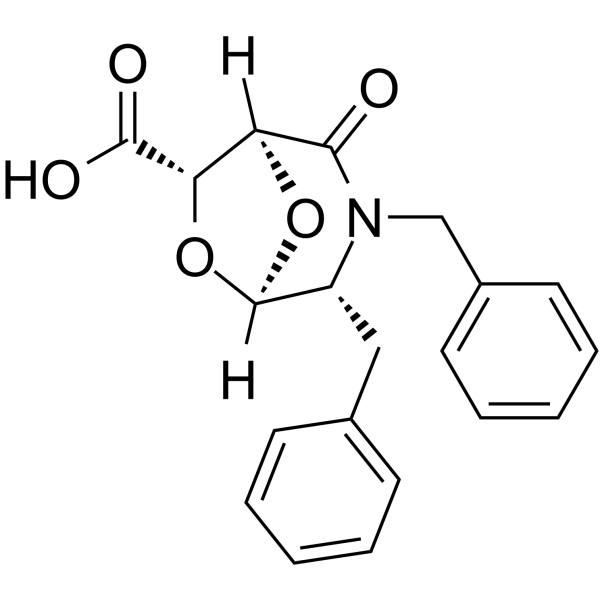
    AZD8542 is an antagonist of Smoothened (SMO), playing an important role in oncology. AZD8542 is an Hedgehog (Hh) pathway antagonist on tumor progression with an emphasis on the role of the stroma compartment .
    AZD8542
  • HY-P4111A

    CXCR Cancer
    Peptide R (TFA) is a synthetic and specific CXCR4 antagonist. Peptide R (TFA) shows outstanding capacities to remodel the tumor stroma. Peptide R (TFA) can be used for solid tumor (glioblastoma, etc.) research .
    Peptide R TFA
  • HY-131162

    Angiotensin Receptor Cardiovascular Disease
    Chymase is a protein-digester enzyme found primarily in mast cells (MC), fibroblasts, and vascular endothelial cells. Chymase is released into the extracellular stroma in the context of inflammatory signals, tissue injury and cellular stress. Chymase is also involved in angiotensin II (Ang II) production, which is used in cardiovascular disease studies .
    Chymase
  • HY-18714

    Others Cancer
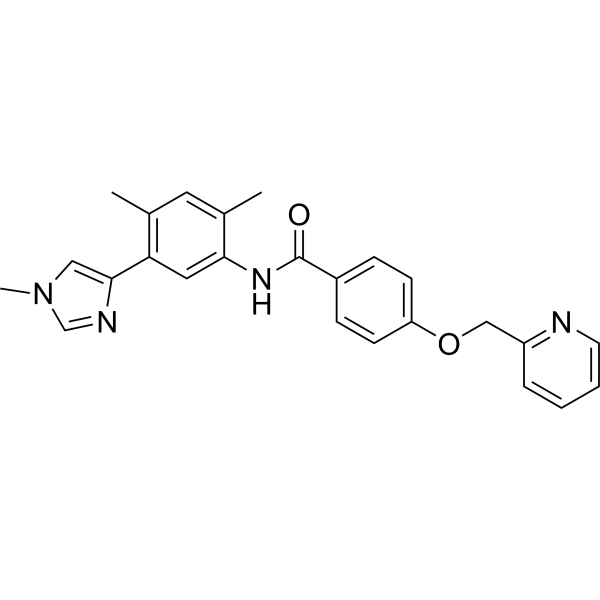
    BRD7116 is a cell-non-autonomous inhibitor of leukemic stem cells (LSCs). BRD7116, without directly contacting LSCs, can inhibit LSCs merely by altering the microenvironment. BRD7116 also has any cell-autonomous effects on LSCs and induces transcriptional changes consistent with myeloid differentiation. BRD7116 can be used for the study of leukemia .
    BRD7116
  • HY-134920

    Indoleamine 2,3-Dioxygenase (IDO) Apoptosis SWI/SNF Complex Cancer
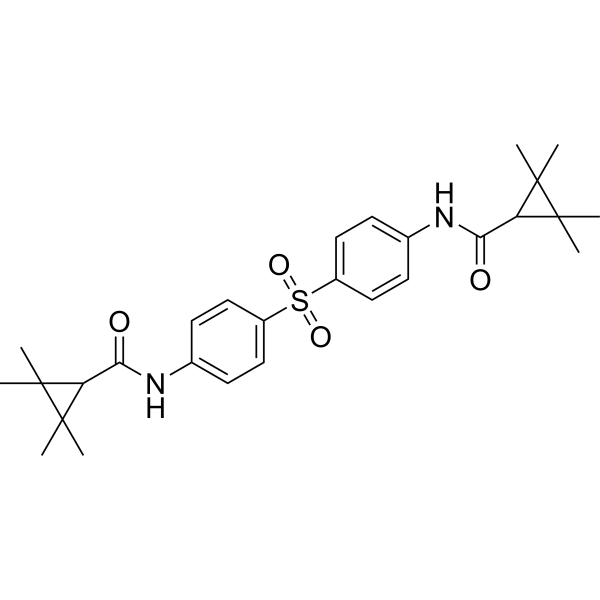
    LW106 is a selective IDO1 inhibitor with an IC50 of 1.57 μM. LW106 has no inhibitory effect on IDO2 and TDO. LW106 inhibits tumor outgrowth by limiting stroma-immune crosstalk and CSC enrichment in the tumor microenvironment. LW106 reduces subpopulation of cancer stem cells (CSCs) in xenografted tumors in which less proliferative/invasive tumor cells and more tumor cells apoptosis. LW106 can be used for the studies of lung cancer and melanoma .
    LW106
  • HY-P2886

    Phosphoriboisomerase

    Biochemical Assay Reagents Others
    Ribose-5-phosphate isomerase (Phosphoriboisomerase) exists widely in microorganisms, animals and plants. It is the first enzyme in the non-oxidative phase of the pentose phosphate pathway (PPP) and also a key enzyme in the Calvin cycle (photosynthetic carbon fixation). Ribose-5-phosphate isomerase catalyzes the reversible isomerization between D-ribulose-5-phosphate (Ru5P) and D-ribose-5-phosphate (R5P). Ribose-5-phosphate isomerase acts as a multifunctional biocatalyst for rare sugar production. Ribose-5-phosphate isomerase serves as a target for antitrypanosomal agents .
    Ribose-5-phosphate isomerase
  • HY-E70125

    Carboxycyclohexadienyl dehydratase

    Biochemical Assay Reagents Others
    Arogenate dehydratase (Carboxycyclohexadienyl dehydratase) is the key enzymes that catalyze the conversion of arogenate into Phe in the stroma of chloroplasts and plastids in vascular plants. Arogenate dehydratase plays an important role in cell wall lignin biosynthesis, photosynthesis, and can be used for plant improvement .
    Arogenate dehydratase
  • HY-P10869
    dCNP
    1 Publications Verification

    Natriuretic Peptide Receptor (NPR) Inflammation/Immunology Cancer
    dCNP binds to NPR-B/C receptor, activates cGMP signaling pathway, and regulates vascular function. dCNP exhibits anti-hypoxia property through downregulation of hypoxia-related genes expressions like HIF1α and HIF2α. dCNP inhibits the induction of tumor stroma and exhibits anti-fibrosis activity. dCNP upregulates CTLs, NK cells, and conventional type 1 dendritic cells in tumors, and activates immune responses .
    dCNP

Inquiry Online

Your information is safe with us. * Required Fields.

Salutation


Country or Region *

Applicant Name *


Organization Name *

Department *


Email Address *


Product Name *

Cat. No.


Requested quantity *

Phone Number *


Remarks

Inquiry Online

Inquiry Information

Product Name:
Cat. No.:
Quantity:
MCE Japan Authorized Agent:

